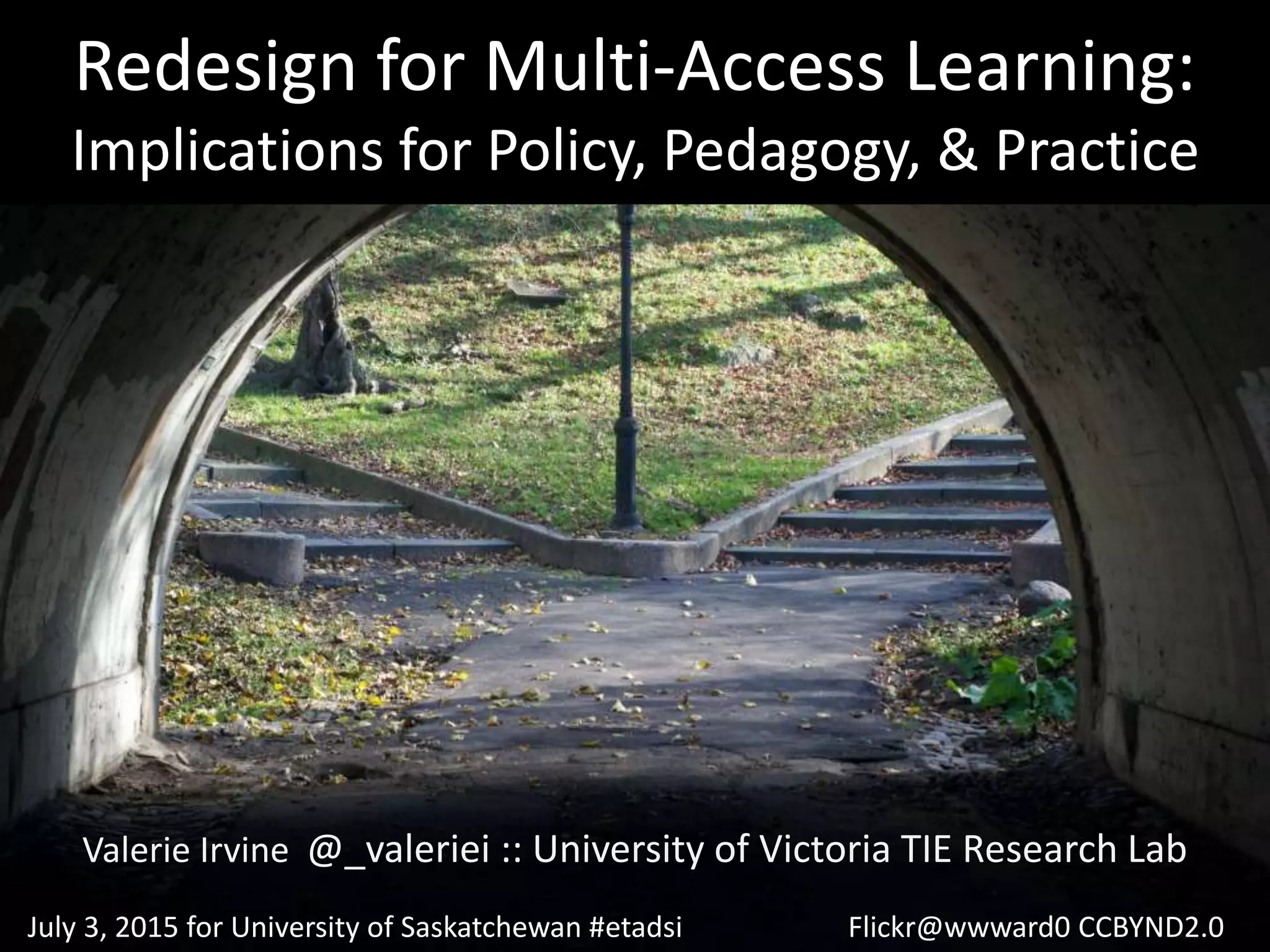
Redesign for Multi-Access Learning:
Implications for Policy, Pedagogy, & Practice
Valerie Irvine @_valeriei :: University of Victoria TIE Research Lab
July 3, 2015 for University of Saskatchewan #etadsi Flickr@wwward0 CCBYND2.0
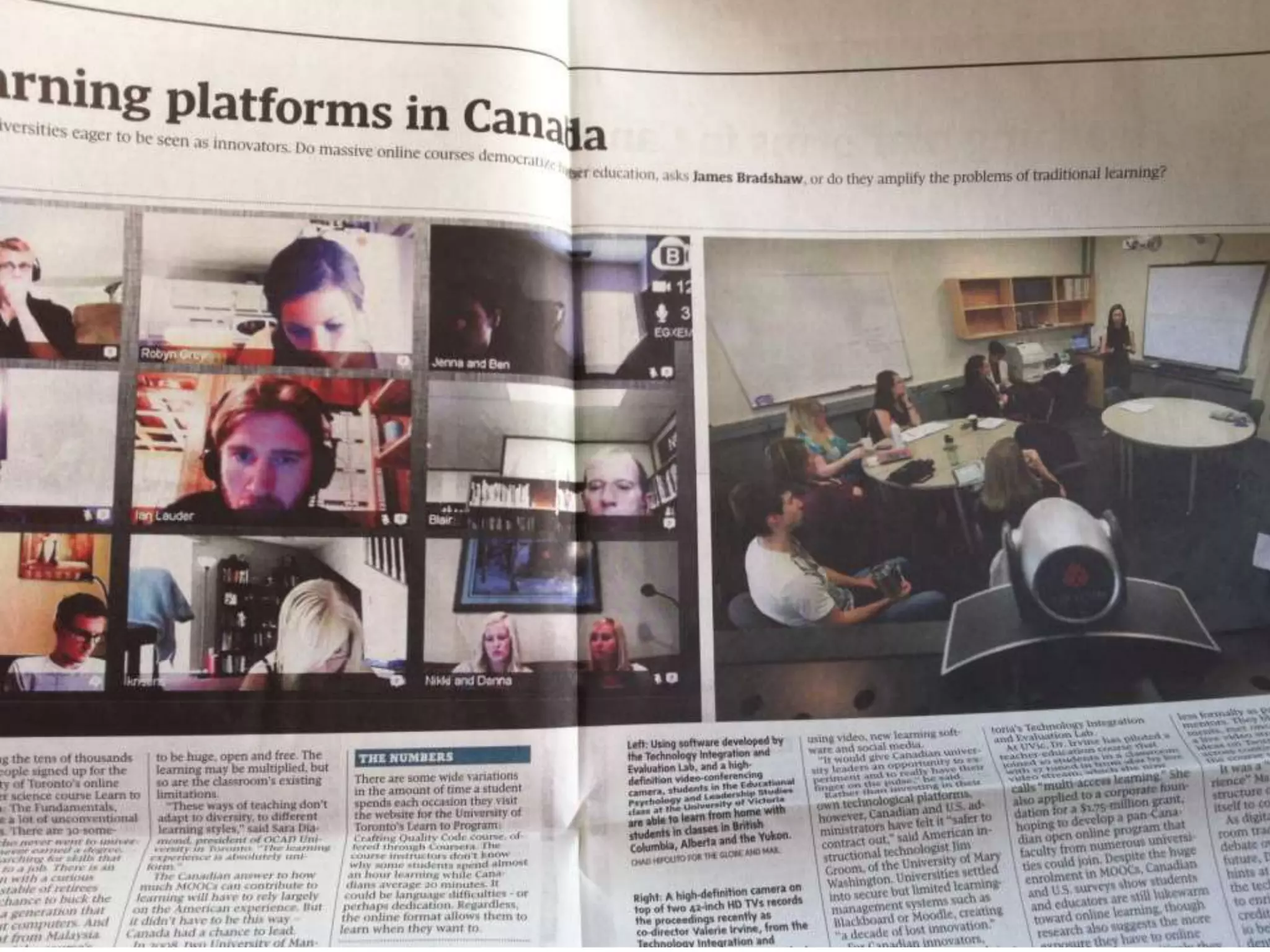
Online/Open Access
• #ds106radio
• #etadsi
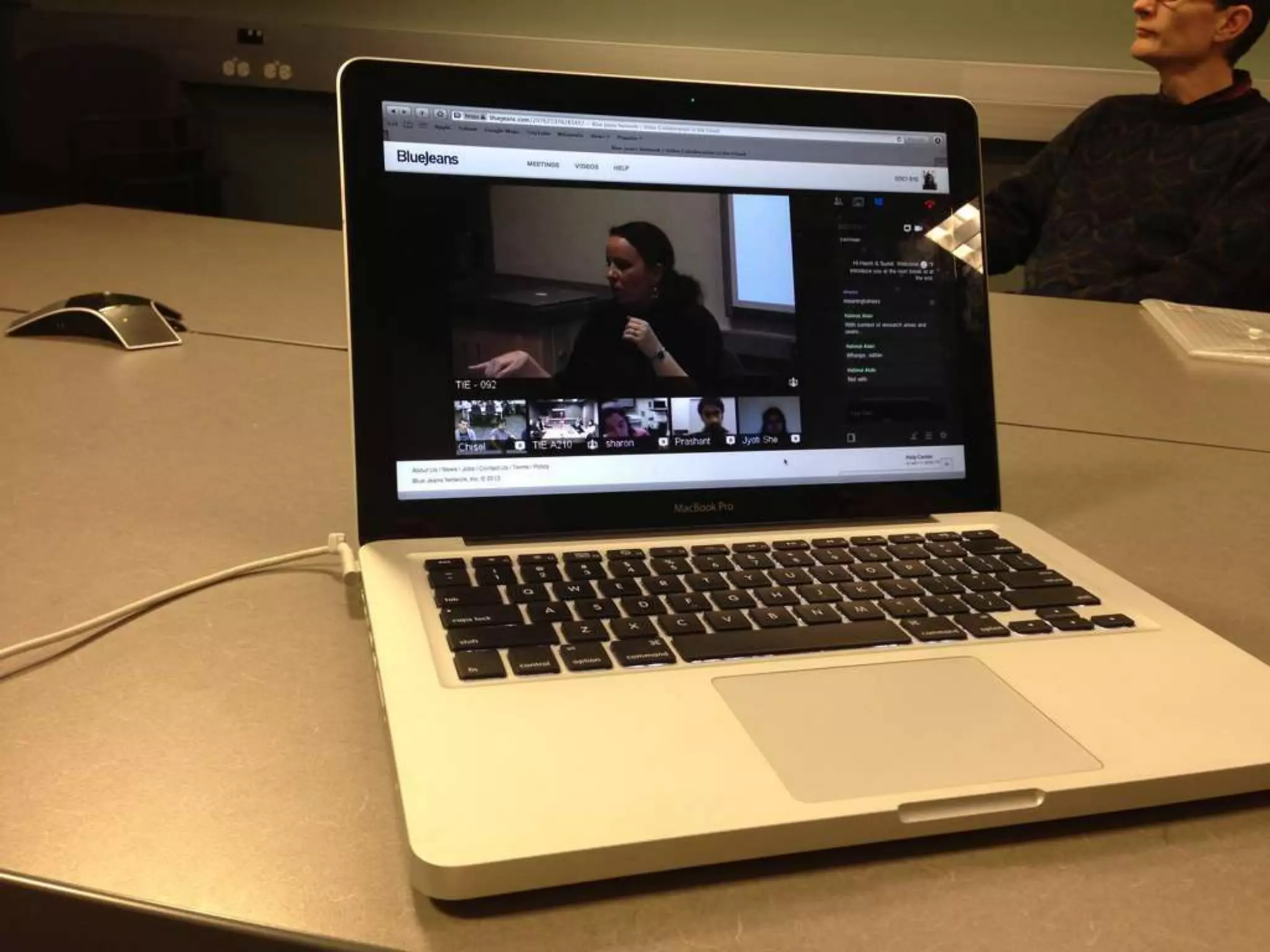
• Blue Jeans access
• Use gdoc tweeted out
Q1: Why do we need
to have a required
face-to-face
experience as a class?
Reply with A1: ___
to #csshe2015 &
#blended
Q2: Should an institution’s
or instructor’s preference
override student
accessibility?
Or student preference of
modality?
Reply with A2: ___
to #csshe2015 & #blended
Q3: Does/should modality
bias exist?
Reply with A3: ___
to #csshe2015 & #blended
Q4:
Should we allow flexibility
in modality accessibility
(e.g., multi-access)? What
are the implications?
Reply with A4: ___
to #csshe2015 &
#blended
Responses and
resources curated at
google doc URL
tweeted out:
bit.ly/1PVK26u
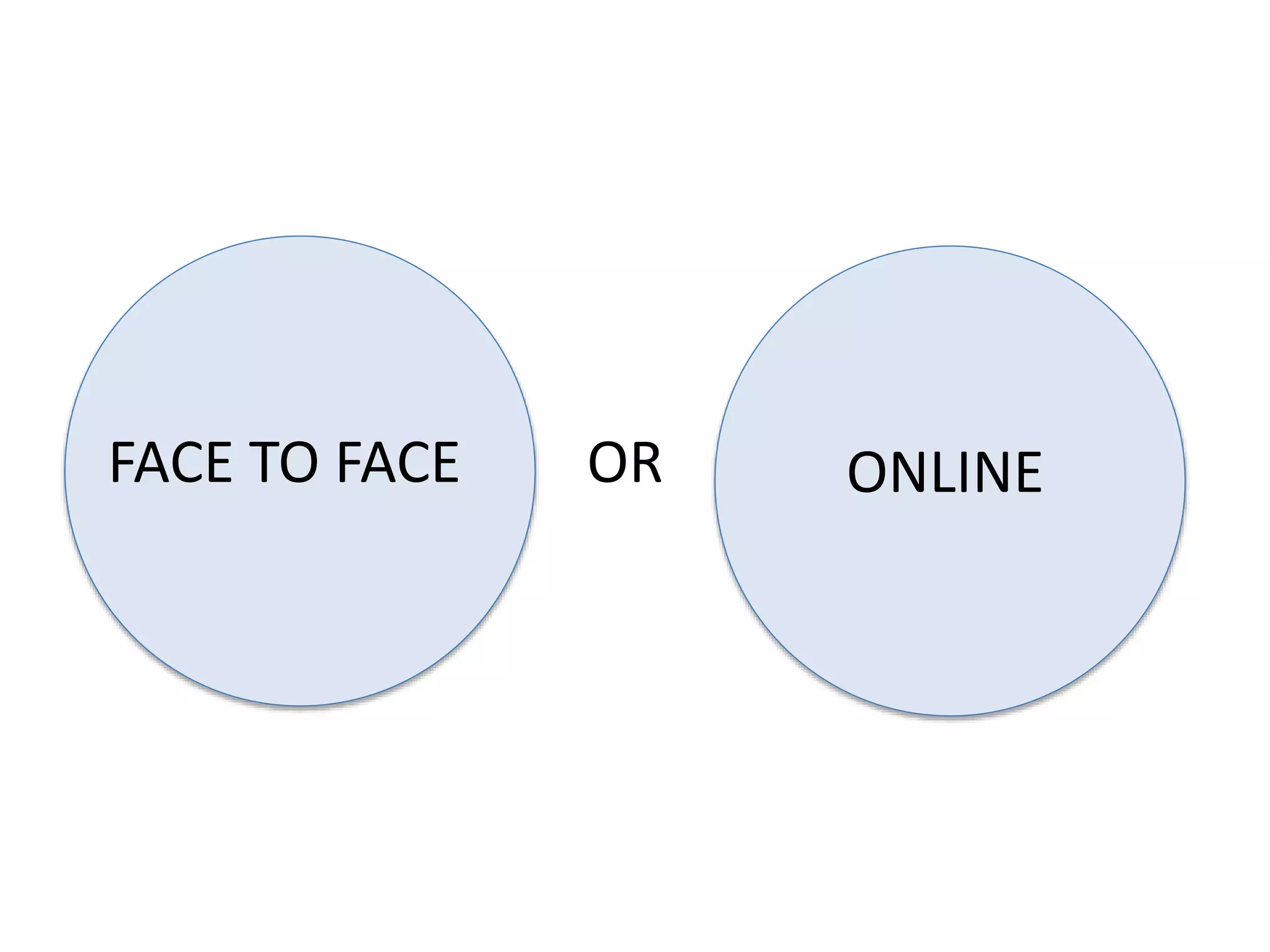
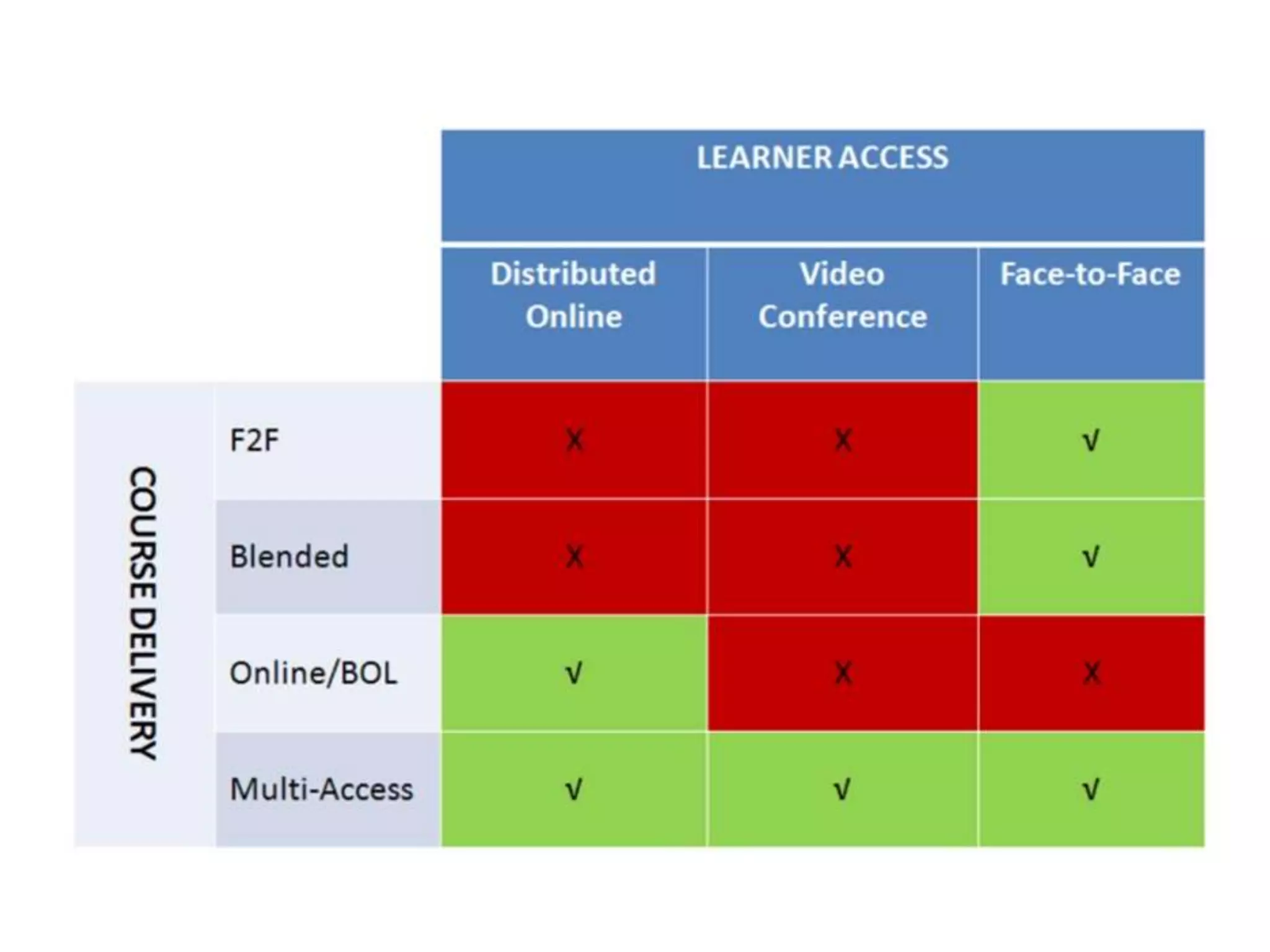
FACE TO FACE ONLINEOR
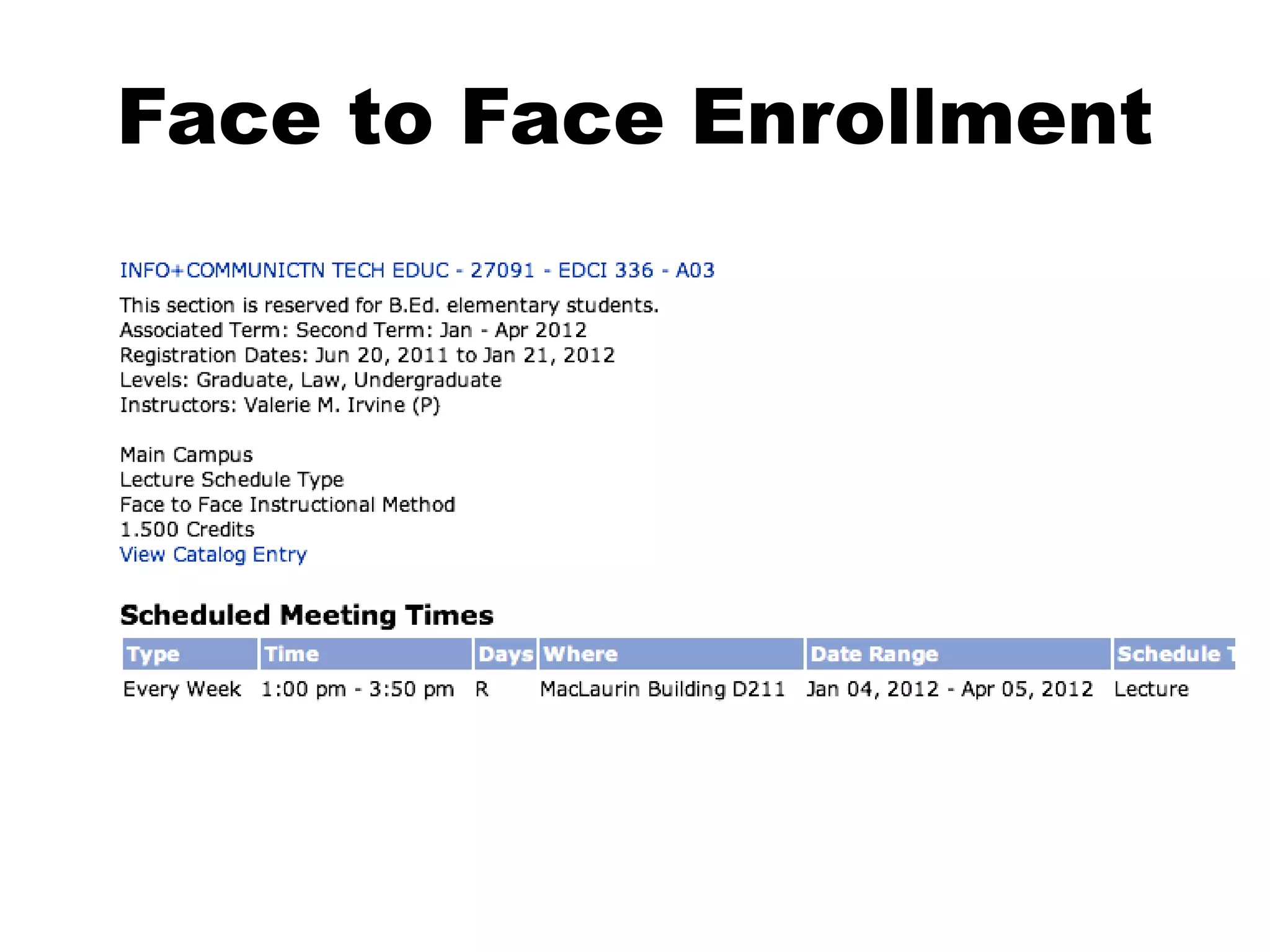
Face to Face Enrollment
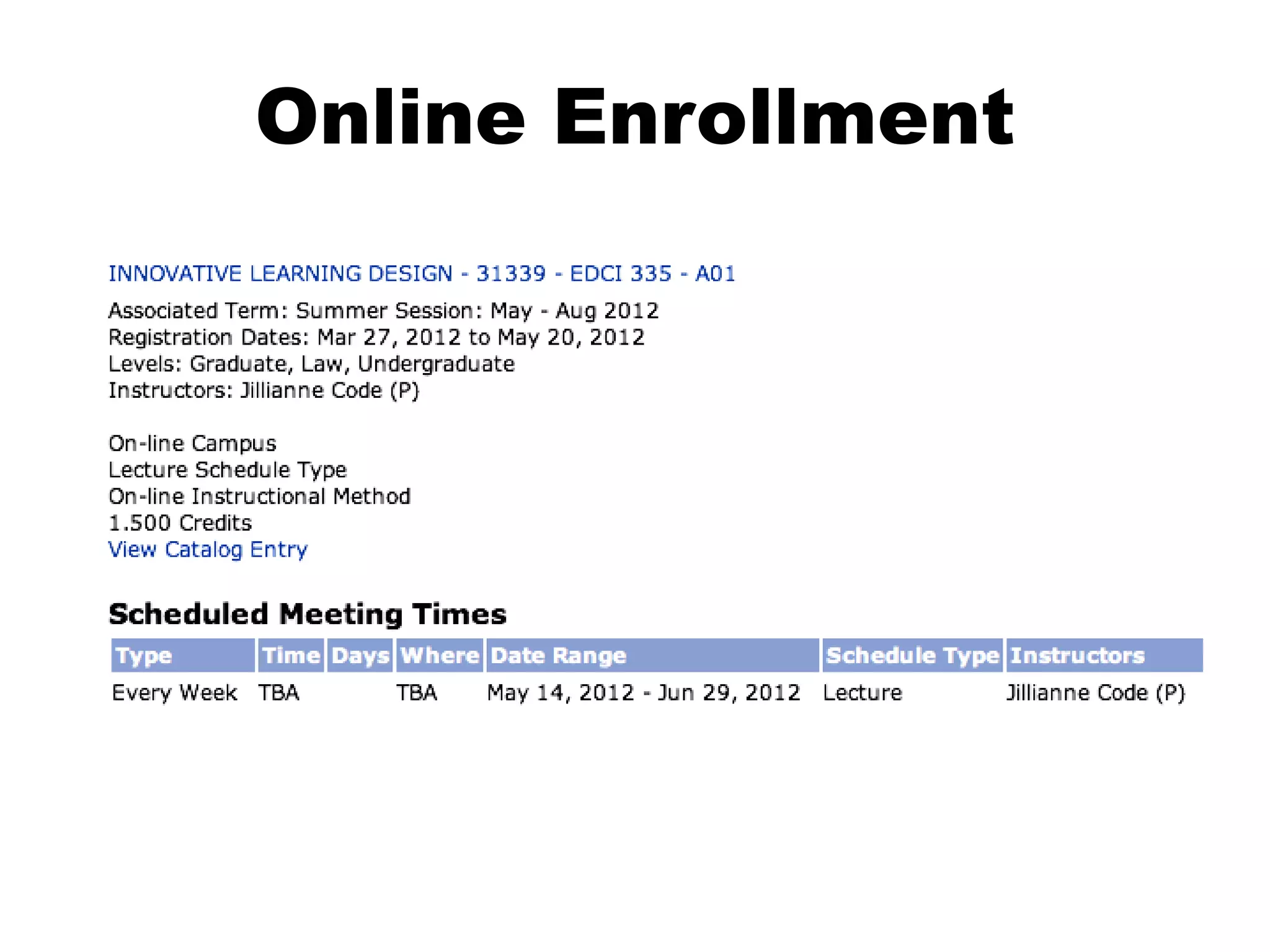
Online Enrollment
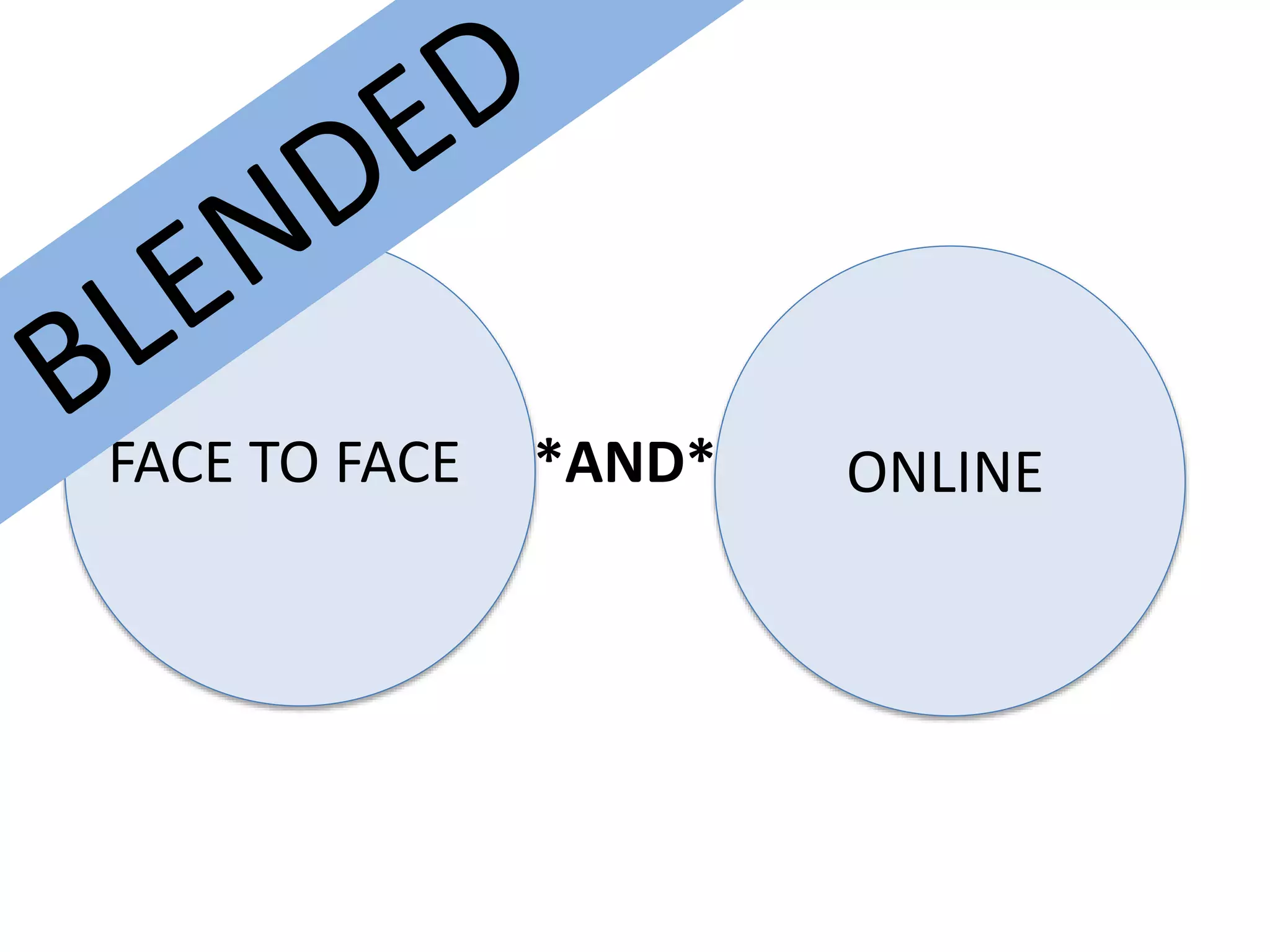
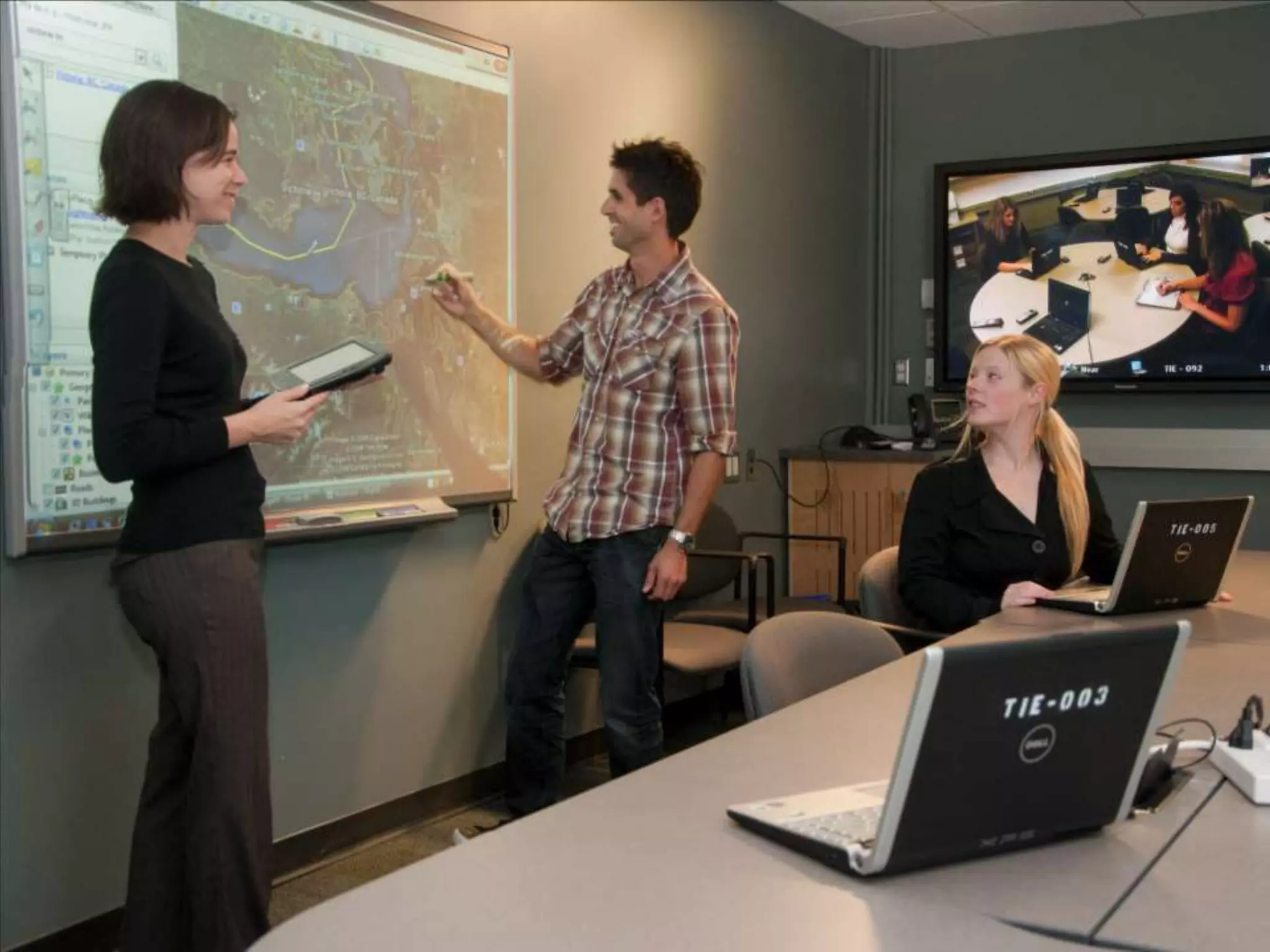
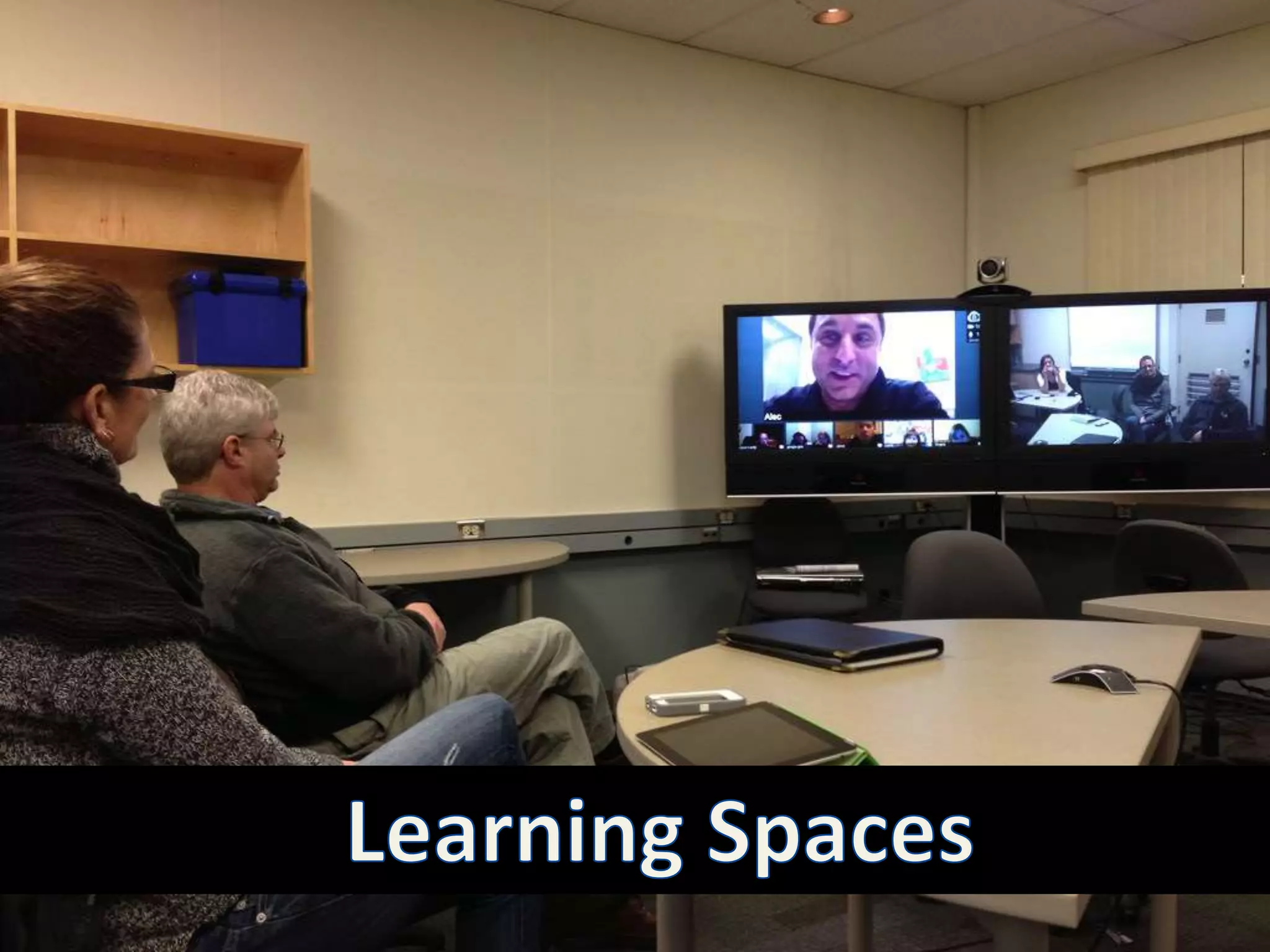
FACE TO FACE ONLINE*AND*
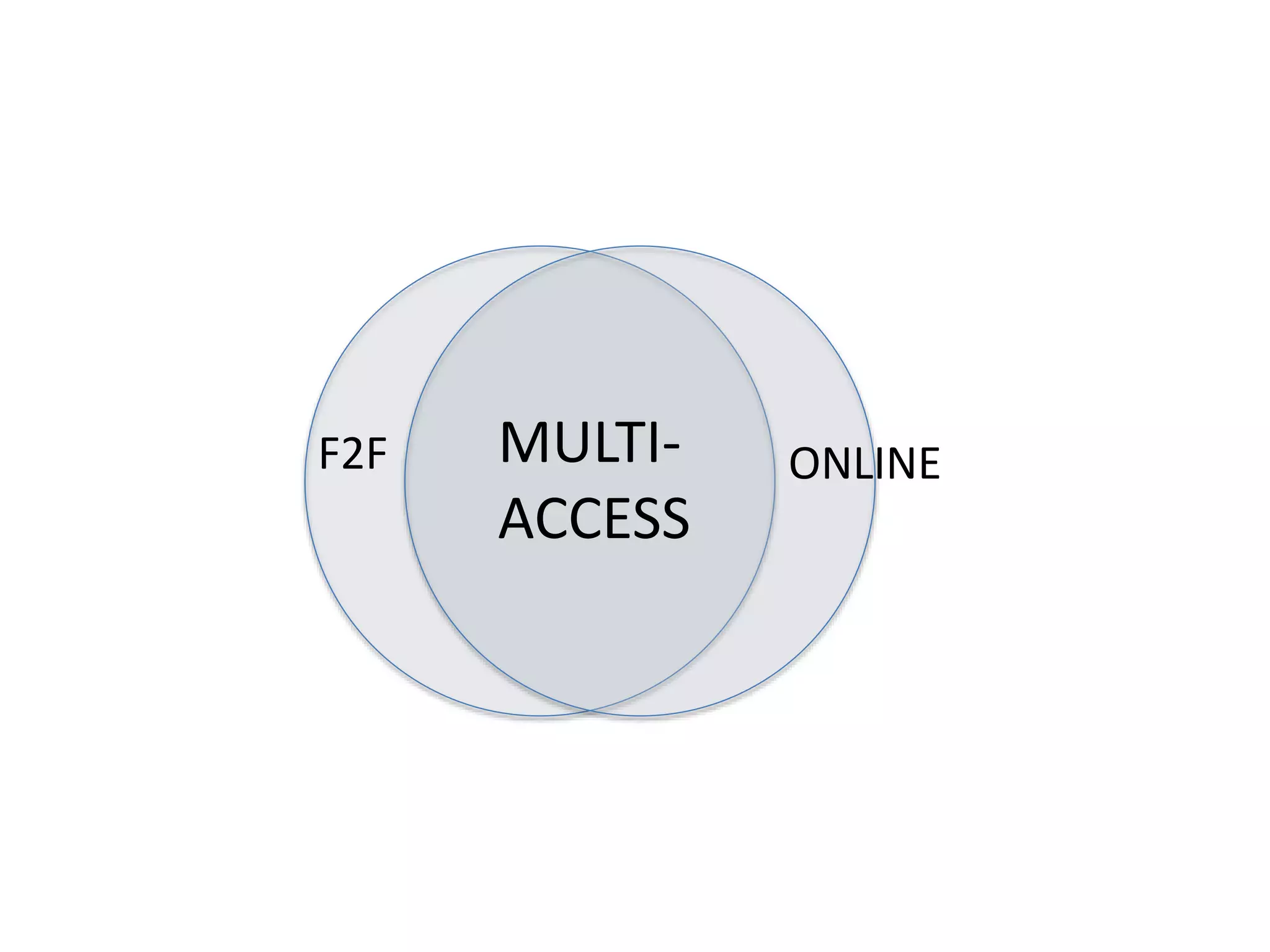
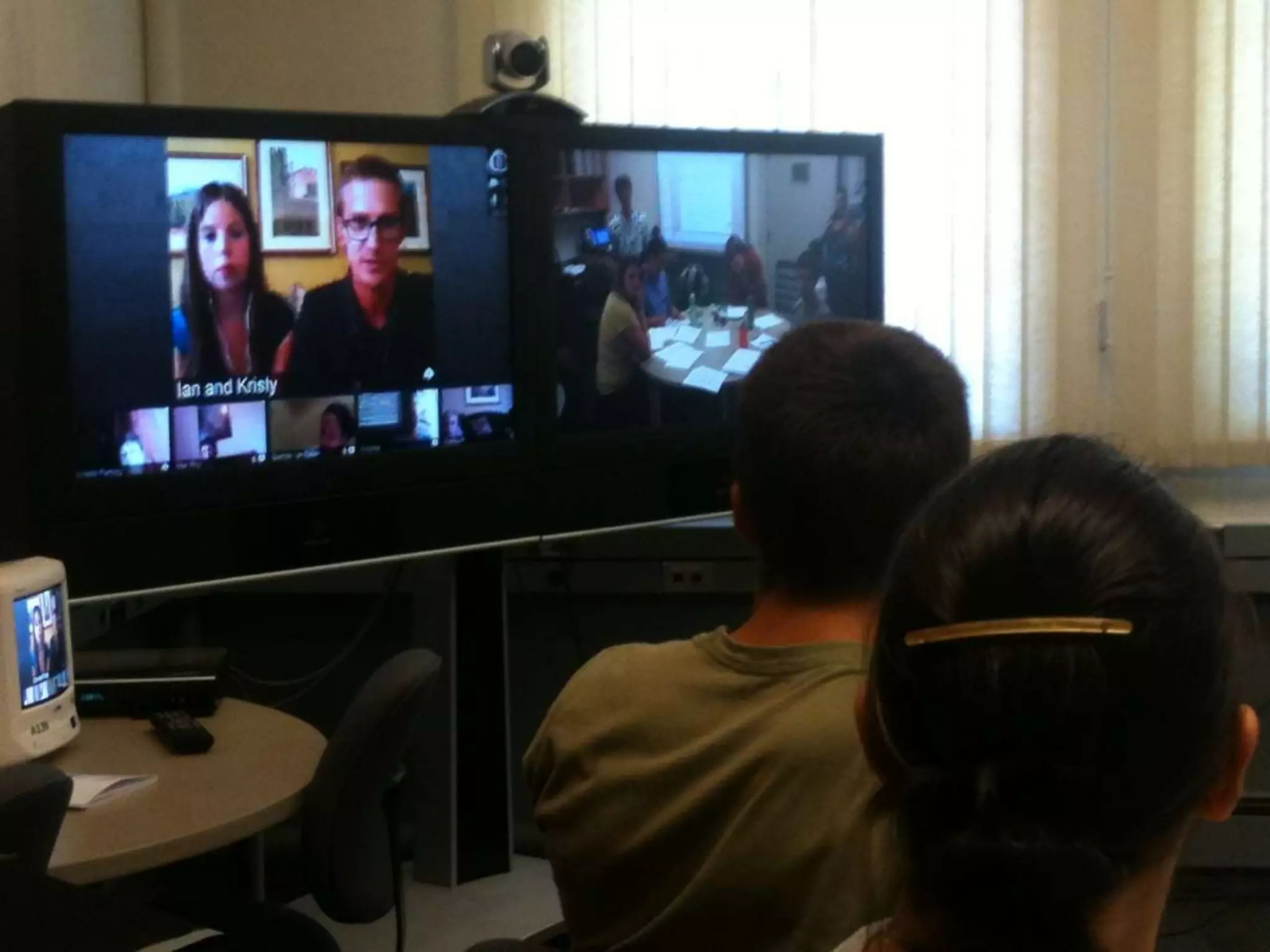
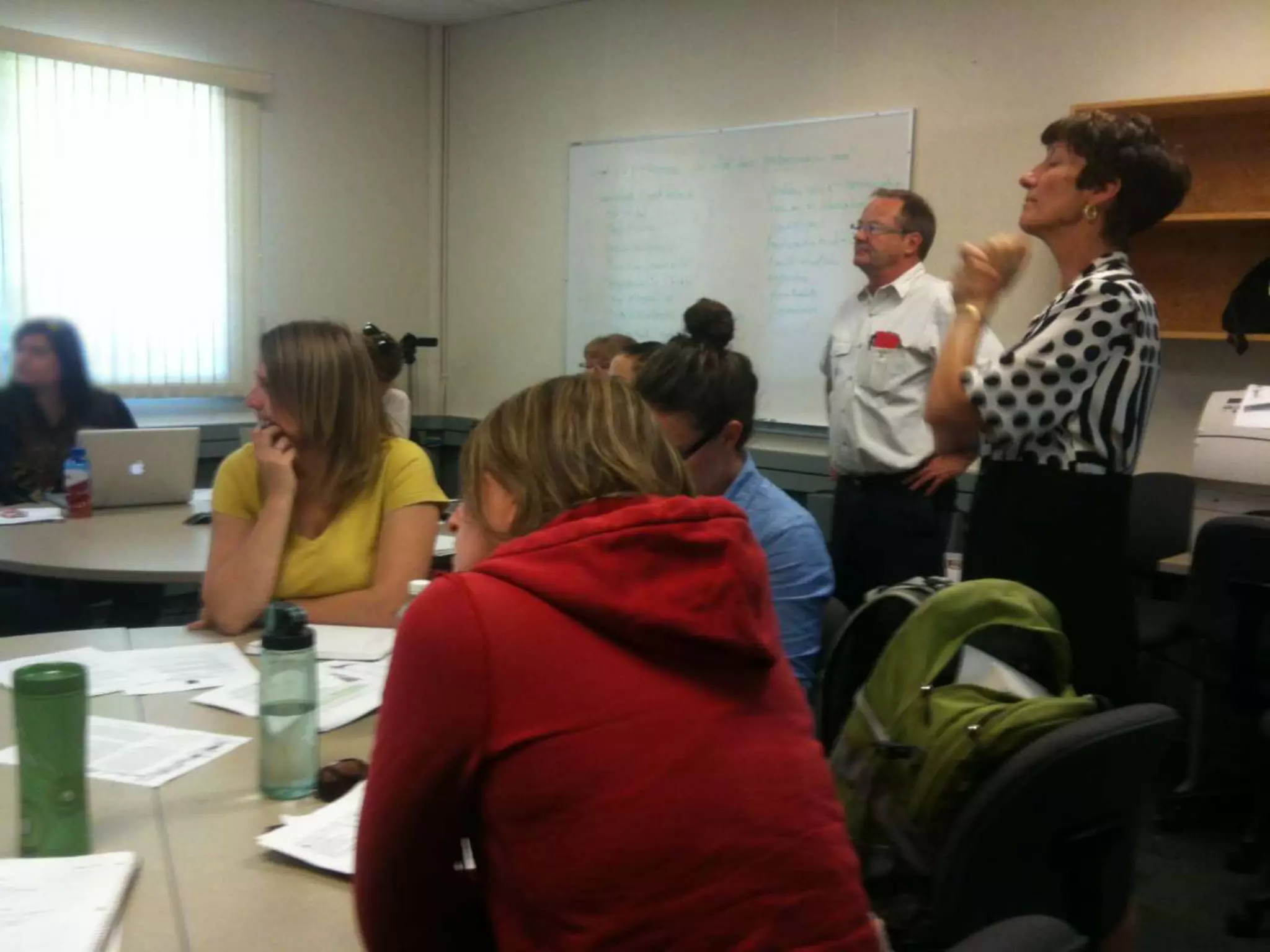
F2F ONLINEMULTI-
ACCESS
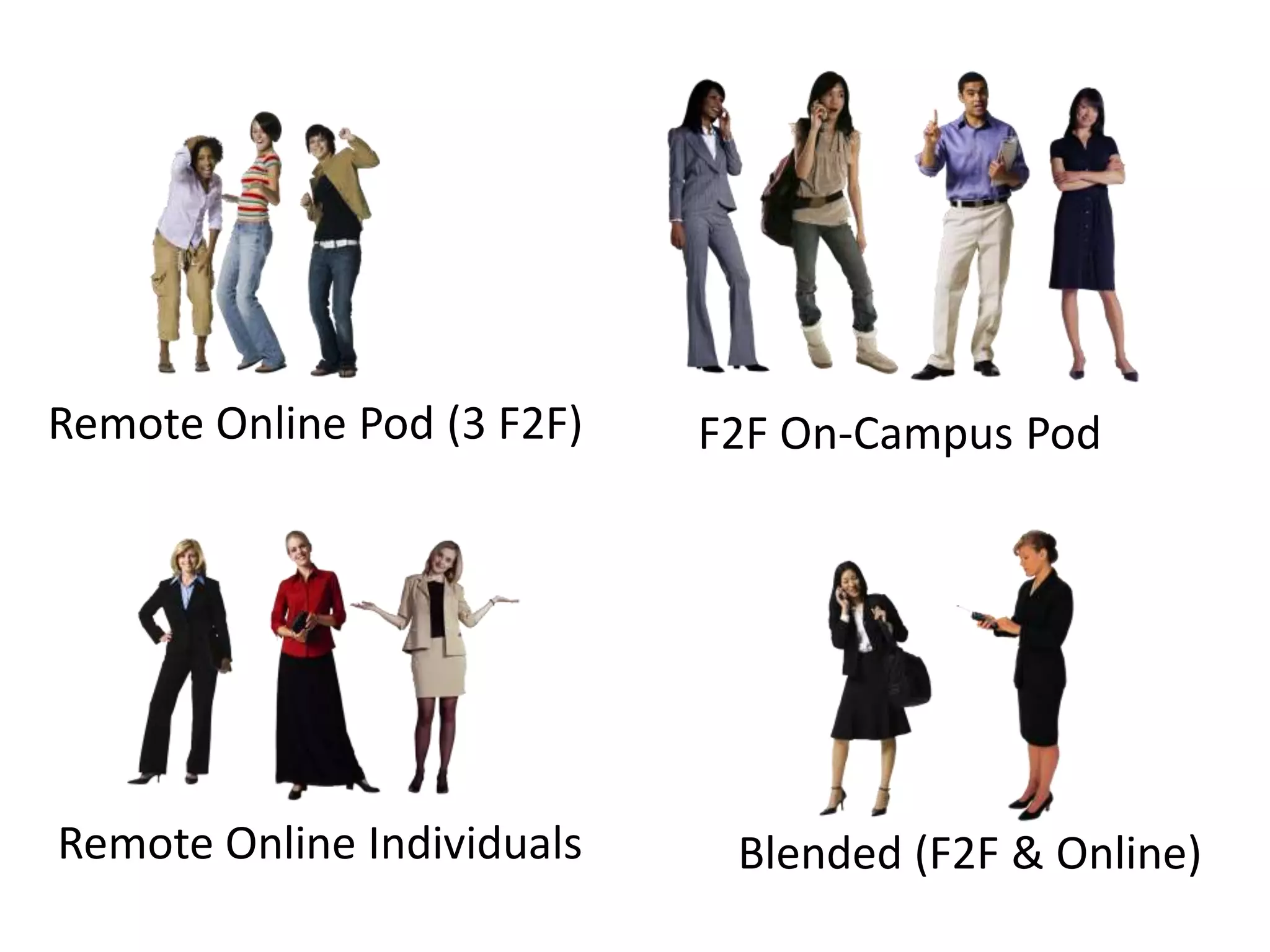
Remote Online Pod (3 F2F) F2F On-Campus Pod
Remote Online Individuals Blended (F2F & Online)
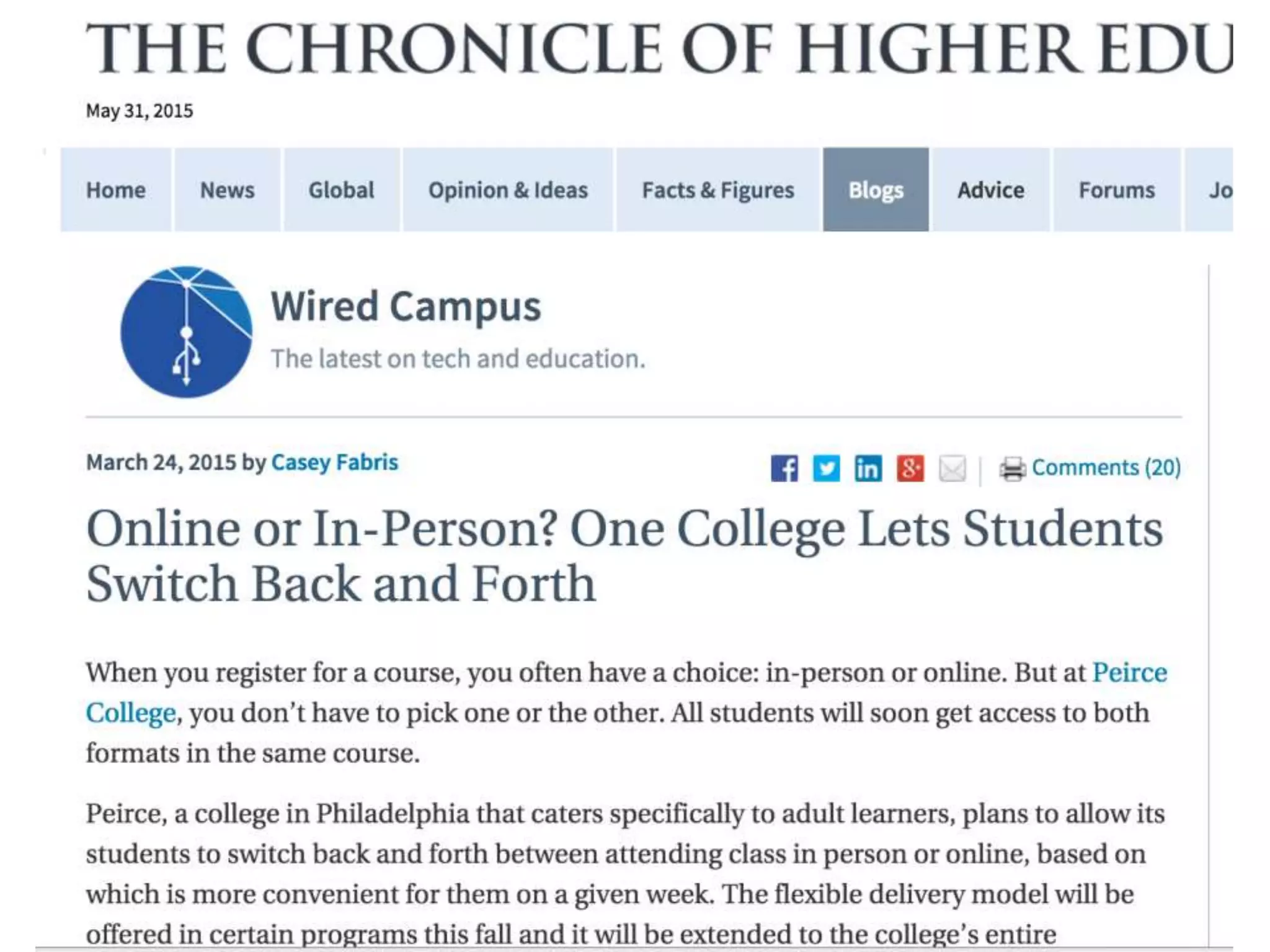
Who Controls the Blend?
Is Blended an Instructional Experience
or a Learner Experience?
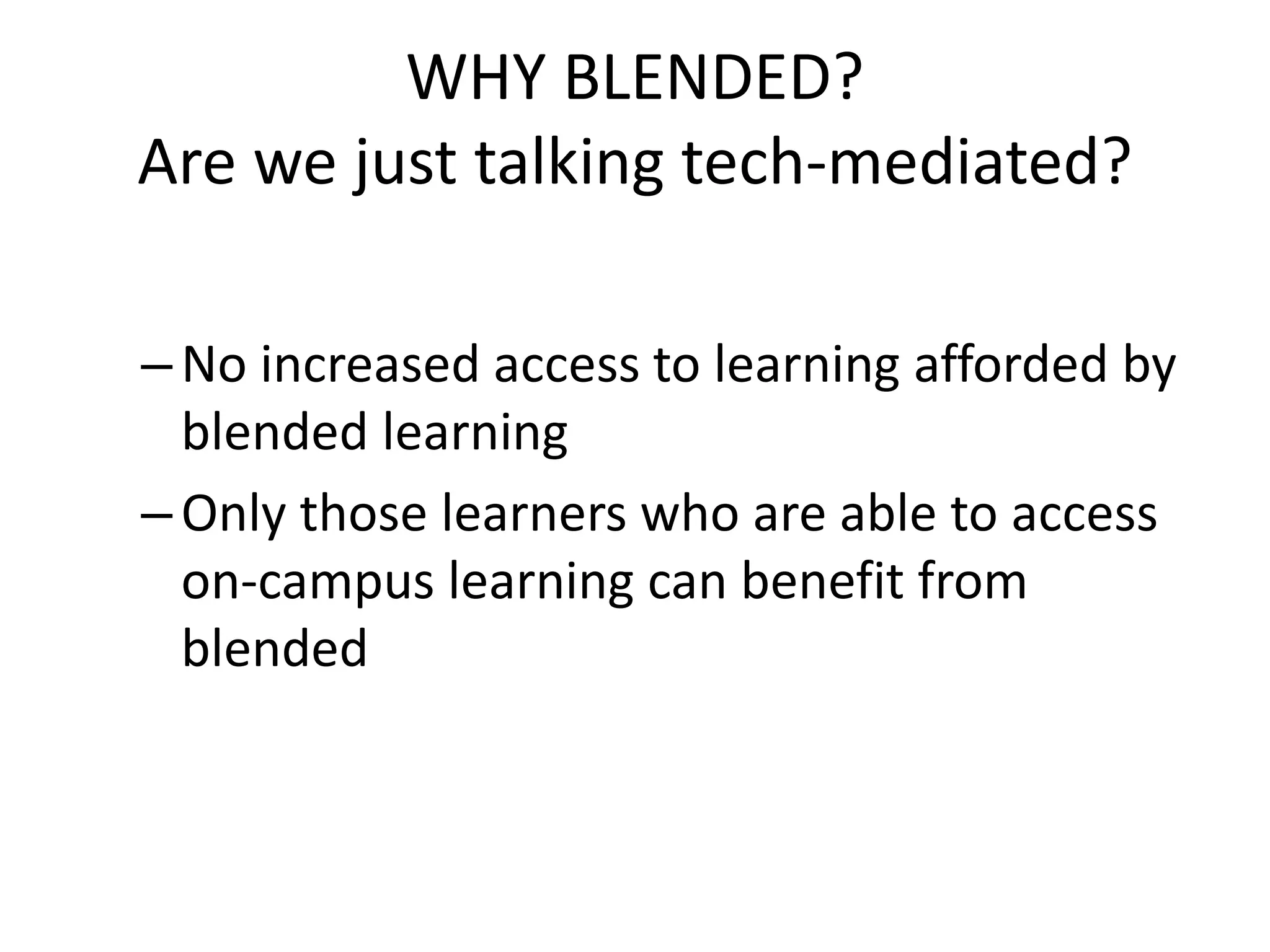
WHY BLENDED?
Are we just talking tech-mediated?
–No increased access to learning afforded by
blended learning
–Only those learners who are able to access
on-campus learning can benefit from
blended
Can Blended Meet Mobility Needs?
NO
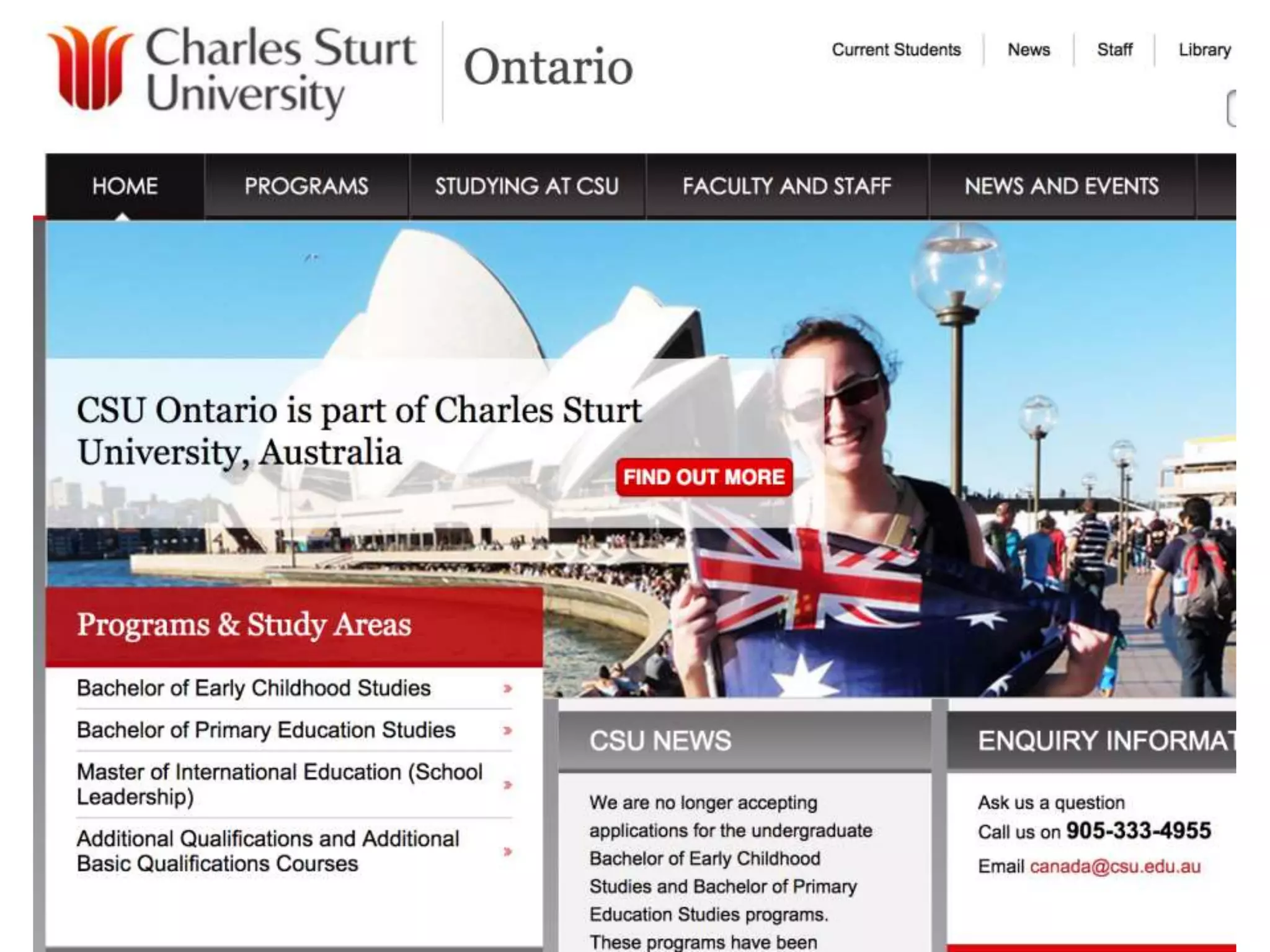
Do we redefine blended to include
merging modalities?
NO.
We don’t say snowboarding is the
new skiing.
CLARITY
Program Delivery
The cohort will include face-to-face
instruction in courses taught in a centrally-
located Vancouver site and flexible,
blended formats that mix on-site and
online learning.
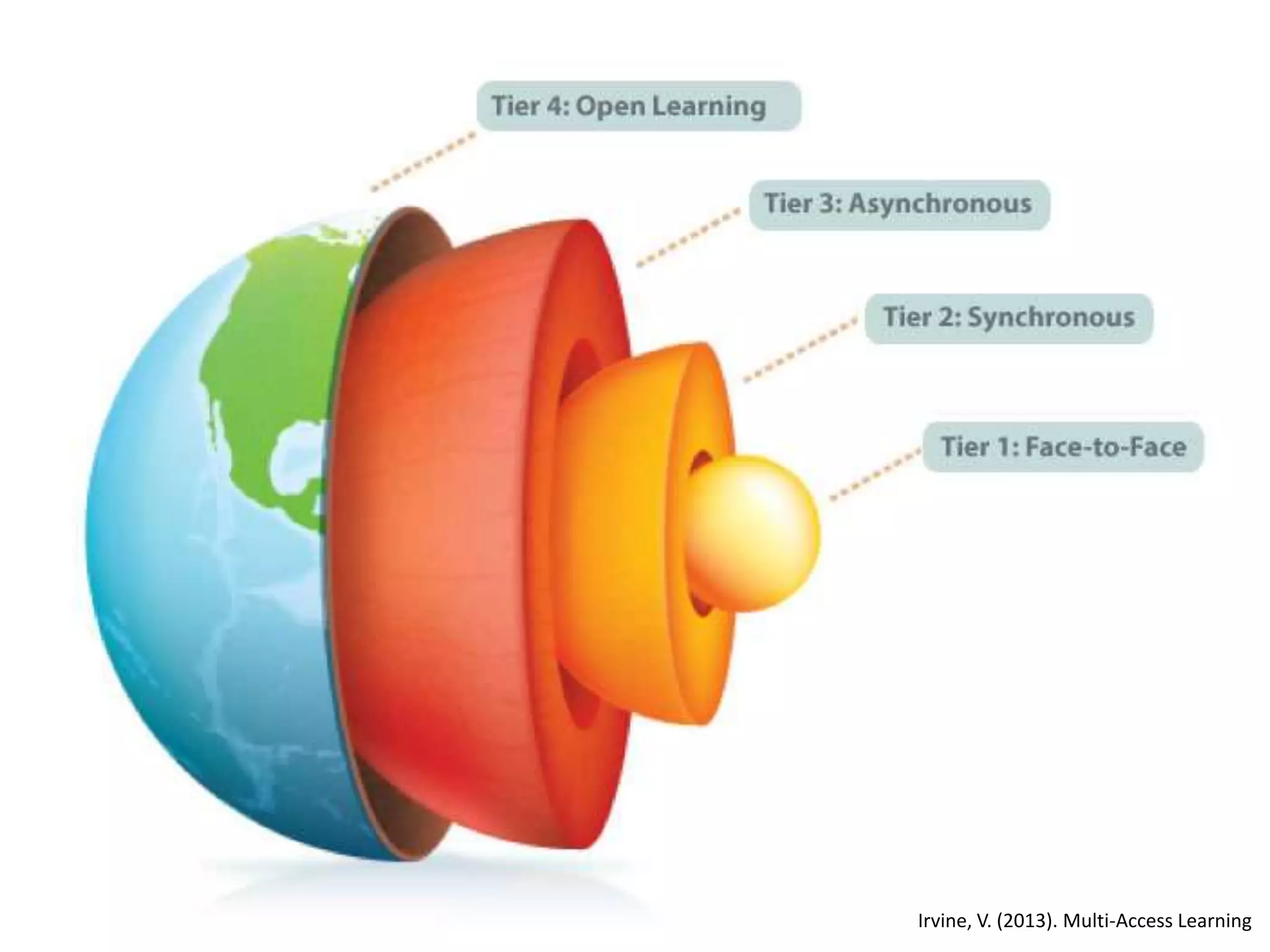
Irvine, V. (2013). Multi-Access Learning
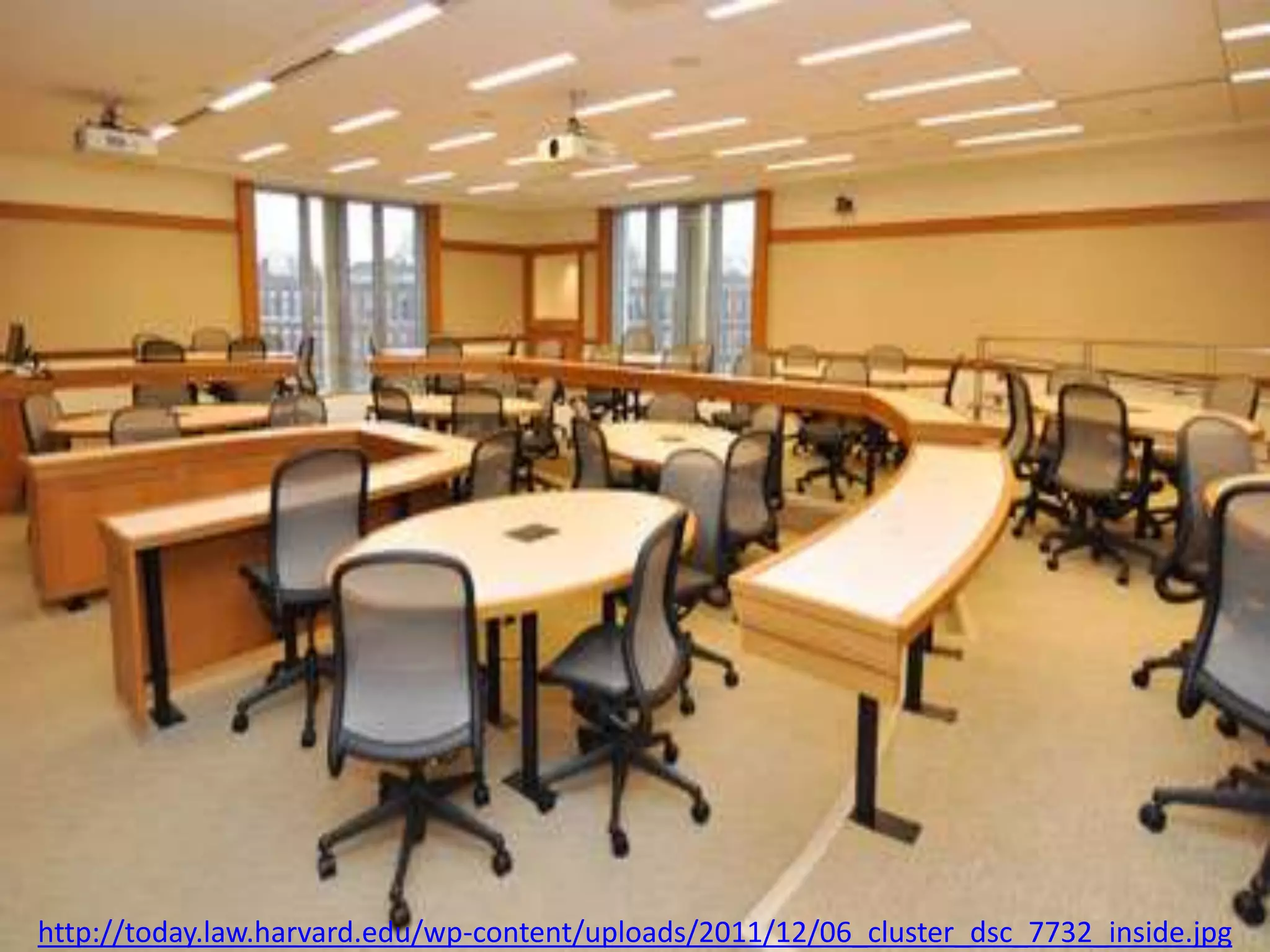
http://today.law.harvard.edu/wp-content/uploads/2011/12/06_cluster_dsc_7732_inside.jpg
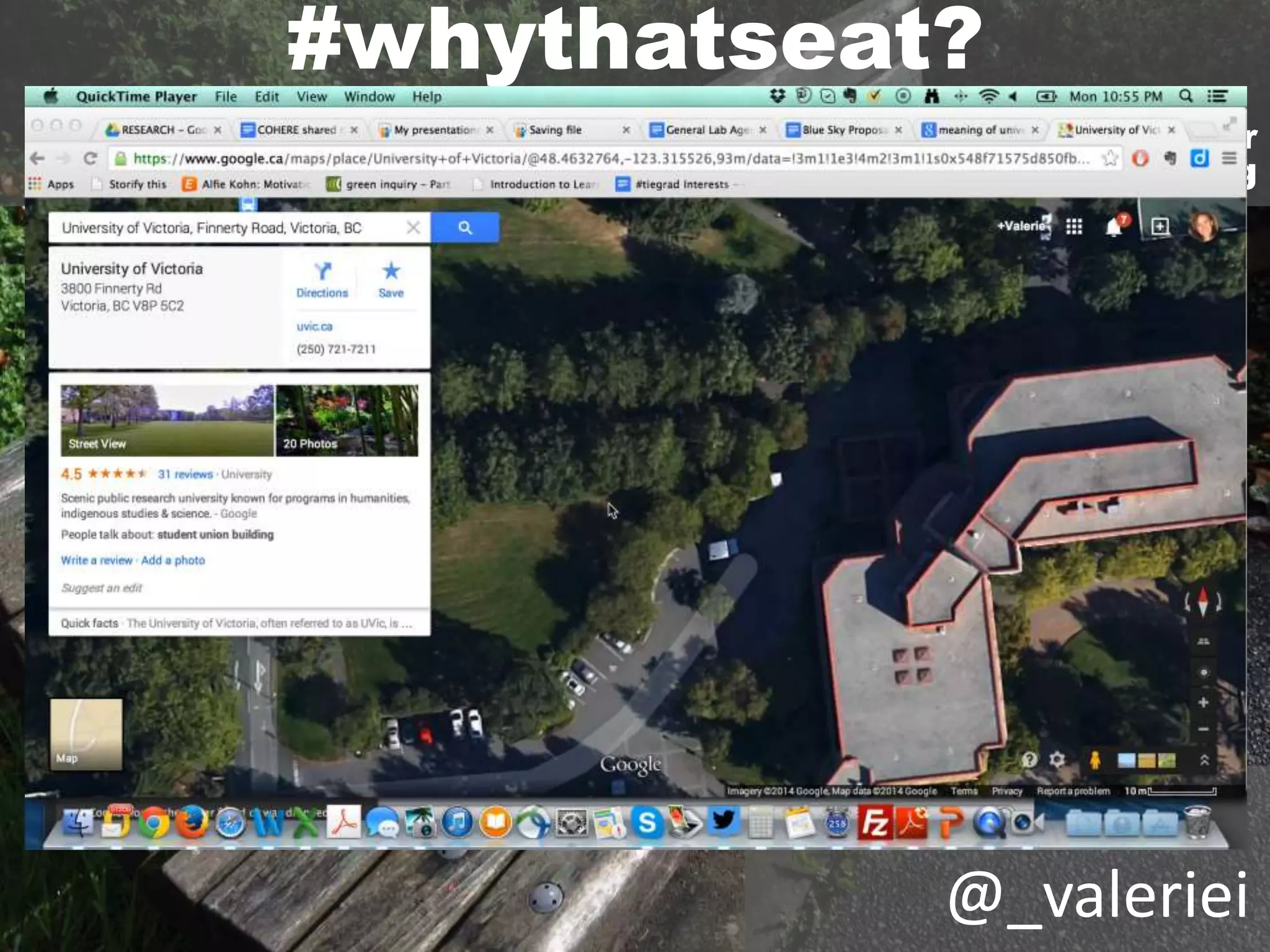
#whythatseat?
Realigning Higher Ed for the 21st Century Learner
Through Multi-Access Learning
Dr. Valerie Irvine
@_valeriei
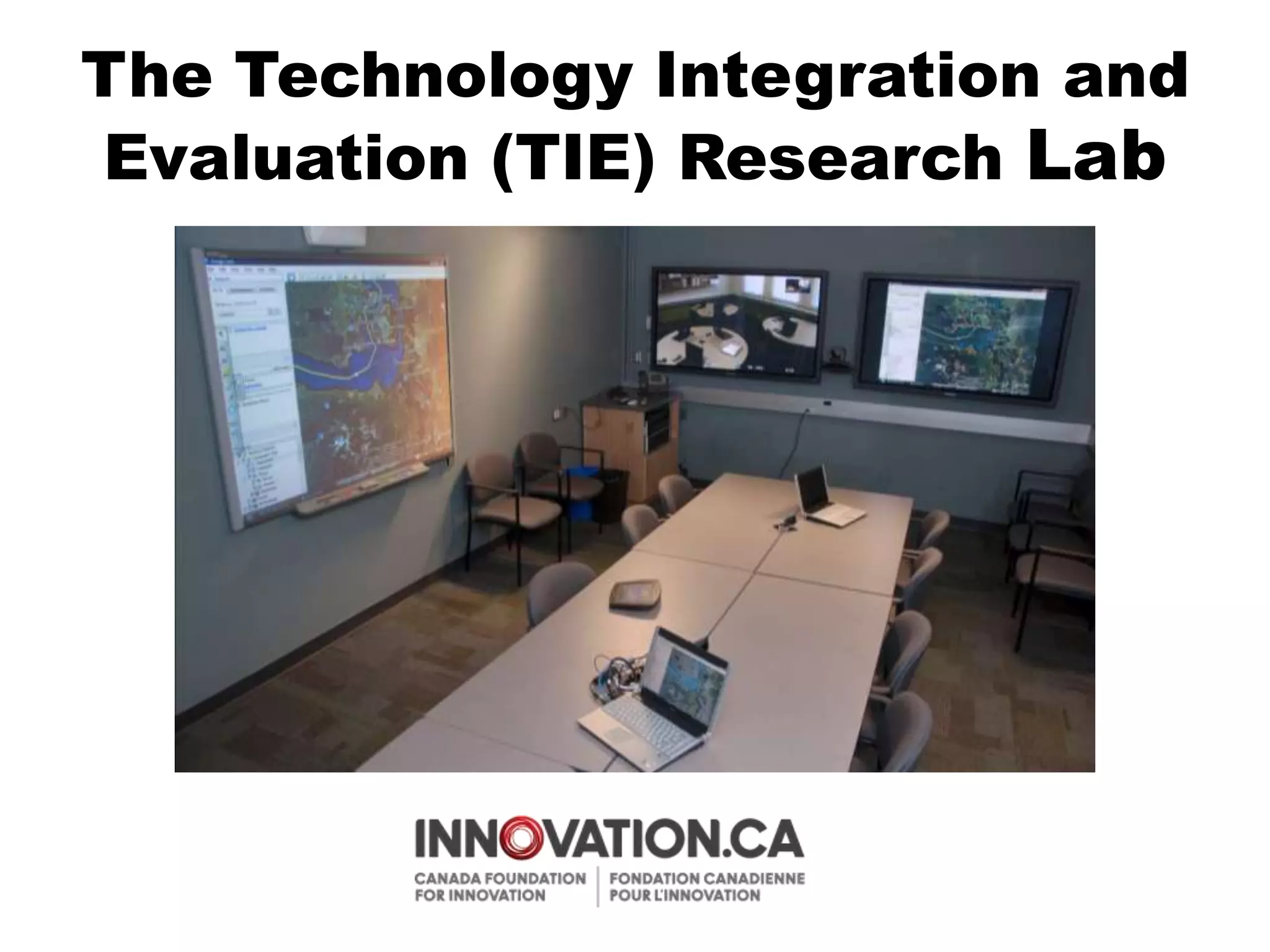
The Technology Integration and
Evaluation (TIE) Research Lab
COMMUNITY
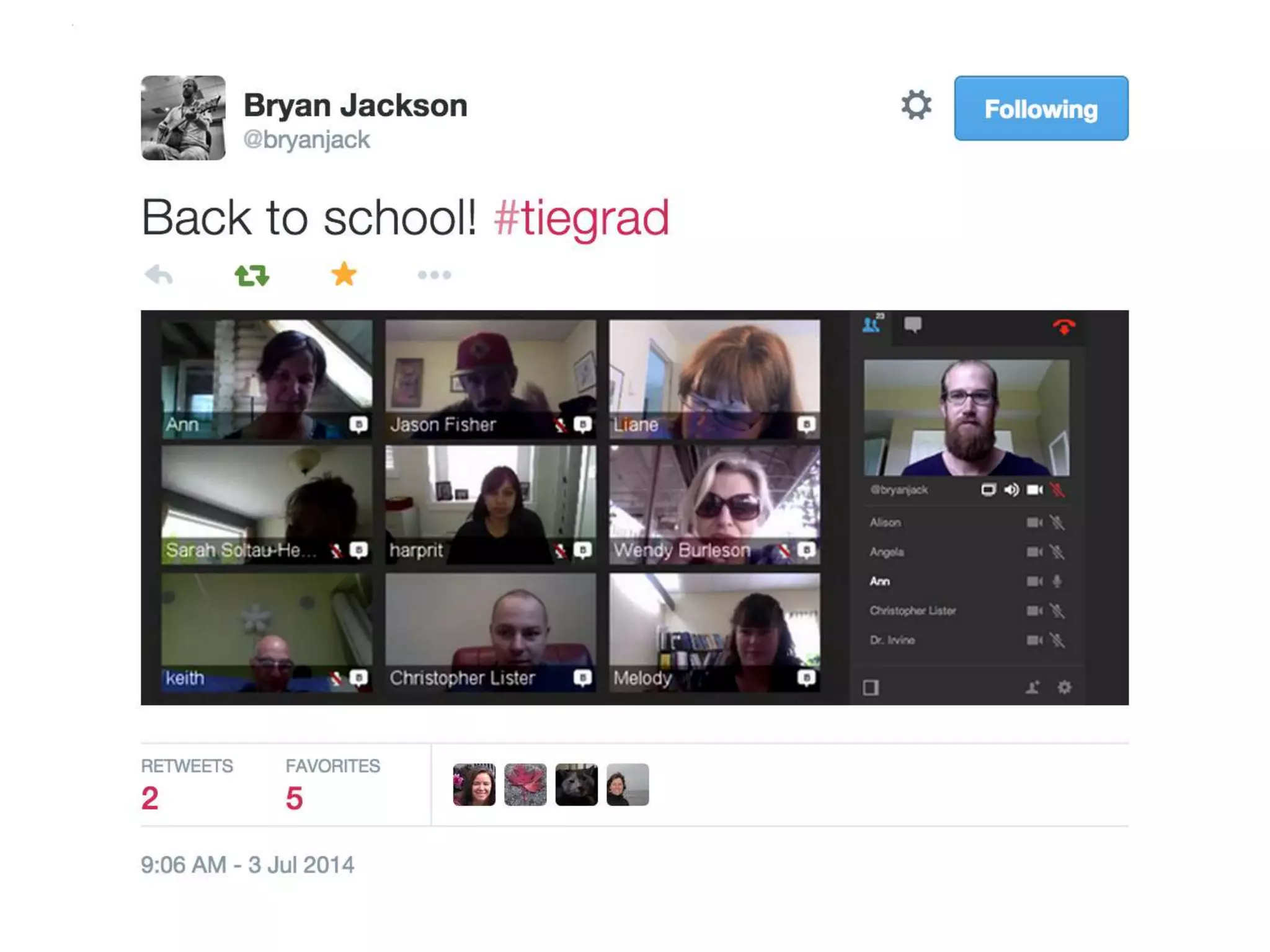
The connectedness and access topics also came up during my
lunch. My friend commented on how disconnected she
felt from others in her class because she was
completing it online. She mentioned how she often
felt “alone” in her program. This really struck a cord
with me. Also being in an online program on
technology, I have never felt disconnected from my
classmates or professor. Our one hour weekly sessions
provide me with the opportunity to connect with my cohort. I
know they are only a tweet, email, or bluejeans session away if I
want to connect with them. Considering that geographically
some of us are hours away from each other, it really speaks to the
design and effectiveness of the program. There is something to
be said for the connectedness technology brings. I also
appreciate that students have the opportunity to be face-to-face
if preferred. In this sense, the course truly is Multi-Access.
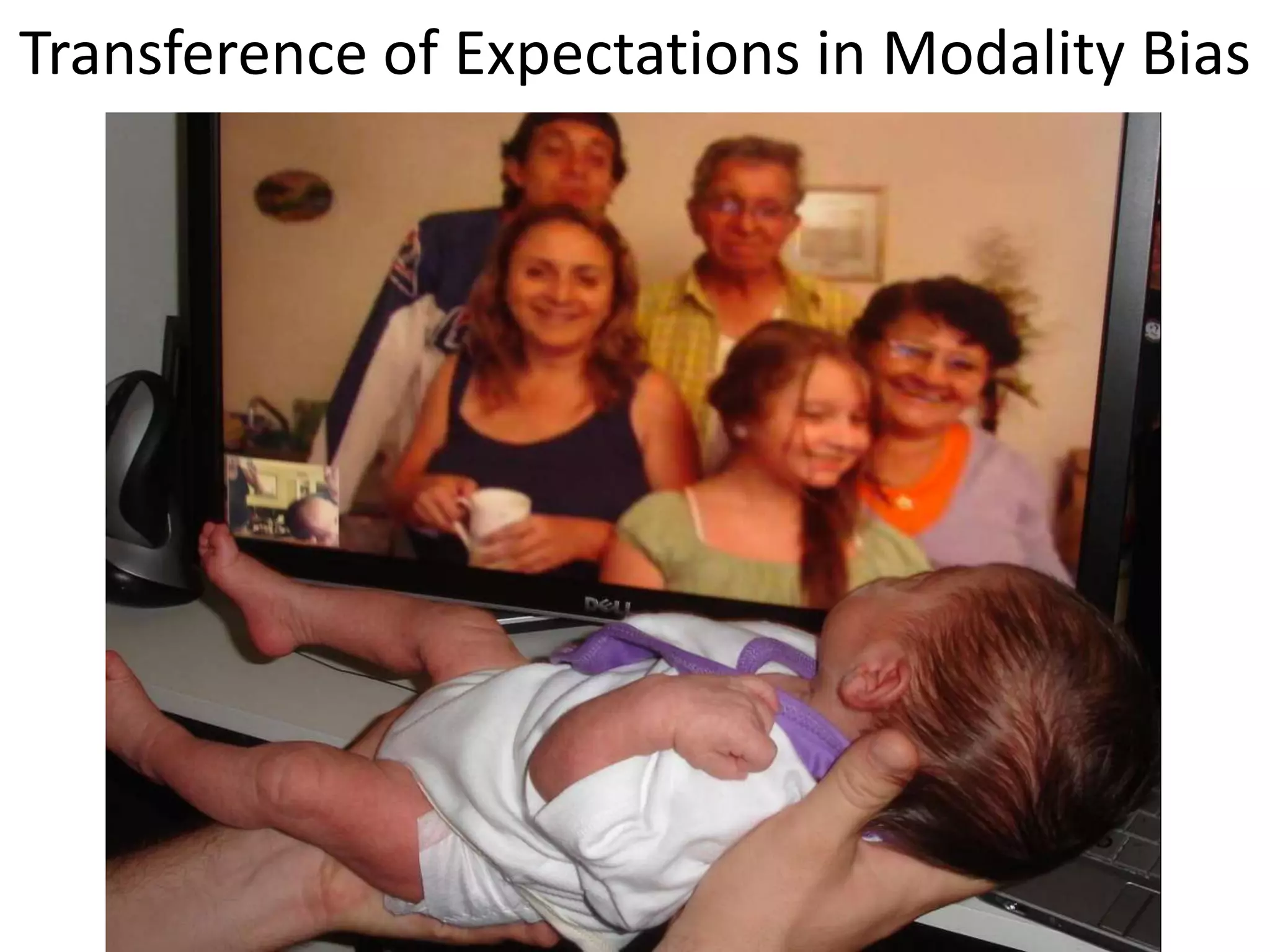
Transference of Expectations in Modality Bias
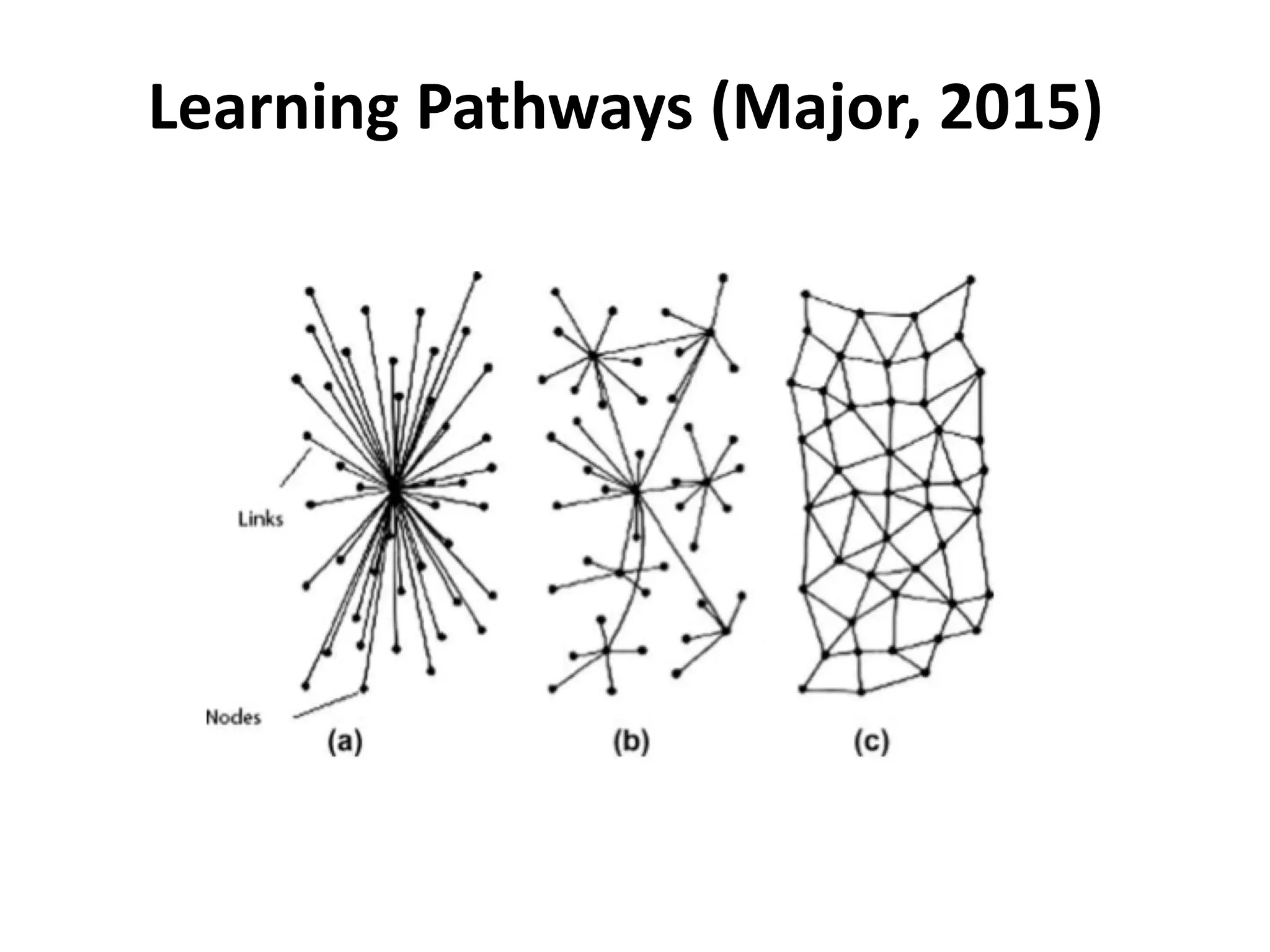
Learning Pathways (Major, 2015)
Flickr@healthbrandon
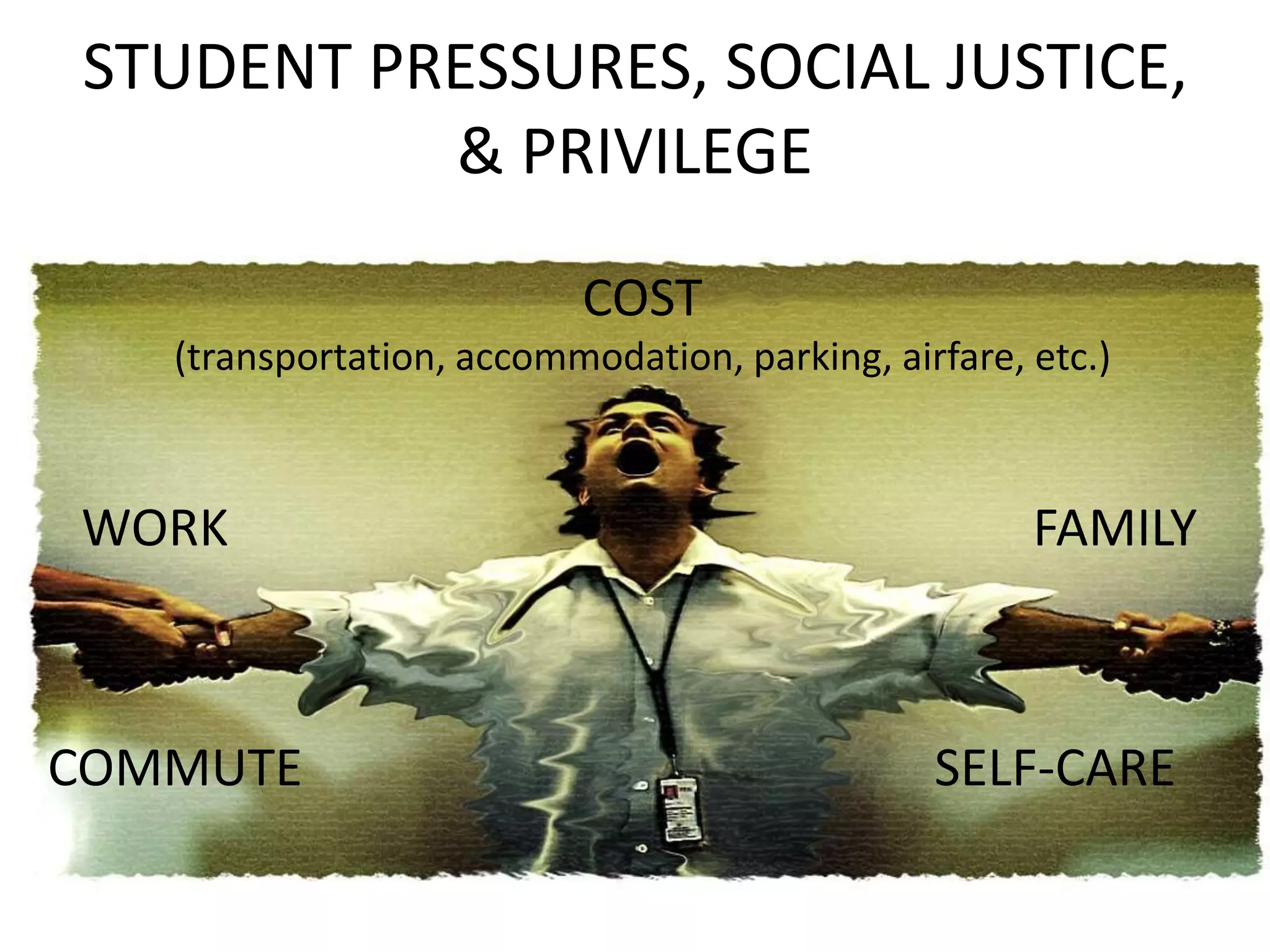
WORK FAMILY
STUDENT PRESSURES, SOCIAL JUSTICE,
& PRIVILEGE
SELF-CARECOMMUTE
COST
(transportation, accommodation, parking, airfare, etc.)
Multi-Access F2F Student
• This course was amazing. It allowed for
freedom of life - the ability to participate
online and face-to-face was essential in life as
a parent, caregiver for an ailing parent and a
full time student.
Learner Preferences for Modality
TOP CHOICE
• 9 out of 15 (60%) ranked multi-access as THE
top choice
• 3 selected blended
• 2 selected F2F
• 1 selected online
Learner Preferences for Modality
TOP CHOICE
• 14 out of 15 (93.3%) chose multi-access (F2F
or remote) as 1st or 2nd choice
Multi-Access Remote Student
• If I lived very close to campus year round, I think I would
have preferred to be in a F2F class or a multi-access class
in which I was in the room. However, I lived in [a town on
the outskirts] and avoiding the 45 minute drive saved me
a lot of money and valuable time that I could spend
being more productive. On top of that, the flexibility that
the multi-access course provided allowed me to move to
another city to prepare for my practicum much further
ahead of schedule than a F2F course would have
permitted. I went to my practicum city 3 weeks before my
start day; while a F2F class would have given me a long
weekend to pack up and move, meet with teachers,
supervisor, and admin, and plan my lessons with no time
to observe.
Learner Perspectives on
Multi-Access Learning
Control
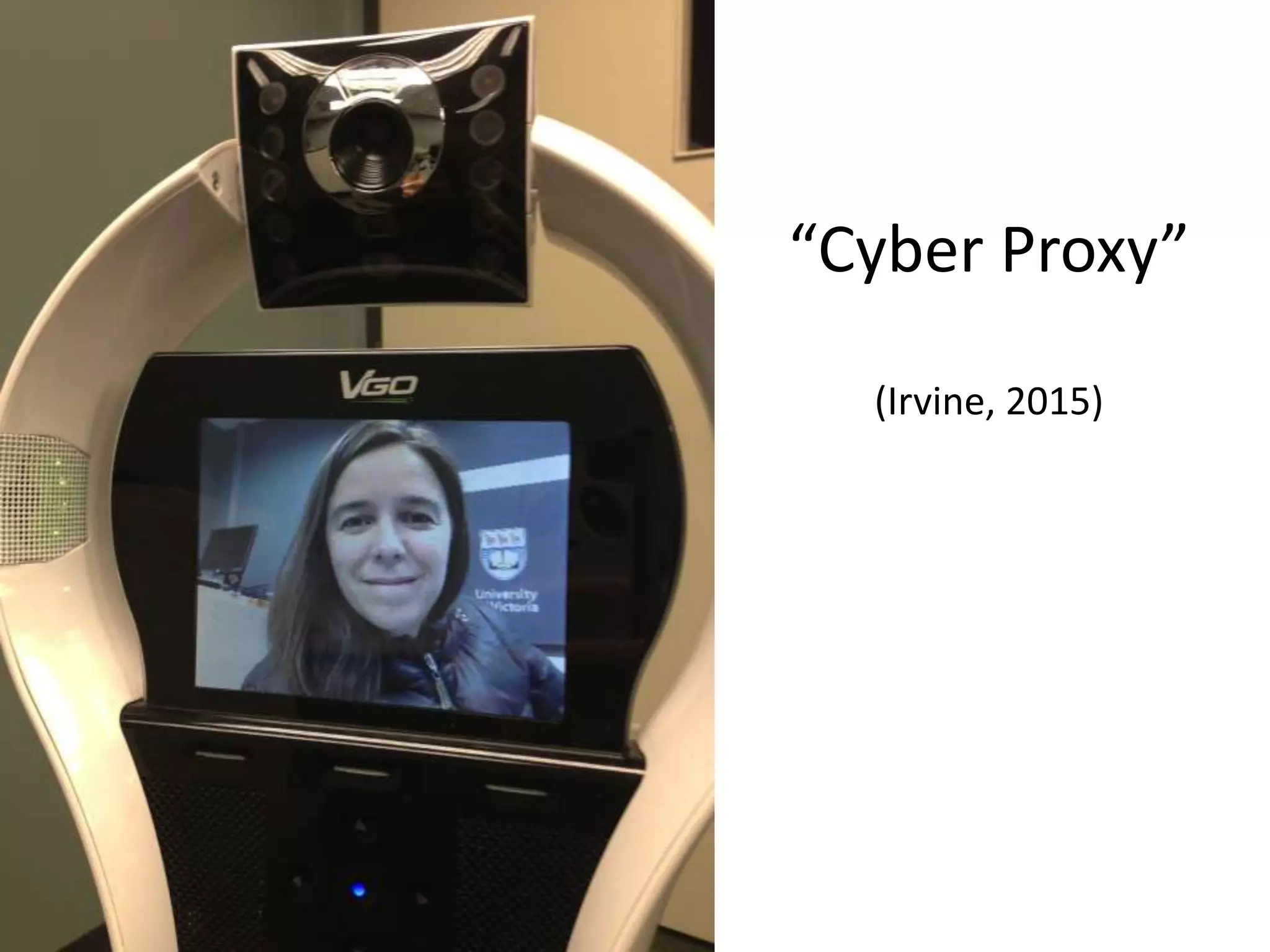
“Cyber Proxy”
(Irvine, 2015)
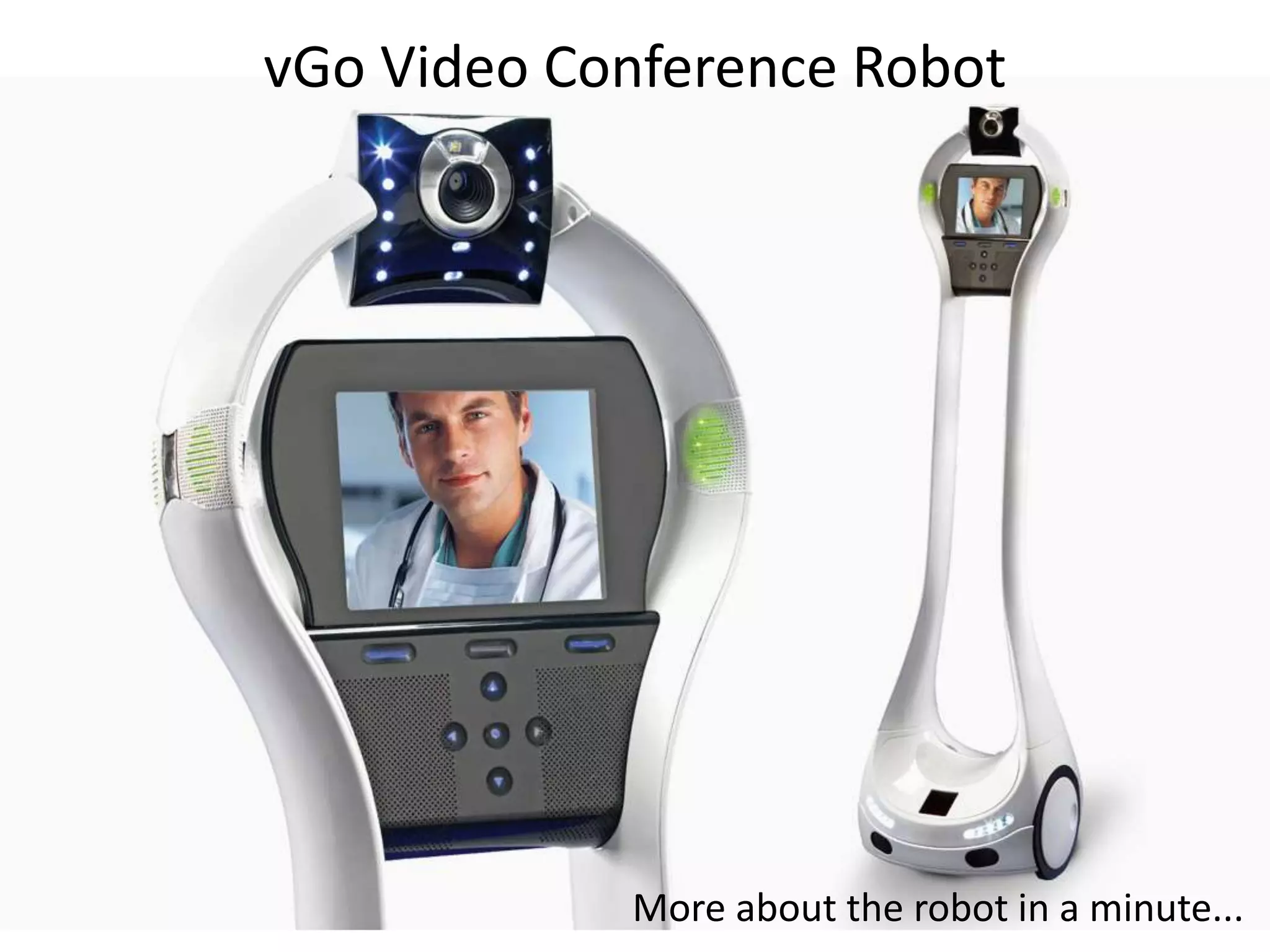
vGo Video Conference Robot
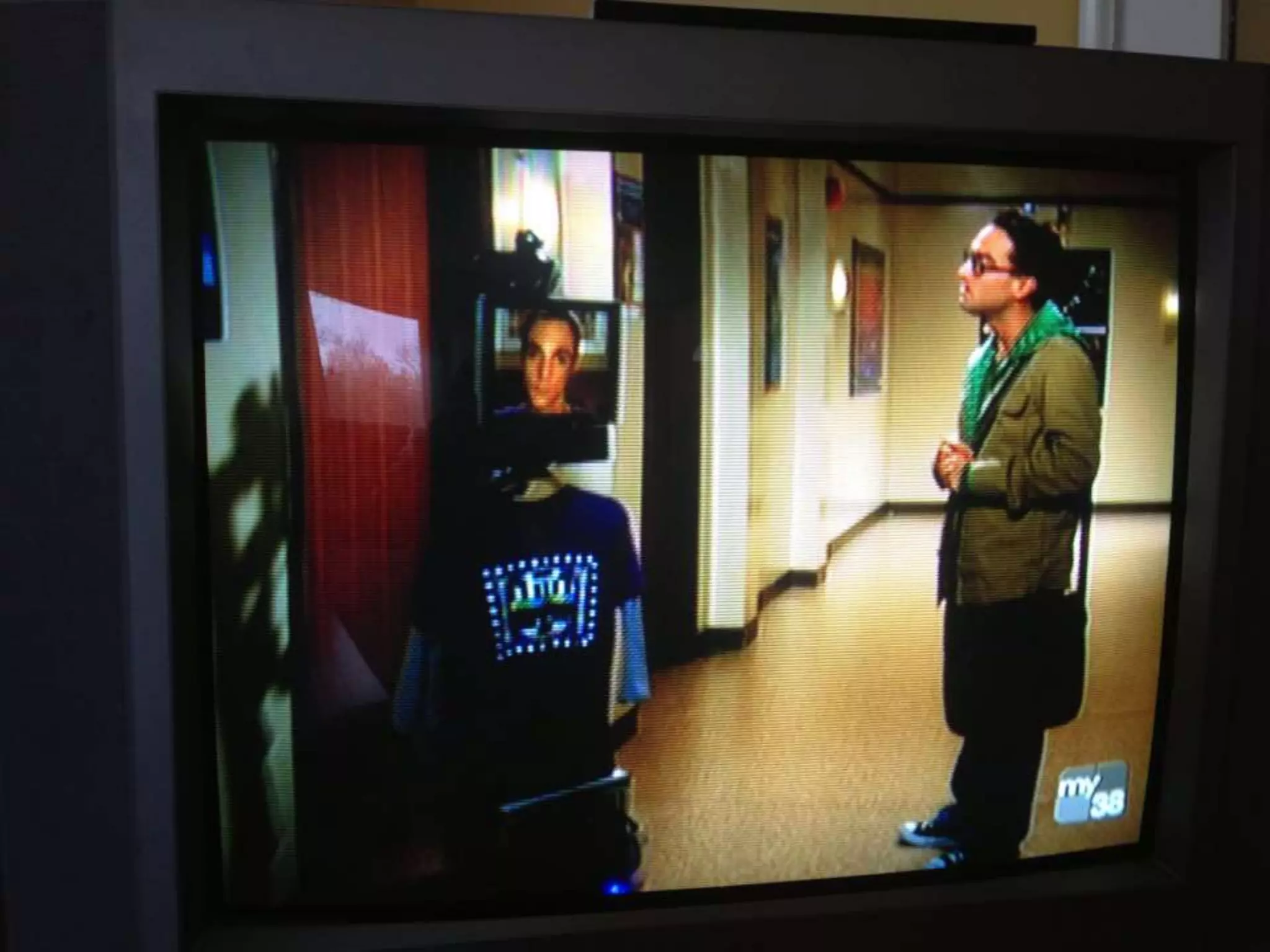
More about the robot in a minute...
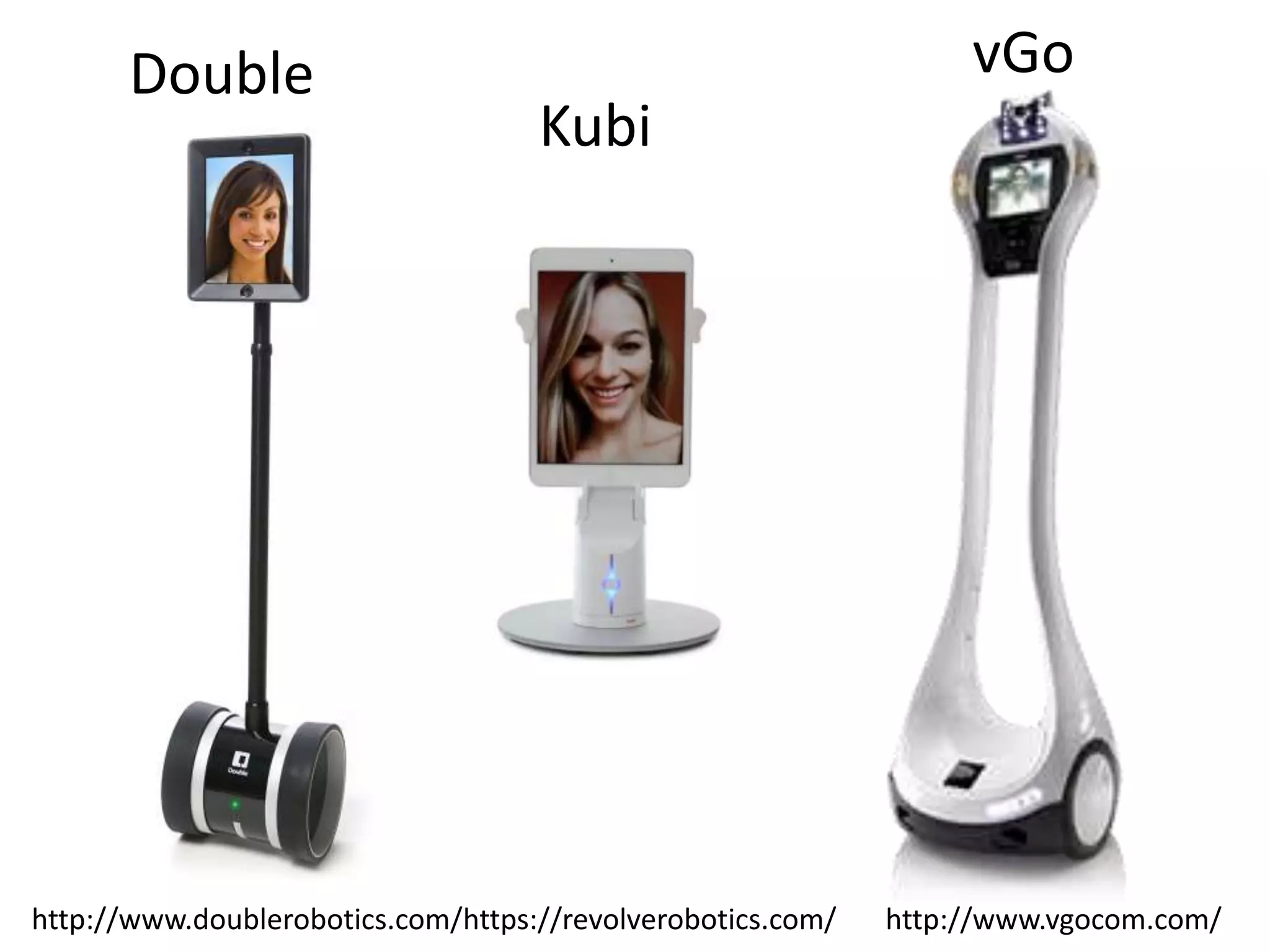
http://www.doublerobotics.com/https://revolverobotics.com/ http://www.vgocom.com/
Kubi
vGoDouble
● Need for Equity Among Access
● Avoid Preferential Treatment
● Policy on Cyber Proxy
https://www.flickr.com/photos/anitasarkeesian/3903166130/
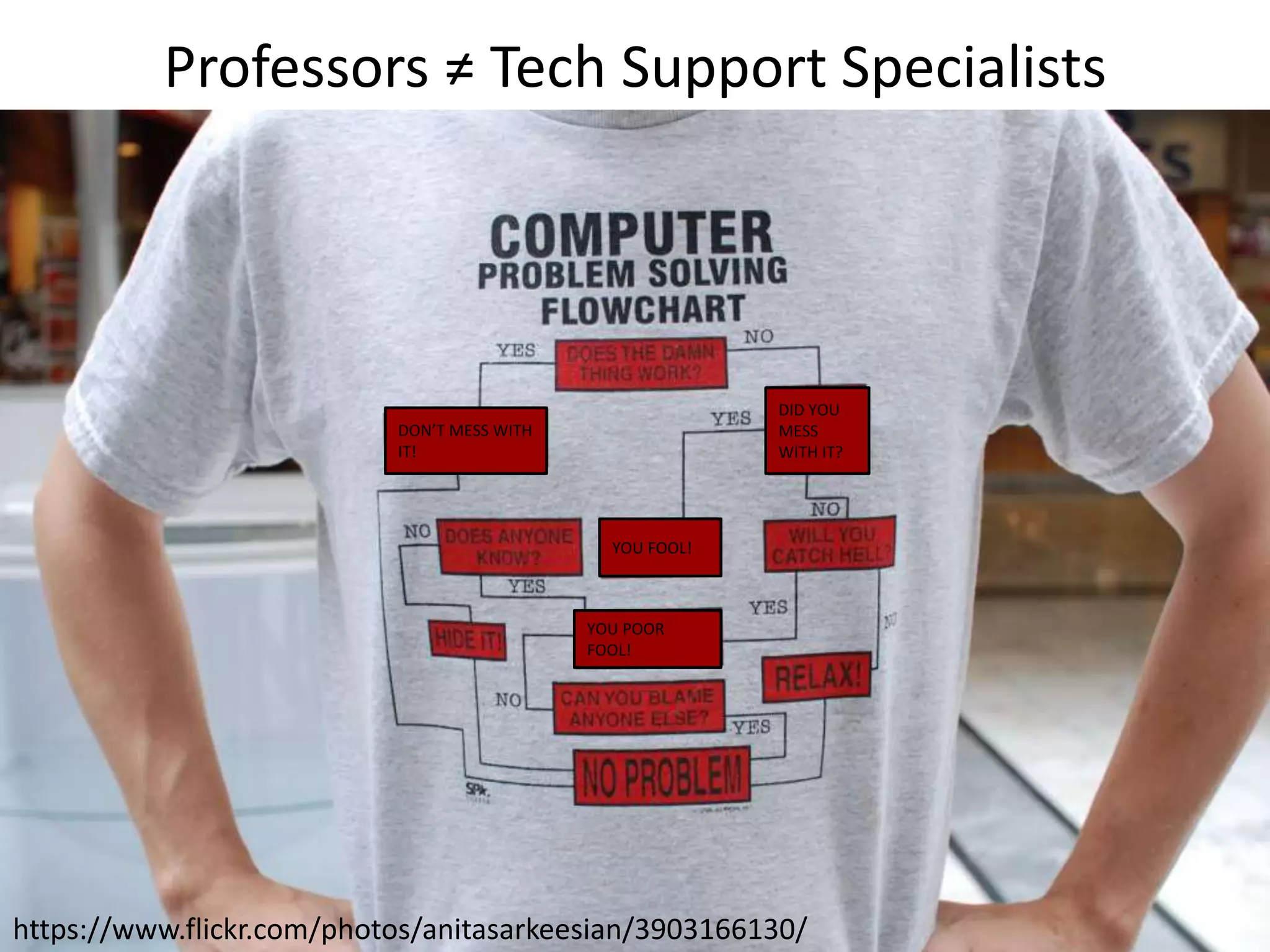
Professors ≠ Tech Support Specialists
YOU FOOL!
YOU POOR
FOOL!
DID YOU
MESS
WITH IT?
DON’T MESS WITH
IT!
The Business Case for Video Conference Robots
http://commons.wikimedia.org/wiki/File:Analyzing_Financial_Data_(5099605
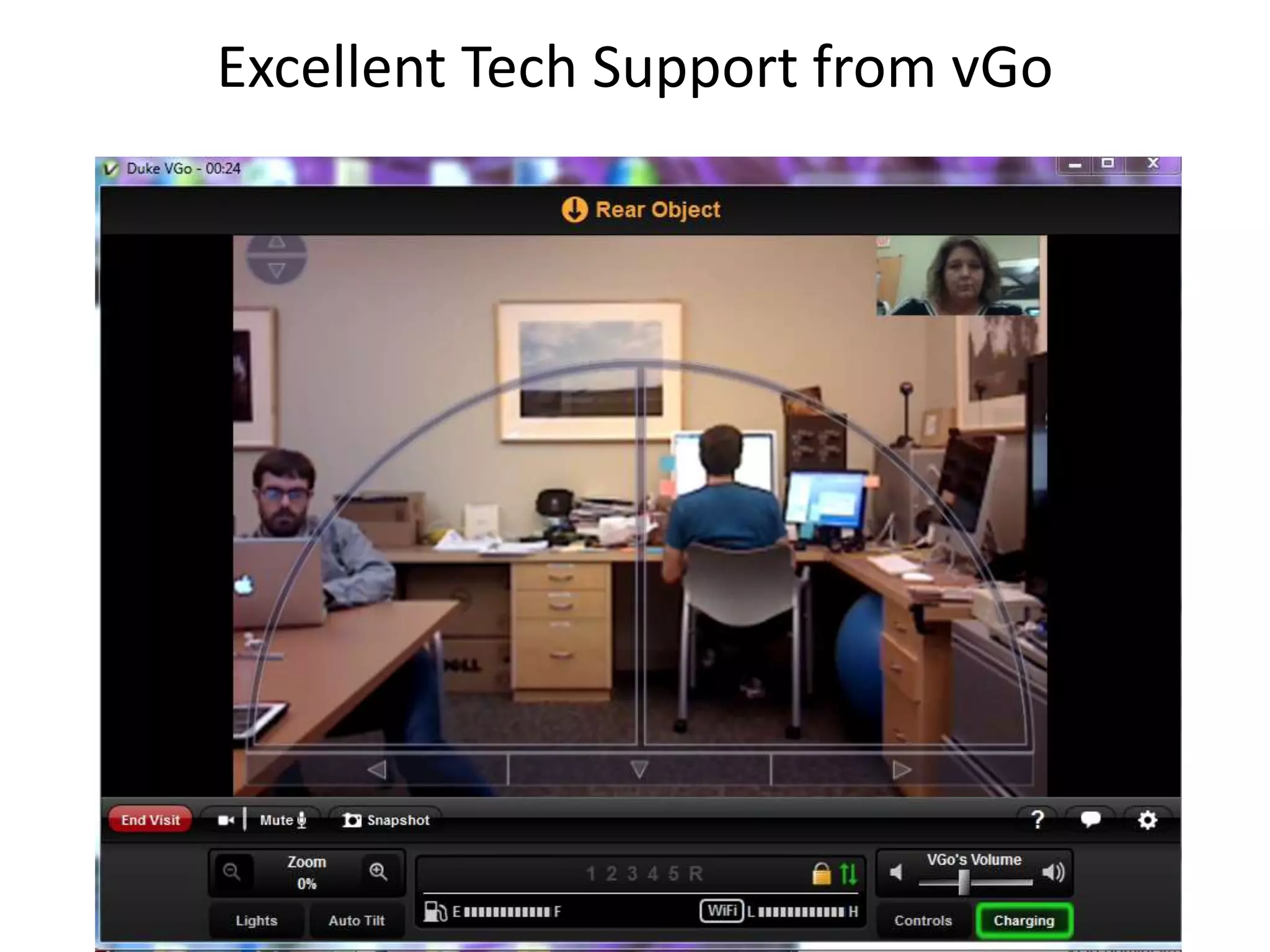
Excellent Tech Support from vGo
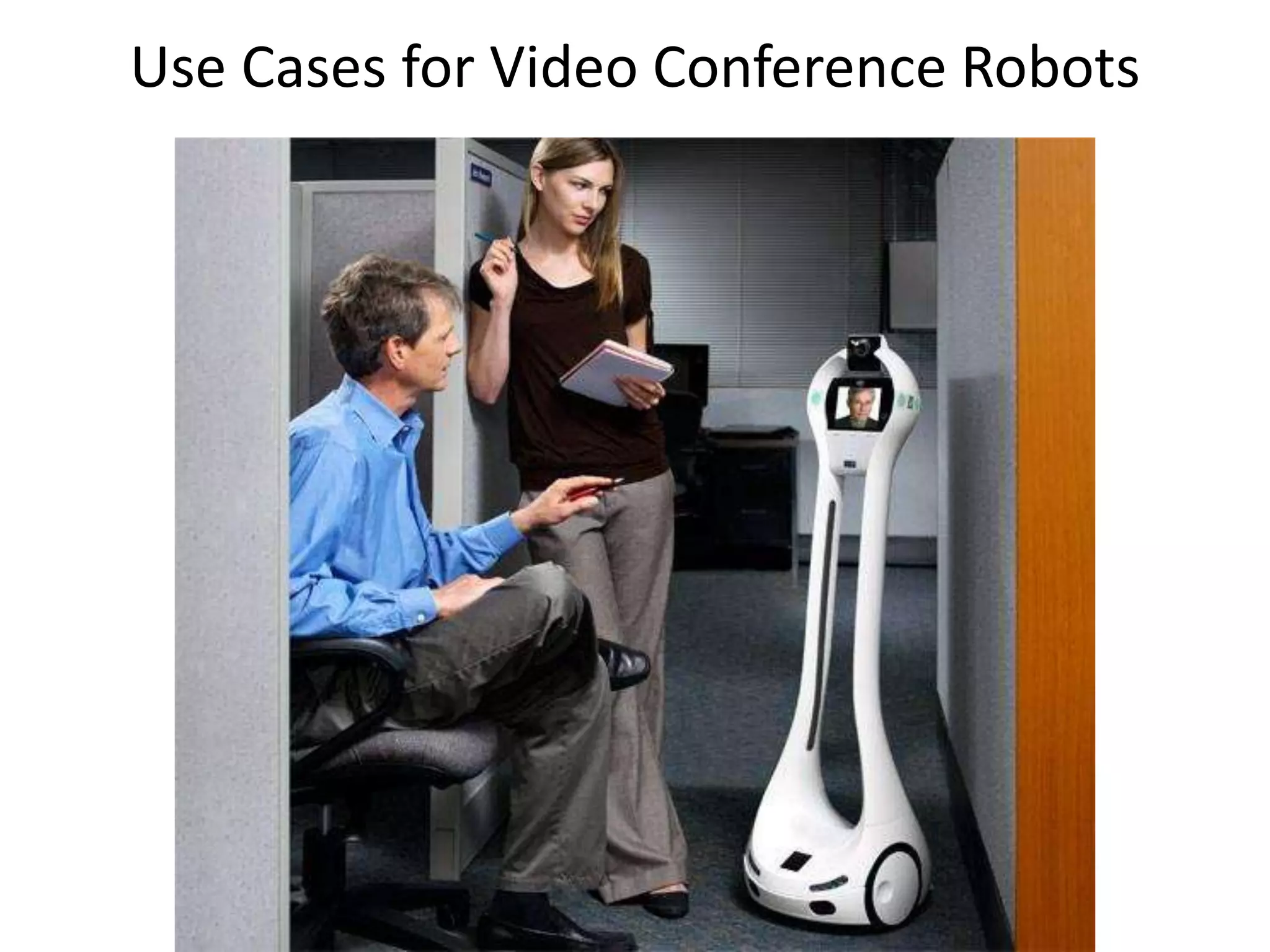
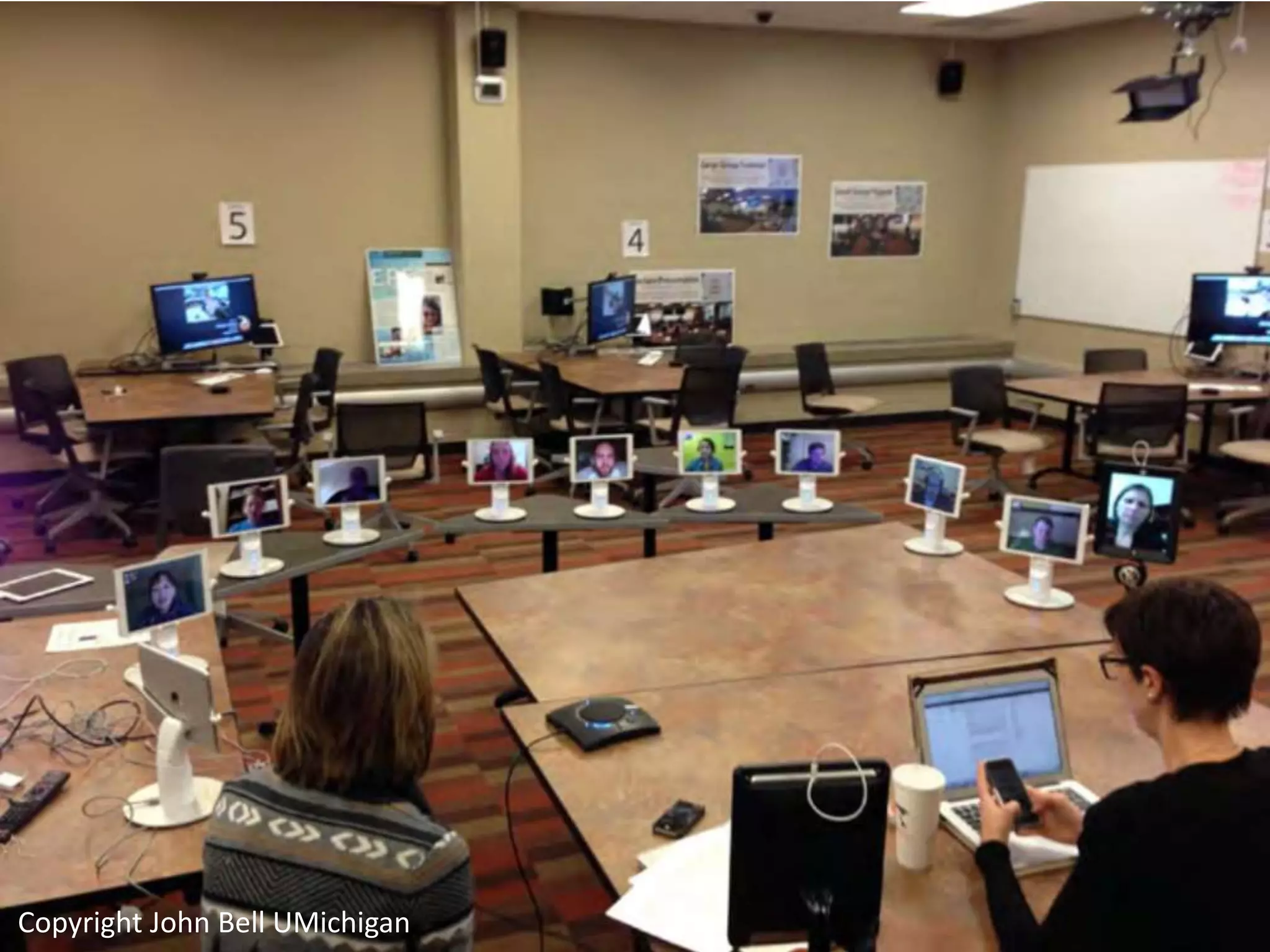
Use Cases for Video Conference Robots
Copyright John Bell UMichigan
7 Instructors Perspectives on
Multi-Access Video
Conference Robots...
“If you had asked me that question two years ago
I would have balked. [Using a VC robot] would be
exciting and challenging. It’s about what we’re
doing, not about the technology. I’d love to see
that in action.
Again I see that as superior to what we’ve
experienced [with BlueJeans], the fact that they
can turn the camera and talk. That more
replicates what we’re trying do in the room.”
“I think in that case where I have one student
coming in or two or three; a small number of
students relative to the number of students in
my class this would be great. Perfect actually,
because you could go out in the hall and work
in a group.”
“The robot to me is an interesting idea. Part of
my thinking is thinking about who are we, so it’s
ontological but what essence or what physicality
is different to me. It wouldn’t bother me, if I had
10 of those it still wouldn’t bother me, it’s just
another way of being.”
“I can just teach normally to them and to them
the same way as this face-to-face student. I don’t
see that being an issue. ”
“Wonderful. I have students all the time who are
sick who skype in. They have to find a friend to
skype them in, but that would be great.”
“I would love to try it as a student. I would love
to try it as a teacher. As long as I have no
responsibility for moving their screens around.”
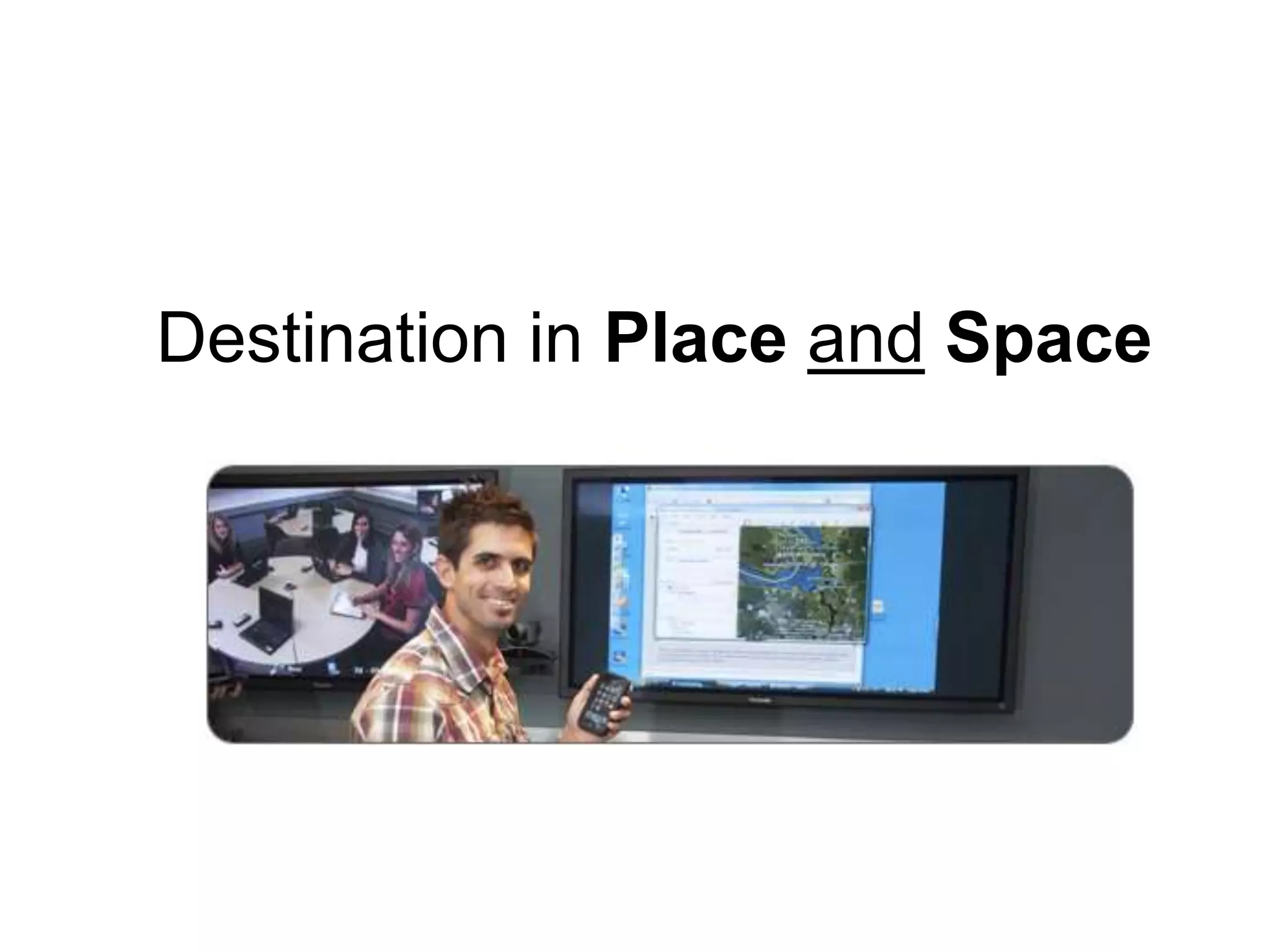
Destination in Place and Space
The distance is nothing when
one has a motive.
~ Jane Austen, Pride and Prejudice
The connectedness and access topics also came up during my
lunch. My friend commented on how disconnected she
felt from others in her class because she was
completing it online. She mentioned how she often
felt “alone” in her program. This really struck a cord
with me. Also being in an online program on
technology, I have never felt disconnected from my
classmates or professor. Our one hour weekly sessions
provide me with the opportunity to connect with my cohort. I
know they are only a tweet, email, or bluejeans session away if I
want to connect with them. Considering that geographically
some of us are hours away from each other, it really speaks to the
design and effectiveness of the program. There is something to
be said for the connectedness technology brings. I also
appreciate that students have the opportunity to be face-to-face
if preferred. In this sense, the course truly is Multi-Access.
Multi-Access Remote
Student
• I think the quality of teaching and learning was not
affected by the course being online. The instructor was
effective in delivering the material and giving appropriate
wait times after asking questions. It was a very
interactive course which I believe would have the same
impact if the course was fully F2F. We are going
towards an online community, and it is great to know
that there are already professors out there that are
equipped with the skills and knowledge to effectively
teach in any setting. Great experience. I wish more
people this year had had the same opportunity.
Multi-Access Remote
Student
• I would say that it enhanced it. I felt like I was
in the class with live video and audio feeds,
but at the same time I had access to review
the teaching materials on my own computer
and expand with my own research during the
class without disrupting the flow of the
lesson. For a long class (3 hours +) the
opportunity to access from home was a huge
advantage because the comfortable setting
allowed me to hold focus and breaks were
more refreshing.
Multi-Access Remote
Student
• I really enjoyed the multi-access experience. I had ongoing
conversations on instant messenger with a classmate
whilst listening and taking in a presentation for example. If
you're in a face-to-face class you can't just pull out your
laptop and start typing because it's rude, but when you're
using multi-access, you can immediately check out any
thought tangents online whilst keeping up with the
presenter. This makes the learning experience fuller,
because you can check things out as you think of them
instead of forgetting them and not getting around to it
after the class is done. I did feel part of the class as well.
Multi-Access Remote
Student
• I also experienced the class from the other side of
the monitor, and I have to say, it feels better on the
technology. I felt the pace of the class was much
slower when I was in the classroom F2F.
• hmmmmm. Personally I am an auditory learner so
this was exponentially better than any previous
online learning courses I have taken.
Multi-Access Remote
Student
• It was fairly neutral, overall. I didn't feel like
it was any better or worse in terms of
learning quality, but I did feel that it was
light years more convenient for me. Grow
this opportunity! Offer these kinds of
course mediums as often as possible! They
really do make the grade, and it makes life
for people in rural areas so much easier and
more affordable!
Multi-Access Remote
Student
• I commend the individuals who
designed and implemented this
course. It was extremely successful,
and accommodated many students
who would have otherwise faced
serious challenges regarding their
living situations.
Multi-Access Remote
Student
• If I lived very close to campus year round, I think I would
have preferred to be in a F2F class or a multi-access class
in which I was in the room. However, I lived in [a town on
the outskirts] and avoiding the 45 minute drive saved me
a lot of money and valuable time that I could spend
being more productive. On top of that, the flexibility that
the multi-access course provided allowed me to move to
another city to prepare for my practicum much further
ahead of schedule than a F2F course would have
permitted. I went to my practicum city 3 weeks before my
start day; while a F2F class would have given me a long
weekend to pack up and move, meet with teachers,
supervisor, and admin, and plan my lessons with no time
to observe.
Multi-Access Remote
Student
• I think it contributes to the quality of
learning because it's differentiated
instruction. By having a multi-access course,
students can choose how to participate. I
felt like my needs were met and the video
enhanced the quality of the teaching and
learning. Without video, I wouldn't be able
to concentrate for 3 hours.
Multi-Access F2F Student
• This course was amazing. It allowed for
freedom of life - the ability to participate
online and face-to-face was essential in life as
a parent, caregiver for an ailing parent and a
full time student.
Multi-Access F2F Student
• I know that the remote group benefitted
from the online aspect of the class for
monetary reasons, which I fully support.
University is expensive, saving money any way
that individuals can, should.”
• “I think [multi-access] would be ESPECIALLY
important for professional development
courses that full-time teachers would want to
take.

Redesign for Multi-Access Learning

  • 1.
    Redesign for Multi-AccessLearning: Implications for Policy, Pedagogy, & Practice Valerie Irvine @_valeriei :: University of Victoria TIE Research Lab July 3, 2015 for University of Saskatchewan #etadsi Flickr@wwward0 CCBYND2.0
  • 2.
    Online/Open Access • #ds106radio •#etadsi • Blue Jeans access • Use gdoc tweeted out
  • 3.
    Q1: Why dowe need to have a required face-to-face experience as a class? Reply with A1: ___ to #csshe2015 & #blended
  • 4.
    Q2: Should aninstitution’s or instructor’s preference override student accessibility? Or student preference of modality? Reply with A2: ___ to #csshe2015 & #blended
  • 5.
    Q3: Does/should modality biasexist? Reply with A3: ___ to #csshe2015 & #blended
  • 6.
    Q4: Should we allowflexibility in modality accessibility (e.g., multi-access)? What are the implications? Reply with A4: ___ to #csshe2015 & #blended
  • 7.
    Responses and resources curatedat google doc URL tweeted out: bit.ly/1PVK26u
  • 8.
    FACE TO FACEONLINEOR
  • 9.
    Face to FaceEnrollment
  • 10.
  • 11.
    FACE TO FACEONLINE*AND*
  • 12.
  • 13.
    Remote Online Pod(3 F2F) F2F On-Campus Pod Remote Online Individuals Blended (F2F & Online)
  • 14.
    Who Controls theBlend? Is Blended an Instructional Experience or a Learner Experience?
  • 15.
    WHY BLENDED? Are wejust talking tech-mediated? –No increased access to learning afforded by blended learning –Only those learners who are able to access on-campus learning can benefit from blended
  • 17.
    Can Blended MeetMobility Needs? NO
  • 18.
    Do we redefineblended to include merging modalities? NO. We don’t say snowboarding is the new skiing.
  • 19.
    CLARITY Program Delivery The cohortwill include face-to-face instruction in courses taught in a centrally- located Vancouver site and flexible, blended formats that mix on-site and online learning.
  • 23.
    Irvine, V. (2013).Multi-Access Learning
  • 28.
  • 29.
    #whythatseat? Realigning Higher Edfor the 21st Century Learner Through Multi-Access Learning Dr. Valerie Irvine @_valeriei
  • 30.
    The Technology Integrationand Evaluation (TIE) Research Lab
  • 31.
  • 33.
    The connectedness andaccess topics also came up during my lunch. My friend commented on how disconnected she felt from others in her class because she was completing it online. She mentioned how she often felt “alone” in her program. This really struck a cord with me. Also being in an online program on technology, I have never felt disconnected from my classmates or professor. Our one hour weekly sessions provide me with the opportunity to connect with my cohort. I know they are only a tweet, email, or bluejeans session away if I want to connect with them. Considering that geographically some of us are hours away from each other, it really speaks to the design and effectiveness of the program. There is something to be said for the connectedness technology brings. I also appreciate that students have the opportunity to be face-to-face if preferred. In this sense, the course truly is Multi-Access.
  • 35.
  • 37.
  • 38.
  • 39.
    WORK FAMILY STUDENT PRESSURES,SOCIAL JUSTICE, & PRIVILEGE SELF-CARECOMMUTE COST (transportation, accommodation, parking, airfare, etc.)
  • 40.
    Multi-Access F2F Student •This course was amazing. It allowed for freedom of life - the ability to participate online and face-to-face was essential in life as a parent, caregiver for an ailing parent and a full time student.
  • 41.
    Learner Preferences forModality TOP CHOICE • 9 out of 15 (60%) ranked multi-access as THE top choice • 3 selected blended • 2 selected F2F • 1 selected online
  • 42.
    Learner Preferences forModality TOP CHOICE • 14 out of 15 (93.3%) chose multi-access (F2F or remote) as 1st or 2nd choice
  • 45.
    Multi-Access Remote Student •If I lived very close to campus year round, I think I would have preferred to be in a F2F class or a multi-access class in which I was in the room. However, I lived in [a town on the outskirts] and avoiding the 45 minute drive saved me a lot of money and valuable time that I could spend being more productive. On top of that, the flexibility that the multi-access course provided allowed me to move to another city to prepare for my practicum much further ahead of schedule than a F2F course would have permitted. I went to my practicum city 3 weeks before my start day; while a F2F class would have given me a long weekend to pack up and move, meet with teachers, supervisor, and admin, and plan my lessons with no time to observe.
  • 70.
  • 73.
  • 74.
  • 76.
    vGo Video ConferenceRobot More about the robot in a minute...
  • 77.
  • 78.
    ● Need forEquity Among Access ● Avoid Preferential Treatment ● Policy on Cyber Proxy
  • 80.
    https://www.flickr.com/photos/anitasarkeesian/3903166130/ Professors ≠ TechSupport Specialists YOU FOOL! YOU POOR FOOL! DID YOU MESS WITH IT? DON’T MESS WITH IT!
  • 81.
    The Business Casefor Video Conference Robots http://commons.wikimedia.org/wiki/File:Analyzing_Financial_Data_(5099605
  • 82.
  • 83.
    Use Cases forVideo Conference Robots
  • 85.
  • 86.
    7 Instructors Perspectiveson Multi-Access Video Conference Robots...
  • 87.
    “If you hadasked me that question two years ago I would have balked. [Using a VC robot] would be exciting and challenging. It’s about what we’re doing, not about the technology. I’d love to see that in action. Again I see that as superior to what we’ve experienced [with BlueJeans], the fact that they can turn the camera and talk. That more replicates what we’re trying do in the room.”
  • 88.
    “I think inthat case where I have one student coming in or two or three; a small number of students relative to the number of students in my class this would be great. Perfect actually, because you could go out in the hall and work in a group.”
  • 89.
    “The robot tome is an interesting idea. Part of my thinking is thinking about who are we, so it’s ontological but what essence or what physicality is different to me. It wouldn’t bother me, if I had 10 of those it still wouldn’t bother me, it’s just another way of being.”
  • 90.
    “I can justteach normally to them and to them the same way as this face-to-face student. I don’t see that being an issue. ” “Wonderful. I have students all the time who are sick who skype in. They have to find a friend to skype them in, but that would be great.” “I would love to try it as a student. I would love to try it as a teacher. As long as I have no responsibility for moving their screens around.”
  • 91.
  • 92.
    The distance isnothing when one has a motive. ~ Jane Austen, Pride and Prejudice
  • 93.
    The connectedness andaccess topics also came up during my lunch. My friend commented on how disconnected she felt from others in her class because she was completing it online. She mentioned how she often felt “alone” in her program. This really struck a cord with me. Also being in an online program on technology, I have never felt disconnected from my classmates or professor. Our one hour weekly sessions provide me with the opportunity to connect with my cohort. I know they are only a tweet, email, or bluejeans session away if I want to connect with them. Considering that geographically some of us are hours away from each other, it really speaks to the design and effectiveness of the program. There is something to be said for the connectedness technology brings. I also appreciate that students have the opportunity to be face-to-face if preferred. In this sense, the course truly is Multi-Access.
  • 94.
    Multi-Access Remote Student • Ithink the quality of teaching and learning was not affected by the course being online. The instructor was effective in delivering the material and giving appropriate wait times after asking questions. It was a very interactive course which I believe would have the same impact if the course was fully F2F. We are going towards an online community, and it is great to know that there are already professors out there that are equipped with the skills and knowledge to effectively teach in any setting. Great experience. I wish more people this year had had the same opportunity.
  • 95.
    Multi-Access Remote Student • Iwould say that it enhanced it. I felt like I was in the class with live video and audio feeds, but at the same time I had access to review the teaching materials on my own computer and expand with my own research during the class without disrupting the flow of the lesson. For a long class (3 hours +) the opportunity to access from home was a huge advantage because the comfortable setting allowed me to hold focus and breaks were more refreshing.
  • 96.
    Multi-Access Remote Student • Ireally enjoyed the multi-access experience. I had ongoing conversations on instant messenger with a classmate whilst listening and taking in a presentation for example. If you're in a face-to-face class you can't just pull out your laptop and start typing because it's rude, but when you're using multi-access, you can immediately check out any thought tangents online whilst keeping up with the presenter. This makes the learning experience fuller, because you can check things out as you think of them instead of forgetting them and not getting around to it after the class is done. I did feel part of the class as well.
  • 97.
    Multi-Access Remote Student • Ialso experienced the class from the other side of the monitor, and I have to say, it feels better on the technology. I felt the pace of the class was much slower when I was in the classroom F2F. • hmmmmm. Personally I am an auditory learner so this was exponentially better than any previous online learning courses I have taken.
  • 98.
    Multi-Access Remote Student • Itwas fairly neutral, overall. I didn't feel like it was any better or worse in terms of learning quality, but I did feel that it was light years more convenient for me. Grow this opportunity! Offer these kinds of course mediums as often as possible! They really do make the grade, and it makes life for people in rural areas so much easier and more affordable!
  • 99.
    Multi-Access Remote Student • Icommend the individuals who designed and implemented this course. It was extremely successful, and accommodated many students who would have otherwise faced serious challenges regarding their living situations.
  • 100.
    Multi-Access Remote Student • IfI lived very close to campus year round, I think I would have preferred to be in a F2F class or a multi-access class in which I was in the room. However, I lived in [a town on the outskirts] and avoiding the 45 minute drive saved me a lot of money and valuable time that I could spend being more productive. On top of that, the flexibility that the multi-access course provided allowed me to move to another city to prepare for my practicum much further ahead of schedule than a F2F course would have permitted. I went to my practicum city 3 weeks before my start day; while a F2F class would have given me a long weekend to pack up and move, meet with teachers, supervisor, and admin, and plan my lessons with no time to observe.
  • 101.
    Multi-Access Remote Student • Ithink it contributes to the quality of learning because it's differentiated instruction. By having a multi-access course, students can choose how to participate. I felt like my needs were met and the video enhanced the quality of the teaching and learning. Without video, I wouldn't be able to concentrate for 3 hours.
  • 102.
    Multi-Access F2F Student •This course was amazing. It allowed for freedom of life - the ability to participate online and face-to-face was essential in life as a parent, caregiver for an ailing parent and a full time student.
  • 103.
    Multi-Access F2F Student •I know that the remote group benefitted from the online aspect of the class for monetary reasons, which I fully support. University is expensive, saving money any way that individuals can, should.” • “I think [multi-access] would be ESPECIALLY important for professional development courses that full-time teachers would want to take.