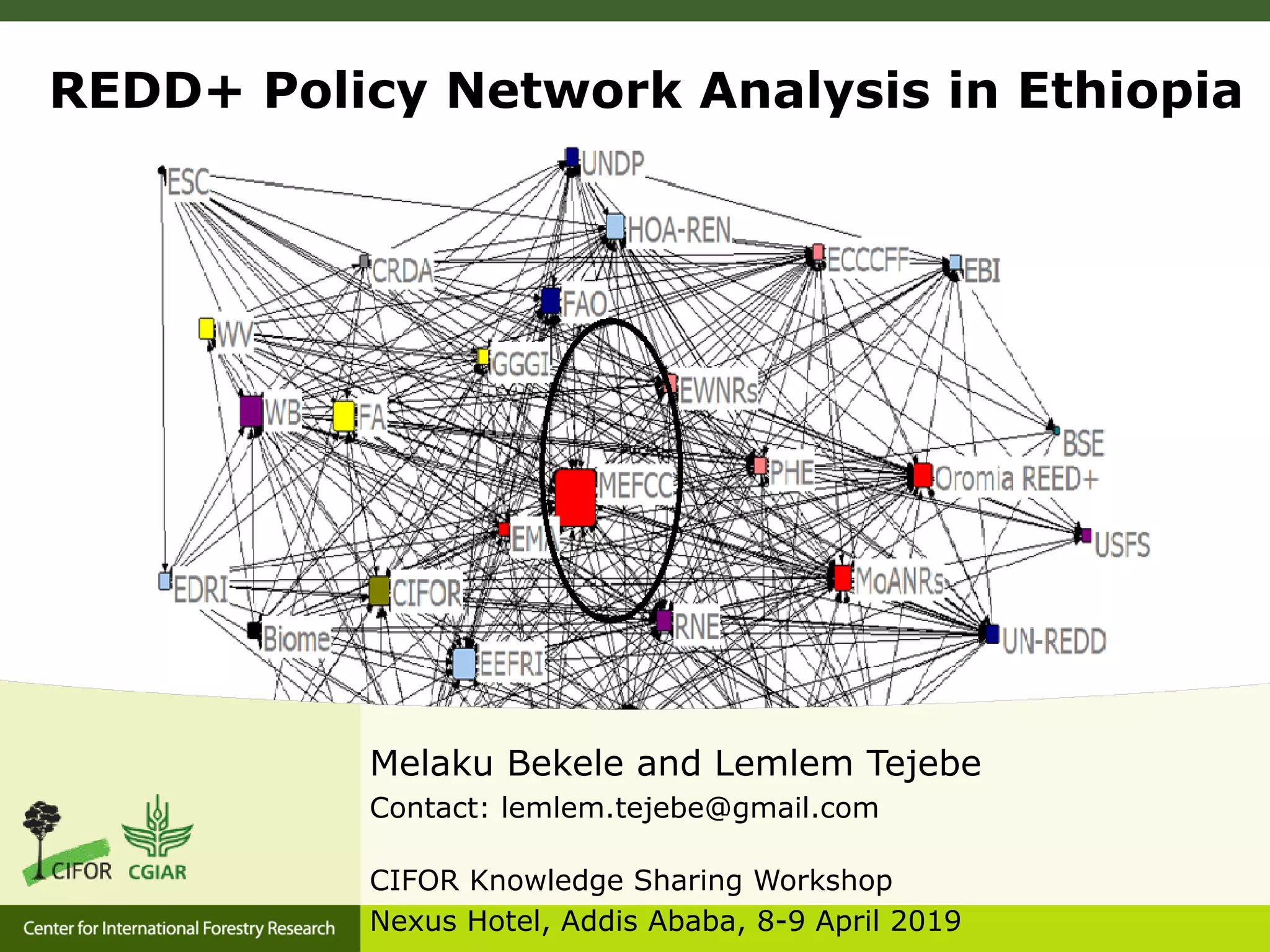
REDD+ Policy Network Analysis in Ethiopia
Melaku Bekele and Lemlem Tejebe
Contact: lemlem.tejebe@gmail.com
CIFOR Knowledge Sharing Workshop
Nexus Hotel, Addis Ababa, 8-9 April 2019
Method: Data Collection
REDD+ actors identified in consultation with national REDD+
secretariat and several NGOs
 REDD+ Actors
• 33 Organizations in structured interviews
• 30% of those involved in semi-structured interviews
• Senior and mid-level experts were interviewed
• Interviews conducted from June to November 2017
 Missing information from WB, USFS
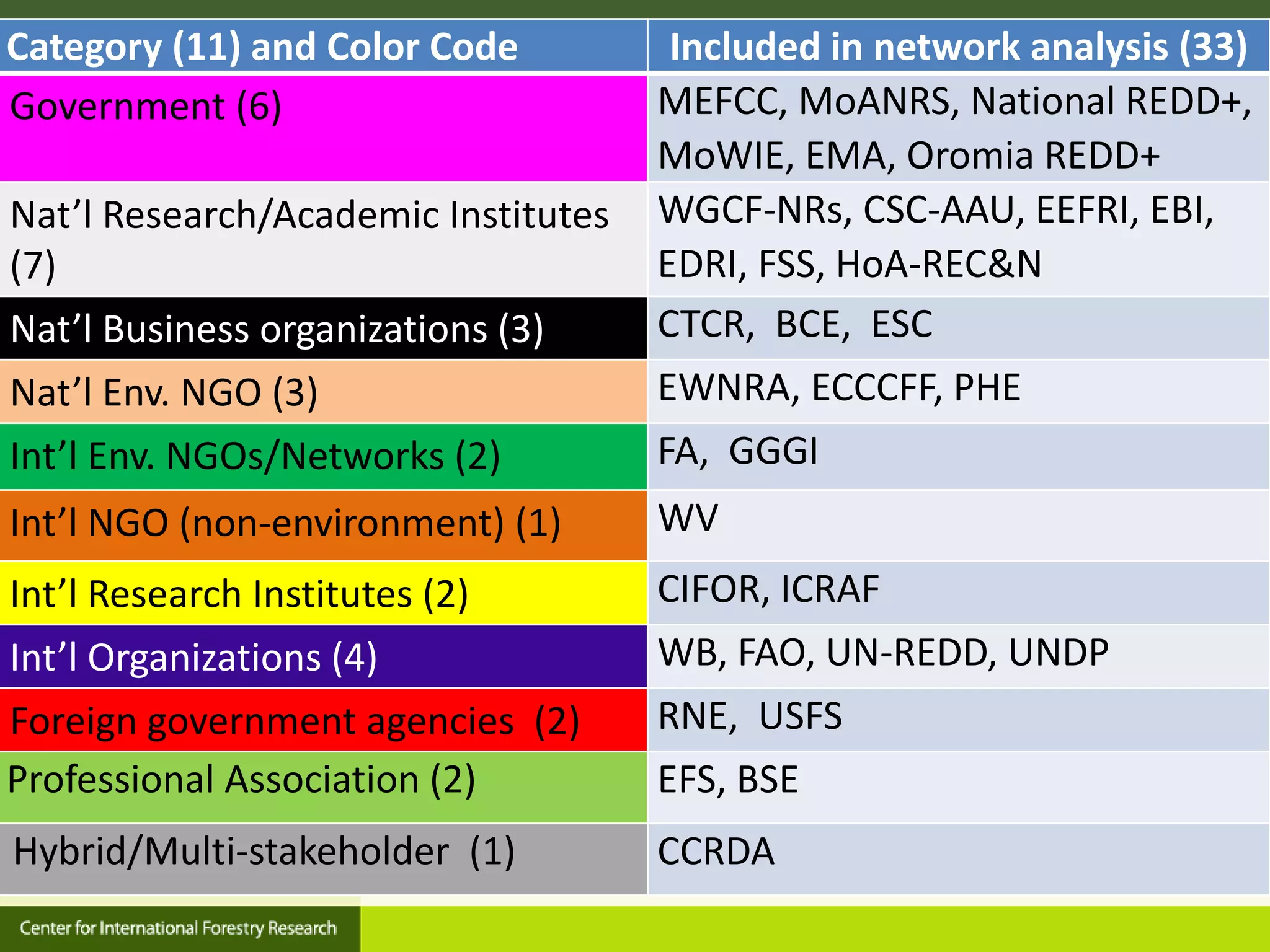
Category (11) and Color Code Included in network analysis (33)
Government (6) MEFCC, MoANRS, National REDD+,
MoWIE, EMA, Oromia REDD+
Nat’l Research/Academic Institutes
(7)
WGCF-NRs, CSC-AAU, EEFRI, EBI,
EDRI, FSS, HoA-REC&N
Nat’l Business organizations (3) CTCR, BCE, ESC
Nat’l Env. NGO (3) EWNRA, ECCCFF, PHE
Int’l Env. NGOs/Networks (2) FA, GGGI
Int’l NGO (non-environment) (1) WV
Int’l Research Institutes (2) CIFOR, ICRAF
Int’l Organizations (4) WB, FAO, UN-REDD, UNDP
Foreign government agencies (2) RNE, USFS
Professional Association (2) EFS, BSE
Hybrid/Multi-stakeholder (1) CCRDA
Results and Discussions
Power Relations among Actors
 Measured by
“Indegree” = An actor
who receives many
ties from other
actors
 26 out of 33 indicates
MEFCC as an
influential actor in
Domestic REDD+
policies.
 Followed by WB,
MoANRs, Oromia
REDD+, RNE,
MoWIE and National
REDD+ Secretariat.
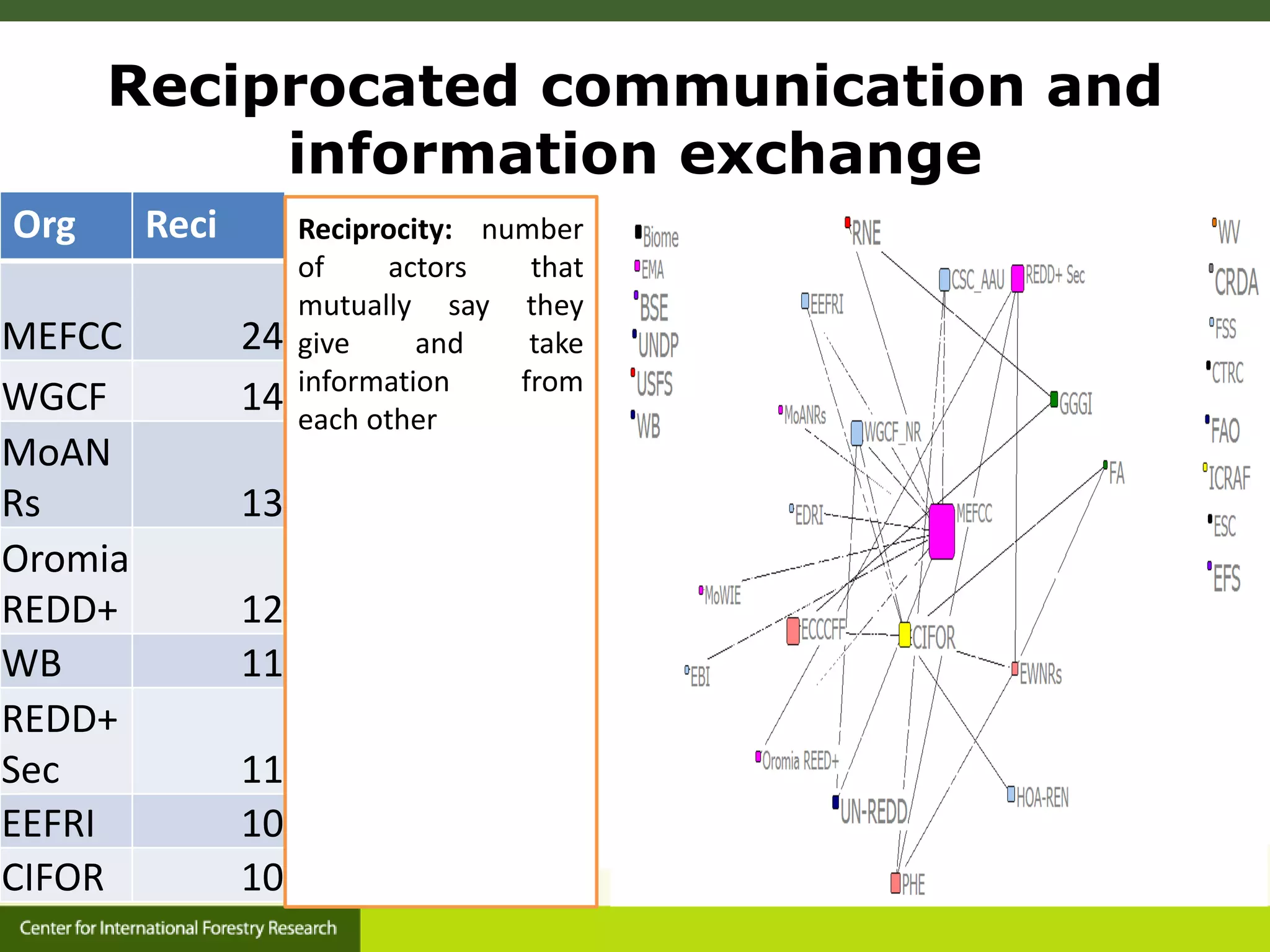
Reciprocated communication and
information exchange
Org Reci
MEFCC 24
WGCF 14
MoAN
Rs 13
Oromia
REDD+ 12
WB 11
REDD+
Sec 11
EEFRI 10
CIFOR 10
Reciprocity: number
of actors that
mutually say they
give and take
information from
each other
Reciprocated communication ..
 Private sectors, professional associations and hybrid/multi
stakeholder groups do not have a reciprocated relation with
others.
 Governmental institution mostly exchanges information with
national research and academic institution and other
governmental institutions.
Brokerage of information
 Actors without direct
information exchange,
indirectly gain information
through the bridging actors
or brokers.
 Brokerage: Actors who gets
info from the source and
give info to
Brokerage of information
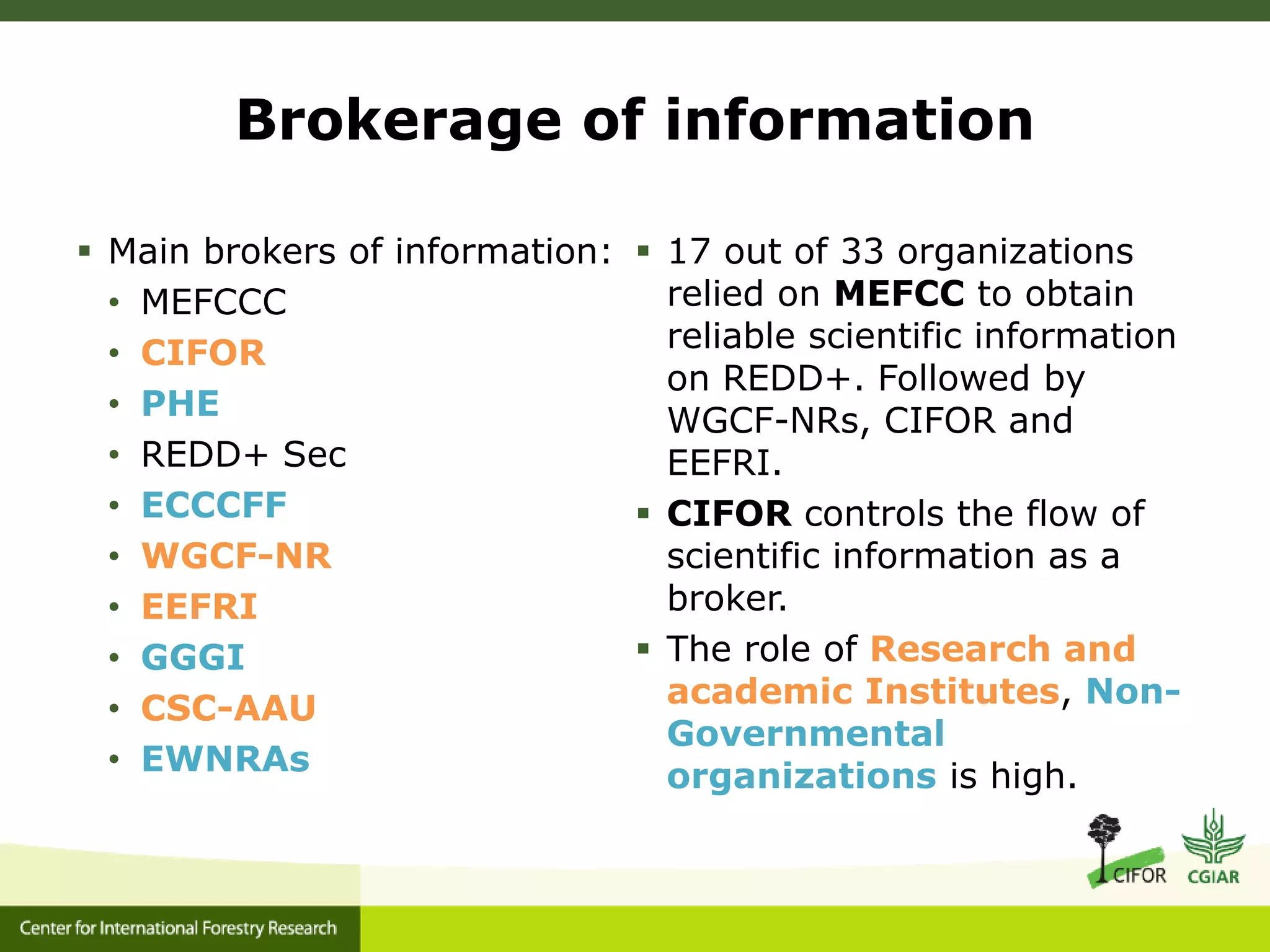
 Main brokers of information:
• MEFCCC
• CIFOR
• PHE
• REDD+ Sec
• ECCCFF
• WGCF-NR
• EEFRI
• GGGI
• CSC-AAU
• EWNRAs
 17 out of 33 organizations
relied on MEFCC to obtain
reliable scientific information
on REDD+. Followed by
WGCF-NRs, CIFOR and
EEFRI.
 CIFOR controls the flow of
scientific information as a
broker.
 The role of Research and
academic Institutes, Non-
Governmental
organizations is high.
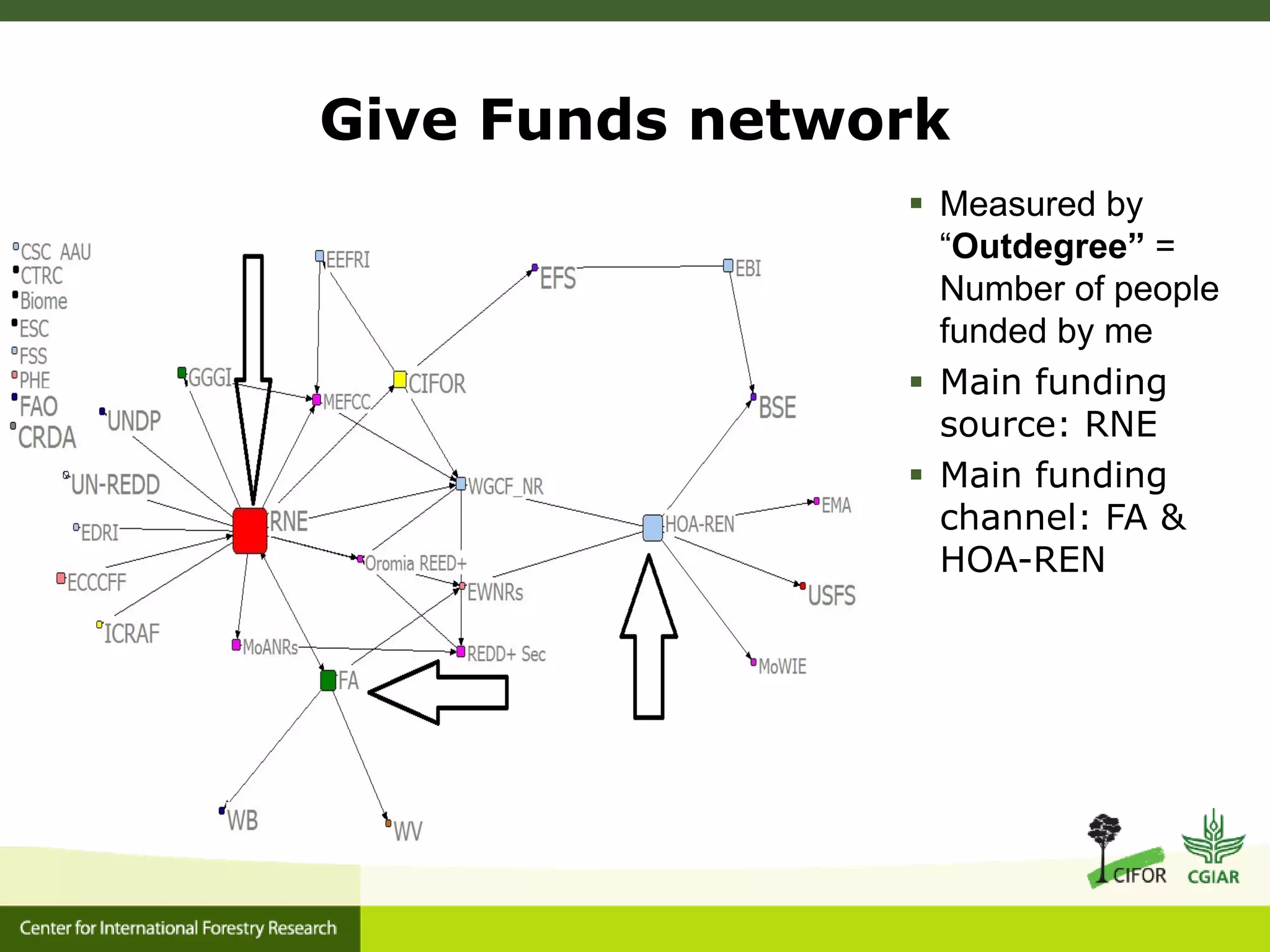
Give Funds network
 Measured by
“Outdegree” =
Number of people
funded by me
 Main funding
source: RNE
 Main funding
channel: FA &
HOA-REN
Disagreements in 2017
 Not so many
disagreements..
• MEFCC and
MoANRs are the
most influential
actors, and the
focus of some
disagreements
• Can be a useful
discussion point
for us
Actor Interest and Effort in REDD+ Activities
High interests and efforts Low interest and efforts
• Forest conservation
• Design of national and sub-
national level REDD+
strategies
• Tenure Rights (land, trees)
• Biodiversity conservation
• Poverty alleviation
• Adaptation to climate change
• Community-based forest
management
• Sustainable logging
• REDD+ policy design
at the international
level
• REDD+
Implementation at the
site level
• Forest governance
• Carbon financing/
trading
List of REDD+ activities where REDD+ actors in Ethiopia show
high vs. low interest and efforts
Actor Interest and Effort in REDD+ Activities
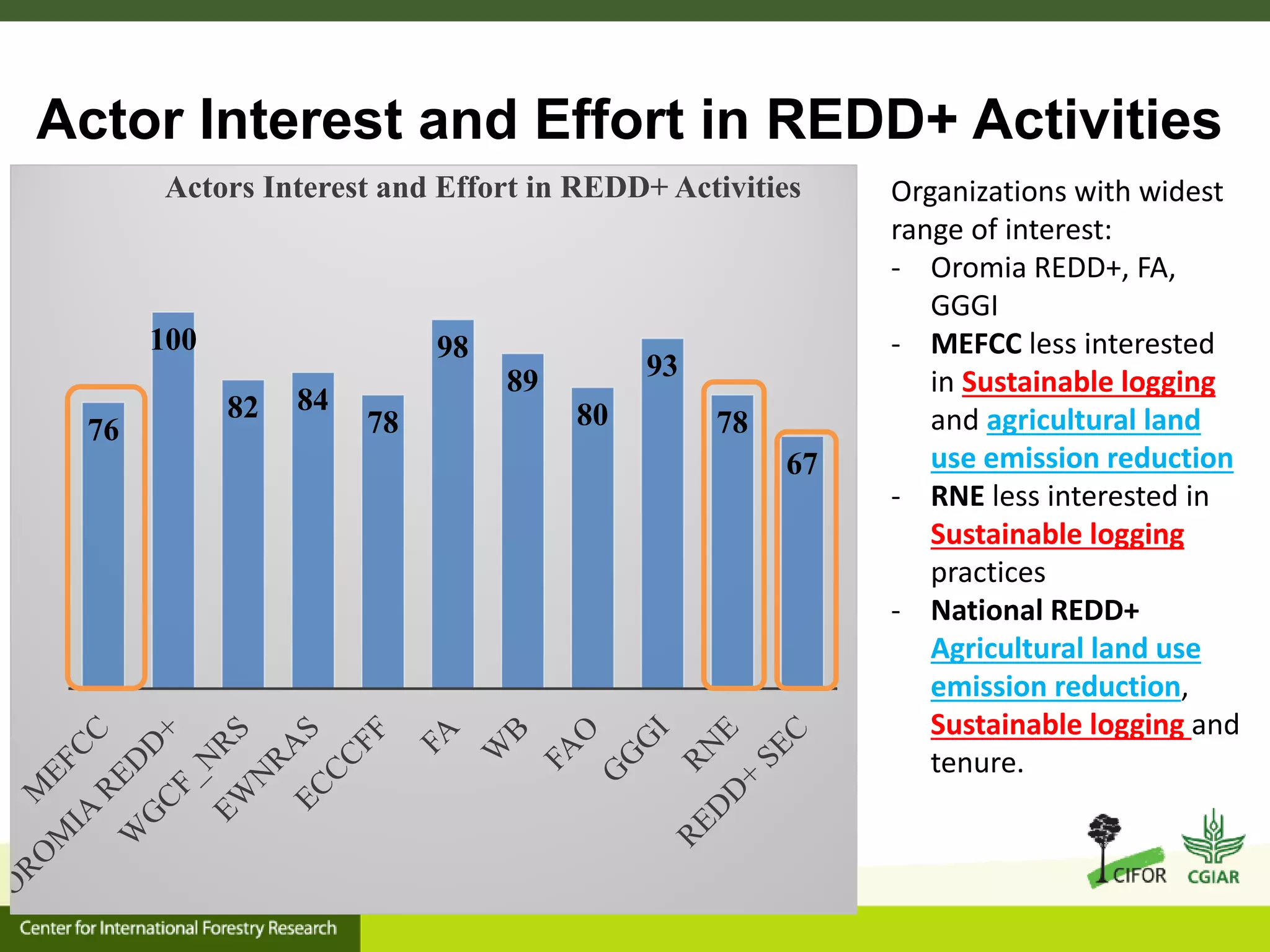
Organizations with widest
range of interest:
- Oromia REDD+, FA,
GGGI
- MEFCC less interested
in Sustainable logging
and agricultural land
use emission reduction
- RNE less interested in
Sustainable logging
practices
- National REDD+
Agricultural land use
emission reduction,
Sustainable logging and
tenure.
76
100
82 84
78
98
89
80
93
78
67
Actors Interest and Effort in REDD+ Activities
Challenges for an effective REDD+
national implementation
1. Lack of knowledge and awareness on REDD+
2. Lack effective coordination between state agencies, the
private sector, and civil society
3. Problem in effectively addressing main drivers of deforestation
and clarification of Tenure right
Conclusion
 The ball is still in the hands of the government and donors.
 Government and donors have high influence and control
funding with less private sector involvement
 Government and research institutions control information flows
 Most influential actors do not have a considerable role in
information exchange
 REDD+ is not engaging the private sector nor forest
communities possibly because it has not shown direct and
tangible benefits for them.
 Influential gov’tal actors are in disagreement mostly with
research and academic institutions.
Thank you

REDD+ Policy Network Analysis in Ethiopia

  • 1.
    REDD+ Policy NetworkAnalysis in Ethiopia Melaku Bekele and Lemlem Tejebe Contact: lemlem.tejebe@gmail.com CIFOR Knowledge Sharing Workshop Nexus Hotel, Addis Ababa, 8-9 April 2019
  • 2.
    Method: Data Collection REDD+actors identified in consultation with national REDD+ secretariat and several NGOs  REDD+ Actors • 33 Organizations in structured interviews • 30% of those involved in semi-structured interviews • Senior and mid-level experts were interviewed • Interviews conducted from June to November 2017  Missing information from WB, USFS
  • 3.
    Category (11) andColor Code Included in network analysis (33) Government (6) MEFCC, MoANRS, National REDD+, MoWIE, EMA, Oromia REDD+ Nat’l Research/Academic Institutes (7) WGCF-NRs, CSC-AAU, EEFRI, EBI, EDRI, FSS, HoA-REC&N Nat’l Business organizations (3) CTCR, BCE, ESC Nat’l Env. NGO (3) EWNRA, ECCCFF, PHE Int’l Env. NGOs/Networks (2) FA, GGGI Int’l NGO (non-environment) (1) WV Int’l Research Institutes (2) CIFOR, ICRAF Int’l Organizations (4) WB, FAO, UN-REDD, UNDP Foreign government agencies (2) RNE, USFS Professional Association (2) EFS, BSE Hybrid/Multi-stakeholder (1) CCRDA
  • 4.
  • 5.
    Power Relations amongActors  Measured by “Indegree” = An actor who receives many ties from other actors  26 out of 33 indicates MEFCC as an influential actor in Domestic REDD+ policies.  Followed by WB, MoANRs, Oromia REDD+, RNE, MoWIE and National REDD+ Secretariat.
  • 6.
    Reciprocated communication and informationexchange Org Reci MEFCC 24 WGCF 14 MoAN Rs 13 Oromia REDD+ 12 WB 11 REDD+ Sec 11 EEFRI 10 CIFOR 10 Reciprocity: number of actors that mutually say they give and take information from each other
  • 7.
    Reciprocated communication .. Private sectors, professional associations and hybrid/multi stakeholder groups do not have a reciprocated relation with others.  Governmental institution mostly exchanges information with national research and academic institution and other governmental institutions.
  • 8.
    Brokerage of information Actors without direct information exchange, indirectly gain information through the bridging actors or brokers.  Brokerage: Actors who gets info from the source and give info to
  • 9.
    Brokerage of information Main brokers of information: • MEFCCC • CIFOR • PHE • REDD+ Sec • ECCCFF • WGCF-NR • EEFRI • GGGI • CSC-AAU • EWNRAs  17 out of 33 organizations relied on MEFCC to obtain reliable scientific information on REDD+. Followed by WGCF-NRs, CIFOR and EEFRI.  CIFOR controls the flow of scientific information as a broker.  The role of Research and academic Institutes, Non- Governmental organizations is high.
  • 10.
    Give Funds network Measured by “Outdegree” = Number of people funded by me  Main funding source: RNE  Main funding channel: FA & HOA-REN
  • 11.
    Disagreements in 2017 Not so many disagreements.. • MEFCC and MoANRs are the most influential actors, and the focus of some disagreements • Can be a useful discussion point for us
  • 12.
    Actor Interest andEffort in REDD+ Activities High interests and efforts Low interest and efforts • Forest conservation • Design of national and sub- national level REDD+ strategies • Tenure Rights (land, trees) • Biodiversity conservation • Poverty alleviation • Adaptation to climate change • Community-based forest management • Sustainable logging • REDD+ policy design at the international level • REDD+ Implementation at the site level • Forest governance • Carbon financing/ trading List of REDD+ activities where REDD+ actors in Ethiopia show high vs. low interest and efforts
  • 13.
    Actor Interest andEffort in REDD+ Activities Organizations with widest range of interest: - Oromia REDD+, FA, GGGI - MEFCC less interested in Sustainable logging and agricultural land use emission reduction - RNE less interested in Sustainable logging practices - National REDD+ Agricultural land use emission reduction, Sustainable logging and tenure. 76 100 82 84 78 98 89 80 93 78 67 Actors Interest and Effort in REDD+ Activities
  • 14.
    Challenges for aneffective REDD+ national implementation 1. Lack of knowledge and awareness on REDD+ 2. Lack effective coordination between state agencies, the private sector, and civil society 3. Problem in effectively addressing main drivers of deforestation and clarification of Tenure right
  • 15.
    Conclusion  The ballis still in the hands of the government and donors.  Government and donors have high influence and control funding with less private sector involvement  Government and research institutions control information flows  Most influential actors do not have a considerable role in information exchange  REDD+ is not engaging the private sector nor forest communities possibly because it has not shown direct and tangible benefits for them.  Influential gov’tal actors are in disagreement mostly with research and academic institutions.
  • 16.