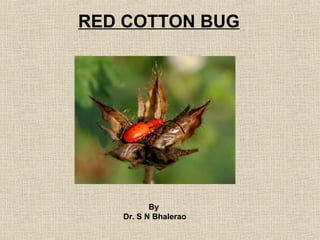
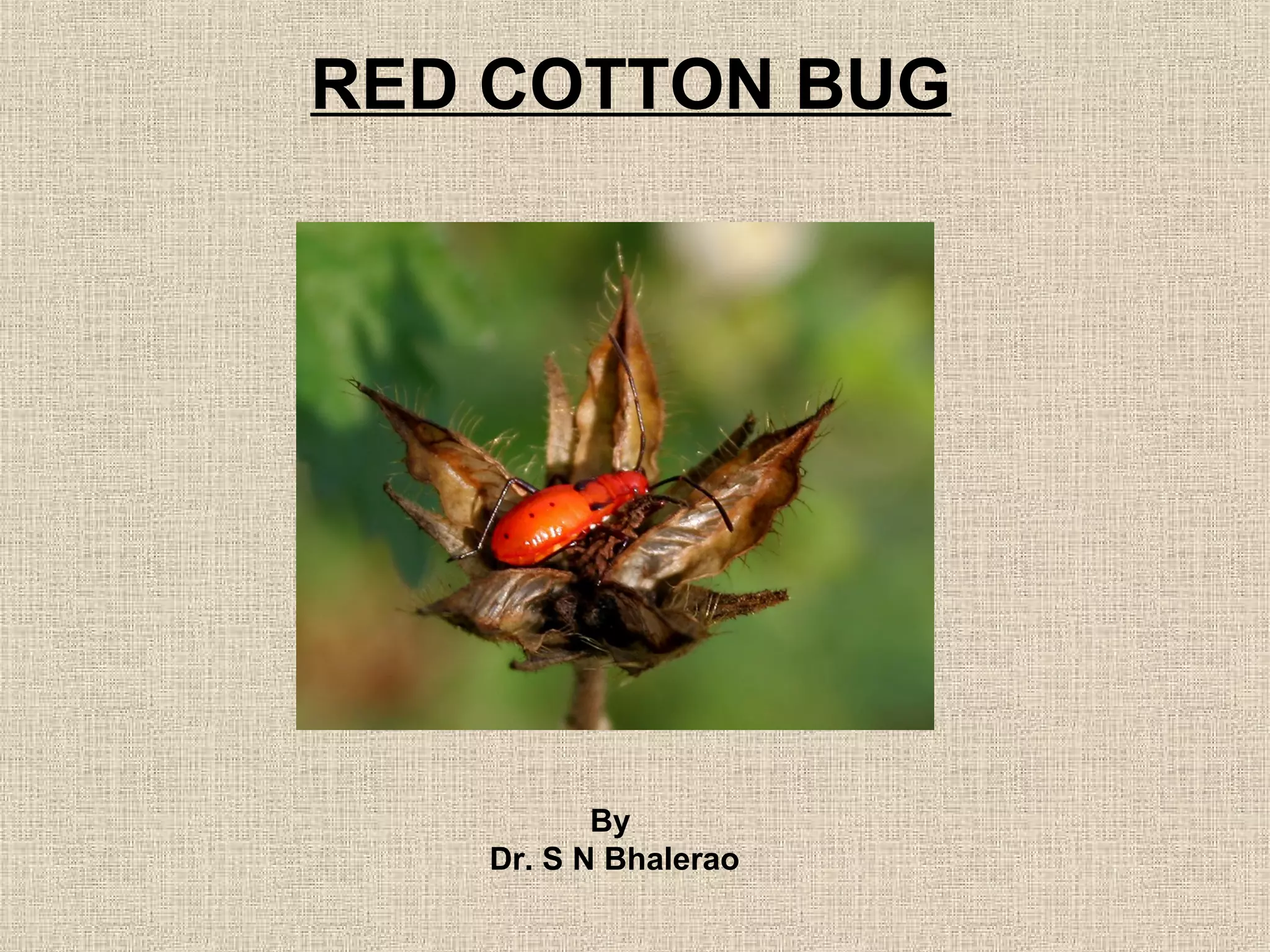
RED COTTON BUG
By
Dr. S N Bhalerao
Class - Insecta
Order - Hemiptera
Family - Pyrrhocoroidae
Common Name - Cotton Stainer
Scientific Name - Dysdercus suturellus
CLASSIFICATION
Identification Marks
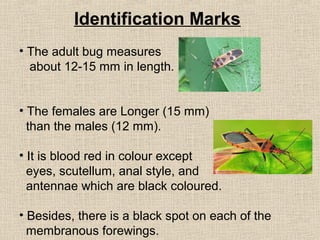
• The adult bug measures
about 12-15 mm in length.
• The females are Longer (15 mm)
than the males (12 mm).
• It is blood red in colour except
eyes, scutellum, anal style, and
antennae which are black coloured.
• Besides, there is a black spot on each of the
membranous forewings.
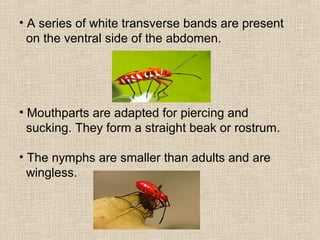
• A series of white transverse bands are present
on the ventral side of the abdomen.
• Mouthparts are adapted for piercing and
sucking. They form a straight beak or rostrum.
• The nymphs are smaller than adults and are
wingless.
LIFE CYCLE
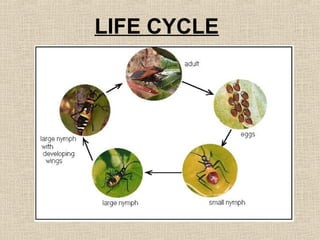
• The mature female lays eggs during spring in
clusters of 70-80 eggs each under the moist soil
surface; fallen leaves and in crevices.
• The eggs are spherical, yellowish-white about
1.2 mm in length.
• After 7 days of incubation period and moist
weather, eggs are hatched into active 1 mm long
red coloured nymphs which are resemble the
adult except size and absence of wings.
• The nymphs feed gregariously on the cotton
bolls. The nymphs undergo 5-moults within 49-
89-days to reach adult stage.
• In winter the life of the adult is about 3-months
but in summer it is varied.
• Pest breeds on cotton from August- November;
takes shelter under leaves or debris from
December-middle of March and feeds on bhendi
from April-July.
• The life cycle of bug is completed within six to
eight weeks.
Nature of Damage
• Both nymphs and adults suck the cell sap from
leaves and tender shoots and impair vitality of plant.
• If the attack is severe, bolls open badly and the
lint is of poor quality.
• In addition they also feed on the seeds and lower
their oil content and low percentage of germination;
such seeds are unfit for sowing.
• The lint is stained by the excreta of bugs or by their
body juice as they are crushed in the ginning
factories, so named cotton stainer.
Control Measures
1. Cotton field should be ploughed to expose eggs
to sunlight.
2. Insects should be hand picked and killed in
kerosene water.
3. The crops of bhendi should be sown as trap crop
and pests collected there, should be destroyed.
4. Moistened cotton seeds should be hanged up at
different places in the field where bugs
congregate, they may get killed in the kerosene
water.
5. Spraying of Malathion O.O5% is effective to
control the pest.
6. Spraying of 1 litre endosulfan 35% EC, 0.25 litre
phosphamidon = 100% EC or 1 litre Fenitrothion
100% EC per hectare is very effective or reduce
pest population.
…

Red Cotton Bug

  • 1.
  • 2.
    Class - Insecta Order- Hemiptera Family - Pyrrhocoroidae Common Name - Cotton Stainer Scientific Name - Dysdercus suturellus CLASSIFICATION
  • 3.
    Identification Marks • Theadult bug measures about 12-15 mm in length. • The females are Longer (15 mm) than the males (12 mm). • It is blood red in colour except eyes, scutellum, anal style, and antennae which are black coloured. • Besides, there is a black spot on each of the membranous forewings.
  • 4.
    • A seriesof white transverse bands are present on the ventral side of the abdomen. • Mouthparts are adapted for piercing and sucking. They form a straight beak or rostrum. • The nymphs are smaller than adults and are wingless.
  • 5.
  • 6.
    • The maturefemale lays eggs during spring in clusters of 70-80 eggs each under the moist soil surface; fallen leaves and in crevices. • The eggs are spherical, yellowish-white about 1.2 mm in length. • After 7 days of incubation period and moist weather, eggs are hatched into active 1 mm long red coloured nymphs which are resemble the adult except size and absence of wings. • The nymphs feed gregariously on the cotton bolls. The nymphs undergo 5-moults within 49- 89-days to reach adult stage.
  • 7.
    • In winterthe life of the adult is about 3-months but in summer it is varied. • Pest breeds on cotton from August- November; takes shelter under leaves or debris from December-middle of March and feeds on bhendi from April-July. • The life cycle of bug is completed within six to eight weeks.
  • 8.
    Nature of Damage •Both nymphs and adults suck the cell sap from leaves and tender shoots and impair vitality of plant. • If the attack is severe, bolls open badly and the lint is of poor quality. • In addition they also feed on the seeds and lower their oil content and low percentage of germination; such seeds are unfit for sowing. • The lint is stained by the excreta of bugs or by their body juice as they are crushed in the ginning factories, so named cotton stainer.
  • 9.
    Control Measures 1. Cottonfield should be ploughed to expose eggs to sunlight. 2. Insects should be hand picked and killed in kerosene water. 3. The crops of bhendi should be sown as trap crop and pests collected there, should be destroyed.
  • 10.
    4. Moistened cottonseeds should be hanged up at different places in the field where bugs congregate, they may get killed in the kerosene water. 5. Spraying of Malathion O.O5% is effective to control the pest. 6. Spraying of 1 litre endosulfan 35% EC, 0.25 litre phosphamidon = 100% EC or 1 litre Fenitrothion 100% EC per hectare is very effective or reduce pest population. …