You will find the
presentation slides
here. Feel free to follow
along
bit.ly/bcteal2014
Using online tools to
provide oral feedback
on writing assignments
Nathan Hall
Douglas College
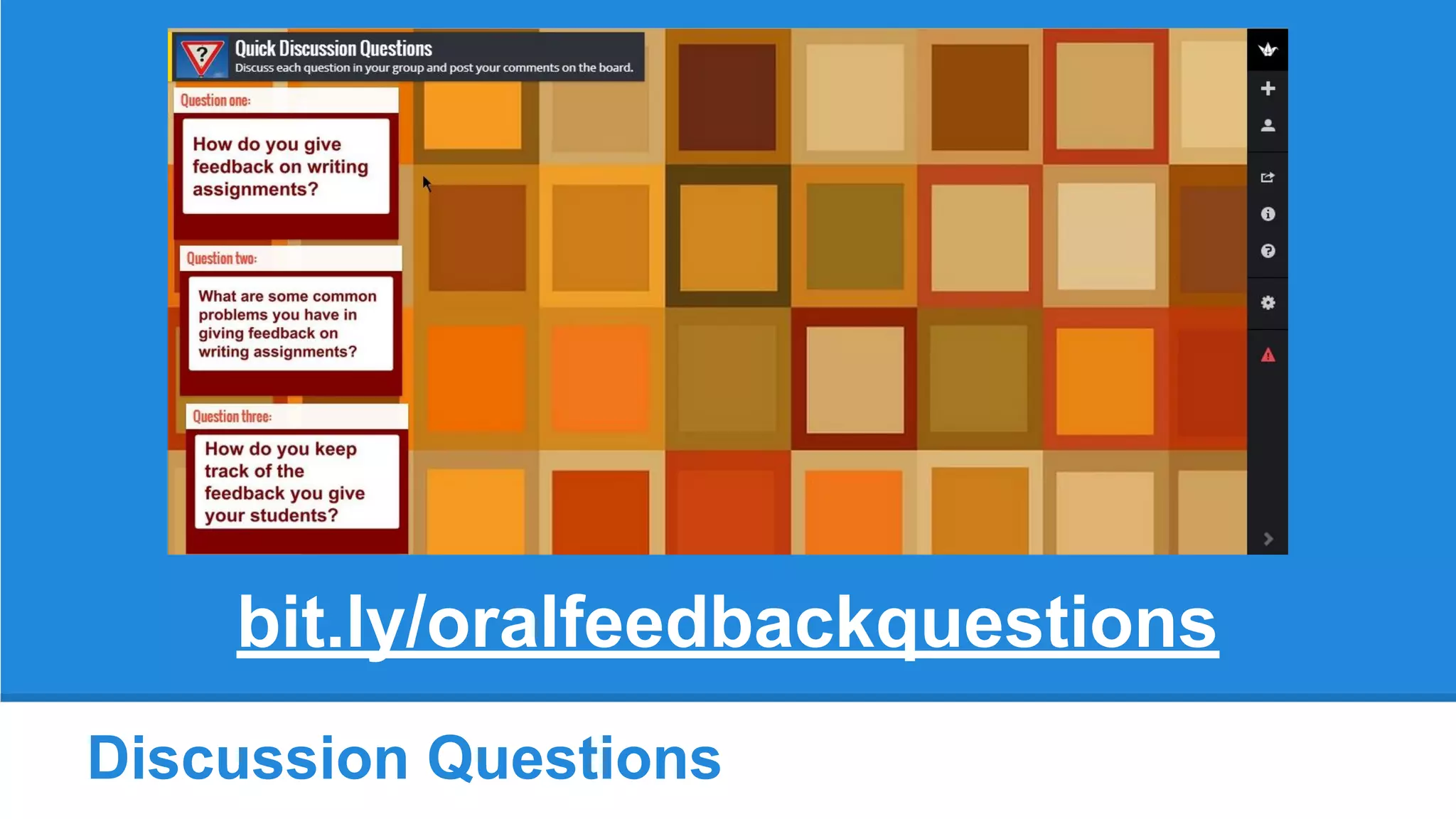
Discussion Questions
bit.ly/oralfeedbackquestions
Overview
● Theory
● Practice
● Problems
● Questions
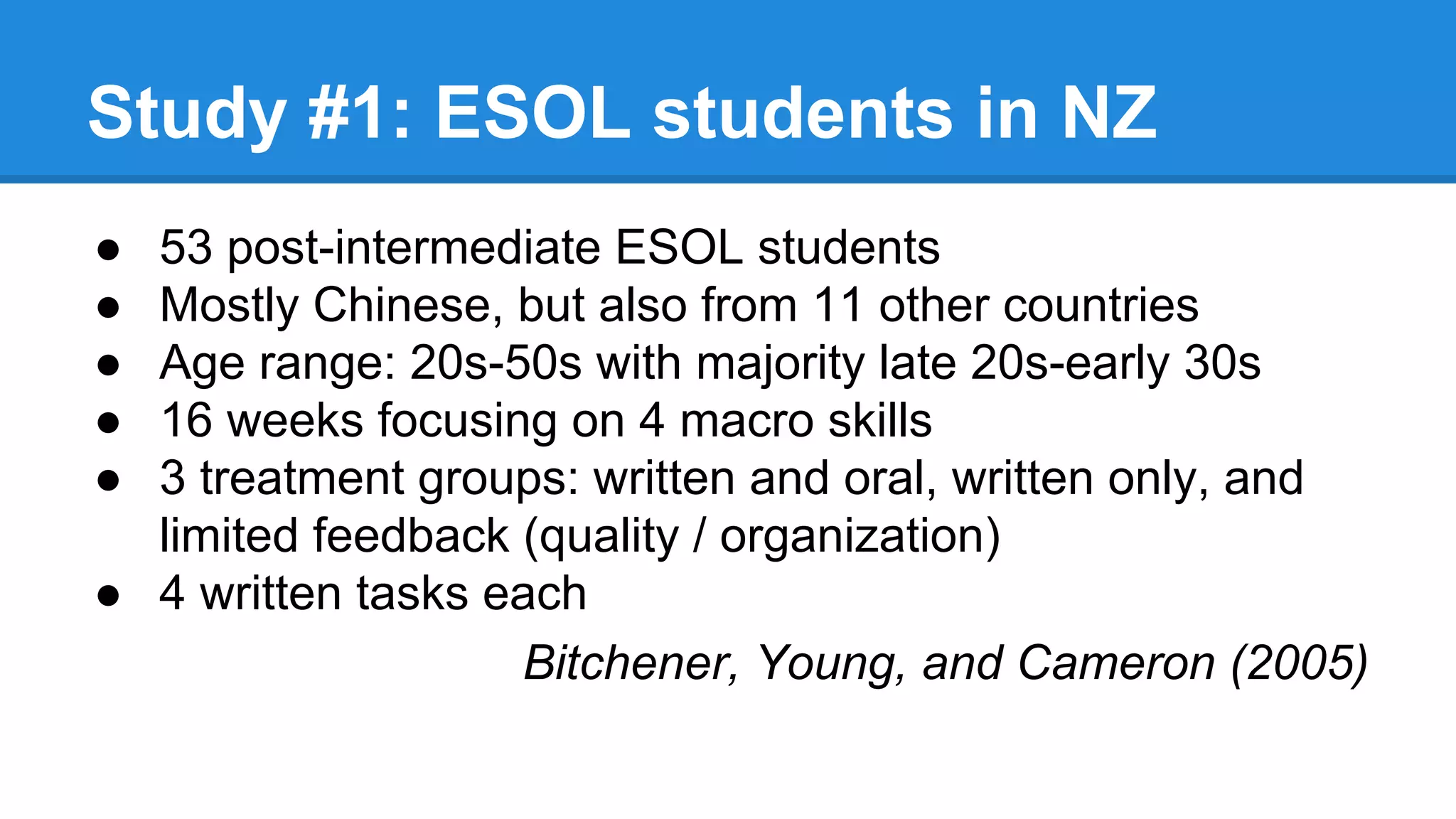
Study #1: ESOL students in NZ
● 53 post-intermediate ESOL students
● Mostly Chinese, but also from 11 other countries
● Age range: 20s-50s with majority late 20s-early 30s
● 16 weeks focusing on 4 macro skills
● 3 treatment groups: written and oral, written only, and
limited feedback (quality / organization)
● 4 written tasks each
Bitchener, Young, and Cameron (2005)
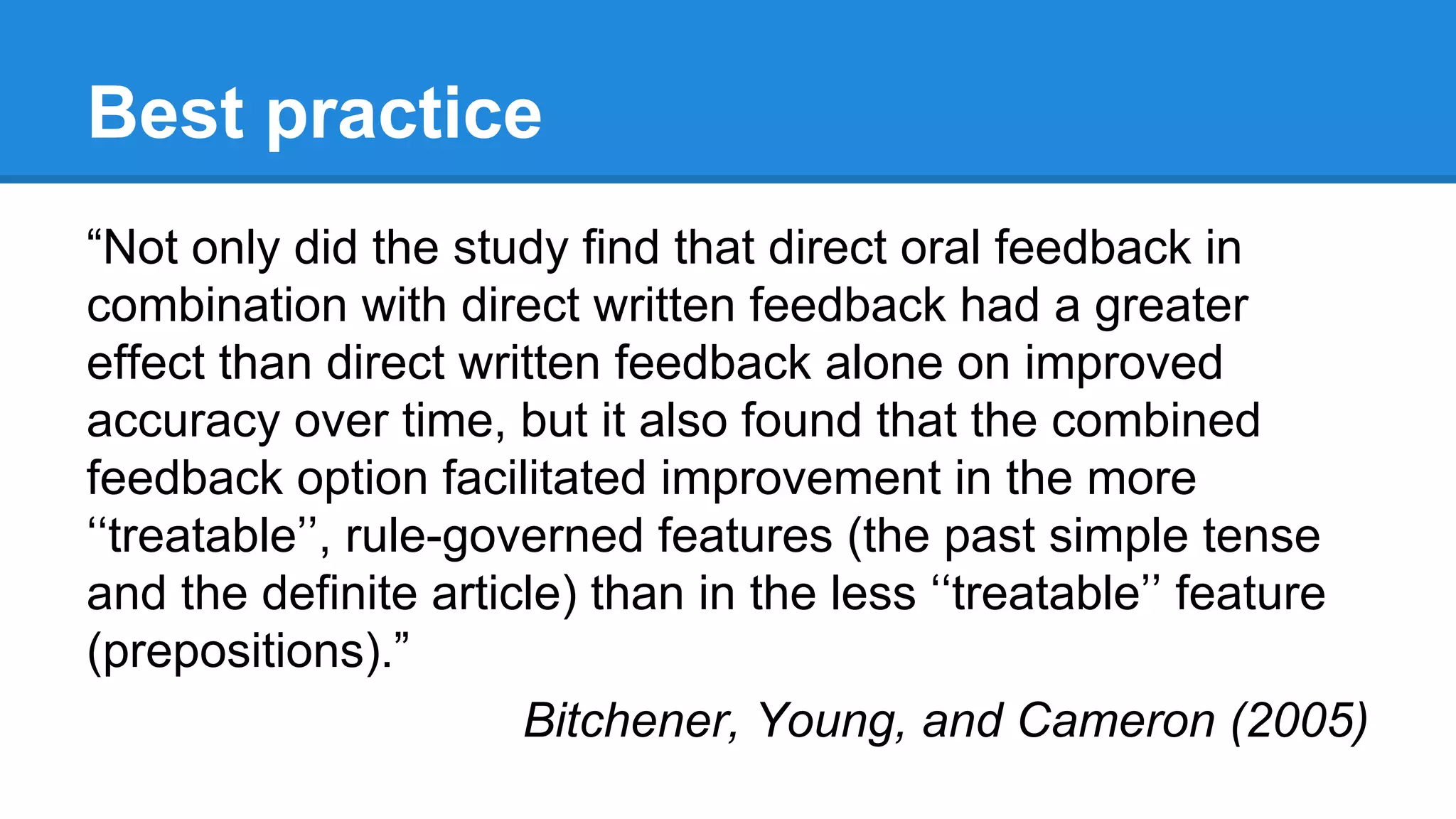
Best practice
“Not only did the study find that direct oral feedback in
combination with direct written feedback had a greater
effect than direct written feedback alone on improved
accuracy over time, but it also found that the combined
feedback option facilitated improvement in the more
‘‘treatable’’, rule-governed features (the past simple tense
and the definite article) than in the less ‘‘treatable’’ feature
(prepositions).”
Bitchener, Young, and Cameron (2005)
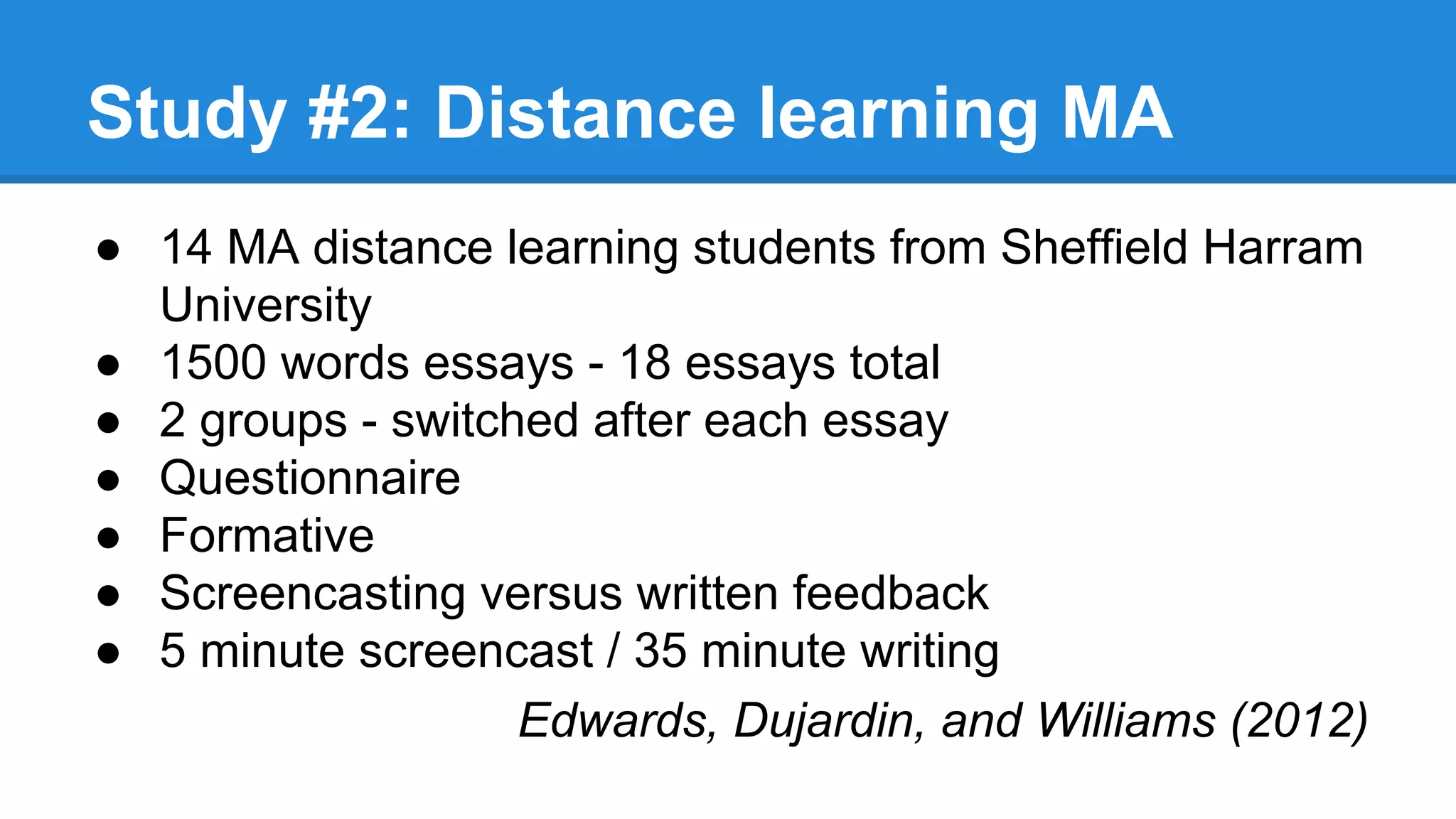
Study #2: Distance learning MA
● 14 MA distance learning students from Sheffield Harram
University
● 1500 words essays - 18 essays total
● 2 groups - switched after each essay
● Questionnaire
● Formative
● Screencasting versus written feedback
● 5 minute screencast / 35 minute writing
Edwards, Dujardin, and Williams (2012)
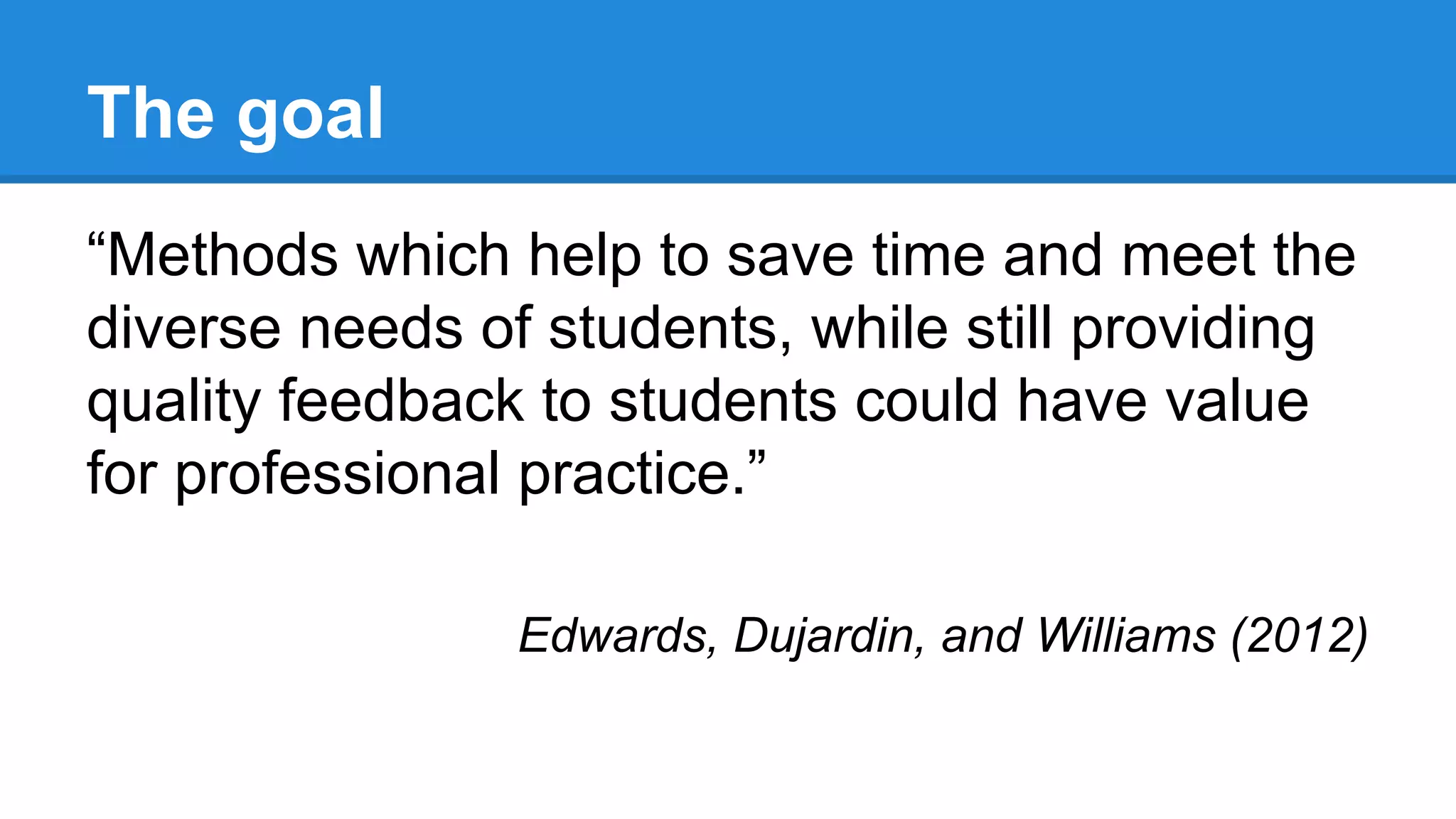
The goal
“Methods which help to save time and meet the
diverse needs of students, while still providing
quality feedback to students could have value
for professional practice.”
Edwards, Dujardin, and Williams (2012)
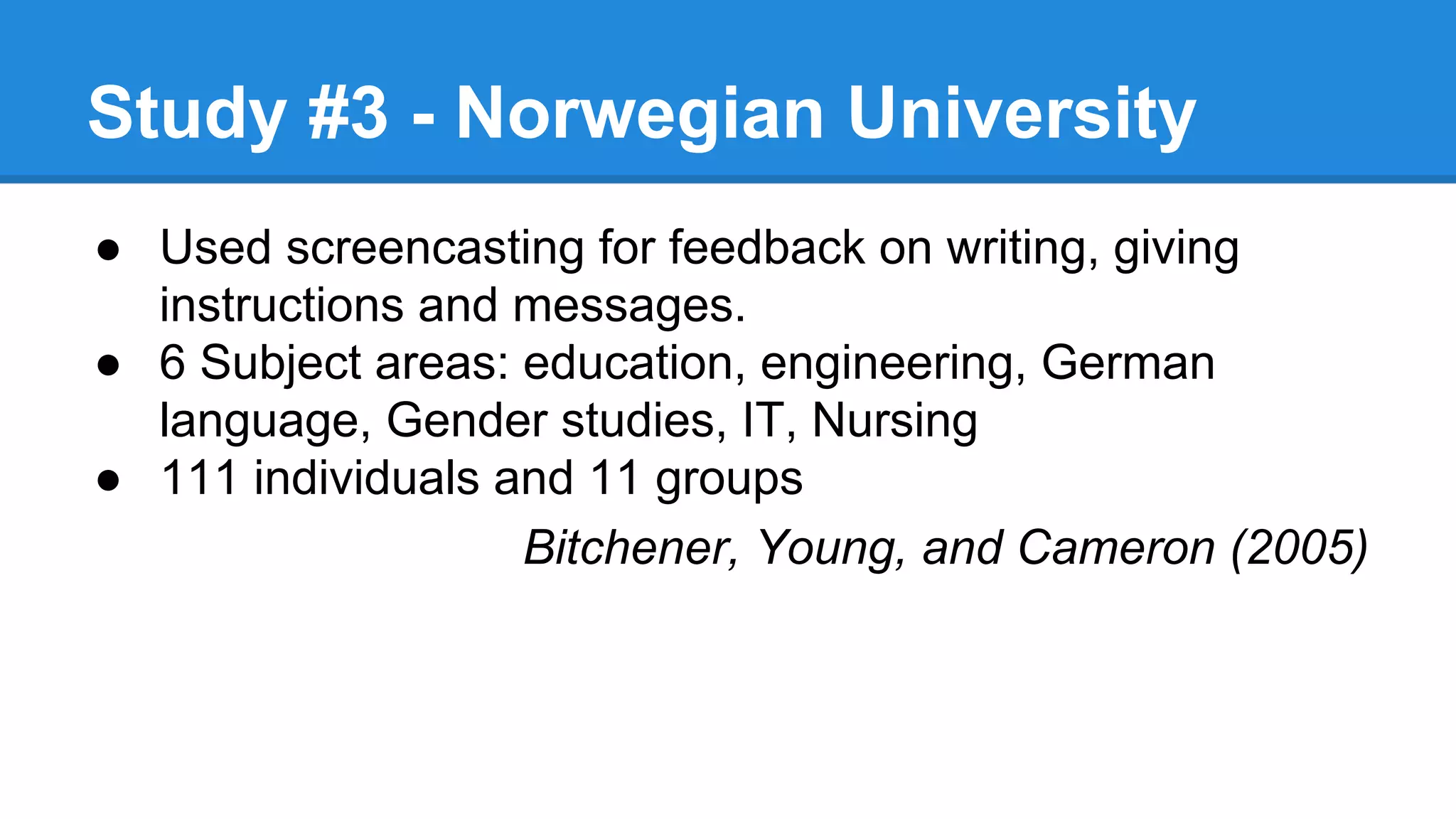
Study #3 - Norwegian University
● Used screencasting for feedback on writing, giving
instructions and messages.
● 6 Subject areas: education, engineering, German
language, Gender studies, IT, Nursing
● 111 individuals and 11 groups
Bitchener, Young, and Cameron (2005)
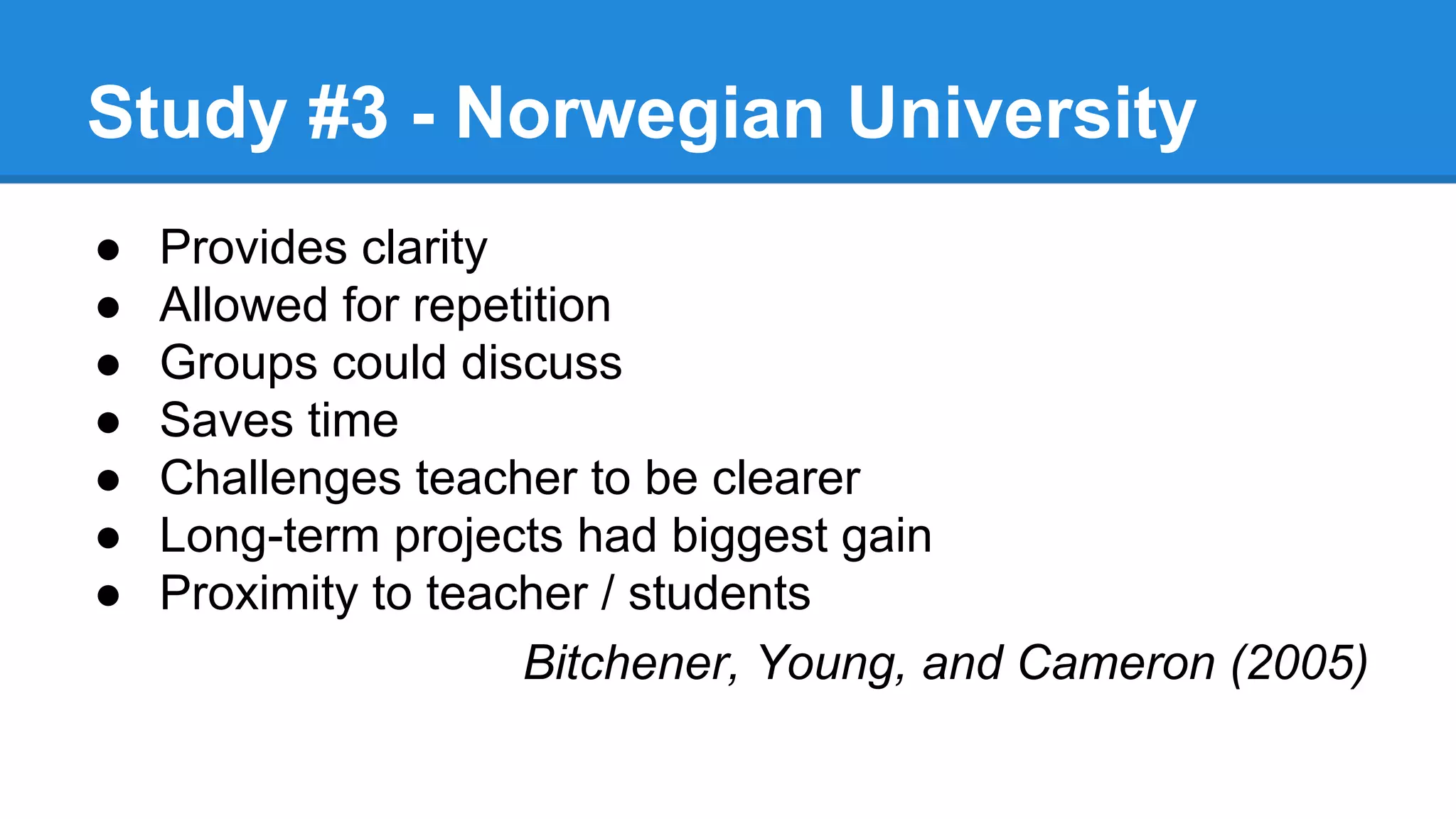
Study #3 - Norwegian University
● Provides clarity
● Allowed for repetition
● Groups could discuss
● Saves time
● Challenges teacher to be clearer
● Long-term projects had biggest gain
● Proximity to teacher / students
Bitchener, Young, and Cameron (2005)
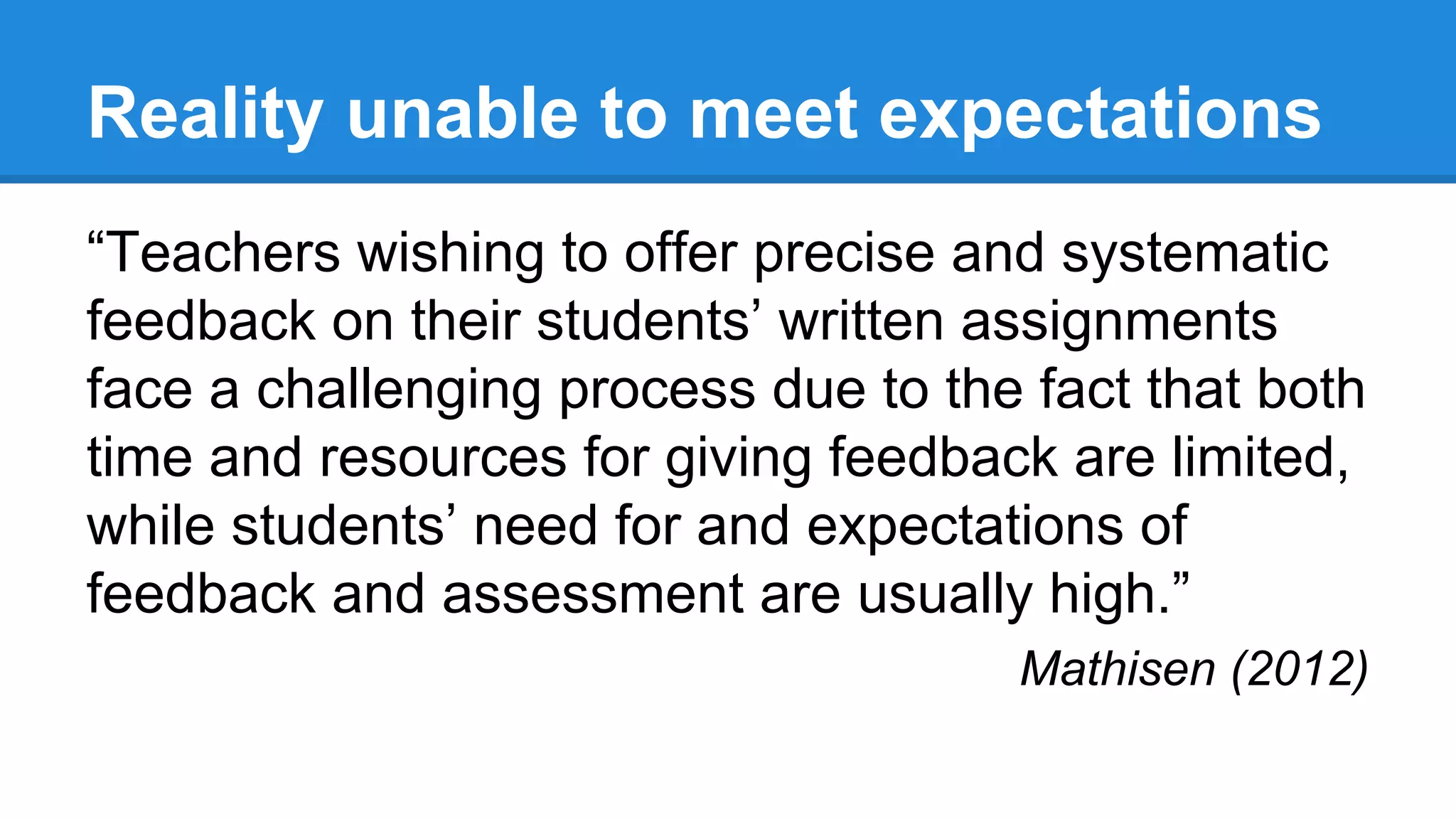
Reality unable to meet expectations
“Teachers wishing to offer precise and systematic
feedback on their students’ written assignments
face a challenging process due to the fact that both
time and resources for giving feedback are limited,
while students’ need for and expectations of
feedback and assessment are usually high.”
Mathisen (2012)
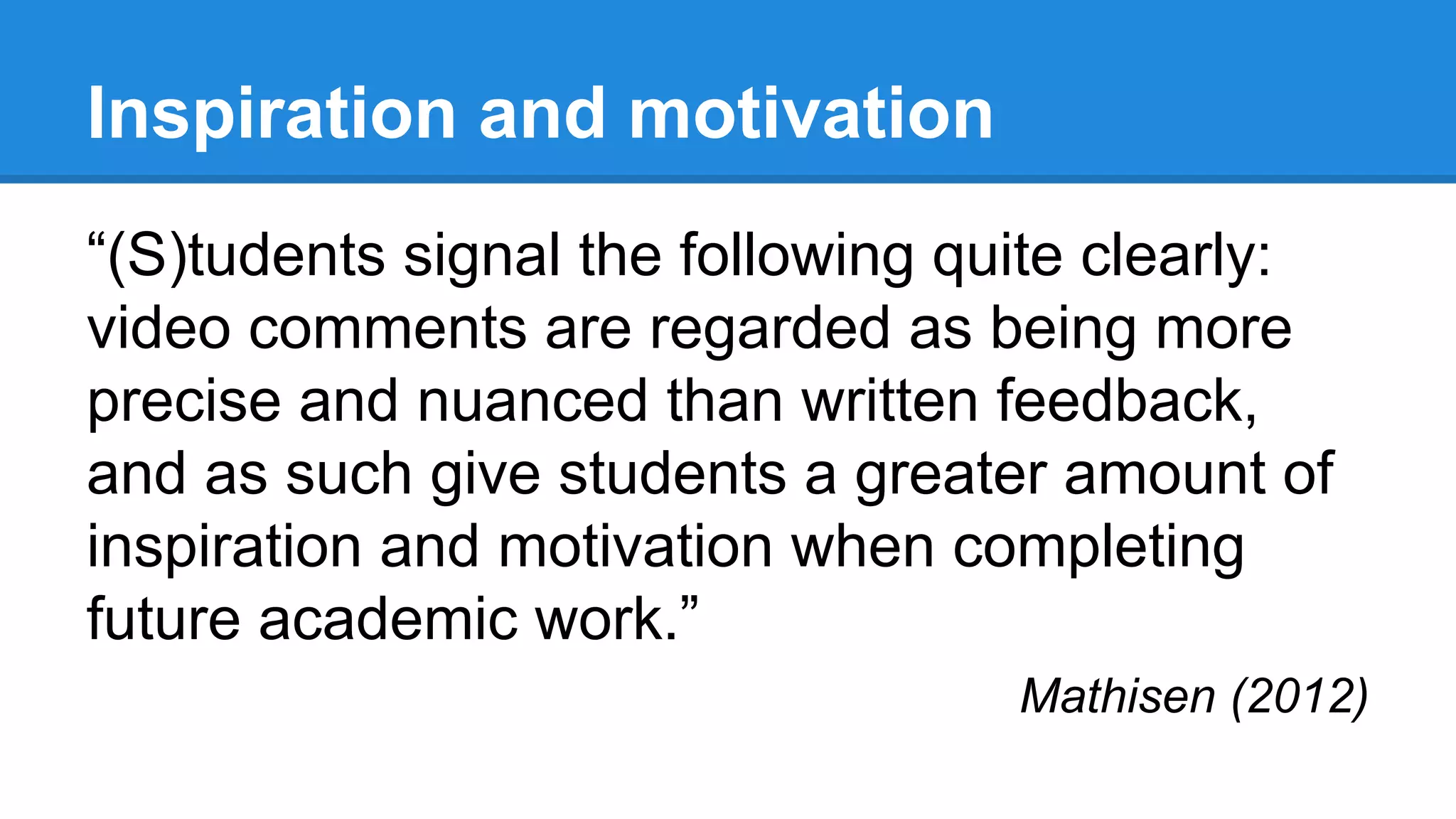
Inspiration and motivation
“(S)tudents signal the following quite clearly:
video comments are regarded as being more
precise and nuanced than written feedback,
and as such give students a greater amount of
inspiration and motivation when completing
future academic work.”
Mathisen (2012)
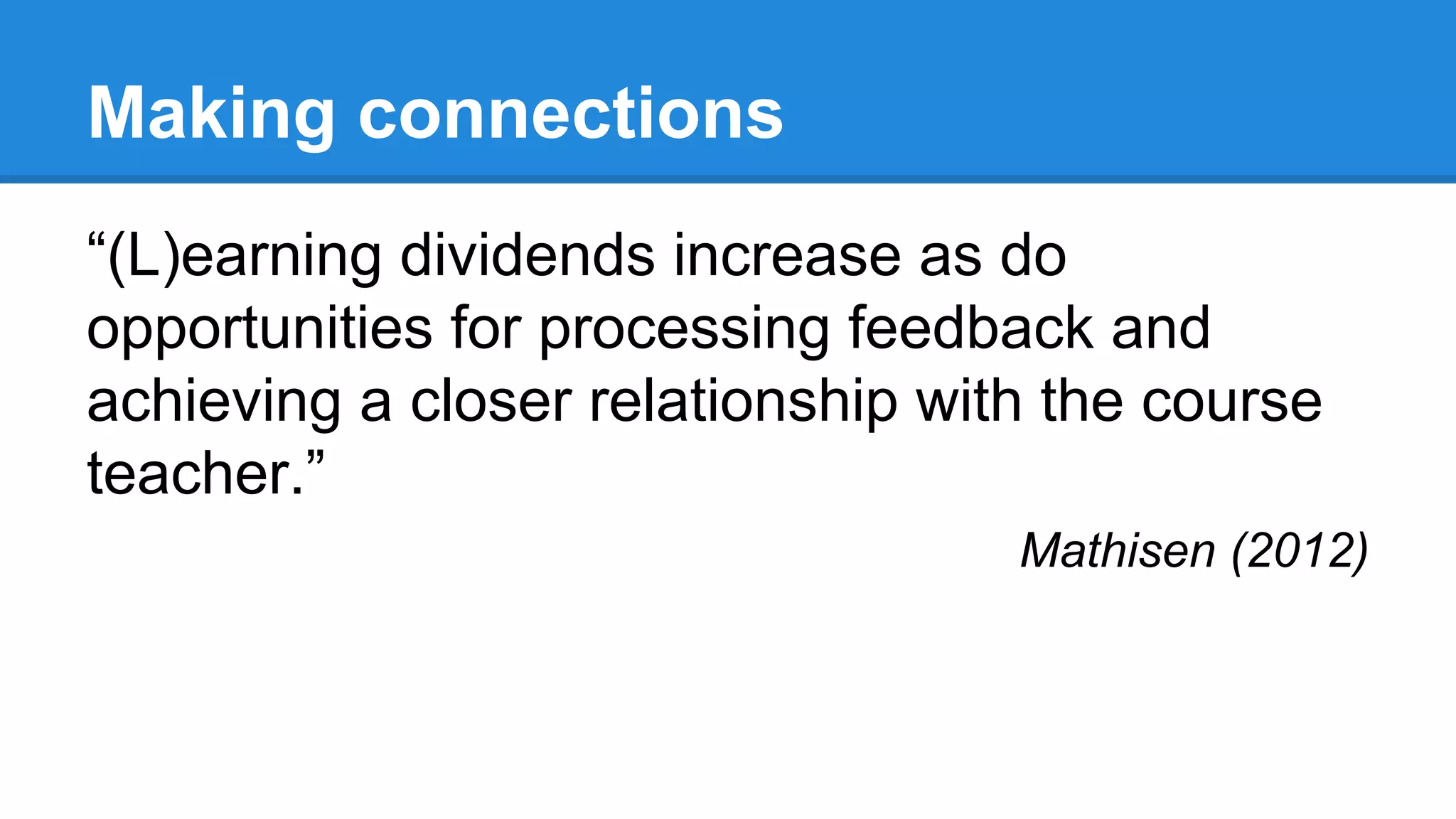
Making connections
“(L)earning dividends increase as do
opportunities for processing feedback and
achieving a closer relationship with the course
teacher.”
Mathisen (2012)
The solution
“Teachers point out the same experiences,
emphasizing that this working form simplifies
and increases the efficiency of working with
feedback while at the same time allowing the
opportunity to achieve increased levels of
precision and quality.”
Mathisen (2012)
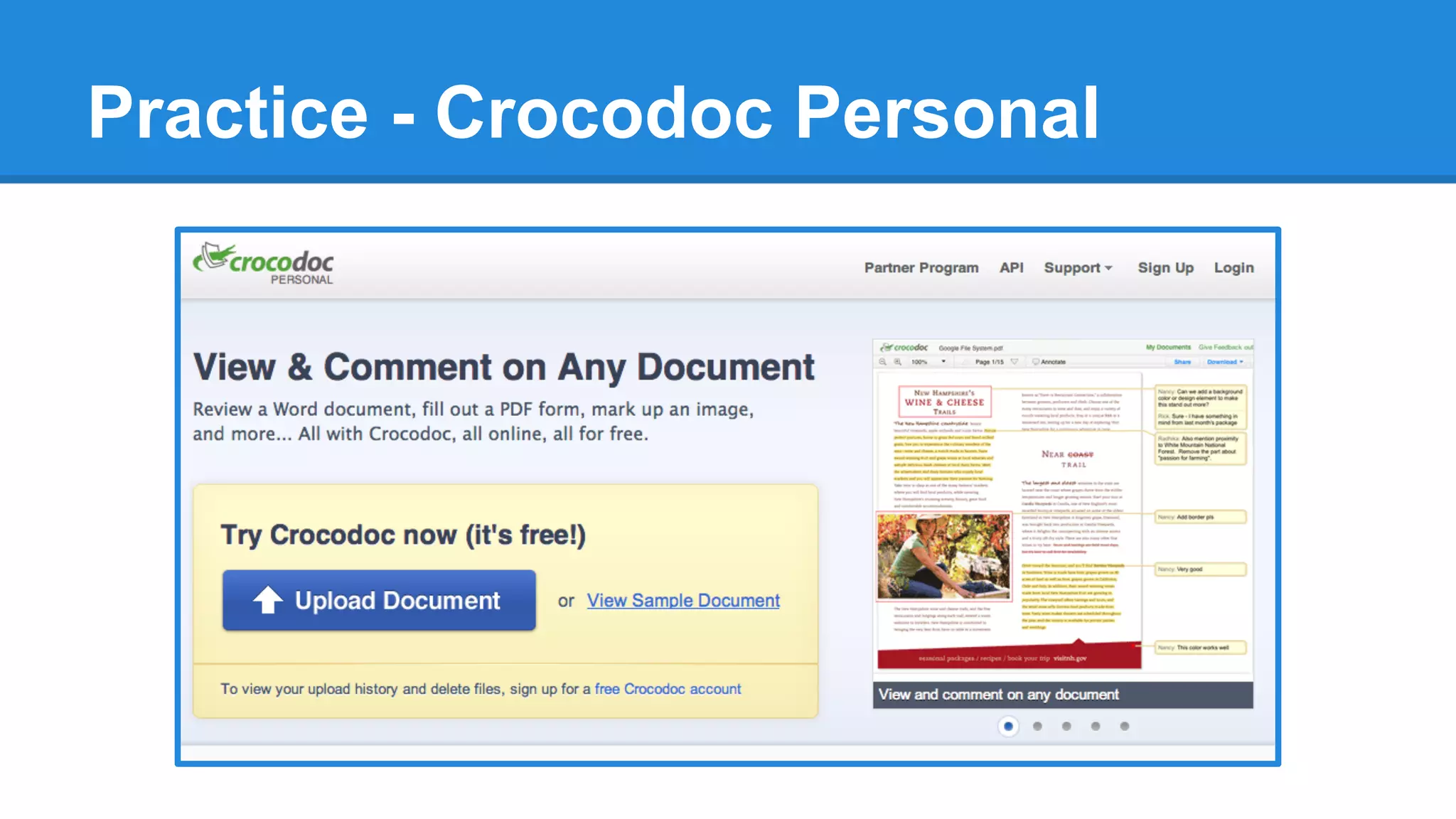
Practice - Crocodoc Personal
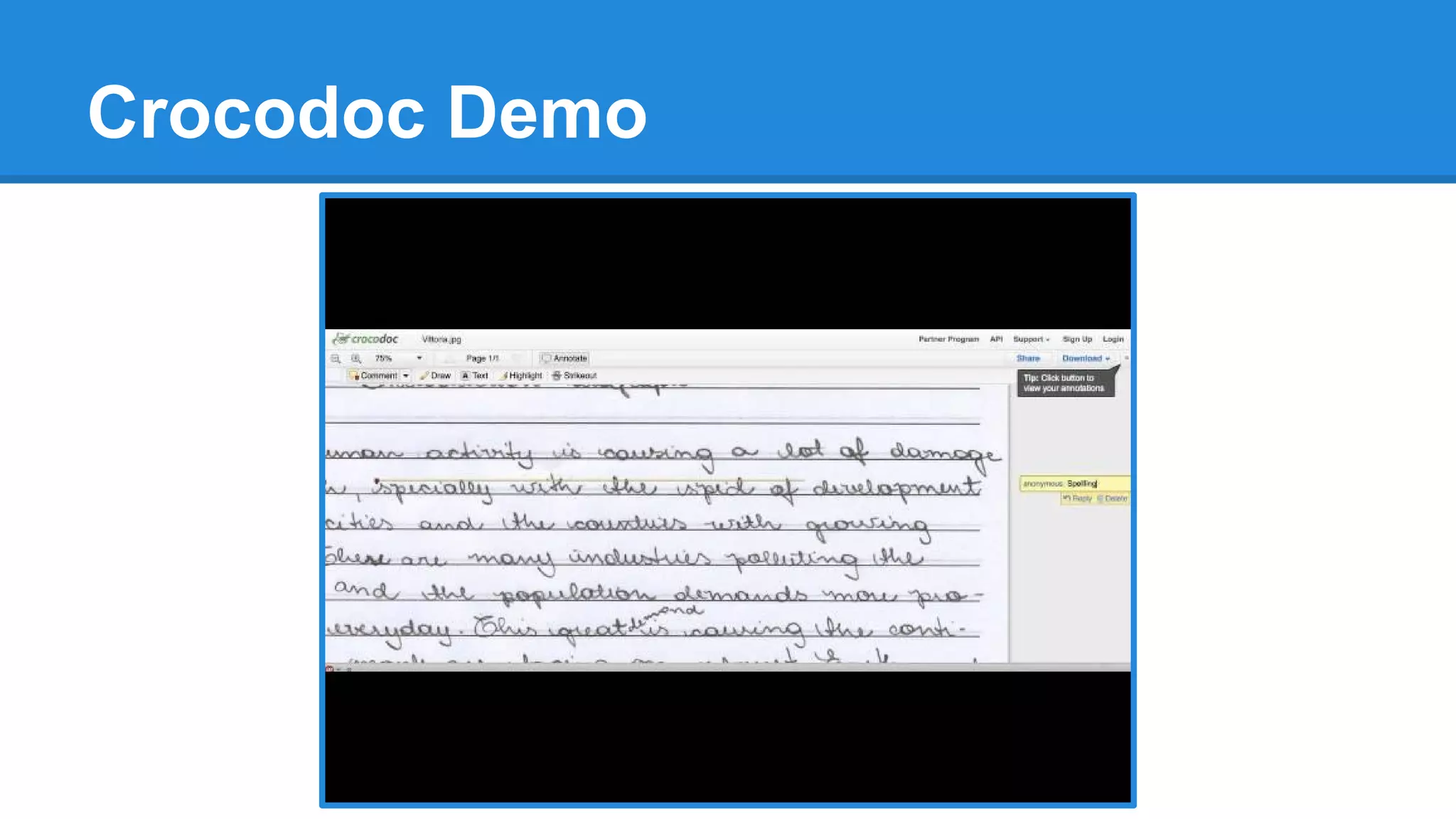
Crocodoc Demo
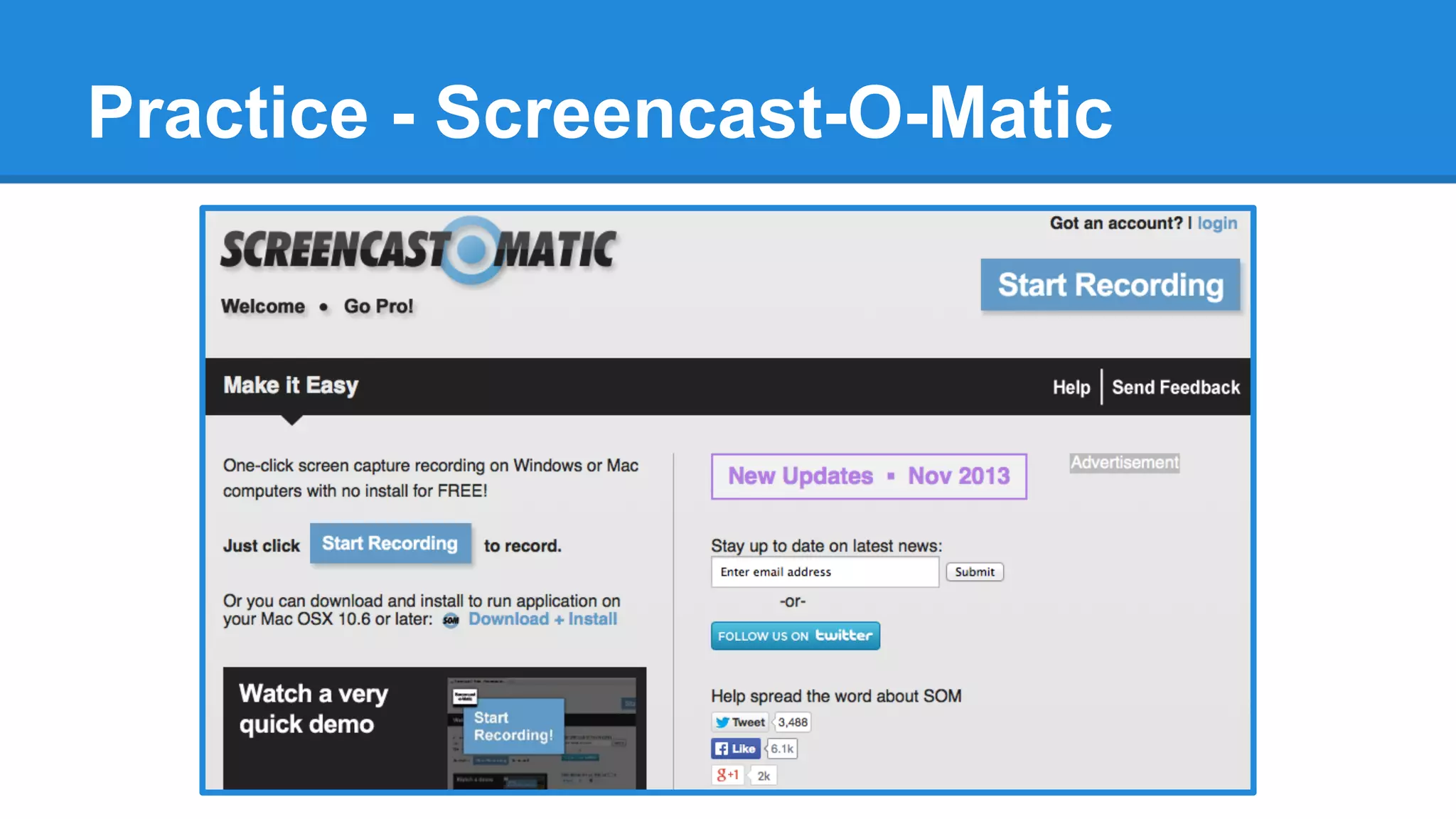
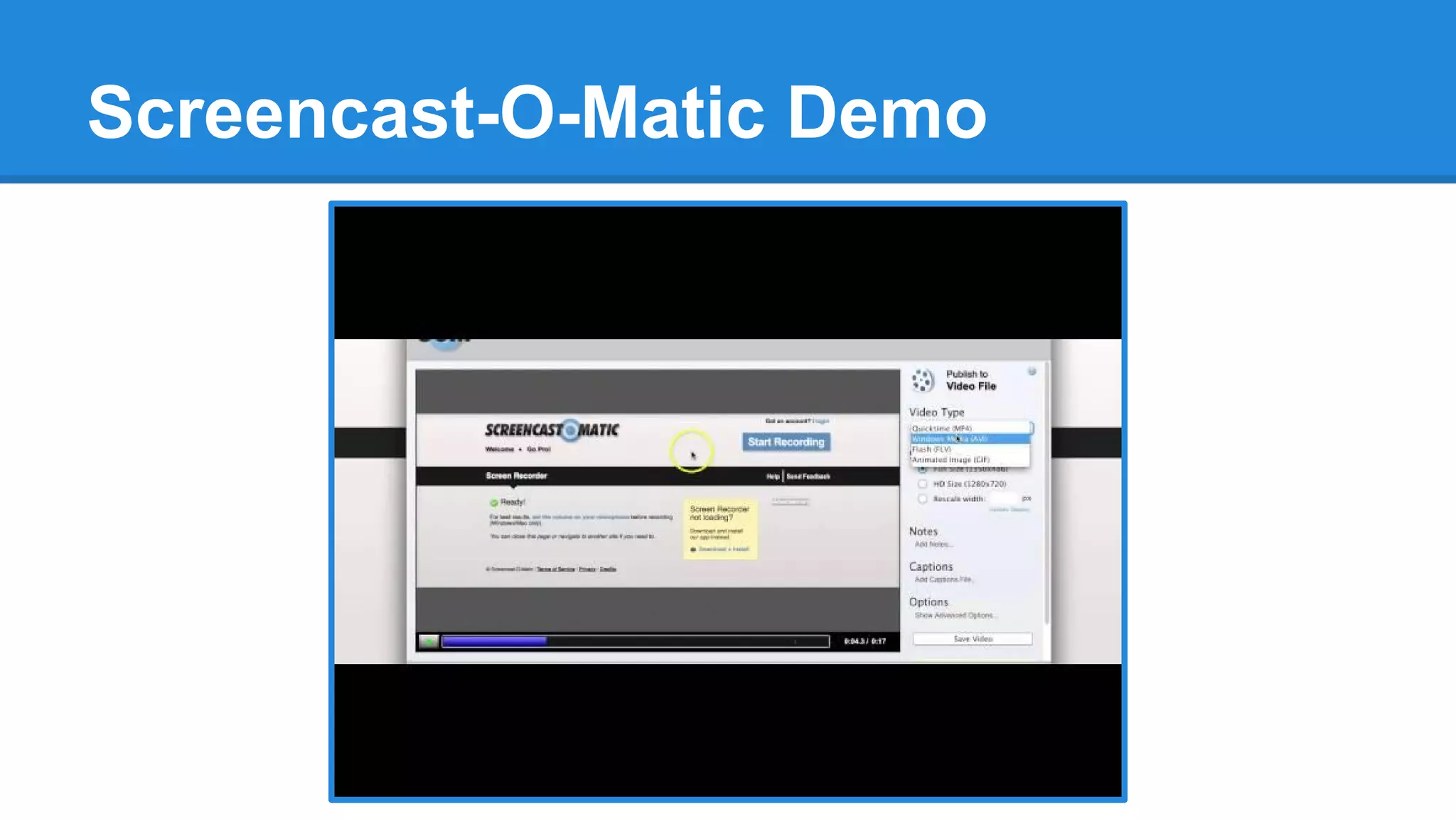
Practice - Screencast-O-Matic
Screencast-O-Matic Demo
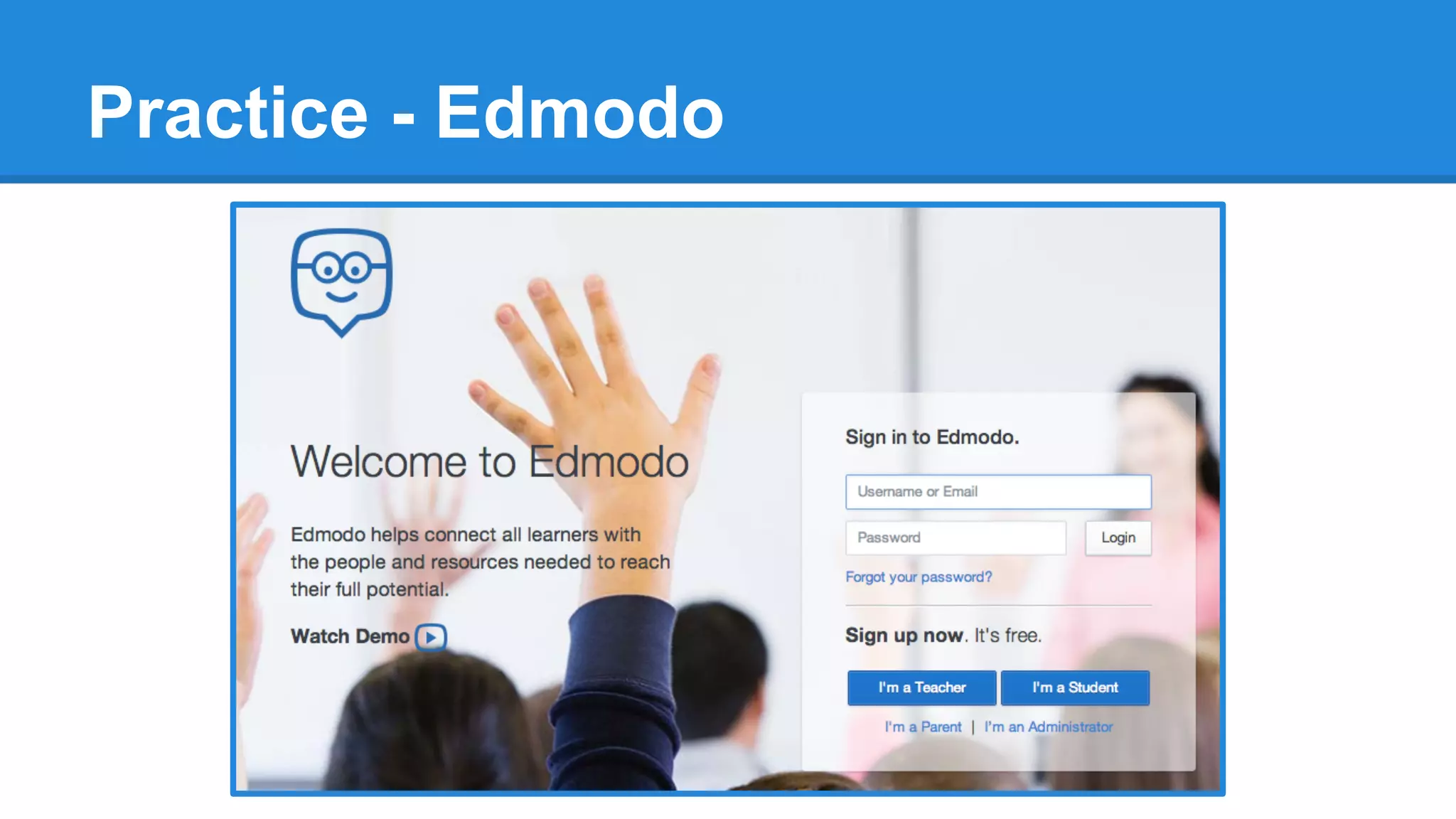
Practice - Edmodo
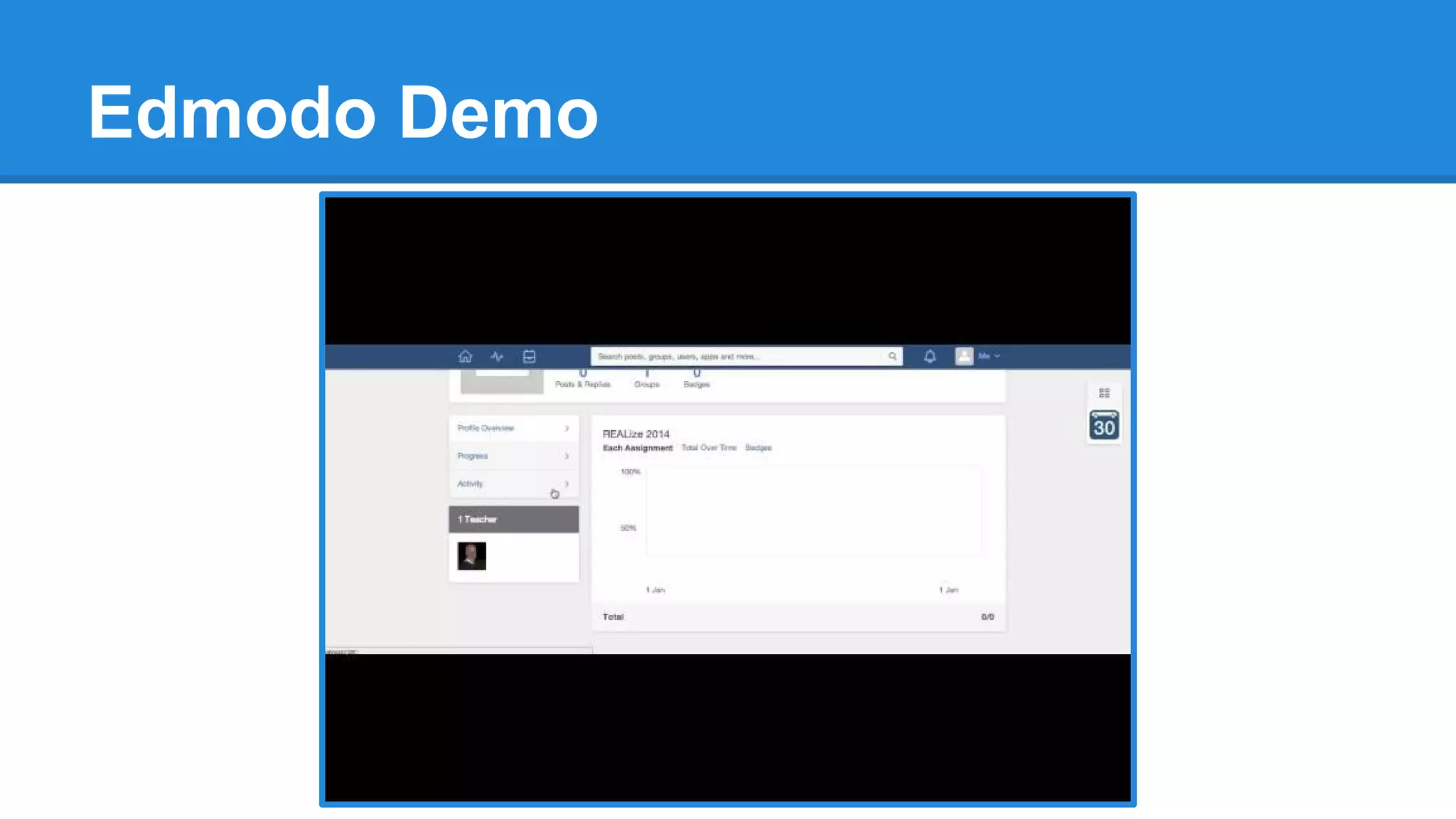
Edmodo Demo
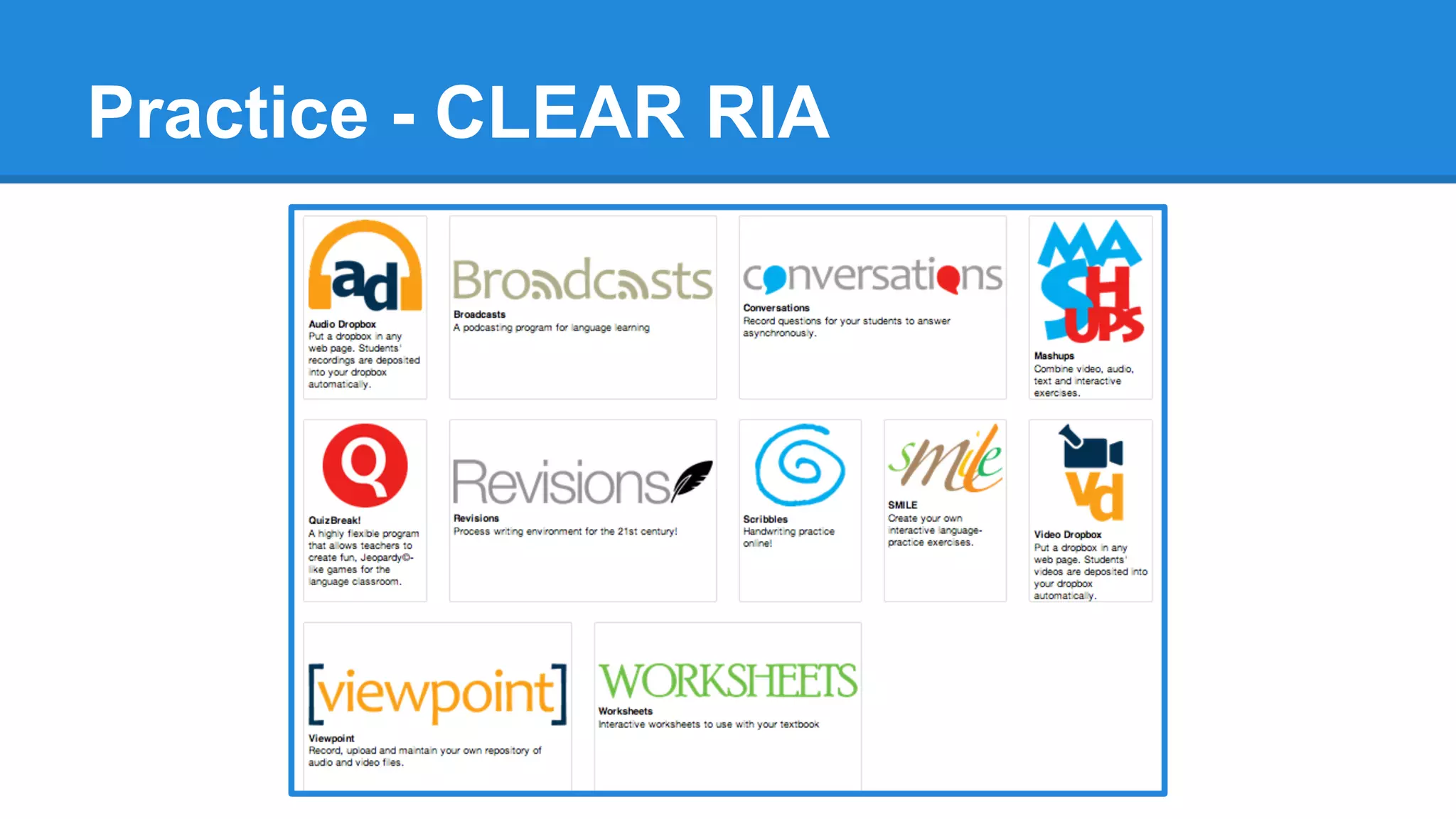
Practice - CLEAR RIA
Problems - Privacy
Cloud computing guidelines for public bodies as laid
out by the Office of the Information & Privacy
Commissioner for British Columbia
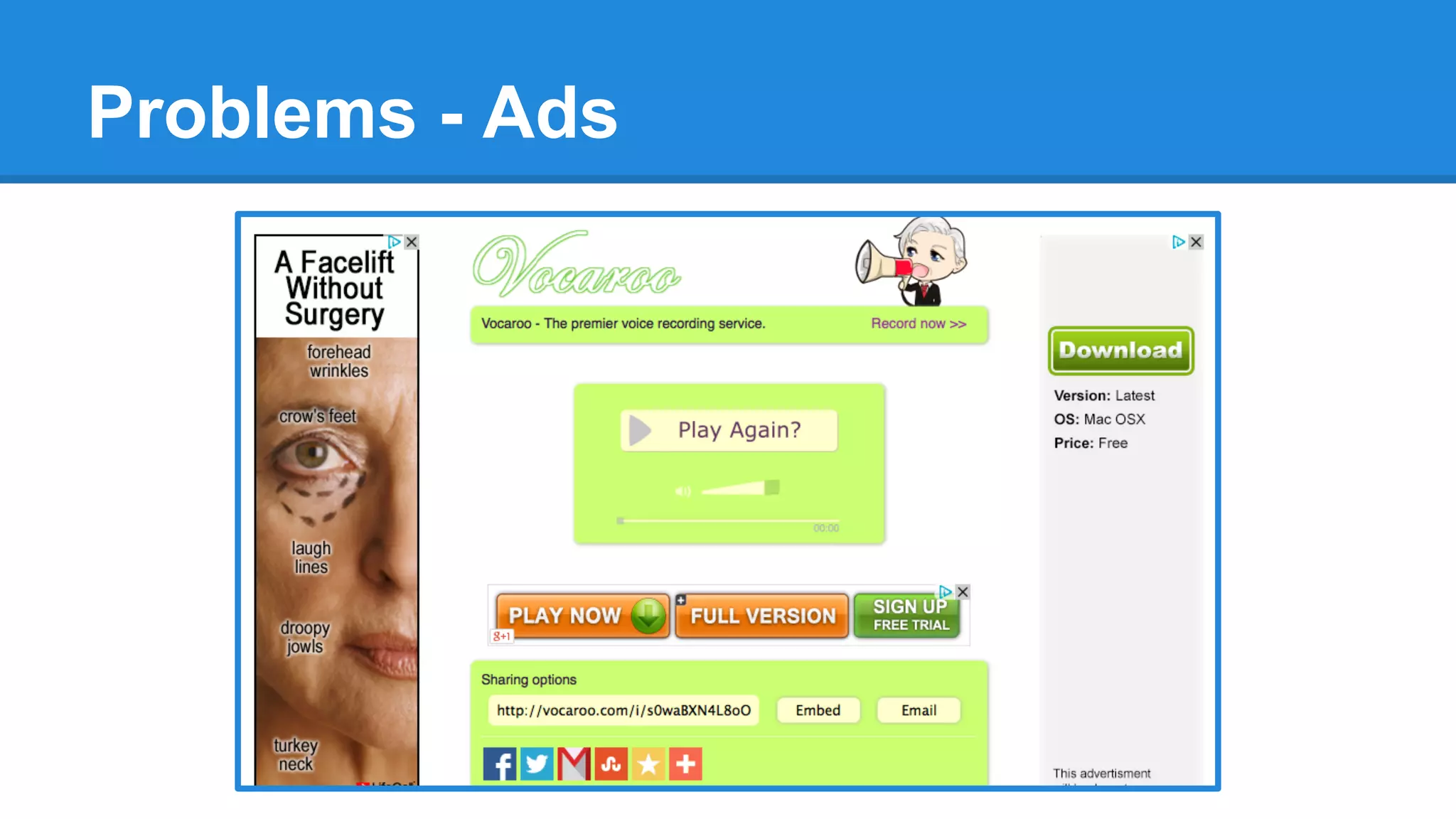
Problems - Ads
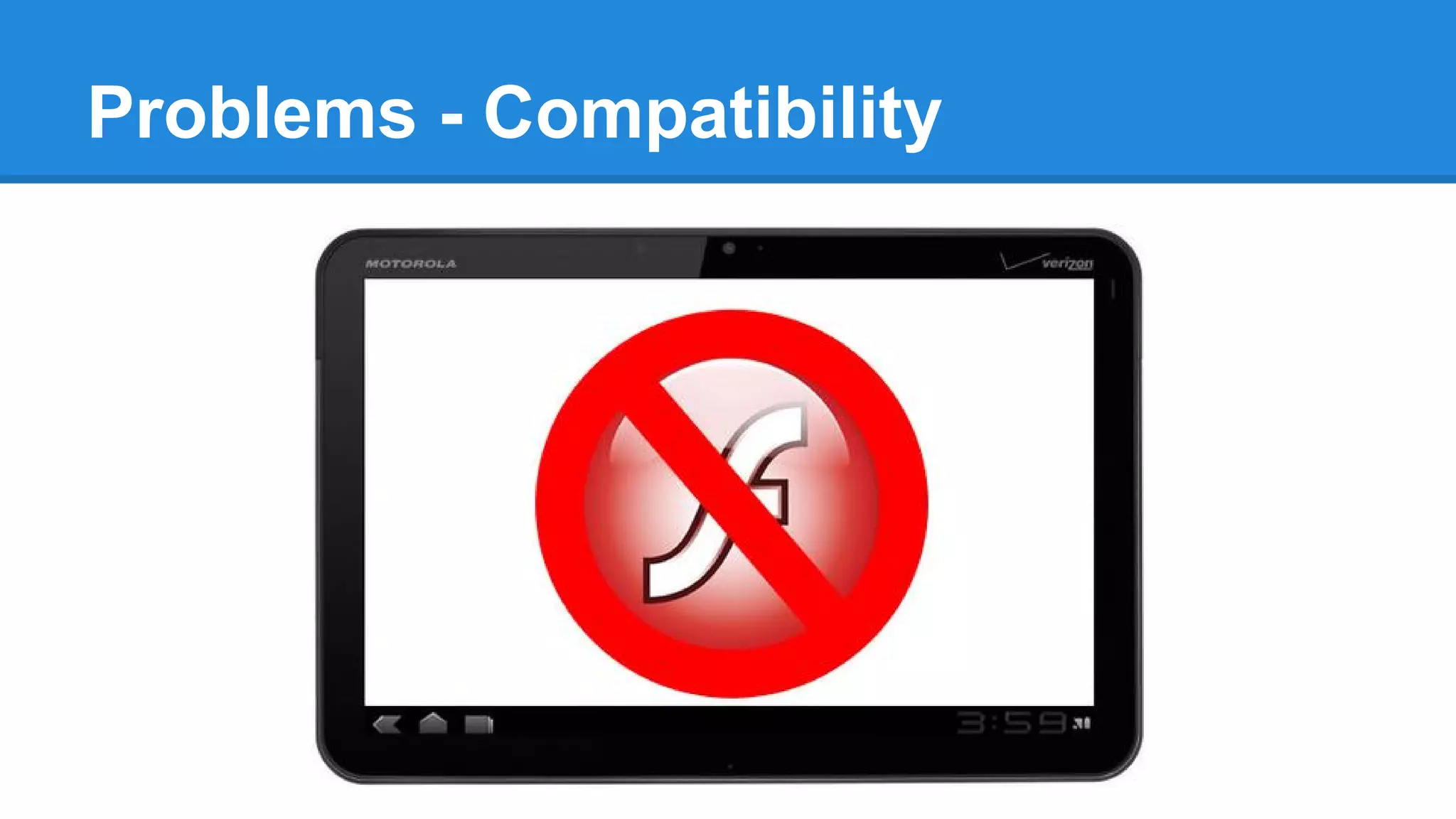
Problems - Compatibility
Problems - Accessibility
Problems - Time
Problems - Learning curve
Q & A
References
Bitchener, J., Young, S., and Cameron, D. (2005). The effect of different types of corrective feedback
on ESL student writing. Journal of Second Language Writing, 14. 191-205. Retrieved from http:
//peoplelearn.homestead.com/MEdHOME/SPECIALISATIONS/Writing.feedback_on.writing.pdf
Edwards, K., Dujardin, A., and Williams, N. (2012). Screencast feedback for essays on a distance
learning MA in Professional Communication: An action research project. Journal of Academic Writing,
2(1). 95-126. Retrieved from http://e-learning.coventry.ac.uk/ojs/index.php/joaw/article/view/62
Mathisen, P. (2012). Video feedback in higher education - A contribution to improving the quality of
written feedback. Nordic Journal of Digital Literacy, 7(2). 97-116. Retrieved from http://petter.
pmathisen.no/4file/filer/artikler/videofeedback%20in%20higher%20education%20petter%
20mathisen%202012.pdf
Thank you
TY! :-)
Nathan Hall
info.nathanhall.ca
nathan@nathanhall.ca

Recording Oral Feedback for Writing Assignments

  • 1.
    You will findthe presentation slides here. Feel free to follow along bit.ly/bcteal2014
  • 2.
    Using online toolsto provide oral feedback on writing assignments Nathan Hall Douglas College
  • 3.
  • 4.
  • 5.
    Study #1: ESOLstudents in NZ ● 53 post-intermediate ESOL students ● Mostly Chinese, but also from 11 other countries ● Age range: 20s-50s with majority late 20s-early 30s ● 16 weeks focusing on 4 macro skills ● 3 treatment groups: written and oral, written only, and limited feedback (quality / organization) ● 4 written tasks each Bitchener, Young, and Cameron (2005)
  • 6.
    Best practice “Not onlydid the study find that direct oral feedback in combination with direct written feedback had a greater effect than direct written feedback alone on improved accuracy over time, but it also found that the combined feedback option facilitated improvement in the more ‘‘treatable’’, rule-governed features (the past simple tense and the definite article) than in the less ‘‘treatable’’ feature (prepositions).” Bitchener, Young, and Cameron (2005)
  • 7.
    Study #2: Distancelearning MA ● 14 MA distance learning students from Sheffield Harram University ● 1500 words essays - 18 essays total ● 2 groups - switched after each essay ● Questionnaire ● Formative ● Screencasting versus written feedback ● 5 minute screencast / 35 minute writing Edwards, Dujardin, and Williams (2012)
  • 8.
    The goal “Methods whichhelp to save time and meet the diverse needs of students, while still providing quality feedback to students could have value for professional practice.” Edwards, Dujardin, and Williams (2012)
  • 9.
    Study #3 -Norwegian University ● Used screencasting for feedback on writing, giving instructions and messages. ● 6 Subject areas: education, engineering, German language, Gender studies, IT, Nursing ● 111 individuals and 11 groups Bitchener, Young, and Cameron (2005)
  • 10.
    Study #3 -Norwegian University ● Provides clarity ● Allowed for repetition ● Groups could discuss ● Saves time ● Challenges teacher to be clearer ● Long-term projects had biggest gain ● Proximity to teacher / students Bitchener, Young, and Cameron (2005)
  • 11.
    Reality unable tomeet expectations “Teachers wishing to offer precise and systematic feedback on their students’ written assignments face a challenging process due to the fact that both time and resources for giving feedback are limited, while students’ need for and expectations of feedback and assessment are usually high.” Mathisen (2012)
  • 12.
    Inspiration and motivation “(S)tudentssignal the following quite clearly: video comments are regarded as being more precise and nuanced than written feedback, and as such give students a greater amount of inspiration and motivation when completing future academic work.” Mathisen (2012)
  • 13.
    Making connections “(L)earning dividendsincrease as do opportunities for processing feedback and achieving a closer relationship with the course teacher.” Mathisen (2012)
  • 14.
    The solution “Teachers pointout the same experiences, emphasizing that this working form simplifies and increases the efficiency of working with feedback while at the same time allowing the opportunity to achieve increased levels of precision and quality.” Mathisen (2012)
  • 15.
  • 16.
  • 17.
  • 18.
  • 19.
  • 20.
  • 21.
  • 22.
    Problems - Privacy Cloudcomputing guidelines for public bodies as laid out by the Office of the Information & Privacy Commissioner for British Columbia
  • 23.
  • 24.
  • 25.
  • 26.
  • 27.
  • 28.
  • 29.
    References Bitchener, J., Young,S., and Cameron, D. (2005). The effect of different types of corrective feedback on ESL student writing. Journal of Second Language Writing, 14. 191-205. Retrieved from http: //peoplelearn.homestead.com/MEdHOME/SPECIALISATIONS/Writing.feedback_on.writing.pdf Edwards, K., Dujardin, A., and Williams, N. (2012). Screencast feedback for essays on a distance learning MA in Professional Communication: An action research project. Journal of Academic Writing, 2(1). 95-126. Retrieved from http://e-learning.coventry.ac.uk/ojs/index.php/joaw/article/view/62 Mathisen, P. (2012). Video feedback in higher education - A contribution to improving the quality of written feedback. Nordic Journal of Digital Literacy, 7(2). 97-116. Retrieved from http://petter. pmathisen.no/4file/filer/artikler/videofeedback%20in%20higher%20education%20petter% 20mathisen%202012.pdf
  • 30.
    Thank you TY! :-) NathanHall info.nathanhall.ca nathan@nathanhall.ca