Read Manchester
#ReadMCR readmanchester.org.uk
Read Manchester – what is it?
• A campaign / initiative / programme / a movement!
• National Literacy Trust
• From 0-99
• Focuses on reading for pleasure
• Not re-inventing the wheel – there’s a lot going on already
• An umbrella for existing reading activity
• A brand – enabling partners to badge their activity
• Not a competitor, but an enabler
Why now?
The time is right:
Our Manchester – a 10 year strategy for the city
- a thriving, sustainable city
- a highly skilled city
a place where residents from all backgrounds feel safe, can aspire, succeed and live well
Schools – the need to drive improvement
Recognition that the city council can’t do it all – ownership to
embed a culture change
1 in 6 adults struggle to read (15% adults in NW don’t have the literacy skills expected of an
11-year old)
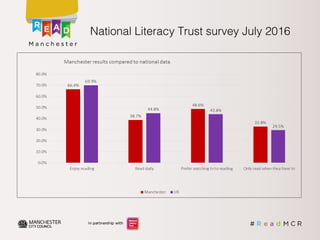
National Literacy Trust survey July 2016
What makes a difference?
Raising literacy standards needs more than excellent literacy
teaching in schools
It also requires:
•positive home learning environments
•a focus on reading for pleasure
•a locally-focused approach – one size doesn’t fit all
•partnerships from across all sectors (schools, libraries, businesses,
3rd
sector etc.)
Why is reading for pleasure
important?
Research shows that when people read for pleasure:
•they have greater opportunities in everyday life, education and
employment
•Studies (Mindlab International 2104) show that reading for just 6 mins is the
best way to relax:
• Better than listening to music or going for a walk
• Heart rate slows and muscles unwind
• Stress levels can fall by almost 70%
•Positive impact on a range of outcomes…
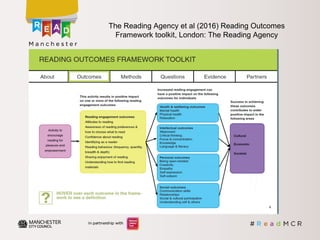
The Reading Agency et al (2016) Reading Outcomes
Framework toolkit, London: The Reading Agency
Public libraries are not all closing…
•250 million visits were made last year (more than cinema & theatre & visits to the
top 10 tourist attractions & visits to live gigs COMBINED)
•51% of us have a current public library card (47% have used a public library in the
last 12 months)
•15-25 year olds are more likely to use public libraries than over 55’s
But public libraries can’t go it alone…
Whose responsibility is reading
anyway?
• The National Literacy Trust – research, sector expertise and
contacts
• Businesses – employees and local ownership
• Community partners – e.g. Wythenshawe Community Housing
Group
• Established brands – Manchester Literature Festival, Manchester
Children’s Book Festival
• Transport for Greater Manchester
• Schools, colleges, universities
Partnerships are key
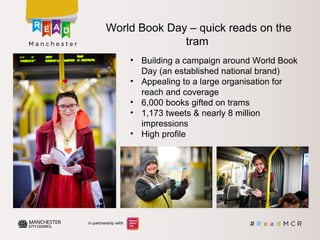
• Building a campaign around World Book
Day (an established national brand)
• Appealing to a large organisation for
reach and coverage
• 6,000 books gifted on trams
• 1,173 tweets & nearly 8 million
impressions
• High profile
World Book Day – quick reads on the
tram
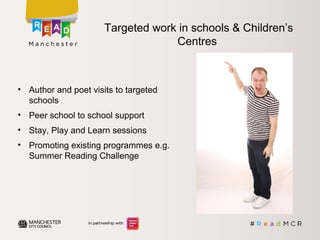
• Author and poet visits to targeted
schools
• Peer school to school support
• Stay, Play and Learn sessions
• Promoting existing programmes e.g.
Summer Reading Challenge
Targeted work in schools & Children’s
Centres
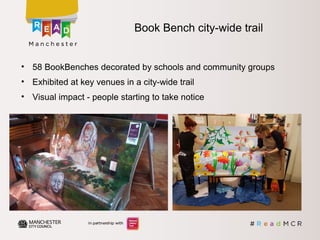
• 58 BookBenches decorated by schools and community groups
• Exhibited at key venues in a city-wide trail
• Visual impact - people starting to take notice
Book Bench city-wide trail
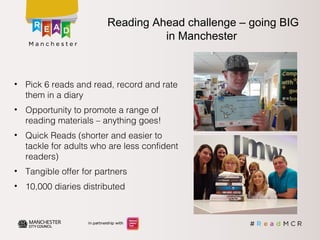
• Pick 6 reads and read, record and rate
them in a diary
• Opportunity to promote a range of
reading materials – anything goes!
• Quick Reads (shorter and easier to
tackle for adults who are less confident
readers)
• Tangible offer for partners
• 10,000 diaries distributed
Reading Ahead challenge – going BIG
in Manchester
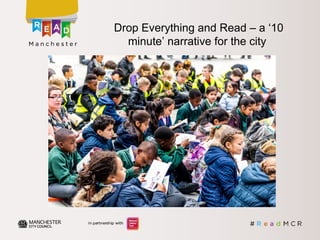
Drop Everything and Read – a ‘10
minute’ narrative for the city
• Funding secured, but with a more targeted focus on early
years and young people
• Develop a reading narrative for the city – Just 10 minutes
• Grow partners and brand
• #ReadMCR
Cheryl Pridgeon
c.pridgeon@manchester.gov.uk
@manclibraries
Where do we go from here?

Read Manchester

  • 1.
  • 2.
    Read Manchester –what is it? • A campaign / initiative / programme / a movement! • National Literacy Trust • From 0-99 • Focuses on reading for pleasure • Not re-inventing the wheel – there’s a lot going on already • An umbrella for existing reading activity • A brand – enabling partners to badge their activity • Not a competitor, but an enabler
  • 3.
    Why now? The timeis right: Our Manchester – a 10 year strategy for the city - a thriving, sustainable city - a highly skilled city a place where residents from all backgrounds feel safe, can aspire, succeed and live well Schools – the need to drive improvement Recognition that the city council can’t do it all – ownership to embed a culture change 1 in 6 adults struggle to read (15% adults in NW don’t have the literacy skills expected of an 11-year old)
  • 4.
    National Literacy Trustsurvey July 2016
  • 5.
    What makes adifference? Raising literacy standards needs more than excellent literacy teaching in schools It also requires: •positive home learning environments •a focus on reading for pleasure •a locally-focused approach – one size doesn’t fit all •partnerships from across all sectors (schools, libraries, businesses, 3rd sector etc.)
  • 6.
    Why is readingfor pleasure important? Research shows that when people read for pleasure: •they have greater opportunities in everyday life, education and employment •Studies (Mindlab International 2104) show that reading for just 6 mins is the best way to relax: • Better than listening to music or going for a walk • Heart rate slows and muscles unwind • Stress levels can fall by almost 70% •Positive impact on a range of outcomes…
  • 7.
    The Reading Agencyet al (2016) Reading Outcomes Framework toolkit, London: The Reading Agency
  • 8.
    Public libraries arenot all closing… •250 million visits were made last year (more than cinema & theatre & visits to the top 10 tourist attractions & visits to live gigs COMBINED) •51% of us have a current public library card (47% have used a public library in the last 12 months) •15-25 year olds are more likely to use public libraries than over 55’s But public libraries can’t go it alone… Whose responsibility is reading anyway?
  • 9.
    • The NationalLiteracy Trust – research, sector expertise and contacts • Businesses – employees and local ownership • Community partners – e.g. Wythenshawe Community Housing Group • Established brands – Manchester Literature Festival, Manchester Children’s Book Festival • Transport for Greater Manchester • Schools, colleges, universities Partnerships are key
  • 10.
    • Building acampaign around World Book Day (an established national brand) • Appealing to a large organisation for reach and coverage • 6,000 books gifted on trams • 1,173 tweets & nearly 8 million impressions • High profile World Book Day – quick reads on the tram
  • 11.
    • Author andpoet visits to targeted schools • Peer school to school support • Stay, Play and Learn sessions • Promoting existing programmes e.g. Summer Reading Challenge Targeted work in schools & Children’s Centres
  • 12.
    • 58 BookBenchesdecorated by schools and community groups • Exhibited at key venues in a city-wide trail • Visual impact - people starting to take notice Book Bench city-wide trail
  • 13.
    • Pick 6reads and read, record and rate them in a diary • Opportunity to promote a range of reading materials – anything goes! • Quick Reads (shorter and easier to tackle for adults who are less confident readers) • Tangible offer for partners • 10,000 diaries distributed Reading Ahead challenge – going BIG in Manchester
  • 14.
    Drop Everything andRead – a ‘10 minute’ narrative for the city
  • 16.
    • Funding secured,but with a more targeted focus on early years and young people • Develop a reading narrative for the city – Just 10 minutes • Grow partners and brand • #ReadMCR Cheryl Pridgeon c.pridgeon@manchester.gov.uk @manclibraries Where do we go from here?