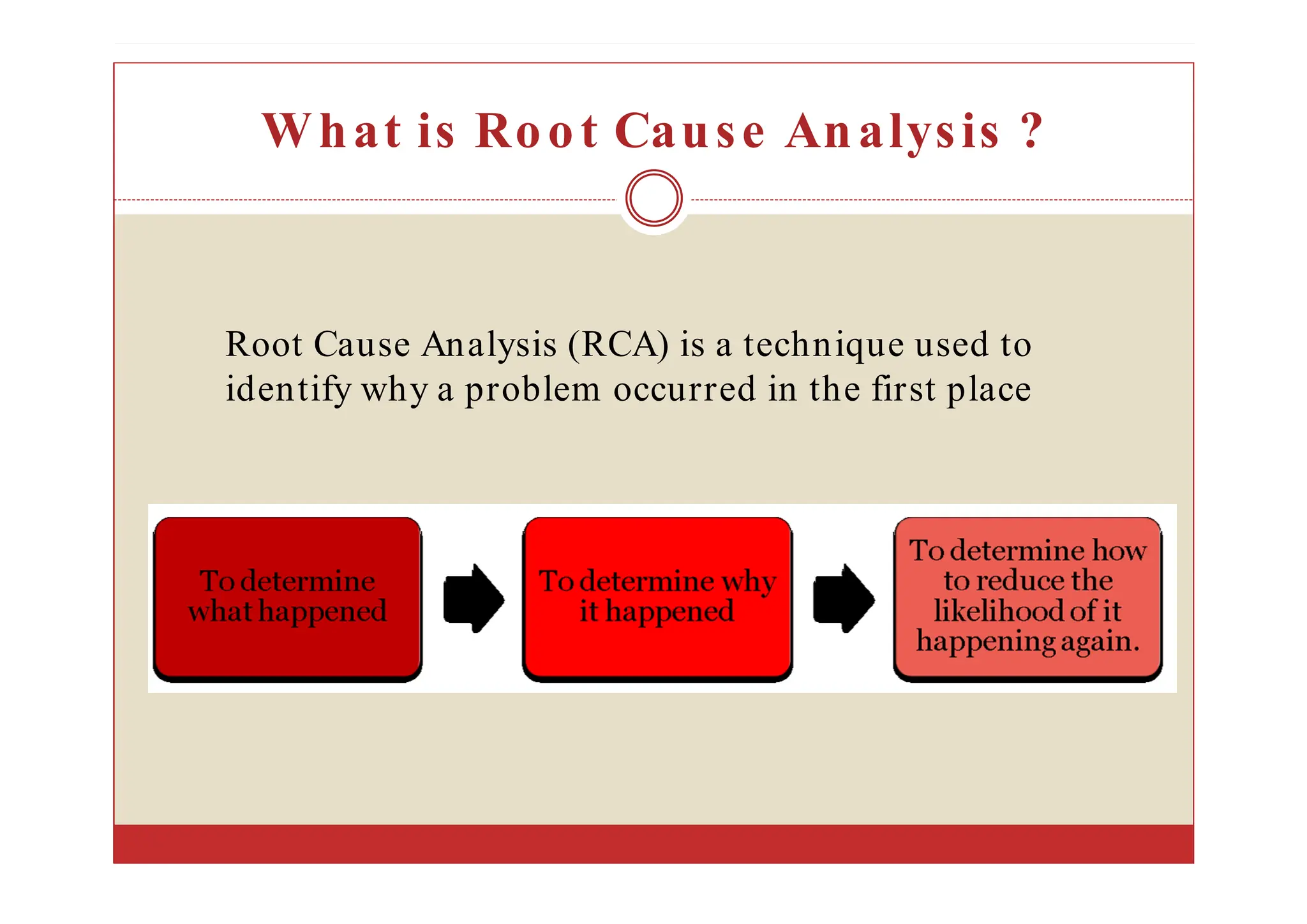
What is Root Cause Analysis ?
Root Cause Analysis (RCA) is a technique used to
identify why a problem occurred in the first place
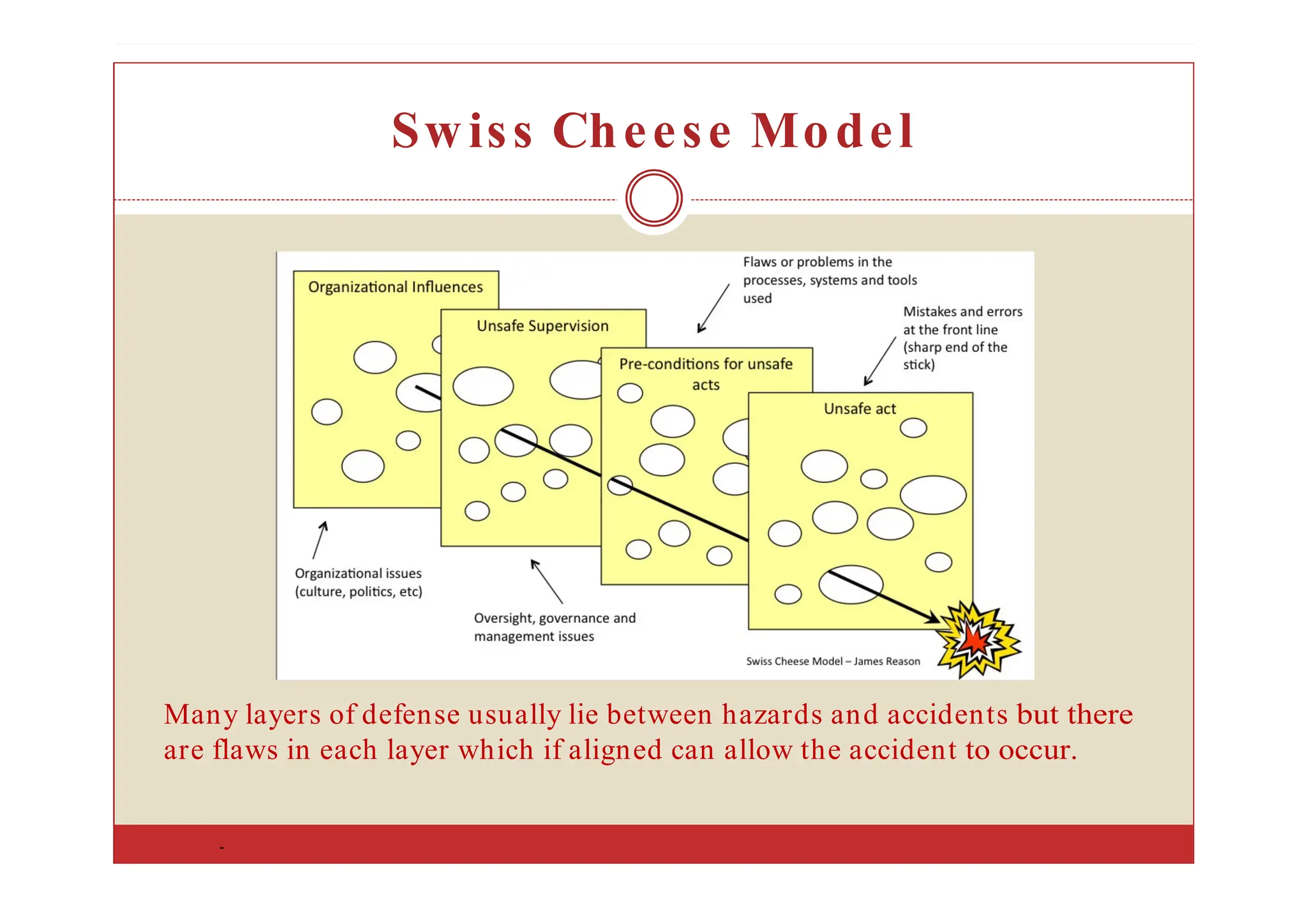
Swiss Cheese Model
Many layers of defense usually lie between hazards and accidents but there
are flaws in each layer which if aligned can allow the accident to occur.
-
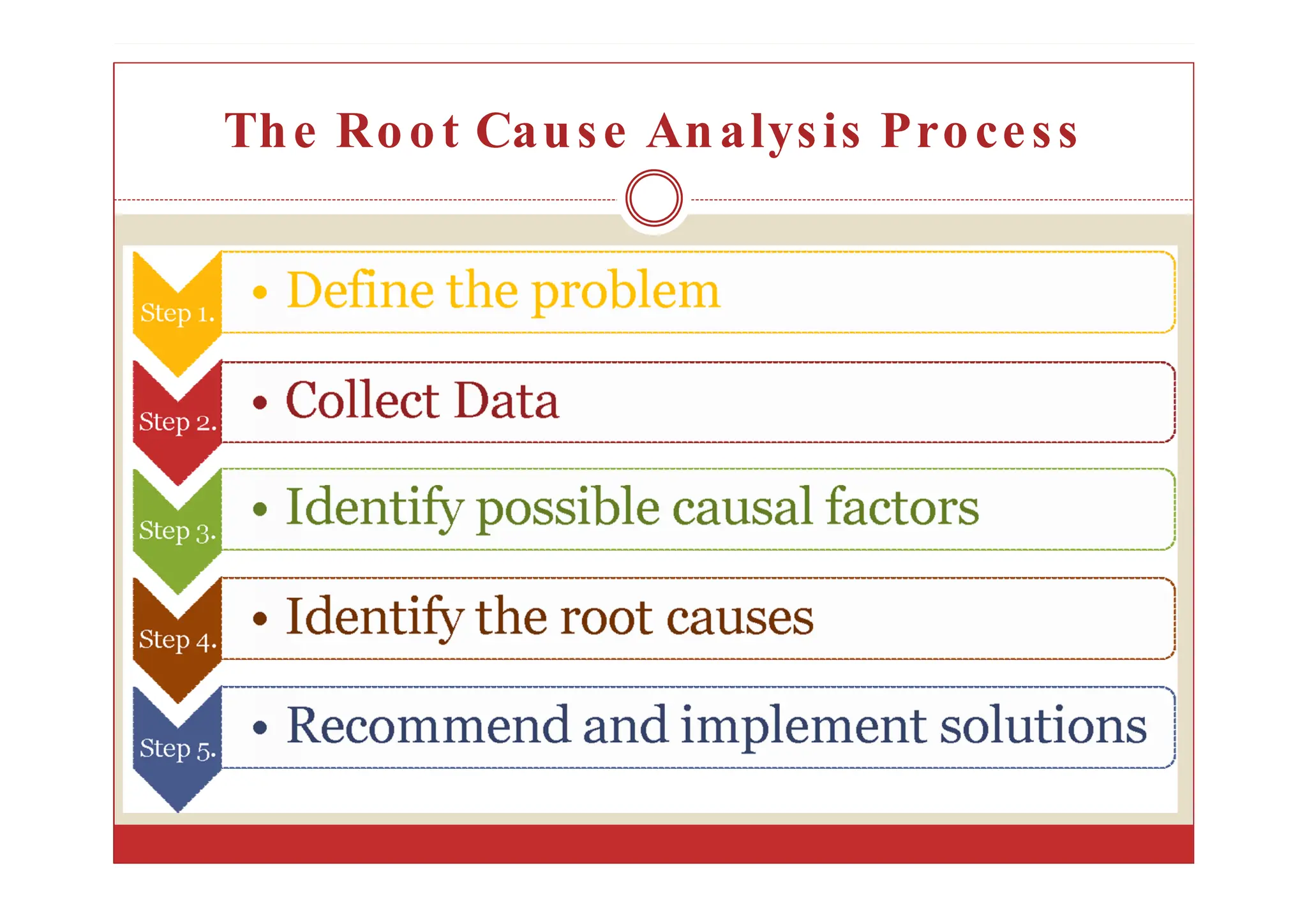
The Root Cause Analysis Process
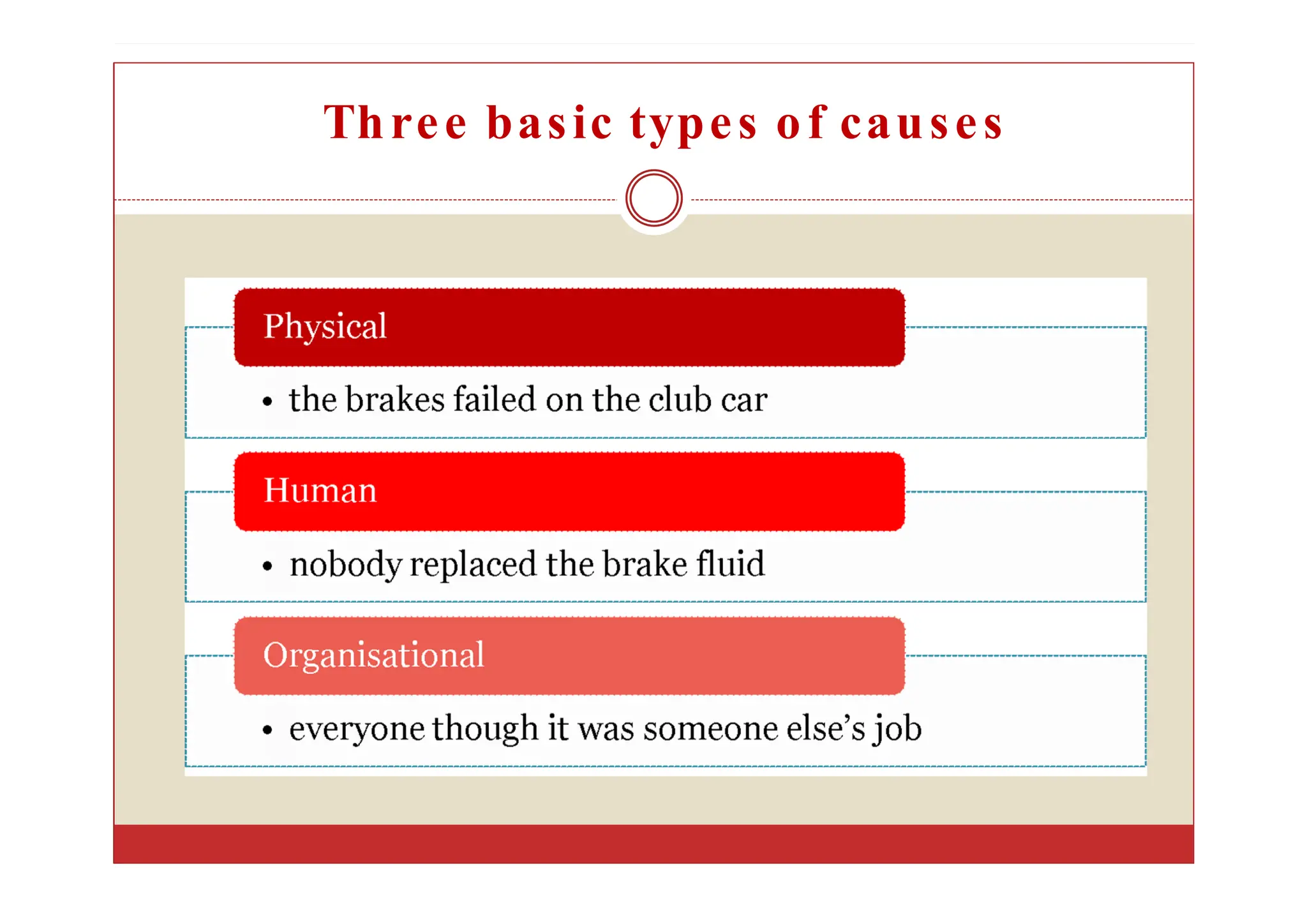
Three basic types of causes
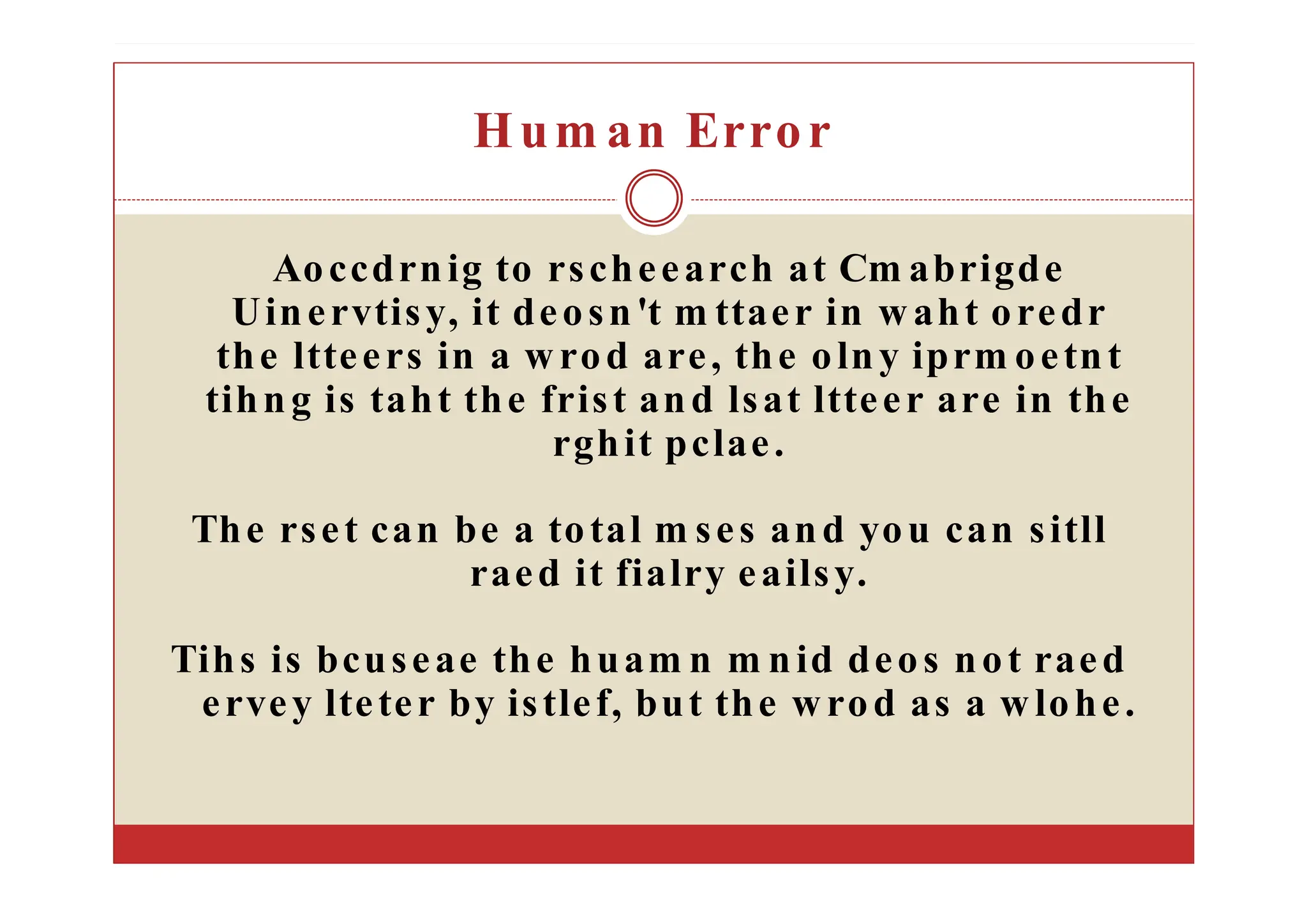
Hum an Error
Aoccdrnig to rscheearch at Cm abrigde
Uinervtisy, it deosn't m ttaer in waht oredr
the ltteers in a wrod are, the olny iprm oetnt
tihng is taht the frist and lsat ltteer are in the
rghit pclae.
The rset can be a total m ses and you can sitll
raed it fialry eailsy.
Tihs is bcuseae the huam n m nid deos not raed
ervey lteter by istlef, but the wrod as a wlohe.
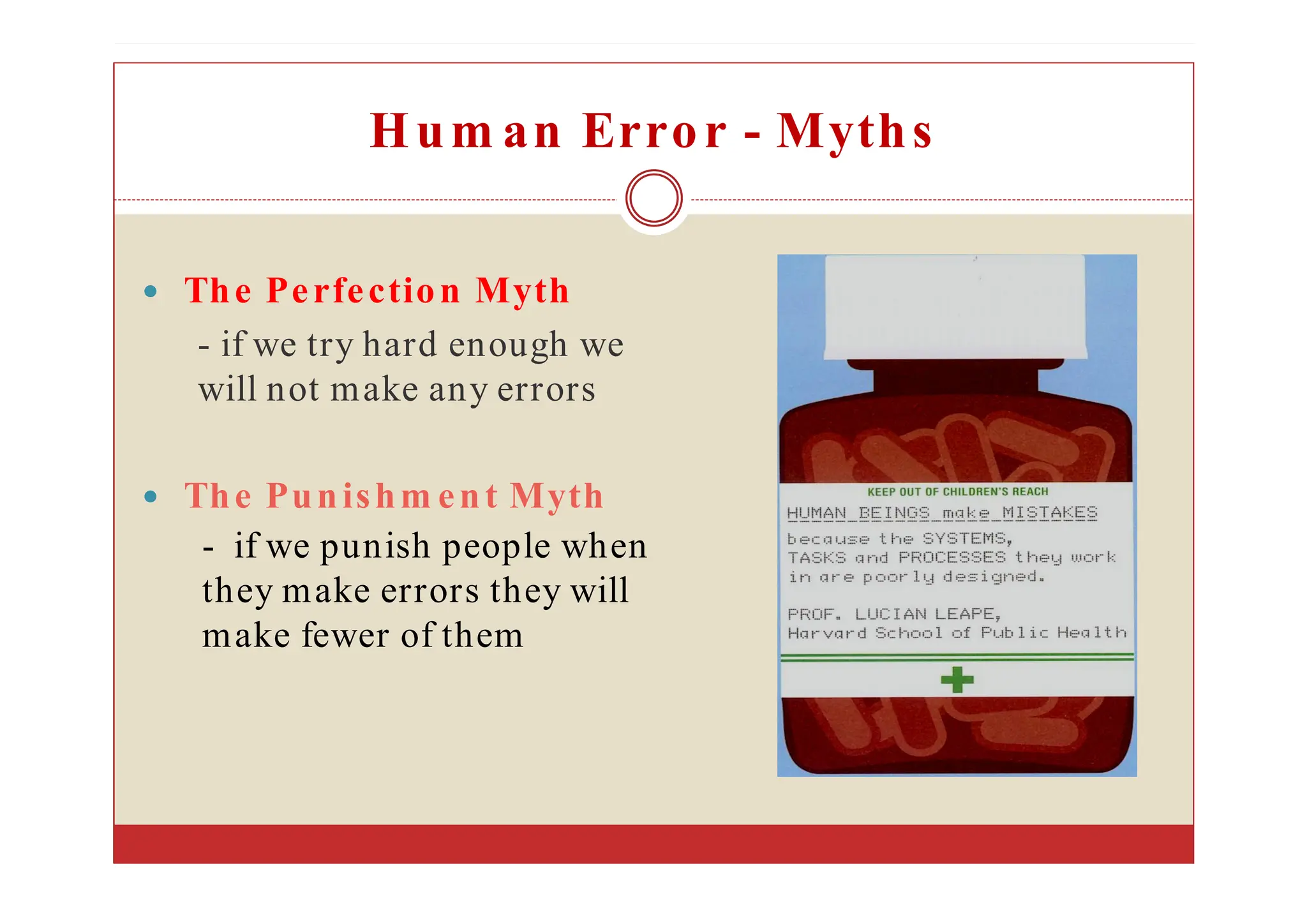
Hum an Error - Myths
The Perfection Myth
- if we try hard enough we
will not make any errors
The Punishm ent Myth
- if we punish people when
they make errors they will
make fewer of them
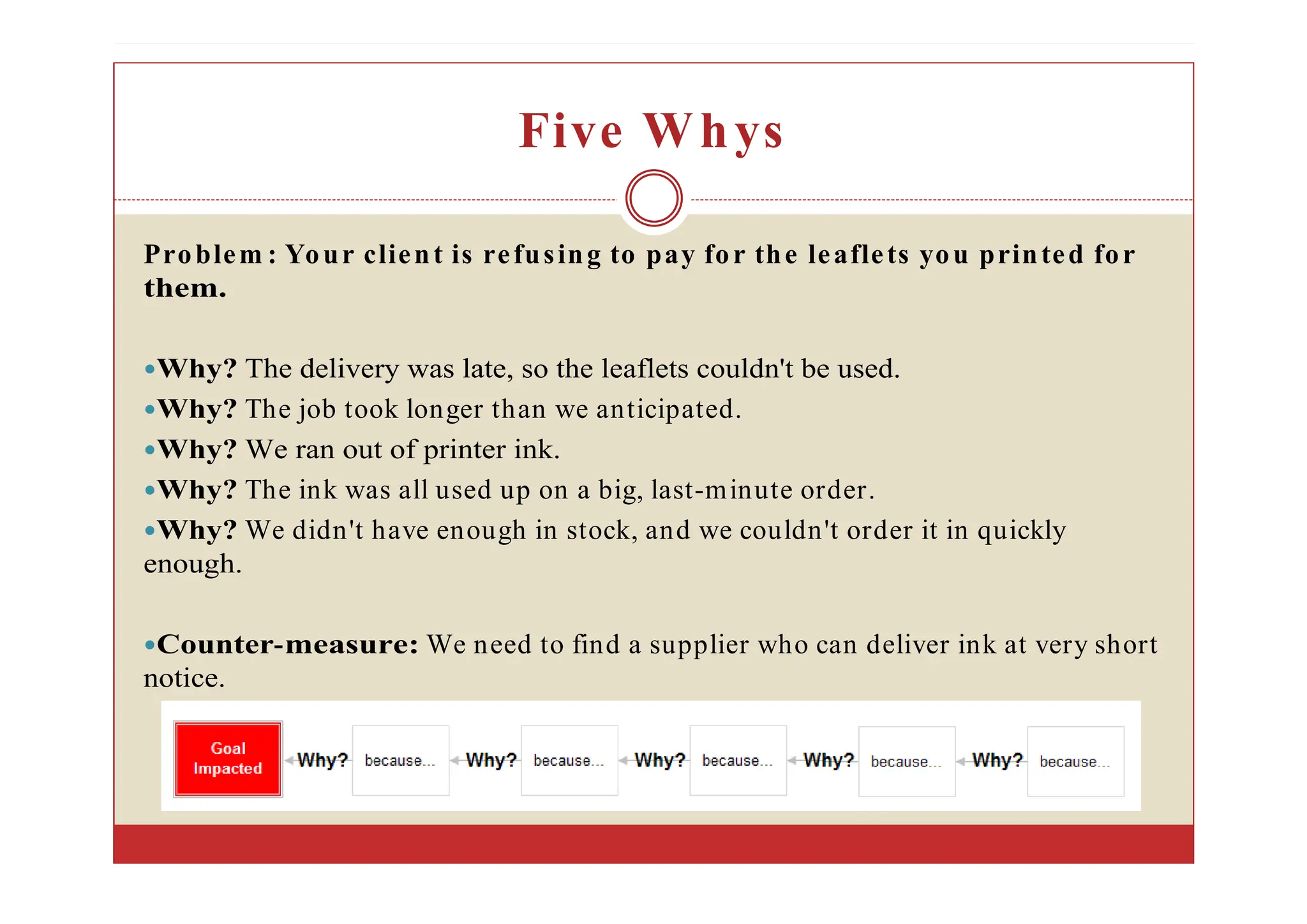
Five Whys
Problem : Your client is refusing to pay for the leaflets you printed for
them.
Why? The delivery was late, so the leaflets couldn't be used.
Why? The job took longer than we anticipated.
Why? We ran out of printer ink.
Why? The ink was all used up on a big, last-minute order.
Why? We didn't have enough in stock, and we couldn't order it in quickly
enough.
Counter-measure: We need to find a supplier who can deliver ink at very short
notice.
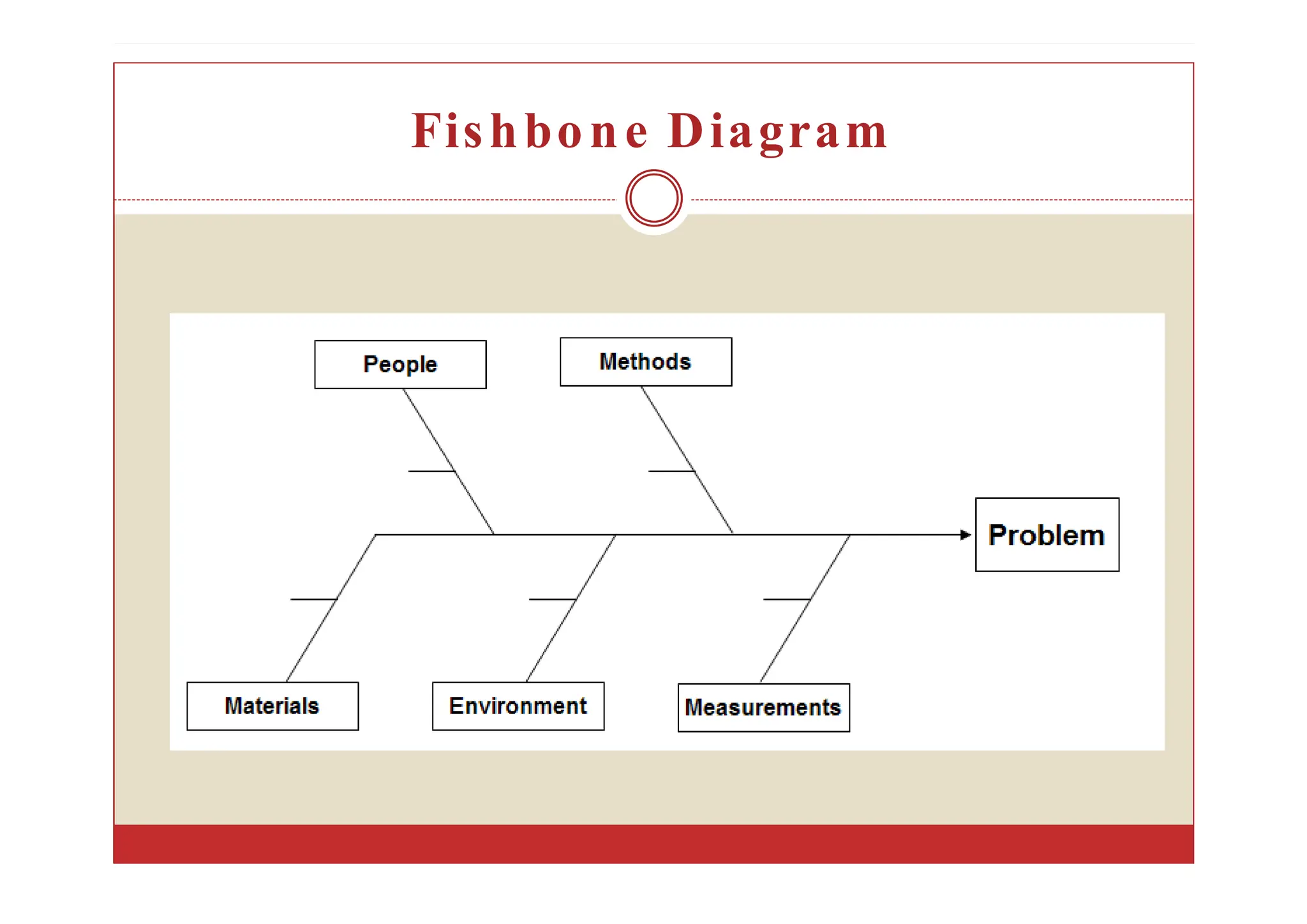
Fishbone Diagram
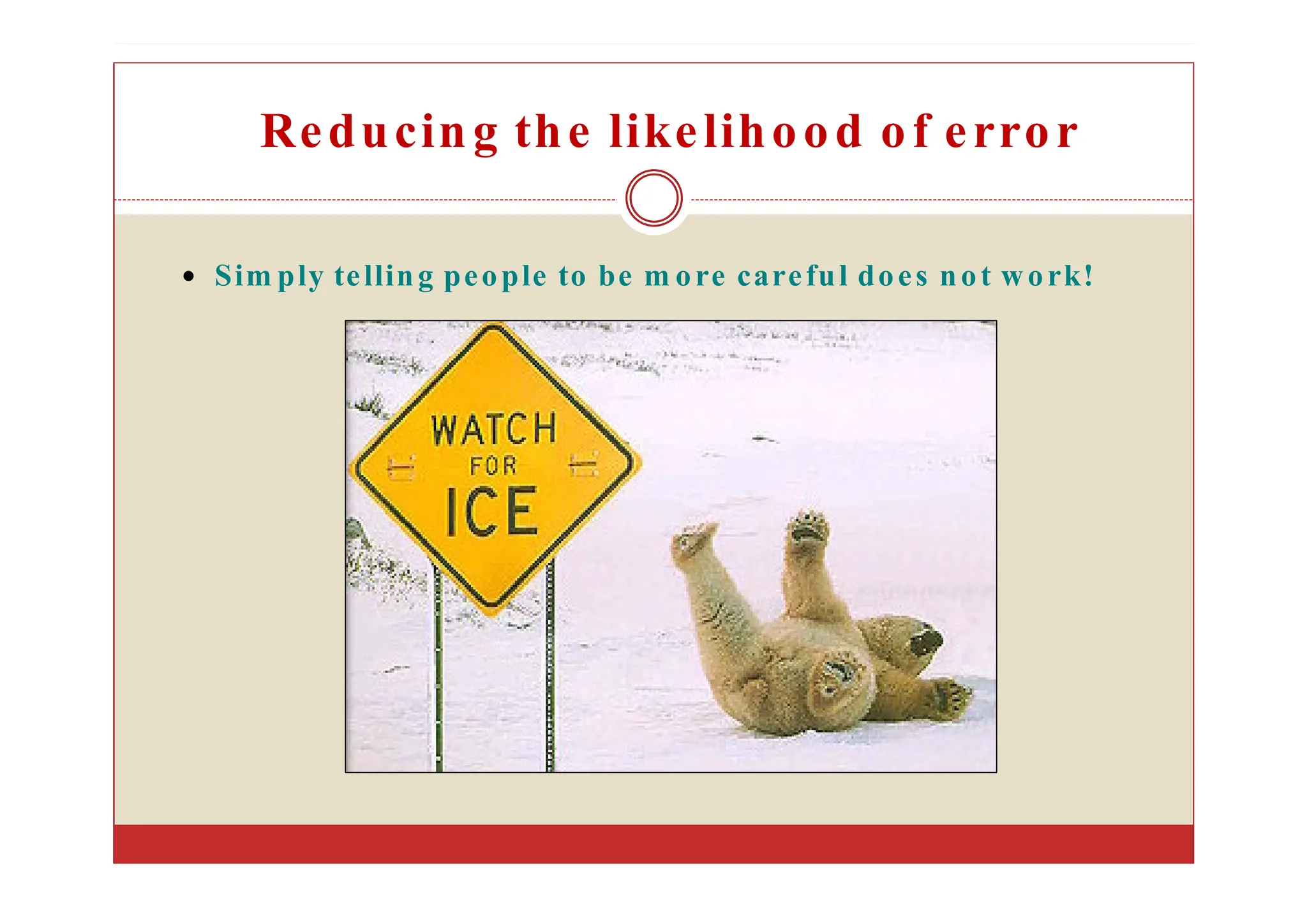
Sim ply telling people to be m ore careful does not work!
Reducing the likelihood of error
Safety Solutions / Actions
Rem edial actions should
• Draw on the experience of NHS staff + patients / public
• Be simple and cost effective (proportionality)
• Target root causes or lessons learned
• Offer a long term solution to the problem
• Be SMART (Specific, Measurable, Achievable, Reasonable + Timed)
• Have a greater positive than negative impact on other procedures, resources
and schedules (risk assess and evaluate before implementation)
• Be shared
Take Hom e Messages
RCAs are used to identify and correct problems, and should
not to used to blame individual(s)
All contributing factors should be explored
As much information as possible is required
Suggestions for improvement should be given
Feedback should be provided to everyone who contributed
to the RCA and anyone who is affected by the actions
RCA Basics1724597609.presentation of RCA.

  • 2.
    What is RootCause Analysis ? Root Cause Analysis (RCA) is a technique used to identify why a problem occurred in the first place
  • 3.
    Swiss Cheese Model Manylayers of defense usually lie between hazards and accidents but there are flaws in each layer which if aligned can allow the accident to occur. -
  • 4.
    The Root CauseAnalysis Process
  • 5.
  • 6.
    Hum an Error Aoccdrnigto rscheearch at Cm abrigde Uinervtisy, it deosn't m ttaer in waht oredr the ltteers in a wrod are, the olny iprm oetnt tihng is taht the frist and lsat ltteer are in the rghit pclae. The rset can be a total m ses and you can sitll raed it fialry eailsy. Tihs is bcuseae the huam n m nid deos not raed ervey lteter by istlef, but the wrod as a wlohe.
  • 7.
    Hum an Error- Myths The Perfection Myth - if we try hard enough we will not make any errors The Punishm ent Myth - if we punish people when they make errors they will make fewer of them
  • 8.
    Five Whys Problem :Your client is refusing to pay for the leaflets you printed for them. Why? The delivery was late, so the leaflets couldn't be used. Why? The job took longer than we anticipated. Why? We ran out of printer ink. Why? The ink was all used up on a big, last-minute order. Why? We didn't have enough in stock, and we couldn't order it in quickly enough. Counter-measure: We need to find a supplier who can deliver ink at very short notice.
  • 9.
  • 10.
    Sim ply tellingpeople to be m ore careful does not work! Reducing the likelihood of error
  • 11.
    Safety Solutions /Actions Rem edial actions should • Draw on the experience of NHS staff + patients / public • Be simple and cost effective (proportionality) • Target root causes or lessons learned • Offer a long term solution to the problem • Be SMART (Specific, Measurable, Achievable, Reasonable + Timed) • Have a greater positive than negative impact on other procedures, resources and schedules (risk assess and evaluate before implementation) • Be shared
  • 12.
    Take Hom eMessages RCAs are used to identify and correct problems, and should not to used to blame individual(s) All contributing factors should be explored As much information as possible is required Suggestions for improvement should be given Feedback should be provided to everyone who contributed to the RCA and anyone who is affected by the actions