Project members:
Rana Bilal
Mujahid Aziz
Naseer Ahmed
Project Advisor
Sir Hassan Ahmed
Contents: (sequence)
• Introduction of hovercraft
• History
• Working principle
• Basic parts of hovercraft
• Design & analysis
• Configuration selection
• Advantages and disadvantages
• Application of hovercraft
• Future of hovercraft
• conclusion
Hovercraft
• As modes of transportation have evolved over the years, finding
more efficient and economic ways of movement have been the
chief goals of developers. It is from this evolution that the
hovercraft arose.
Introduction:
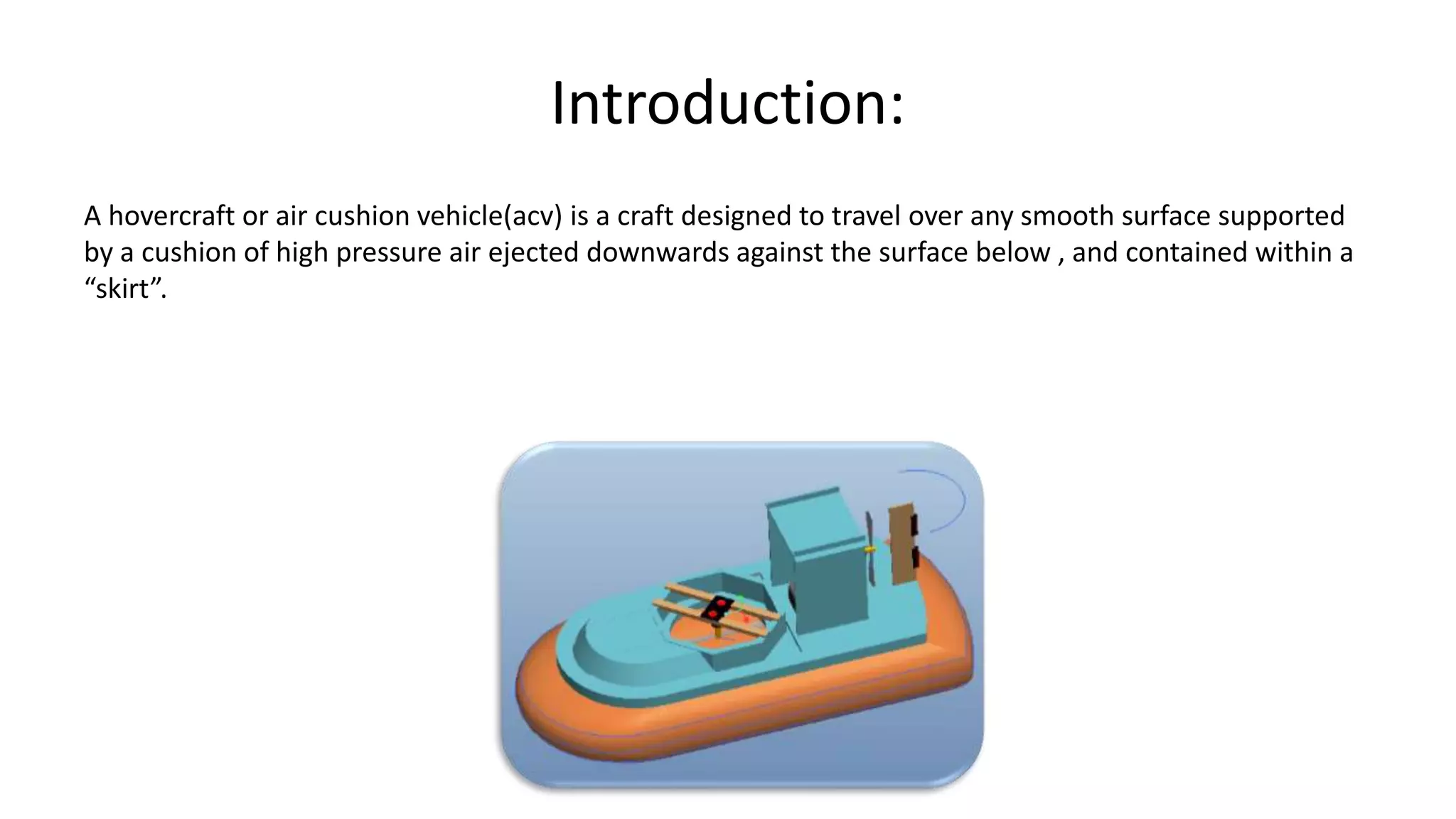
A hovercraft or air cushion vehicle(acv) is a craft designed to travel over any smooth surface supported
by a cushion of high pressure air ejected downwards against the surface below , and contained within a
“skirt”.
Introduction:
A Hovercraft is a vehicle that
Flies like a plane
Float like a boat
Drive like a car
History
1716 Emmanuel Swedenborg (Swedish Designer & Philosopher)
• He first conceptualized the idea of supporting a vehicle
on a cushion of air but his projectwas short lived and his
craft never built.
History
Mid 1870s Sir John Thornycroft (British Engineer)
• He developed the air cushion effect idea further by building and testing a number
of models but no applications were found since the technology to implement the
concept did not exist at the time.
History
1952 Sir Christopher Cockerell (British Engineering)
• He invented the hovercraft and got his idea patented in 1955.
• With diligent work he was able to bring his idea to reality with the first commercial
hovercraft in 1959.
• From there on the idea took with numerous developments with the vehicle.
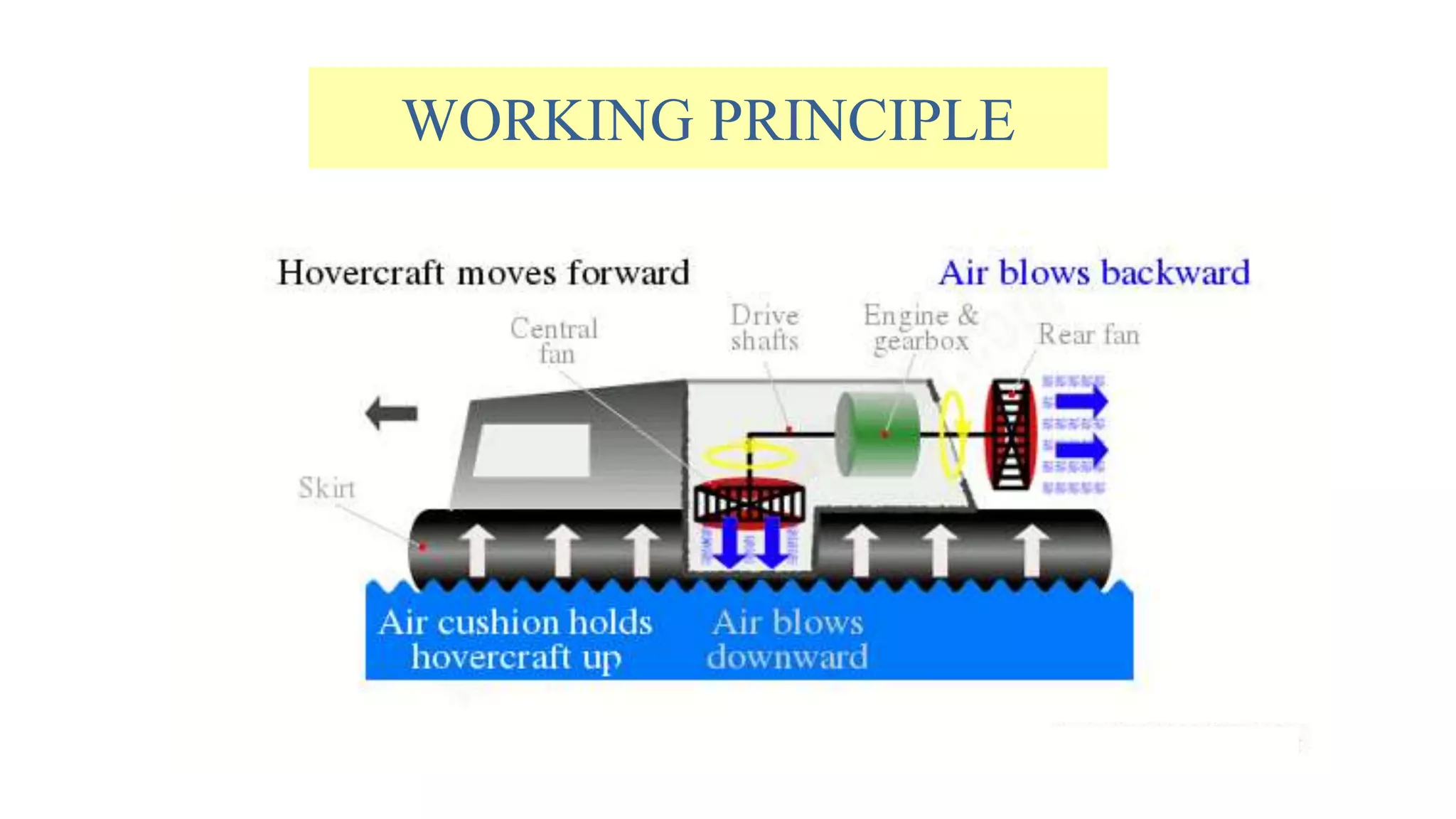
WORKING PRINCIPLE
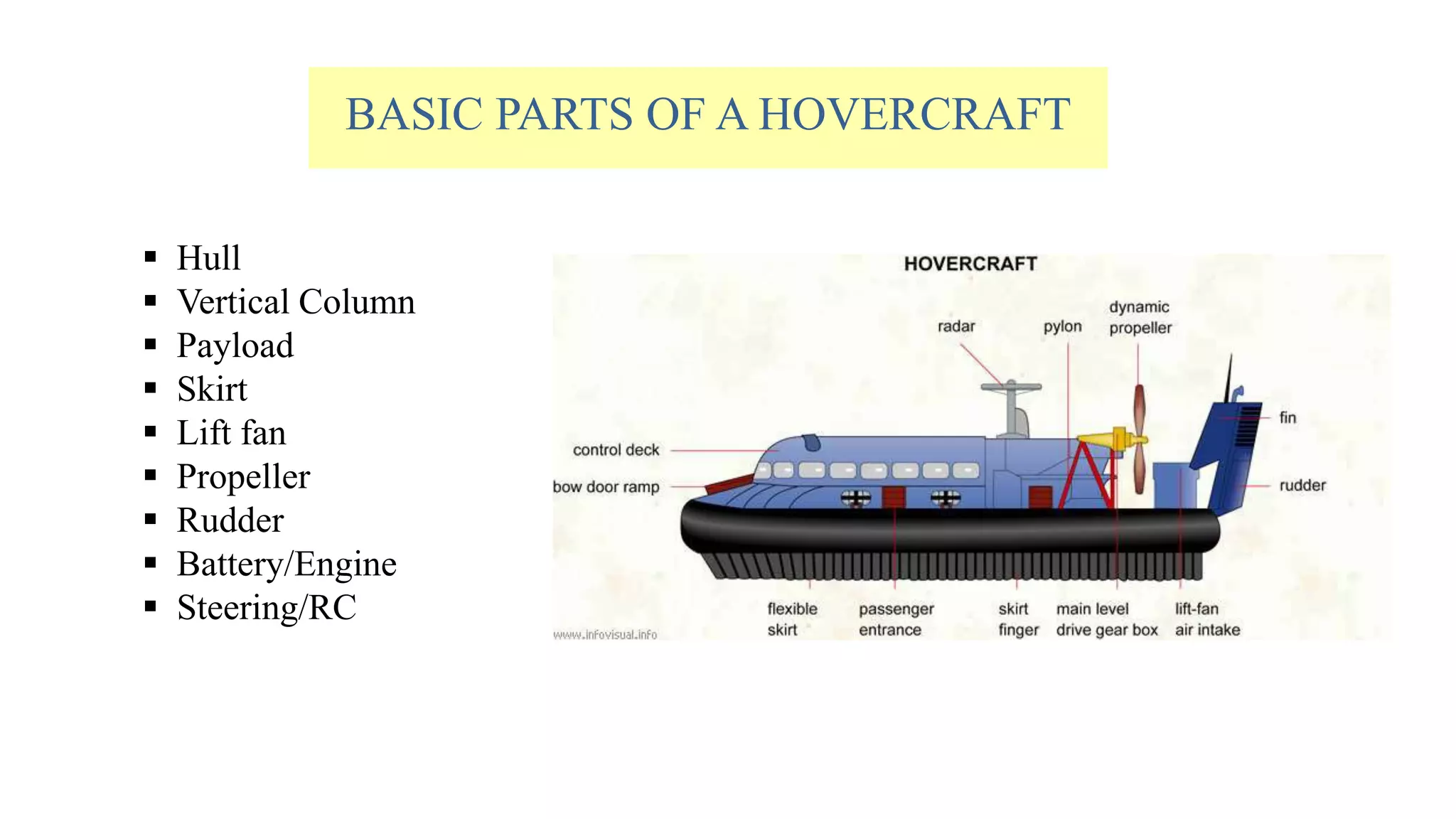
BASIC PARTS OF A HOVERCRAFT
 Hull
 Vertical Column
 Payload
 Skirt
 Lift fan
 Propeller
 Rudder
 Battery/Engine
 Steering/RC
*** insert a good
quality labeled diagram
here
DESIGN & ANALYSIS
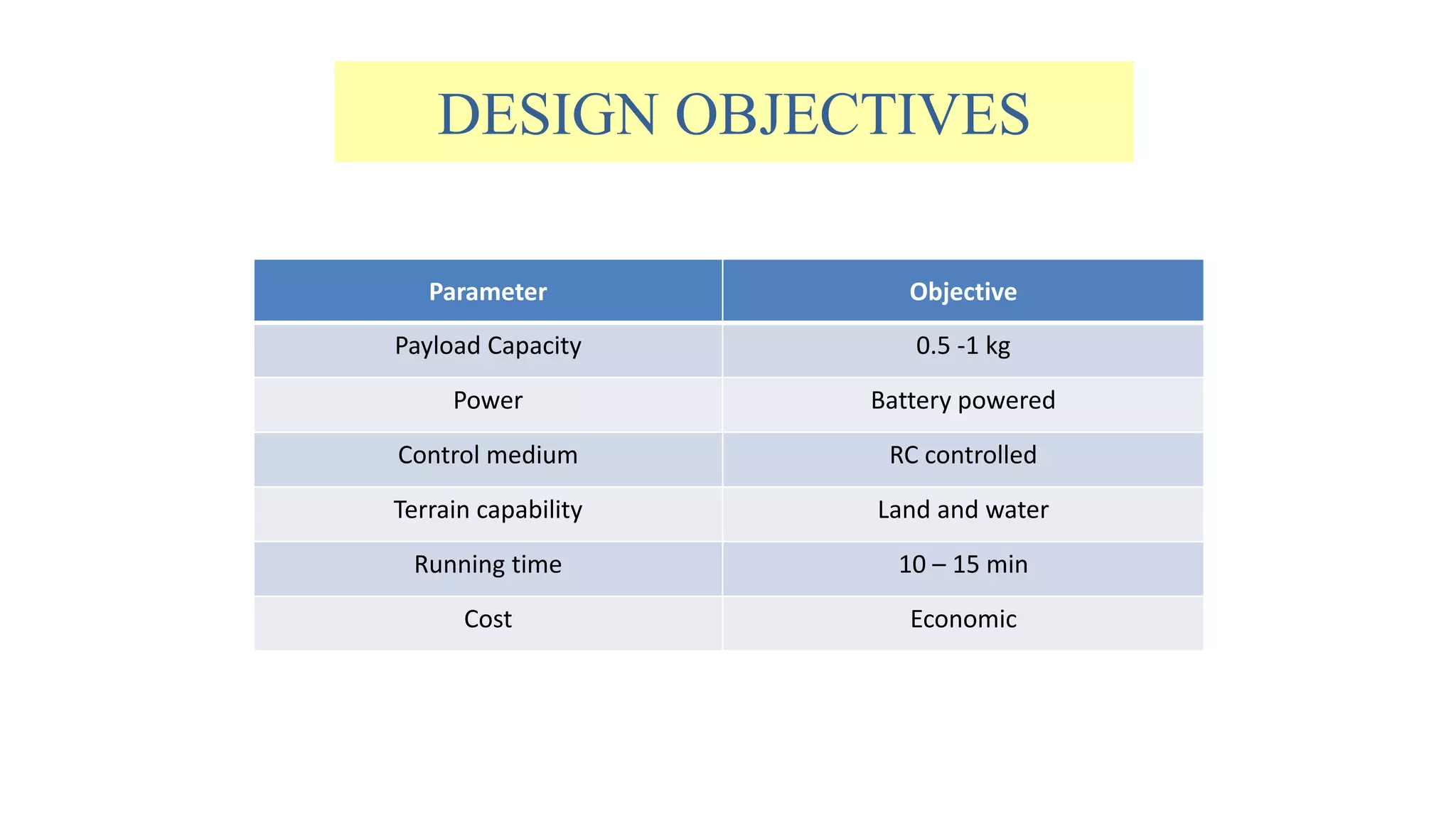
DESIGN OBJECTIVES
Parameter Objective
Payload Capacity 0.5 -1 kg
Power Battery powered
Control medium RC controlled
Terrain capability Land and water
Running time 10 – 15 min
Cost Economic
DESIGN CONSIDERATIONS
 Design Constraints:
o Budget : 25k-30k
o Manufacturing facilities
o Materials availability
 Personal skill level
 Project duration
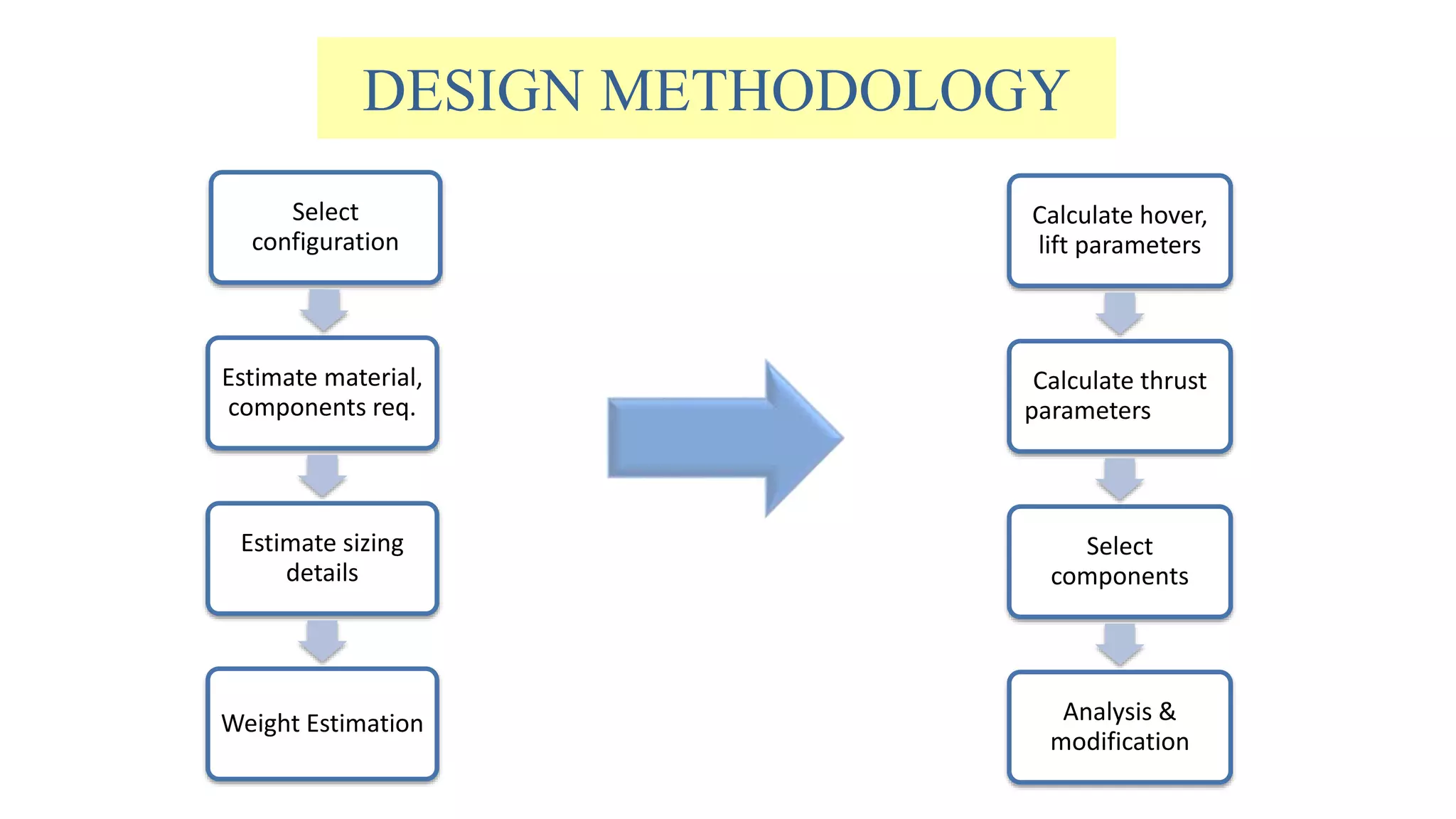
DESIGN METHODOLOGY
Select
configuration
Estimate material,
components req.
Estimate sizing
details
Weight Estimation
Calculate hover,
lift parameters
Calculate thrust
parameters
Select
components
Analysis &
modification
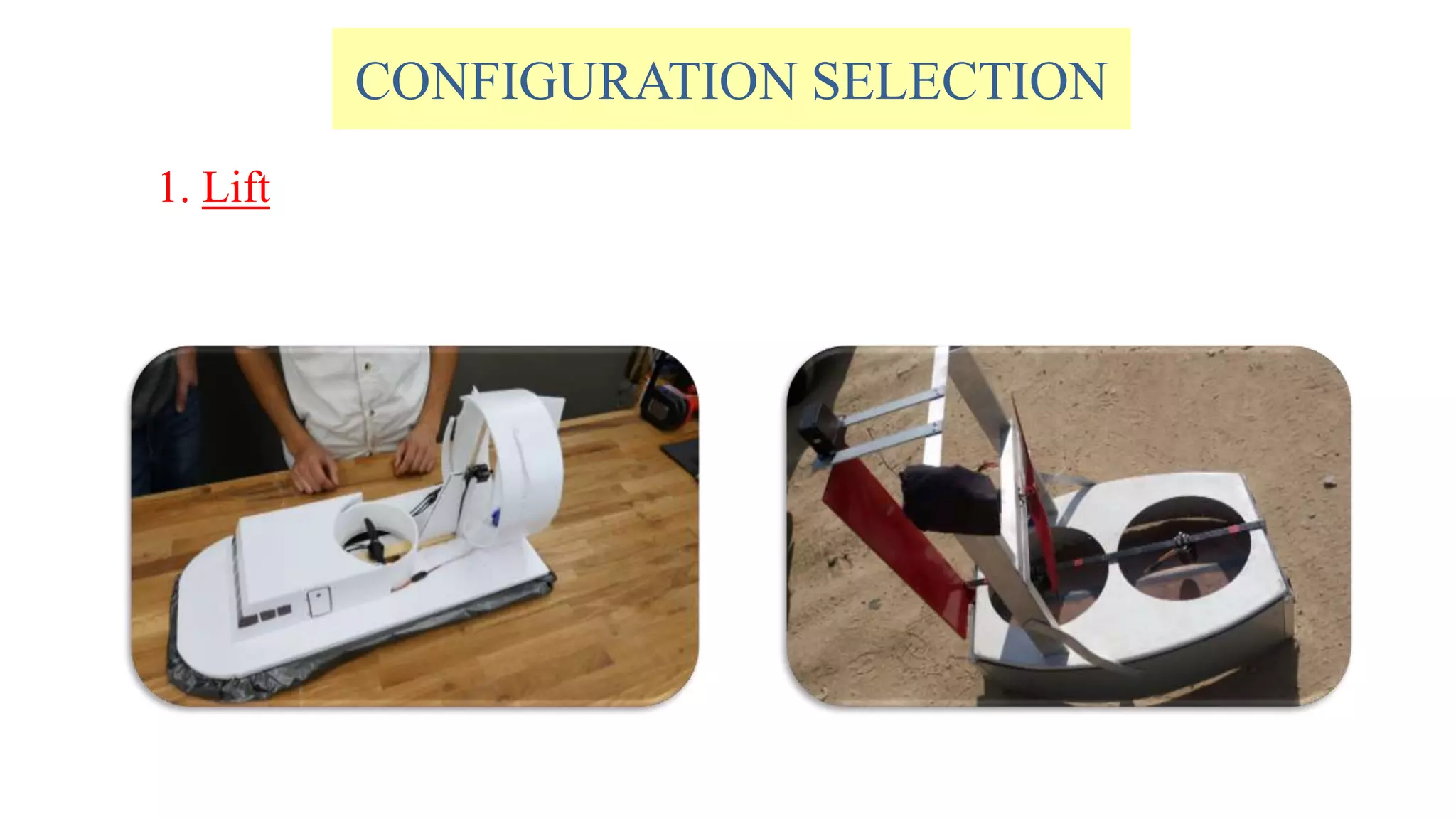
CONFIGURATION SELECTION
1. Lift
CONFIGURATION SELECTION
2. Air Cushion
CONFIGURATION SELECTION
3. Thrust
CONFIGURATION SELECTION
4. Rudder
DESIGN CALCULATIONS
1. Weight Estimation
Components Mass Quantity Net Mass Total mass,weight
Hull 300g 1 300g
1.952kg
Or
19.52 N
Vertical Column 52g 1 52g
Skirt 200g 1 200g
Rudder 100g 1 100g
Bldc Motor 300g 2 600g
Servo motor 200g 1 200g
ESC 100g 1 100g
Battery 400g 1 400
DESIGN CALCULATIONS
2. Lift Force and Air Cushion Pressure
Required lift force = Air cushion pressure * lift area
FL = Pc * AL
Pc = FL / AL
FL = Lift force = Estimated weight = 1.95 kg * g = 19.5 N
AL = Total area covered by hull – Area of lift motor duct
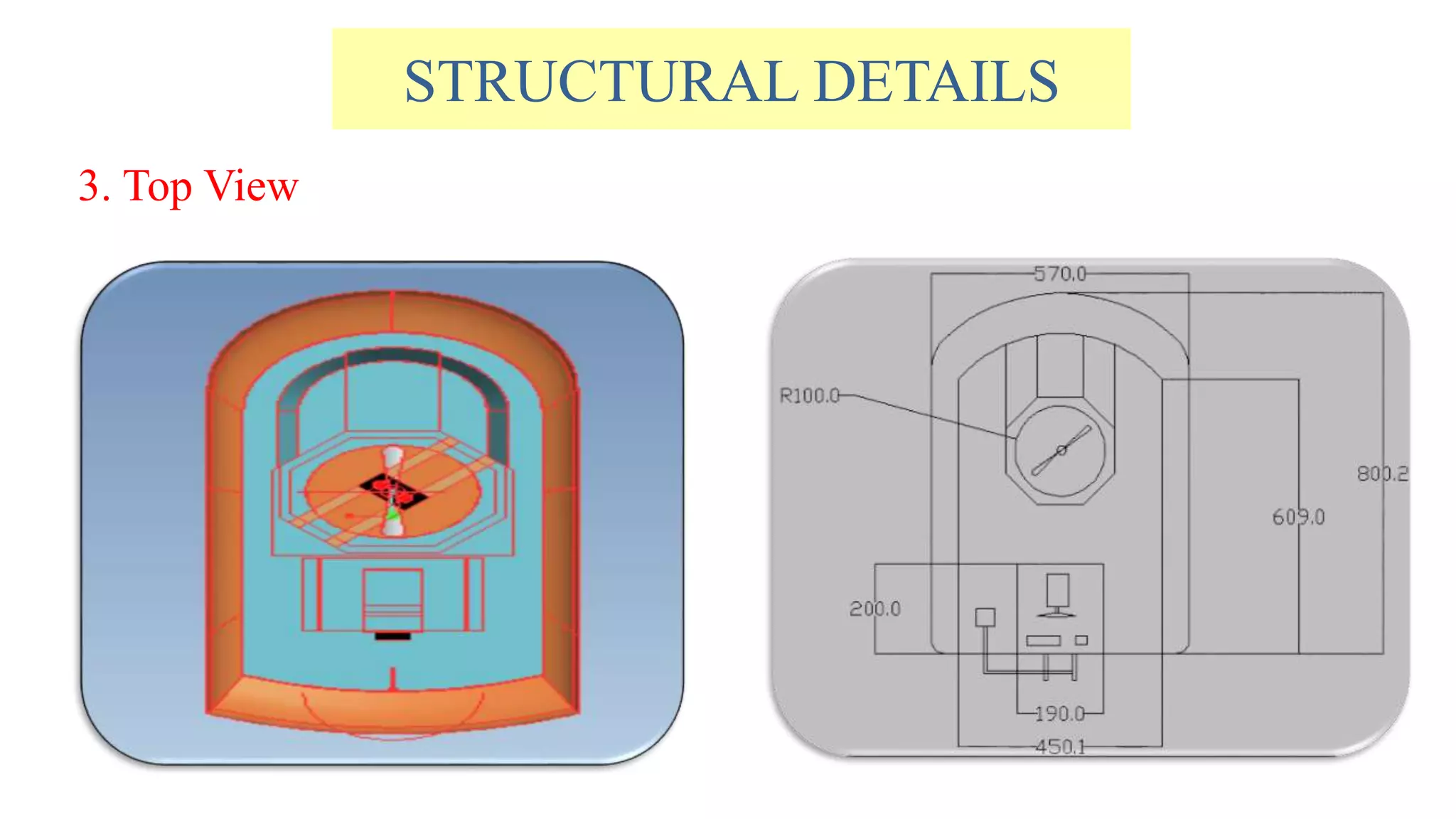
= 0.610 m x - 0.450 m - ∏ x (0.1 mm)2
=0.243 m2
Pc = Air cushion pressure = 19.5 N / 0.243 m2
= 88.76 Pa
Pc = 88.76 Pa
DESIGN CALCULATIONS
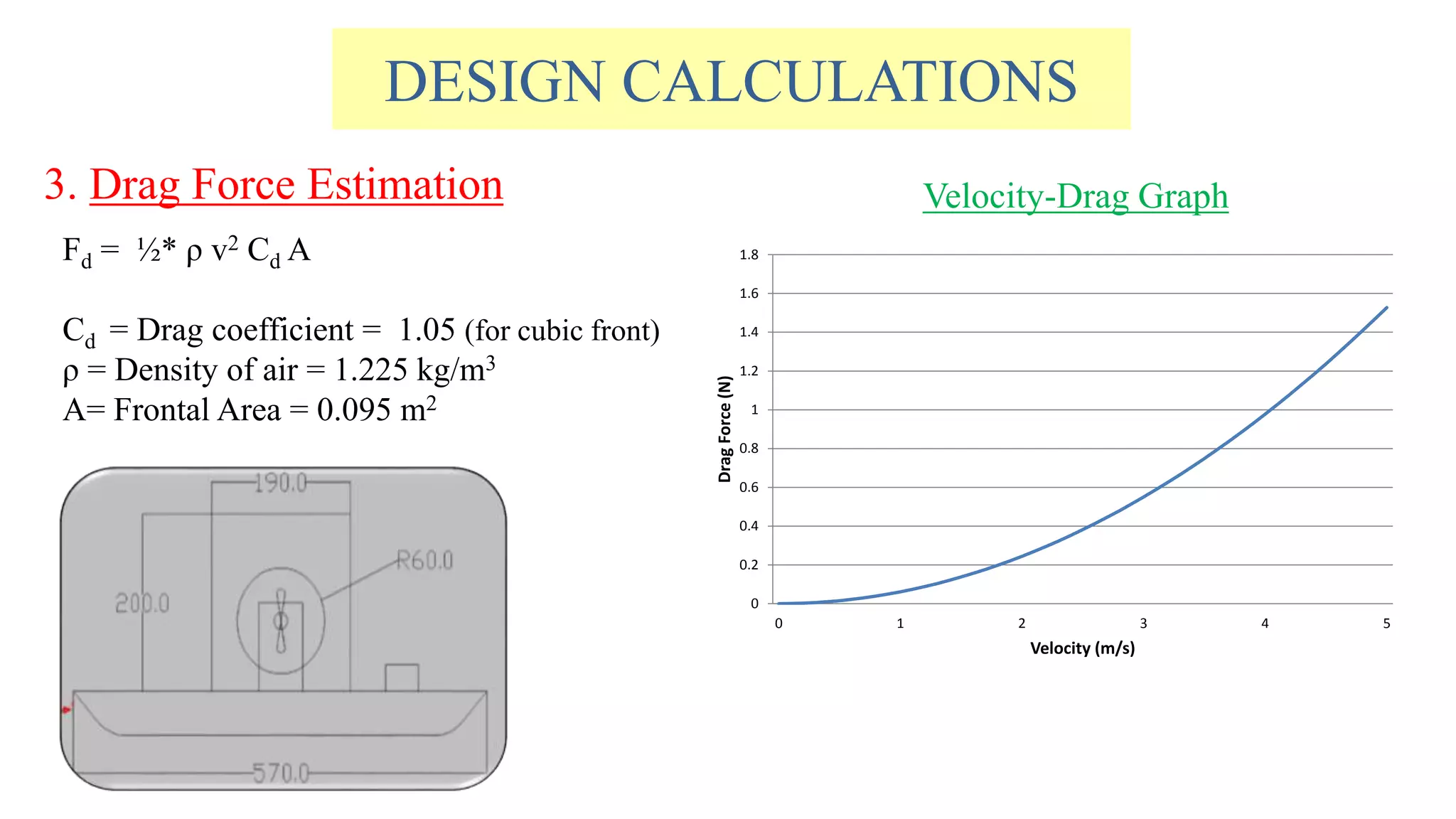
3. Drag Force Estimation
Fd = ½* ρ v2 Cd A
Cd = Drag coefficient = 1.05 (for cubic front)
ρ = Density of air = 1.225 kg/m3
A= Frontal Area = 0.095 m2
0
0.2
0.4
0.6
0.8
1
1.2
1.4
1.6
1.8
0 1 2 3 4 5
DragForce(N)
Velocity (m/s)
Velocity-Drag Graph
DESIGN CALCULATIONS
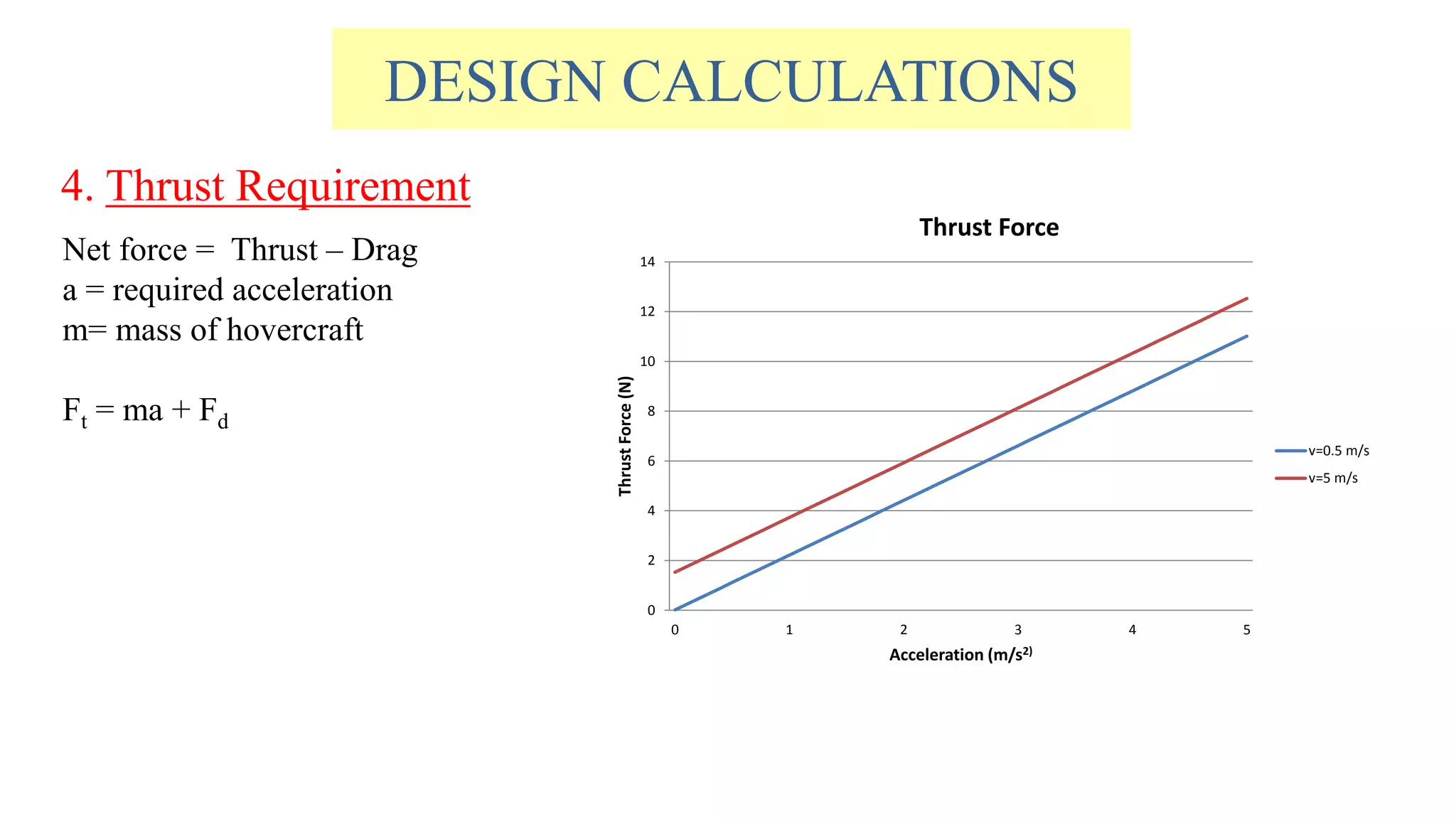
4. Thrust Requirement
Net force = Thrust – Drag
a = required acceleration
m= mass of hovercraft
Ft = ma + Fd
0
2
4
6
8
10
12
14
0 1 2 3 4 5ThrustForce(N)
Acceleration (m/s2)
Thrust Force
v=0.5 m/s
v=5 m/s
DESIGN CALCULATIONS
4. Running Time
Total capacity = 10000 mAh
Total current drain (65A ESC) =130A
Running time = Capacity/ Amperage
= 11 min approximately
STRUCTURAL DETAILS
1. Assembly Model
STRUCTURAL DETAILS
2. Front View
STRUCTURAL DETAILS
3. Top View
STRUCTURAL DETAILS
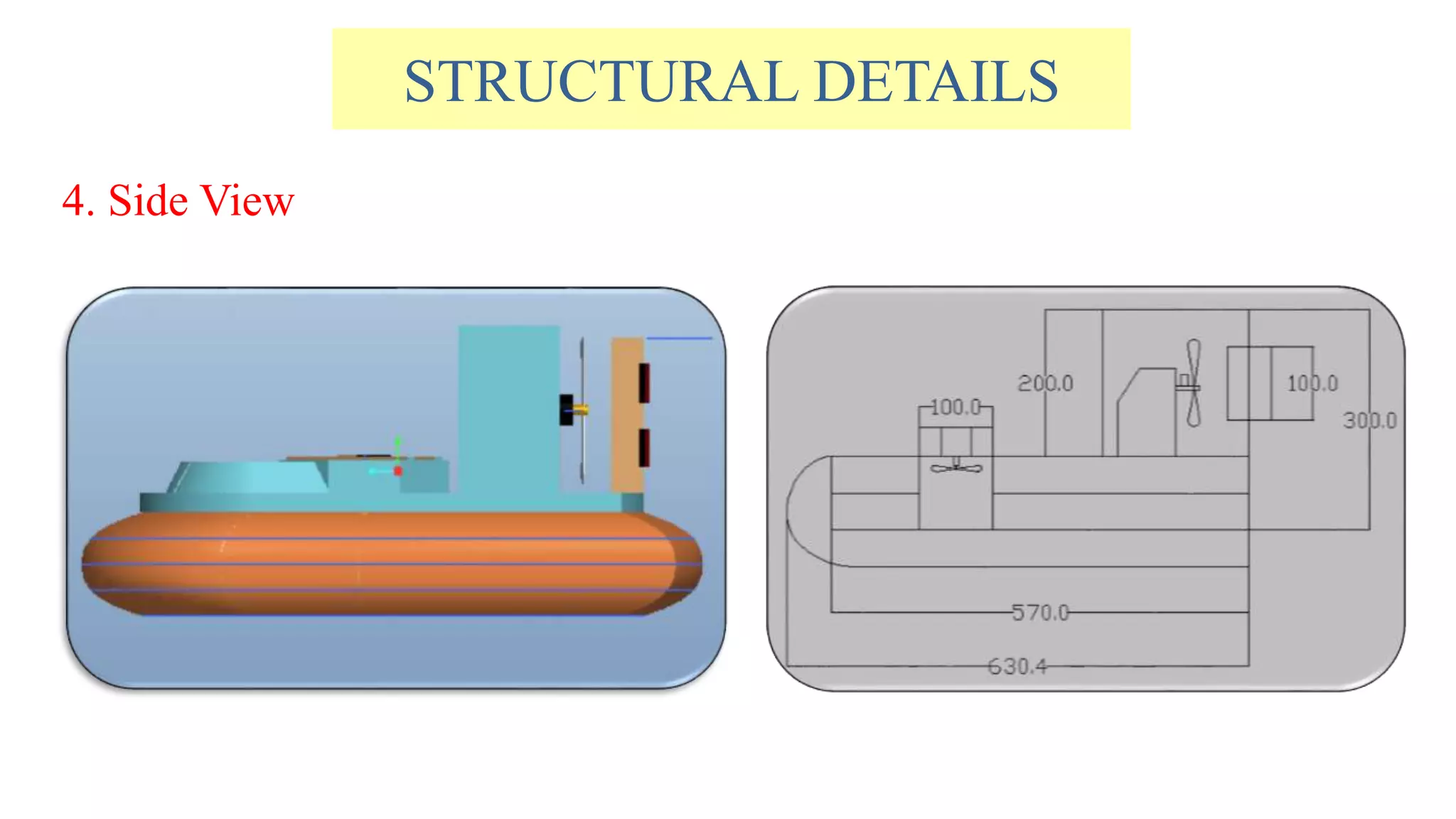
4. Side View
STRUCTURAL DETAILS
5. Hull
STRUCTURAL DETAILS
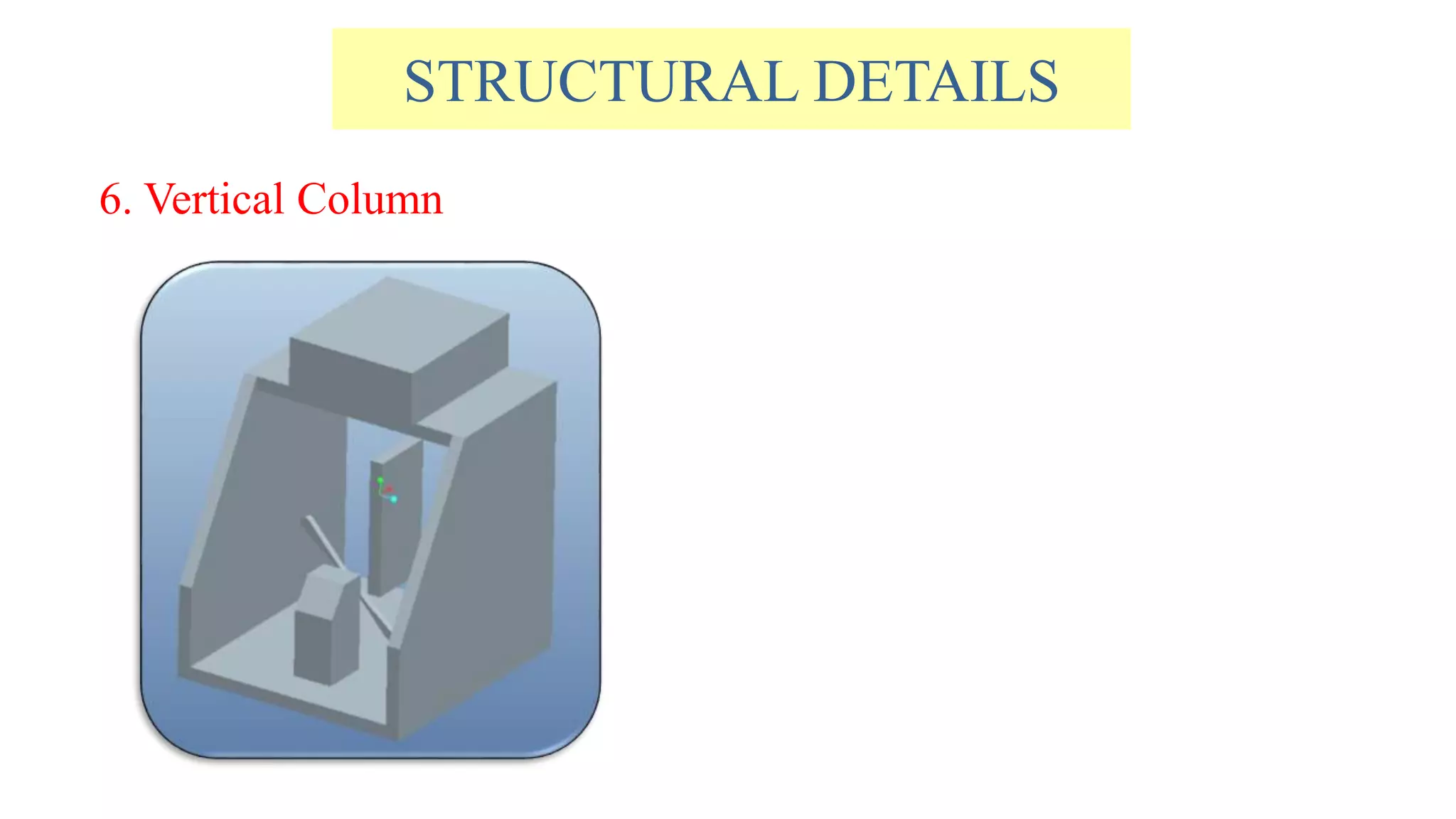
6. Vertical Column
STRUCTURAL DETAILS
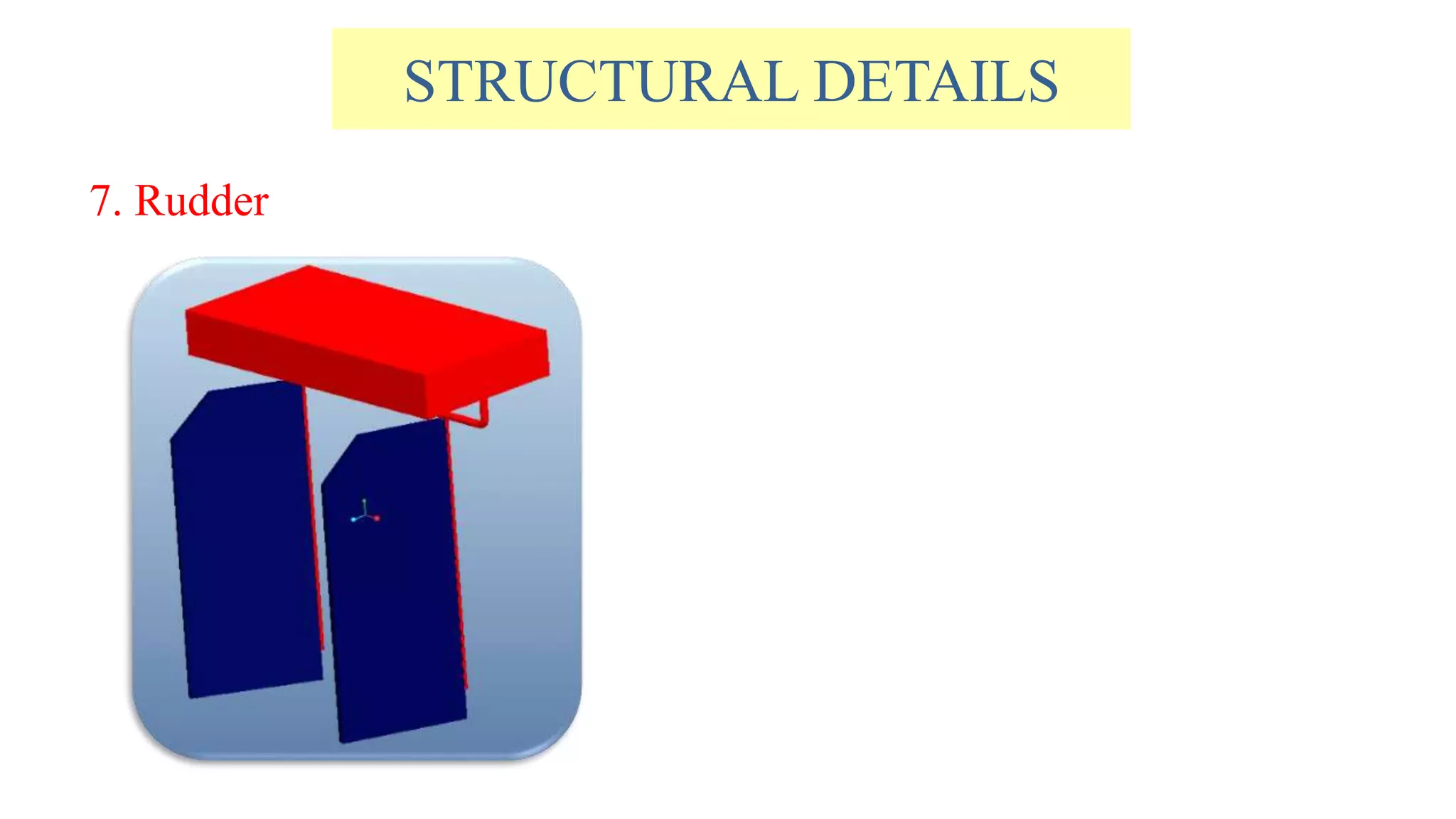
7. Rudder
STRUCTURAL DETAILS
8. Skirt
STRUCTURAL DETAILS
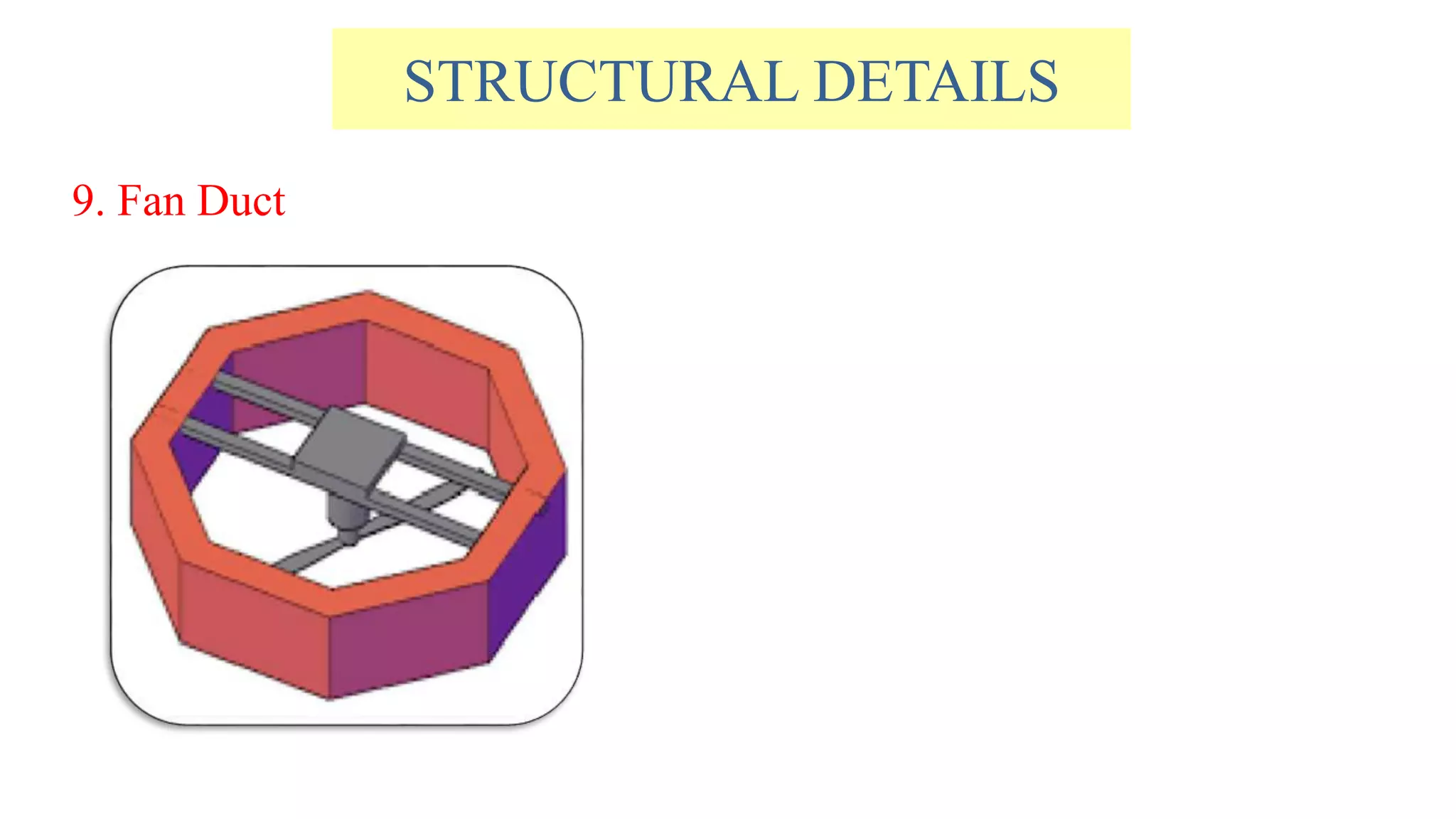
9. Fan Duct
ELECTRONIC COMPONENTS
RC Controller
Servo MotorBLDC Motors
ESC Lipo Battery
Connecting Wires
Comparison of Pros & Cons
Advantages Disadvantages
****Did not understand what to add in it
 Commercial hovercraft.
 Leisure hovercraft.
 Military hovercraft.
 Rescue hovercraft.
 Survey hovercraft.
APPLICATIONS
Advantages of hovercraft
 Travel over any surface.
 Shortcutting routes.
 Travel rivers up as fast as down, irrespective of the
current.
 Hovercraft are very fuel efficient (CO² friendly).
 No collision with debris, logs etc.
Disadvantages of hovercraft
 They move a lot air and can be
relatively loud.
 Noise pollution.
 Steep grade can be issue.
 Potential of skirt damage.
 Difficult to control on the land.
Current status
 Literature review has done.
 Design has completed.
 All the detailed drawings are designed.
 Demands are initiated.
 Prototype model has manufactured.
Learning outcomes
 Manufacturing skills.
 Management skills.
 Designing skills.
 Utilization of subjects studied through out the diploma.
 Teamwork.
 Overall experience was good.
Future of hovercraft
 The future of hovercraft seems
uncertain, but there is a good chance
there will be huge hover ports all over
the world, like the one in the picture.
Thinner hovercraft might be built so
civilians can drive safely on roads.
 It also seems likely that the larger hover
vehicles will become larger than ever!
Hovercraft are likely to be capable of
high flight.
Conclusion
Hovercrafts are generally simple mechanisms in theory. Yet the process
from theory to manifestation is not as easy as it may seem. A plethora of
problems exist and must be faced in order to attain a well functioning
hovercraft. The plans and designs must be flawless. One thing is certain;
when building a hovercraft, be well aware of the demands of
construction. Be prepared and willing to embrace failure for it is the only
way to success.
RC Hovercraft

RC Hovercraft

  • 2.
    Project members: Rana Bilal MujahidAziz Naseer Ahmed Project Advisor Sir Hassan Ahmed
  • 3.
    Contents: (sequence) • Introductionof hovercraft • History • Working principle • Basic parts of hovercraft • Design & analysis • Configuration selection • Advantages and disadvantages • Application of hovercraft • Future of hovercraft • conclusion
  • 4.
    Hovercraft • As modesof transportation have evolved over the years, finding more efficient and economic ways of movement have been the chief goals of developers. It is from this evolution that the hovercraft arose.
  • 5.
    Introduction: A hovercraft orair cushion vehicle(acv) is a craft designed to travel over any smooth surface supported by a cushion of high pressure air ejected downwards against the surface below , and contained within a “skirt”.
  • 6.
    Introduction: A Hovercraft isa vehicle that Flies like a plane Float like a boat Drive like a car
  • 7.
    History 1716 Emmanuel Swedenborg(Swedish Designer & Philosopher) • He first conceptualized the idea of supporting a vehicle on a cushion of air but his projectwas short lived and his craft never built.
  • 8.
    History Mid 1870s SirJohn Thornycroft (British Engineer) • He developed the air cushion effect idea further by building and testing a number of models but no applications were found since the technology to implement the concept did not exist at the time.
  • 9.
    History 1952 Sir ChristopherCockerell (British Engineering) • He invented the hovercraft and got his idea patented in 1955. • With diligent work he was able to bring his idea to reality with the first commercial hovercraft in 1959. • From there on the idea took with numerous developments with the vehicle.
  • 10.
  • 11.
    BASIC PARTS OFA HOVERCRAFT  Hull  Vertical Column  Payload  Skirt  Lift fan  Propeller  Rudder  Battery/Engine  Steering/RC *** insert a good quality labeled diagram here
  • 12.
  • 13.
    DESIGN OBJECTIVES Parameter Objective PayloadCapacity 0.5 -1 kg Power Battery powered Control medium RC controlled Terrain capability Land and water Running time 10 – 15 min Cost Economic
  • 14.
    DESIGN CONSIDERATIONS  DesignConstraints: o Budget : 25k-30k o Manufacturing facilities o Materials availability  Personal skill level  Project duration
  • 15.
    DESIGN METHODOLOGY Select configuration Estimate material, componentsreq. Estimate sizing details Weight Estimation Calculate hover, lift parameters Calculate thrust parameters Select components Analysis & modification
  • 16.
  • 17.
  • 18.
  • 19.
  • 20.
    DESIGN CALCULATIONS 1. WeightEstimation Components Mass Quantity Net Mass Total mass,weight Hull 300g 1 300g 1.952kg Or 19.52 N Vertical Column 52g 1 52g Skirt 200g 1 200g Rudder 100g 1 100g Bldc Motor 300g 2 600g Servo motor 200g 1 200g ESC 100g 1 100g Battery 400g 1 400
  • 21.
    DESIGN CALCULATIONS 2. LiftForce and Air Cushion Pressure Required lift force = Air cushion pressure * lift area FL = Pc * AL Pc = FL / AL FL = Lift force = Estimated weight = 1.95 kg * g = 19.5 N AL = Total area covered by hull – Area of lift motor duct = 0.610 m x - 0.450 m - ∏ x (0.1 mm)2 =0.243 m2 Pc = Air cushion pressure = 19.5 N / 0.243 m2 = 88.76 Pa Pc = 88.76 Pa
  • 22.
    DESIGN CALCULATIONS 3. DragForce Estimation Fd = ½* ρ v2 Cd A Cd = Drag coefficient = 1.05 (for cubic front) ρ = Density of air = 1.225 kg/m3 A= Frontal Area = 0.095 m2 0 0.2 0.4 0.6 0.8 1 1.2 1.4 1.6 1.8 0 1 2 3 4 5 DragForce(N) Velocity (m/s) Velocity-Drag Graph
  • 23.
    DESIGN CALCULATIONS 4. ThrustRequirement Net force = Thrust – Drag a = required acceleration m= mass of hovercraft Ft = ma + Fd 0 2 4 6 8 10 12 14 0 1 2 3 4 5ThrustForce(N) Acceleration (m/s2) Thrust Force v=0.5 m/s v=5 m/s
  • 24.
    DESIGN CALCULATIONS 4. RunningTime Total capacity = 10000 mAh Total current drain (65A ESC) =130A Running time = Capacity/ Amperage = 11 min approximately
  • 25.
  • 26.
  • 27.
  • 28.
  • 29.
  • 30.
  • 31.
  • 32.
  • 33.
  • 34.
    ELECTRONIC COMPONENTS RC Controller ServoMotorBLDC Motors ESC Lipo Battery Connecting Wires
  • 35.
    Comparison of Pros& Cons Advantages Disadvantages ****Did not understand what to add in it
  • 36.
     Commercial hovercraft. Leisure hovercraft.  Military hovercraft.  Rescue hovercraft.  Survey hovercraft. APPLICATIONS
  • 37.
    Advantages of hovercraft Travel over any surface.  Shortcutting routes.  Travel rivers up as fast as down, irrespective of the current.  Hovercraft are very fuel efficient (CO² friendly).  No collision with debris, logs etc.
  • 38.
    Disadvantages of hovercraft They move a lot air and can be relatively loud.  Noise pollution.  Steep grade can be issue.  Potential of skirt damage.  Difficult to control on the land.
  • 39.
    Current status  Literaturereview has done.  Design has completed.  All the detailed drawings are designed.  Demands are initiated.  Prototype model has manufactured.
  • 40.
    Learning outcomes  Manufacturingskills.  Management skills.  Designing skills.  Utilization of subjects studied through out the diploma.  Teamwork.  Overall experience was good.
  • 41.
    Future of hovercraft The future of hovercraft seems uncertain, but there is a good chance there will be huge hover ports all over the world, like the one in the picture. Thinner hovercraft might be built so civilians can drive safely on roads.  It also seems likely that the larger hover vehicles will become larger than ever! Hovercraft are likely to be capable of high flight.
  • 42.
    Conclusion Hovercrafts are generallysimple mechanisms in theory. Yet the process from theory to manifestation is not as easy as it may seem. A plethora of problems exist and must be faced in order to attain a well functioning hovercraft. The plans and designs must be flawless. One thing is certain; when building a hovercraft, be well aware of the demands of construction. Be prepared and willing to embrace failure for it is the only way to success.