BACK PAIN
Due to serious disease.
Back pain
� Back pain is a common reason for absence from work
and for seeking medical treatment. It can be
uncomfortable and debilitating.
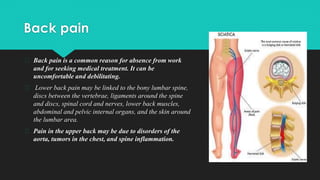
� Lower back pain may be linked to the bony lumbar spine,
discs between the vertebrae, ligaments around the spine
and discs, spinal cord and nerves, lower back muscles,
abdominal and pelvic internal organs, and the skin around
the lumbar area.
� Pain in the upper back may be due to disorders of the
aorta, tumors in the chest, and spine inflammation.
Cause
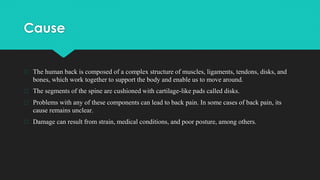
� The human back is composed of a complex structure of muscles, ligaments, tendons, disks, and
bones, which work together to support the body and enable us to move around.
� The segments of the spine are cushioned with cartilage-like pads called disks.
� Problems with any of these components can lead to back pain. In some cases of back pain, its
cause remains unclear.
� Damage can result from strain, medical conditions, and poor posture, among others.
Strain
� Back pain commonly stems from strain, tension, or injury. Frequent causesTrusted Source of back
pain are:
� strained muscles or ligaments
� a muscle spasm
� muscle tension
� damaged disks
� injuries, fractures, or falls
� Activities that can lead to strains or spasms include:
� lifting something improperly
� lifting something that is too heavy
� making an abrupt and awkward movement
Structural problems
� A number of structural problems may also result in back pain.
� Ruptured discs: Each vertebra in the spine is cushioned by disks. If the disk ruptures there will be more pressure on
a nerve, resulting in back pain.
� Bulging discs: In much the same way as ruptured discs, a bulging disk can result in more pressure on a nerve.
� Sciatica: A sharp and shooting pain travels through the buttock and down the back of the leg, caused by a bulging
or herniated disk pressing on a nerve.
� Arthritis: Osteoarthritis can cause problems with the joints in the hips, lower back, and other places. In some cases,
the space around the spinal cord narrows. This is known as spinal stenosis.
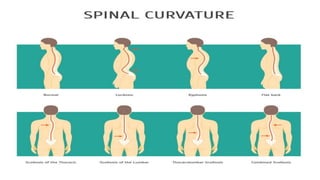
� Abnormal curvature of the spine: If the spine curves in an unusual way, back pain can result. An example
is scoliosis, in which the spine curves to the side.
� Osteoporosis: Bones, including the vertebrae of the spine, become brittle and porous, making compression fractures
more likely.
� Kidney problems: Kidney stones or kidney infection can cause back pain.
Movement and posture
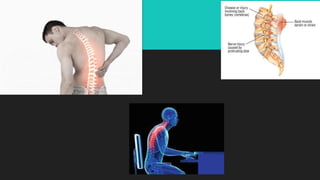
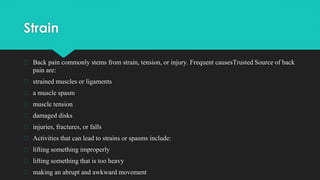
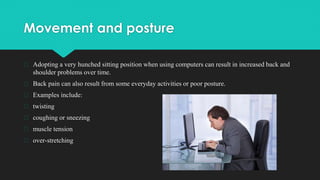
� Adopting a very hunched sitting position when using computers can result in increased back and
shoulder problems over time.
� Back pain can also result from some everyday activities or poor posture.
� Examples include:
� twisting
� coughing or sneezing
� muscle tension
� over-stretching
Contin…
� bending awkwardly or for long periods
� pushing, pulling, lifting, or carrying something
� standing or sitting for long periods
� straining the neck forward, such as when driving or using a computer
� long driving lessons without a break, even when not hunched
� sleeping on a mattress that does not support the body and keep the spine straight
Other cause
� Some medical conditions can lead to back pain.
� Cauda equina syndrome: The cauda equina is a bundle of spinal nerve roots that arise from the lower
end of the spinal cord. Symptoms include a dull pain in the lower back and upper buttocks, as well as
numbness in the buttocks, genitalia, and thighs. There are sometimes bowel and bladder function
disturbances.
� Cancer of the spine: A tumor on the spine may press against a nerve, resulting in back pain.
� Infection of the spine: A fever and a tender, warm area on the back could be due to an infection of the
spine.
� Other infections: Pelvic inflammatory disease, bladder, or kidney infections may also lead to back pain.
� Sleep disorders: Individuals with sleep disorders are more likely to experience back pain, compared
with others.
� Shingles: An infection that can affect the nerves may lead to back pain. This depends on which nerves
are affected.
Risk factors
The following factors are linked to a higher risk Trusted Source of developing low back pain:
� occupational activities
� pregnancy
� a sedentary lifestyle
� poor physical fitness
� older age
� obesity and excess weight
� Smoking
� strenuous physical exercise or work, especially if done incorrectly
� genetic factors
Contin…
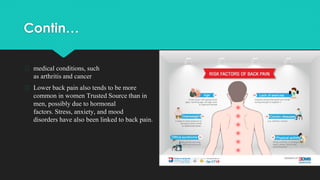
� medical conditions, such
as arthritis and cancer
� Lower back pain also tends to be more
common in women Trusted Source than in
men, possibly due to hormonal
factors. Stress, anxiety, and mood
disorders have also been linked to back pain.
Symptoms
� The main symptom of back pain is an ache or pain anywhere in the back, and sometimes all
the way down to the buttocks and legs.
� Some back issues can cause pain in other parts of the body, depending on the nerves affected.
� The pain often goes away without treatment, but if it occurs with any of the following people
should see their doctor:
� weight loss
� fever
� inflammation or swelling on the back
� persistent back pain, where lying down or resting does not help
� pain down the legs
� pain that reaches below the knees
Contin…
� fecal incontinence, or loss of control over bowel movements
� numbness around the genitals
� numbness around the anus
� numbness around the buttocks
When to see a doctor ?
� A doctor will usually be able to diagnose back pain after asking about symptoms and carrying out
a physical examination.
� An imaging scan and other tests may be required if:
� back pain appears to result from an injury
� there may be underlying cause that needs treatment
� the pain persists over a long period
Diagnosis
� An X-ray, MRI, or CT scan can give information about the state of the soft tissues in the back.
� X-rays can show the alignment of the bones and detect signs of arthritis or broken bones, but they may not
reveal damage in the muscles, spinal cord, nerves, or disks.
� MRI or CT scans can reveal herniated disks or problems with tissue, tendons, nerves, ligaments, blood
vessels, muscles, and bones.
� Bone scans can detect bone tumors or compression fractures caused by osteoporosis. A radioactive substance
or tracer is injected into a vein. The tracer collects in the bones and helps the doctor detect bone problems
with the aid of a special camera.
� Electromyography or EMG measures the electrical impulses produced by nerves in response to muscles.
This can confirm nerve compression, which may occur with a herniated disk or spinal stenosis.
� The doctor may also order a blood test if infection is suspected.
Chronic or acute pain
� Other types of diagnosis
� A chiropractor
� An osteopath
� A physical therapist
Back pain is categorized into two types Trusted Source:
●Acute pain starts suddenly and lasts for up to 6 weeks.
●Chronic or long-term pain develops over a longer period, lasts for over 3 months, and causes
ongoing problems.
If a person has both occasional bouts of more intense pain and fairly continuous mild back pain, it
can be hard for a doctor to determine whether they have acute or chronic back pain.
Treatment
� Back pain usually resolves with rest and home remedies, but sometimes medical treatment is necessary.
� Home treatments
Over-the-counter (OTC) pain relief medication, usually nonsteroidal anti-inflammatory
drugs (NSAID), such as ibuprofen, can relieve discomfort. Applying a hot compress or an ice pack to the
painful area may also reduce pain.
� Medical treatment
If home treatments do not relieve back pain, a doctor may recommend the following
medication, physical therapy, or both.
� Medication: Back pain that does not respond well to OTC painkillers may require a prescription
NSAID. Codeine or hydrocodone, which are narcotics, may be prescribed for short periods. These
require close monitoring by the doctor. In some cases, muscle relaxants may be used.
Contin…
� Physical therapy: Applying heat, ice, ultrasound, and electrical stimulation — as well as some
muscle-release techniques to the back muscles and soft tissues — may help alleviate pain.
� As the pain improves, the physical therapist may introduce some flexibility and strength exercises
for the back and abdominal muscles. Techniques for improving posture may also help.
� Cortisone injections: If other options are not effective, these may be injected into the epidural
space, around the spinal cord. Cortisone is an anti-inflammatory drug. It helps reduce
inflammation around the nerve roots. Injections may also be used to numb areas thought to be
causing the pain.
� Botox: Botox (botulism toxin), according to some early studies, are thought to reduce pain Trusted
Source by paralyzing strained muscles in spasm. These injections are effective for about 3 to 4
months.
� Traction: Pulleys and weights are used to stretch the back. This may result in a herniated disk
moving back into position. It can also relieve pain, but only while traction is applied.
Preventions
� Steps to lower the risk Trusted Source of developing back pain consist mainly of addressing some
of the risk factors.
� Exercise: Regular exercise helps build strength and control body weight. Guided, low-impact
aerobic activities can boost heart health without straining or jerking the back. Before starting any
exercise program, talk to a healthcare professional.
� There are two main types of exercise that people can do to reduce the risk of back pain:
� Core-strengthening exercises work the abdominal and back muscles, helping to strengthen
muscles that protect the back.
� Flexibility training aims at improving core flexibility, including the spine, hips, and upper legs.
� Diet: Make sure your diet includes enough calcium and vitamin D, as these are needed for bone
health. A healthful diet also helps control body weight.
� Smoking: A significantly higher percentage of smokers have back pain incidences compared to
non-smokers of the same age, height, and weight.
� Body weight: The weight people carry and where they carry it affects the risk of developing back
pain. The difference in back pain risk between obese and normal-weight individuals is
considerable. People who carry their weight in the abdominal area versus the buttocks and hip area
are also at greater risk.
� Posture when standing: Make sure you have a neutral pelvic position. Stand upright, head facing
forward, back straight, and balance your weight evenly on both feet. Keep your legs straight and
your head in line with your spine.
(BACK PAIN) (1).pptx

(BACK PAIN) (1).pptx

  • 1.
    BACK PAIN Due toserious disease.
  • 2.
    Back pain � Backpain is a common reason for absence from work and for seeking medical treatment. It can be uncomfortable and debilitating. � Lower back pain may be linked to the bony lumbar spine, discs between the vertebrae, ligaments around the spine and discs, spinal cord and nerves, lower back muscles, abdominal and pelvic internal organs, and the skin around the lumbar area. � Pain in the upper back may be due to disorders of the aorta, tumors in the chest, and spine inflammation.
  • 4.
    Cause � The humanback is composed of a complex structure of muscles, ligaments, tendons, disks, and bones, which work together to support the body and enable us to move around. � The segments of the spine are cushioned with cartilage-like pads called disks. � Problems with any of these components can lead to back pain. In some cases of back pain, its cause remains unclear. � Damage can result from strain, medical conditions, and poor posture, among others.
  • 5.
    Strain � Back paincommonly stems from strain, tension, or injury. Frequent causesTrusted Source of back pain are: � strained muscles or ligaments � a muscle spasm � muscle tension � damaged disks � injuries, fractures, or falls � Activities that can lead to strains or spasms include: � lifting something improperly � lifting something that is too heavy � making an abrupt and awkward movement
  • 6.
    Structural problems � Anumber of structural problems may also result in back pain. � Ruptured discs: Each vertebra in the spine is cushioned by disks. If the disk ruptures there will be more pressure on a nerve, resulting in back pain. � Bulging discs: In much the same way as ruptured discs, a bulging disk can result in more pressure on a nerve. � Sciatica: A sharp and shooting pain travels through the buttock and down the back of the leg, caused by a bulging or herniated disk pressing on a nerve. � Arthritis: Osteoarthritis can cause problems with the joints in the hips, lower back, and other places. In some cases, the space around the spinal cord narrows. This is known as spinal stenosis. � Abnormal curvature of the spine: If the spine curves in an unusual way, back pain can result. An example is scoliosis, in which the spine curves to the side. � Osteoporosis: Bones, including the vertebrae of the spine, become brittle and porous, making compression fractures more likely. � Kidney problems: Kidney stones or kidney infection can cause back pain.
  • 7.
    Movement and posture �Adopting a very hunched sitting position when using computers can result in increased back and shoulder problems over time. � Back pain can also result from some everyday activities or poor posture. � Examples include: � twisting � coughing or sneezing � muscle tension � over-stretching
  • 8.
    Contin… � bending awkwardlyor for long periods � pushing, pulling, lifting, or carrying something � standing or sitting for long periods � straining the neck forward, such as when driving or using a computer � long driving lessons without a break, even when not hunched � sleeping on a mattress that does not support the body and keep the spine straight
  • 9.
    Other cause � Somemedical conditions can lead to back pain. � Cauda equina syndrome: The cauda equina is a bundle of spinal nerve roots that arise from the lower end of the spinal cord. Symptoms include a dull pain in the lower back and upper buttocks, as well as numbness in the buttocks, genitalia, and thighs. There are sometimes bowel and bladder function disturbances. � Cancer of the spine: A tumor on the spine may press against a nerve, resulting in back pain. � Infection of the spine: A fever and a tender, warm area on the back could be due to an infection of the spine. � Other infections: Pelvic inflammatory disease, bladder, or kidney infections may also lead to back pain. � Sleep disorders: Individuals with sleep disorders are more likely to experience back pain, compared with others. � Shingles: An infection that can affect the nerves may lead to back pain. This depends on which nerves are affected.
  • 10.
    Risk factors The followingfactors are linked to a higher risk Trusted Source of developing low back pain: � occupational activities � pregnancy � a sedentary lifestyle � poor physical fitness � older age � obesity and excess weight � Smoking � strenuous physical exercise or work, especially if done incorrectly � genetic factors
  • 11.
    Contin… � medical conditions,such as arthritis and cancer � Lower back pain also tends to be more common in women Trusted Source than in men, possibly due to hormonal factors. Stress, anxiety, and mood disorders have also been linked to back pain.
  • 12.
    Symptoms � The mainsymptom of back pain is an ache or pain anywhere in the back, and sometimes all the way down to the buttocks and legs. � Some back issues can cause pain in other parts of the body, depending on the nerves affected. � The pain often goes away without treatment, but if it occurs with any of the following people should see their doctor: � weight loss � fever � inflammation or swelling on the back � persistent back pain, where lying down or resting does not help � pain down the legs � pain that reaches below the knees
  • 13.
    Contin… � fecal incontinence,or loss of control over bowel movements � numbness around the genitals � numbness around the anus � numbness around the buttocks
  • 14.
    When to seea doctor ? � A doctor will usually be able to diagnose back pain after asking about symptoms and carrying out a physical examination. � An imaging scan and other tests may be required if: � back pain appears to result from an injury � there may be underlying cause that needs treatment � the pain persists over a long period
  • 15.
    Diagnosis � An X-ray,MRI, or CT scan can give information about the state of the soft tissues in the back. � X-rays can show the alignment of the bones and detect signs of arthritis or broken bones, but they may not reveal damage in the muscles, spinal cord, nerves, or disks. � MRI or CT scans can reveal herniated disks or problems with tissue, tendons, nerves, ligaments, blood vessels, muscles, and bones. � Bone scans can detect bone tumors or compression fractures caused by osteoporosis. A radioactive substance or tracer is injected into a vein. The tracer collects in the bones and helps the doctor detect bone problems with the aid of a special camera. � Electromyography or EMG measures the electrical impulses produced by nerves in response to muscles. This can confirm nerve compression, which may occur with a herniated disk or spinal stenosis. � The doctor may also order a blood test if infection is suspected.
  • 16.
    Chronic or acutepain � Other types of diagnosis � A chiropractor � An osteopath � A physical therapist Back pain is categorized into two types Trusted Source: ●Acute pain starts suddenly and lasts for up to 6 weeks. ●Chronic or long-term pain develops over a longer period, lasts for over 3 months, and causes ongoing problems. If a person has both occasional bouts of more intense pain and fairly continuous mild back pain, it can be hard for a doctor to determine whether they have acute or chronic back pain.
  • 17.
    Treatment � Back painusually resolves with rest and home remedies, but sometimes medical treatment is necessary. � Home treatments Over-the-counter (OTC) pain relief medication, usually nonsteroidal anti-inflammatory drugs (NSAID), such as ibuprofen, can relieve discomfort. Applying a hot compress or an ice pack to the painful area may also reduce pain. � Medical treatment If home treatments do not relieve back pain, a doctor may recommend the following medication, physical therapy, or both. � Medication: Back pain that does not respond well to OTC painkillers may require a prescription NSAID. Codeine or hydrocodone, which are narcotics, may be prescribed for short periods. These require close monitoring by the doctor. In some cases, muscle relaxants may be used.
  • 18.
    Contin… � Physical therapy:Applying heat, ice, ultrasound, and electrical stimulation — as well as some muscle-release techniques to the back muscles and soft tissues — may help alleviate pain. � As the pain improves, the physical therapist may introduce some flexibility and strength exercises for the back and abdominal muscles. Techniques for improving posture may also help. � Cortisone injections: If other options are not effective, these may be injected into the epidural space, around the spinal cord. Cortisone is an anti-inflammatory drug. It helps reduce inflammation around the nerve roots. Injections may also be used to numb areas thought to be causing the pain. � Botox: Botox (botulism toxin), according to some early studies, are thought to reduce pain Trusted Source by paralyzing strained muscles in spasm. These injections are effective for about 3 to 4 months. � Traction: Pulleys and weights are used to stretch the back. This may result in a herniated disk moving back into position. It can also relieve pain, but only while traction is applied.
  • 19.
    Preventions � Steps tolower the risk Trusted Source of developing back pain consist mainly of addressing some of the risk factors. � Exercise: Regular exercise helps build strength and control body weight. Guided, low-impact aerobic activities can boost heart health without straining or jerking the back. Before starting any exercise program, talk to a healthcare professional. � There are two main types of exercise that people can do to reduce the risk of back pain: � Core-strengthening exercises work the abdominal and back muscles, helping to strengthen muscles that protect the back. � Flexibility training aims at improving core flexibility, including the spine, hips, and upper legs.
  • 20.
    � Diet: Makesure your diet includes enough calcium and vitamin D, as these are needed for bone health. A healthful diet also helps control body weight. � Smoking: A significantly higher percentage of smokers have back pain incidences compared to non-smokers of the same age, height, and weight. � Body weight: The weight people carry and where they carry it affects the risk of developing back pain. The difference in back pain risk between obese and normal-weight individuals is considerable. People who carry their weight in the abdominal area versus the buttocks and hip area are also at greater risk. � Posture when standing: Make sure you have a neutral pelvic position. Stand upright, head facing forward, back straight, and balance your weight evenly on both feet. Keep your legs straight and your head in line with your spine.