Radio Drama : Codes
and conventions
by Natalia Rogalska
What is radio drama ?
Radio drama, commonly known as radio play, is a
dramatized, purely audio performance that is usually
broadcast on radio, tape or CD. With no visual
component, this performance relies on dialogue,
music and sound effects so as to help the listener
visualize the story and characters.
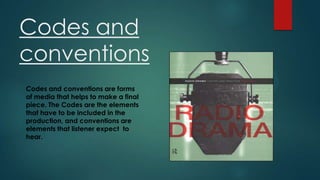
Codes and
conventions
Codes and conventions are forms
of media that helps to make a final
piece. The Codes are the elements
that have to be included in the
production, and conventions are
elements that listener expect to
hear.
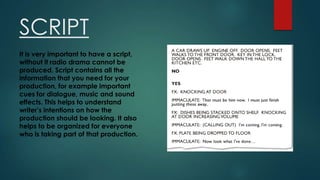
SCRIPT
It is very important to have a script,
without it radio drama cannot be
produced. Script contains all the
information that you need for your
production, for example important
cues for dialogue, music and sound
effects. This helps to understand
writer’s intentions on how the
production should be looking. It also
helps to be organized for everyone
who is taking part of that production.
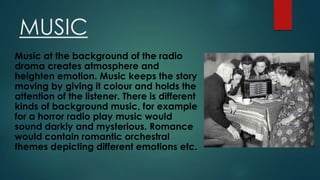
MUSIC
Music at the background of the radio
drama creates atmosphere and
heighten emotion. Music keeps the story
moving by giving it colour and holds the
attention of the listener. There is different
kinds of background music, for example
for a horror radio play music would
sound darkly and mysterious. Romance
would contain romantic orchestral
themes depicting different emotions etc.
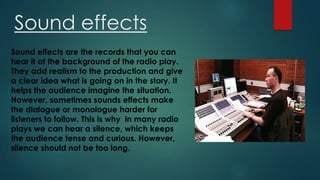
Sound effects
Sound effects are the records that you can
hear it at the background of the radio play.
They add realism to the production and give
a clear idea what is going on in the story. It
helps the audience imagine the situation.
However, sometimes sounds effects make
the dialogue or monologue harder for
listeners to follow. This is why in many radio
plays we can hear a silence, which keeps
the audience tense and curious. However,
silence should not be too long.
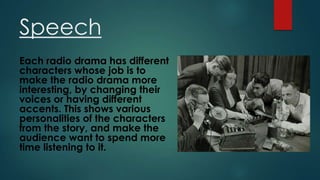
Speech
Each radio drama has different
characters whose job is to
make the radio drama more
interesting, by changing their
voices or having different
accents. This shows various
personalities of the characters
from the story, and make the
audience want to spend more
time listening to it.
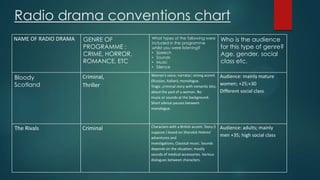
Radio drama conventions chart
NAME OF RADIO DRAMA

GENRE OF
PROGRAMME :
CRIME, HORROR,
ROMANCE, ETC

What types of the following were
included in the programme
whilst you were listening?
• Speech
• Sounds
• Music
• Silence

Who is the audience
for this type of genre?
Age, gender, social
class etc.

Bloody
Scotland

Criminal,
Thriller

Woman’s voice; narrator; strong accent
(Russian, Italian); monologue.
Tragic ,criminal story with romantic bits;
about the past of a woman. No
music or sounds at the background.
Short silence pauses between
monologue.

Audience: mainly mature
women; +25;+30
Different social class.

The Rivals

Criminal

Characters with a British accent. Story (I
suppose ) based on Sherolck Holems’
adventures and
investigations. Classical music. Sounds
depends on the situation; mostly
sounds of medical accessories. Various
dialogues between characters.

Audience: adults; mainly
men +35; high social class
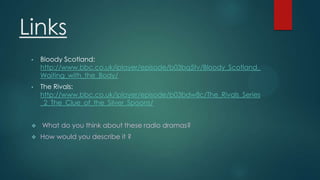
Links
•

Bloody Scotland:
http://www.bbc.co.uk/iplayer/episode/b03bq5tv/Bloody_Scotland_
Waiting_with_the_Body/

•

The Rivals:
http://www.bbc.co.uk/iplayer/episode/b03bdw8c/The_Rivals_Series
_2_The_Clue_of_the_Silver_Spoons/





What do you think about these radio dramas?

How would you describe it ?

Radio drama presentation

  • 1.
    Radio Drama :Codes and conventions by Natalia Rogalska
  • 2.
    What is radiodrama ? Radio drama, commonly known as radio play, is a dramatized, purely audio performance that is usually broadcast on radio, tape or CD. With no visual component, this performance relies on dialogue, music and sound effects so as to help the listener visualize the story and characters.
  • 3.
    Codes and conventions Codes andconventions are forms of media that helps to make a final piece. The Codes are the elements that have to be included in the production, and conventions are elements that listener expect to hear.
  • 4.
    SCRIPT It is veryimportant to have a script, without it radio drama cannot be produced. Script contains all the information that you need for your production, for example important cues for dialogue, music and sound effects. This helps to understand writer’s intentions on how the production should be looking. It also helps to be organized for everyone who is taking part of that production.
  • 5.
    MUSIC Music at thebackground of the radio drama creates atmosphere and heighten emotion. Music keeps the story moving by giving it colour and holds the attention of the listener. There is different kinds of background music, for example for a horror radio play music would sound darkly and mysterious. Romance would contain romantic orchestral themes depicting different emotions etc.
  • 6.
    Sound effects Sound effectsare the records that you can hear it at the background of the radio play. They add realism to the production and give a clear idea what is going on in the story. It helps the audience imagine the situation. However, sometimes sounds effects make the dialogue or monologue harder for listeners to follow. This is why in many radio plays we can hear a silence, which keeps the audience tense and curious. However, silence should not be too long.
  • 7.
    Speech Each radio dramahas different characters whose job is to make the radio drama more interesting, by changing their voices or having different accents. This shows various personalities of the characters from the story, and make the audience want to spend more time listening to it.
  • 8.
    Radio drama conventionschart NAME OF RADIO DRAMA GENRE OF PROGRAMME : CRIME, HORROR, ROMANCE, ETC What types of the following were included in the programme whilst you were listening? • Speech • Sounds • Music • Silence Who is the audience for this type of genre? Age, gender, social class etc. Bloody Scotland Criminal, Thriller Woman’s voice; narrator; strong accent (Russian, Italian); monologue. Tragic ,criminal story with romantic bits; about the past of a woman. No music or sounds at the background. Short silence pauses between monologue. Audience: mainly mature women; +25;+30 Different social class. The Rivals Criminal Characters with a British accent. Story (I suppose ) based on Sherolck Holems’ adventures and investigations. Classical music. Sounds depends on the situation; mostly sounds of medical accessories. Various dialogues between characters. Audience: adults; mainly men +35; high social class
  • 9.