THE ELEMENTS
OF RADIO
The Elements of Radio by Rubén Bermejo is licensed under a Creative Commons Attribution-
NonCommercial-ShareAlike 4.0 International License.
THE ELEMENTS OF RADIO
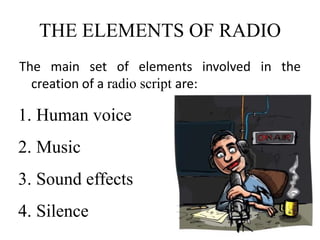
The main set of elements involved in the
creation of a radio script are:
1. Human voice
2. Music
3. Sound effects
4. Silence
Human voice
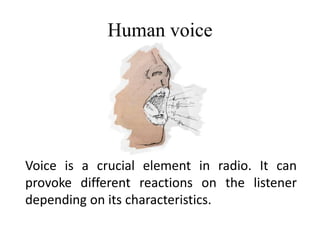
Voice is a crucial element in radio. It can
provoke different reactions on the listener
depending on its characteristics.
Human voice
• Speak slowly. We are not in a hurry!
• Move your mouth as much as you can while
pronouncing words.
• Do not laugh! (if not on script) There are
people listening to you.
If we do not take care of our voice and
the way we speak, we will not make it
easy for the listener to understand our
message.
Tips
Music
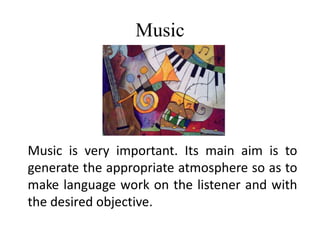
Music is very important. Its main aim is to
generate the appropriate atmosphere so as to
make language work on the listener and with
the desired objective.
Music
Music does not transmit ideas or concrete
realities, instead it works on emotions. The
listener would understand and feel different
emotions depending on the images and
feelings generated by the music. It is one of
the most meaningful elements of the radio
language.
Music
Music functions:
• Grammatical: it joins different spaces and
identifies different contents and sections of
the programme.
• Descriptive: when the music is part of the
narration.
• As content: in musical programmes.
Silence
Silence is a very useful resource to put
emphasis and atmosphere to the radio
message. However, there is usually not much
place for silence in radio scripts. Silence can
provide a message with tension, emotion and
very deep feelings.
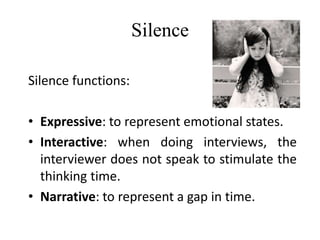
Silence
Silence functions:
• Expressive: to represent emotional states.
• Interactive: when doing interviews, the
interviewer does not speak to stimulate the
thinking time.
• Narrative: to represent a gap in time.
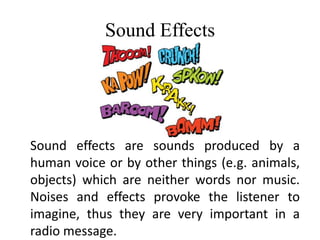
Sound Effects
Sound effects are sounds produced by a
human voice or by other things (e.g. animals,
objects) which are neither words nor music.
Noises and effects provoke the listener to
imagine, thus they are very important in a
radio message.
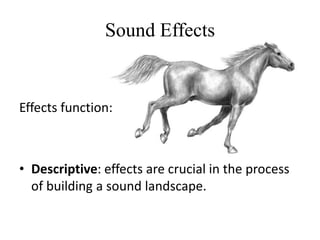
Sound Effects
Effects function:
• Descriptive: effects are crucial in the process
of building a sound landscape.
THE ELEMENTS OF RADIO
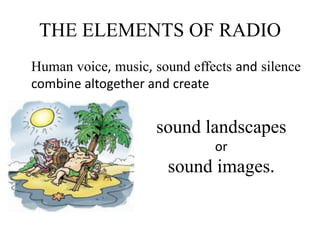
Human voice, music, sound effects and silence
combine altogether and create
sound landscapes
or
sound images.
Sound Landscapes
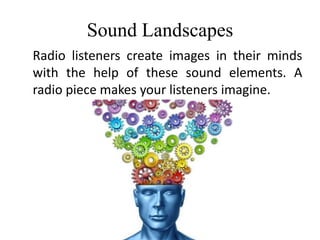
Radio listeners create images in their minds
with the help of these sound elements. A
radio piece makes your listeners imagine.

The Elements Of Radio

  • 1.
    THE ELEMENTS OF RADIO TheElements of Radio by Rubén Bermejo is licensed under a Creative Commons Attribution- NonCommercial-ShareAlike 4.0 International License.
  • 2.
    THE ELEMENTS OFRADIO The main set of elements involved in the creation of a radio script are: 1. Human voice 2. Music 3. Sound effects 4. Silence
  • 3.
    Human voice Voice isa crucial element in radio. It can provoke different reactions on the listener depending on its characteristics.
  • 4.
    Human voice • Speakslowly. We are not in a hurry! • Move your mouth as much as you can while pronouncing words. • Do not laugh! (if not on script) There are people listening to you. If we do not take care of our voice and the way we speak, we will not make it easy for the listener to understand our message. Tips
  • 5.
    Music Music is veryimportant. Its main aim is to generate the appropriate atmosphere so as to make language work on the listener and with the desired objective.
  • 6.
    Music Music does nottransmit ideas or concrete realities, instead it works on emotions. The listener would understand and feel different emotions depending on the images and feelings generated by the music. It is one of the most meaningful elements of the radio language.
  • 7.
    Music Music functions: • Grammatical:it joins different spaces and identifies different contents and sections of the programme. • Descriptive: when the music is part of the narration. • As content: in musical programmes.
  • 8.
    Silence Silence is avery useful resource to put emphasis and atmosphere to the radio message. However, there is usually not much place for silence in radio scripts. Silence can provide a message with tension, emotion and very deep feelings.
  • 9.
    Silence Silence functions: • Expressive:to represent emotional states. • Interactive: when doing interviews, the interviewer does not speak to stimulate the thinking time. • Narrative: to represent a gap in time.
  • 10.
    Sound Effects Sound effectsare sounds produced by a human voice or by other things (e.g. animals, objects) which are neither words nor music. Noises and effects provoke the listener to imagine, thus they are very important in a radio message.
  • 11.
    Sound Effects Effects function: •Descriptive: effects are crucial in the process of building a sound landscape.
  • 12.
    THE ELEMENTS OFRADIO Human voice, music, sound effects and silence combine altogether and create sound landscapes or sound images.
  • 13.
    Sound Landscapes Radio listenerscreate images in their minds with the help of these sound elements. A radio piece makes your listeners imagine.