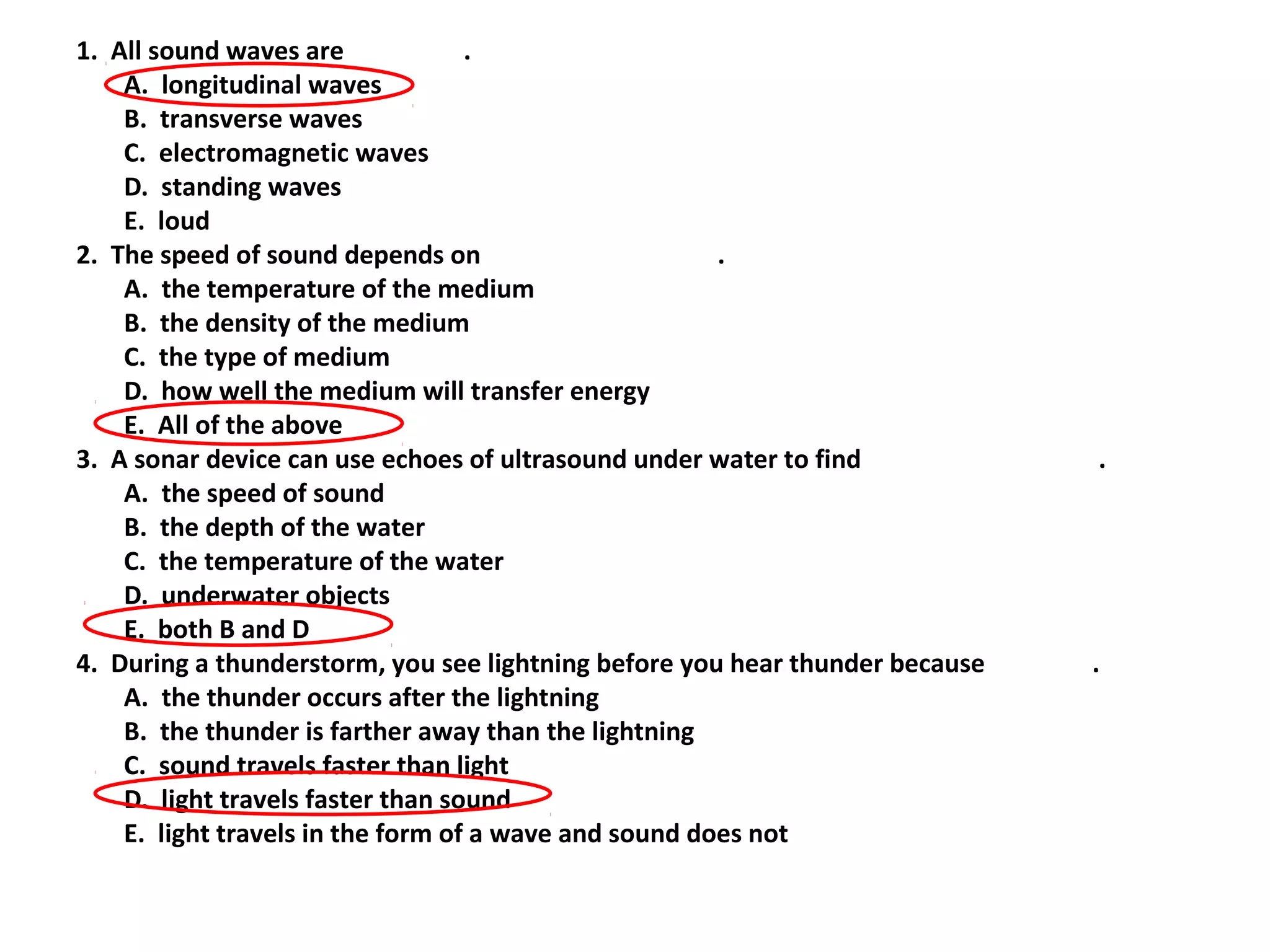
1. All sound waves are .
A. longitudinal waves
B. transverse waves
C. electromagnetic waves
D. standing waves
E. loud
2. The speed of sound depends on .
A. the temperature of the medium
B. the density of the medium
C. the type of medium
D. how well the medium will transfer energy
E. All of the above
3. A sonar device can use echoes of ultrasound under water to find .
A. the speed of sound
B. the depth of the water
C. the temperature of the water
D. underwater objects
E. both B and D
4. During a thunderstorm, you see lightning before you hear thunder because .
A. the thunder occurs after the lightning
B. the thunder is farther away than the lightning
C. sound travels faster than light
D. light travels faster than sound
E. light travels in the form of a wave and sound does not
ReviewReview
Sound
Pitch
Loudness
Echo
Resonance
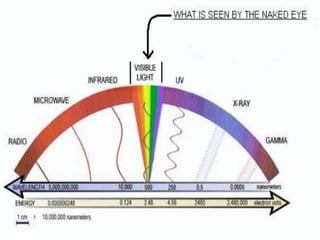
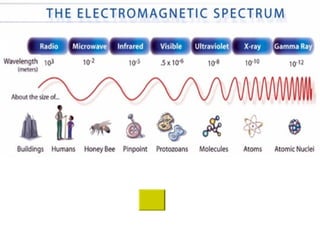
Electromagnetic SpectrumElectromagnetic Spectrum
EMS
“light” from the sun
Most of the EMS can not be
seen
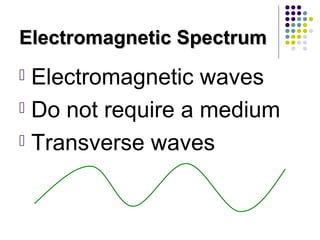
Electromagnetic SpectrumElectromagnetic Spectrum
 Electromagnetic waves
 Do not require a medium
 Transverse waves
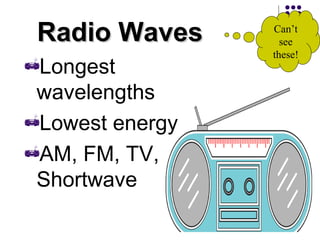
Radio WavesRadio Waves
Longest
wavelengths
Lowest energy
AM, FM, TV,
Shortwave
Can’t
see
these!
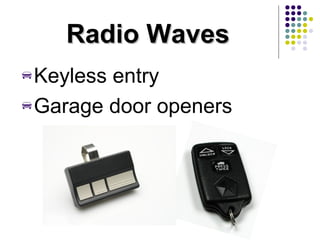
Radio WavesRadio Waves
Keyless entry
Garage door openers
MicrowavesMicrowaves
Higher energy than radio
waves
Shorter wavelength
Can’t
see
these!
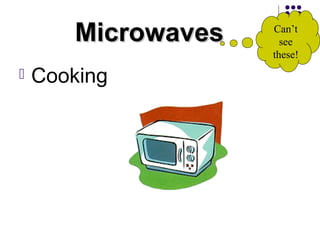
MicrowavesMicrowaves
 Cooking
Can’t
see
these!
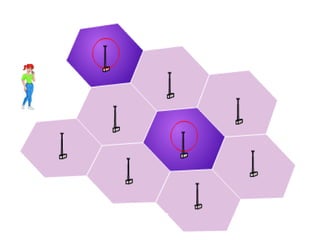
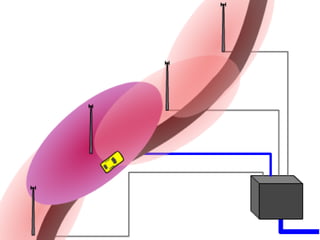
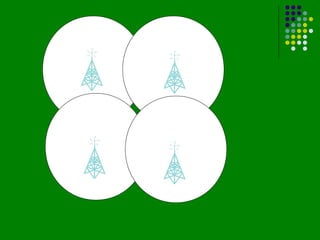
Cell PhonesCell Phones
Use wavelengths/frequencies
right on the dividing line
between radio and micro waves
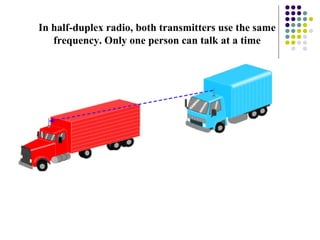
In half-duplex radio, both transmitters use the same
frequency. Only one person can talk at a time
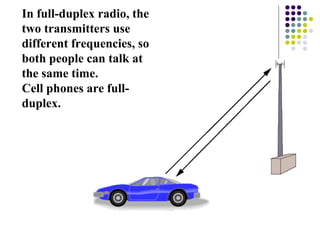
In full-duplex radio, the
two transmitters use
different frequencies, so
both people can talk at
the same time.
Cell phones are full-
duplex.
Radio and Micro Waves

Radio and Micro Waves