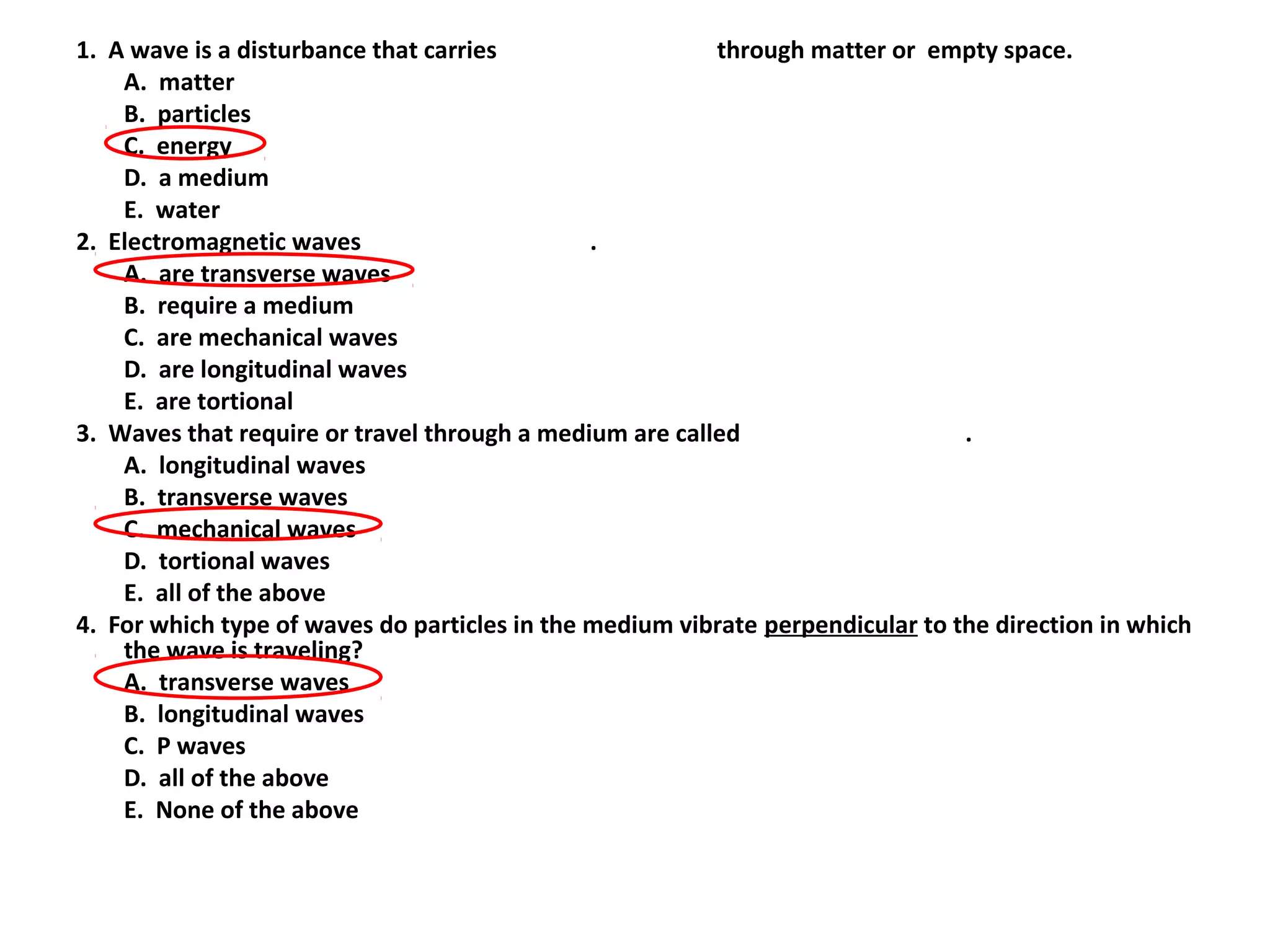
1. A wave is a disturbance that carries through matter or empty space.
A. matter
B. particles
C. energy
D. a medium
E. water
2. Electromagnetic waves .
A. are transverse waves
B. require a medium
C. are mechanical waves
D. are longitudinal waves
E. are tortional
3. Waves that require or travel through a medium are called .
A. longitudinal waves
B. transverse waves
C. mechanical waves
D. tortional waves
E. all of the above
4. For which type of waves do particles in the medium vibrate perpendicular to the direction in which
the wave is traveling?
A. transverse waves
B. longitudinal waves
C. P waves
D. all of the above
E. None of the above
ReviewReview
 Mechanical waves
 Electromagnetic waves
 Transverse waves
 Longitudinal waves
 Characteristics of waves
SoundSound
 Is a longitudinal wave
 Needs a medium to travel
through
 The source of a sound
wave vibrates rapidly
SoundSound
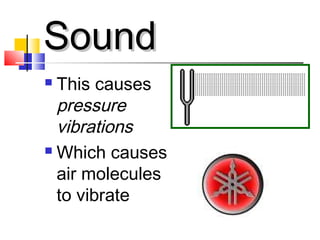
 This causes
pressure
vibrations
 Which causes
air molecules
to vibrate
SoundSound
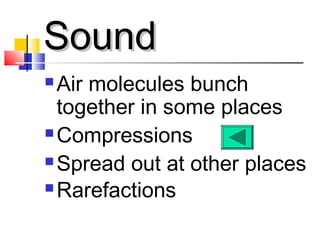
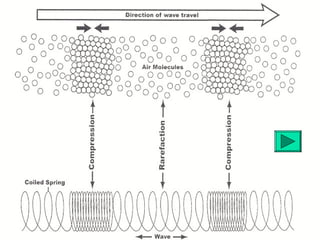
 Air molecules bunch
together in some places
 Compressions
 Spread out at other places
 Rarefactions
PitchPitch
 How high or how low a
sound is
 Not how loud
 Depends on the frequency
 Faster the frequency, the
higher the pitch
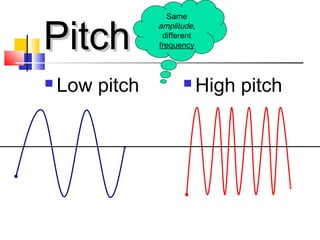
PitchPitch
 Low pitch  High pitch
Same
amplitude,
different
frequency
LoudnessLoudness
 Depends on the amplitude
 Higher amplitude, louder
sound
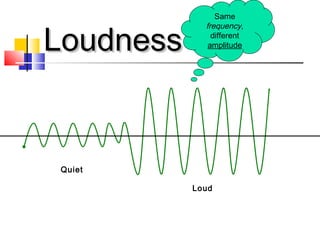
LoudnessLoudness
Quiet
Loud
Same
frequency,
different
amplitude
EchoEcho
 Sound waves that bounce off
a surface
 Sound will reflect off hard
surfaces
 They will be absorbed by soft
surfaces
ResonanceResonance
 When two objects naturally
vibrate at the same frequency

Sound Waves

  • 1.
    1. A waveis a disturbance that carries through matter or empty space. A. matter B. particles C. energy D. a medium E. water 2. Electromagnetic waves . A. are transverse waves B. require a medium C. are mechanical waves D. are longitudinal waves E. are tortional 3. Waves that require or travel through a medium are called . A. longitudinal waves B. transverse waves C. mechanical waves D. tortional waves E. all of the above 4. For which type of waves do particles in the medium vibrate perpendicular to the direction in which the wave is traveling? A. transverse waves B. longitudinal waves C. P waves D. all of the above E. None of the above
  • 2.
    ReviewReview  Mechanical waves Electromagnetic waves  Transverse waves  Longitudinal waves  Characteristics of waves
  • 3.
    SoundSound  Is alongitudinal wave  Needs a medium to travel through  The source of a sound wave vibrates rapidly
  • 4.
    SoundSound  This causes pressure vibrations Which causes air molecules to vibrate
  • 5.
    SoundSound  Air moleculesbunch together in some places  Compressions  Spread out at other places  Rarefactions
  • 7.
    PitchPitch  How highor how low a sound is  Not how loud  Depends on the frequency  Faster the frequency, the higher the pitch
  • 8.
    PitchPitch  Low pitch High pitch Same amplitude, different frequency
  • 9.
    LoudnessLoudness  Depends onthe amplitude  Higher amplitude, louder sound
  • 10.
  • 11.
    EchoEcho  Sound wavesthat bounce off a surface  Sound will reflect off hard surfaces  They will be absorbed by soft surfaces
  • 12.
    ResonanceResonance  When twoobjects naturally vibrate at the same frequency