PLANETS
PLANET EARTH
LANDSCAPES ON EARTH
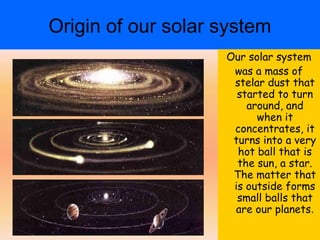
Origin of our solar system
Our solar system
was a mass of
stelar dust that
started to turn
around, and
when it
concentrates, it
turns into a very
hot ball that is
the sun, a star.
The matter that
is outside forms
small balls that
are our planets.
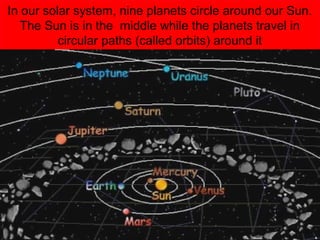
In our solar system, nine planets circle around our Sun.
The Sun is in the middle while the planets travel in
circular paths (called orbits) around it
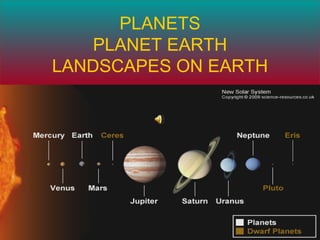
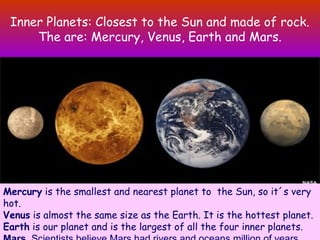
Inner Planets: Closest to the Sun and made of rock.
The are: Mercury, Venus, Earth and Mars.
Mercury is the smallest and nearest planet to the Sun, so it´s very
hot.
Venus is almost the same size as the Earth. It is the hottest planet.
Earth is our planet and is the largest of all the four inner planets.
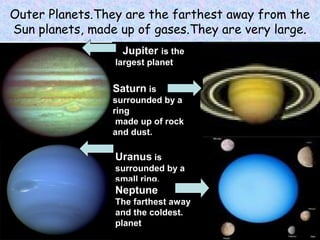
Outer Planets.They are the farthest away from the
Sun planets, made up of gases.They are very large.
Jupiter is the
largest planet.
Uranus is
surrounded by a
small ring.
Neptune
The farthest away
and the coldest.
planet
Saturn is
surrounded by a
ring
made up of rock
and dust.
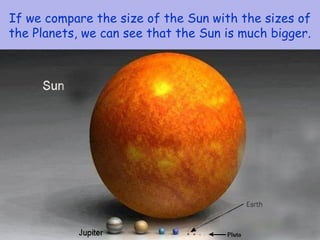
If we compare the size of the Sun with the sizes of
the Planets, we can see that the Sun is much bigger.
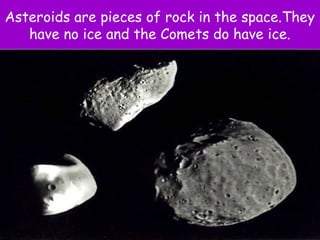
Asteroids are pieces of rock in the space.They
have no ice and the Comets do have ice.
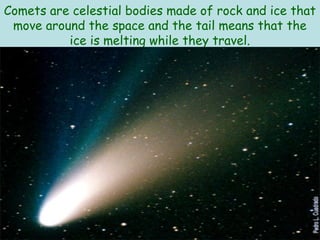
Comets are celestial bodies made of rock and ice that
move around the space and the tail means that the
ice is melting while they travel.
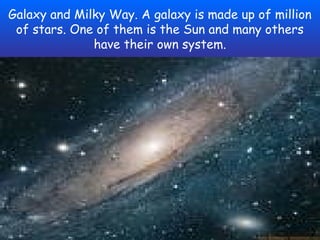
Galaxy and Milky Way. A galaxy is made up of million
of stars. One of them is the Sun and many others
have their own system.
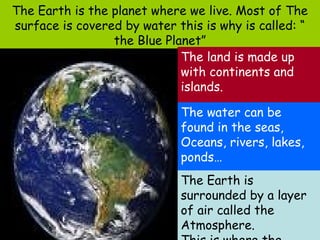
The Earth is the planet where we live. Most of The
surface is covered by water this is why is called: “
the Blue Planet”
The land is made up
with continents and
islands.
The water can be
found in the seas,
Oceans, rivers, lakes,
ponds…
The Earth is
surrounded by a layer
of air called the
Atmosphere.
THE MOON
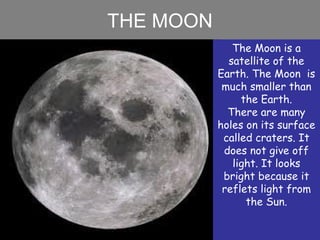
The Moon is a
satellite of the
Earth. The Moon is
much smaller than
the Earth.
There are many
holes on its surface
called craters. It
does not give off
light. It looks
bright because it
reflets light from
the Sun.
DAY AND NIGHT
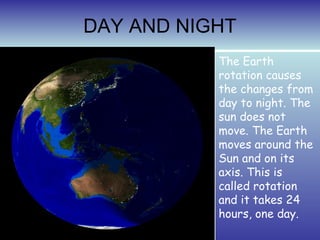
The Earth
rotation causes
the changes from
day to night. The
sun does not
move. The Earth
moves around the
Sun and on its
axis. This is
called rotation
and it takes 24
hours, one day.
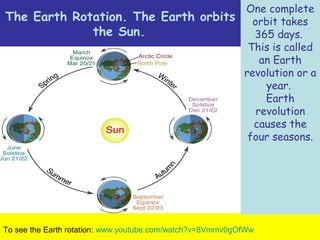
The Earth Rotation. The Earth orbits
the Sun.
To see the Earth rotation: www.youtube.com/watch?v=8Vmmv0gOfWw
One complete
orbit takes
365 days.
This is called
an Earth
revolution or a
year.
Earth
revolution
causes the
four seasons.
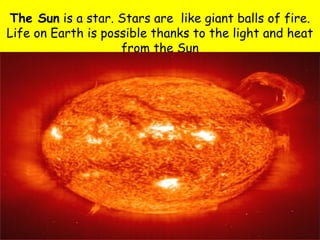
The Sun is a star. Stars are like giant balls of fire.
Life on Earth is possible thanks to the light and heat
from the Sun
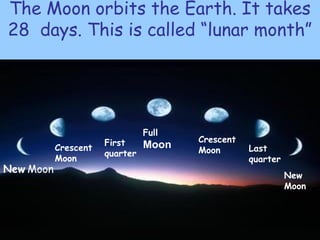
The Moon orbits the Earth. It takes
28 days. This is called “lunar month”
New Moon
Full
Moon
Crescent
Moon Last
quarter
First
quarter
Crescent
Moon
New
Moon
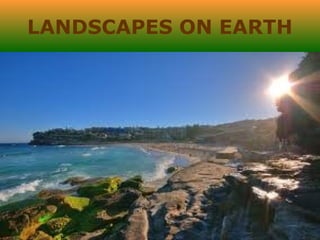
LANDSCAPES ON EARTH
•
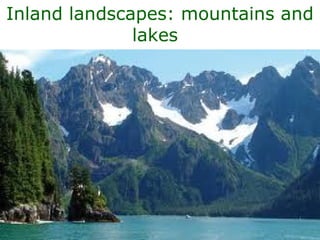
Inland landscapes: mountains and
lakes
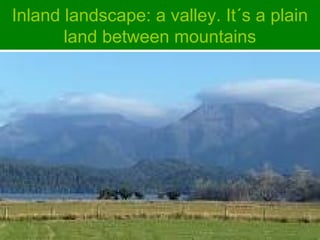
Inland landscape: a valley. It´s a plain
land between mountains
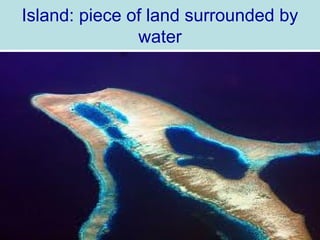
Island: piece of land surrounded by
water
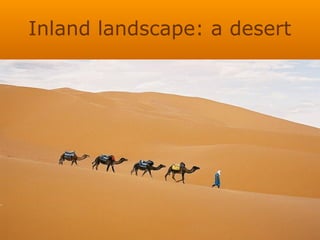
Inland landscape: a desert
MADE BY
MªAngeles Cola
• English teacher in a bilingual school
• Presentation for Primary Education.

R

  • 1.
  • 2.
    Origin of oursolar system Our solar system was a mass of stelar dust that started to turn around, and when it concentrates, it turns into a very hot ball that is the sun, a star. The matter that is outside forms small balls that are our planets.
  • 3.
    In our solarsystem, nine planets circle around our Sun. The Sun is in the middle while the planets travel in circular paths (called orbits) around it
  • 4.
    Inner Planets: Closestto the Sun and made of rock. The are: Mercury, Venus, Earth and Mars. Mercury is the smallest and nearest planet to the Sun, so it´s very hot. Venus is almost the same size as the Earth. It is the hottest planet. Earth is our planet and is the largest of all the four inner planets.
  • 5.
    Outer Planets.They arethe farthest away from the Sun planets, made up of gases.They are very large. Jupiter is the largest planet. Uranus is surrounded by a small ring. Neptune The farthest away and the coldest. planet Saturn is surrounded by a ring made up of rock and dust.
  • 6.
    If we comparethe size of the Sun with the sizes of the Planets, we can see that the Sun is much bigger.
  • 7.
    Asteroids are piecesof rock in the space.They have no ice and the Comets do have ice.
  • 8.
    Comets are celestialbodies made of rock and ice that move around the space and the tail means that the ice is melting while they travel.
  • 9.
    Galaxy and MilkyWay. A galaxy is made up of million of stars. One of them is the Sun and many others have their own system.
  • 10.
    The Earth isthe planet where we live. Most of The surface is covered by water this is why is called: “ the Blue Planet” The land is made up with continents and islands. The water can be found in the seas, Oceans, rivers, lakes, ponds… The Earth is surrounded by a layer of air called the Atmosphere.
  • 11.
    THE MOON The Moonis a satellite of the Earth. The Moon is much smaller than the Earth. There are many holes on its surface called craters. It does not give off light. It looks bright because it reflets light from the Sun.
  • 12.
    DAY AND NIGHT TheEarth rotation causes the changes from day to night. The sun does not move. The Earth moves around the Sun and on its axis. This is called rotation and it takes 24 hours, one day.
  • 13.
    The Earth Rotation.The Earth orbits the Sun. To see the Earth rotation: www.youtube.com/watch?v=8Vmmv0gOfWw One complete orbit takes 365 days. This is called an Earth revolution or a year. Earth revolution causes the four seasons.
  • 14.
    The Sun isa star. Stars are like giant balls of fire. Life on Earth is possible thanks to the light and heat from the Sun
  • 15.
    The Moon orbitsthe Earth. It takes 28 days. This is called “lunar month” New Moon Full Moon Crescent Moon Last quarter First quarter Crescent Moon New Moon
  • 16.
  • 17.
  • 18.
    Inland landscape: avalley. It´s a plain land between mountains
  • 19.
    Island: piece ofland surrounded by water
  • 20.
  • 21.
    MADE BY MªAngeles Cola •English teacher in a bilingual school • Presentation for Primary Education.