Questionnaire
Results
Gender
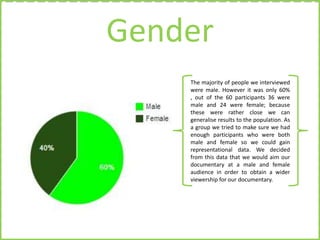
The majority of people we interviewed
were male. However it was only 60%
, out of the 60 participants 36 were
male and 24 were female; because
these were rather close we can
generalise results to the population. As
a group we tried to make sure we had
enough participants who were both
male and female so we could gain
representational data. We decided
from this data that we would aim our
documentary at a male and female
audience in order to obtain a wider
viewership for our documentary.
Age
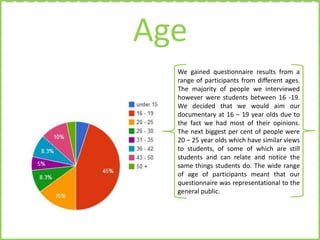
We gained questionnaire results from a
range of participants from different ages.
The majority of people we interviewed
however were students between 16 -19.
We decided that we would aim our
documentary at 16 – 19 year olds due to
the fact we had most of their opinions.
The next biggest per cent of people were
20 – 25 year olds which have similar views
to students, of some of which are still
students and can relate and notice the
same things students do. The wide range
of age of participants meant that our
questionnaire was representational to the
general public.
Postcode
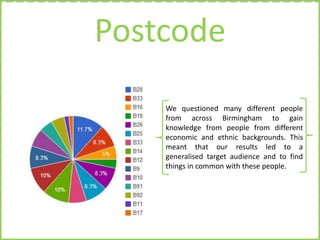
We questioned many different people
from across Birmingham to gain
knowledge from people from different
economic and ethnic backgrounds. This
meant that our results led to a
generalised target audience and to find
things in common with these people.
Do you watch documentaries?
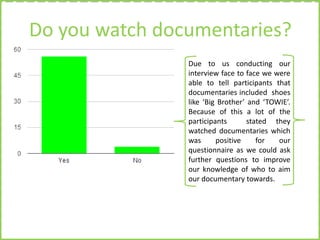
Due to us conducting our
interview face to face we were
able to tell participants that
documentaries included shoes
like ‘Big Brother’ and ‘TOWIE’.
Because of this a lot of the
participants
stated they
watched documentaries which
was
positive
for
our
questionnaire as we could ask
further questions to improve
our knowledge of who to aim
our documentary towards.
How often do you watch
documentaries?
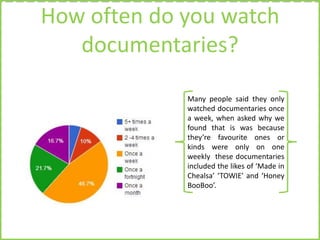
Many people said they only
watched documentaries once
a week, when asked why we
found that is was because
they’re favourite ones or
kinds were only on one
weekly these documentaries
included the likes of ‘Made in
Chealsa’ ‘TOWIE’ and ‘Honey
BooBoo’.
What genre of documentaries do
you watch?
Participat…

Observa..

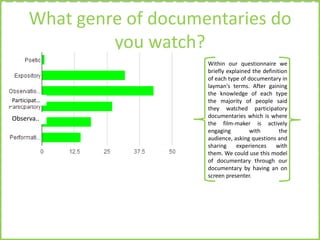
Within our questionnaire we
briefly explained the definition
of each type of documentary in
layman's terms. After gaining
the knowledge of each type
the majority of people said
they watched participatory
documentaries which is where
the film-maker is actively
engaging
with
the
audience, asking questions and
sharing
experiences
with
them. We could use this model
of documentary through our
documentary by having an on
screen presenter.
What time do you watch the
documentaries?
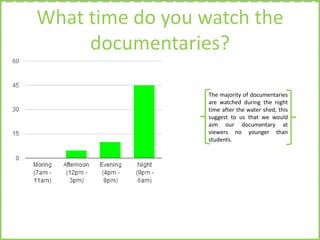
The majority of documentaries
are watched during the night
time after the water shed, this
suggest to us that we would
aim our documentary at
viewers no younger than
students.
What topics would you be interested
in watching a documentary about?

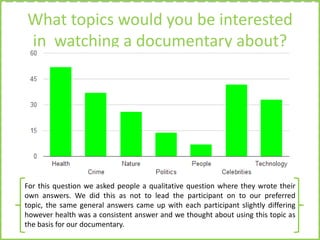
For this question we asked people a qualitative question where they wrote their
own answers. We did this as not to lead the participant on to our preferred
topic, the same general answers came up with each participant slightly differing
however health was a consistent answer and we thought about using this topic as
the basis for our documentary.
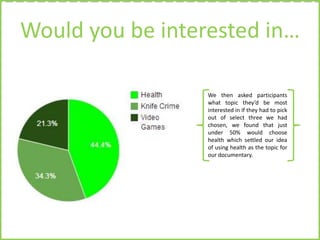
Would you be interested in…
We then asked participants
what topic they’d be most
interested in if they had to pick
out of select three we had
chosen, we found that just
under 50% would choose
health which settled our idea
of using health as the topic for
our documentary.

Questionnaire results analysis

  • 1.
  • 2.
    Gender The majority ofpeople we interviewed were male. However it was only 60% , out of the 60 participants 36 were male and 24 were female; because these were rather close we can generalise results to the population. As a group we tried to make sure we had enough participants who were both male and female so we could gain representational data. We decided from this data that we would aim our documentary at a male and female audience in order to obtain a wider viewership for our documentary.
  • 3.
    Age We gained questionnaireresults from a range of participants from different ages. The majority of people we interviewed however were students between 16 -19. We decided that we would aim our documentary at 16 – 19 year olds due to the fact we had most of their opinions. The next biggest per cent of people were 20 – 25 year olds which have similar views to students, of some of which are still students and can relate and notice the same things students do. The wide range of age of participants meant that our questionnaire was representational to the general public.
  • 4.
    Postcode We questioned manydifferent people from across Birmingham to gain knowledge from people from different economic and ethnic backgrounds. This meant that our results led to a generalised target audience and to find things in common with these people.
  • 5.
    Do you watchdocumentaries? Due to us conducting our interview face to face we were able to tell participants that documentaries included shoes like ‘Big Brother’ and ‘TOWIE’. Because of this a lot of the participants stated they watched documentaries which was positive for our questionnaire as we could ask further questions to improve our knowledge of who to aim our documentary towards.
  • 6.
    How often doyou watch documentaries? Many people said they only watched documentaries once a week, when asked why we found that is was because they’re favourite ones or kinds were only on one weekly these documentaries included the likes of ‘Made in Chealsa’ ‘TOWIE’ and ‘Honey BooBoo’.
  • 7.
    What genre ofdocumentaries do you watch? Participat… Observa.. Within our questionnaire we briefly explained the definition of each type of documentary in layman's terms. After gaining the knowledge of each type the majority of people said they watched participatory documentaries which is where the film-maker is actively engaging with the audience, asking questions and sharing experiences with them. We could use this model of documentary through our documentary by having an on screen presenter.
  • 8.
    What time doyou watch the documentaries? The majority of documentaries are watched during the night time after the water shed, this suggest to us that we would aim our documentary at viewers no younger than students.
  • 9.
    What topics wouldyou be interested in watching a documentary about? For this question we asked people a qualitative question where they wrote their own answers. We did this as not to lead the participant on to our preferred topic, the same general answers came up with each participant slightly differing however health was a consistent answer and we thought about using this topic as the basis for our documentary.
  • 10.
    Would you beinterested in… We then asked participants what topic they’d be most interested in if they had to pick out of select three we had chosen, we found that just under 50% would choose health which settled our idea of using health as the topic for our documentary.