Nick Crompton
*
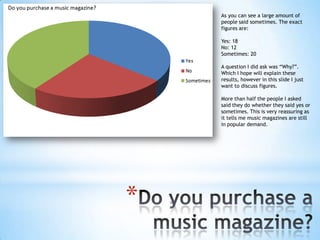
As you can see a large amount of
    people said sometimes. The exact
    figures are:

    Yes: 18
    No: 12
    Sometimes: 20

    A question I did ask was “Why?”.
    Which I hope will explain these
    results, however in this slide I just
    want to discuss figures.

    More than half the people I asked
    said they do whether they said yes or
    sometimes. This is very reassuring as
    it tells me music magazines are still
    in popular demand.


*
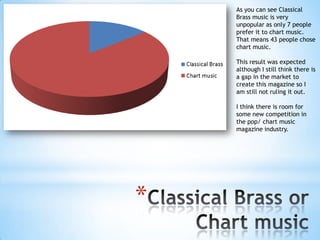
As you can see Classical
    Brass music is very
    unpopular as only 7 people
    prefer it to chart music.
    That means 43 people chose
    chart music.

    This result was expected
    although I still think there is
    a gap in the market to
    create this magazine so I
    am still not ruling it out.

    I think there is room for
    some new competition in
    the pop/ chart music
    magazine industry.


*
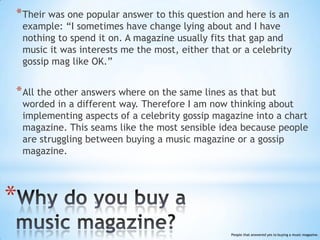
* Their was one popular answer to this question and here is an
    example: “I sometimes have change lying about and I have
    nothing to spend it on. A magazine usually fits that gap and
    music it was interests me the most, either that or a celebrity
    gossip mag like OK.”


* All the other answers where on the same lines as that but
    worded in a different way. Therefore I am now thinking about
    implementing aspects of a celebrity gossip magazine into a chart
    magazine. This seams like the most sensible idea because people
    are struggling between buying a music magazine or a gossip
    magazine.


*
                                                    People that answered yes to buying a music magazine.
* One of the answers that kept popping up was the fact they
    didn’t feel the need to regularly buy a music magazine because
    not a lot happens in the music industry and you feel like you are
    reading the same thing.


* This didn’t cross my mind until now therefore I am going to have
    to think about this. A way I can avoid this is by implementing
    aspects of a gossip magazine into my music magazine like I said
    before. Not only does this eliminate the choice the reader has to
    make between music or celebs, but it makes sure that each issue
    is packed with brand new information.


*
                                                 People that answered sometimes to buying a music magazine.
* I counted through each questionnaire that said no and all 12 of
    them said that the information is available digitally on a
    computer or another portable device and usually for free.


* A way I can persuade the readers to buy the magazine is by
    creating a digital subscription service which enables the reader
    to view the magazine electronically and interactively on devices
    such as iPad’s and iPhone’s. This also makes the magazine more
    diverse and accessible to more people.


*
                                                People that answered no to buying a music magazine.
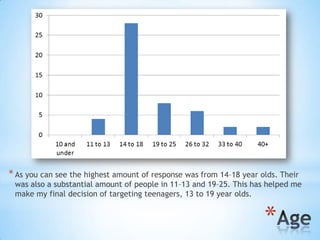
* As you can see the highest amount of response was from 14–18 year olds. Their
 was also a substantial amount of people in 11–13 and 19–25. This has helped me
 make my final decision of targeting teenagers, 13 to 19 year olds.


                                                                     *

Questionnaire results

  • 1.
  • 2.
    As you cansee a large amount of people said sometimes. The exact figures are: Yes: 18 No: 12 Sometimes: 20 A question I did ask was “Why?”. Which I hope will explain these results, however in this slide I just want to discuss figures. More than half the people I asked said they do whether they said yes or sometimes. This is very reassuring as it tells me music magazines are still in popular demand. *
  • 3.
    As you cansee Classical Brass music is very unpopular as only 7 people prefer it to chart music. That means 43 people chose chart music. This result was expected although I still think there is a gap in the market to create this magazine so I am still not ruling it out. I think there is room for some new competition in the pop/ chart music magazine industry. *
  • 4.
    * Their wasone popular answer to this question and here is an example: “I sometimes have change lying about and I have nothing to spend it on. A magazine usually fits that gap and music it was interests me the most, either that or a celebrity gossip mag like OK.” * All the other answers where on the same lines as that but worded in a different way. Therefore I am now thinking about implementing aspects of a celebrity gossip magazine into a chart magazine. This seams like the most sensible idea because people are struggling between buying a music magazine or a gossip magazine. * People that answered yes to buying a music magazine.
  • 5.
    * One ofthe answers that kept popping up was the fact they didn’t feel the need to regularly buy a music magazine because not a lot happens in the music industry and you feel like you are reading the same thing. * This didn’t cross my mind until now therefore I am going to have to think about this. A way I can avoid this is by implementing aspects of a gossip magazine into my music magazine like I said before. Not only does this eliminate the choice the reader has to make between music or celebs, but it makes sure that each issue is packed with brand new information. * People that answered sometimes to buying a music magazine.
  • 6.
    * I countedthrough each questionnaire that said no and all 12 of them said that the information is available digitally on a computer or another portable device and usually for free. * A way I can persuade the readers to buy the magazine is by creating a digital subscription service which enables the reader to view the magazine electronically and interactively on devices such as iPad’s and iPhone’s. This also makes the magazine more diverse and accessible to more people. * People that answered no to buying a music magazine.
  • 7.
    * As youcan see the highest amount of response was from 14–18 year olds. Their was also a substantial amount of people in 11–13 and 19–25. This has helped me make my final decision of targeting teenagers, 13 to 19 year olds. *