TOP NINE INSTRUCTIONAL STRATEGIES TO INCREASE
STUDENT ACHIEVEMENT
ESSENTIAL
QUESTIONS/QUESTIONING
Palmyra Area School District
1. Essential Questions/Questioning
2. Previewing/Advance Organizers/Activating
3. Summarizing
4. Non-Verbal Representations
5. Active Student Engagement/Collaborative Pairs
6. Extending Thinking Skills
7. Differentiated Instruction
8. Vocabulary in Context
9. Student Writing
Top Nine Strategies
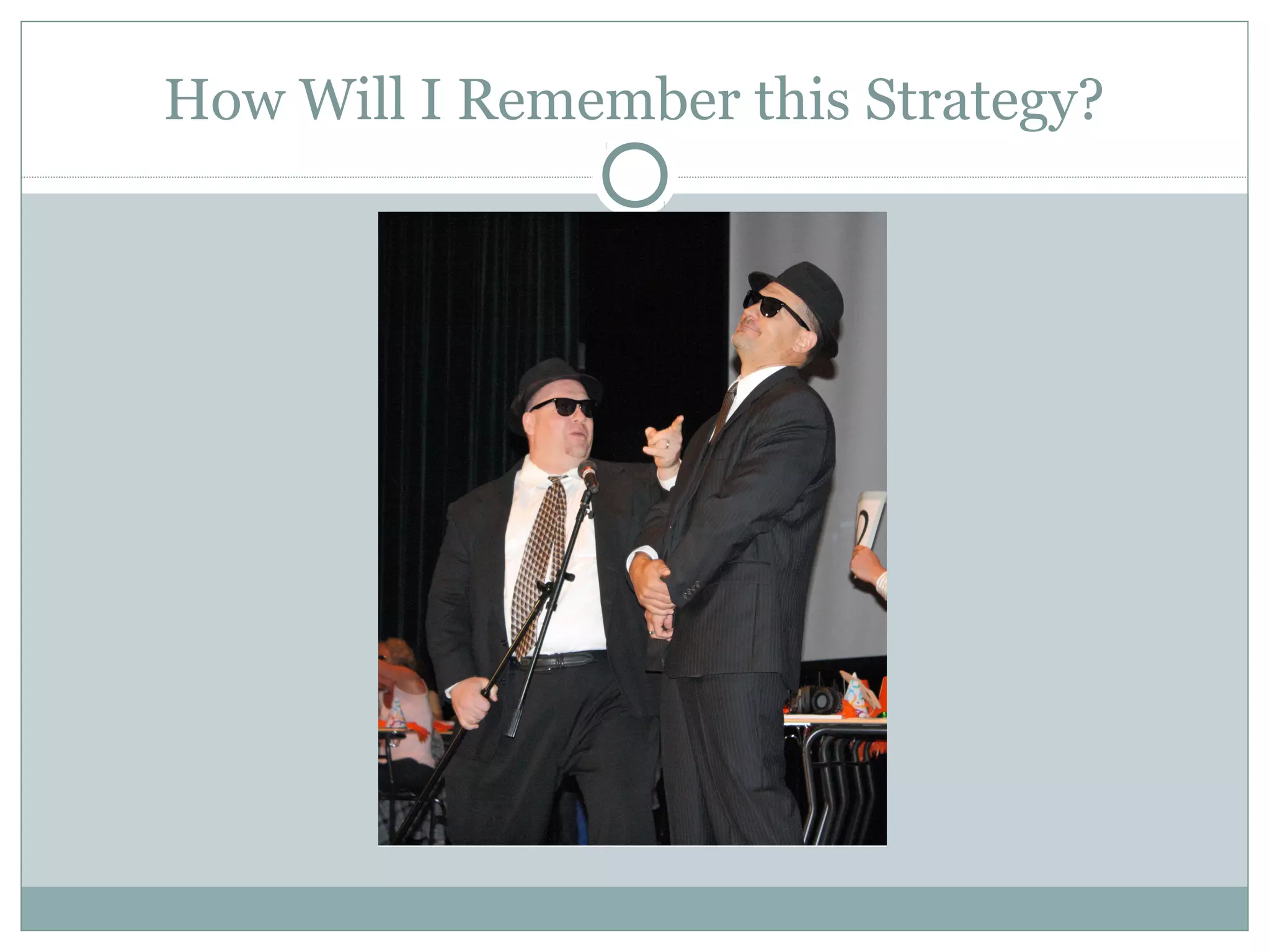
How Will I Remember this Strategy?
Strategy: Essential Questions/Questioning
Essential questions (EQs) express concepts or skills
in question form to guide lesson development.
Questioning engages students’ thought processes in
order to deepen student learning.
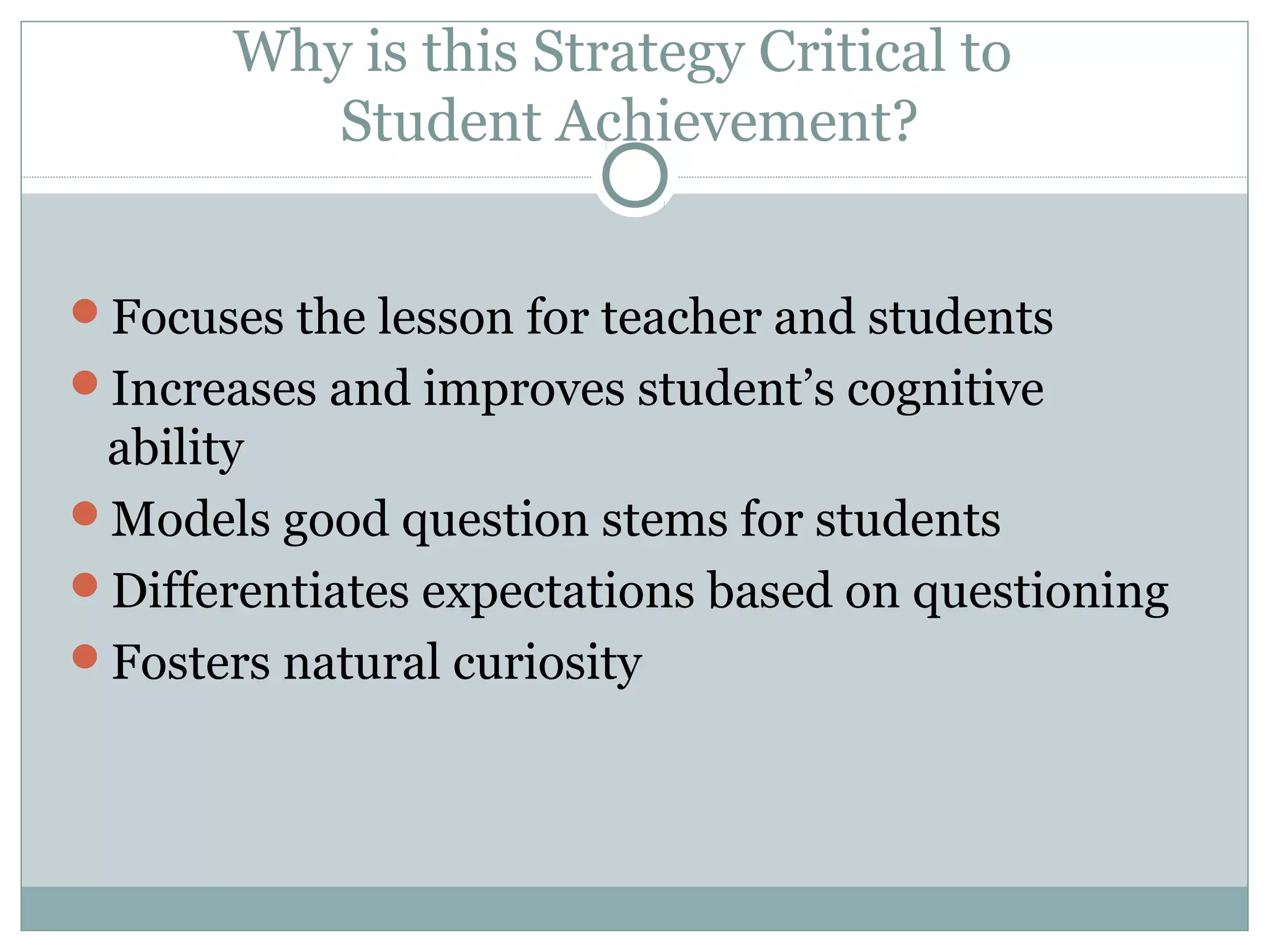
Focuses the lesson for teacher and students
Increases and improves student’s cognitive
ability
Models good question stems for students
Differentiates expectations based on questioning
Fosters natural curiosity
Why is this Strategy Critical to
Student Achievement?
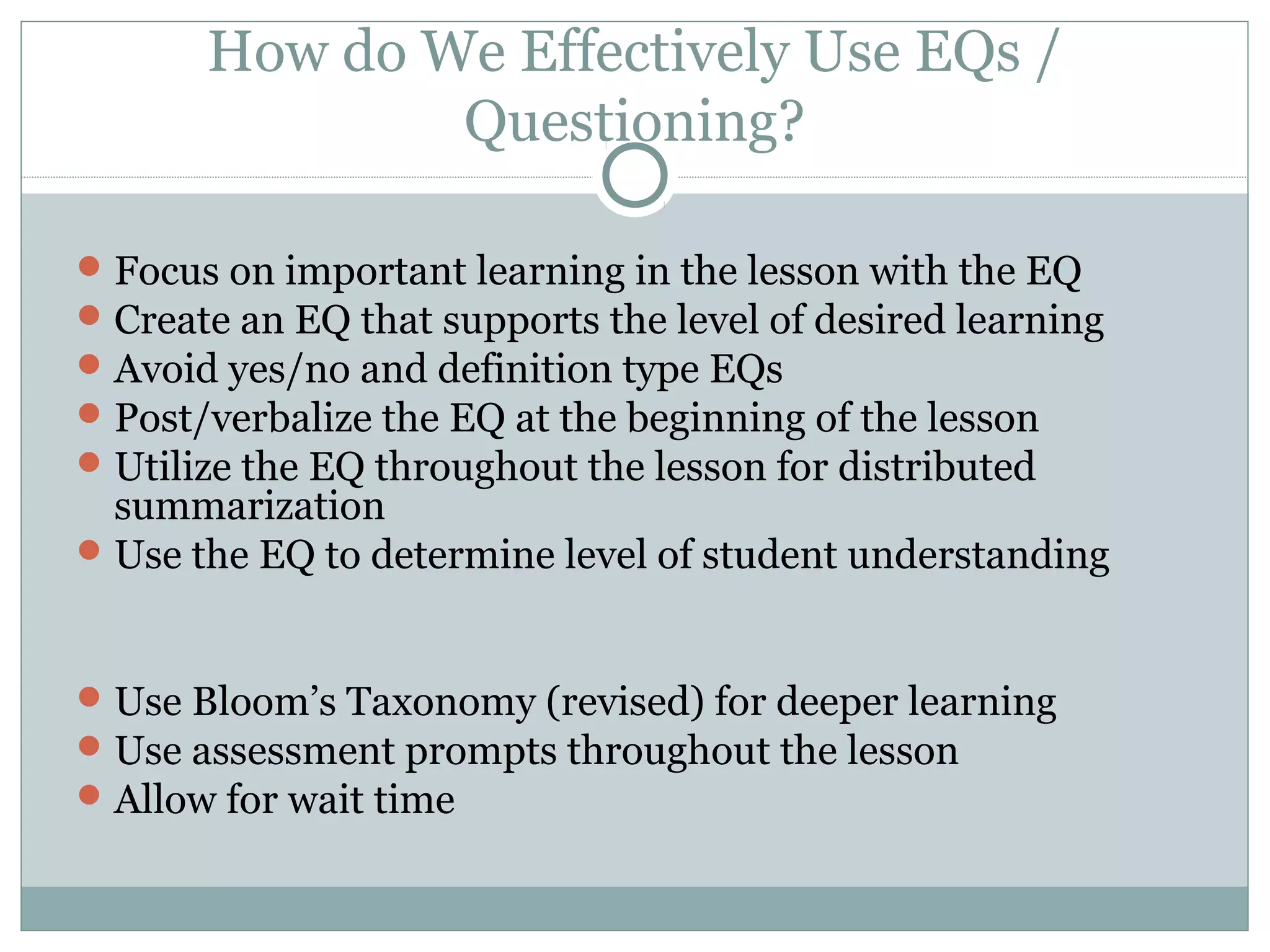
Focus on important learning in the lesson with the EQ
Create an EQ that supports the level of desired learning
Avoid yes/no and definition type EQs
Post/verbalize the EQ at the beginning of the lesson
Utilize the EQ throughout the lesson for distributed
summarization
Use the EQ to determine level of student understanding
Use Bloom’s Taxonomy (revised) for deeper learning
Use assessment prompts throughout the lesson
Allow for wait time
How do We Effectively Use EQs /
Questioning?
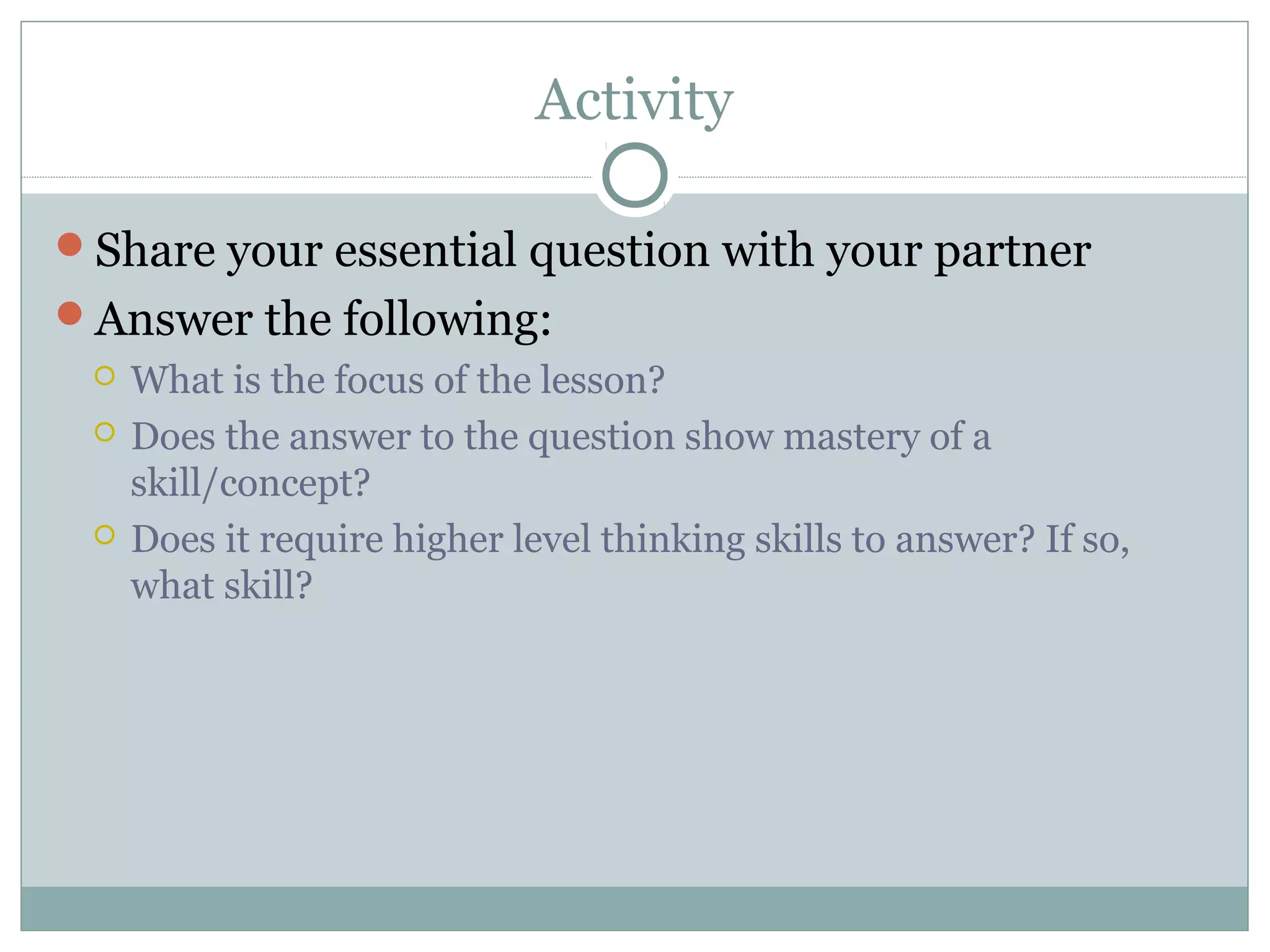
Activity
Share your essential question with your partner
Answer the following:
 What is the focus of the lesson?
 Does the answer to the question show mastery of a
skill/concept?
 Does it require higher level thinking skills to answer? If so,
what skill?
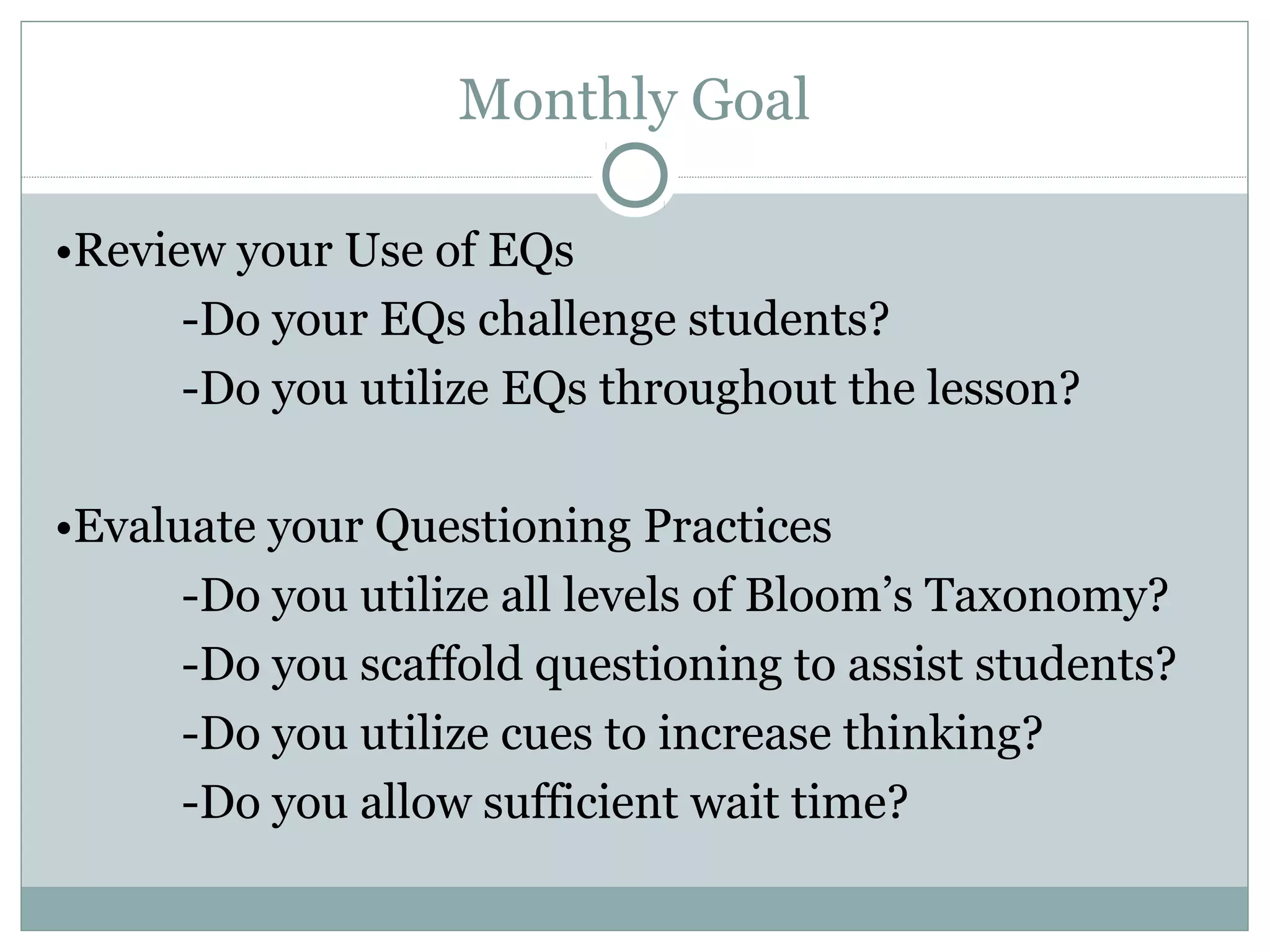
Monthly Goal
•Review your Use of EQs
-Do your EQs challenge students?
-Do you utilize EQs throughout the lesson?
•Evaluate your Questioning Practices
-Do you utilize all levels of Bloom’s Taxonomy?
-Do you scaffold questioning to assist students?
-Do you utilize cues to increase thinking?
-Do you allow sufficient wait time?

Questioning powerpoint final

  • 1.
    TOP NINE INSTRUCTIONALSTRATEGIES TO INCREASE STUDENT ACHIEVEMENT ESSENTIAL QUESTIONS/QUESTIONING Palmyra Area School District
  • 2.
    1. Essential Questions/Questioning 2.Previewing/Advance Organizers/Activating 3. Summarizing 4. Non-Verbal Representations 5. Active Student Engagement/Collaborative Pairs 6. Extending Thinking Skills 7. Differentiated Instruction 8. Vocabulary in Context 9. Student Writing Top Nine Strategies
  • 3.
    How Will IRemember this Strategy?
  • 4.
    Strategy: Essential Questions/Questioning Essentialquestions (EQs) express concepts or skills in question form to guide lesson development. Questioning engages students’ thought processes in order to deepen student learning.
  • 5.
    Focuses the lessonfor teacher and students Increases and improves student’s cognitive ability Models good question stems for students Differentiates expectations based on questioning Fosters natural curiosity Why is this Strategy Critical to Student Achievement?
  • 6.
    Focus on importantlearning in the lesson with the EQ Create an EQ that supports the level of desired learning Avoid yes/no and definition type EQs Post/verbalize the EQ at the beginning of the lesson Utilize the EQ throughout the lesson for distributed summarization Use the EQ to determine level of student understanding Use Bloom’s Taxonomy (revised) for deeper learning Use assessment prompts throughout the lesson Allow for wait time How do We Effectively Use EQs / Questioning?
  • 7.
    Activity Share your essentialquestion with your partner Answer the following:  What is the focus of the lesson?  Does the answer to the question show mastery of a skill/concept?  Does it require higher level thinking skills to answer? If so, what skill?
  • 8.
    Monthly Goal •Review yourUse of EQs -Do your EQs challenge students? -Do you utilize EQs throughout the lesson? •Evaluate your Questioning Practices -Do you utilize all levels of Bloom’s Taxonomy? -Do you scaffold questioning to assist students? -Do you utilize cues to increase thinking? -Do you allow sufficient wait time?