QUESTION 2
How does your media product
represent particular social
groups?
Elizabeth Redden 9181
AGE:
My music magazine is aimed at 17 to 21 year olds.
Therefore, throughout my front cover; contents page; and
double page spread, I have used language that young
adults would understand rather than using sophisticated
language that the audience would struggle to
understand.
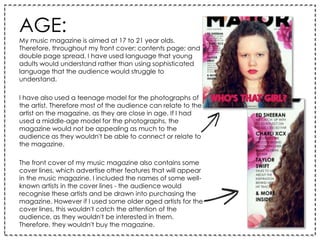
I have also used a teenage model for the photographs of
the artist. Therefore most of the audience can relate to the
artist on the magazine, as they are close in age. If I had
used a middle-age model for the photographs, the
magazine would not be appealing as much to the
audience as they wouldn't be able to connect or relate to
the magazine.
The front cover of my music magazine also contains some
cover lines, which advertise other features that will appear
in the music magazine. I included the names of some well-
known artists in the cover lines - the audience would
recognise these artists and be drawn into purchasing the
magazine. However if I used some older aged artists for the
cover lines, this wouldn't catch the attention of the
audience, as they wouldn't be interested in them.
Therefore, they wouldn't buy the magazine.
GENDER:
My music magazine is primarily aimed at females.
Therefore, my media products are mainly
representative of the female gender.
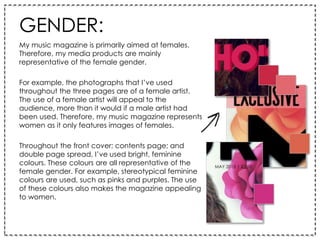
For example, the photographs that I’ve used
throughout the three pages are of a female artist.
The use of a female artist will appeal to the
audience, more than it would if a male artist had
been used. Therefore, my music magazine represents
women as it only features images of females.
Throughout the front cover; contents page; and
double page spread, I’ve used bright, feminine
colours. These colours are all representative of the
female gender. For example, stereotypical feminine
colours are used, such as pinks and purples. The use
of these colours also makes the magazine appealing
to women.
CLASS:
My media product is aimed at, and represents, the
working-class social group.
Although informal language is used in areas, the overall
language of the media product isn’t too formal or too
informal. For example, in the front cover, words such as
‘who’s’; ‘hit tracks’ are used – which also gives it a
friendly feel and appeals to the reader. The contents
page is the same in the way that the language is used
to represent the particular social group that the
magazine is aimed at. Words such as: ‘hottest’; and ‘jet
out’ are used.
Again, on the double-page spread I have used informal
language to appeal to and represent particular social
groups. Words such as ‘yeah’ and ‘a.k.a’ are used to
give the double page spread a friendly feel.
The social class is also represented in the price of the
magazine. Most of the audience will be students who
are unable to shell out £4.00+ for a monthly magazine.
Therefore, my magazine is priced at £2.50.

Question 2

  • 1.
    QUESTION 2 How doesyour media product represent particular social groups? Elizabeth Redden 9181
  • 2.
    AGE: My music magazineis aimed at 17 to 21 year olds. Therefore, throughout my front cover; contents page; and double page spread, I have used language that young adults would understand rather than using sophisticated language that the audience would struggle to understand. I have also used a teenage model for the photographs of the artist. Therefore most of the audience can relate to the artist on the magazine, as they are close in age. If I had used a middle-age model for the photographs, the magazine would not be appealing as much to the audience as they wouldn't be able to connect or relate to the magazine. The front cover of my music magazine also contains some cover lines, which advertise other features that will appear in the music magazine. I included the names of some well- known artists in the cover lines - the audience would recognise these artists and be drawn into purchasing the magazine. However if I used some older aged artists for the cover lines, this wouldn't catch the attention of the audience, as they wouldn't be interested in them. Therefore, they wouldn't buy the magazine.
  • 3.
    GENDER: My music magazineis primarily aimed at females. Therefore, my media products are mainly representative of the female gender. For example, the photographs that I’ve used throughout the three pages are of a female artist. The use of a female artist will appeal to the audience, more than it would if a male artist had been used. Therefore, my music magazine represents women as it only features images of females. Throughout the front cover; contents page; and double page spread, I’ve used bright, feminine colours. These colours are all representative of the female gender. For example, stereotypical feminine colours are used, such as pinks and purples. The use of these colours also makes the magazine appealing to women.
  • 4.
    CLASS: My media productis aimed at, and represents, the working-class social group. Although informal language is used in areas, the overall language of the media product isn’t too formal or too informal. For example, in the front cover, words such as ‘who’s’; ‘hit tracks’ are used – which also gives it a friendly feel and appeals to the reader. The contents page is the same in the way that the language is used to represent the particular social group that the magazine is aimed at. Words such as: ‘hottest’; and ‘jet out’ are used. Again, on the double-page spread I have used informal language to appeal to and represent particular social groups. Words such as ‘yeah’ and ‘a.k.a’ are used to give the double page spread a friendly feel. The social class is also represented in the price of the magazine. Most of the audience will be students who are unable to shell out £4.00+ for a monthly magazine. Therefore, my magazine is priced at £2.50.