Quantum Spiral Theory
Suraj Kumar
surajkumar600s@gmail.com
Abstract
In this paper we have tried to
describe a gauge group for
gravitational potential associated
with the elementary particle as
described by their spiral structure in
accordance with the standard model.
It relates to the framework of
quantum field theory considering the
Dark Potential Waves which
constitutes the Universe to be
destructively interfering through
Symmetry which breaks
spontaneously through autocatalysis
to initiate the Higgs Mechanism
which consecutively defines the
gravitational potential resulting in
various spiral forms of particles. It
also redefines the formation of Spiral
Structure of Elementary Particles in
context to formation of Sea Shells.
PACS: 10, 11, 21, 31, 32, 41, 95, 96, 97, 98
Keywords: spiral, elementary particles,
standard model, universe, quantum field
theory and shells.
Introduction:
The Universe is constituted fundamentally
with the Dark Potential which is the
symmetric constructive and destructive
interference of heat potent waves (that are
unobservable ingredient of The Universe)
which leaves zero potential for formation of
particle in the resultant field. Unlike Quantum
Field Theory where Universe is constituted
fundamentally with the fields which is excited
to produce the elementary particles, in
Quantum Spiral Theory the elementary
particles are formed through autocatalysis
(described in later section) of these Dark
Potentials which break the symmetry either
by phase shift or horizontal expansion
resulting in initiation of Higgs Mechanism [2]
which consecutively defines the gravitational
potential resulting in various spiral forms of
particles.
(Fig 1: Horizontal Displacement and vertical
Phase Shift resulting in spontaneous symmetry
break.)
Defining Gauge Group for Elementary
Particles with Spiral Structure:
The Gauge Group of Standard model is known
to be as SU (3) X SU (2) X U (1) which is a
non-abelian symmetry gauge group. The term
gauge refers to redundant degrees of
freedom in the Lagrangian. It satisfies the
description for three of the four fundamental
forces named, Strong Nuclear Force, Weak
Nuclear Force and Electromagnetic Force. It
does not provide a description for the
Gravitational Force yet. Referring to the
description of Gravity in [1] and
rearrange the Gauge Group of Standard
Model to include the Gravitational Force as:
SU (3) X SU (2) X [SU (1) ⋊⋊⋊⋊
[Since, 1 SU (n) U (n) U (1) 1
This can be splitted as semidirect product of
SU (n) and U (1) where U (1) subgroup of
U (n) can be taken to consist of matrices
which are diagonal and have ݁௜ఏ
corner and 1 on rest of diagonal.
U (n) is non abelian for n > 1 and is infinite
cyclic for all n. Thus it concludes that,
(Fig. 2: Illustration of Autocatalysis in U (1)
Autocatalysis in U (1) which is quantised in
units of ࢉ૛
as described in [1]. The
Potentials also provides short term supply of
energy demanded during Boson Interaction
permitted by the Heisenberg Uncertainty
Principle i.e.
∆ࡱ	∆࢚ ൒	
૚
૛
	԰
The borrowed energy after the usage or
interaction annihilates by destroying the
potential through destructive interference
and loosing back the potential to the Overall
Dark Potential i.e. unobservable ingredient of
The Universe.
Nuclear Force and Electromagnetic Force. It
does not provide a description for the
Gravitational Force yet. Referring to the
and [2], we can
rearrange the Gauge Group of Standard
Model to include the Gravitational Force as:
⋊⋊⋊⋊ U (1)] …(1)
SU (n) U (n) U (1) 1]
This can be splitted as semidirect product of
subgroup of
can be taken to consist of matrices
௜ఏ
in upper left
corner and 1 on rest of diagonal. Also the
and is infinite
Thus it concludes that,
U (1) = SU (1) ⋊⋊⋊⋊ U (1)
SU (1) is trivial group having only a single
element. There are isomorphic of cyclic order
1. The trivial group serves as the zero objects
in category of groups, meaning it behaves as
both initial and terminal object.
of Quantum Spiral Theory,
the Overall Dark Potential
from which the Energy is being borrowed in
account of available potential
Spiral Structure for Elementary Particles
through the semidirect product with
Equation (2) describes the phenomenon of
: Illustration of Autocatalysis in U (1) = SU (1) ⋊ U (1) [in the units of
which is quantised in
The Dark
Potentials also provides short term supply of
energy demanded during Boson Interaction as
permitted by the Heisenberg Uncertainty
…(3)
The borrowed energy after the usage or
nnihilates by destroying the
potential through destructive interference
and loosing back the potential to the Overall
Dark Potential i.e. unobservable ingredient of
The Overall Dark Potential term of Gauge
Group goes along in all its subgroup
required for autocatalysis
during Higgs Mechanism when the Gauge
Group of Standard Model decay into
U (1), the U (1) preserves it
behaviour and the respective Gauge Group
can be viewed as SU (3) X [SU (1)
Note: The Quantum Spiral Theory keeps the
Gauge Group and Lagrangian of Standard
Model conserved. It only integrates the
autocatalysis definition in the existing
Standard Model to incorporate the
U (1) …(2)
is trivial group having only a single
element. There are isomorphic of cyclic order
1. The trivial group serves as the zero objects
in category of groups, meaning it behaves as
both initial and terminal object. In our model
of Quantum Spiral Theory, SU (1) represents
the Overall Dark Potentials of the Universe
from which the Energy is being borrowed in
account of available potential for formation of
Spiral Structure for Elementary Particles
through the semidirect product with U (1).
the phenomenon of
U (1) [in the units of ܿଶ
])
The Overall Dark Potential term of Gauge
Group goes along in all its subgroups as it is
autocatalysis. For example,
during Higgs Mechanism when the Gauge
Group of Standard Model decay into SU (3) X
preserves it autocatalytic
behaviour and the respective Gauge Group
) X [SU (1) ⋊⋊⋊⋊ U (1)].
Note: The Quantum Spiral Theory keeps the
Gauge Group and Lagrangian of Standard
Model conserved. It only integrates the
autocatalysis definition in the existing
Standard Model to incorporate the
gravitational potential as defined by the
Spiral Structure of Elementary Particles.
Redefining the formation of Spiral
Structure of Elementary Particles in
context to formation of Sea Shells:
Taking the Spiral Structure of Elementary
Particles in analogous to the self-similar Sea
Shells, we can derive its structure and
pigmentation pattern which for Elementary
Particles combines together to form an initial
structure with intrinsic behaviours and
extrinsic interaction with other particles.
Initially the particle is expected to have
inwardly rotating Nautilus shape while during
acceleration it attains the various conical
shapes.
Reaction – Diffusion model of pigmentation
patterns provide the key of intrinsic property
deposited on the tip of the Spiral Structure of
Elementary Particle which diffuses inwardly to
the whole of spiral structure. (It’s in context to
the deposition of pigmentation pattern on the
growing edge of shells)
Pickover approximated shell surfaces using
interpenetrated spheres, placed at carefully
choosen distances from each other and
rendered using periodically altering potential
waves creates the appearance of ribbed
surface with stripes. In comparison to the
Spiral Structure of Elementary Particles, the
approximation describes the discrete
behaviour of Elementary Particles to be
consequence of interpenetration of
constituent dark potential waves of
associated elementary particle at sub-scales
(i.e. the interfering waves at smaller scale
which provides the final resultant potential
waveform required for creating the Spiral
Structure of Elementary Particle) which is
being rendered externally using periodically
altering potential waves at super-scale (i.e.
the waves enveloping the final resultant
potential waveform which is creating the
Spiral Structure of Elementary Particle).
It can now be described by short range
activation and long range inhibition in Fernet
Frame by incorporating Generating Curve. The
Fernet Frame is not defined in points with
Zero Curvature as in context to Space-Time
Canvas, zero curvature does not hold mass i.e.
it lacks gravitational potential.
Reaction Diffusion equation operates in
discretized uniform space provided by the
initial potential wave form during formation
of Spiral Structure for Elementary Particle.
This provides following mathematical
viewpoints:
‫ܮ‬ =	‫׬‬ ට(
ௗ௨
ௗ௦
)ଶ + (
ௗ௩
ௗ௦
)ଶ + (
ௗ௪
ௗ௦
)ଶௌ೘ೌೣ
ௌ೘೔೙
	݀‫ݏ‬
ௗ௦
ௗ௟
=	
ଵ
௙(௦)
The total length of resulting spiral is given by
‫.ܮ‬ Where ‫)ݏ(ܥ‬ = (‫,)ݏ(ݑ‬ ‫,)ݏ(ݒ‬ ‫))ݏ(ݓ‬ denote a
parametric definition of the spiral’s curve with
‫	ݏ‬ ∈ [ܵ௠௜௡, ܵ௠௔௫].
Diversity in pattern of Particle Family is
attributed to the lack of selective value of any
particular pattern. The potential deposition
for behaviour or interaction is under the
control of waveform called activator, which
simulates its own production through a
positive feedback mechanism called
autocatalysis. Inhibitors are waveforms that
suppress the production of the activator in
neighbourhood of autocatalytic centre.
Production of activator is autocatalytic
process proportional to ࢉ૛
. The autocatalysis
can saturate at higher activator
concentrations at level controlled by the
super-scale potential waves. Initially Vacuum
Expectation Value (VEV) (i.e. the minimum of
potential V (Ф) in the lagrangian of scalar
potential) represents a small base production
of activator waves needed to initiate the
autocatalytic process for formation of Spirals
of Elementary Particles. This VEV is provided
by the potential created through the
spontaneous break in the symmetry of
Universe which itself is consequence of
autocatalytic process in Dark Potentials.
Note: The autocatalytic process in Dark
Potential is independent of the autocatalytic
process required for formation of Spiral
Structure for Elementary Particles and it does
not require VEV to be initiated but is ever
running process along with the interferences
of Dark Potential Waves.
Propagation of colliding waves is a major
feature of neutral Universe as a whole.
Previously colliding waves extinguishes each
other. But after spontaneous symmetry break
with VEV, an activated point of one wave
spontaneously initiates another wave
travelling in opposite direction. The Overall
Dark Potential of the Universe is the global
control mechanism that monitors the total
amount of activator in the system and
initiates new waves when its concentration
becomes too low.
The activator catalyses the production of its
antagonist inhibitors which in turns decreases
the production of activator proportionally. A
small number of travelling wave yields a small
concentration of catalysing which accelerates
the decay of inhibitors. The concentration of
activator increases and at some points
reaches the threshold at which additional
activator waves are formed resulting in
multiple behaviours of single particle. E.g.
Quarks. It’s a self regulating process, where
the catalysing which accelerates the decay of
inhibitors provides a negative feedback
maintaining the number of travelling waves at
an approximately constant level.
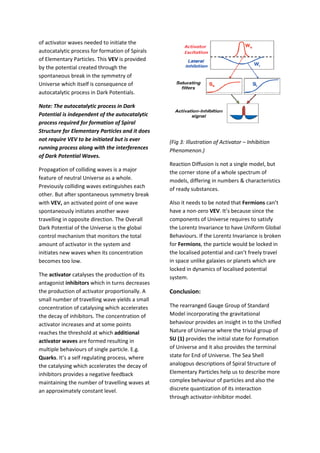
(Fig 3: Illustration of Activator – Inhibition
Phenomenon.)
Reaction Diffusion is not a single model, but
the corner stone of a whole spectrum of
models, differing in numbers & characteristics
of ready substances.
Also it needs to be noted that Fermions can’t
have a non-zero VEV. It’s because since the
components of Universe requires to satisfy
the Lorentz Invariance to have Uniform Global
Behaviours. If the Lorentz Invariance is broken
for Fermions, the particle would be locked in
the localised potential and can’t freely travel
in space unlike galaxies or planets which are
locked in dynamics of localised potential
system.
Conclusion:
The rearranged Gauge Group of Standard
Model incorporating the gravitational
behaviour provides an insight in to the Unified
Nature of Universe where the trivial group of
SU (1) provides the initial state for Formation
of Universe and it also provides the terminal
state for End of Universe. The Sea Shell
analogous descriptions of Spiral Structure of
Elementary Particles help us to describe more
complex behaviour of particles and also the
discrete quantization of its interaction
through activator-inhibitor model.
Bibliography:
[1]. Suraj Kumar, “A Spiral Structure for
Elementary Particles”. Int. J. Res. Vol. 1,
Issue 6, July 2014 [ISSN 2348-6848].
[2]. Suraj Kumar, “Journey of the Universe
from Birth to Rebirth with insight into the
Unified Interaction of Elementary Particles
with Spiral Structure”. Int. J. Res. Vol. 1, Issue
9, October 2014 [ISSN 2348-6848].
[3]. Deborah R. Fowler, Hans Meinhardt and
Przemyslaw Prusinkiewicz, “Modeling
Seashells”. Computer Graphics, 26, 2, (July
1992), ACM SIGGRAPH, New York, pp. 379-
387.
[4]. George Oster, Bard Ermentrout and
Alistair Boettiger, “The neural origin of sea
shell patterns.”

Quantum spiral theory

  • 1.
    Quantum Spiral Theory SurajKumar surajkumar600s@gmail.com Abstract In this paper we have tried to describe a gauge group for gravitational potential associated with the elementary particle as described by their spiral structure in accordance with the standard model. It relates to the framework of quantum field theory considering the Dark Potential Waves which constitutes the Universe to be destructively interfering through Symmetry which breaks spontaneously through autocatalysis to initiate the Higgs Mechanism which consecutively defines the gravitational potential resulting in various spiral forms of particles. It also redefines the formation of Spiral Structure of Elementary Particles in context to formation of Sea Shells. PACS: 10, 11, 21, 31, 32, 41, 95, 96, 97, 98 Keywords: spiral, elementary particles, standard model, universe, quantum field theory and shells. Introduction: The Universe is constituted fundamentally with the Dark Potential which is the symmetric constructive and destructive interference of heat potent waves (that are unobservable ingredient of The Universe) which leaves zero potential for formation of particle in the resultant field. Unlike Quantum Field Theory where Universe is constituted fundamentally with the fields which is excited to produce the elementary particles, in Quantum Spiral Theory the elementary particles are formed through autocatalysis (described in later section) of these Dark Potentials which break the symmetry either by phase shift or horizontal expansion resulting in initiation of Higgs Mechanism [2] which consecutively defines the gravitational potential resulting in various spiral forms of particles. (Fig 1: Horizontal Displacement and vertical Phase Shift resulting in spontaneous symmetry break.) Defining Gauge Group for Elementary Particles with Spiral Structure: The Gauge Group of Standard model is known to be as SU (3) X SU (2) X U (1) which is a non-abelian symmetry gauge group. The term gauge refers to redundant degrees of freedom in the Lagrangian. It satisfies the description for three of the four fundamental forces named, Strong Nuclear Force, Weak
  • 2.
    Nuclear Force andElectromagnetic Force. It does not provide a description for the Gravitational Force yet. Referring to the description of Gravity in [1] and rearrange the Gauge Group of Standard Model to include the Gravitational Force as: SU (3) X SU (2) X [SU (1) ⋊⋊⋊⋊ [Since, 1 SU (n) U (n) U (1) 1 This can be splitted as semidirect product of SU (n) and U (1) where U (1) subgroup of U (n) can be taken to consist of matrices which are diagonal and have ݁௜ఏ corner and 1 on rest of diagonal. U (n) is non abelian for n > 1 and is infinite cyclic for all n. Thus it concludes that, (Fig. 2: Illustration of Autocatalysis in U (1) Autocatalysis in U (1) which is quantised in units of ࢉ૛ as described in [1]. The Potentials also provides short term supply of energy demanded during Boson Interaction permitted by the Heisenberg Uncertainty Principle i.e. ∆ࡱ ∆࢚ ൒ ૚ ૛ ԰ The borrowed energy after the usage or interaction annihilates by destroying the potential through destructive interference and loosing back the potential to the Overall Dark Potential i.e. unobservable ingredient of The Universe. Nuclear Force and Electromagnetic Force. It does not provide a description for the Gravitational Force yet. Referring to the and [2], we can rearrange the Gauge Group of Standard Model to include the Gravitational Force as: ⋊⋊⋊⋊ U (1)] …(1) SU (n) U (n) U (1) 1] This can be splitted as semidirect product of subgroup of can be taken to consist of matrices ௜ఏ in upper left corner and 1 on rest of diagonal. Also the and is infinite Thus it concludes that, U (1) = SU (1) ⋊⋊⋊⋊ U (1) SU (1) is trivial group having only a single element. There are isomorphic of cyclic order 1. The trivial group serves as the zero objects in category of groups, meaning it behaves as both initial and terminal object. of Quantum Spiral Theory, the Overall Dark Potential from which the Energy is being borrowed in account of available potential Spiral Structure for Elementary Particles through the semidirect product with Equation (2) describes the phenomenon of : Illustration of Autocatalysis in U (1) = SU (1) ⋊ U (1) [in the units of which is quantised in The Dark Potentials also provides short term supply of energy demanded during Boson Interaction as permitted by the Heisenberg Uncertainty …(3) The borrowed energy after the usage or nnihilates by destroying the potential through destructive interference and loosing back the potential to the Overall Dark Potential i.e. unobservable ingredient of The Overall Dark Potential term of Gauge Group goes along in all its subgroup required for autocatalysis during Higgs Mechanism when the Gauge Group of Standard Model decay into U (1), the U (1) preserves it behaviour and the respective Gauge Group can be viewed as SU (3) X [SU (1) Note: The Quantum Spiral Theory keeps the Gauge Group and Lagrangian of Standard Model conserved. It only integrates the autocatalysis definition in the existing Standard Model to incorporate the U (1) …(2) is trivial group having only a single element. There are isomorphic of cyclic order 1. The trivial group serves as the zero objects in category of groups, meaning it behaves as both initial and terminal object. In our model of Quantum Spiral Theory, SU (1) represents the Overall Dark Potentials of the Universe from which the Energy is being borrowed in account of available potential for formation of Spiral Structure for Elementary Particles through the semidirect product with U (1). the phenomenon of U (1) [in the units of ܿଶ ]) The Overall Dark Potential term of Gauge Group goes along in all its subgroups as it is autocatalysis. For example, during Higgs Mechanism when the Gauge Group of Standard Model decay into SU (3) X preserves it autocatalytic behaviour and the respective Gauge Group ) X [SU (1) ⋊⋊⋊⋊ U (1)]. Note: The Quantum Spiral Theory keeps the Gauge Group and Lagrangian of Standard Model conserved. It only integrates the autocatalysis definition in the existing Standard Model to incorporate the
  • 3.
    gravitational potential asdefined by the Spiral Structure of Elementary Particles. Redefining the formation of Spiral Structure of Elementary Particles in context to formation of Sea Shells: Taking the Spiral Structure of Elementary Particles in analogous to the self-similar Sea Shells, we can derive its structure and pigmentation pattern which for Elementary Particles combines together to form an initial structure with intrinsic behaviours and extrinsic interaction with other particles. Initially the particle is expected to have inwardly rotating Nautilus shape while during acceleration it attains the various conical shapes. Reaction – Diffusion model of pigmentation patterns provide the key of intrinsic property deposited on the tip of the Spiral Structure of Elementary Particle which diffuses inwardly to the whole of spiral structure. (It’s in context to the deposition of pigmentation pattern on the growing edge of shells) Pickover approximated shell surfaces using interpenetrated spheres, placed at carefully choosen distances from each other and rendered using periodically altering potential waves creates the appearance of ribbed surface with stripes. In comparison to the Spiral Structure of Elementary Particles, the approximation describes the discrete behaviour of Elementary Particles to be consequence of interpenetration of constituent dark potential waves of associated elementary particle at sub-scales (i.e. the interfering waves at smaller scale which provides the final resultant potential waveform required for creating the Spiral Structure of Elementary Particle) which is being rendered externally using periodically altering potential waves at super-scale (i.e. the waves enveloping the final resultant potential waveform which is creating the Spiral Structure of Elementary Particle). It can now be described by short range activation and long range inhibition in Fernet Frame by incorporating Generating Curve. The Fernet Frame is not defined in points with Zero Curvature as in context to Space-Time Canvas, zero curvature does not hold mass i.e. it lacks gravitational potential. Reaction Diffusion equation operates in discretized uniform space provided by the initial potential wave form during formation of Spiral Structure for Elementary Particle. This provides following mathematical viewpoints: ‫ܮ‬ = ‫׬‬ ට( ௗ௨ ௗ௦ )ଶ + ( ௗ௩ ௗ௦ )ଶ + ( ௗ௪ ௗ௦ )ଶௌ೘ೌೣ ௌ೘೔೙ ݀‫ݏ‬ ௗ௦ ௗ௟ = ଵ ௙(௦) The total length of resulting spiral is given by ‫.ܮ‬ Where ‫)ݏ(ܥ‬ = (‫,)ݏ(ݑ‬ ‫,)ݏ(ݒ‬ ‫))ݏ(ݓ‬ denote a parametric definition of the spiral’s curve with ‫ ݏ‬ ∈ [ܵ௠௜௡, ܵ௠௔௫]. Diversity in pattern of Particle Family is attributed to the lack of selective value of any particular pattern. The potential deposition for behaviour or interaction is under the control of waveform called activator, which simulates its own production through a positive feedback mechanism called autocatalysis. Inhibitors are waveforms that suppress the production of the activator in neighbourhood of autocatalytic centre. Production of activator is autocatalytic process proportional to ࢉ૛ . The autocatalysis can saturate at higher activator concentrations at level controlled by the super-scale potential waves. Initially Vacuum Expectation Value (VEV) (i.e. the minimum of potential V (Ф) in the lagrangian of scalar potential) represents a small base production
  • 4.
    of activator wavesneeded to initiate the autocatalytic process for formation of Spirals of Elementary Particles. This VEV is provided by the potential created through the spontaneous break in the symmetry of Universe which itself is consequence of autocatalytic process in Dark Potentials. Note: The autocatalytic process in Dark Potential is independent of the autocatalytic process required for formation of Spiral Structure for Elementary Particles and it does not require VEV to be initiated but is ever running process along with the interferences of Dark Potential Waves. Propagation of colliding waves is a major feature of neutral Universe as a whole. Previously colliding waves extinguishes each other. But after spontaneous symmetry break with VEV, an activated point of one wave spontaneously initiates another wave travelling in opposite direction. The Overall Dark Potential of the Universe is the global control mechanism that monitors the total amount of activator in the system and initiates new waves when its concentration becomes too low. The activator catalyses the production of its antagonist inhibitors which in turns decreases the production of activator proportionally. A small number of travelling wave yields a small concentration of catalysing which accelerates the decay of inhibitors. The concentration of activator increases and at some points reaches the threshold at which additional activator waves are formed resulting in multiple behaviours of single particle. E.g. Quarks. It’s a self regulating process, where the catalysing which accelerates the decay of inhibitors provides a negative feedback maintaining the number of travelling waves at an approximately constant level. (Fig 3: Illustration of Activator – Inhibition Phenomenon.) Reaction Diffusion is not a single model, but the corner stone of a whole spectrum of models, differing in numbers & characteristics of ready substances. Also it needs to be noted that Fermions can’t have a non-zero VEV. It’s because since the components of Universe requires to satisfy the Lorentz Invariance to have Uniform Global Behaviours. If the Lorentz Invariance is broken for Fermions, the particle would be locked in the localised potential and can’t freely travel in space unlike galaxies or planets which are locked in dynamics of localised potential system. Conclusion: The rearranged Gauge Group of Standard Model incorporating the gravitational behaviour provides an insight in to the Unified Nature of Universe where the trivial group of SU (1) provides the initial state for Formation of Universe and it also provides the terminal state for End of Universe. The Sea Shell analogous descriptions of Spiral Structure of Elementary Particles help us to describe more complex behaviour of particles and also the discrete quantization of its interaction through activator-inhibitor model.
  • 5.
    Bibliography: [1]. Suraj Kumar,“A Spiral Structure for Elementary Particles”. Int. J. Res. Vol. 1, Issue 6, July 2014 [ISSN 2348-6848]. [2]. Suraj Kumar, “Journey of the Universe from Birth to Rebirth with insight into the Unified Interaction of Elementary Particles with Spiral Structure”. Int. J. Res. Vol. 1, Issue 9, October 2014 [ISSN 2348-6848]. [3]. Deborah R. Fowler, Hans Meinhardt and Przemyslaw Prusinkiewicz, “Modeling Seashells”. Computer Graphics, 26, 2, (July 1992), ACM SIGGRAPH, New York, pp. 379- 387. [4]. George Oster, Bard Ermentrout and Alistair Boettiger, “The neural origin of sea shell patterns.”