Concepts of Elementary Particle Physics Michael E. Peskin
Concepts of Elementary Particle Physics Michael E. Peskin
Concepts of Elementary Particle Physics Michael E. Peskin
Concepts of Elementary Particle Physics Michael E. Peskin
Concepts of Elementary Particle Physics Michael E. Peskin
1.
Visit ebookmass.com todownload the full version and
explore more ebook or textbook
Concepts of Elementary Particle Physics Michael E.
Peskin
_____ Click the link below to download _____
https://ebookmass.com/product/concepts-of-elementary-
particle-physics-michael-e-peskin/
Explore and download more ebook or textbook at ebookmass.com
2.
Here are somerecommended products that we believe you will be
interested in. You can click the link to download.
Concepts of elementary particle physics First Edition
Peskin
https://ebookmass.com/product/concepts-of-elementary-particle-physics-
first-edition-peskin/
Elementary Particle Physics John Iliopoulos
https://ebookmass.com/product/elementary-particle-physics-john-
iliopoulos/
Elementary Particle Physics -The Standard Theory J.
Iliopoulos And T.N. Tomaras
https://ebookmass.com/product/elementary-particle-physics-the-
standard-theory-j-iliopoulos-and-t-n-tomaras/
A Modern Primer in Particle and Nuclear Physics Francesco
Terranova
https://ebookmass.com/product/a-modern-primer-in-particle-and-nuclear-
physics-francesco-terranova/
3.
Physics and Technologyof Sustainable Energy E. L. Wolf
https://ebookmass.com/product/physics-and-technology-of-sustainable-
energy-e-l-wolf/
Concepts Of Chemical Dependency 10th Edition Edition
Harold E. Doweiko
https://ebookmass.com/product/concepts-of-chemical-dependency-10th-
edition-edition-harold-e-doweiko/
Management of Information Security 6th Edition Michael E.
Whitman
https://ebookmass.com/product/management-of-information-security-6th-
edition-michael-e-whitman/
Principles of Information Security 7th Edition Michael E.
Whitman
https://ebookmass.com/product/principles-of-information-security-7th-
edition-michael-e-whitman/
Moving particle semi-implicit method: a meshfree particle
method for fluid dynamics Kondo
https://ebookmass.com/product/moving-particle-semi-implicit-method-a-
meshfree-particle-method-for-fluid-dynamics-kondo/
7.
OXFORD MASTER SERIESIN PHYSICS
The Oxford Master Series is designed for final year undergraduate and beginning graduate students in physics and
related disciplines. It has been driven by a perceived gap in the literature today. While basic undergraduate physics
texts often show little or no connection with the huge explosion of research over the last two decades, more advanced
and specialized texts tend to be rather daunting for students. In this series, all topics and their consequences are
treated at a simple level, while pointers to recent developments are provided at various stages. The emphasis is on
clear physical principles like symmetry, quantum mechanics, and electromagnetism which underlie the whole of
physics. At the same time, the subjects are related to real measurements and to the experimental techniques and
devices currently used by physicists in academe and industry. Books in this series are written as course books, and
include ample tutorial material, examples, illustrations, revision points, and problem sets. They can likewise be used
as preparation for students starting a doctorate in physics and related fields, or for recent graduates starting research
in one of these fields in industry.
CONDENSED MATTER PHYSICS
1. M.T. Dove: Structure and dynamics: an atomic view of materials
2. J. Singleton: Band theory and electronic properties of solids
3. A.M. Fox: Optical properties of solids, second edition
4. S.J. Blundell: Magnetism in condensed matter
5. J.F. Annett: Superconductivity, superfluids, and condensates
6. R.A.L. Jones: Soft condensed matter
17. S. Tautz: Surfaces of condensed matter
18. H. Bruus: Theoretical microfluidics
19. C.L. Dennis, J.F. Gregg: The art of spintronics: an introduction
21. T.T. Heikkilä: The physics of nanoelectronics: transport and fluctuation phenomena at low temperatures
22. M. Geoghegan, G. Hadziioannou: Polymer electronics
25. R. Soto: Kinetic theory and transport phenomena
ATOMIC, OPTICAL, AND LASER PHYSICS
7. C.J. Foot: Atomic physics
8. G.A. Brooker: Modern classical optics
9. S.M. Hooker, C.E. Webb: Laser physics
15. A.M. Fox: Quantum optics: an introduction
16. S.M. Barnett: Quantum information
23. P. Blood: Quantum confined laser devices
PARTICLE PHYSICS, ASTROPHYSICS, AND COSMOLOGY
10. D.H. Perkins: Particle astrophysics, second edition
11. Ta-Pei Cheng: Relativity, gravitation and cosmology, second edition
24. G. Barr, R. Devenish, R. Walczak, T. Weidberg: Particle physics in the LHC era
STATISTICAL, COMPUTATIONAL, AND THEORETICAL PHYSICS
12. M. Maggiore: A modern introduction to quantum field theory
13. W. Krauth: Statistical mechanics: algorithms and computations
14. J.P. Sethna: Statistical mechanics: entropy, order parameters, and complexity
20. S.N. Dorogovtsev: Lectures on complex networks
8.
Concepts of
Elementary ParticlePhysics
Michael E. Peskin
SLAC, Stanford University
(version of April 2, 2019)
CLARENDON PRESS . OXFORD
2019
10.
Preface
This is atextbook of elementary particle physics, intended for students
who have a secure knowledge of special relativity and have completed
an undergraduate course in quantum mechanics.
Particle physics has now reached the end of a major stage in its de-
velopment. The primary forces that act within the atomic nucleus, the
strong and weak interactions, now have a fundamental description, with
equations that are similar in form to Maxwell’s equations. These forces
are summarized in a compact mathematical description, called the Stan-
dard Model of particle physics. The purpose of this book is to explain
what the Standard Model is and how its various ingredients are required
by the results of elementary particle experiments.
Increasingly, there is a gap between the study of elementary particles
and other areas of physical science. While other areas of physics seem to
apply directly to materials science, modern electronics, and even biology,
particle physics describes an increasingly remote regime of very small
distances. Physicists in other areas are put off by the sheer size and
expense of elementary particle experiments, and by the esoteric terms by
which particle physicists explain themselves. Particle physics is bound
up with relativistic quantum field theory, a highly technical subject, and
this adds to the difficulty of understanding it.
Still, there is much to appreciate in particle physics if it can be made
accessible. Particle physics contains ideas of great beauty. It reveals
some of the most deep and surprising ideas in physics through direct
connections between theory and experimental results. In this textbook,
I attempt to present particle physics and the Standard Model in a way
that brings the key ideas forward. I hope that it will give students an
entryway into this subject, and will help others gain a better under-
standing of the intellectual value of our recent discoveries.
The presentation of elementary particle physics in this book has been
shaped by many years of discussion with experimental and theoretical
physicists. Particle physicists form a global community that brings to-
gether many different points of view and different national styles. This
diversity has been a key source of new ideas that have driven the field
forward. It has also been a source of intuitive pictures that make it pos-
sible to visualize physical processes in the distant and abstract domain of
the subnuclear forces. I have tried to bring as many of these pictures as
possible into my discussion here. My own way of thinking about particle
physics has been shaped by my connection with the great laboratories
at Cornell University and SLAC. I am indebted to many colleagues at
11.
vi Preface
these laboratoriesfor central parts of the development given here.
I have been reminded often during the writing of this book that many
of the great figures responsible for the formulation of the Standard Model
have passed on to that symposium in the beyond. In only the past few
years, we have lost Sidney Drell, Martin Perl, Richard Taylor, Kenneth
Wilson, and, most recently, Burton Richter. All of these people influ-
enced me personally and profoundly affected my thinking about particle
physics. It is a challenge for us who follow them not only to finish their
work but also to open new chapters in the development of fundamental
physics. I hope that this book will provide useful background for those
who wish to do so.
The core of this presentation was developed as a set of lectures for
CERN summer students in 1997; I thank Luis Alvarez-Gaumé for the
invitation to present these lectures. I have presented parts of this mate-
rial at a number of summer schools and courses, in particular, the course
on elementary physics at the Perimeter Scholars International program
at the Perimeter Institute. Most recently, I have polished this material
by my teaching of the course Physics 152/252 at Stanford University. I
am grateful to Patricia Burchat for giving me this opportunity, and for
much advice on teaching a course at this level. I thank the students in
all of these courses for their patience with preliminary versions of this
book and their attention to errors they contained. I thank Sonke Ad-
lung, Harriet Konishi, Sal Moore, and their team at Oxford University
Press for their interest in this project. I thank Tim Cohen, Serge Den-
das, Christopher Hill, Sunghoon Jung, Andrew Larkoski, Aaron Pierce,
Daniel Schroeder, Bruce Schumm, and André David Tinoco for valuable
comments on the presentation, and Jongmin Yoon for an especially care-
ful reading of the manuscript. Most of all, I thank my colleagues in the
SLAC Theory Group for their advice and criticism that has benefited
my understanding of elementary particle physics.
Michael E. Peskin
Sunnyvale, CA
August, 2018
12.
Contents
I Preliminaries andTools 1
1 Introduction 3
2 Symmetries of Space-Time 7
2.1 Relativistic particle kinematics 8
2.2 Natural units 10
2.3 A little theory of discrete groups 12
2.4 A little theory of continuous groups 15
2.5 Discrete space-time symmetries 19
Exercises 21
3 Relativistic Wave Equations 23
3.1 The Klein-Gordon equation 23
3.2 Fields and particles 26
3.3 Maxwell’s equations 27
3.4 The Dirac equation 30
3.5 Relativistic normalization of states 35
3.6 Spin and statistics 37
Exercises 38
4 The Hydrogen Atom and Positronium 39
4.1 The ideal hydrogen atom 39
4.2 Fine structure and hyperfine structure 40
4.3 Positronium 44
Exercises 46
5 The Quark Model 49
5.1 The discovery of the hadrons 49
5.2 Charmonium 52
5.3 The light mesons 59
5.4 The heavy mesons 63
5.5 The baryons 64
Exercises 68
6 Detectors of Elementary Particles 71
6.1 Energy loss by ionization 72
6.2 Electromagnetic showers 75
6.3 Further effects of nuclear scattering 79
6.4 Energy loss through macroscopic properties of the medium 81
13.
viii Contents
6.5 Detectorsystems for collider physics 82
Exercises 87
7 Tools for Calculation 89
7.1 Observables in particle experiments 89
7.2 Master formulae for partial width and cross sections 90
7.3 Phase space 92
7.4 Example: π+
π−
scattering at the ρ resonance 95
Exercises 100
II The Strong Interaction 105
8 Electron-Positron Annihilation 107
8.1 The reaction e+
e−
→ µ+
µ−
107
8.2 Properties of massless spin-1
2 fermions 109
8.3 Evaluation of the matrix elements for e+
e−
→ µ+
µ−
112
8.4 Evaluation of the cross section for e+
e−
→ µ+
µ−
115
8.5 e+
e−
annihilation to hadrons 116
Exercises 120
9 Deep Inelastic Electron Scattering 123
9.1 The SLAC-MIT experiment 123
9.2 The parton model 127
9.3 Crossing symmetry 128
9.4 Cross section for electron-quark scattering 133
9.5 The cross section for deep inelastic scattering 135
9.6 Bjorken scaling 137
Exercises 141
10 The Gluon 143
10.1 Measurement of parton distribution functions 143
10.2 Photon emission in e+
e−
→ qq 150
10.3 Three-jet events in e+
e−
annihilation 155
10.4 Effects of gluon emission on pdfs 157
Exercises 163
11 Quantum Chromodynamics 165
11.1 Lagrangian dynamics and gauge invariance 165
11.2 More about Lie groups 167
11.3 Non-Abelian gauge symmetry 169
11.4 Formulation of QCD 171
11.5 Gluon emission in QCD 172
11.6 Vacuum polarization 173
11.7 Asymptotic freedom 176
Exercises 180
12 Partons and Jets 183
12.1 Altarelli-Parisi evolution of parton distribution functions 183
14.
Contents ix
12.2 Thestructure of jets 187
Exercises 192
13 QCD at Hadron Colliders 195
13.1 Hadron scattering at low momentum transfer 195
13.2 Hadron scattering at large momentum transfer 200
13.3 Jet structure observables for hadron collisions 205
13.4 The width of a jet in hadron-hadron collisions 206
13.5 Production of the top quark 210
Exercises 212
14 Chiral Symmetry 215
14.1 Symmetries of QCD with zero quark masses 215
14.2 Spontaneous symmetry breaking 217
14.3 Goldstone bosons 221
14.4 Properties of π mesons as Goldstone bosons 222
Exercises 226
III The Weak Interaction 229
15 The Current-Current Model of the Weak Interaction 231
15.1 Development of the V−A theory of the weak interaction 232
15.2 Predictions of the V−A theory for leptons 233
15.3 Predictions of the V−A theory for pion decay 241
15.4 Predictions of the V−A theory for neutrino scattering 243
Exercises 246
16 Gauge Theories with Spontaneous Symmetry Breaking 249
16.1 Field equations for a massive photon 249
16.2 Model field equations with a non-Abelian gauge symmetry 251
16.3 The Glashow-Salam-Weinberg electroweak model 253
16.4 The neutral current weak interaction 258
Exercises 261
17 The W and Z Bosons 263
17.1 Properties of the W boson 263
17.2 W production in pp collisions 266
17.3 Properties of the Z boson 268
17.4 Precision tests of the electroweak model 269
Exercises 278
18 Quark Mixing Angles and Weak Decays 281
18.1 The Cabibbo mixing angle 281
18.2 Quark and lepton mass terms in the Standard Model 283
18.3 Discrete space-time symmetries and the Standard Model 285
18.4 The Standard Model of particle physics 287
18.5 Quark mixing including heavy quarks 289
Exercises 291
15.
Visit https://ebookmass.com todayto explore
a vast collection of ebooks across various
genres, available in popular formats like
PDF, EPUB, and MOBI, fully compatible with
all devices. Enjoy a seamless reading
experience and effortlessly download high-
quality materials in just a few simple steps.
Plus, don’t miss out on exciting offers that
let you access a wealth of knowledge at the
best prices!
16.
x Contents
19 CPViolation 293
19.1 CP violation in the K0
–K0
system 293
19.2 Electric dipole moments 300
19.3 CP violation in the B0
–B0
system 301
Exercises 308
20 Neutrino Masses and Mixings 311
20.1 Neutrino mass and β decay 311
20.2 Adding neutrino mass to the Standard Model 313
20.3 Measurements of neutrino flavor mixing 317
Exercises 322
21 The Higgs Boson 325
21.1 Constraints on the Higgs field from the weak interaction 325
21.2 Expected properties of the Higgs boson 327
21.3 Measurements of Higgs boson properties at the LHC 329
Exercises 338
IV Epilogue 341
22 Epilogue 343
A Notation 353
B Conversion factors and physical constants 357
C Formulae for the creation and destruction of elementary
particles 359
D Master formulae for the computation of cross sections
and partial widths 361
E QCD formulae for hadron collisions 363
References 365
Index 375
Introduction
1
The aim ofthis book is to describe the interactions of nature that act
on elementary particles at distances of the size of an atomic nucleus.
At this time, physicists know about four distinct fundamental inter-
actions. Two of these are macroscopic—gravity and electromagnetism.
Gravity has been known since the beginning of history and has been un-
derstood quantitatively since the time of Newton. Electrical and mag-
netic phenomena have also been known since ancient times. The unified
theory of electromagnetism was given its definitive form by Maxwell in
1865. Through all of these developments, there was no sign that there
could be additional fundamental forces. These would appear only when
physicists could probe matter at very small distances.
The first evidence for additional interactions of nature was Bequerel’s
discovery of radioactivity in 1896. In 1911, Rutherford discovered that
the atom consists of electrons surrounding a very tiny, positively charged
nucleus. As physicists learned more about atomic structure, it became
increasingly clear that the known macroscopic forces of nature could not
give the full explanation. By the middle of the 20th century, experiments
had revealed a series of questions that could not be resolved without new
particles and interactions. These included: These simple questions give the starting
point for the exploration of subnuclear
physics.
• What is radioactivity? Why do some atomic nuclei emit high-
energy particles? What specific reactions are responsible? What
are the particles that are emitted in radioactive decay?
• What holds the atomic nucleus together? The nucleus is made of
positively charged protons and neutral neutrons. Electromagnetic
forces destabilize the nucleus—as we see from the fact that heavy
nuclei are unstable with respect to fission. What is the counter-
balancing attractive force?
• What are protons and neutrons made of? These particles have
properties that indicate that they are not elementary pointlike
particles. What gives them structure? What kinds of particles are
inside?
Experiments designed to study these issues produced more confusion
before they produced more understanding. The proton and the neutron
turned out to be the first of hundreds of particles interacting through
the nuclear force. The electron turned out to be only one of three appar-
ently pointlike particles with electric charge but no strong interactions.
All of these particles were observed to interact with one another through
a web of new, short-ranged interactions. Finally, as the 1960’s turned to
20.
4 Introduction
the 1970’s,the new interactions were sorted into two basic forces—called
the strong and the weak interaction—and simple mathematical expres-
sions for these forces were constructed. Today, physicists refer to these
expressions collectively as “the Standard Model of particle physics”.
Sometimes, authors or lecturers present the table of elementary par-
ticles of the Standard Model and imply that this is all there is to the
story. It is not. The way that the forces of nature act on the elementary
particles is beautiful and intricate. Often, the telling details of these
interactions show up through remarkable aspects of the data when we
examine elementary particle behavior experimentally.
These ideas elicit a related question: Of all the ways that nature could
be built, how do we know that the Standard Model is the correct one?
It seems hardly possible that we could pin down the exact nature of new
fundamental interactions beyond gravity and electromagnetism. All of
the phenomena associated with the new forces occur at distances smaller
than an atomic nucleus, and in a regime where both special relativity
and quantum mechanics play an essential role.
It is important to remember the theory
of particle physics must be studied to-
gether with the understanding of how
experiments are done and how their re-
sults are interpreted.
In this book, I will explain the answers to these questions. It turns
out that the new forces have common properties and can be built up
from simple ingredients. The presence of these ingredients is revealed
by well-chosen experiments. The dynamics of the new interactions be-
comes more clear at higher energies. With the benefit of hindsight, we
can begin our study today by studying these dynamical ingredients in
their simplest form, working out the consequences of these laws, and
comparing the resulting formulae to data from high energy accelerator
experiments that illustrate the correctness of these formulae in a very
direct way.
Our quest for a fundamental theory of nature is far from complete.
In the final chapter of the book, I will discuss a number of issues about
fundamental forces for which we still have no understanding. It is also
possible, as we probe more deeply into the structure of nature, that we
will uncover new interactions that work at even smaller distances than
those currently explored. But, at least, one chapter of the story, open
since 1896, is now finished. I hope that, working through this book,
you will not only understand how to work with the underlying theories
describing the strong and weak interactions, but also that you will be
amazed at the wealth of evidence that supports the connection of these
theories to the real world.
The book is organized into three Parts. Part I introduces the basic
Outline of the book.
materials that we will use to probe the nature of new forces at short
distances. Parts II and III use this as a foundation to build up the
Standard Model theories of the strong and weak interactions.
Part I begins with basic theory that underlies the subject of particle
Part I
physics. Even before we attempt to write theories of the subnuclear
forces, we expect that those theories will obey the laws of quantum
mechanics and special relativity. I will provide some methods for using
these important principles to make predictions about the outcome of
elementary particle collisions.
21.
5
In addition, Iwill describe the types of matter in the theories of
strong and weak interactions, the basic elementary particles that in-
teract through these forces. It turns out that there are two types of
matter particles that are elementary at the level of our current under-
standing. Of these, one type, the leptons, are seen in our experiments as
individual particles. There are six known leptons. Three have electric
charge: the electron (e), the muon (µ), and the τ lepton. The other three
are the neutrinos, particles that are electrically neutral and extremely
weakly interacting. Despite this, the evidence for neutrinos as ordinary
relativistic particles is very persuasive; I will discuss this in Part III.
Matter particles of the other type, the quarks, are hidden from view.
Quarks appear as constituents of particles such as protons and neutrons
that interact through the strong interaction. There are many known
strongly interacting particles, collectively called hadrons. I will explain
the properties of the most prominent ones, and show that they are nat-
urally considered in families. On the other hand, no experiment has
ever seen an isolated quark. It is actually a prediction of the Standard
Model that quarks can never appear singly. This makes it especially
challenging to learn their properties. One piece of evidence that the
description of quarks in the Standard Model is correct is found from the
fact it gives a simple explanation for the quantum numbers of observed
hadrons and their assortment into families. I will discuss this also in
Part I. In the process, I will give names to the hadrons that appear
most often in experiments, so that we can discuss experimental methods
more concretely.
In a relativistic quantum theory, forces are also associated with parti-
cles that can be thought to transmit them. The Standard Model contains
four types of such particles. These are the photon, the carrier of the elec-
tromagnetic interaction, the gluon, the carriers of the strong interaction,
the W and Z bosons, the carriers of the weak interaction, and the Higgs
boson, which plays a more subtle role. You will have already encoun-
tered the photon in your study of quantum mechanics. I will introduce
the gluon in Part II and the W, Z, and Higgs bosons in Part III.
To understand experimental findings about elementary particles, we
will need to know at least the basics of how experiments on elementary
particles are done, and what sorts of quantities describing their proper-
ties are measureable. I will discuss this material also in Part I.
Part II begins with a discussion of the most important experiments Part II
that give insight into the underlying character of the strong interaction.
One might guess intuitively that the most convincing data on the strong
interaction comes from the study of collisions of hadrons with other
hadrons. That is incorrect. The experiments that were most crucial in
understanding the nature of strong interaction involved electron scatter-
ing from protons and the annihilation of electrons and positrons at high
energy. This latter process has a initial state with no hadrons at all.
I will begin Part II with a discussion of the features of these processes
at high energy. Our analysis will introduce the concept of the current-
current interaction, which is an essential part of the physics of both the
22.
6 Introduction
strong andweak interactions. Then, through a series of arguments that
pass back and forth between theory and experiment, we will explore the
nature of hadron-hadron collisions at high energy, as revealed today in
experiments at the Large Hadron Collider.
The final chapter of Part II presents our current understanding of the
masses of quarks. It might seem that it is straightforward to measure
the mass of a quark, but in fact this question brings in a number of
new, subtle concepts. This chapter introduces the important idea of
spontaneous symmetry breaking, and other ideas that will prove to be
essential parts of the theory of the weak interaction.
Part III presents the description of the weak interaction. Here I will
Part III
begin from a proposal for the nature of the weak interaction that uses
the concept of the current-current interaction that has already proven
its worth in the description of the strong interaction. I will present
some quite counterintuitive, and even startling, predictions of that the-
ory and show that they are actually reproduced by experiment. From
this starting point, again in dialogue between theory and experiment,
we will build up the full theory. My discussion will include the precision
study of the carriers of the weak interaction, the W and Z bosons, and
the newest ingredients in this theory, the masses of neutrinos and the
properties of the Higgs boson.
This is not a complete textbook of elementary particle physics. In
general, I will concentrate on the simplest applications of the Standard
Model, the applications that make the underlying structure of the model
most clear. Most of the processes that I will consider will be studied in
the limit of very high energies, where the mathematical analysis can be
simplified as much as possible. A full discussion of the subject would
cover a more complete list of reactions, including some whose theoretical
analysis is quite complex. Such a full treatment of particle physics is
beyond the scope of this book.
In particular, many aspects of the theory of elementary particles can-
not be understood without a deep understanding of quantum field the-
ory. This book will explain those aspects of quantum field theory that
are absolutely necessary for the presentation, but will omit any sophis-
ticated discussion of this subject. A full description of the properties of
elementary particles needs more.
For students who would like to study further in particle physics, there
are many excellent references written from different and complementary
points of view. I have put a list of the most useful texts at the beginning
of the References.
A particularly useful reference work is the Review of Particle Physics
assembled by the Particle Data Group (Patrignani et al. 2016). This
volume compiles the basic properties of all known elementary particles
and provides up-to-date reviews of the major topics in this subject. All
elementary particle masses and other physical quantities quoted in this
book but not explicitly referenced are taken from the summary tables
given in that source.
23.
Symmetries of Space-Time
2
Wedo not have complete freedom in postulating new laws of nature. Any
laws that we postulate should be consistent with well-established symme-
tries and invariance principles. On distance scales smaller than an atom,
space-time is invariant with respect to translations of space and time.
Space-time is also invariant with respect to rotations and boosts, the
symmetry transformations of special relativity. Many aspects of exper-
iments on elementary particles test the principles of energy-momentum
conservation, rotational invariance, the constancy of the speed of light,
and the special-relativity relation of mass, momentum, and energy. So
far, no discrepancy has been seen. So it makes sense to apply these pow-
erful constraints to any proposal for elementary particle interactions.
Perhaps you consider this statement too strong. As we explore new
realms in physics, we might well discover that the basic principles applied
in more familiar settings are no longer valid. In the early 20th century,
real crises brought on by the understanding of atoms and light forced
physicists to abandon Newtonian space-time in favor of that of Einstein
and Minkowski, and to abandon the principles of classical mechanics in
favor of the very different tools of quantum mechanics. By setting rela-
tivity and quantum mechanics as absolute principles to be respected in
the subnuclear world, we are making a conservative choice of orienta-
tion. There have been many suggestions of more radical approaches to
formulating laws of elementary particles. Some of these have even led to
new insights: The bootstrap of Geoffrey Chew, in which there is no fun-
damental Hamiltonian, is still finding new applications in quantum field
theory (Simmons-Duffin 2017); string theory, which radically modifies
space-time structure, is a candidate for the overall unification of parti-
cle interactions with quantum gravity (Zwiebach 2004, Polchinski 2005).
However, the most successful routes to the theory of subnuclear interac-
tions have taken translation invariance, special relativity, and standard
quantum mechanics as absolutes. In this book, I will make the assump-
tion that special relativity and quantum mechanics are correct in the
realm of elementary particle interactions, and I will use their principles
in a strong way to organize my exploration of elementary particle forces.
This being so, it will be useful to formulate the constraints from space-
time symmetries in such a way that we can apply them easily. We
would like to use the actual transformation laws associated with these
symmetries as little as possible. Instead, we should formulate questions
in such a way that the answers are expressions invariant under space-
time symmetries. Generally, there will be a small and well-constrained
24.
8 Symmetries ofSpace-Time
set of possible invariants. If we are lucky, only one of these will be
consistent with experiment.
2.1 Relativistic particle kinematics
As a first step in simplifying the use of constraints from special rel-
ativity, I will discuss the kinematics of particle interactions. Any iso-
lated particle is characterized by an energy and a vector momentum. In
special relativity, these are unified into a 4-vector. I will write energy-
momentum 4-vectors in energy units and notate them with an index
µ = 0, 1, 2, 3,
Representation of the energy and mo-
mentum of a particle in 4-vector nota-
tion.
pµ
= (E, ~
pc)µ
. (2.1)
I will now review aspects of the formalism of special relativity. Prob-
ably you have seen these formulae before in terms of rulers, clocks, and
moving trains. Now we will need to use them in earnest, because elemen-
tary particle collisions generally occur at energies at which it is essential
to use relativistic formulae.
Under a boost by v along the 3̂ direction, the energy-momentum
4-vector transforms as p → p0
, with
E0
=
1
p
1 − v2/c2
(E +
v
c
p3
c) , p30
c =
1
p
1 − v2/c2
(p3
c +
v
c
E) ,
p1,20
c = p1,2
c . (2.2)
It is convenient to write this as a matrix transformation
p0
= Λp with Λ =
γ 0 0 γβ
0 1 0 0
0 0 1 0
γβ 0 0 γ
, (2.3)
where
β =
v
c
γ =
1
p
1 − β2
. (2.4)
In multiplying matrices and vectors in this book, I will use the con-
vention that repeated indices are summed over. Then, for example, I
will write (2.3) as
p0µ
= Λµ
ν pν
. (2.5)
omitting the explicit summation sign for the index ν. Lorentz trans-
In this book, unless it is explicitly in-
dicated otherwise, repeated indices are
summed over. This convention is one
of Einstein’s lesser, but still much ap-
preciated, innovations.
formations leave invariant the Minkowski space vector product
p · q = EpEq − ~
p · ~
q . (2.6)
To keep track of the minus sign in this product, I will make use of
raised and lowered Lorentz indices. Lorentz transformations preserve
the metric tensor
ηµν =
1 0 0 0
0 −1 0 0
0 0 −1 0
0 0 0 −1
, ηµν
=
1 0 0 0
0 −1 0 0
0 0 −1 0
0 0 0 −1
. (2.7)
25.
2.1 Relativistic particlekinematics 9
Using this matrix, and the summation convention, we can write (2.6) as
p · q = pµ
ηµνqν
. (2.8)
Alternatively, let q with a lowered index be defined by I will use raised and lowered Lorentz
indices to keep track of the minus
sign in the Minkowski vector prod-
uct. Please pay attention to the po-
sition of indices—raised or lowered—
throughout this book.
qµ = ηµνqν
= (Eq, −~
q)µ . (2.9)
The invariant product of p and q is written
p · q = pµ
qµ . (2.10)
To form an invariant, we always combine a raised index with a lowered
index. As the equations in this book become more complex, we will
find this trick very useful in keeping track of the Minkowski space minus
signs.
A particularly important Lorentz invariant is the square of a Lorentz
vector,
p · p ≡ p2
= E2
− |~
p|2
c2
. (2.11)
Being an invariant, this quantity is independent of the state of motion
of the particle. In the rest frame
pµ
= (E0,~
0)µ
. (2.12)
I will define the mass of a particle as its rest-frame energy The mass of a particle is a Lorentz-
invariant quantity that characterizes
that particle in any reference frame.
(mc2
) ≡ E0 . (2.13)
Since p2
is an invariant, the expression
(mc2
)2
= p2
= E2
− |~
p|2
c2
(2.14)
is true in any frame of reference.
In this book, I will write particle momenta in two standard ways
pµ
= (Ep, ~
pc)µ
or pµ
= mc2
γ(1, ~
β)µ
, (2.15)
where Definitions of the quantities Ep, β, γ
associated with relativistic particle mo-
tion.
Ep = c(|~
p|2
+ (mc)2
)1/2
, β =
|~
p|c
Ep
, γ = (1 − β2
)1/2
. (2.16)
Especially, the symbol Ep will always be used in this book to represent
this standard function of momentum and mass. I will refer to a 4-vector
with E = Ep as being “on the mass shell”.
To illustrate these conventions, I will now work out some simple but
important exercises in relativistic kinematics. Imagine that a particle of
mass M, at rest, decays to two lighter particles, of masses m1 and m2. In
the simplest case, both particles have zero mass: m1 = m2 = 0. Then,
energy-momentum conservation dictates that the two particle energies
26.
Visit https://ebookmass.com todayto explore
a vast collection of ebooks across various
genres, available in popular formats like
PDF, EPUB, and MOBI, fully compatible with
all devices. Enjoy a seamless reading
experience and effortlessly download high-
quality materials in just a few simple steps.
Plus, don’t miss out on exciting offers that
let you access a wealth of knowledge at the
best prices!
become established duringthe last thirty years; and others are even
now arising. How are these seeming contradictions to be reconciled?
The reconciliation is not difficult. It lies in the fact that while the
direct frauds have been diminishing, the indirect frauds have been
increasing: alike in variety and in number. And this admission we
take to be consistent with the opinion that the standard of
commercial morals is higher than it was. For if we omit, as excluded
from the question, the penal restraints—religious and legal—and ask
what is the ultimate moral restraint to the aggression of man on
man, we find it to be—sympathy with the pain inflicted. Now the
keenness of the sympathy, depending on the vividness with which
this pain is realized, varies with the conditions of the case. It may be
active enough to check misdeeds which will manifestly cause great
suffering, and yet not be active enough to check misdeeds which will
cause but slight annoyance. While sufficiently acute to prevent a
man from doing that which will entail immediate injury on a known
person, it may not be sufficiently acute to prevent him from doing
that which will entail remote injuries on unknown persons. And we
find the facts to agree with this deduction, that the moral restraint
varies according to the clearness with which the evil consequences
are conceived. Many a one who would shrink from picking a pocket
does not scruple to adulterate his goods; and he who never dreams
of passing base coin will yet be a party to joint-stock-bank
deceptions. Hence, as we say, the multiplication of the more subtle
and complex forms of {143} fraud, is consistent with a general
progress in morality; provided it is accompanied with a decrease in
the grosser forms of fraud.
But the question which most concerns us is, not whether the
morals of trade are better or worse than they have been? but rather
—why are they so bad? Why in this civilized state of ours, is there so
much that betrays the cunning selfishness of the savage? Why, after
the careful inculcations of rectitude during education, comes there in
29.
after-life all thisknavery? Why, in spite of all the exhortations to
which the commercial classes listen every Sunday, do they next
morning recommence their evil deeds? What is this so potent agency
which almost neutralizes the discipline of education, of law, of
religion?
Various subsidiary causes that might be assigned, must be passed
over, that we may have space to deal with the chief cause. In an
exhaustive statement, something would have to be said on the
credulity of consumers, which leads them to believe in
representations of impossible advantages; and something, too, on
their greediness, which, ever prompting them to look for more than
they ought to get, encourages sellers to offer delusive bargains. The
increased difficulty of living consequent on growing pressure of
population, might perhaps come in as a part cause; and that greater
cost of bringing up a family, which results from the higher standard
of education, might be added. But the chief inciter of these trading
malpractices is intense desire for wealth. And if we ask—Why this
intense desire? the reply is—It results from the indiscriminate
respect paid to wealth.
To be distinguished from the common herd—to be somebody—to
make a name, a position—this is the universal ambition; and to
accumulate riches is alike the surest and the easiest way of fulfilling
this ambition. Very early in life all learn this. At school, the court paid
to one whose {144} parents have called in their carriage to see him,
is conspicuous; while the poor boy whose insufficient stock of
clothes implies the small means of his family, soon has burnt into his
memory the fact that poverty is contemptible. On entering the
world, the lessons which may have been taught about the nobility of
self-sacrifice, the reverence due to genius, the admirableness of high
integrity, are quickly neutralized by experience: men’s actions
proving that these are not their standards of respect. It is soon
perceived that while abundant outward marks of deference from
fellow-citizens may almost certainly be gained by directing every
30.
energy to theaccumulation of property, they are but rarely to be
gained in any other way; and that even in the few cases in which
they are otherwise gained, they are not given with entire unreserve,
but are commonly joined with a more or less manifest display of
patronage. When, seeing this, the young man further sees that while
the acquisition of property is possible with his mediocre
endowments, the acquirement of distinction by brilliant discoveries,
or heroic acts, or high achievements in art, implies faculties and
feelings which he does not possess; it is not difficult to understand
why he devotes himself heart and soul to business.
We do not mean to say that men act on the consciously reasoned-
out conclusions thus indicated; but we mean that these conclusions
are the unconsciously-formed products of their daily experiences.
From early childhood the sayings and doings of all around them have
generated the idea that wealth and respectability are two sides of
the same thing. This idea, growing with their growth, and
strengthening with their strength, becomes at last almost what we
may call an organic conviction. And this organic conviction it is which
prompts the expenditure of all their energies in money-making. We
contend that the chief stimulus is not the desire for the wealth itself,
but for the applause and position which the wealth brings. And in
this belief, we {145} find ourselves at one with various intelligent
traders with whom we have talked on the matter. It is incredible that
men should make the sacrifices, mental and bodily, which they do,
merely to get the material benefits which money purchases. Who
would undertake an extra burden of business for the purpose of
getting a cellar of choice wines for his own drinking? He who does it,
does it that he may have choice wines to give his guests and gain
their praises. What merchant would spend an additional hour at his
office daily, merely that he might move into a house in a more
fashionable quarter? He submits to the tax not to gain health and
comfort but for the sake of the increased social consideration which
the new house will bring him. Where is the man who would lie
31.
awake at nightsdevising means of increasing his income, in the
hope of being able to provide his wife with a carriage, were the use
of the carriage the sole consideration? It is because of the éclat
which the carriage will give, that he enters on these additional
anxieties. So manifest, so trite, indeed, are these truths, that we
should be ashamed of insisting on them, did not our argument
require it.
For if the desire for that homage which wealth brings, is the chief
stimulus to these strivings after wealth, then the giving of this
homage (when given, as it is, with but little discrimination) is the
chief cause of the dishonesties into which these strivings betray
mercantile men. When the shopkeeper, on the strength of a
prosperous year and favourable prospects, has yielded to his wife’s
persuasions, and replaced the old furniture with new, at an outlay
greater than his income covers—when, instead of the hoped-for
increase, the next year brings a decrease in his returns—when he
finds that his expenses are out-running his revenue; then does he
fall under the strongest temptation to adopt some newly-introduced
adulteration or other malpractice. When, having by display gained a
certain recognition, the wholesale trader begins to give dinners {146}
appropriate only to those of ten times his income, with other
expensive entertainments to match—when, having for a time carried
on this style at a cost greater than he can afford, he finds that he
cannot discontinue it without giving up his position; then is he most
strongly prompted to enter into larger transactions, to trade beyond
his means, to seek undue credit, to get into that ever-complicating
series of misdeeds which ends in disgraceful bankruptcy. And if
these are the facts then is it an unavoidable conclusion that the blind
admiration which society gives to mere wealth, and the display of
wealth, is the chief source of these multitudinous immoralities.
Yes, the evil is deeper than appears—draws its nutriment from far
below the surface. This gigantic system of dishonesty, branching out
into every conceivable form of fraud, has roots which run
32.
underneath our wholesocial fabric, and, sending fibres into every
house, suck up strength from our daily sayings and doings. In every
dining-room a rootlet finds food, when the conversation turns on So-
and-so’s successful speculations, his purchase of an estate, his
probable worth—on this man’s recent large legacy, and the other’s
advantageous match; for being thus talked about is one form of that
tacit respect which men struggle for. Every drawing-room furnishes
nourishment in the admiration awarded to costliness—to silks that
are “rich,” that is, expensive; to dresses that contain an enormous
quantity of material, that is, are expensive; to laces that are hand-
made, that is, expensive; to diamonds that are rare, that is,
expensive; to china that is old, that is, expensive. And from scores of
small remarks and minutiæ of behaviour which, in all circles, hourly
imply how completely the idea of respectability involves that of
costly externals, there is drawn fresh pabulum.
We are all implicated. We all, whether with self-approbation or
not, give expression to the established feeling. Even he who
disapproves this feeling finds himself unable to {147} treat virtue in
threadbare apparel with a cordiality as great as that which he would
show to the same virtue endowed with prosperity. Scarcely a man is
to be found who would not behave with more civility to a knave in
broadcloth than to a knave in fustian. Though for the deference
which they have shown to the vulgar rich, or the dishonestly
successful, men afterwards compound with their consciences by
privately venting their contempt; yet when they again come face to
face with these imposing externals covering worthlessness, they do
as before. And so long as imposing worthlessness gets the visible
marks of respect, while the disrespect felt for it is hidden, it naturally
flourishes.
Hence, then, is it that men persevere in these evil practices which
all condemn. They can so purchase a homage which, if not genuine,
is yet, so far as appearances go, as good as the best. To one whose
wealth has been gained by a life of frauds, what matters it that his
33.
name is inall circles a synonym of roguery? Has he not been
conspicuously honoured by being twice elected mayor of his town?
(we state a fact) and does not this, joined to the personal
consideration shown him, outweigh in his estimation all that is said
against him; of which he hears scarcely anything? When, not many
years after the exposure of his inequitable dealing, a trader attains
to the highest civic distinction which the kingdom has to offer, and
that, too, through the instrumentality of those who best know his
delinquency, is not the fact an encouragement to him, and to all
others, to sacrifice rectitude to aggrandizement? If, after listening to
a sermon that has by implication denounced the dishonesties he has
been guilty of, the rich ill-doer finds, on leaving church, that his
neighbours cap to him, does not this tacit approval go far to
neutralize the effect of all he has heard? The truth is that with the
great majority of men, the visible expression of social opinion is far
the most efficient of incentives and restraints. Let any one who
wishes to estimate the strength {148} of this control, propose to
himself to walk through the streets in the dress of a dustman, or
hawk vegetables from door to door. Let him feel, as he probably will,
that he had rather do something morally wrong than commit such a
breach of usage and suffer the resulting derision. He will then better
estimate how powerful a curb to men is the open disapproval of
their fellows, and how, conversely, the outward applause of their
fellows is a stimulus surpassing all others in intensity. Fully realizing
which facts, he will see that the immoralities of trade are in great
part traceable to an immoral public opinion.
Let none infer, from what has been said, that the payment of
respect to wealth rightly acquired and rightly used, is deprecated. In
its original meaning, and in due degree, the feeling which prompts
such respect is good. Primarily, wealth is the sign of mental power;
and this is always respectable. To have honestly-acquired property,
implies intelligence, energy, self-control; and these are worthy of the
homage that is indirectly paid to them by admiring their results.
34.
Moreover, the goodad
min
i
stra
tion and increase of inherited
property, also requires its virtues; and therefore demands its share
of approbation. And besides being applauded for their display of
faculty, men who gain and increase wealth are to be applauded as
public benefactors. For he who, as manufacturer or merchant, has,
without injustice to others, realized a fortune, is thereby proved to
have discharged his functions better than those who have been less
successful. By greater skill, better judgment, or more economy than
his competitors, he has afforded the public greater advantages. His
extra profits are but a share of the extra produce obtained by the
same outlay: the other share going to the consumers. And similarly,
the landowner who, by judicious investment of money, has increased
the value (that is, the productiveness) of his estate, has thereby
added to the stock of national capital. By all means, then, {149} let
the right acquisition and proper use of wealth have their due share
of admiration.
But that which we condemn as the chief cause of commercial
dishonesty, is the indiscriminate admiration of wealth—an admiration
that has little or no reference to the character of the possessor.
When, as generally happens, the external signs are reverenced
where they signify no internal worthiness—nay, even where they
cover internal unworthiness; then does the feeling become vicious. It
is this idolatry which worships the symbol apart from the thing
symbolized, that is the root of all these evils we have been exposing.
So long as men pay homage to those social benefactors who have
grown rich honestly, they give a wholesome stimulus to industry; but
when they accord a share of their homage to those social
malefactors who have grown rich dishonestly, then do they foster
corruption—then do they become accomplices in all these frauds of
commerce.
As for remedy, it manifestly follows that there is none save a
purified public opinion. When that abhorrence which society now
35.
shows to directtheft, is shown to theft of all degrees of indirectness;
then will these mercantile vices disappear. When not only the trader
who adulterates or gives short measure, but also the merchant who
over-trades, the bank-director who countenances an exaggerated
report, and the railway-director who repudiates his guarantee, come
to be regarded as of the same genus as the pickpocket, and are
treated with like disdain; then will the morals of trade become what
they should be.
We have little hope, however, that any such higher tone of public
opinion will shortly be reached. The present condition of things
appears to be, in great measure, a necessary accompaniment of our
present phase of progress. Throughout the civilized world, especially
in England, and above all in America, social activity is almost wholly
expended in material development. To subjugate Nature {150} and
bring the powers of production and distribution to their highest
perfection, is the task of our age, and probably will be the task of
many future ages. And as in times when national defence and
conquest were the chief desiderata, military achievement was
honoured above all other things; so now, when the chief
desideratum is industrial growth, honour is most conspicuously given
to that which generally indicates the aiding of industrial growth. The
English nation at present displays what we may call the commercial
diathesis; and the undue admiration for wealth appears to be its
concomitant—a relation still more conspicuous in the worship of “the
almighty dollar” by the Americans. And while the commercial
diathesis, with its ac
com
pa
ny
ing standard of distinction, continues,
we fear the evils we have been delineating can be but partially
cured. It seems hopeless to expect that men will distinguish
between that wealth which represents personal superiority and
benefits done to society, from that which does not. The symbols, the
externals, have all the world through swayed the masses, and must
long continue to do so. Even the cultivated, who are on their guard
against the bias of associated ideas, and try to separate the real
36.
from the seeming,cannot escape the influence of current opinion.
We must therefore content ourselves with looking for a slow
amelioration.
Something, however, may even now be done by vigorous protest
against adoration of mere success. And it is important that it should
be done, considering how this vicious sentiment is being fostered.
When we have one of our leading moralists preaching, with
increasing vehemence, the doctrine of sanctification by force—when
we are told that while a selfishness troubled with qualms of
conscience is contemptible, a selfishness intense enough to trample
down everything in the unscrupulous pursuit of its ends is worthy of
admiration—when we find that if it be sufficiently great, power, no
matter of what kind or how directed, is held up for our reverence;
we may fear lest the prevalent applause {151} of mere success,
together with the commercial vices which it stimulates, should be
increased rather than diminished. Not at all by this hero-worship
grown into brute-worship is society to be made better, but by exactly
the opposite—by a stern criticism of the means through which
success has been achieved, and by according honour to the higher
and less selfish modes of activity.
And happily the signs of this more moral public opinion are
showing themselves. It is becoming a tacitly-received doctrine that
the rich should not, as in bygone times, spend their lives in personal
gratification; but should devote them to the general welfare. Year by
year is the improvement of the people occupying a larger share of
the attention of the upper classes. Year by year are they voluntarily
devoting more energy to furthering the material and mental progress
of the masses. And those among them who do not join in the
discharge of these high functions, are beginning to be looked upon
with more or less contempt by their own order. This latest and most
hopeful fact in human history—this new and better chivalry—
promises to evolve a higher standard of honour, and so to ameliorate
many evils: among others those which we have detailed. When
37.
wealth obtained byillegitimate means inevitably brings nothing but
disgrace—when to wealth rightly acquired is accorded only its due
share of homage, while the greatest homage is given to those who
consecrate their energies and their means to the noblest ends; then
may we be sure that, along with other ac
com
pa
ny
ing benefits, the
morals of trade will be greatly purified.
38.
{152}
PRISON-ETHICS.
[First published inThe British Quarterly Review for July 1860.]
The two antagonist theories of morals, like many other antagonist
theories, are both right and both wrong. The a priori school has its
truth; the a posteriori school has its truth; and for the proper
guidance of conduct, there must be due recognition of both. On the
one hand, it is asserted that there is an absolute standard of
rectitude; and, respecting certain classes of actions, it is rightly so
asserted. From the fundamental laws of life and the conditions of
social existence, are deducible certain imperative limitations to
individual action—limitations which are essential to a perfect life,
individual and social; or, in other words, essential to the greatest
happiness. And these limitations, following inevitably as they do
from undeniable first principles, deep as the nature of life itself,
constitute what we may distinguish as absolute morality. On the
other hand it is contended, and in a sense rightly contended, that
with men as they are and society as it is, the dictates of absolute
morality are impracticable. Legal control, which involves infliction of
pain, alike on those who are restrained and on those who pay the
cost of restraining them, is proved by this fact to be not absolutely
moral; seeing that absolute morality is the regulation of conduct in
such way that pain shall not be inflicted. {153}
Wherefore, if it be admitted that legal control is at present
indispensable, it must be admitted that these a priori rules cannot
39.
be immediately carriedout. And hence it follows that we must adapt
our laws and actions to the existing character of mankind—that we
must estimate the good or evil resulting from this or that
arrangement, and so reach, a posteriori, a code fitted for the time
being. In short, we must fall back on expediency. Now, each of these
positions being valid, it is a grave mistake to adopt either to the
exclusion of the other. They should be respectively appealed to for
mutual qualification. Progressing civilization, which is of necessity a
succession of compromises between old and new, requires a
perpetual readjustment of the compromise between the ideal and
the practicable in social arrangements: to which end both elements
of the compromise must be kept in view. If it is true that pure
rectitude prescribes a system of things too good for men as they
are; it is not less true that mere expediency does not of itself tend to
establish a system of things any better than that which exists. While
absolute morality owes to expediency the checks which prevent it
from rushing into utopian absurdities; expediency is indebted to
absolute morality for all stimulus to improvement. Granted that we
are chiefly interested in ascertaining what is relatively right; it still
follows that we must first consider what is absolutely right; since the
one conception presupposes the other. That is to say, though we
must ever aim to do what is best for the present times, yet we must
ever bear in mind what is abstractedly best; so that the changes we
make may be towards it, and not away from it. Unattainable as pure
rectitude is, and will long continue to be, we must keep an eye on
the compass which tells us whereabout it lies; or we shall otherwise
wander in the opposite direction.
Illustrations from our recent history will show very conclusively, we
think, how important it is that {154} considerations of abstract
expediency should be joined with those of concrete expediency—
how immense would be the evils avoided and the benefits gained, if
a posteriori morality were enlightened by a priori morality. Take first
the case of free trade. Until recently it has been the practice of all
40.
nations, artificially torestrict their commerce with other nations.
Throughout past centuries this course was defensible as conducing
to safety. Without saying that law-givers had the motive of
promoting industrial independence, it may yet be said that in ages
when national quarrels were perpetual, it would not have been well
for any people to be much dependent on others for necessary
commodities. But though there is this ground for asserting that
commercial restrictions were once expedient, it cannot be asserted
that our corn-laws were thus justified: it cannot be alleged that the
penalties and prohibitions which, until lately, hampered our trade,
were needful to prevent us from being industrially disabled by a war.
Protection in all its forms was established and maintained for other
reasons of expediency; and the reasons for which it was opposed
and finally abolished were also those of expediency. Calculations of
immediate and remote consequences were set forth by the
antagonist parties; and the mode of decision was by a balancing of
these various anticipated consequences. And what, after generations
of mischievous legislation and long years of arduous struggle, was
the conclusion arrived at, and since justified by the results? Exactly
the one which abstract equity plainly teaches. The moral course
proves to be the politic course. That ability to exercise the faculties,
the total denial of which causes death—that liberty to pursue the
objects of desire, without which there cannot be complete life—that
freedom of action which his nature prompts every individual to
claim, and on which equity puts no limit save the like freedom of
action of other individuals, involves, among other corollaries,
freedom of exchange. {155} Government which, in protecting citizens
from murder, robbery, assault or other aggression, shows us that it
has the all-essential function of securing to each this free exercise of
faculties within the assigned limits, is called on, in the due discharge
of its function, to maintain this freedom of exchange; and cannot
abrogate it without reversing its function, and becoming aggressor
instead of protector. Thus, absolute morality would all along have
41.
shown in whatdirection legislation should tend. Qualified only by the
consideration that in turbulent times they must not be so carried out
as to endanger national life, through suspensions in the supply of
necessaries, these a priori principles would have guided statesmen,
as fast as circumstances allowed, towards the normal condition. We
should have been saved from thousands of needless restrictions.
Such restrictions as were needful would have been abolished as
soon as was safe. An enormous amount of suffering would have
been prevented. That prosperity which we now enjoy would have
commenced much sooner. And our present condition would have
been one of greater power, wealth, happiness, and morality.
Our railway-politics furnish another instance. A vast loss of
national capital has been incurred, and great misery has been
inflicted, in consequence of the neglect of a simple principle clearly
dictated by abstract justice. Whoso enters into a contract, though he
is bound to do that which the contract specifies, is not bound to do
some other thing which is neither specified nor implied in the
contract. We do not appeal to moral perception only in warranty of
this position. It is one deducible from that first principle of equity
which, as above pointed out, follows from the laws of life, individual
and social; and it is one which the accumulated experience of
mankind has so uniformly justified, that it has become a tacitly-
recognized doctrine of civil law among all nations. In cases of
disputes about agreements, the question in each case brought to
trial {156} always is, whether the terms bind one or other of the
contracting parties to do this or that; and it is assumed, as a matter
of course, that neither of them can be called upon to do more than
is expressed or understood in the agreement. Now this almost self-
evident principle has been wholly ignored in railway-legislation. A
shareholder, uniting with others to make and work a line from one
specified place to another specified place, binds himself to pay
certain sums in furtherance of the project; and, by implication,
agrees to yield to the majority of his fellow-shareholders on all
42.
questions raised respectingthe execution of this project. But he
commits himself no further than this. He is not required to obey the
majority concerning things not named in the deed of incorporation.
Though with respect to the specified railway he has bound himself,
he has not bound himself, with respect to any unspecified railway
which his co-proprietors may wish to make; and he cannot be
committed to such unspecified railway by a vote of the majority. But
this distinction has been wholly passed over. Shareholders in joint-
stock undertakings have been perpetually involved in other
undertakings subsequently decided on by their fellow-shareholders;
and, against their will, have had their properties heavily mortgaged
for the execution of projects that were ruinously unremunerative. In
every case the proprietary contract for making a particular railway,
has been dealt with as though it were a proprietary contract for
making railways! Not only have directors thus misinterpreted it, and
not only have shareholders allowed it to be thus misinterpreted, but
legislators have so little understood their duties as to have endorsed
the mis
in
ter
pre
ta
tion. To this simple cause has been owing most of
our railway-companies’ disasters. Abnormal facilities for getting
capital have caused reckless competition in extension-making and
branch-making, and in needless opposition lines, got up to be
purchased by the companies they threatened. Had each new scheme
been {157} executed by an independent body of shareholders,
without any guarantee from another company—without any capital
raised by preference shares—there would have been little or none of
the ruinous expenditure we have seen. Something like a hundred
millions of money would have been saved, and thousands of families
preserved from misery, had the proprietary-contract been enforced
according to the dictates of pure equity.
These cases go far to justify our position. The general reasons we
gave for thinking that the ethics of immediate experience must be
enlightened by abstract ethics, to ensure correct guidance, are
strongly enforced by these instances of the gigantic errors which are
43.
made when thedictates of abstract ethics are ignored. The complex
estimates of relative expediency, cannot do without the clue
furnished by the simple deductions of absolute expediency.
We propose to study the treatment of criminals from this point of
view. And first, let us set down those temporary requirements which
have hitherto prevented, and do still, in part, prevent the
establishment of a just system.
The same average popular character which necessitates a rigorous
form of government, necessitates also a rigorous criminal code.
Institutions are ultimately determined by the natures of the citizens
living under them; and when these citizens are too impulsive or
selfish for free institutions, and unscrupulous enough to supply the
requisite staff of agents for maintaining tyrannical institutions, they
are proved by implication to be citizens who will tolerate, and will
probably need, severe forms of punishment. The same mental defect
underlies both results. The character which originates and sustains
political liberty, is a character swayed by remote considerations—a
character not at the mercy of immediate temptations, but one which
contemplates the consequences likely to arise in future. We have
only to remember that, among ourselves, a political encroachment is
{158} resisted, not because of any direct evil it inflicts, but because of
the evils likely hereafter to flow from it, to see how the maintenance
of freedom presupposes the habit of weighing distant results, and
being chiefly guided by them. Conversely, it is manifest that men
who dwell only in the present, the special, the concrete—who do not
realize with clearness the contingencies of the future—will put little
value on those rights of citizenship which profit them nothing, save
as a means of warding off unspecified evils that can possibly affect
them only at a distant time in an obscure way. Well, is it not obvious
that the forms of mind thus contrasted, will require different kinds of
punishment for misconduct? To restrain the second, there must be
penalties which are severe, prompt, and specific enough to be vividly
44.
conceived; while thefirst may be deterred by penalties which are
less definite, less intense, less immediate. For the more civilized,
dread of a long, monotonous, criminal discipline may suffice; but for
the less civilized there must be inflictions of bodily pain and death.
Thus we hold, not only that a social condition which generates a
harsh form of government, also generates harsh retributions; but
also, that in such a social condition, harsh retributions are requisite.
And there are facts which illustrate this. Witness the case of one of
the Italian states, in which the punishment of death having been
abolished in conformity with the wish of a dying duchess,
assassinations increased so greatly that it became needful to re-
establish it.
Besides the fact that in the less-advanced stages of civilization, a
bloody penal code is both a natural product of the time and a
needful restraint for the time, there must be noted the fact that a
more equitable and humane code could not be carried out from want
of fit ad
min
i
stra
tion. To deal with delinquents not by short and sharp
methods but by such methods as abstract justice indicates, implies a
class of agencies too complicated to exist in a low society, {159} and
a class of officers more trustworthy than can be found among its
citizens. Especially would the equitable treatment of criminals be
impracticable where the amount of crime was very great. The
number to be dealt with would be unmanageable. Some simpler
method of purging the community of its worst members becomes,
under such circumstances, a necessity.
The inapplicability of an absolutely just system of penal discipline
to a barbarous or semi-barbarous people, is thus, we think, as
manifest as is the inapplicability of an absolutely just form of
government to them. And in the same manner that, for some
nations, a despotism is warranted; so may a criminal code of the
extremest severity be warranted. In either case the defence is, that
the institution is as good as the average character of the people
permits—that less stringent institutions would entail social confusion
45.
and its farmore severe evils. Bad as a despotism is, yet where
anarchy is the only alternative, we must say that, as anarchy would
bring greater suffering than despotism brings, despotism is justified
by the circumstances. And similarly, however inequitable in the
abstract were the beheadings, crucifyings, and burnings of ruder
ages, yet, if it be shown that, without penalties thus extreme, the
safety of society could not have been insured—if, in their absence,
the increase of crime would have inflicted a larger total of evil, and
that, too, on peaceable members of the community; then it follows
that morality warranted this severity. In the one case, as in the
other, we must say that, measured by the quantities of pain
respectively inflicted and avoided, the course pursued was the least
wrong; and to say that it was the least wrong is to say that it was
relatively right.
But while we thus admit all that can be alleged by the defenders
of Draconian codes, we go on to assert a correlative truth which
they overlook. While fully recognizing the evils that must follow the
premature establishment of a {160} penal system dictated by pure
equity, let us not overlook the evils that have arisen from altogether
rejecting the guidance of pure equity. Let us note how terribly the
one-sided regard for immediate expediency has retarded the
ameliorations from time to time demanded.
Consider, for instance, the immense amount of suffering and
demoralization needlessly caused by our severe laws in the last
century. Those many merciless penalties which Romilly and others
succeeded in abolishing, were as little justified by social necessities
as by abstract morality. Experience has since proved that to hang
men for theft, was not requisite for the security of property. And that
such a measure was opposed to pure equity, scarcely needs saying.
Evidently, had considerations of relative expediency been all along
qualified by considerations of absolute expediency, these severities,
with their many concomitant evils, would have ceased long before
they did.
46.
Again, the dreadfulmisery, demoralization, and crime, generated
by the harsh treatment of transported convicts, would have been
impossible, had our authorities considered what seemed just as well
as what seemed politic. There would never have been inflicted on
transports the shocking cruelties proved before the Parliamentary
Committee of 1848. We should not have had men condemned to the
horrors of the chain-gang even for insolent looks. There could not
have been perpetrated such an atrocity as that of locking up chain-
gangs “from sunset to sunrise in the caravans or boxes used for this
description of prisons, which hold from twenty to twenty-eight men,
but in which the whole number can neither stand upright nor sit
down at the same time, except with their legs at right angles to their
bodies.” Men would never have been doomed to tortures extreme
enough to produce despair, desperation, and further crimes—
tortures under which “a man’s heart is taken from him, and there is
given to him the heart of a {161} beast,” as said by one of these law-
produced criminals before his execution. We should not have been
told, as by a chief justice of Australia, that the discipline was “carried
to an extent of suffering, such as to render death desirable, and to
induce many prisoners to seek it under its most appalling aspects.”
Sir G. Arthur would not have had to testify that, in Van Diemen’s
Land, convicts committed murder for the purpose “of being sent up
to Hobart Town for trial, though aware that in the ordinary course
they must be executed within a fortnight after arrival;” nor would
tears of commiseration have been drawn from Judge Burton’s eyes,
by one of these cruelly-used transports placed before him for
sentence. In brief, had abstract equity joined with immediate
expediency in devising convict discipline, not only would untold
suffering, degradation, and mortality have been prevented; but
those who were responsible for atrocities like those above-named,
would not themselves be chargeable with crime, as we now hold
them to be.
47.
Probably we shallmeet with a less general assent when, as a
further benefit which the guidance of absolute morality would have
conferred, we instance the prevention of such methods as those in
use at Pentonville. How the silent and the separate systems are
negatived by abstract justice we shall by and by see. For the
present, the position we have to defend is that these systems are
bad. That but a moderate per-centage of the prisoners subjected to
them are re-convicted, may be true; though, considering the
fallaciousness of negative statistics, this by no means proves that
those not re-convicted are reformed. But the question is not solely
how many prisoners are prevented from again committing crime? A
further question is, how many of them have become self-supporting
members of society? It is notorious that this prolonged denial of
human intercourse not unfrequently produces insanity or imbecility;
and on those who remain sane, its depressing influence must almost
{162} of necessity entail serious debility, bodily and mental.7
Indeed,
we think it probable that much of the apparent success is due to an
enfeeblement which incapacitates for crime as much as for industry.
Our own objection to such methods, however, has always been, that
their effect on the moral nature is the reverse of that required. Crime
is anti-social—is prompted by self-regarding feelings and checked by
social feelings. The natural prompter of right conduct to others, and
the natural opponent of misconduct to others, is sympathy; for out
of sympathy grow both the kindly emotions, and that sentiment of
justice which restrains us from aggressions. Well, this sympathy,
which makes society possible, is cultivated by social intercourse. By
habitual participation in the pleasures of others, the faculty is
strengthened; and whatever prevents this participation, weakens it.
Hence, therefore, shutting up prisoners within themselves, or
forbidding all interchange of feeling, inevitably deadens such
sympathies as they have; and so tends rather to diminish than to
increase the moral check to transgression. This a priori conviction,
which we have long entertained, we now find confirmed by facts.
48.
Captain Maconochie states,as a result of observation, that a long
course of separation so fosters the self-regarding desires, and so
weakens the sympathies, as to make even well-disposed men very
unfit to bear the little trials of domestic life on their return to their
homes. Thus there is good reason to think that, while silence and
solitude may cow the spirit or undermine the energies, it cannot
produce true reformation.
7
Mr. Baillie-Cochrane says:—“The officers at the Dartmoor prison inform me
that the prisoners who arrive there even after one year’s confinement at
Pentonville, may be distinguished from the others by their miserable downcast
look. In most instances their brain is affected; and they are unable to give
satisfactory replies to the simplest questions.”
“But how can it be shown,” asks the reader, “that these injudicious
penal systems are inequitable? Where is the method which will
enable us to say what kind of {163} punishment is justified by
absolute morality, and what kind is not?” These questions we will
now attempt to answer.
So long as the individual citizen pursues the objects of his desires
without diminishing the equal freedom of any of his fellow citizens to
do the like, society cannot equitably interfere with him. While he
contents himself with the benefits won by his own energies, and
attempts not to intercept any of the benefits similarly won for
themselves by others, or any of those which Nature has conferred
on them; no legal penalties can rightly be inflicted on him. But
when, by murder, theft, assault, arson, or minor aggression, he has
broken through these limits, the community is warranted in putting
him under restraint. On the relative propriety of doing this we need
say nothing: it is demonstrated by social experience. Its absolute
propriety not being so manifest, we will proceed to point out how it
is deducible from the ultimate laws of life.
49.
Life depends onthe maintenance of certain natural relations
between actions and their results. If respiration does not supply
oxygen to the blood, as in the normal order of things it should do,
but instead supplies carbonic acid, death quickly results. If the
swallowing of food is not followed by the usual organic sequences—
the contractions of the stomach, and the pouring into it of gastric
juice—indigestion arises, and the energies flag. If active movements
of the limbs fail in exciting the heart to supply blood more rapidly, or
if the extra current propelled by the heart is greatly retarded by an
aneurism through which it passes, speedy prostration ensues. In
which, and endless like cases, we see that bodily life depends on the
maintenance of the established connexions between physiological
causes and their consequences. Among the intellectual processes,
the same thing holds. If certain impressions made on the senses do
not induce the appropriate muscular adjustments—if the brain is
clouded with wine, or consciousness is {164} pre-occupied, or the
perceptions are naturally obtuse; the movements are so ill-controlled
that accidents happen. Where, as in paralytic patients, the natural
link between mental impressions and the appropriate motions is
broken, the life is greatly vitiated. And when, as during insanity,
evidence fitted, according to the usual order of thought, to produce
certain convictions, produces convictions of an opposite kind,
conduct is reduced to chaos, and life endangered—perhaps cut
short. So it is with more involved phenomena. Just as we here find
that, throughout both its physical and intellectual divisions, healthful
life implies continuance of the established successions of
antecedents and consequents among our vital actions; so shall we
find it throughout the moral division. In our dealings with external
Nature and our fellow men, there are relations of cause and effect,
on the maintenance of which, as on the maintenance of the internal
ones above instanced, life depends. Conduct of this or that kind
tends to bring results which are pleasurable or painful; and the
welfare of every one demands that these natural sequences shall not
50.
be interfered with.To speak more specifically, we see that in the
order of Nature, inactivity entails want. There is a connexion
between exertion and the fulfilment of certain imperative needs. If,
now, this connexion is broken—if labour of body or mind has been
gone through, and the produce of the labour is intercepted by
another, one of the conditions to complete life is unfulfilled. The
defrauded person is physically injured by deprivation of the
wherewithal to make good the wear and tear he had undergone;
and if the robbery be continually repeated, he must die. Where all
men are dishonest a reflex evil results. When, throughout a society,
the normal relation between work and benefit is habitually broken,
not only are the lives of many directly undermined, but the lives of
all are indirectly undermined by destruction of the motive for work,
and by the consequent poverty. Thus, to demand that there shall
{165} be no breach of the natural sequence between labour and the
rewards obtained by labour, is to demand that the laws of life shall
be respected. What we call the right of property, is simply a corollary
from certain necessary conditions to complete living. It is a
formulated recognition of the relation between expenditure of force
and the need for force-sustaining objects obtainable by the
expenditure of force—a recognition in full of a relation which cannot
be wholly ignored without causing death. And all else regarded as
individual rights, are indirect implications of like nature—similarly
insist on certain relations between man and man, as conditions
without which there cannot be fully maintained that correspondence
between inner and outer actions which constitutes life. It is not, as
some moralists and most lawyers absurdly assert, that such rights
are derived from human legislation; nor is it, as asserted by others
with absurdity almost as great, that there is no basis for them save
the inductions of immediate expediency. These rights are deducible
from the established connexions between our acts and their results.
As certainly as there are conditions which must be fulfilled before life
can exist, so certainly are there conditions which must be fulfilled
51.
before complete lifecan be enjoyed by the respective members of a
society; and those which we call the requirements of justice, simply
answer to the most important of such conditions.
Hence, if life is our legitimate aim—if absolute morality means, as
it does, conformity to the laws of complete life; then absolute
morality warrants the restraint of those who force their fellow-
citizens into non-conformity. Our justification is, that life is
impossible save under certain conditions; that it cannot be entire
unless these conditions are maintained unbroken; and that if it is
right for us to live completely, it is right for us to remove any one
who either breaks these conditions in our persons or constrains us to
break them.
Such being the basis of our right to coerce the criminal, {166} there
next come the questions:—What is the legitimate extent of the
coercion? Can we from this source derive authority for certain
demands on him? and are there any similarly-derived limits to such
demands? To both these questions there are affirmative answers.
First, we find authority for demanding restitution or compensation.
Conformity to the laws of life being the substance of absolute
morality; and the social regulations which absolute morality dictates,
being those which make this conformity possible; it is a manifest
corollary that whoever breaks these regulations, may be justly
required to undo, as far as possible, the wrong he has done. The
object being to maintain the conditions essential to complete life, it
follows that, when one of these conditions has been transgressed,
the first thing to be required of the transgressor is, that he shall put
matters as nearly as may be in the state they previously were. The
property stolen shall be restored, or an equivalent for it given. Any
one injured by an assault shall have his surgeon’s bill paid,
compensation for lost time, and also for the suffering he has borne.
And similarly in all cases of infringed rights.
Second, we are warranted by this highest authority in restricting
the actions of the offender as much as is needful to prevent further
52.
aggressions. Any citizenwho will not allow others to fulfil the
conditions to complete life—who takes away the produce of his
neighbour’s labour, or deducts from that bodily health and comfort
which his neighbour has earned by good conduct, must be forced to
desist. And society is warranted in using such force as may be found
requisite. Equity justifies the fellow-citizens of such a man in limiting
the free exercise of his faculties to the extent necessary for
preserving the free exercise of their own faculties.
But now mark that absolute morality countenances no restraint
beyond this—no gratuitous inflictions of pain, no revengeful
penalties. The conditions it insists on being such as make possible
complete life, we cannot rightly abrogate {167} these conditions,
even in the person of a criminal, further than is needful to prevent
greater abrogations of them. Freedom to fulfil the laws of life being
the thing insisted on, to the end that the sum of life may be the
greatest possible, it follows that the life of the offender must be
taken into account as an item in this sum. We must permit him to
live as completely as consists with social safety. It is commonly said
that the criminal loses all his rights. This may be so according to law,
but it is not so according to justice. Such portion of them only is
justly taken away, as cannot be left to him without danger to the
community. Those exercises of faculty, and consequent benefits,
which are possible under the necessary restraint, cannot be
equitably denied. If any do not think it proper that we should be
thus regardful of an offender’s claims, let them consider for a
moment the lesson which Nature reads us. We do not find that those
processes of life by which bodily health is maintained, are
miraculously suspended in the person of the prisoner. In him, as in
others, good digestion waits on appetite. If he is wounded, the
healing process goes on with the usual rapidity. When he is ill, as
much effect is expected from the vis medicatrix naturæ by the
medical officer, as in one who has not transgressed. His perceptions
yield him guidance as they did before he was imprisoned; and he is
53.
capable of muchthe same pleasurable emotions. When we thus see
that the beneficent arrangements of things, are no less uniformly
sustained in his person than in that of another, are we not bound to
respect in his person such of these beneficent arrangements as we
have power to thwart? are we not bound to interfere with the laws
of life no further than is needful? If any still hesitate, there is
another lesson for them having the same implication. Whoso
disregards any one of those simpler laws of life out of which, as we
have shown, the moral laws originate, has to bear the evil
necessitated by the transgression—just that, and no more. If,
careless of your footing, you fall, the {168} consequent bruise, and
possibly some constitutional disturbance entailed by it, are all you
have to suffer: there is not the further gratuitous penalty of a cold or
an attack of small-pox. If you have eaten something which you know
to be indigestible, there follow certain visceral derangements and
their concomitants; but, for your physical sin, there is no vengeance
in the shape of a broken bone or a spinal affection. The
punishments, in these and other cases, are neither greater nor less
than flow from the natural workings of things. Well, should we not
with all humility follow this example? Must we not infer that,
similarly, a citizen who has transgressed the conditions to social
welfare, ought to bear the needful penalties and restraints, but
nothing beyond these? Is it not clear that neither by absolute
morality nor by Nature’s precedents, are we warranted in visiting on
him any pains besides those involved in remedying, as far as may
be, the evil committed, and preventing other such evils? To us it
seems manifest that if society exceeds this, it trespasses against the
criminal.
Those who think that we are tending towards a mischievous
leniency, will find that the next step in our argument disposes of any
such objection; for while equity forbids us to punish the criminal
otherwise than by making him suffer the natural consequences,
these, when rigorously enforced, are quite severe enough.
54.
Society having provedin the high court of absolute morality, that
the offender must make restitution or compensation, and submit to
the restraints requisite for public safety; and the offender having
obtained from the same court the decision, that these restraints shall
be no greater than the specified end requires; society thereupon
makes the further demand that, while living in durance, the offender
shall maintain himself; and this demand absolute morality at once
endorses. The community having taken measures for self-
preservation, and having inflicted on the aggressor no punishments
or disabilities beyond those {169} involved in these necessary
measures, is no further concerned in the matter. With the support of
the prisoner it has no more to do than before he committed the
crime. It is the business of society simply to defend itself against
him; and it is his business to live as well as he can under the
restrictions society is obliged to impose on him. All he may rightly
ask is, to have the opportunity of labouring, and exchanging the
produce of his labour for necessaries; and this claim is a corollary
from that already admitted, that his actions shall not be restricted
more than is needful for the public safety. With these opportunities,
however, he must make the best of his position. He must be content
to gain as good a livelihood as the circumstances permit; and if he
cannot employ his powers to the best advantage, if he has to work
hard and fare scantily, these evils must be counted among the
penalties of his transgression—the natural reactions of his wrong
action.
On this self-maintenance equity sternly insists. The reasons which
justify his imprisonment, equally justify the refusal to let him have
any other sustenance than he earns. He is confined that he may not
further interfere with the complete living of his fellow-citizens—that
he may not again intercept any of those benefits which the order of
Nature has conferred on them, or any of those procured by their
exertions and careful conduct. And he is required to support himself
for exactly the same reasons—that he may not interfere with others’
55.
complete living—that hemay not intercept the benefits they earn.
For, if otherwise, whence must come his food and clothing? Directly
from the public stores, and indirectly from the pockets of all tax-
payers. And what is the property thus abstracted from tax-payers? It
is the equivalent of so much benefit earned by labour. It is so much
means to complete living. And when this property is taken away—
when the toil has been gone through, and the produce of it is
intercepted by the tax-gatherer on behalf of the convict; the
conditions to {170} complete life are broken: the convict commits by
deputy a further aggression on his fellow-citizens. It matters not that
such abstraction is made according to law. We are here considering
the dictum of that authority which is above law; and which law
ought to enforce. And this dictum we find to be, that each individual
shall take the evils and benefits of his own conduct—that the
offender must suffer, as far as is possible, all pains entailed by his
offence; and must not be allowed to visit part of them on the
unoffending. Unless the criminal maintains himself, he indirectly
commits an additional crime. Instead of repairing the breach he has
made in the conditions to complete social life, he widens this breach.
He inflicts on others that very injury which the restraint imposed on
him was to prevent. As certainly, therefore, as such restraint is
warranted by absolute morality; so certainly does absolute morality
warrant us in refusing him gratuitous support.
These, then, are the requirements of an equitable penal system:—
That the aggressor shall make restitution or compensation; that he
shall be placed under the restraints requisite for social security; that
neither any restraints beyond these, nor any gratuitous penalties,
shall be inflicted on him; and that while living in confinement, or
under surveillance, he shall maintain himself. We are not prepared to
say that such dictates may at once be fully obeyed. Already we have
admitted that the deductions of absolute expediency must, in our
transition state, be qualified by the inductions of relative expediency.
We have pointed out that in rude times, the severest criminal codes
56.
were morally justifiedif, without them, crime could not be repressed
and social safety insured. Whence, by implication, it follows that our
present methods of treating criminals are warranted, if they come as
near to those of pure equity as circumstances permit. That any
system now feasible must fall short of the ideal sketched out, is
probable. It may be that the enforcement of restitution or {171}
compensation, is in many cases impracticable. It may be that on
some convicts, penalties more severe than abstract justice demands
must be inflicted. On the other hand, it may be that entire self-
maintenance would entail on the wholly-unskilled criminal, a
punishment too grievous to be borne. But any such shortcomings do
not affect our argument. All we insist on is, that the commands of
absolute morality shall be obeyed as far as possible—that we shall
fulfil them up to those limits beyond which experiment proves that
more evil than good results—that, ever keeping in view the ideal,
each change we make shall be towards its realization.
But now we are prepared to say, that this ideal may be in great
part realized at the present time. Experience in various countries,
under various circumstances, has shown that immense benefits
result from substituting for the old penal systems, systems that
approximate to that above indicated. Germany, France, Spain,
England, Ireland, and Australia, send statements to the effect that
the most successful criminal discipline, is a discipline of decreased
restraints and increased self-dependence. And the evidence proves
the success to be greatest, where the nearest approach is made to
the arrangements prescribed by abstract justice. We shall find the
facts striking: some of them even astonishing.
When M. Obermair was appointed Governor of the Munich State-
Prison―
“He found from 600 to 700 prisoners in the jail, in the worst state of
insubordination, and whose excesses, he was told, defied the harshest and most
stringent discipline; the prisoners were all chained together, and attached to each
chain was an iron weight, which the strongest found difficulty in dragging along.
57.
The guard consistedof about 100 soldiers, who did duty not only at the gates and
around the walls, but also in the passages, and even in the workshops and
dormitories; and, strangest of all protections against the possibility of an outbreak
or individual invasion, twenty to thirty large savage dogs, of the bloodhound
breed, were let loose at night in the passages and courts to keep their watch and
ward. {172} According to his account the place was a perfect Pandemonium,
comprising, within the limits of a few acres, the worst passions, the most slavish
vices, and the most heartless tyranny.”
M. Obermair gradually relaxed this harsh system. He greatly
lightened the chains; and would, if allowed, have thrown them aside.
The dogs, and nearly all the guards, were dispensed with; and the
prisoners were treated with such consideration as to gain their
confidence. Mr. Baillie-Cochrane, who visited the place in 1852, says
the prison-gates were
“Wide open, without any sentinel at the door, and a guard of only twenty men
idling away their time in a guard-room off the entrance-hall. . . . . None of the
doors were provided with bolts and bars; the only security was an ordinary lock,
and as in most of the rooms the key was not turned, there was no obstacle to the
men walking into the passage. . . . . Over each workshop some of the prisoners
with the best characters were appointed overseers, and M. Obermair assured me
that if a prisoner transgressed a regulation, his companions generally told him, ‘Es
ist verboten’ (it is forbidden), and it rarely happened that he did not yield to the
opinion of his fellow-prisoners. . . . . Within the prison walls every description of
work is carried on; the prisoners, divided into different gangs and supplied with
instruments and tools, make their own clothes, repair their own prison walls, and
forge their own chains, producing various specimens of manufacture which are
turned to most excellent account—the result being, that each prisoner, by
occupation and industry, maintains himself; the surplus of his earnings being given
him on his emancipation, avoids his being parted with in a state of destitution.”
And further, the prisoners “associate in their leisure hours, without
any check on their intercourse, but at the same time under an
efficient system of observation and control”—an arrangement by
which, after many years’ experience, M. Obermair asserts that
morality is increased.
And now what has been the result? During his six-years’
government of the Kaiserslauten (the first prison under his care), M.
Obermair discharged 132 criminals, of which number 123 have since
conducted themselves well, and 7 have been recommitted. From the
58.
Munich prison, between1843 and 1845, 298 prisoners were
discharged.
Of these, 246 have been restored, improved, to society. Those
whose characters are doubtful, but have not been {173} remanded
for any criminal act, 26; again under examination, 4; punished by
the police, 6; remanded, 8; died, 8. This statement, says M.
Obermair, “is based on irrefutable evidence.” And to the reality of his
success, we have the testimony not only of Mr. Baillie-Cochrane, but
of the Rev. C. H. Townsend, Mr. George Combe, Mr. Matthew Hill,
and Sir John Milbanke, our Envoy at the Court of Bavaria.
Take, again, the case of Mettray. Every one has heard something
about Mettray, and its success as a reformatory of juvenile criminals.
Observe how nearly the successful system there pursued, conforms
to the abstract principles above enunciated.
This “Colonie Agricole” is “without wall or enclosure of any sort,
for the purposes at least of confinement;” and except when for some
fault a child is temporarily put in a cell, there is no physical restraint.
The life is industrial: the boys being brought up to trades or
agriculture as they prefer; and all the domestic services being
discharged by them. “They all do their work by the piece;” are
rewarded according to the judgment of the chef d’atelier; and, a
portion being placed at the disposal of the child, the rest is
deposited in the savings-bank at Tours. “A boy in receipt of any
money has to make payment for any part of his dress which requires
to be renewed before the stated time arrives at which fresh clothing
is given out; . . . . . on the other hand, if his clothes are found in
good condition at such time, he receives the benefit of it by having
the money which would have been laid out in clothes placed to his
account. Two hours per day are allowed for play. Part-singing is
taught; and if a boy shows any turn for drawing he receives a little
instruction in it. . . . . . Some of the boys also are formed into a fire-
brigade, and have rendered at times substantial assistance in the
neighbourhood.” In which few leading facts do we not clearly see
59.
that the essentialpeculiarities {174} are—no more restraint than is
absolutely necessary; self-support as far as possible; extra benefits
earned by extra labour; and as much gratifying exercise of faculties
as the circumstances permit.
The “intermediate system” which has of late been carried out with
much success in Ireland, exemplifies, in a degree, the practicability
of the same general principles. Under this system, prisoners working
as artizans are allowed “such a modified degree of liberty as shall in
various ways prove their power of self-denial and self-dependence,
in a manner wholly incompatible with the rigid restraints of an
ordinary prison.” An offender who has passed through this stage of
probation, is tested by employment “on messenger’s duties daily
throughout the city, and also in special works required by the
department outside the prison-walls. The performance of the duties
of messengers entails their being out until seven or eight in the
evening, unaccompanied by an officer; and although a small portion
of their earnings is allowed them weekly, and they would have the
power of compromising themselves if so disposed, not one instance
has as yet taken place of the slightest irregularity, or even the want
of punctuality, although careful checks have been contrived to detect
either, should it occur.” A proportion of their prison-earnings is set
aside for them in a savings-bank; and to this they are encouraged to
add during their period of partial freedom, with a view to
subsequent emigration. The results are:—“In the penitentiary the
greatest possible order and regularity, and an amount of willing
industry performed that cannot be obtained in the prisons.”
Employers to whom prisoners are eventually transferred, “have on
many occasions returned for others in consequence of the good
conduct of those at first engaged.” And according to Captain
Crofton’s pamphlet of 1857, out of 112 conditionally discharged
during the previous year, 85 were going on satisfactorily, “9 have
been discharged {175} too recently to be spoken of, and 5 have had
60.
their licences revoked.As to the remaining 13, it has been found
impossible to obtain accurate information, but it is supposed that 5
have left the country, and 3 enlisted.”
The “mark system” of Captain Maconochie, is one which more fully
carries out the principle of self-maintenance, under restraints no
greater than are needful for safety. The plan is to join with time-
sentences certain labour-sentences—specific tasks to be worked out
by the convicts. “No rations, or other supplies of any kind, whether
of food, bedding, clothing, or even education or indulgences, to be
given gratuitously, but all to be made exchangeable, at fixed rates,
at the prisoners’ own option, for marks previously earned; it being
understood, at the same time, that only those shall count towards
liberation which remain over and above all so exchanged; the
prisoners being thus caused to depend for every necessary on their
own good conduct; and their prison-offences to be in like manner
restrained by corresponding fines imposed according to the
measures of each.” The use of marks, which thus play the part of
money, was first introduced by Captain Maconochie in Norfolk Island.
Describing the working of his method, he says―
“First, it gave me wages and then fines. One gave me willing and progressively-
skilled labourers, and the other saved me from the necessity of imposing brutal
and demoralizing punishments. . . . . My form of money next gave me school fees.
I was most anxious to encourage education among my men, but as I refused them
rations gratuitously, so I would not give them schooling either, but compelled them
to yield marks to acquire it. . . . . I never saw adult schools make such rapid
progress. . . . . My form of money next gave me bailbonds in cases of minor or
even great offences; a period of close imprisonment being wholly or in part
remitted in consideration of a sufficient number of other prisoners of good
character becoming bound, under a penalty, for the improved conduct of the
culprit.”
Even in the establishment of a sick-club and a burial-club, Captain
Maconochie applied “the inflexible principle of giving nothing for
nothing.” That is to say, here, as throughout, he made the discipline
of the prisoners as {176} much like the discipline of ordinary life as
possible: let them experience just such good or evil as naturally
61.
flowed from theirconduct—a principle which he rightly asserts is the
only true one. What were the effects? The extreme debasement of
Norfolk Island convicts was notorious; and on a preceding page we
have described some of the horrible sufferings inflicted on them. Yet,
starting with these most demoralized of criminals, Captain
Maconochie obtained highly-favourable results. “In four years,” he
says, “I discharged 920 doubly-convicted men to Sydney, of whom
only 20, or 2 per cent., had been re-convicted up to January, 1845;”
while, at the same time, the ordinary proportion of re-convicted Van
Diemen’s Land men, otherwise trained, was 9 per cent. “Captain
Maconochie,” writes Mr. Harris in his Settlers and Convicts, “did more
for the reformation of these unhappy wretches, and amelioration of
their physical circumstances, than the most sanguine practical mind
could beforehand have ventured even to hope.” Another witness
says—“a reformation far greater than has been hitherto effected in
any body of men by any system, either before or after yours, has
taken place in them.” “As pastor of the island, and for two years a
magistrate, I can prove that at no period was there so little crime,”
writes the Rev. B. Naylor. And Thomas H. Dixon, Chief
Superintendent of Convicts in Western Australia, who partially
introduced the system there in 1856, asserts that not only was the
amount of work done under it extraordinary, but that “even although
the characters of some of the party were by no means good
previously (many of them being men whose licences had been
revoked in England), yet the transformation which in this and all
other respects they underwent, was very remarkable indeed.” If such
were the results, when the method was imperfectly carried out (for
the Government all along refused to give any fixed value to the
marks as a means to liberation); what might be {177} expected if its
motives and restraints were allowed their full influence?
Perhaps, however, of all evidence, the most conclusive is that
afforded by the prison of Valencia. When, in 1835, Colonel
Montesinos was appointed governor, “the average of re-committals
62.
Welcome to ourwebsite – the ideal destination for book lovers and
knowledge seekers. With a mission to inspire endlessly, we offer a
vast collection of books, ranging from classic literary works to
specialized publications, self-development books, and children's
literature. Each book is a new journey of discovery, expanding
knowledge and enriching the soul of the reade
Our website is not just a platform for buying books, but a bridge
connecting readers to the timeless values of culture and wisdom. With
an elegant, user-friendly interface and an intelligent search system,
we are committed to providing a quick and convenient shopping
experience. Additionally, our special promotions and home delivery
services ensure that you save time and fully enjoy the joy of reading.
Let us accompany you on the journey of exploring knowledge and
personal growth!
ebookmass.com






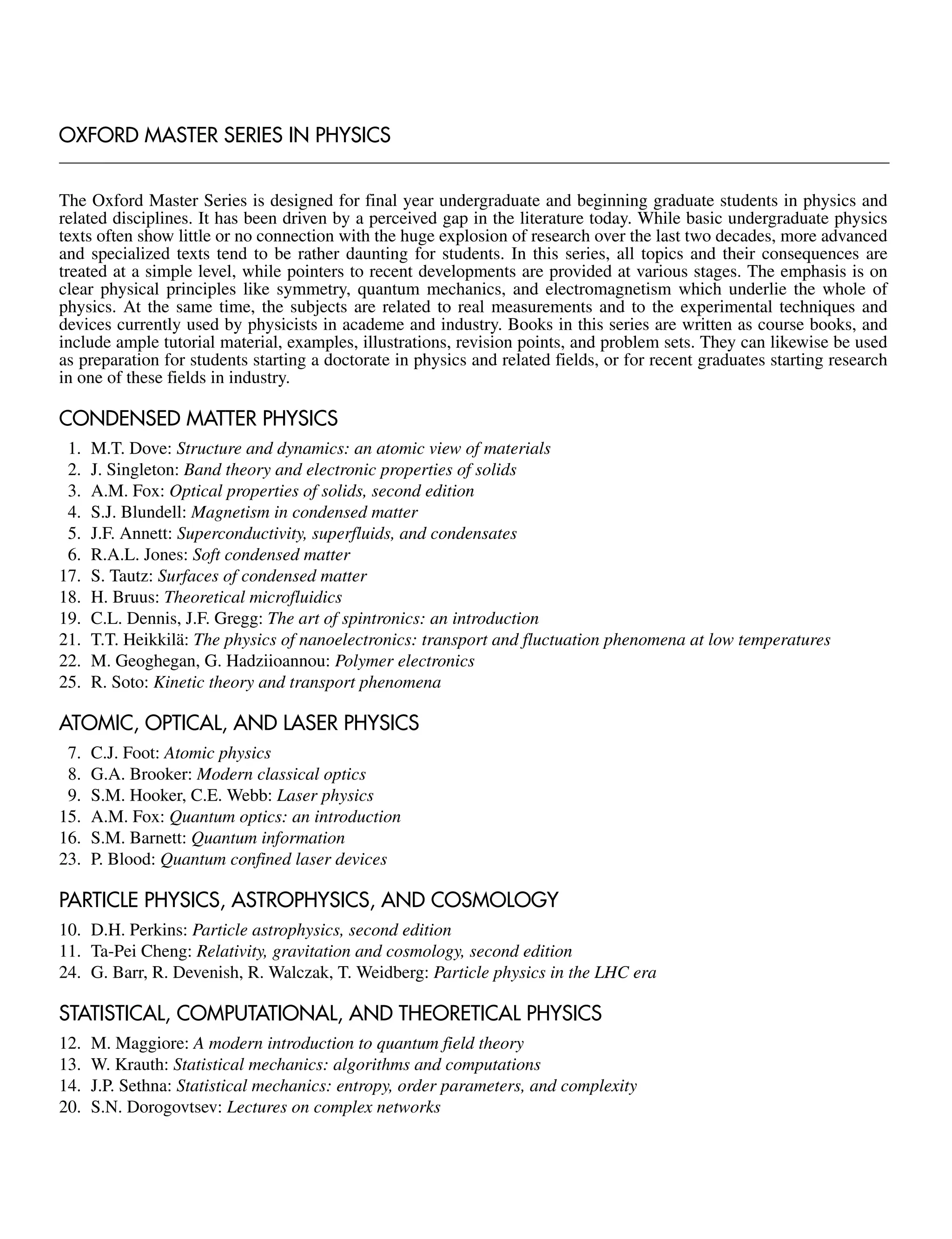

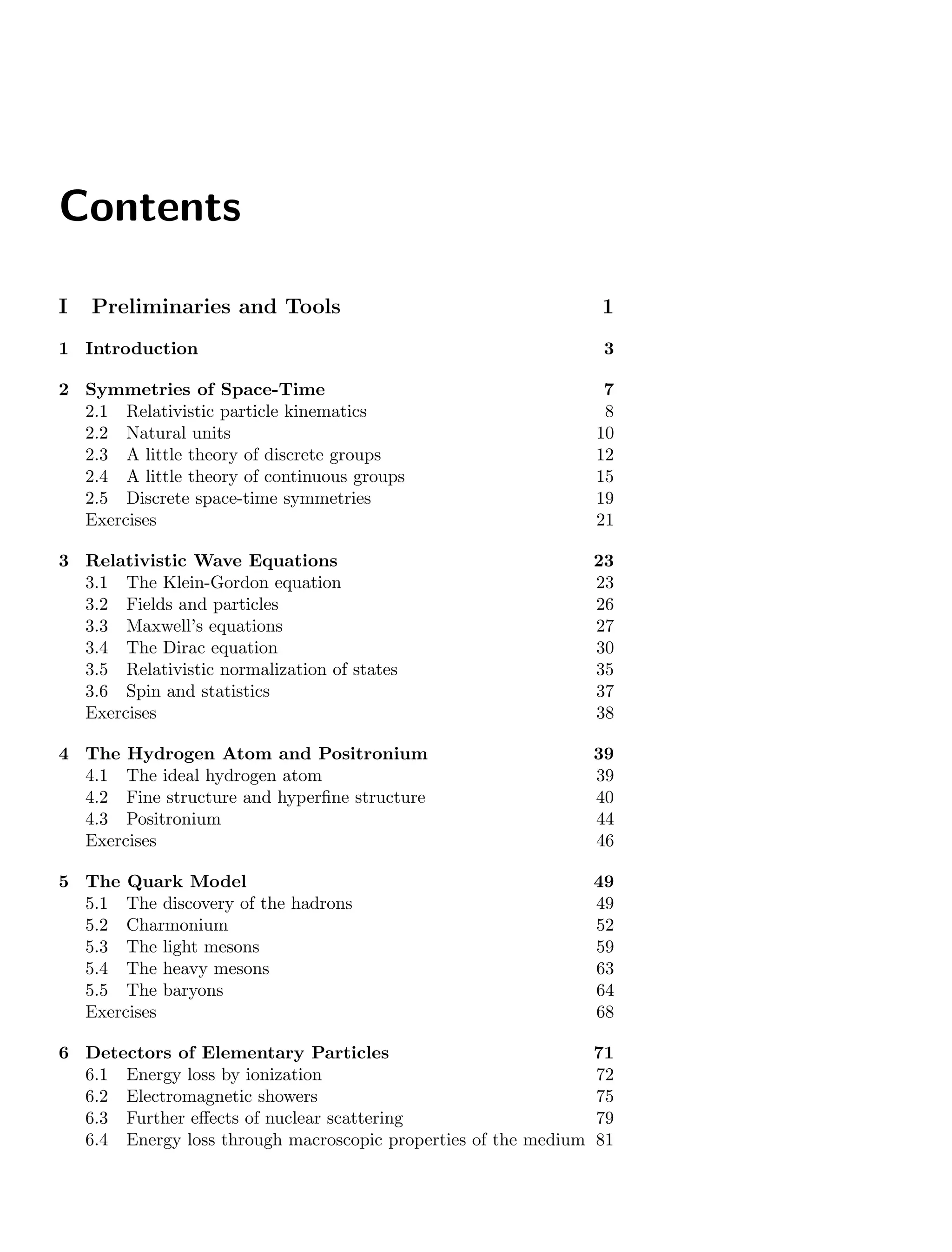
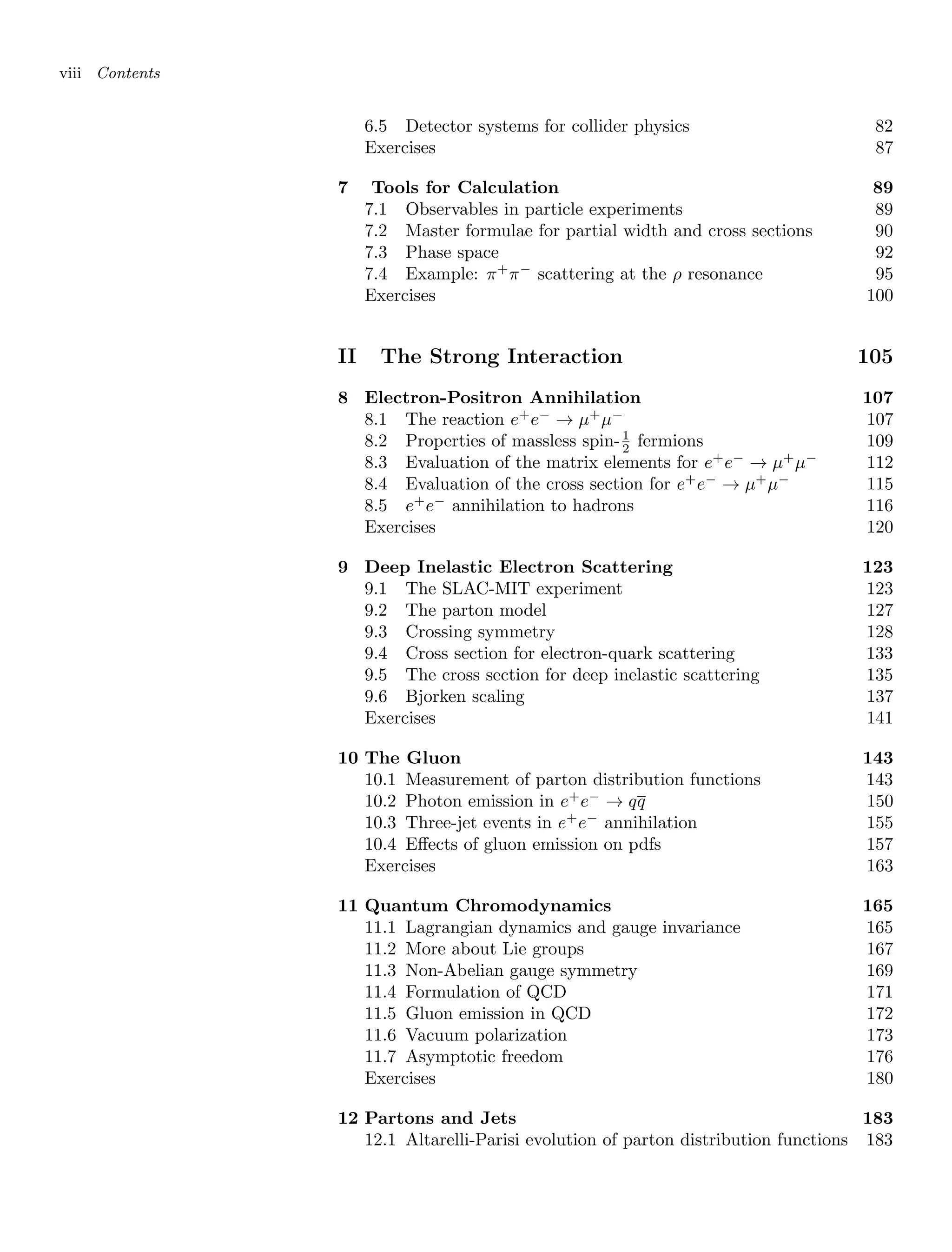
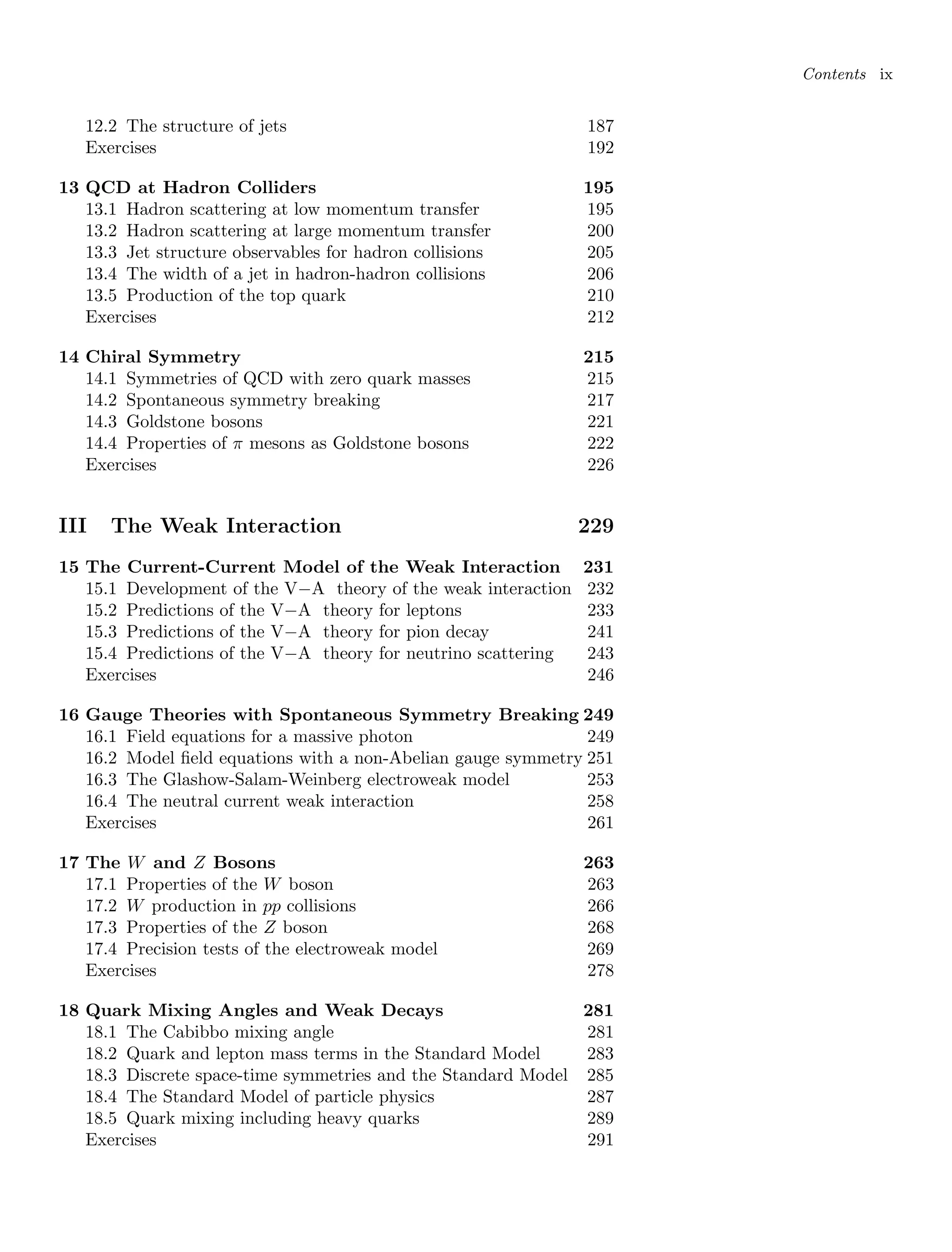

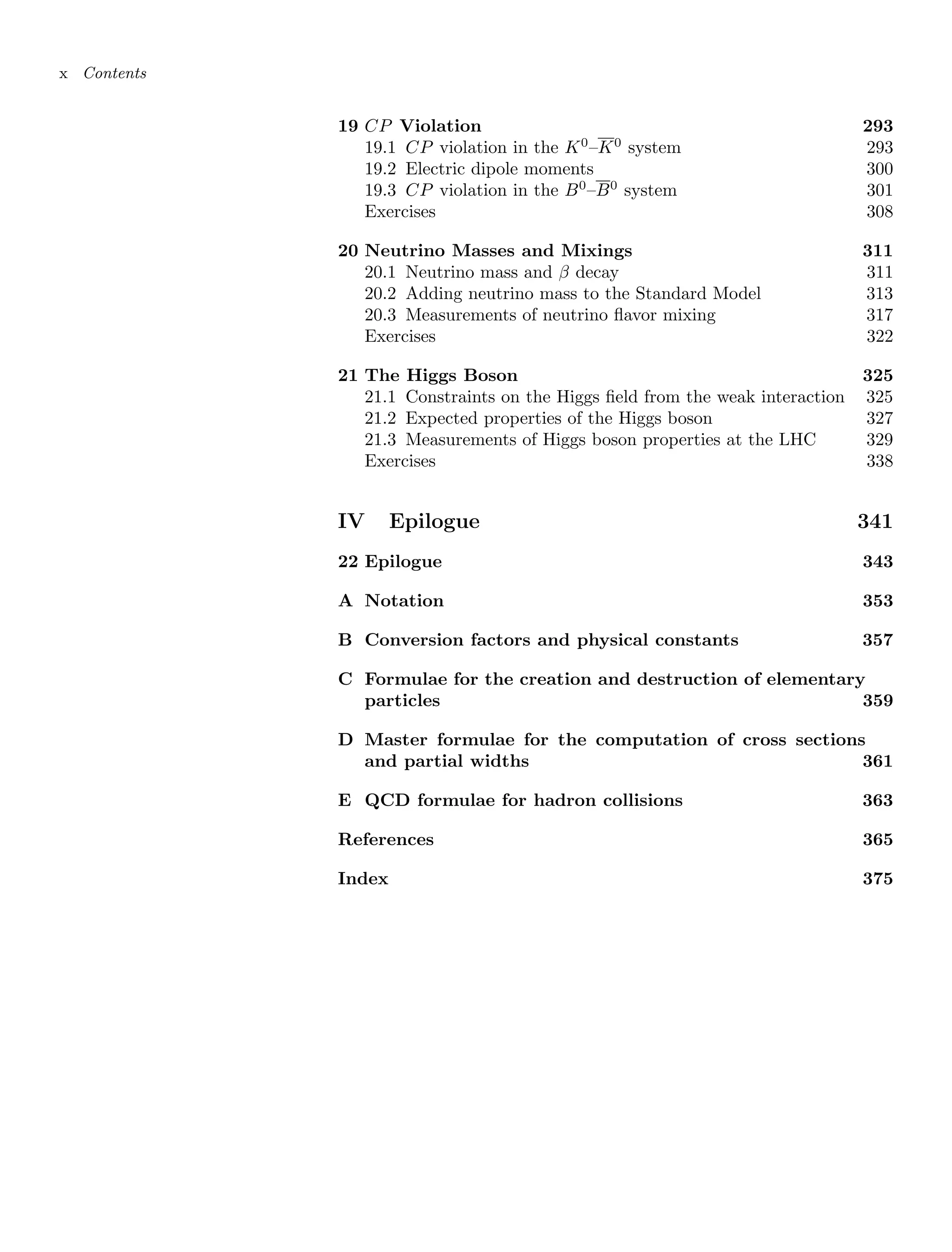

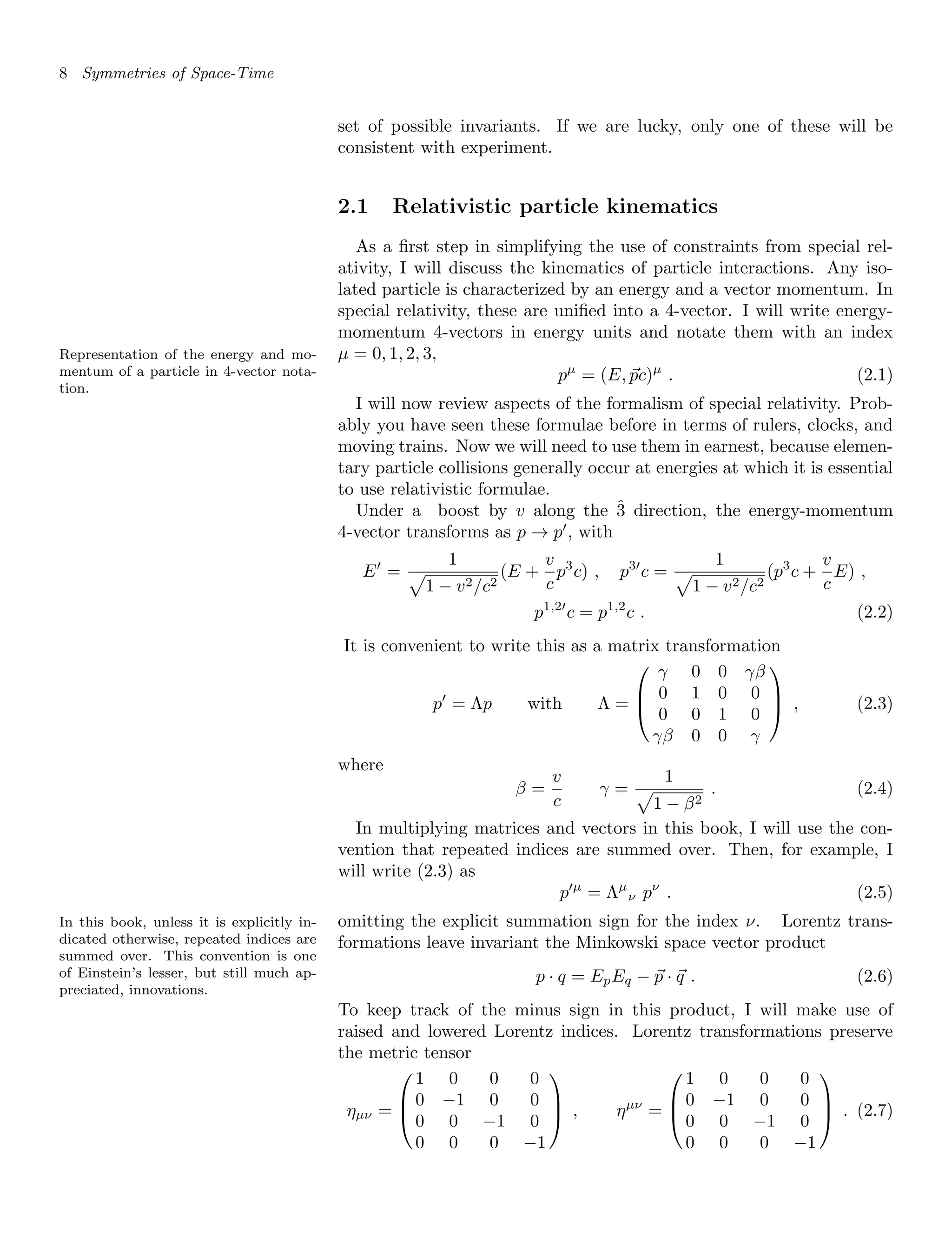
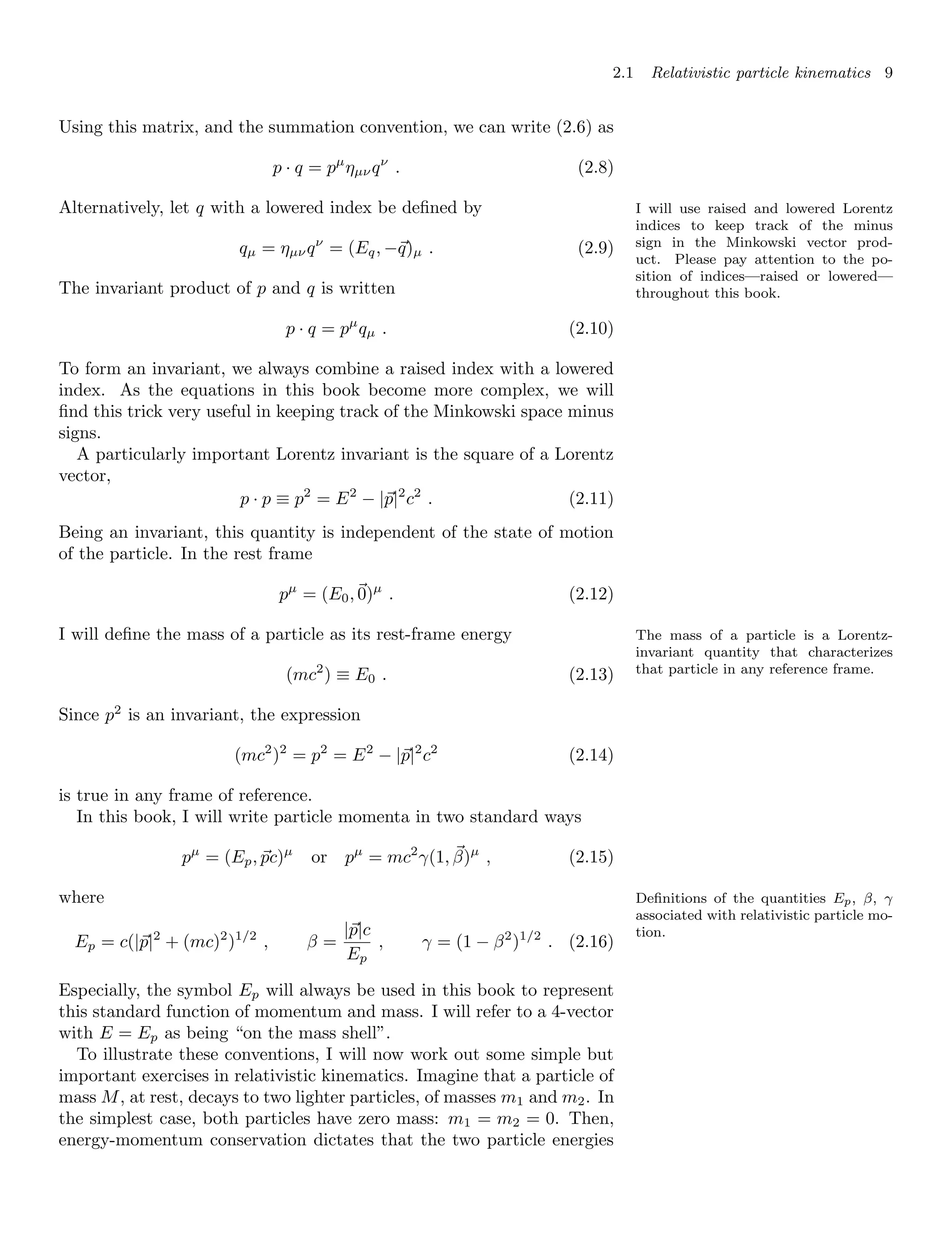


![{152}
PRISON-ETHICS.
[First published in The British Quarterly Review for July 1860.]
The two antagonist theories of morals, like many other antagonist
theories, are both right and both wrong. The a priori school has its
truth; the a posteriori school has its truth; and for the proper
guidance of conduct, there must be due recognition of both. On the
one hand, it is asserted that there is an absolute standard of
rectitude; and, respecting certain classes of actions, it is rightly so
asserted. From the fundamental laws of life and the conditions of
social existence, are deducible certain imperative limitations to
individual action—limitations which are essential to a perfect life,
individual and social; or, in other words, essential to the greatest
happiness. And these limitations, following inevitably as they do
from undeniable first principles, deep as the nature of life itself,
constitute what we may distinguish as absolute morality. On the
other hand it is contended, and in a sense rightly contended, that
with men as they are and society as it is, the dictates of absolute
morality are impracticable. Legal control, which involves infliction of
pain, alike on those who are restrained and on those who pay the
cost of restraining them, is proved by this fact to be not absolutely
moral; seeing that absolute morality is the regulation of conduct in
such way that pain shall not be inflicted. {153}
Wherefore, if it be admitted that legal control is at present
indispensable, it must be admitted that these a priori rules cannot](https://image.slidesharecdn.com/24649-250307101818-37a33200/75/Concepts-of-Elementary-Particle-Physics-Michael-E-Peskin-38-2048.jpg)