QUALITATIVE
RISK ANALYSIS
SONALI TALKAR
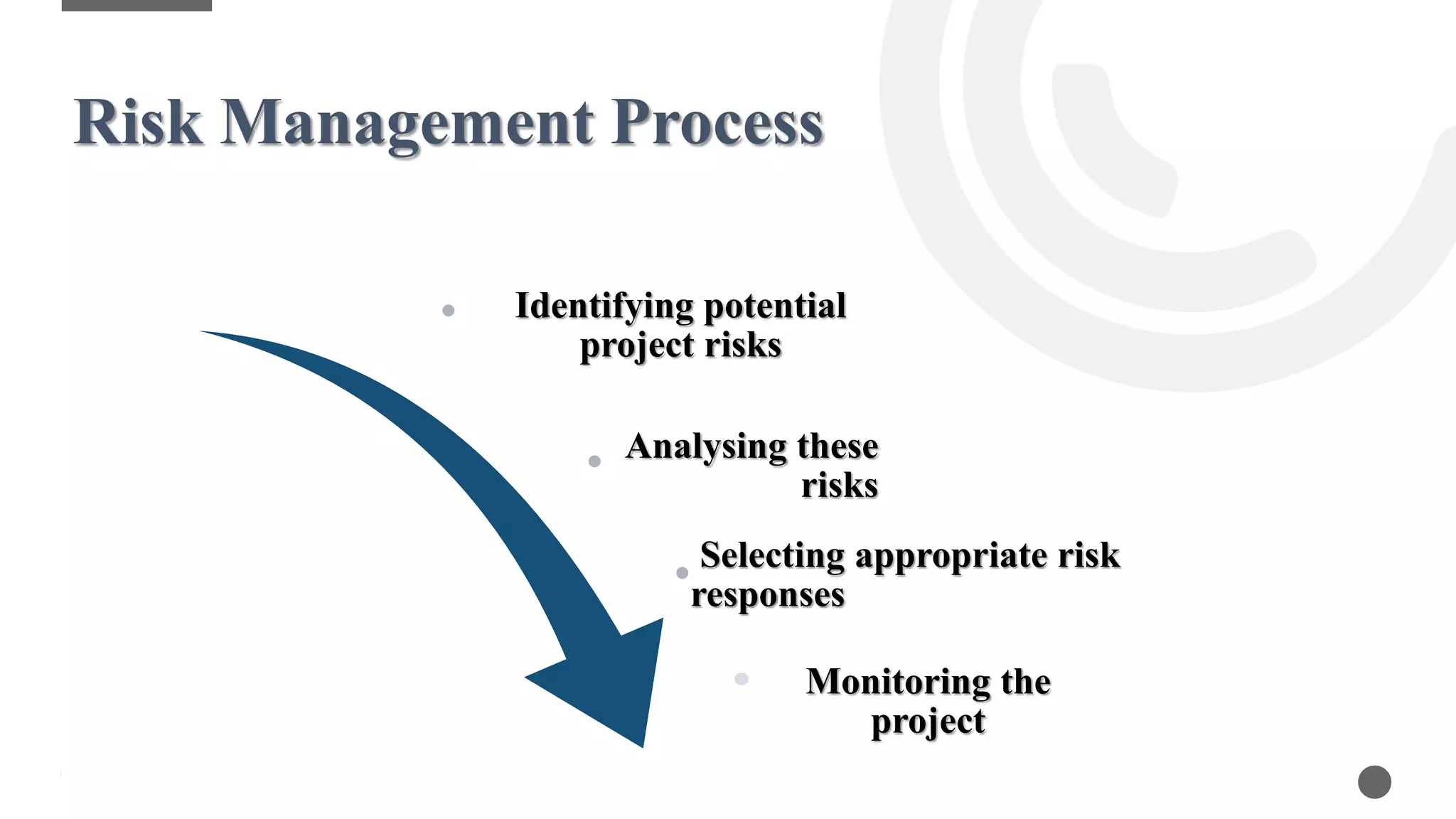
Risk Management Process
Identifying potential
project risks
Selecting appropriate risk
responses
Analysing these
risks
Monitoring the
project
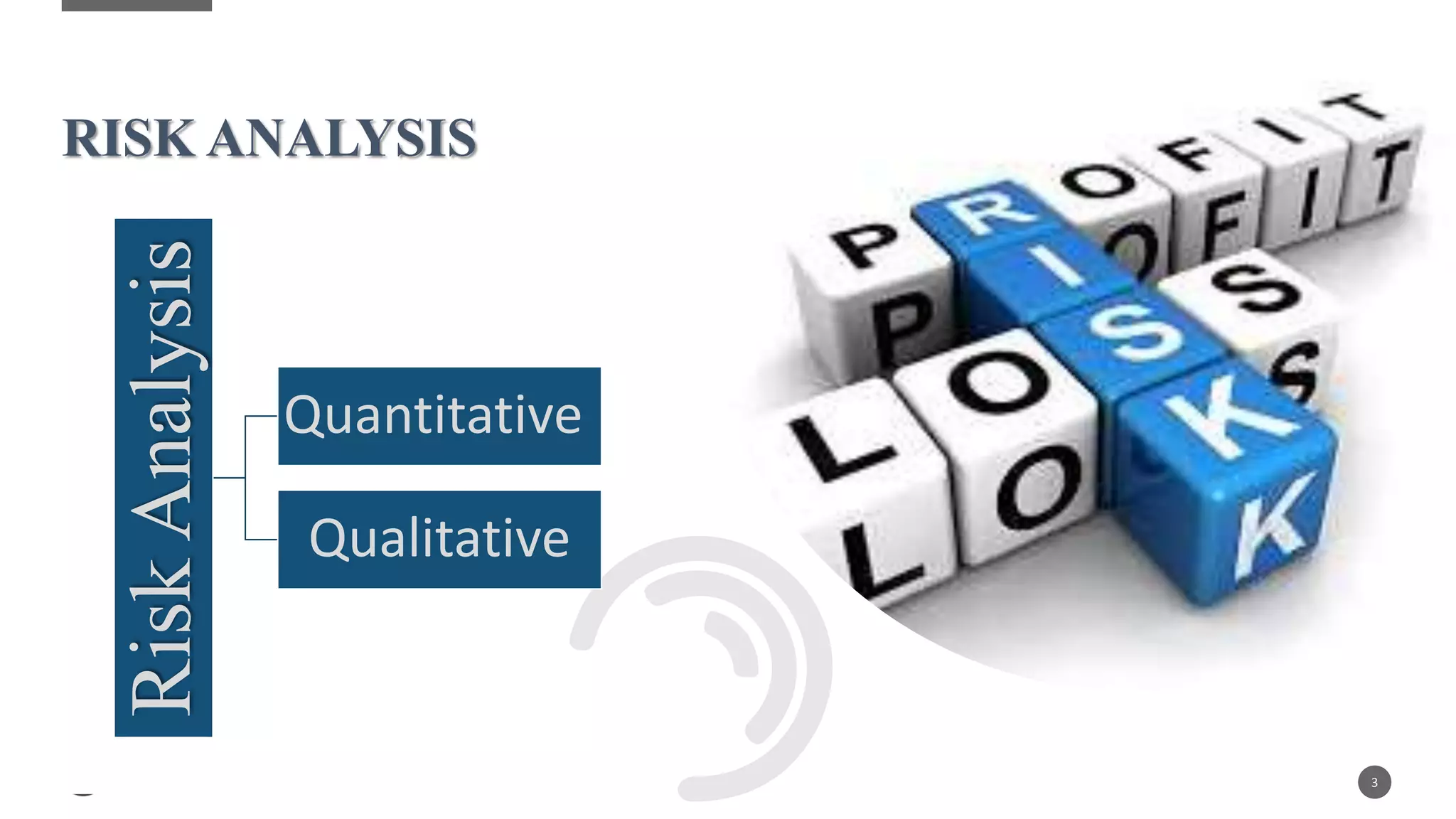
RiskAnalysis
Quantitative
Qualitative
3
RISK ANALYSIS
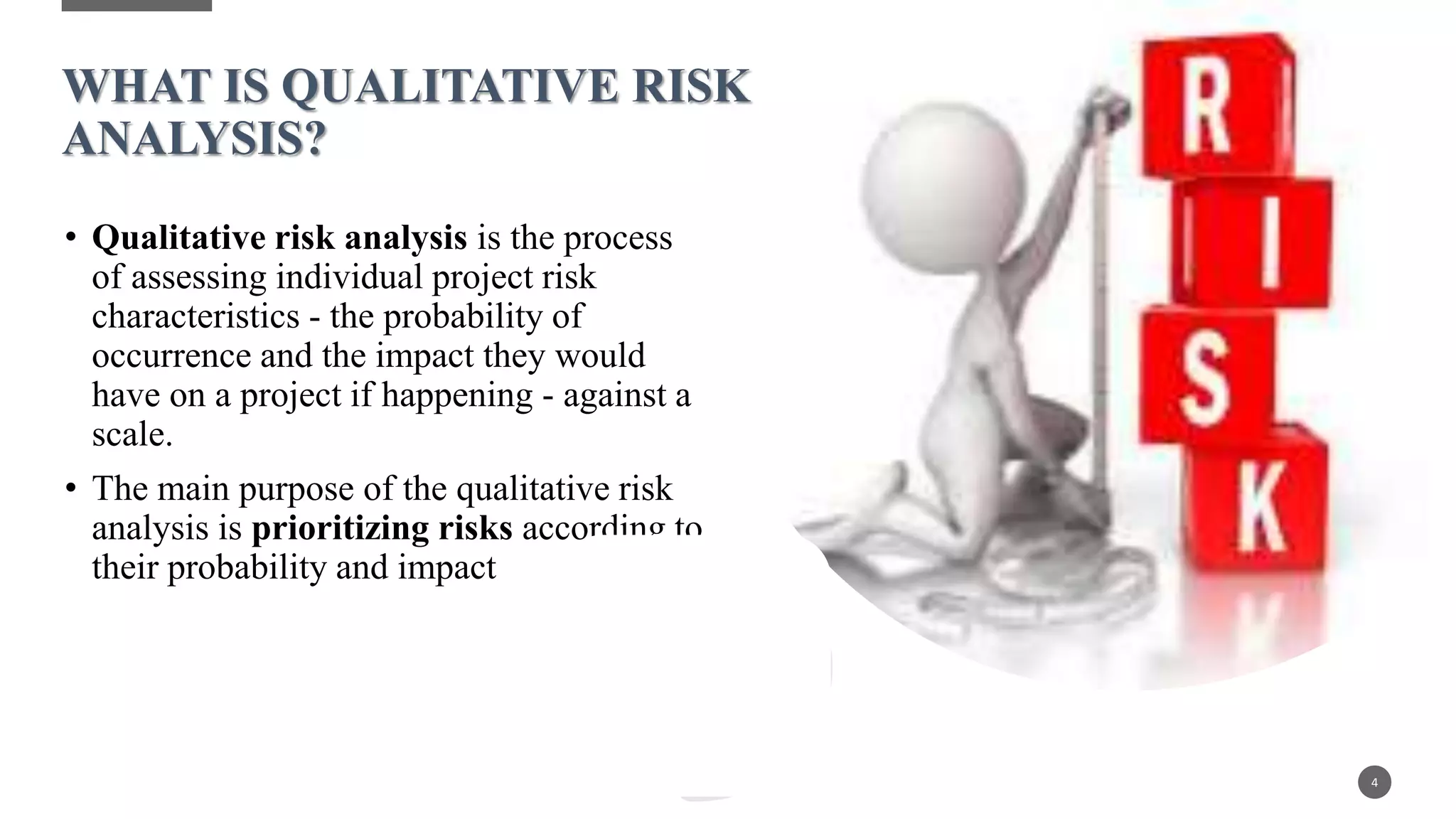
• Qualitative risk analysis is the process
of assessing individual project risk
characteristics - the probability of
occurrence and the impact they would
have on a project if happening - against a
scale.
• The main purpose of the qualitative risk
analysis is prioritizing risks according to
their probability and impact
4
WHAT IS QUALITATIVE RISK
ANALYSIS?
5
TECHNIQUES
Probability/impact
matrixes
The Top Ten Risk Item
Tracking
Expert judgment
6
PROBABILITY/IMPACT MATRIXES
• A probability/impact matrix or chart lists the
relative probability of a risk occurring on one
side of a matrix or axis on a chart and the
relative impact of the risk occurring on the
other
• List the risks and then label each one as high,
medium, or low in terms of its probability of
occurrence and its impact if it did occur
• Probability of a risk occurring can be estimated
based on several factors as determined by the
unique nature of each project
• Low: The consequences of the risk are minor, and it is unlikely to occur.
These types of risks are generally ignored
• Medium: Somewhat likely to occur, these risks come with slightly more
serious consequences. If possible, take steps to prevent medium risks
from occurring, but remember that they are not high-priority and should
not significantly affect organization or project success.
• High: These are serious risks that both have significant consequences,
and are likely to occur. Prioritize and respond to these risks in the near
term.
7
CLASSIFYING AND PRIORITIZING RISK
SOFTWARE RISK ANALYSIS
1. Complexity of the technology
2. Technical knowledge
possessed by the testing team
3. Conflicts within the team
4. Teams being distributed over
a large geographical area
5. Usage of poor quality testing
tools
8
• Monetary losses
• Loss of reputation or harm
to society
• Legal actions against the
company
• What will be the loss to the
customer
RISK IMPACT
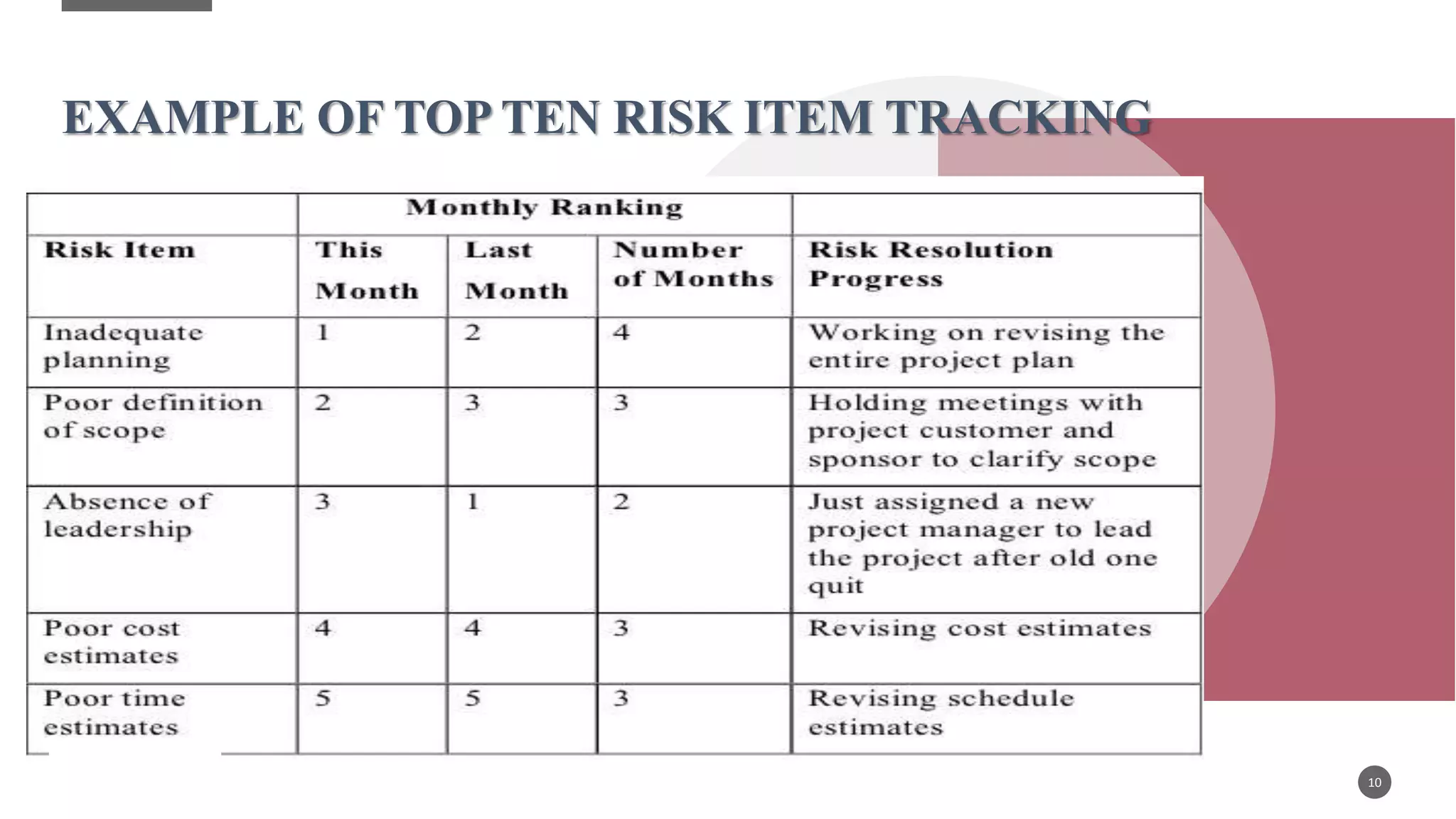
THE TOP TEN RISK ITEM TRACKING
• Top Ten Risk Item Tracking is a qualitative
risk analysis tool that helps to identify risks
and maintain an awareness of risks
throughout the life of a project
• The review begins with a summary of the
status of top ten sources of risk on the
project.
• The summary includes each item’s current
ranking previous ranking, number of times it
appears on the list over a period of time
9
EXAMPLE OF TOP TEN RISK ITEM TRACKING
10
EXPERT JUDGMENT
• Expert Judgment is one of the best
accepted approaches and most useful
too during the planning phases of
many activities.
• the intuitive feelings and past
experience of experts to help identify
potential project risks.
• Experts can categorize risks as high,
medium, or low with or without more
sophisticated techniques
11
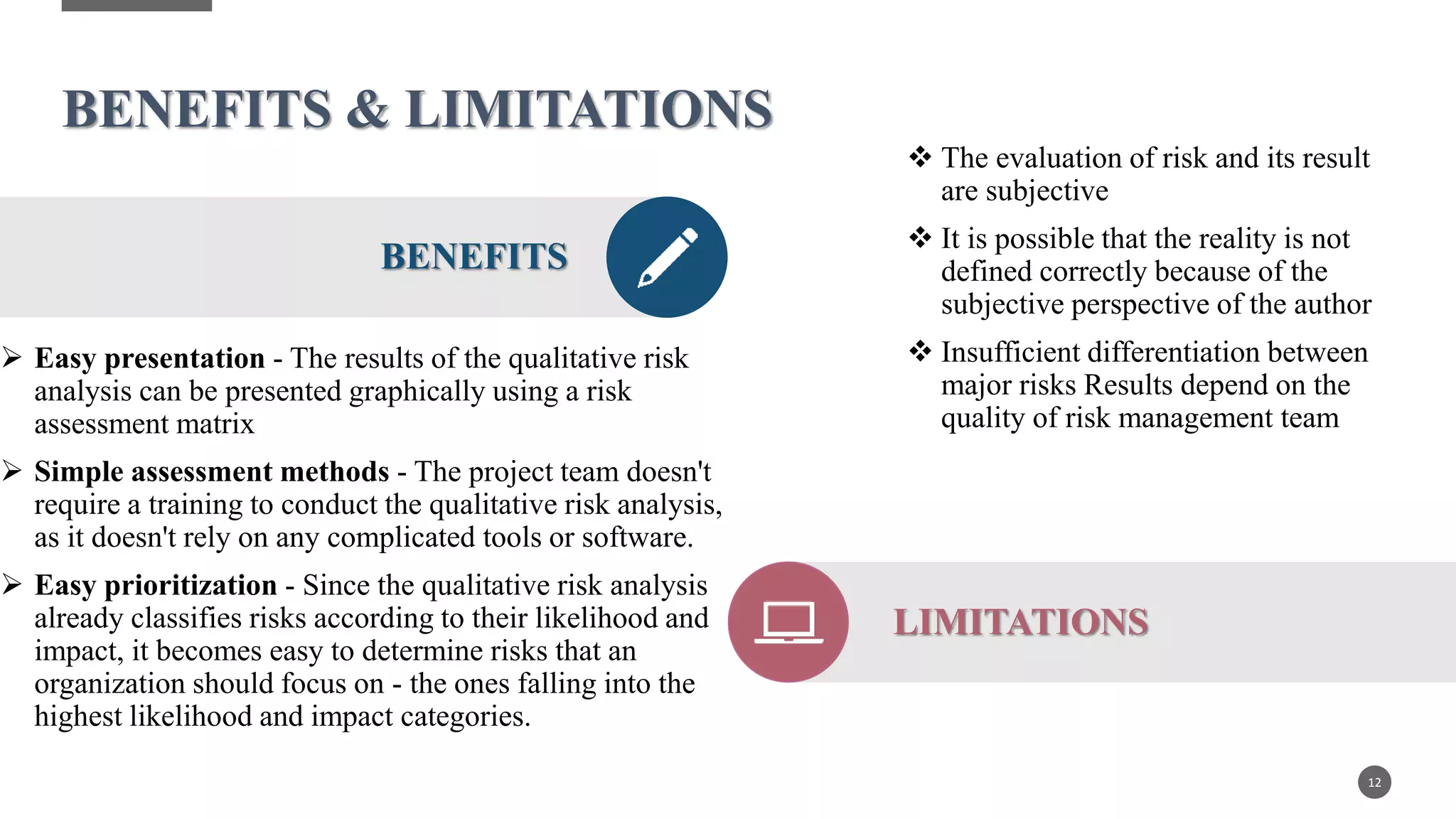
BENEFITS & LIMITATIONS
 Easy presentation - The results of the qualitative risk
analysis can be presented graphically using a risk
assessment matrix
 Simple assessment methods - The project team doesn't
require a training to conduct the qualitative risk analysis,
as it doesn't rely on any complicated tools or software.
 Easy prioritization - Since the qualitative risk analysis
already classifies risks according to their likelihood and
impact, it becomes easy to determine risks that an
organization should focus on - the ones falling into the
highest likelihood and impact categories.
12
BENEFITS
 The evaluation of risk and its result
are subjective
 It is possible that the reality is not
defined correctly because of the
subjective perspective of the author
 Insufficient differentiation between
major risks Results depend on the
quality of risk management team
LIMITATIONS
SONALI TALKAR
THANK YOU

Qualitative risk analysis

  • 1.
  • 2.
    Risk Management Process Identifyingpotential project risks Selecting appropriate risk responses Analysing these risks Monitoring the project
  • 3.
  • 4.
    • Qualitative riskanalysis is the process of assessing individual project risk characteristics - the probability of occurrence and the impact they would have on a project if happening - against a scale. • The main purpose of the qualitative risk analysis is prioritizing risks according to their probability and impact 4 WHAT IS QUALITATIVE RISK ANALYSIS?
  • 5.
    5 TECHNIQUES Probability/impact matrixes The Top TenRisk Item Tracking Expert judgment
  • 6.
    6 PROBABILITY/IMPACT MATRIXES • Aprobability/impact matrix or chart lists the relative probability of a risk occurring on one side of a matrix or axis on a chart and the relative impact of the risk occurring on the other • List the risks and then label each one as high, medium, or low in terms of its probability of occurrence and its impact if it did occur • Probability of a risk occurring can be estimated based on several factors as determined by the unique nature of each project
  • 7.
    • Low: Theconsequences of the risk are minor, and it is unlikely to occur. These types of risks are generally ignored • Medium: Somewhat likely to occur, these risks come with slightly more serious consequences. If possible, take steps to prevent medium risks from occurring, but remember that they are not high-priority and should not significantly affect organization or project success. • High: These are serious risks that both have significant consequences, and are likely to occur. Prioritize and respond to these risks in the near term. 7 CLASSIFYING AND PRIORITIZING RISK
  • 8.
    SOFTWARE RISK ANALYSIS 1.Complexity of the technology 2. Technical knowledge possessed by the testing team 3. Conflicts within the team 4. Teams being distributed over a large geographical area 5. Usage of poor quality testing tools 8 • Monetary losses • Loss of reputation or harm to society • Legal actions against the company • What will be the loss to the customer RISK IMPACT
  • 9.
    THE TOP TENRISK ITEM TRACKING • Top Ten Risk Item Tracking is a qualitative risk analysis tool that helps to identify risks and maintain an awareness of risks throughout the life of a project • The review begins with a summary of the status of top ten sources of risk on the project. • The summary includes each item’s current ranking previous ranking, number of times it appears on the list over a period of time 9
  • 10.
    EXAMPLE OF TOPTEN RISK ITEM TRACKING 10
  • 11.
    EXPERT JUDGMENT • ExpertJudgment is one of the best accepted approaches and most useful too during the planning phases of many activities. • the intuitive feelings and past experience of experts to help identify potential project risks. • Experts can categorize risks as high, medium, or low with or without more sophisticated techniques 11
  • 12.
    BENEFITS & LIMITATIONS Easy presentation - The results of the qualitative risk analysis can be presented graphically using a risk assessment matrix  Simple assessment methods - The project team doesn't require a training to conduct the qualitative risk analysis, as it doesn't rely on any complicated tools or software.  Easy prioritization - Since the qualitative risk analysis already classifies risks according to their likelihood and impact, it becomes easy to determine risks that an organization should focus on - the ones falling into the highest likelihood and impact categories. 12 BENEFITS  The evaluation of risk and its result are subjective  It is possible that the reality is not defined correctly because of the subjective perspective of the author  Insufficient differentiation between major risks Results depend on the quality of risk management team LIMITATIONS
  • 13.