Qualitative methods of
forecasting demands for FMCG
Presented by :
Mudassir Farooque
Rahul Pandey
Shivani Kumari
Shambhavi Singh
INTRODUCTION
In this presentation we will discuss about Qualitative
method of forecasting demand for FMCG product.
Foreseeing changes in product demand can be
challenging. In this presentation, we will delve into
various qualitative methods to forecast consumer
trends for FMCG.
Forecasting
• Forecasting is the process of attempting to
predict the future condition of the economy
using a combination of widely followed
indicators.
• Traders and analysts use forecasts in
valuation models, to time trades, and to
identify trends. Forecasts are often
predicated on historical data.
Demand Forecasting
• Demand forecasting refers to the process of
predicting the quantity of goods and services
that will be demanded by consumers at a
future point in time.
• The methods of demand forecasting entail using predictive analytics to
estimate customer demand in consideration of key economic
conditions.
Qualitative Methods
These methods are based on emotions, intuitions, judgments, personal
experiences, and opinions. This means that there is no math involved in
qualitative forecasting methods.
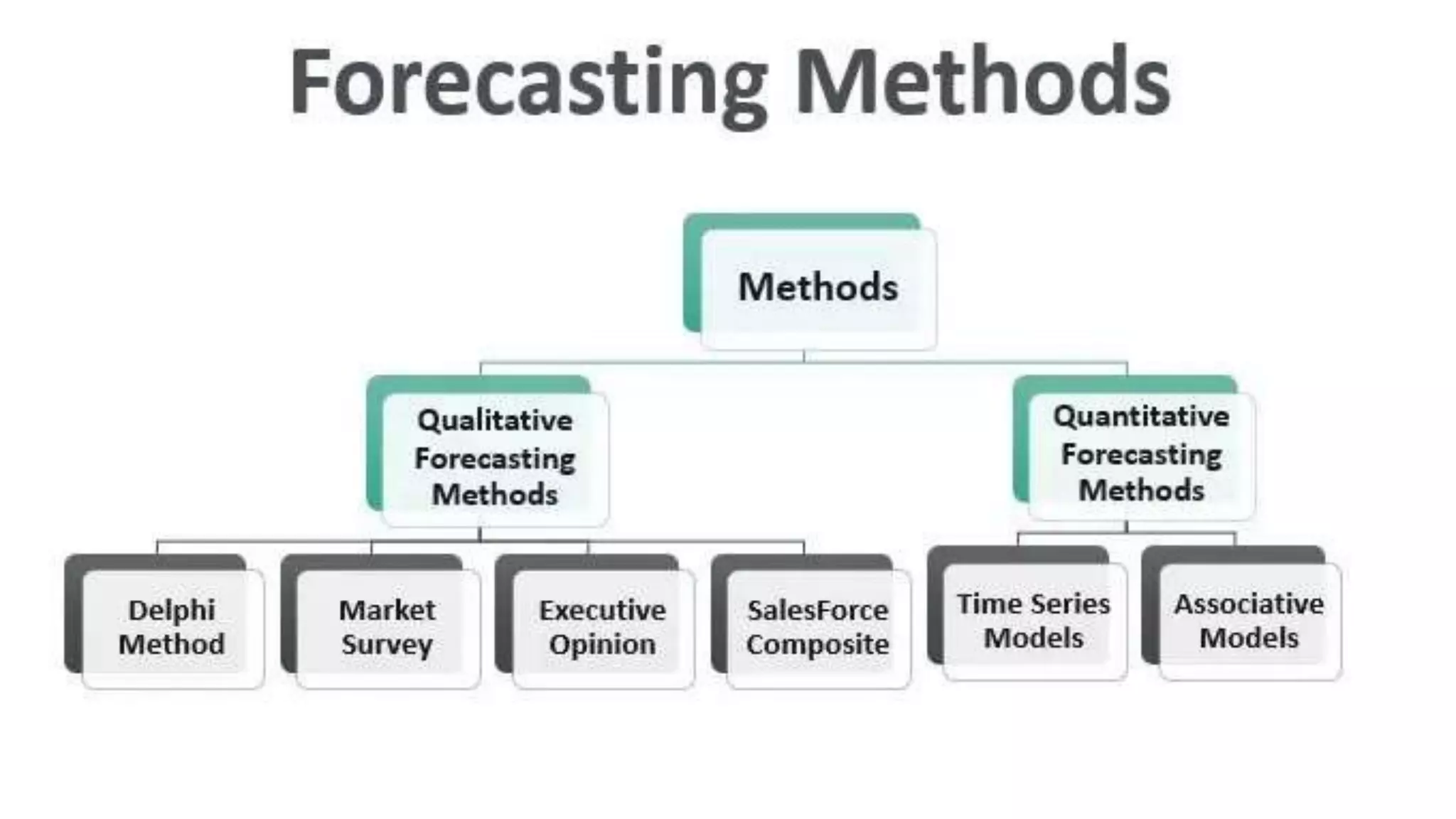
• Delphi Method - The agreement of a group of experts in consensus is
required to conclude in the Delphi method. This method involves a
discussion between experts on a given problem or situation. The
process remains anonymous and the experts can share feedback
without any discretion. Individually they share own opinion.
• Market Survey - In a market survey, interviews and surveys of
customers are made to understand the task of the customer and
tap the trend well in advance to deliver the right product or service
according to the changing needs of the customer.
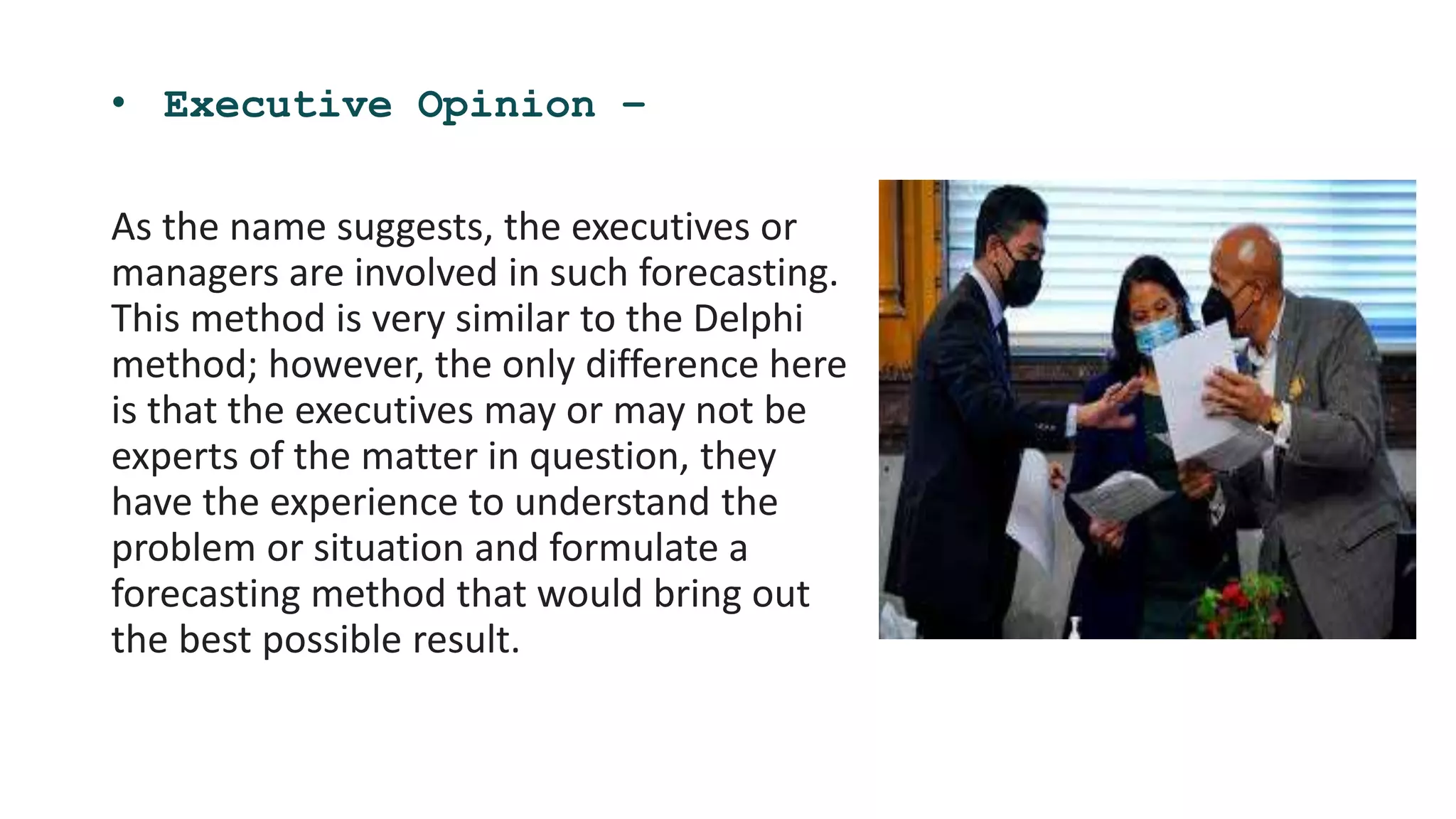
• Executive Opinion –
As the name suggests, the executives or
managers are involved in such forecasting.
This method is very similar to the Delphi
method; however, the only difference here
is that the executives may or may not be
experts of the matter in question, they
have the experience to understand the
problem or situation and formulate a
forecasting method that would bring out
the best possible result.
• Sales Force Composite
The information and intuition of the
salesperson determine the needs of the
customer and estimate the sales in the
particular region or area assigned to the
salesperson. This information is vital in
forecasting the needs of the customer, which
can be used to make necessary changes in the
business to meet the needs of the customer
and identify the sales volumes beforehand.
Few FMCG products using qualitative methods
• Surf Excel
• Gillette
• Vim
• Colgate
Case study
A leading fashion retailer, "StyleTrends," operates both brick-
and-mortar stores and an online platform. The company offers
a wide range of trendy clothing and accessories for men and
women. As part of their strategic planning for the upcoming
year, the management team wants to improve their demand
forecasting accuracy to optimize inventory levels, reduce
stockouts, and enhance customer satisfaction. Since the
fashion industry is highly influenced by ever-changing trends
and consumer preferences, they decide to employ a
qualitative demand forecasting method to complement their
existing quantitative forecasting techniques.
Steps Taken:
• Focus Group Discussions: StyleTrends organized focus group
discussions with its target customers from different age groups,
regions, and demographics. These sessions aimed to
understand their fashion preferences, brand perceptions, and
anticipated buying behavior in the upcoming seasons. Valuable
insights were collected on color preferences, clothing styles,
and overall brand loyalty.
• Employee Surveys: Store managers and sales staff were
surveyed to gain insights into on-the-ground observations.
Employees interact with customers daily, giving them unique
perspectives on current demand trends and potential shifts in
customer preferences.
• Industry Experts' Insights: The company consulted with fashion
industry experts, trend analysts, and consultants to obtain an
external viewpoint on macro-level trends impacting the fashion
industry. This helped identify potential disruptive factors and
emerging fashion movements.
• Social Media and Web Analytics: StyleTrends monitored social media
platforms, fashion blogs, and other online sources to gauge
sentiment and track emerging trends. Web analytics provided
valuable data on customer engagement with their online platform,
helping to understand popular products and trending styles.
• Competitor Analysis: To understand the competitive landscape and
anticipate potential market shifts, the company conducted an
analysis of its competitors. This included studying their product
offerings, pricing strategies, and marketing campaigns.
Results and Benefits:
The qualitative demand forecasting approach yielded several valuable
benefits for StyleTrends:
1.Improved Forecast Accuracy: By incorporating qualitative data, the
company gained a deeper understanding of customer preferences
and market dynamics, leading to more accurate demand forecasts.
2.Better Inventory Management: With improved forecasting accuracy,
StyleTrends was able to optimize inventory levels, reducing excess
stock and minimizing stockouts.
3.Enhanced Customer Satisfaction: Anticipating and aligning with
customer preferences allowed the retailer to offer the right products
at the right time, resulting in increased customer satisfaction and
loyalty.
4. Adaptation to Trends: The qualitative method helped the company stay
ahead of rapidly changing fashion trends, enabling them to adapt quickly
and remain relevant in the market.
5. Strategic Decision-Making: The insights gathered from various sources
empowered the management team to make informed strategic decisions,
guiding marketing efforts and new product development.
Conclusion:
Incorporating qualitative demand forecasting methods alongside
traditional quantitative techniques provided StyleTrends with a
comprehensive view of the fashion market. By understanding
customer preferences, emerging trends, and market dynamics, the
company achieved better forecasting accuracy, optimized inventory
management, and enhanced customer satisfaction. The case study
demonstrates the value of qualitative forecasting in industries driven
by ever-changing consumer preferences and highlights its role as a
valuable tool for strategic decision-making.
Quiz Time
Thank you

Qualitative Demand Forecasting.pptx

  • 1.
    Qualitative methods of forecastingdemands for FMCG Presented by : Mudassir Farooque Rahul Pandey Shivani Kumari Shambhavi Singh
  • 2.
    INTRODUCTION In this presentationwe will discuss about Qualitative method of forecasting demand for FMCG product. Foreseeing changes in product demand can be challenging. In this presentation, we will delve into various qualitative methods to forecast consumer trends for FMCG.
  • 3.
    Forecasting • Forecasting isthe process of attempting to predict the future condition of the economy using a combination of widely followed indicators. • Traders and analysts use forecasts in valuation models, to time trades, and to identify trends. Forecasts are often predicated on historical data.
  • 4.
    Demand Forecasting • Demandforecasting refers to the process of predicting the quantity of goods and services that will be demanded by consumers at a future point in time. • The methods of demand forecasting entail using predictive analytics to estimate customer demand in consideration of key economic conditions.
  • 6.
    Qualitative Methods These methodsare based on emotions, intuitions, judgments, personal experiences, and opinions. This means that there is no math involved in qualitative forecasting methods. • Delphi Method - The agreement of a group of experts in consensus is required to conclude in the Delphi method. This method involves a discussion between experts on a given problem or situation. The process remains anonymous and the experts can share feedback without any discretion. Individually they share own opinion.
  • 7.
    • Market Survey- In a market survey, interviews and surveys of customers are made to understand the task of the customer and tap the trend well in advance to deliver the right product or service according to the changing needs of the customer.
  • 8.
    • Executive Opinion– As the name suggests, the executives or managers are involved in such forecasting. This method is very similar to the Delphi method; however, the only difference here is that the executives may or may not be experts of the matter in question, they have the experience to understand the problem or situation and formulate a forecasting method that would bring out the best possible result.
  • 9.
    • Sales ForceComposite The information and intuition of the salesperson determine the needs of the customer and estimate the sales in the particular region or area assigned to the salesperson. This information is vital in forecasting the needs of the customer, which can be used to make necessary changes in the business to meet the needs of the customer and identify the sales volumes beforehand.
  • 11.
    Few FMCG productsusing qualitative methods • Surf Excel • Gillette • Vim • Colgate
  • 12.
    Case study A leadingfashion retailer, "StyleTrends," operates both brick- and-mortar stores and an online platform. The company offers a wide range of trendy clothing and accessories for men and women. As part of their strategic planning for the upcoming year, the management team wants to improve their demand forecasting accuracy to optimize inventory levels, reduce stockouts, and enhance customer satisfaction. Since the fashion industry is highly influenced by ever-changing trends and consumer preferences, they decide to employ a qualitative demand forecasting method to complement their existing quantitative forecasting techniques.
  • 13.
    Steps Taken: • FocusGroup Discussions: StyleTrends organized focus group discussions with its target customers from different age groups, regions, and demographics. These sessions aimed to understand their fashion preferences, brand perceptions, and anticipated buying behavior in the upcoming seasons. Valuable insights were collected on color preferences, clothing styles, and overall brand loyalty. • Employee Surveys: Store managers and sales staff were surveyed to gain insights into on-the-ground observations. Employees interact with customers daily, giving them unique perspectives on current demand trends and potential shifts in customer preferences.
  • 14.
    • Industry Experts'Insights: The company consulted with fashion industry experts, trend analysts, and consultants to obtain an external viewpoint on macro-level trends impacting the fashion industry. This helped identify potential disruptive factors and emerging fashion movements. • Social Media and Web Analytics: StyleTrends monitored social media platforms, fashion blogs, and other online sources to gauge sentiment and track emerging trends. Web analytics provided valuable data on customer engagement with their online platform, helping to understand popular products and trending styles. • Competitor Analysis: To understand the competitive landscape and anticipate potential market shifts, the company conducted an analysis of its competitors. This included studying their product offerings, pricing strategies, and marketing campaigns.
  • 15.
    Results and Benefits: Thequalitative demand forecasting approach yielded several valuable benefits for StyleTrends: 1.Improved Forecast Accuracy: By incorporating qualitative data, the company gained a deeper understanding of customer preferences and market dynamics, leading to more accurate demand forecasts. 2.Better Inventory Management: With improved forecasting accuracy, StyleTrends was able to optimize inventory levels, reducing excess stock and minimizing stockouts. 3.Enhanced Customer Satisfaction: Anticipating and aligning with customer preferences allowed the retailer to offer the right products at the right time, resulting in increased customer satisfaction and loyalty.
  • 16.
    4. Adaptation toTrends: The qualitative method helped the company stay ahead of rapidly changing fashion trends, enabling them to adapt quickly and remain relevant in the market. 5. Strategic Decision-Making: The insights gathered from various sources empowered the management team to make informed strategic decisions, guiding marketing efforts and new product development. Conclusion: Incorporating qualitative demand forecasting methods alongside traditional quantitative techniques provided StyleTrends with a comprehensive view of the fashion market. By understanding customer preferences, emerging trends, and market dynamics, the company achieved better forecasting accuracy, optimized inventory management, and enhanced customer satisfaction. The case study demonstrates the value of qualitative forecasting in industries driven by ever-changing consumer preferences and highlights its role as a valuable tool for strategic decision-making.
  • 17.
  • 18.