T O
Introduction
Ignacio Cruz – ignacioc@usc.edu
Overview
1. What is Q-Method?
2. How to do it
3. Usage and implications
4. Questions
Method/SortQ
‘QUALI-quantological’ analysis of
subjective matters, by revealing the
key first-person viewpoints in any
given group of participants
(Bullock, Muddiman, & Phillips, TASME Conference, 201
Origins
 Developed by William Stephenson, 1930’s
 General purpose: “the aim of Q is to utilize subjective views,
opinions, and perceptions to capture general responses to a
phenomenon” (Bang & Montgomery, 2013, p. 346).
 A Q sort is a ranking of variables or statements by a “sorter”
that allows researchers to understand subjective descriptions
of a phenomenon.
How to Do It
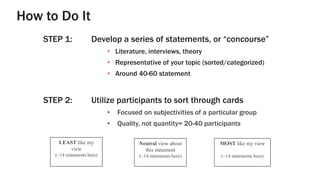
STEP 1: Develop a series of statements, or “concourse”
• Literature, interviews, theory
• Representative of your topic (sorted/categorized)
• Around 40-60 statement
STEP 2: Utilize participants to sort through cards
• Focused on subjectivities of a particular group
• Quality, not quantity= 20-40 participants
LEAST like my
view
(~14 statements here)
MOST like my view
(~14 statements here)
Neutral view about
this statement
(~14 statements here)
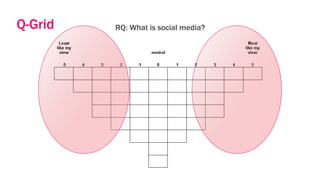
Q-Grid RQ: What is social media?
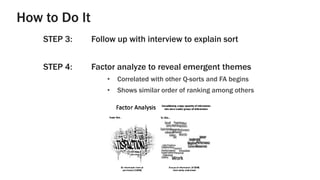
How to Do It
STEP 3: Follow up with interview to explain sort
STEP 4: Factor analyze to reveal emergent themes
• Correlated with other Q-sorts and FA begins
• Shows similar order of ranking among others
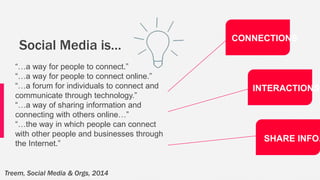
“…a way for people to connect.”
“…a way for people to connect online.”
“…a forum for individuals to connect and
communicate through technology.”
“…a way of sharing information and
connecting with others online…”
“…the way in which people can connect
with other people and businesses through
the Internet.”
Social Media is…
Treem, Social Media & Orgs, 2014
CONNECTIONS
INTERACTIONS
SHARE INFO.
Continued growth
• 335 peer-reviewed articles in the past 20 years
• 196 articles since between 2006-2011
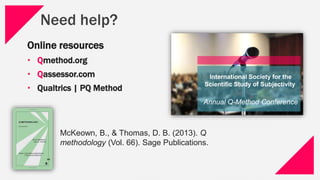
Need help?
Online resources
• Qmethod.org
• Qassessor.com
• Qualtrics | PQ Method
McKeown, B., & Thomas, D. B. (2013). Q
methodology (Vol. 66). Sage Publications.
International Society for the
Scientific Study of Subjectivity
Annual Q-Method Conference
Q&A
References
Herrington, N., & Coogan, J. (2011). Q methodology: An overview. Research in Secondary
Teacher Education, 1(2), 24-28.
McKeown, B., & Thomas, D. B. (2013). Q methodology (Vol. 66). Sage Publications.
Stephen, T. D. (1985). Q‐methodology in communication science: An introduction.
Communication Quarterly, 33(3), 193-208.
Contact
Ignacio Cruz
USC Annnenberg
ignacioc [at] usc [dot] edu
www.ignaciocruz.com

Q-Methodology

  • 1.
    T O Introduction Ignacio Cruz– ignacioc@usc.edu
  • 2.
    Overview 1. What isQ-Method? 2. How to do it 3. Usage and implications 4. Questions
  • 3.
    Method/SortQ ‘QUALI-quantological’ analysis of subjectivematters, by revealing the key first-person viewpoints in any given group of participants (Bullock, Muddiman, & Phillips, TASME Conference, 201
  • 4.
    Origins  Developed byWilliam Stephenson, 1930’s  General purpose: “the aim of Q is to utilize subjective views, opinions, and perceptions to capture general responses to a phenomenon” (Bang & Montgomery, 2013, p. 346).  A Q sort is a ranking of variables or statements by a “sorter” that allows researchers to understand subjective descriptions of a phenomenon.
  • 5.
    How to DoIt STEP 1: Develop a series of statements, or “concourse” • Literature, interviews, theory • Representative of your topic (sorted/categorized) • Around 40-60 statement STEP 2: Utilize participants to sort through cards • Focused on subjectivities of a particular group • Quality, not quantity= 20-40 participants LEAST like my view (~14 statements here) MOST like my view (~14 statements here) Neutral view about this statement (~14 statements here)
  • 6.
    Q-Grid RQ: Whatis social media?
  • 7.
    How to DoIt STEP 3: Follow up with interview to explain sort STEP 4: Factor analyze to reveal emergent themes • Correlated with other Q-sorts and FA begins • Shows similar order of ranking among others
  • 9.
    “…a way forpeople to connect.” “…a way for people to connect online.” “…a forum for individuals to connect and communicate through technology.” “…a way of sharing information and connecting with others online…” “…the way in which people can connect with other people and businesses through the Internet.” Social Media is… Treem, Social Media & Orgs, 2014 CONNECTIONS INTERACTIONS SHARE INFO.
  • 10.
    Continued growth • 335peer-reviewed articles in the past 20 years • 196 articles since between 2006-2011
  • 11.
    Need help? Online resources •Qmethod.org • Qassessor.com • Qualtrics | PQ Method McKeown, B., & Thomas, D. B. (2013). Q methodology (Vol. 66). Sage Publications. International Society for the Scientific Study of Subjectivity Annual Q-Method Conference
  • 12.
  • 13.
    References Herrington, N., &Coogan, J. (2011). Q methodology: An overview. Research in Secondary Teacher Education, 1(2), 24-28. McKeown, B., & Thomas, D. B. (2013). Q methodology (Vol. 66). Sage Publications. Stephen, T. D. (1985). Q‐methodology in communication science: An introduction. Communication Quarterly, 33(3), 193-208. Contact Ignacio Cruz USC Annnenberg ignacioc [at] usc [dot] edu www.ignaciocruz.com

Editor's Notes