Medical Research Center
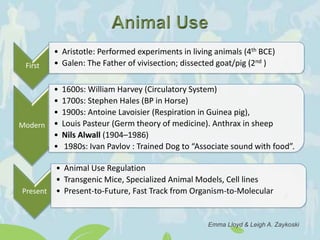
First
• Aristotle: Performed experiments in living animals (4th BCE)
• Galen: The Father of vivisection; dissected goat/pig (2nd )
Modern
• 1600s: William Harvey (Circulatory System)
• 1700s: Stephen Hales (BP in Horse)
• 1900s: Antoine Lavoisier (Respiration in Guinea pig),
• Louis Pasteur (Germ theory of medicine). Anthrax in sheep
• Nils Alwall (1904–1986)
• 1980s: Ivan Pavlov : Trained Dog to “Associate sound with food”.
Present
• Animal Use Regulation
• Transgenic Mice, Specialized Animal Models, Cell lines
• Present-to-Future, Fast Track from Organism-to-Molecular
Emma Lloyd & Leigh A. Zaykoski
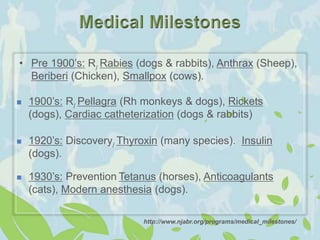
• Pre 1900’s: R/
Rabies (dogs & rabbits), Anthrax (Sheep),
Beriberi (Chicken), Smallpox (cows).
 1900’s: R/
Pellagra (Rh monkeys & dogs), Rickets
(dogs), Cardiac catheterization (dogs & rabbits)
 1920’s: Discovery/
Thyroxin (many species). Insulin
(dogs).
 1930’s: Prevention Tetanus (horses), Anticoagulants
(cats), Modern anesthesia (dogs).
http://www.njabr.org/programs/medical_milestones/
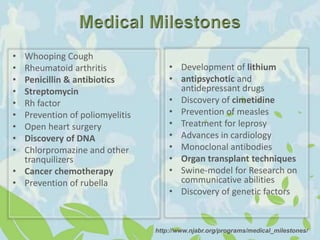
• Whooping Cough
• Rheumatoid arthritis
• Penicillin & antibiotics
• Streptomycin
• Rh factor
• Prevention of poliomyelitis
• Open heart surgery
• Discovery of DNA
• Chlorpromazine and other
tranquilizers
• Cancer chemotherapy
• Prevention of rubella
• Development of lithium
• antipsychotic and
antidepressant drugs
• Discovery of cimetidine
• Prevention of measles
• Treatment for leprosy
• Advances in cardiology
• Monoclonal antibodies
• Organ transplant techniques
• Swine-model for Research on
communicative abilities
• Discovery of genetic factors
http://www.njabr.org/programs/medical_milestones/
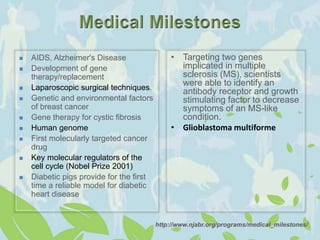
• Targeting two genes
implicated in multiple
sclerosis (MS), scientists
were able to identify an
antibody receptor and growth
stimulating factor to decrease
symptoms of an MS-like
condition.
• Glioblastoma multiforme
 AIDS, Alzheimer's Disease
 Development of gene
therapy/replacement
 Laparoscopic surgical techniques.
 Genetic and environmental factors
of breast cancer
 Gene therapy for cystic fibrosis
 Human genome
 First molecularly targeted cancer
drug
 Key molecular regulators of the
cell cycle (Nobel Prize 2001)
 Diabetic pigs provide for the first
time a reliable model for diabetic
heart disease
http://www.njabr.org/programs/medical_milestones/
• This is a Privilege
Basic Biomedical Research
• This is also a Privilege
Testing a product or procedure
• This is a Privilege too
Teaching a concept
• Required by the SCH for any institution
conducting Research, Testing, or Teaching.
• Operates according to Terms of Reference
acceptable to SCH, and International
Standards.
• Provide oversight to ensure safety within the
research environment, and advocacy of the
animal welfare.
• Ensure that No program involving use or
procurement of animals commences prior to
approval of a written use protocol filed with
the IACUC.
• Require and enforce that animal users fully
complete an animal use protocol.
• Stop any objectionable procedure if
considered as unnecessarily causing pain or
distress to an animal;
• Stop any use of animals which deviates from
the approved use;
• Have the animal killed humanely if pain or
distress caused to the animal is not part of the
approved protocol.
“Character is doing the right thing
when nobody’s looking. There are
too many people who think that the
only thing that’s right is to get by,
and the only thing that is wrong is
to get caught”
~ J.C. Watts
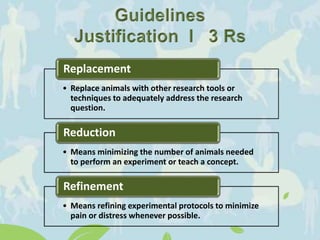
• Replace animals with other research tools or
techniques to adequately address the research
question.
Replacement
• Means minimizing the number of animals needed
to perform an experiment or teach a concept.
Reduction
• Means refining experimental protocols to minimize
pain or distress whenever possible.
Refinement
• Microorganisms, plants, eggs, reptiles,
amphibians, and invertebrates may be used in
some studies to replace warm-blooded
animals.
• Alternately, live animals may be replaced with
non-animal models, such as dummies for an
introduction to dissection for teaching the
structure of the animal or the human body,
mechanical or computer models, audiovisual
aids, or in vitro modeling.
• Performing pilot studies to determine some of the potential
problems in an experiment before numerous animals are used
• Designing a study to utilize animals as their own controls
• Gathering a maximum amount of information from each
animal, perhaps gathering data for more than one experiment
concurrently
• Consulting with a statistician to use only the number of
animals required to achieve significance
• Minimizing variables such as disease, stress, diet, genetics,
etc., that may affect experimental results
• Performing appropriate literature searches and consulting
with colleagues to ensure that experiments are not duplicated
• Using the appropriate species of animal so that useful data is
collected
• Replacement whenever possible.
• Identifying pain and distress and making plans for preventing or relieving
them.
• Setting the earliest possible endpoint for termination of the experiment
before the animal experiences any ill effects.
• Receiving adequate training prior to performing a procedure.
• Using proper handling techniques for animals.
• Ensuring that drug doses are correct and that the drugs used are not
expired.
• Ensuring that procedures to be performed on the animal are reasonable
for that species.
• Using appropriate analgesics and anesthetics for potentially painful
procedures.
• Performing surgeries and procedures aseptically to prevent infection.
• Performing only a single major survival surgery on any one animal,
whenever possible.
• Performing appropriate post-surgical care, including thermoregulation
and fluid balance.
Thank you!

QF_IACUC_2010

  • 1.
  • 2.
    First • Aristotle: Performedexperiments in living animals (4th BCE) • Galen: The Father of vivisection; dissected goat/pig (2nd ) Modern • 1600s: William Harvey (Circulatory System) • 1700s: Stephen Hales (BP in Horse) • 1900s: Antoine Lavoisier (Respiration in Guinea pig), • Louis Pasteur (Germ theory of medicine). Anthrax in sheep • Nils Alwall (1904–1986) • 1980s: Ivan Pavlov : Trained Dog to “Associate sound with food”. Present • Animal Use Regulation • Transgenic Mice, Specialized Animal Models, Cell lines • Present-to-Future, Fast Track from Organism-to-Molecular Emma Lloyd & Leigh A. Zaykoski
  • 3.
    • Pre 1900’s:R/ Rabies (dogs & rabbits), Anthrax (Sheep), Beriberi (Chicken), Smallpox (cows).  1900’s: R/ Pellagra (Rh monkeys & dogs), Rickets (dogs), Cardiac catheterization (dogs & rabbits)  1920’s: Discovery/ Thyroxin (many species). Insulin (dogs).  1930’s: Prevention Tetanus (horses), Anticoagulants (cats), Modern anesthesia (dogs). http://www.njabr.org/programs/medical_milestones/
  • 4.
    • Whooping Cough •Rheumatoid arthritis • Penicillin & antibiotics • Streptomycin • Rh factor • Prevention of poliomyelitis • Open heart surgery • Discovery of DNA • Chlorpromazine and other tranquilizers • Cancer chemotherapy • Prevention of rubella • Development of lithium • antipsychotic and antidepressant drugs • Discovery of cimetidine • Prevention of measles • Treatment for leprosy • Advances in cardiology • Monoclonal antibodies • Organ transplant techniques • Swine-model for Research on communicative abilities • Discovery of genetic factors http://www.njabr.org/programs/medical_milestones/
  • 5.
    • Targeting twogenes implicated in multiple sclerosis (MS), scientists were able to identify an antibody receptor and growth stimulating factor to decrease symptoms of an MS-like condition. • Glioblastoma multiforme  AIDS, Alzheimer's Disease  Development of gene therapy/replacement  Laparoscopic surgical techniques.  Genetic and environmental factors of breast cancer  Gene therapy for cystic fibrosis  Human genome  First molecularly targeted cancer drug  Key molecular regulators of the cell cycle (Nobel Prize 2001)  Diabetic pigs provide for the first time a reliable model for diabetic heart disease http://www.njabr.org/programs/medical_milestones/
  • 6.
    • This isa Privilege Basic Biomedical Research • This is also a Privilege Testing a product or procedure • This is a Privilege too Teaching a concept
  • 7.
    • Required bythe SCH for any institution conducting Research, Testing, or Teaching. • Operates according to Terms of Reference acceptable to SCH, and International Standards. • Provide oversight to ensure safety within the research environment, and advocacy of the animal welfare.
  • 8.
    • Ensure thatNo program involving use or procurement of animals commences prior to approval of a written use protocol filed with the IACUC. • Require and enforce that animal users fully complete an animal use protocol.
  • 9.
    • Stop anyobjectionable procedure if considered as unnecessarily causing pain or distress to an animal; • Stop any use of animals which deviates from the approved use; • Have the animal killed humanely if pain or distress caused to the animal is not part of the approved protocol.
  • 10.
    “Character is doingthe right thing when nobody’s looking. There are too many people who think that the only thing that’s right is to get by, and the only thing that is wrong is to get caught” ~ J.C. Watts
  • 11.
    • Replace animalswith other research tools or techniques to adequately address the research question. Replacement • Means minimizing the number of animals needed to perform an experiment or teach a concept. Reduction • Means refining experimental protocols to minimize pain or distress whenever possible. Refinement
  • 12.
    • Microorganisms, plants,eggs, reptiles, amphibians, and invertebrates may be used in some studies to replace warm-blooded animals. • Alternately, live animals may be replaced with non-animal models, such as dummies for an introduction to dissection for teaching the structure of the animal or the human body, mechanical or computer models, audiovisual aids, or in vitro modeling.
  • 13.
    • Performing pilotstudies to determine some of the potential problems in an experiment before numerous animals are used • Designing a study to utilize animals as their own controls • Gathering a maximum amount of information from each animal, perhaps gathering data for more than one experiment concurrently • Consulting with a statistician to use only the number of animals required to achieve significance • Minimizing variables such as disease, stress, diet, genetics, etc., that may affect experimental results • Performing appropriate literature searches and consulting with colleagues to ensure that experiments are not duplicated • Using the appropriate species of animal so that useful data is collected • Replacement whenever possible.
  • 14.
    • Identifying painand distress and making plans for preventing or relieving them. • Setting the earliest possible endpoint for termination of the experiment before the animal experiences any ill effects. • Receiving adequate training prior to performing a procedure. • Using proper handling techniques for animals. • Ensuring that drug doses are correct and that the drugs used are not expired. • Ensuring that procedures to be performed on the animal are reasonable for that species. • Using appropriate analgesics and anesthetics for potentially painful procedures. • Performing surgeries and procedures aseptically to prevent infection. • Performing only a single major survival surgery on any one animal, whenever possible. • Performing appropriate post-surgical care, including thermoregulation and fluid balance.
  • 15.