Qeraton Arabia – Energy Audit Services
Introduction
Qeraton Arabia offers a unique methodology and approach to help lower energy costs, upgrade the
facility and protect the environment. We perform in-depth energy audits and engineering designs to
present the energy efficiency action plans. Our
objective is to provide value-added and cost
effective solutions for our clients in the area of
inspection and energy management with superior
field work and reports.
The objective of an energy audit or energy analysis
is to identify opportunities that will reduce the
energy use of a facility. Our energy audit will include
the following steps:
1. Collect and analyze historical energy use.
2. Study the building and its operational
characteristics by onsite field measurements.
3. Identify potential solutions that will reduce the
energy use and/or cost.
4. Perform an engineering and economic analysis of
potential modifications.
5. Prepare a rank-ordered list of appropriate
modifications.
6. Prepare a report to document the analysis
process and results.
Scope and Services
The energy audit will include energy performance assessment of the
following utilities/equipment:
1. Lighting
2. Compressors and Compressed Air Distribution System
3. Boilers / Steam Generators and Steam distribution System
4. HVAC (Chillers, AHUs)
5. Cooling Towers
6. Electrical Motors (blowers, pumps etc.)
7. Electrical Distribution system, Power quality
8. Building Envelope
The energy audit will also include the following:
Power Logging / Power Quality Analysis:
1. Measurement of Power consumption
2. Power Quality Analysis (including PF, Harmonics etc.)
Thermography
1. Thermography of Electrical systems
2. Thermography of steam, hot water systems, chilled water systems and other mechanical equipment
Ultrasound Scanning
1. Ultrasound scanning of compressed air systems
2. Ultrasound scanning of steam systems (including steam traps, valves etc.)
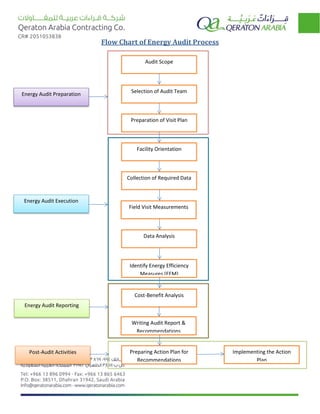
Flow Chart of Energy Audit Process
Audit Scope
Selection of Audit Team
Preparation of Visit Plan
Facility Orientation
Collection of Required Data
Field Visit Measurements
Data Analysis
Identify Energy Efficiency
Measures (EEM)
Cost-Benefit Analysis
Writing Audit Report &
Recommendations
Preparing Action Plan for
Recommendations
Implementing the Action
Plan
Post-Audit Activities
Energy Audit Reporting
Energy Audit Execution
Energy Audit Preparation
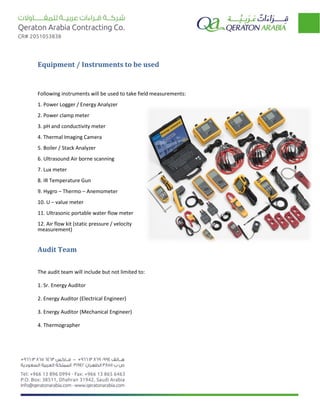
Equipment / Instruments to be used
Following instruments will be used to take field measurements:
1. Power Logger / Energy Analyzer
2. Power clamp meter
3. pH and conductivity meter
4. Thermal Imaging Camera
5. Boiler / Stack Analyzer
6. Ultrasound Air borne scanning
7. Lux meter
8. IR Temperature Gun
9. Hygro – Thermo – Anemometer
10. U – value meter
11. Ultrasonic portable water flow meter
12. Air flow kit (static pressure / velocity
measurement)
Audit Team
The audit team will include but not limited to:
1. Sr. Energy Auditor
2. Energy Auditor (Electrical Engineer)
3. Energy Auditor (Mechanical Engineer)
4. Thermographer
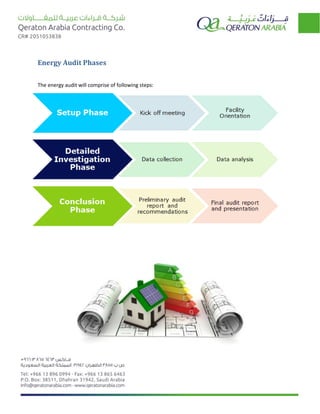
Energy Audit Phases
The energy audit will comprise of following steps:
Deliverables
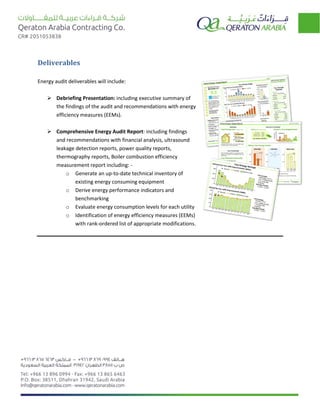
Energy audit deliverables will include:
 Debriefing Presentation: including executive summary of
the findings of the audit and recommendations with energy
efficiency measures (EEMs).
 Comprehensive Energy Audit Report: including findings
and recommendations with financial analysis, ultrasound
leakage detection reports, power quality reports,
thermography reports, Boiler combustion efficiency
measurement report including: -
o Generate an up-to-date technical inventory of
existing energy consuming equipment
o Derive energy performance indicators and
benchmarking
o Evaluate energy consumption levels for each utility
o Identification of energy efficiency measures (EEMs)
with rank-ordered list of appropriate modifications.

Qeraton Intro- Energy Audits

  • 1.
    Qeraton Arabia –Energy Audit Services Introduction Qeraton Arabia offers a unique methodology and approach to help lower energy costs, upgrade the facility and protect the environment. We perform in-depth energy audits and engineering designs to present the energy efficiency action plans. Our objective is to provide value-added and cost effective solutions for our clients in the area of inspection and energy management with superior field work and reports. The objective of an energy audit or energy analysis is to identify opportunities that will reduce the energy use of a facility. Our energy audit will include the following steps: 1. Collect and analyze historical energy use. 2. Study the building and its operational characteristics by onsite field measurements. 3. Identify potential solutions that will reduce the energy use and/or cost. 4. Perform an engineering and economic analysis of potential modifications. 5. Prepare a rank-ordered list of appropriate modifications. 6. Prepare a report to document the analysis process and results.
  • 2.
    Scope and Services Theenergy audit will include energy performance assessment of the following utilities/equipment: 1. Lighting 2. Compressors and Compressed Air Distribution System 3. Boilers / Steam Generators and Steam distribution System 4. HVAC (Chillers, AHUs) 5. Cooling Towers 6. Electrical Motors (blowers, pumps etc.) 7. Electrical Distribution system, Power quality 8. Building Envelope The energy audit will also include the following: Power Logging / Power Quality Analysis: 1. Measurement of Power consumption 2. Power Quality Analysis (including PF, Harmonics etc.) Thermography 1. Thermography of Electrical systems 2. Thermography of steam, hot water systems, chilled water systems and other mechanical equipment Ultrasound Scanning 1. Ultrasound scanning of compressed air systems 2. Ultrasound scanning of steam systems (including steam traps, valves etc.)
  • 3.
    Flow Chart ofEnergy Audit Process Audit Scope Selection of Audit Team Preparation of Visit Plan Facility Orientation Collection of Required Data Field Visit Measurements Data Analysis Identify Energy Efficiency Measures (EEM) Cost-Benefit Analysis Writing Audit Report & Recommendations Preparing Action Plan for Recommendations Implementing the Action Plan Post-Audit Activities Energy Audit Reporting Energy Audit Execution Energy Audit Preparation
  • 4.
    Equipment / Instrumentsto be used Following instruments will be used to take field measurements: 1. Power Logger / Energy Analyzer 2. Power clamp meter 3. pH and conductivity meter 4. Thermal Imaging Camera 5. Boiler / Stack Analyzer 6. Ultrasound Air borne scanning 7. Lux meter 8. IR Temperature Gun 9. Hygro – Thermo – Anemometer 10. U – value meter 11. Ultrasonic portable water flow meter 12. Air flow kit (static pressure / velocity measurement) Audit Team The audit team will include but not limited to: 1. Sr. Energy Auditor 2. Energy Auditor (Electrical Engineer) 3. Energy Auditor (Mechanical Engineer) 4. Thermographer
  • 5.
    Energy Audit Phases Theenergy audit will comprise of following steps:
  • 6.
    Deliverables Energy audit deliverableswill include:  Debriefing Presentation: including executive summary of the findings of the audit and recommendations with energy efficiency measures (EEMs).  Comprehensive Energy Audit Report: including findings and recommendations with financial analysis, ultrasound leakage detection reports, power quality reports, thermography reports, Boiler combustion efficiency measurement report including: - o Generate an up-to-date technical inventory of existing energy consuming equipment o Derive energy performance indicators and benchmarking o Evaluate energy consumption levels for each utility o Identification of energy efficiency measures (EEMs) with rank-ordered list of appropriate modifications.