Comparing Ancillary
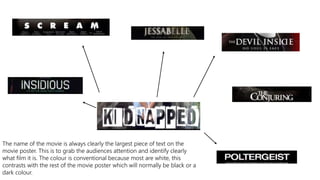
The name of the movie is always clearly the largest piece of text on the
movie poster. This is to grab the audiences attention and identify clearly
what film it is. The colour is conventional because most are white, this
contrasts with the rest of the movie poster which will normally be black or a
dark colour.
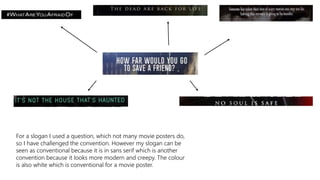
For a slogan I used a question, which not many movie posters do,
so I have challenged the convention. However my slogan can be
seen as conventional because it is in sans serif which is another
convention because it looks more modern and creepy. The colour
is also white which is conventional for a movie poster.
The release date is another convention of a movie poster. As my genre
was horror I used a creepy font that would contrast to the background
and go with the rest of the poster. I used the colour red, which is also
used for some other posters, this is because red signifies gore, horror
and death, which is associated with horror.
A billing block is conventional for a
movie poster because it gives more
details into who made the movie and
who was involved. Billing blocks are
usually white for horror posters, which
would contrast with the (usually) black
background.
Another convention of a horror movie
poster is the main image. This image
is normally a mid shot or a close up,
this is to capture the facial expression
or make up of the main character. In
my movie poster the main girl is
clearly tied up with a neutral
expression. She is wearing plain
clothes to again, be neutral.
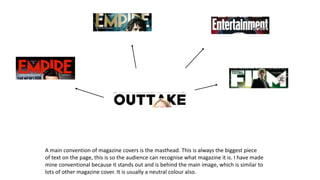
A main convention of magazine covers is the masthead. This is always the biggest piece
of text on the page, this is so the audience can recognise what magazine it is. I have made
mine conventional because it stands out and is behind the main image, which is similar to
lots of other magazine cover. It is usually a neutral colour also.
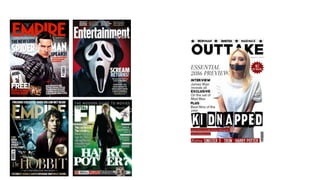
The cover story is also a main part of a magazine. This is the second biggest piece
of text on the magazine. It stands out and shows the audience what the main film
it is about. This also creates a hype about the film and gets the readers interested
in it. It always goes with the main image which again will attract the audience.
Cover lines are also conventional for a magazine cover. These are normally in the left third,
and includes what else is in the magazine. These are also normally in a neutral colour that
contrast with the background.
Banners are conventional for a magazine. These show what else features
in the magazine. Sometimes these banners can be at the top of the
magazine and at the bottom. These drag the readers in as it includes more
films and more things in the magazine
The main image is always on the
front page of a movie magazine.
This attracts the audience and
creates a hype about the film it has
an image of. These are usually in the
centre, however like mine it is
towards the right of the page. The
image is usually of someone or
something from the movie it is
promoting.

Q1 comparing ancillary

  • 1.
  • 2.
    The name ofthe movie is always clearly the largest piece of text on the movie poster. This is to grab the audiences attention and identify clearly what film it is. The colour is conventional because most are white, this contrasts with the rest of the movie poster which will normally be black or a dark colour.
  • 3.
    For a sloganI used a question, which not many movie posters do, so I have challenged the convention. However my slogan can be seen as conventional because it is in sans serif which is another convention because it looks more modern and creepy. The colour is also white which is conventional for a movie poster.
  • 4.
    The release dateis another convention of a movie poster. As my genre was horror I used a creepy font that would contrast to the background and go with the rest of the poster. I used the colour red, which is also used for some other posters, this is because red signifies gore, horror and death, which is associated with horror.
  • 5.
    A billing blockis conventional for a movie poster because it gives more details into who made the movie and who was involved. Billing blocks are usually white for horror posters, which would contrast with the (usually) black background.
  • 6.
    Another convention ofa horror movie poster is the main image. This image is normally a mid shot or a close up, this is to capture the facial expression or make up of the main character. In my movie poster the main girl is clearly tied up with a neutral expression. She is wearing plain clothes to again, be neutral.
  • 8.
    A main conventionof magazine covers is the masthead. This is always the biggest piece of text on the page, this is so the audience can recognise what magazine it is. I have made mine conventional because it stands out and is behind the main image, which is similar to lots of other magazine cover. It is usually a neutral colour also.
  • 9.
    The cover storyis also a main part of a magazine. This is the second biggest piece of text on the magazine. It stands out and shows the audience what the main film it is about. This also creates a hype about the film and gets the readers interested in it. It always goes with the main image which again will attract the audience.
  • 10.
    Cover lines arealso conventional for a magazine cover. These are normally in the left third, and includes what else is in the magazine. These are also normally in a neutral colour that contrast with the background.
  • 11.
    Banners are conventionalfor a magazine. These show what else features in the magazine. Sometimes these banners can be at the top of the magazine and at the bottom. These drag the readers in as it includes more films and more things in the magazine
  • 12.
    The main imageis always on the front page of a movie magazine. This attracts the audience and creates a hype about the film it has an image of. These are usually in the centre, however like mine it is towards the right of the page. The image is usually of someone or something from the movie it is promoting.