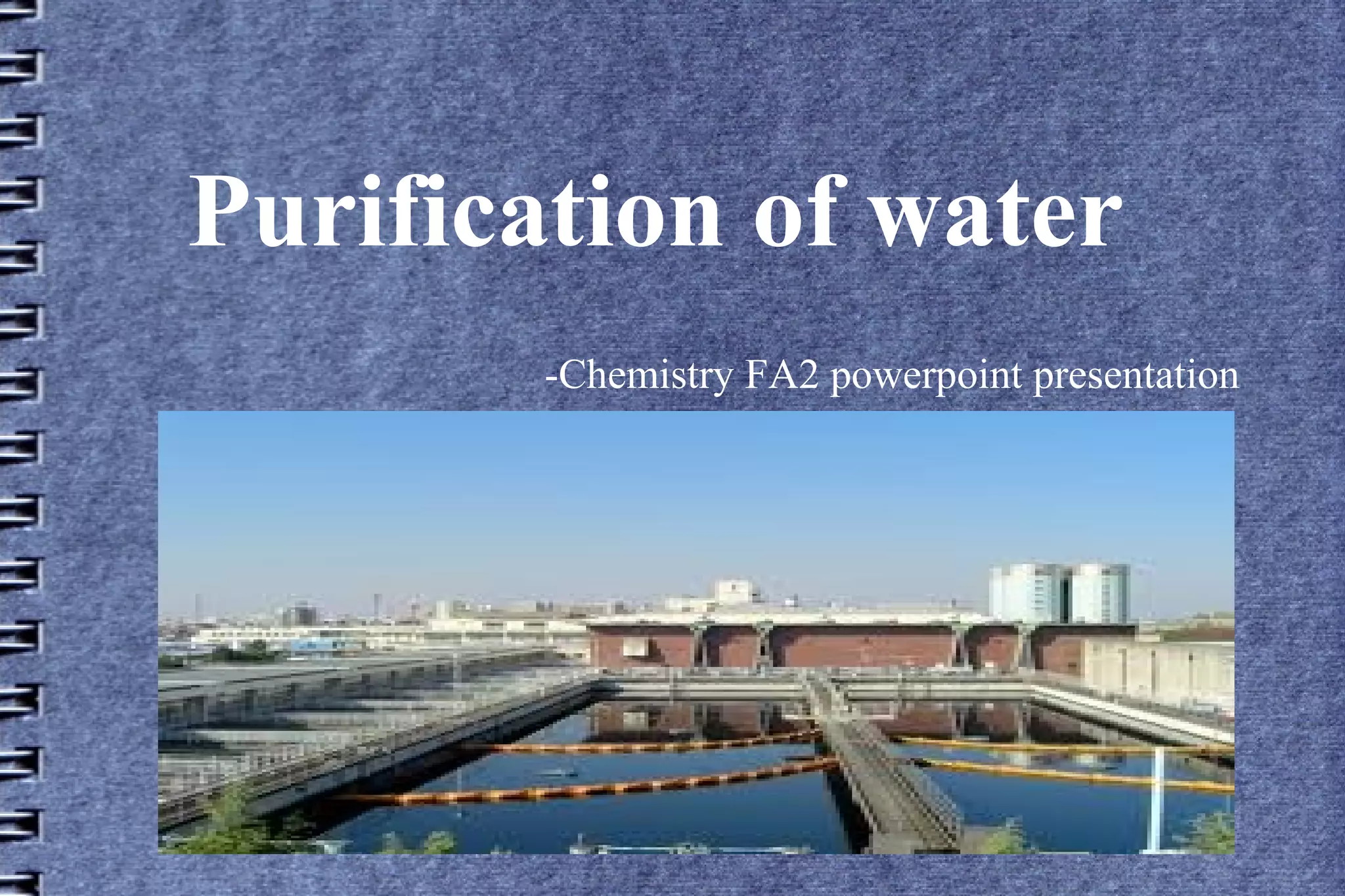
Purification of water
-Chemistry FA2 powerpoint presentation
What is WATER and how does it get polluted
●

●

●
●

Water is a chemical compound with the chemical formula H2O. A water
molecule contains one oxygen and two hydrogen atoms connected by covalent
bonds. By mass distribution the ratio of hydrogen and oxygen particle is 8:1
Water covers 71% of the Earth's surface,[3] and is vital for all known forms of
life.[4] On Earth, 96.5% of the planet's water is found in seas and oceans, 1.7%
in groundwater, 1.7% in glaciers and the ice caps of Antarctica and Greenland, a
small fraction in other large water bodies, and 0.001% in the air as vapor, clouds
(formed of solid and liquid water particles suspended in air), and precipitation.
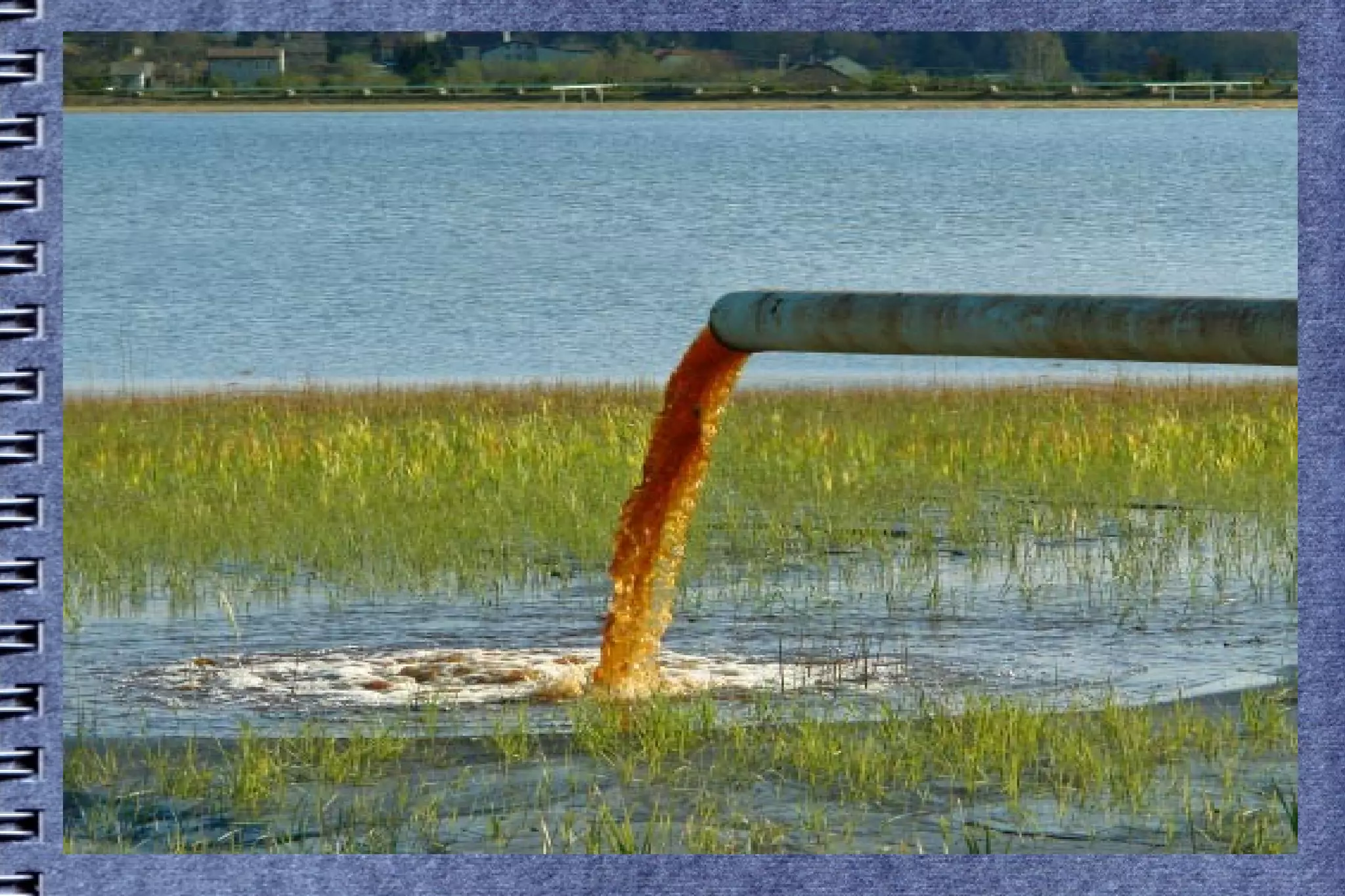
Water pollution is the contamination of water bodies
Water pollution occurs when pollutants (particles, chemicals or substances that
make water contaminated) are discharged directly or indirectly into water bodies
without enough treatment to get rid of harmful compounds. Pollutants get into
water mainly by human causes or factors.
How to purify water from lakes for drinking purposes
●

●

●

●

●

●

Water from rivers or lakes is collected in large reserviors which are free from
large pieces of dirt
Water is allowed to stand in large tanks so that suspended impurities settle down.
This is called sedimentation and it is done in the sedimentation tank
Then the water is passed through the filteration tank where the water is passed
through layers of sand, gracel and coarse gravel.
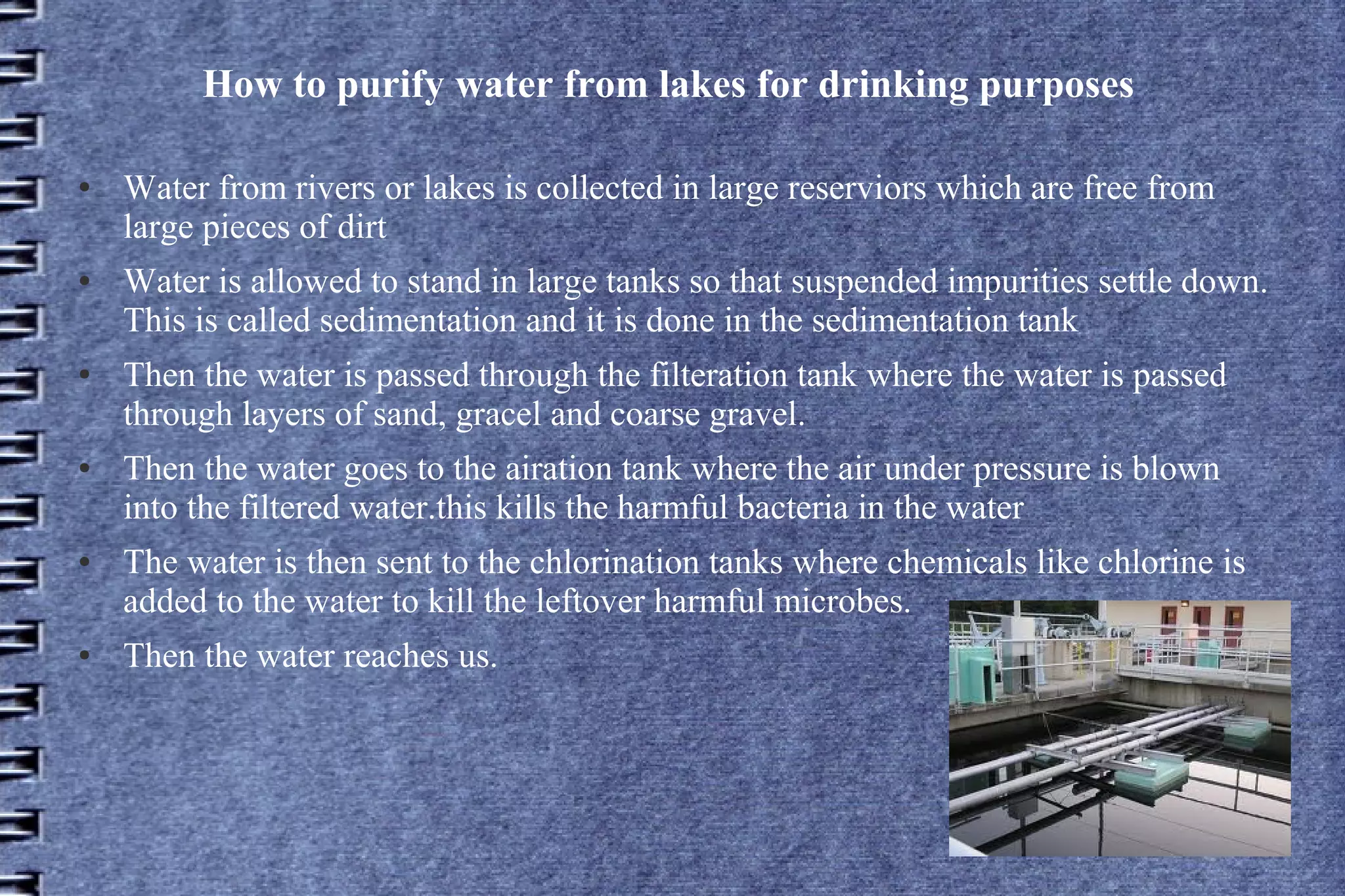
Then the water goes to the airation tank where the air under pressure is blown
into the filtered water.this kills the harmful bacteria in the water
The water is then sent to the chlorination tanks where chemicals like chlorine is
added to the water to kill the leftover harmful microbes.
Then the water reaches us.
Domestic water purification methods
●

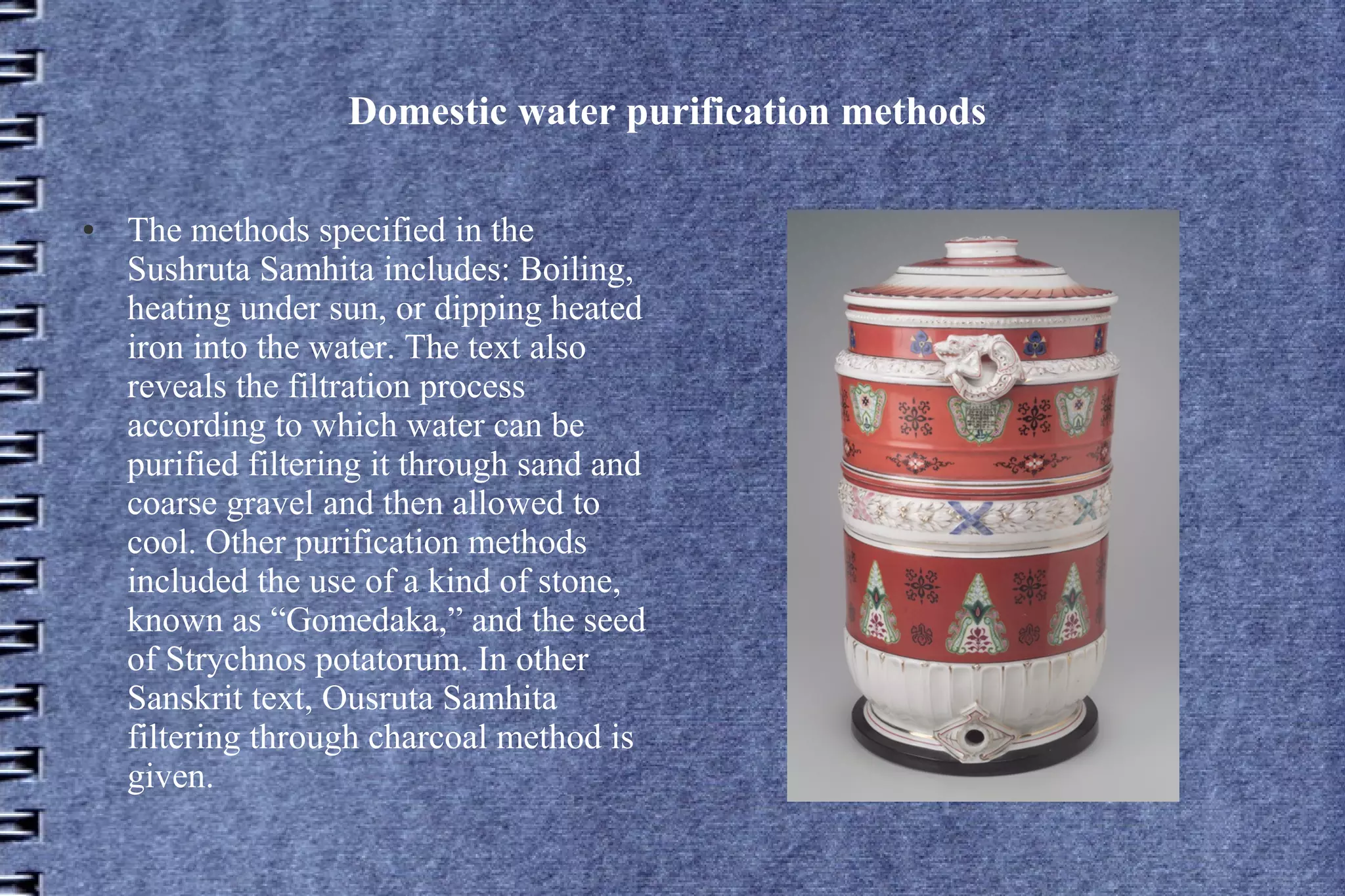
The methods specified in the
Sushruta Samhita includes: Boiling,
heating under sun, or dipping heated
iron into the water. The text also
reveals the filtration process
according to which water can be
purified filtering it through sand and
coarse gravel and then allowed to
cool. Other purification methods
included the use of a kind of stone,
known as “Gomedaka,” and the seed
of Strychnos potatorum. In other
Sanskrit text, Ousruta Samhita
filtering through charcoal method is
given.
More methods of water purification
●
●

●

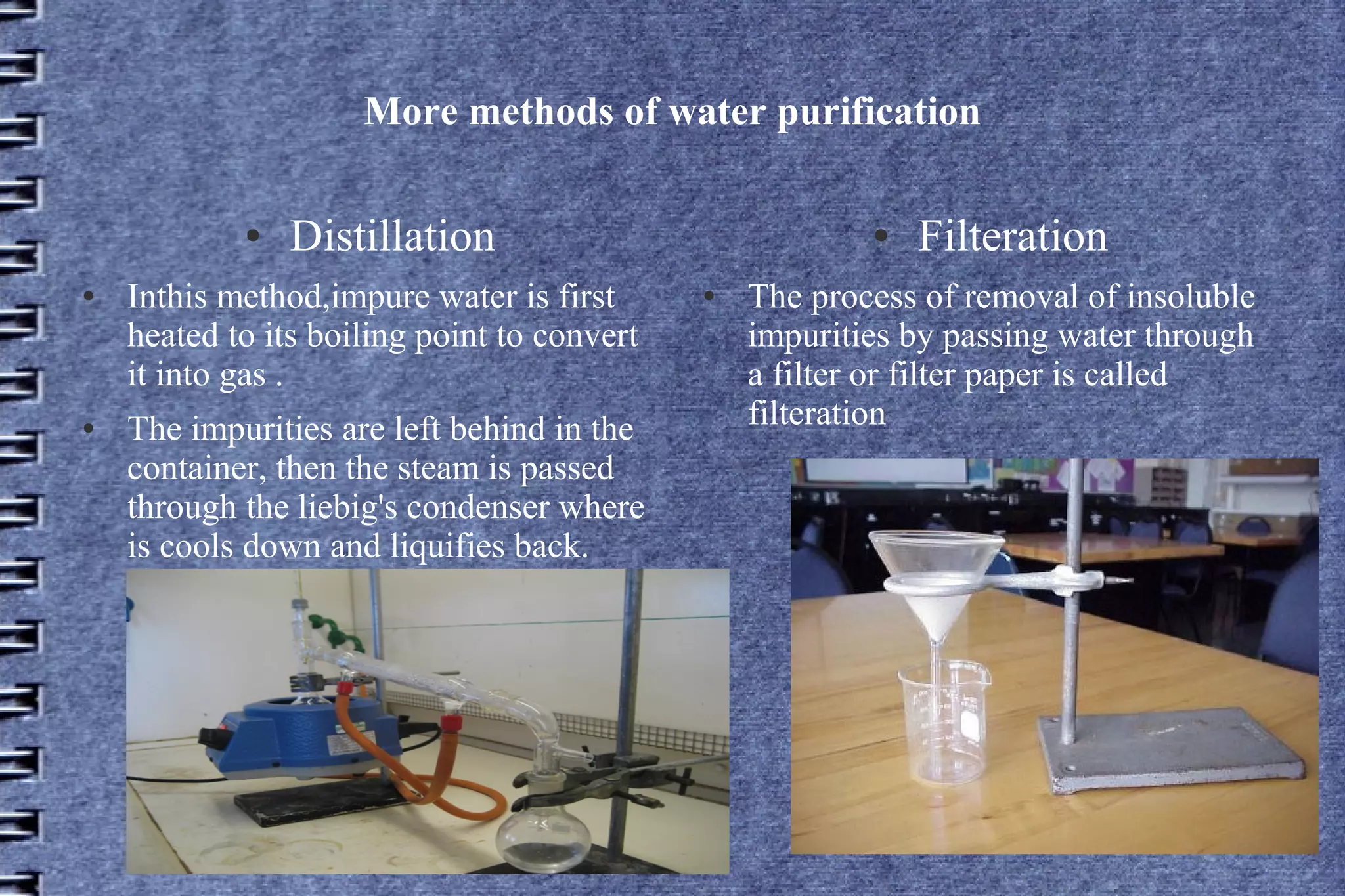
Distillation

Inthis method,impure water is first
heated to its boiling point to convert
it into gas .
The impurities are left behind in the
container, then the steam is passed
through the liebig's condenser where
is cools down and liquifies back.

●
●

Filteration

The process of removal of insoluble
impurities by passing water through
a filter or filter paper is called
filteration
Today's filters
●

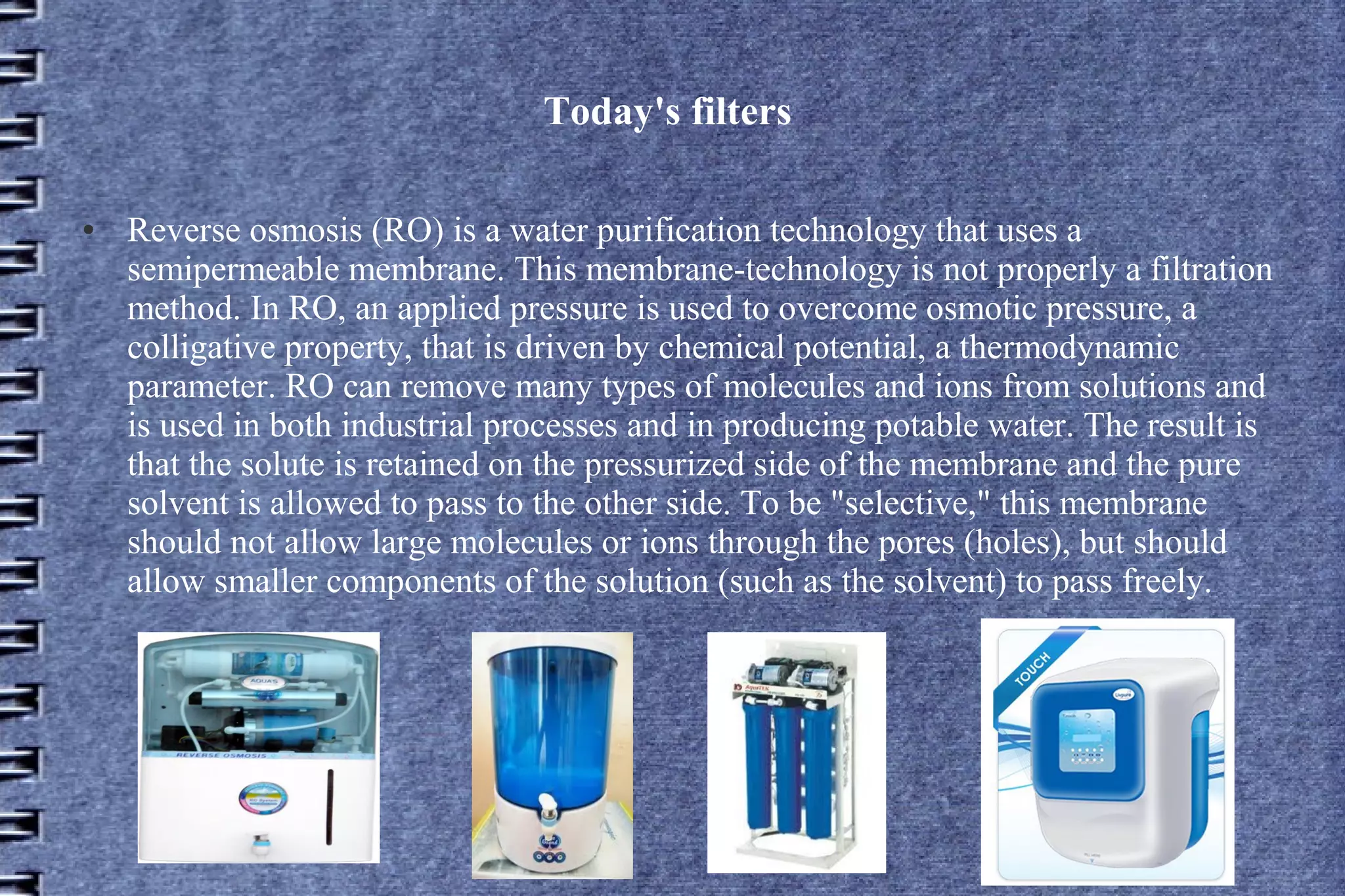
Reverse osmosis (RO) is a water purification technology that uses a
semipermeable membrane. This membrane-technology is not properly a filtration
method. In RO, an applied pressure is used to overcome osmotic pressure, a
colligative property, that is driven by chemical potential, a thermodynamic
parameter. RO can remove many types of molecules and ions from solutions and
is used in both industrial processes and in producing potable water. The result is
that the solute is retained on the pressurized side of the membrane and the pure
solvent is allowed to pass to the other side. To be "selective," this membrane
should not allow large molecules or ions through the pores (holes), but should
allow smaller components of the solution (such as the solvent) to pass freely.
●

MADE BY
Akshat Raika
Himanshu kukde
Chetan Samrit
Mithilesh Gaurihar
Ujjwal Gupta

Purification of water

  • 1.
    Purification of water -ChemistryFA2 powerpoint presentation
  • 2.
    What is WATERand how does it get polluted ● ● ● ● Water is a chemical compound with the chemical formula H2O. A water molecule contains one oxygen and two hydrogen atoms connected by covalent bonds. By mass distribution the ratio of hydrogen and oxygen particle is 8:1 Water covers 71% of the Earth's surface,[3] and is vital for all known forms of life.[4] On Earth, 96.5% of the planet's water is found in seas and oceans, 1.7% in groundwater, 1.7% in glaciers and the ice caps of Antarctica and Greenland, a small fraction in other large water bodies, and 0.001% in the air as vapor, clouds (formed of solid and liquid water particles suspended in air), and precipitation. Water pollution is the contamination of water bodies Water pollution occurs when pollutants (particles, chemicals or substances that make water contaminated) are discharged directly or indirectly into water bodies without enough treatment to get rid of harmful compounds. Pollutants get into water mainly by human causes or factors.
  • 4.
    How to purifywater from lakes for drinking purposes ● ● ● ● ● ● Water from rivers or lakes is collected in large reserviors which are free from large pieces of dirt Water is allowed to stand in large tanks so that suspended impurities settle down. This is called sedimentation and it is done in the sedimentation tank Then the water is passed through the filteration tank where the water is passed through layers of sand, gracel and coarse gravel. Then the water goes to the airation tank where the air under pressure is blown into the filtered water.this kills the harmful bacteria in the water The water is then sent to the chlorination tanks where chemicals like chlorine is added to the water to kill the leftover harmful microbes. Then the water reaches us.
  • 5.
    Domestic water purificationmethods ● The methods specified in the Sushruta Samhita includes: Boiling, heating under sun, or dipping heated iron into the water. The text also reveals the filtration process according to which water can be purified filtering it through sand and coarse gravel and then allowed to cool. Other purification methods included the use of a kind of stone, known as “Gomedaka,” and the seed of Strychnos potatorum. In other Sanskrit text, Ousruta Samhita filtering through charcoal method is given.
  • 6.
    More methods ofwater purification ● ● ● Distillation Inthis method,impure water is first heated to its boiling point to convert it into gas . The impurities are left behind in the container, then the steam is passed through the liebig's condenser where is cools down and liquifies back. ● ● Filteration The process of removal of insoluble impurities by passing water through a filter or filter paper is called filteration
  • 7.
    Today's filters ● Reverse osmosis(RO) is a water purification technology that uses a semipermeable membrane. This membrane-technology is not properly a filtration method. In RO, an applied pressure is used to overcome osmotic pressure, a colligative property, that is driven by chemical potential, a thermodynamic parameter. RO can remove many types of molecules and ions from solutions and is used in both industrial processes and in producing potable water. The result is that the solute is retained on the pressurized side of the membrane and the pure solvent is allowed to pass to the other side. To be "selective," this membrane should not allow large molecules or ions through the pores (holes), but should allow smaller components of the solution (such as the solvent) to pass freely.
  • 8.
    ● MADE BY Akshat Raika Himanshukukde Chetan Samrit Mithilesh Gaurihar Ujjwal Gupta