ETIZAZ SHAH


BP Case Study

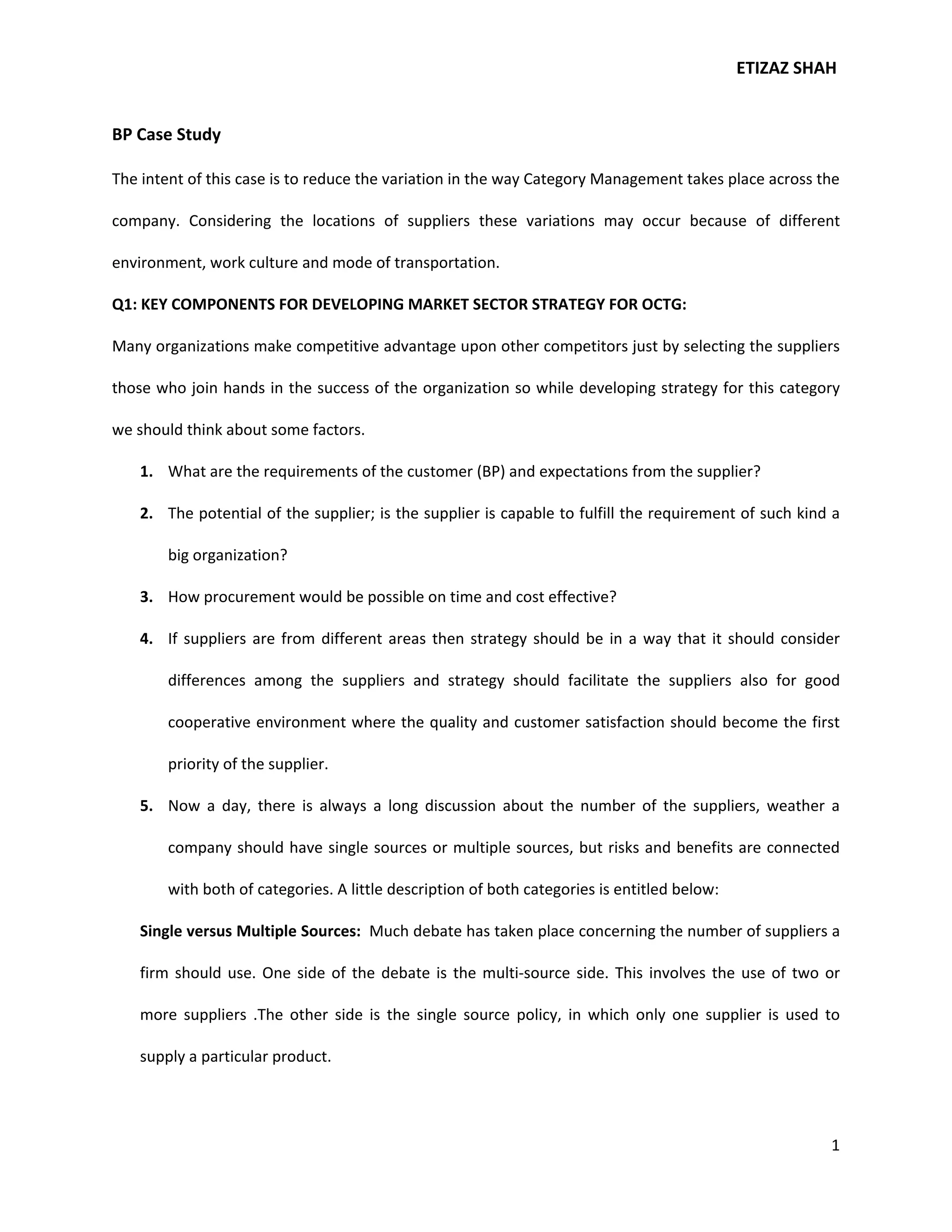
The intent of this case is to reduce the variation in the way Category Management takes place across the

company. Considering the locations of suppliers these variations may occur because of different

environment, work culture and mode of transportation.

Q1: KEY COMPONENTS FOR DEVELOPING MARKET SECTOR STRATEGY FOR OCTG:

Many organizations make competitive advantage upon other competitors just by selecting the suppliers

those who join hands in the success of the organization so while developing strategy for this category

we should think about some factors.

    1. What are the requirements of the customer (BP) and expectations from the supplier?

    2. The potential of the supplier; is the supplier is capable to fulfill the requirement of such kind a

        big organization?

    3. How procurement would be possible on time and cost effective?

   4. If suppliers are from different areas then strategy should be in a way that it should consider

        differences among the suppliers and strategy should facilitate the suppliers also for good

        cooperative environment where the quality and customer satisfaction should become the first

        priority of the supplier.

   5. Now a day, there is always a long discussion about the number of the suppliers, weather a

        company should have single sources or multiple sources, but risks and benefits are connected

        with both of categories. A little description of both categories is entitled below:

   Single versus Multiple Sources: Much debate has taken place concerning the number of suppliers a

   firm should use. One side of the debate is the multi-source side. This involves the use of two or

   more suppliers .The other side is the single source policy, in which only one supplier is used to

   supply a particular product.


                                                                                                        1
ETIZAZ SHAH


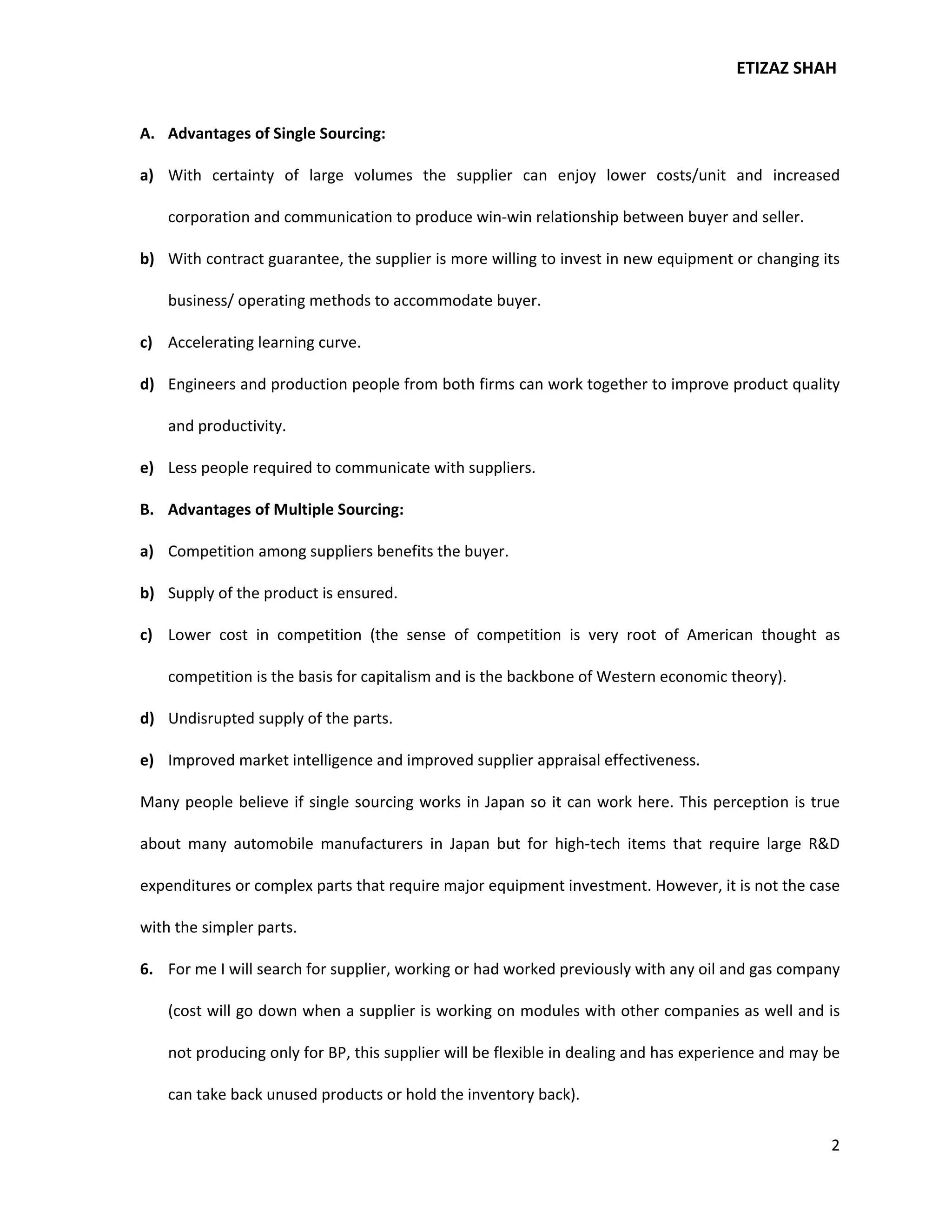
A. Advantages of Single Sourcing:

a) With certainty of large volumes the supplier can enjoy lower costs/unit and increased

    corporation and communication to produce win-win relationship between buyer and seller.

b) With contract guarantee, the supplier is more willing to invest in new equipment or changing its

    business/ operating methods to accommodate buyer.

c) Accelerating learning curve.

d) Engineers and production people from both firms can work together to improve product quality

    and productivity.

e) Less people required to communicate with suppliers.

B. Advantages of Multiple Sourcing:

a) Competition among suppliers benefits the buyer.

b) Supply of the product is ensured.

c) Lower cost in competition (the sense of competition is very root of American thought as

    competition is the basis for capitalism and is the backbone of Western economic theory).

d) Undisrupted supply of the parts.

e) Improved market intelligence and improved supplier appraisal effectiveness.

Many people believe if single sourcing works in Japan so it can work here. This perception is true

about many automobile manufacturers in Japan but for high-tech items that require large R&D

expenditures or complex parts that require major equipment investment. However, it is not the case

with the simpler parts.

6. For me I will search for supplier, working or had worked previously with any oil and gas company

    (cost will go down when a supplier is working on modules with other companies as well and is

    not producing only for BP, this supplier will be flexible in dealing and has experience and may be

    can take back unused products or hold the inventory back).

                                                                                                    2
ETIZAZ SHAH


Q2: DEVELOPING A STRATEGIC SOURCING PLAN:

RFP, RFI and Approach the Market place etc are considered as sourcing strategies. The most important

factor is the understanding of the supplier about the customer requirements so that supplier can

provide the comprehensive and exact details about his product and expertise.

Major requirements of the strategic sourcing plan are as follows:

    1. A complete understanding of corporate strategies and marketing plans in order to provide well –

         integrated purchasing systems.

    2. An extensive evaluation / study of current suppliers, how performance is measured and the

         expectations of the suppliers relative to the industry.

    3. Study of the degree of global purchasing opportunities.

    4. Identification of total costs associated with current purchasing department / function, budgets,

         staffing and so forth.

Management must device a data collection system in order to provide data to the four issues given

above.

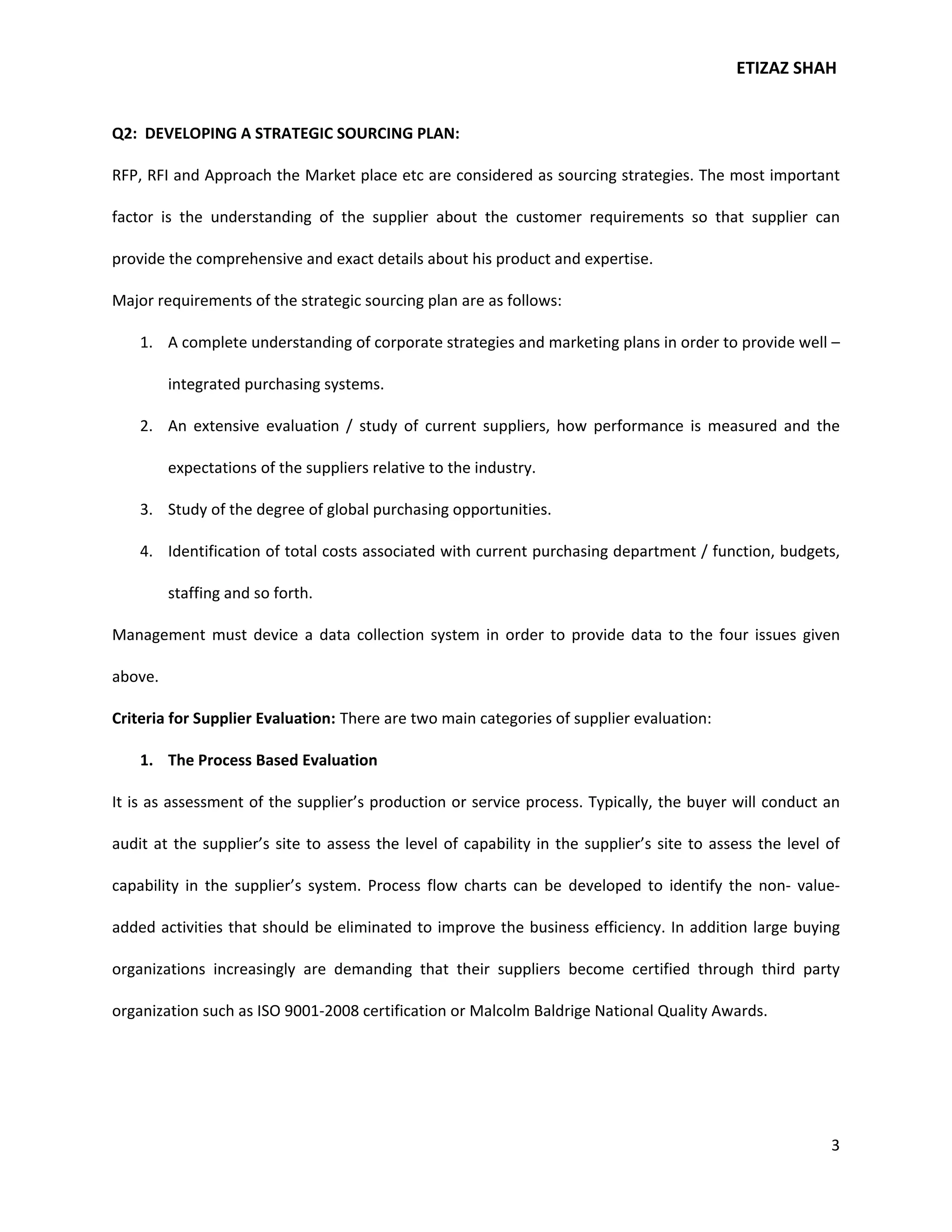
Criteria for Supplier Evaluation: There are two main categories of supplier evaluation:

    1. The Process Based Evaluation

It is as assessment of the supplier’s production or service process. Typically, the buyer will conduct an

audit at the supplier’s site to assess the level of capability in the supplier’s site to assess the level of

capability in the supplier’s system. Process flow charts can be developed to identify the non- value-

added activities that should be eliminated to improve the business efficiency. In addition large buying

organizations increasingly are demanding that their suppliers become certified through third party

organization such as ISO 9001-2008 certification or Malcolm Baldrige National Quality Awards.


                                                                                                          3
ETIZAZ SHAH


    2. The Performance Based Evaluation:

It is an assessment of the supplier’s actual performance on a variety of criteria, such as delivery

reliability, cost and quality defect rate. It is a more tactical assessment and measures the day-to-day

performance of the supplying firm; hence, it is after the fact evaluation. The performance based

evaluation, perhaps since objective data are readily available and easier to measure.

Following are three performance based supplier’s evaluation systems.

    a) Categorical Method               b) Cost-Ratio Method             c) Linear Averaging Method

In general, the guiding factors in determining which system is best are ease of implementation and

overall reliability of the system.

    a) Categorical Method:

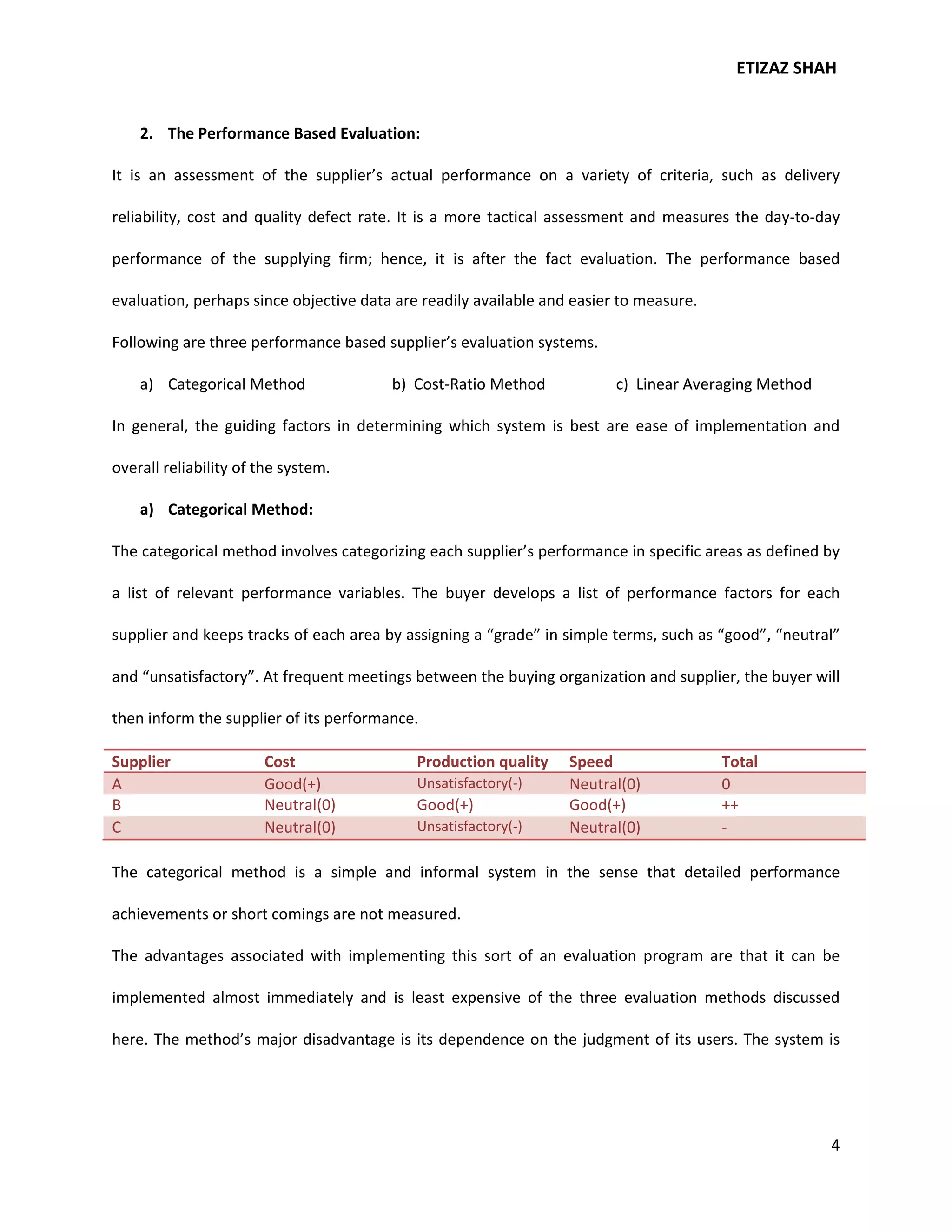
The categorical method involves categorizing each supplier’s performance in specific areas as defined by

a list of relevant performance variables. The buyer develops a list of performance factors for each

supplier and keeps tracks of each area by assigning a “grade” in simple terms, such as “good”, “neutral”

and “unsatisfactory”. At frequent meetings between the buying organization and supplier, the buyer will

then inform the supplier of its performance.

Supplier               Cost                 Production quality    Speed                 Total
A                      Good(+)              Unsatisfactory(-)     Neutral(0)            0
B                      Neutral(0)           Good(+)               Good(+)               ++
C                      Neutral(0)           Unsatisfactory(-)     Neutral(0)            -

The categorical method is a simple and informal system in the sense that detailed performance

achievements or short comings are not measured.

The advantages associated with implementing this sort of an evaluation program are that it can be

implemented almost immediately and is least expensive of the three evaluation methods discussed

here. The method’s major disadvantage is its dependence on the judgment of its users. The system is


                                                                                                      4
ETIZAZ SHAH


largely dependent on the memories of personnel to explain what “unsatisfactory” or “good” means,

with this method, there is no concrete supporting data.

    b) Cost-Ratio Method:

The Cost-ratio method evaluates supplier performance by using standard cost analysis. The total cost of

each purchase is calculated as its selling price plus the buyer’s internal opportunity costs associated with

the quality, delivery and service elements of the purchase. Calculation involves a 4-step approach.

1st: Determine the internal costs associated with quality, delivery and service.

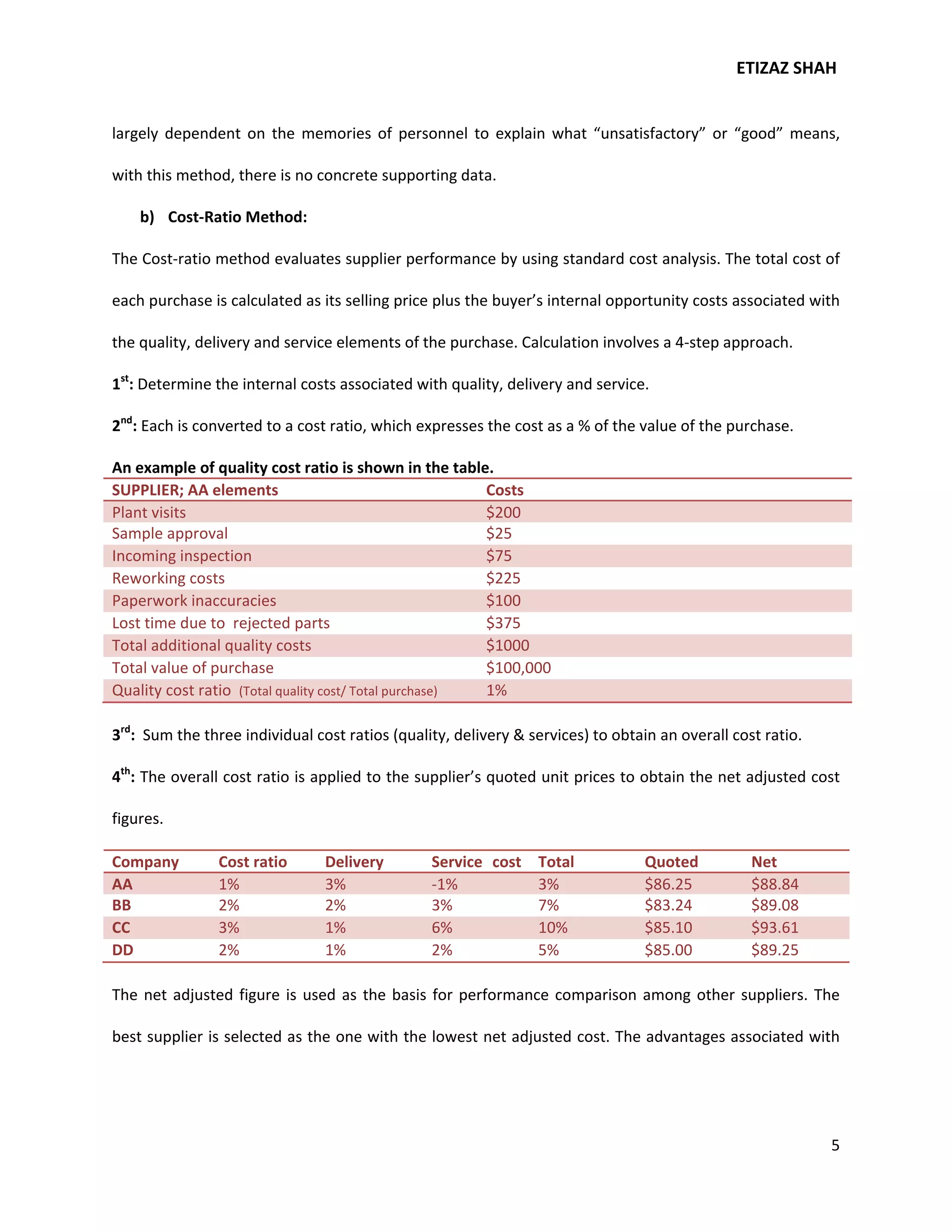
2nd: Each is converted to a cost ratio, which expresses the cost as a % of the value of the purchase.

An example of quality cost ratio is shown in the table.
SUPPLIER; AA elements                                   Costs
Plant visits                                            $200
Sample approval                                         $25
Incoming inspection                                     $75
Reworking costs                                         $225
Paperwork inaccuracies                                  $100
Lost time due to rejected parts                         $375
Total additional quality costs                          $1000
Total value of purchase                                 $100,000
Quality cost ratio (Total quality cost/ Total purchase) 1%

3rd: Sum the three individual cost ratios (quality, delivery & services) to obtain an overall cost ratio.

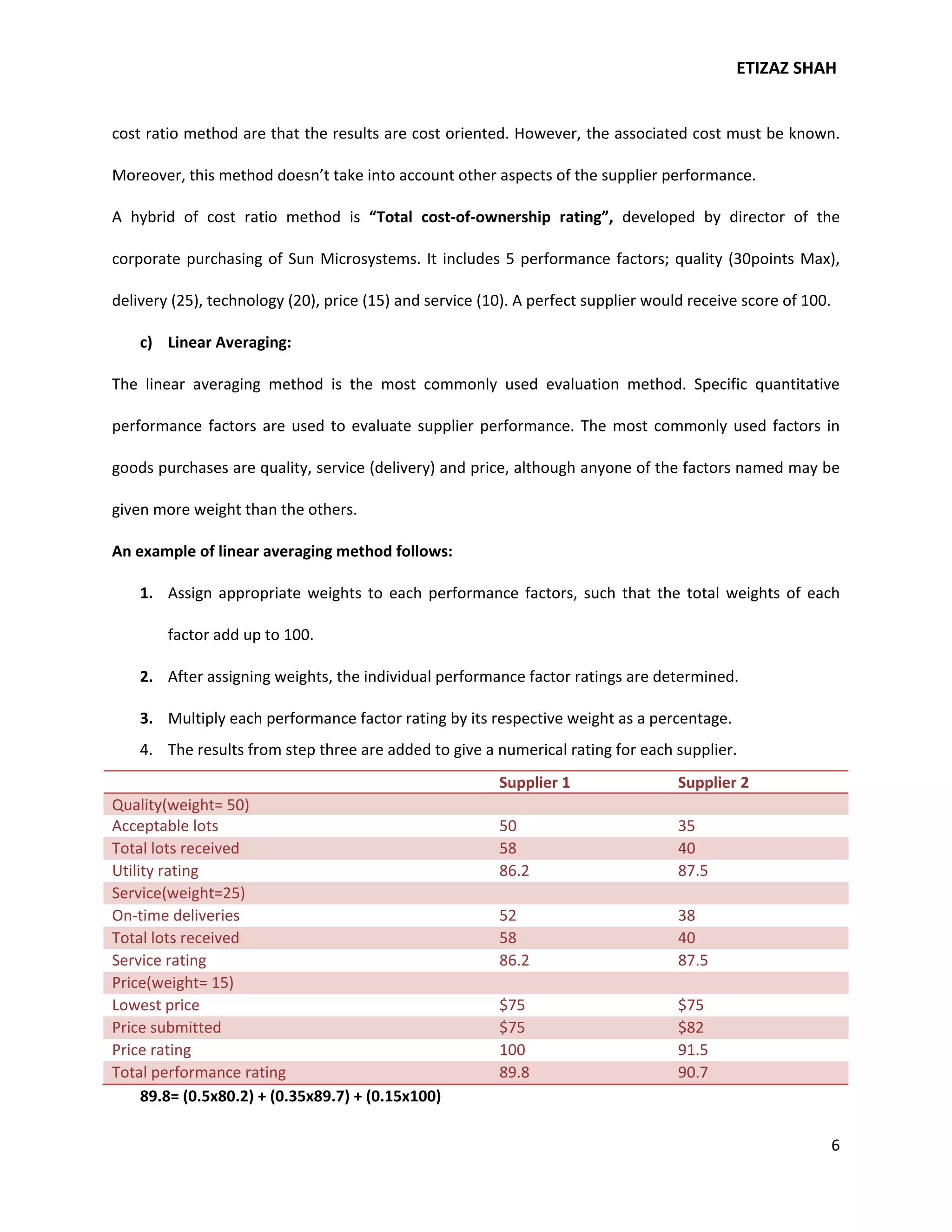
4th: The overall cost ratio is applied to the supplier’s quoted unit prices to obtain the net adjusted cost

figures.

Company         Cost ratio      Delivery        Service cost Total               Quoted          Net
AA              1%              3%              -1%          3%                  $86.25          $88.84
BB              2%              2%              3%           7%                  $83.24          $89.08
CC              3%              1%              6%           10%                 $85.10          $93.61
DD              2%              1%              2%           5%                  $85.00          $89.25

The net adjusted figure is used as the basis for performance comparison among other suppliers. The

best supplier is selected as the one with the lowest net adjusted cost. The advantages associated with


                                                                                                            5
ETIZAZ SHAH


cost ratio method are that the results are cost oriented. However, the associated cost must be known.

Moreover, this method doesn’t take into account other aspects of the supplier performance.

A hybrid of cost ratio method is “Total cost-of-ownership rating”, developed by director of the

corporate purchasing of Sun Microsystems. It includes 5 performance factors; quality (30points Max),

delivery (25), technology (20), price (15) and service (10). A perfect supplier would receive score of 100.

    c) Linear Averaging:

The linear averaging method is the most commonly used evaluation method. Specific quantitative

performance factors are used to evaluate supplier performance. The most commonly used factors in

goods purchases are quality, service (delivery) and price, although anyone of the factors named may be

given more weight than the others.

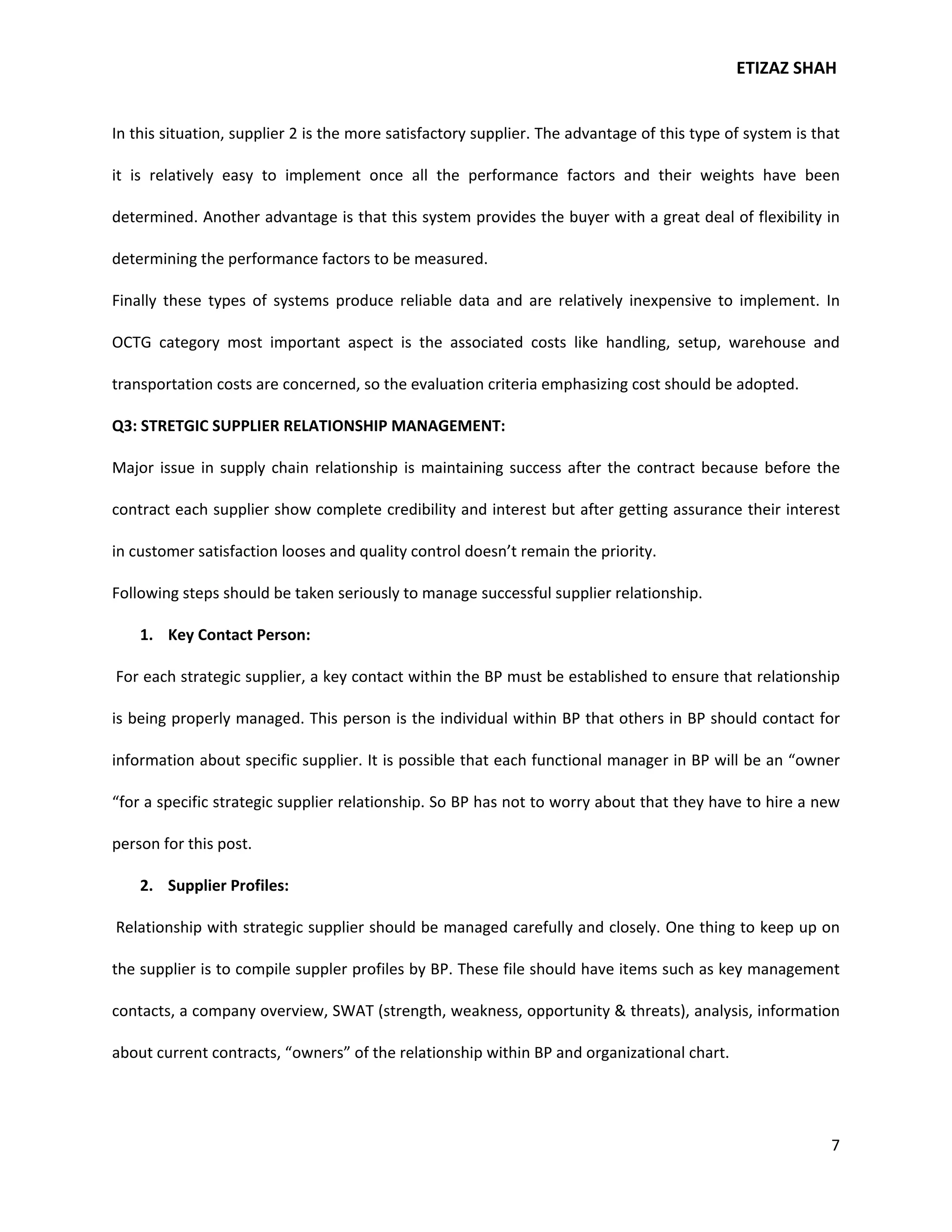
An example of linear averaging method follows:

    1. Assign appropriate weights to each performance factors, such that the total weights of each

        factor add up to 100.

    2. After assigning weights, the individual performance factor ratings are determined.

    3. Multiply each performance factor rating by its respective weight as a percentage.
    4. The results from step three are added to give a numerical rating for each supplier.
                                                         Supplier 1                 Supplier 2
Quality(weight= 50)
Acceptable lots                                          50                         35
Total lots received                                      58                         40
Utility rating                                           86.2                       87.5
Service(weight=25)
On-time deliveries                                       52                         38
Total lots received                                      58                         40
Service rating                                           86.2                       87.5
Price(weight= 15)
Lowest price                                             $75                        $75
Price submitted                                          $75                        $82
Price rating                                             100                        91.5
Total performance rating                                 89.8                       90.7
     89.8= (0.5x80.2) + (0.35x89.7) + (0.15x100)

                                                                                                              6
ETIZAZ SHAH


In this situation, supplier 2 is the more satisfactory supplier. The advantage of this type of system is that

it is relatively easy to implement once all the performance factors and their weights have been

determined. Another advantage is that this system provides the buyer with a great deal of flexibility in

determining the performance factors to be measured.

Finally these types of systems produce reliable data and are relatively inexpensive to implement. In

OCTG category most important aspect is the associated costs like handling, setup, warehouse and

transportation costs are concerned, so the evaluation criteria emphasizing cost should be adopted.

Q3: STRETGIC SUPPLIER RELATIONSHIP MANAGEMENT:

Major issue in supply chain relationship is maintaining success after the contract because before the

contract each supplier show complete credibility and interest but after getting assurance their interest

in customer satisfaction looses and quality control doesn’t remain the priority.

Following steps should be taken seriously to manage successful supplier relationship.

    1. Key Contact Person:

For each strategic supplier, a key contact within the BP must be established to ensure that relationship

is being properly managed. This person is the individual within BP that others in BP should contact for

information about specific supplier. It is possible that each functional manager in BP will be an “owner

“for a specific strategic supplier relationship. So BP has not to worry about that they have to hire a new

person for this post.

    2. Supplier Profiles:

Relationship with strategic supplier should be managed carefully and closely. One thing to keep up on

the supplier is to compile suppler profiles by BP. These file should have items such as key management

contacts, a company overview, SWAT (strength, weakness, opportunity & threats), analysis, information

about current contracts, “owners” of the relationship within BP and organizational chart.


                                                                                                           7
ETIZAZ SHAH


    3. Supplier Performance Review:

BP should have various review categories that are used in order to fully assess their strategic suppliers.

Quality is a very important review category. BP should require their suppliers to meet or exceed their

performance standards and proactively initiate quality process improvements. Customer service should

be proactive and flexible and delivery performance needs to be optimized. The most important attribute

should be high quality and on time delivery.

    4. Technology and Innovation:

These are also important in order to stay a head or at pace with competitors and help keep BP at the

top of this field.

    5. Cost Reduction and Continuous Process Improvement:

 These two aspects are necessary in order to keep costs down and create trust with strategic supplier.

    6. Employ Safety and Well Fare Program:

 Each strategic supplier should also have formal environment, health, operational and safety program.

In addition they should put forth the effort to reduce, reuse and recycle when possible.

DRIVE VALUE

When the contract is signed to continue to drive value BP should keep their suppliers evaluated. One

very useful process to evaluate the suppliers is “SRM SCORING SYSTEM”.

SRM Scoring System:

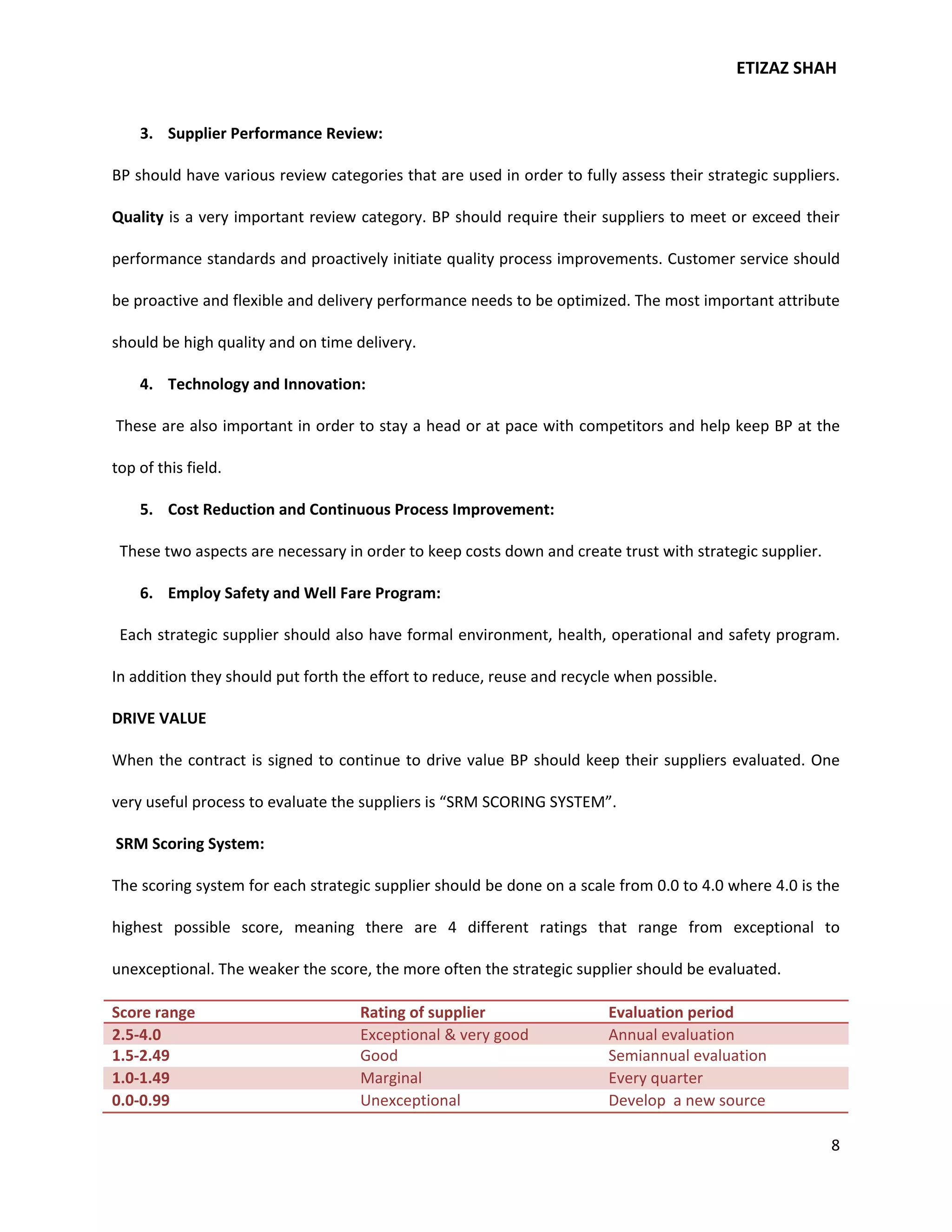
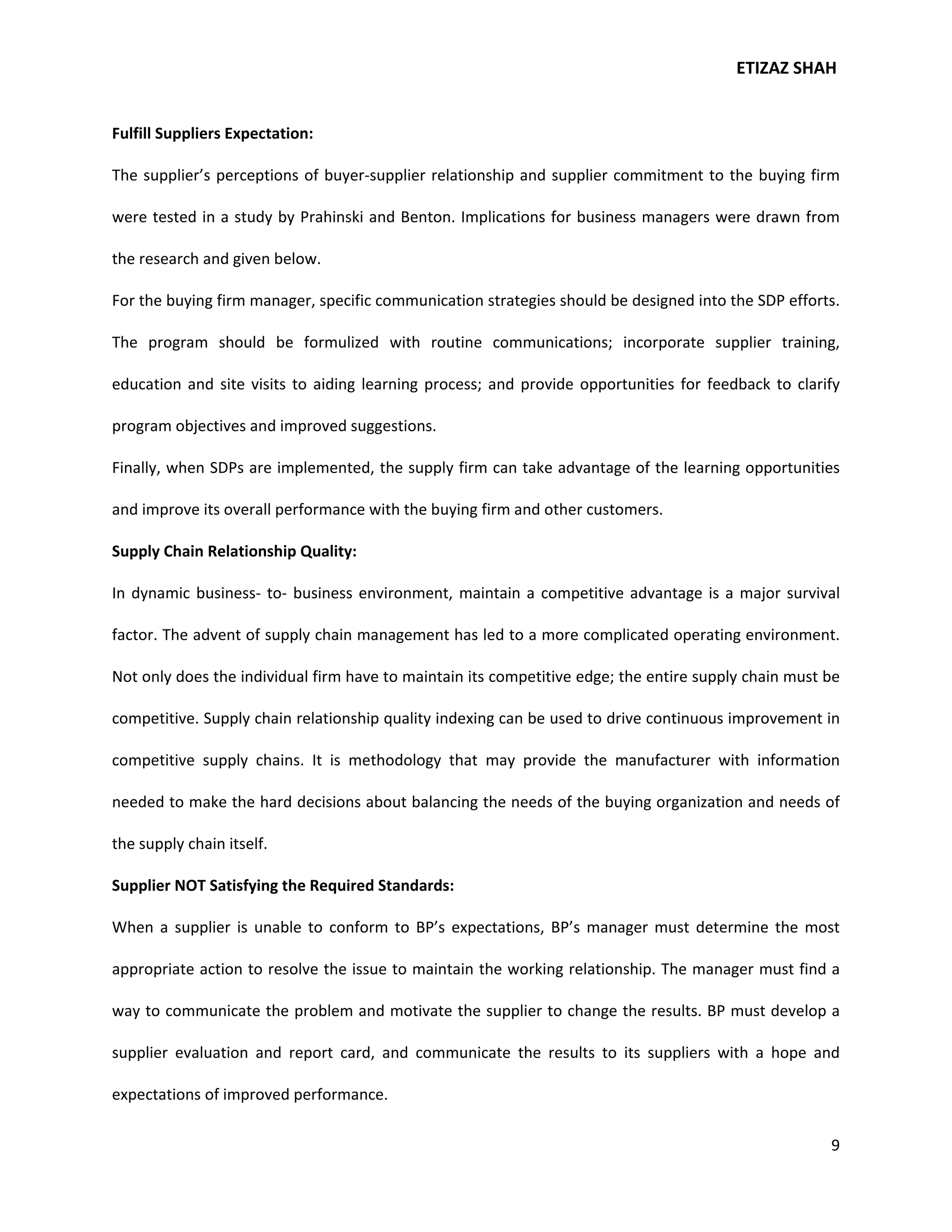
The scoring system for each strategic supplier should be done on a scale from 0.0 to 4.0 where 4.0 is the

highest possible score, meaning there are 4 different ratings that range from exceptional to

unexceptional. The weaker the score, the more often the strategic supplier should be evaluated.

Score range                         Rating of supplier                  Evaluation period
2.5-4.0                             Exceptional & very good             Annual evaluation
1.5-2.49                            Good                                Semiannual evaluation
1.0-1.49                            Marginal                            Every quarter
0.0-0.99                            Unexceptional                       Develop a new source

                                                                                                         8
ETIZAZ SHAH


Fulfill Suppliers Expectation:

The supplier’s perceptions of buyer-supplier relationship and supplier commitment to the buying firm

were tested in a study by Prahinski and Benton. Implications for business managers were drawn from

the research and given below.

For the buying firm manager, specific communication strategies should be designed into the SDP efforts.

The program should be formulized with routine communications; incorporate supplier training,

education and site visits to aiding learning process; and provide opportunities for feedback to clarify

program objectives and improved suggestions.

Finally, when SDPs are implemented, the supply firm can take advantage of the learning opportunities

and improve its overall performance with the buying firm and other customers.

Supply Chain Relationship Quality:

In dynamic business- to- business environment, maintain a competitive advantage is a major survival

factor. The advent of supply chain management has led to a more complicated operating environment.

Not only does the individual firm have to maintain its competitive edge; the entire supply chain must be

competitive. Supply chain relationship quality indexing can be used to drive continuous improvement in

competitive supply chains. It is methodology that may provide the manufacturer with information

needed to make the hard decisions about balancing the needs of the buying organization and needs of

the supply chain itself.

Supplier NOT Satisfying the Required Standards:

When a supplier is unable to conform to BP’s expectations, BP’s manager must determine the most

appropriate action to resolve the issue to maintain the working relationship. The manager must find a

way to communicate the problem and motivate the supplier to change the results. BP must develop a

supplier evaluation and report card, and communicate the results to its suppliers with a hope and

expectations of improved performance.

                                                                                                      9
ETIZAZ SHAH


Suggestions:

Considering the case study provided by BP, I will suggest adopting the same way as Delta Airline. They

have planned to buy an oil refinery to refine the crude oil for their airplanes that will save millions of

dollars. Some analysts claimed that this will divert their attention from the core business but Delta

claimed it to be a successful decision as the refinery would be handled by an expert association and

would produce products for commercial purpose as well. BP should do the same thing by buying or

developing its own OCTG facility. This facility will not only fulfill BP’s requirements while BP can be a

supplier of these products to other companies as well and BP will get a competitive advantage upon its

competitors by becoming nearly the first company owing its own OCTG facility. The major issue of

inventory associated costs, holding inventory back will also be resolved. Costs to facilitate the suppliers

and quality concerns will decrease.

If buying its own OCTG facility is not possible for BP then BP should introduce cross docking, means lean

and JIT operation in which the inventory comes and dispatched as the same time to the required area,

by doing this usage of the ware house becomes so low and all the costs associated with ware house will

go dramatically down.

REFERENCES

Benton, W. C. (2010). Purchasing and supply chain management. Boston: McGraw-Hill Irwin.

Chopra, S. &Meindl, P. (2013).Supply chain management: Strategy, planning, and operation. Boston:

Pearson.

Nelson, D., Moody, P. E., &Stegner, J. (2001).The purchasing machine: How the top ten companies use

best practices to manage their supply chains. New York: Free Press.


                                                                                                        10

bp case study

  • 1.
    ETIZAZ SHAH BP CaseStudy The intent of this case is to reduce the variation in the way Category Management takes place across the company. Considering the locations of suppliers these variations may occur because of different environment, work culture and mode of transportation. Q1: KEY COMPONENTS FOR DEVELOPING MARKET SECTOR STRATEGY FOR OCTG: Many organizations make competitive advantage upon other competitors just by selecting the suppliers those who join hands in the success of the organization so while developing strategy for this category we should think about some factors. 1. What are the requirements of the customer (BP) and expectations from the supplier? 2. The potential of the supplier; is the supplier is capable to fulfill the requirement of such kind a big organization? 3. How procurement would be possible on time and cost effective? 4. If suppliers are from different areas then strategy should be in a way that it should consider differences among the suppliers and strategy should facilitate the suppliers also for good cooperative environment where the quality and customer satisfaction should become the first priority of the supplier. 5. Now a day, there is always a long discussion about the number of the suppliers, weather a company should have single sources or multiple sources, but risks and benefits are connected with both of categories. A little description of both categories is entitled below: Single versus Multiple Sources: Much debate has taken place concerning the number of suppliers a firm should use. One side of the debate is the multi-source side. This involves the use of two or more suppliers .The other side is the single source policy, in which only one supplier is used to supply a particular product. 1
  • 2.
    ETIZAZ SHAH A. Advantagesof Single Sourcing: a) With certainty of large volumes the supplier can enjoy lower costs/unit and increased corporation and communication to produce win-win relationship between buyer and seller. b) With contract guarantee, the supplier is more willing to invest in new equipment or changing its business/ operating methods to accommodate buyer. c) Accelerating learning curve. d) Engineers and production people from both firms can work together to improve product quality and productivity. e) Less people required to communicate with suppliers. B. Advantages of Multiple Sourcing: a) Competition among suppliers benefits the buyer. b) Supply of the product is ensured. c) Lower cost in competition (the sense of competition is very root of American thought as competition is the basis for capitalism and is the backbone of Western economic theory). d) Undisrupted supply of the parts. e) Improved market intelligence and improved supplier appraisal effectiveness. Many people believe if single sourcing works in Japan so it can work here. This perception is true about many automobile manufacturers in Japan but for high-tech items that require large R&D expenditures or complex parts that require major equipment investment. However, it is not the case with the simpler parts. 6. For me I will search for supplier, working or had worked previously with any oil and gas company (cost will go down when a supplier is working on modules with other companies as well and is not producing only for BP, this supplier will be flexible in dealing and has experience and may be can take back unused products or hold the inventory back). 2
  • 3.
    ETIZAZ SHAH Q2: DEVELOPINGA STRATEGIC SOURCING PLAN: RFP, RFI and Approach the Market place etc are considered as sourcing strategies. The most important factor is the understanding of the supplier about the customer requirements so that supplier can provide the comprehensive and exact details about his product and expertise. Major requirements of the strategic sourcing plan are as follows: 1. A complete understanding of corporate strategies and marketing plans in order to provide well – integrated purchasing systems. 2. An extensive evaluation / study of current suppliers, how performance is measured and the expectations of the suppliers relative to the industry. 3. Study of the degree of global purchasing opportunities. 4. Identification of total costs associated with current purchasing department / function, budgets, staffing and so forth. Management must device a data collection system in order to provide data to the four issues given above. Criteria for Supplier Evaluation: There are two main categories of supplier evaluation: 1. The Process Based Evaluation It is as assessment of the supplier’s production or service process. Typically, the buyer will conduct an audit at the supplier’s site to assess the level of capability in the supplier’s site to assess the level of capability in the supplier’s system. Process flow charts can be developed to identify the non- value- added activities that should be eliminated to improve the business efficiency. In addition large buying organizations increasingly are demanding that their suppliers become certified through third party organization such as ISO 9001-2008 certification or Malcolm Baldrige National Quality Awards. 3
  • 4.
    ETIZAZ SHAH 2. The Performance Based Evaluation: It is an assessment of the supplier’s actual performance on a variety of criteria, such as delivery reliability, cost and quality defect rate. It is a more tactical assessment and measures the day-to-day performance of the supplying firm; hence, it is after the fact evaluation. The performance based evaluation, perhaps since objective data are readily available and easier to measure. Following are three performance based supplier’s evaluation systems. a) Categorical Method b) Cost-Ratio Method c) Linear Averaging Method In general, the guiding factors in determining which system is best are ease of implementation and overall reliability of the system. a) Categorical Method: The categorical method involves categorizing each supplier’s performance in specific areas as defined by a list of relevant performance variables. The buyer develops a list of performance factors for each supplier and keeps tracks of each area by assigning a “grade” in simple terms, such as “good”, “neutral” and “unsatisfactory”. At frequent meetings between the buying organization and supplier, the buyer will then inform the supplier of its performance. Supplier Cost Production quality Speed Total A Good(+) Unsatisfactory(-) Neutral(0) 0 B Neutral(0) Good(+) Good(+) ++ C Neutral(0) Unsatisfactory(-) Neutral(0) - The categorical method is a simple and informal system in the sense that detailed performance achievements or short comings are not measured. The advantages associated with implementing this sort of an evaluation program are that it can be implemented almost immediately and is least expensive of the three evaluation methods discussed here. The method’s major disadvantage is its dependence on the judgment of its users. The system is 4
  • 5.
    ETIZAZ SHAH largely dependenton the memories of personnel to explain what “unsatisfactory” or “good” means, with this method, there is no concrete supporting data. b) Cost-Ratio Method: The Cost-ratio method evaluates supplier performance by using standard cost analysis. The total cost of each purchase is calculated as its selling price plus the buyer’s internal opportunity costs associated with the quality, delivery and service elements of the purchase. Calculation involves a 4-step approach. 1st: Determine the internal costs associated with quality, delivery and service. 2nd: Each is converted to a cost ratio, which expresses the cost as a % of the value of the purchase. An example of quality cost ratio is shown in the table. SUPPLIER; AA elements Costs Plant visits $200 Sample approval $25 Incoming inspection $75 Reworking costs $225 Paperwork inaccuracies $100 Lost time due to rejected parts $375 Total additional quality costs $1000 Total value of purchase $100,000 Quality cost ratio (Total quality cost/ Total purchase) 1% 3rd: Sum the three individual cost ratios (quality, delivery & services) to obtain an overall cost ratio. 4th: The overall cost ratio is applied to the supplier’s quoted unit prices to obtain the net adjusted cost figures. Company Cost ratio Delivery Service cost Total Quoted Net AA 1% 3% -1% 3% $86.25 $88.84 BB 2% 2% 3% 7% $83.24 $89.08 CC 3% 1% 6% 10% $85.10 $93.61 DD 2% 1% 2% 5% $85.00 $89.25 The net adjusted figure is used as the basis for performance comparison among other suppliers. The best supplier is selected as the one with the lowest net adjusted cost. The advantages associated with 5
  • 6.
    ETIZAZ SHAH cost ratiomethod are that the results are cost oriented. However, the associated cost must be known. Moreover, this method doesn’t take into account other aspects of the supplier performance. A hybrid of cost ratio method is “Total cost-of-ownership rating”, developed by director of the corporate purchasing of Sun Microsystems. It includes 5 performance factors; quality (30points Max), delivery (25), technology (20), price (15) and service (10). A perfect supplier would receive score of 100. c) Linear Averaging: The linear averaging method is the most commonly used evaluation method. Specific quantitative performance factors are used to evaluate supplier performance. The most commonly used factors in goods purchases are quality, service (delivery) and price, although anyone of the factors named may be given more weight than the others. An example of linear averaging method follows: 1. Assign appropriate weights to each performance factors, such that the total weights of each factor add up to 100. 2. After assigning weights, the individual performance factor ratings are determined. 3. Multiply each performance factor rating by its respective weight as a percentage. 4. The results from step three are added to give a numerical rating for each supplier. Supplier 1 Supplier 2 Quality(weight= 50) Acceptable lots 50 35 Total lots received 58 40 Utility rating 86.2 87.5 Service(weight=25) On-time deliveries 52 38 Total lots received 58 40 Service rating 86.2 87.5 Price(weight= 15) Lowest price $75 $75 Price submitted $75 $82 Price rating 100 91.5 Total performance rating 89.8 90.7 89.8= (0.5x80.2) + (0.35x89.7) + (0.15x100) 6
  • 7.
    ETIZAZ SHAH In thissituation, supplier 2 is the more satisfactory supplier. The advantage of this type of system is that it is relatively easy to implement once all the performance factors and their weights have been determined. Another advantage is that this system provides the buyer with a great deal of flexibility in determining the performance factors to be measured. Finally these types of systems produce reliable data and are relatively inexpensive to implement. In OCTG category most important aspect is the associated costs like handling, setup, warehouse and transportation costs are concerned, so the evaluation criteria emphasizing cost should be adopted. Q3: STRETGIC SUPPLIER RELATIONSHIP MANAGEMENT: Major issue in supply chain relationship is maintaining success after the contract because before the contract each supplier show complete credibility and interest but after getting assurance their interest in customer satisfaction looses and quality control doesn’t remain the priority. Following steps should be taken seriously to manage successful supplier relationship. 1. Key Contact Person: For each strategic supplier, a key contact within the BP must be established to ensure that relationship is being properly managed. This person is the individual within BP that others in BP should contact for information about specific supplier. It is possible that each functional manager in BP will be an “owner “for a specific strategic supplier relationship. So BP has not to worry about that they have to hire a new person for this post. 2. Supplier Profiles: Relationship with strategic supplier should be managed carefully and closely. One thing to keep up on the supplier is to compile suppler profiles by BP. These file should have items such as key management contacts, a company overview, SWAT (strength, weakness, opportunity & threats), analysis, information about current contracts, “owners” of the relationship within BP and organizational chart. 7
  • 8.
    ETIZAZ SHAH 3. Supplier Performance Review: BP should have various review categories that are used in order to fully assess their strategic suppliers. Quality is a very important review category. BP should require their suppliers to meet or exceed their performance standards and proactively initiate quality process improvements. Customer service should be proactive and flexible and delivery performance needs to be optimized. The most important attribute should be high quality and on time delivery. 4. Technology and Innovation: These are also important in order to stay a head or at pace with competitors and help keep BP at the top of this field. 5. Cost Reduction and Continuous Process Improvement: These two aspects are necessary in order to keep costs down and create trust with strategic supplier. 6. Employ Safety and Well Fare Program: Each strategic supplier should also have formal environment, health, operational and safety program. In addition they should put forth the effort to reduce, reuse and recycle when possible. DRIVE VALUE When the contract is signed to continue to drive value BP should keep their suppliers evaluated. One very useful process to evaluate the suppliers is “SRM SCORING SYSTEM”. SRM Scoring System: The scoring system for each strategic supplier should be done on a scale from 0.0 to 4.0 where 4.0 is the highest possible score, meaning there are 4 different ratings that range from exceptional to unexceptional. The weaker the score, the more often the strategic supplier should be evaluated. Score range Rating of supplier Evaluation period 2.5-4.0 Exceptional & very good Annual evaluation 1.5-2.49 Good Semiannual evaluation 1.0-1.49 Marginal Every quarter 0.0-0.99 Unexceptional Develop a new source 8
  • 9.
    ETIZAZ SHAH Fulfill SuppliersExpectation: The supplier’s perceptions of buyer-supplier relationship and supplier commitment to the buying firm were tested in a study by Prahinski and Benton. Implications for business managers were drawn from the research and given below. For the buying firm manager, specific communication strategies should be designed into the SDP efforts. The program should be formulized with routine communications; incorporate supplier training, education and site visits to aiding learning process; and provide opportunities for feedback to clarify program objectives and improved suggestions. Finally, when SDPs are implemented, the supply firm can take advantage of the learning opportunities and improve its overall performance with the buying firm and other customers. Supply Chain Relationship Quality: In dynamic business- to- business environment, maintain a competitive advantage is a major survival factor. The advent of supply chain management has led to a more complicated operating environment. Not only does the individual firm have to maintain its competitive edge; the entire supply chain must be competitive. Supply chain relationship quality indexing can be used to drive continuous improvement in competitive supply chains. It is methodology that may provide the manufacturer with information needed to make the hard decisions about balancing the needs of the buying organization and needs of the supply chain itself. Supplier NOT Satisfying the Required Standards: When a supplier is unable to conform to BP’s expectations, BP’s manager must determine the most appropriate action to resolve the issue to maintain the working relationship. The manager must find a way to communicate the problem and motivate the supplier to change the results. BP must develop a supplier evaluation and report card, and communicate the results to its suppliers with a hope and expectations of improved performance. 9
  • 10.
    ETIZAZ SHAH Suggestions: Considering thecase study provided by BP, I will suggest adopting the same way as Delta Airline. They have planned to buy an oil refinery to refine the crude oil for their airplanes that will save millions of dollars. Some analysts claimed that this will divert their attention from the core business but Delta claimed it to be a successful decision as the refinery would be handled by an expert association and would produce products for commercial purpose as well. BP should do the same thing by buying or developing its own OCTG facility. This facility will not only fulfill BP’s requirements while BP can be a supplier of these products to other companies as well and BP will get a competitive advantage upon its competitors by becoming nearly the first company owing its own OCTG facility. The major issue of inventory associated costs, holding inventory back will also be resolved. Costs to facilitate the suppliers and quality concerns will decrease. If buying its own OCTG facility is not possible for BP then BP should introduce cross docking, means lean and JIT operation in which the inventory comes and dispatched as the same time to the required area, by doing this usage of the ware house becomes so low and all the costs associated with ware house will go dramatically down. REFERENCES Benton, W. C. (2010). Purchasing and supply chain management. Boston: McGraw-Hill Irwin. Chopra, S. &Meindl, P. (2013).Supply chain management: Strategy, planning, and operation. Boston: Pearson. Nelson, D., Moody, P. E., &Stegner, J. (2001).The purchasing machine: How the top ten companies use best practices to manage their supply chains. New York: Free Press. 10