Psychologists
Psychologists
Claire Gui
EPA
Claire Gui
EPA
What is a psychologist?
• evaluates and studies behavior and mental processes.
• must complete a master’s degree or a doctorate degree
Different types of psychologists
11. Educational Psychologists
12. Engineering Psychologists
13. Environmental Psychologists
14. Forensic Psychologists
15. Health Psychologists
16. Industrial-Organizational Psychologists
17. Learning Psychologists
18. Military Psychologists
19. Personality Psychologists
20. School Psychologists
1. Aviation Psychologists
2. Biopsychologists
3. Clinical Psychologists
4. Cognitive Psychologists
5. Community Psychologists
6. Comparative Psychologists
7. Consumer Psychologists
8. Counseling Psychologists
9. Cross-Cultural Psychologists
10. Developmental Psychologists
Practicing Psychologist
Let's focus on ......Let's focus on ......
Who are they?
• professional training and clinical skills
• help people solve life issues and mental health problems
• using techniques to different people
• unique values, characteristics, goals and circumstances
• doctoral degree
• spending an average of seven years in education and
training
• about 105,000 in the US
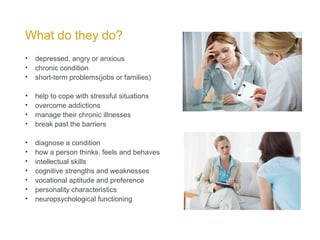
What do they do?
• depressed, angry or anxious
• chronic condition
• short-term problems(jobs or families)
• help to cope with stressful situations
• overcome addictions
• manage their chronic illnesses
• break past the barriers
• diagnose a condition
• how a person thinks, feels and behaves
• intellectual skills
• cognitive strengths and weaknesses
• vocational aptitude and preference
• personality characteristics
• neuropsychological functioning
How they help?
• Therapy
• most commonly use
• cognitive
• behavioral
• cognitive-behavioral
• interpersonal
• humanistic
• psychodynamic
• a combination of a few therapy styles
• for an individual, couples, family or other
group.
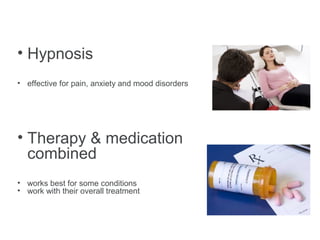
• Hypnosis
• effective for pain, anxiety and mood disorders
• Therapy & medication
combined
• works best for some conditions
• work with their overall treatment
How they are trained?
• doctoral degree (4-6 years)
• Coursework
• supervised internship(1 year)
• supervised practice (1 year)
• a national examination
• addition examination specific to the state
• earning several hours of continuing education credits annually
Where they work?
• with a group
• health care providers.
• schools, colleges and universities
• hospitals
• prisons
• veterans‘ medical centers
• community health and mental health clinics
• businesses and industry
• nursing homes,rehabilitation and long-term care centers.
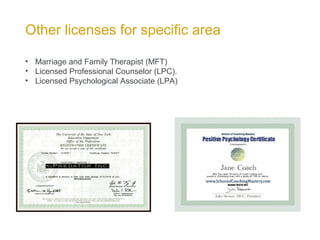
Other licenses for specific area
• Marriage and Family Therapist (MFT)
• Licensed Professional Counselor (LPC).
• Licensed Psychological Associate (LPA)
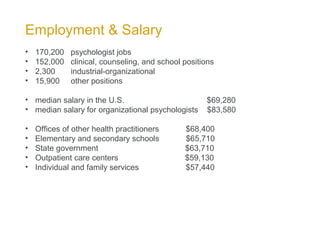
Employment & Salary
• 170,200 psychologist jobs
• 152,000 clinical, counseling, and school positions
• 2,300 industrial-organizational
• 15,900 other positions
• median salary in the U.S. $69,280
• median salary for organizational psychologists $83,580
• Offices of other health practitioners $68,400
• Elementary and secondary schools $65,710
• State government $63,710
• Outpatient care centers $59,130
• Individual and family services $57,440
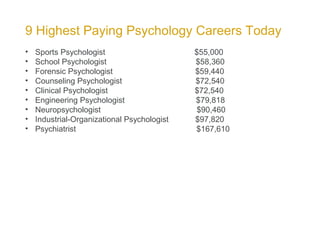
9 Highest Paying Psychology Careers Today
• Sports Psychologist $55,000
• School Psychologist $58,360
• Forensic Psychologist $59,440
• Counseling Psychologist $72,540
• Clinical Psychologist $72,540
• Engineering Psychologist $79,818
• Neuropsychologist $90,460
• Industrial-Organizational Psychologist $97,820
• Psychiatrist $167,610
THANKS

psychology/ists

  • 1.
  • 2.
    What is apsychologist? • evaluates and studies behavior and mental processes. • must complete a master’s degree or a doctorate degree
  • 3.
    Different types ofpsychologists 11. Educational Psychologists 12. Engineering Psychologists 13. Environmental Psychologists 14. Forensic Psychologists 15. Health Psychologists 16. Industrial-Organizational Psychologists 17. Learning Psychologists 18. Military Psychologists 19. Personality Psychologists 20. School Psychologists 1. Aviation Psychologists 2. Biopsychologists 3. Clinical Psychologists 4. Cognitive Psychologists 5. Community Psychologists 6. Comparative Psychologists 7. Consumer Psychologists 8. Counseling Psychologists 9. Cross-Cultural Psychologists 10. Developmental Psychologists
  • 4.
    Practicing Psychologist Let's focuson ......Let's focus on ......
  • 5.
    Who are they? •professional training and clinical skills • help people solve life issues and mental health problems • using techniques to different people • unique values, characteristics, goals and circumstances • doctoral degree • spending an average of seven years in education and training • about 105,000 in the US
  • 6.
    What do theydo? • depressed, angry or anxious • chronic condition • short-term problems(jobs or families) • help to cope with stressful situations • overcome addictions • manage their chronic illnesses • break past the barriers • diagnose a condition • how a person thinks, feels and behaves • intellectual skills • cognitive strengths and weaknesses • vocational aptitude and preference • personality characteristics • neuropsychological functioning
  • 7.
    How they help? •Therapy • most commonly use • cognitive • behavioral • cognitive-behavioral • interpersonal • humanistic • psychodynamic • a combination of a few therapy styles • for an individual, couples, family or other group.
  • 8.
    • Hypnosis • effectivefor pain, anxiety and mood disorders • Therapy & medication combined • works best for some conditions • work with their overall treatment
  • 9.
    How they aretrained? • doctoral degree (4-6 years) • Coursework • supervised internship(1 year) • supervised practice (1 year) • a national examination • addition examination specific to the state • earning several hours of continuing education credits annually
  • 10.
    Where they work? •with a group • health care providers. • schools, colleges and universities • hospitals • prisons • veterans‘ medical centers • community health and mental health clinics • businesses and industry • nursing homes,rehabilitation and long-term care centers.
  • 11.
    Other licenses forspecific area • Marriage and Family Therapist (MFT) • Licensed Professional Counselor (LPC). • Licensed Psychological Associate (LPA)
  • 12.
    Employment & Salary •170,200 psychologist jobs • 152,000 clinical, counseling, and school positions • 2,300 industrial-organizational • 15,900 other positions • median salary in the U.S. $69,280 • median salary for organizational psychologists $83,580 • Offices of other health practitioners $68,400 • Elementary and secondary schools $65,710 • State government $63,710 • Outpatient care centers $59,130 • Individual and family services $57,440
  • 13.
    9 Highest PayingPsychology Careers Today • Sports Psychologist $55,000 • School Psychologist $58,360 • Forensic Psychologist $59,440 • Counseling Psychologist $72,540 • Clinical Psychologist $72,540 • Engineering Psychologist $79,818 • Neuropsychologist $90,460 • Industrial-Organizational Psychologist $97,820 • Psychiatrist $167,610
  • 14.