An Introduction to
Psychology
MODULE – 1
Contents
• An Introduction to Psychology: Meaning,
• Branches of Psychology;
• Myths and Misconceptions of Psychology;
• Role of a Psychologist.
The word Psychology has its origin from two
Greek words ‘Psyche’ and ‘Logos’, ‘psyche’
means ‘soul’ and ‘logos’ means ‘study’. Thus
literally, Psychology means ‘the study of soul’ or
‘science of soul’.
History of Psychology
Ancient roots in philosophy (Plato, Aristotle).
Emerged as a scientific discipline in the late 19th
century.
Wilhelm Wundt established the first psychology lab in
1879.
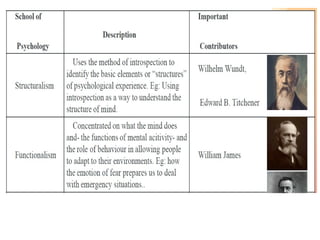
Influences from structuralism, functionalism, and
psychoanalysis.
What is
Psychology?
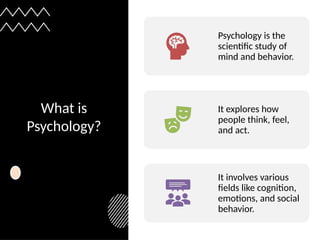
Psychology is the
scientific study of
mind and behavior.
It explores how
people think, feel,
and act.
It involves various
fields like cognition,
emotions, and social
behavior.
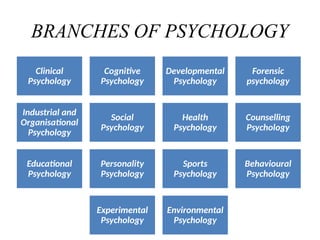
BRANCHES OF PSYCHOLOGY
Clinical
Psychology
Cognitive
Psychology
Developmental
Psychology
Forensic
psychology
Industrial and
Organisational
Psychology
Social
Psychology
Health
Psychology
Counselling
Psychology
Educational
Psychology
Personality
Psychology
Sports
Psychology
Behavioural
Psychology
Experimental
Psychology
Environmental
Psychology
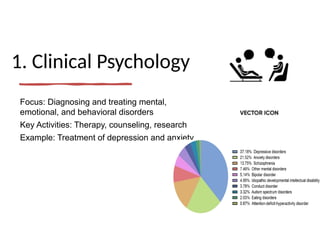
1. Clinical Psychology
Focus: Diagnosing and treating mental,
emotional, and behavioral disorders
Key Activities: Therapy, counseling, research
Example: Treatment of depression and anxiety
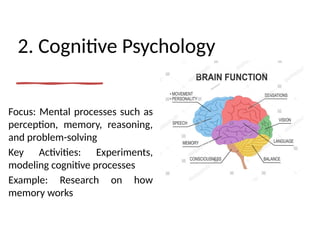
2. Cognitive Psychology
Focus: Mental processes such as
perception, memory, reasoning,
and problem-solving
Key Activities: Experiments,
modeling cognitive processes
Example: Research on how
memory works
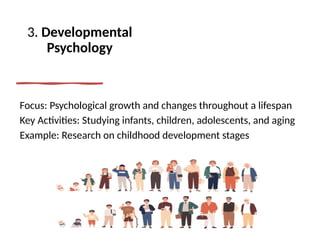
3. Developmental
Psychology
Focus: Psychological growth and changes throughout a lifespan
Key Activities: Studying infants, children, adolescents, and aging
Example: Research on childhood development stages
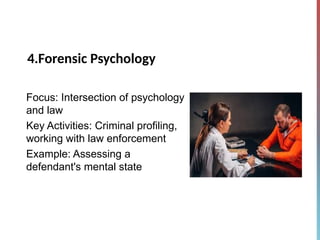
4.Forensic Psychology
Focus: Intersection of psychology
and law
Key Activities: Criminal profiling,
working with law enforcement
Example: Assessing a
defendant's mental state
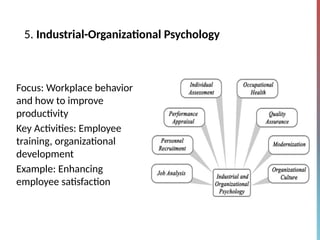
5. Industrial-Organizational Psychology
Focus: Workplace behavior
and how to improve
productivity
Key Activities: Employee
training, organizational
development
Example: Enhancing
employee satisfaction
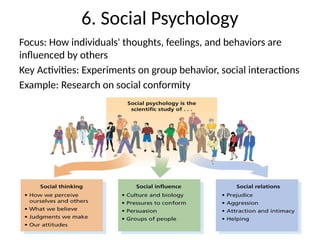
6. Social Psychology
Focus: How individuals' thoughts, feelings, and behaviors are
influenced by others
Key Activities: Experiments on group behavior, social interactions
Example: Research on social conformity
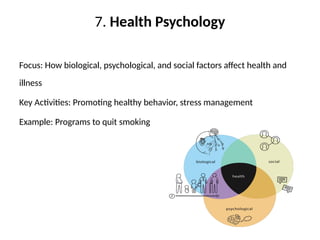
7. Health Psychology
Focus: How biological, psychological, and social factors affect health and
illness
Key Activities: Promoting healthy behavior, stress management
Example: Programs to quit smoking
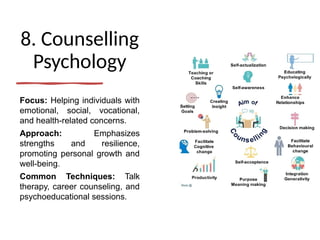
8. Counselling
Psychology
Focus: Helping individuals with
emotional, social, vocational,
and health-related concerns.
Approach: Emphasizes
strengths and resilience,
promoting personal growth and
well-being.
Common Techniques: Talk
therapy, career counseling, and
psychoeducational sessions.
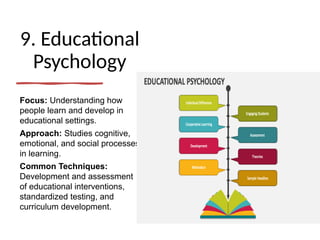
9. Educational
Psychology
Focus: Understanding how
people learn and develop in
educational settings.
Approach: Studies cognitive,
emotional, and social processes
in learning.
Common Techniques:
Development and assessment
of educational interventions,
standardized testing, and
curriculum development.
10. Personality Psychology
Focus: Understanding individual differences in
behavior, thought, and emotion.
Approach: Examines personality traits and how
they influence behavior.
Common Techniques: Personality assessments,
research on personality development and
disorders.
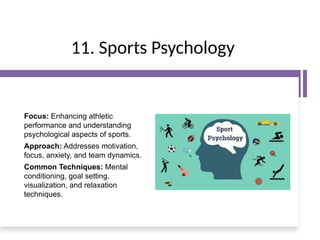
11. Sports Psychology
Focus: Enhancing athletic
performance and understanding
psychological aspects of sports.
Approach: Addresses motivation,
focus, anxiety, and team dynamics.
Common Techniques: Mental
conditioning, goal setting,
visualization, and relaxation
techniques.
12. Behavioural Psychology
Focus: Studying observable behaviors and how
they are learned and reinforced.
Approach: Analyzes how behavior is influenced
by the environment.
Common Techniques: Conditioning, behavior
modification, and behavior analysis.
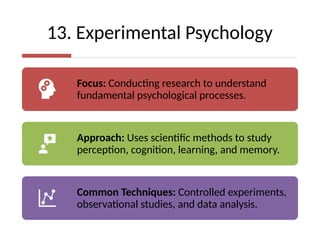
13. Experimental Psychology
Focus: Conducting research to understand
fundamental psychological processes.
Approach: Uses scientific methods to study
perception, cognition, learning, and memory.
Common Techniques: Controlled experiments,
observational studies, and data analysis.
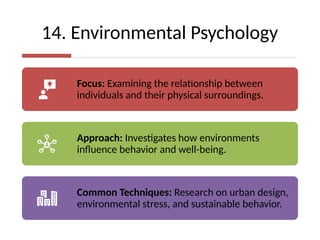
14. Environmental Psychology
Focus: Examining the relationship between
individuals and their physical surroundings.
Approach: Investigates how environments
influence behavior and well-being.
Common Techniques: Research on urban design,
environmental stress, and sustainable behavior.
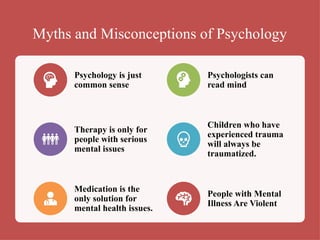
Myths and Misconceptions of Psychology
Psychology is just
common sense
Psychologists can
read mind
Therapy is only for
people with serious
mental issues
Children who have
experienced trauma
will always be
traumatized.
Medication is the
only solution for
mental health issues.
People with Mental
Illness Are Violent
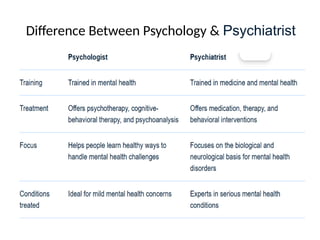
Difference Between Psychology & Psychiatrist
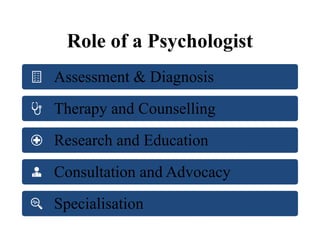
Role of a Psychologist
Assessment & Diagnosis
Therapy and Counselling
Research and Education
Consultation and Advocacy
Specialisation

Module 1 - Introduction to Psychology.pptx

  • 1.
  • 2.
    Contents • An Introductionto Psychology: Meaning, • Branches of Psychology; • Myths and Misconceptions of Psychology; • Role of a Psychologist.
  • 3.
    The word Psychologyhas its origin from two Greek words ‘Psyche’ and ‘Logos’, ‘psyche’ means ‘soul’ and ‘logos’ means ‘study’. Thus literally, Psychology means ‘the study of soul’ or ‘science of soul’.
  • 4.
    History of Psychology Ancientroots in philosophy (Plato, Aristotle). Emerged as a scientific discipline in the late 19th century. Wilhelm Wundt established the first psychology lab in 1879. Influences from structuralism, functionalism, and psychoanalysis.
  • 8.
    What is Psychology? Psychology isthe scientific study of mind and behavior. It explores how people think, feel, and act. It involves various fields like cognition, emotions, and social behavior.
  • 9.
    BRANCHES OF PSYCHOLOGY Clinical Psychology Cognitive Psychology Developmental Psychology Forensic psychology Industrialand Organisational Psychology Social Psychology Health Psychology Counselling Psychology Educational Psychology Personality Psychology Sports Psychology Behavioural Psychology Experimental Psychology Environmental Psychology
  • 10.
    1. Clinical Psychology Focus:Diagnosing and treating mental, emotional, and behavioral disorders Key Activities: Therapy, counseling, research Example: Treatment of depression and anxiety
  • 11.
    2. Cognitive Psychology Focus:Mental processes such as perception, memory, reasoning, and problem-solving Key Activities: Experiments, modeling cognitive processes Example: Research on how memory works
  • 12.
    3. Developmental Psychology Focus: Psychologicalgrowth and changes throughout a lifespan Key Activities: Studying infants, children, adolescents, and aging Example: Research on childhood development stages
  • 13.
    4.Forensic Psychology Focus: Intersectionof psychology and law Key Activities: Criminal profiling, working with law enforcement Example: Assessing a defendant's mental state
  • 14.
    5. Industrial-Organizational Psychology Focus:Workplace behavior and how to improve productivity Key Activities: Employee training, organizational development Example: Enhancing employee satisfaction
  • 15.
    6. Social Psychology Focus:How individuals' thoughts, feelings, and behaviors are influenced by others Key Activities: Experiments on group behavior, social interactions Example: Research on social conformity
  • 16.
    7. Health Psychology Focus:How biological, psychological, and social factors affect health and illness Key Activities: Promoting healthy behavior, stress management Example: Programs to quit smoking
  • 17.
    8. Counselling Psychology Focus: Helpingindividuals with emotional, social, vocational, and health-related concerns. Approach: Emphasizes strengths and resilience, promoting personal growth and well-being. Common Techniques: Talk therapy, career counseling, and psychoeducational sessions.
  • 18.
    9. Educational Psychology Focus: Understandinghow people learn and develop in educational settings. Approach: Studies cognitive, emotional, and social processes in learning. Common Techniques: Development and assessment of educational interventions, standardized testing, and curriculum development.
  • 19.
    10. Personality Psychology Focus:Understanding individual differences in behavior, thought, and emotion. Approach: Examines personality traits and how they influence behavior. Common Techniques: Personality assessments, research on personality development and disorders.
  • 20.
    11. Sports Psychology Focus:Enhancing athletic performance and understanding psychological aspects of sports. Approach: Addresses motivation, focus, anxiety, and team dynamics. Common Techniques: Mental conditioning, goal setting, visualization, and relaxation techniques.
  • 21.
    12. Behavioural Psychology Focus:Studying observable behaviors and how they are learned and reinforced. Approach: Analyzes how behavior is influenced by the environment. Common Techniques: Conditioning, behavior modification, and behavior analysis.
  • 22.
    13. Experimental Psychology Focus:Conducting research to understand fundamental psychological processes. Approach: Uses scientific methods to study perception, cognition, learning, and memory. Common Techniques: Controlled experiments, observational studies, and data analysis.
  • 23.
    14. Environmental Psychology Focus:Examining the relationship between individuals and their physical surroundings. Approach: Investigates how environments influence behavior and well-being. Common Techniques: Research on urban design, environmental stress, and sustainable behavior.
  • 24.
    Myths and Misconceptionsof Psychology Psychology is just common sense Psychologists can read mind Therapy is only for people with serious mental issues Children who have experienced trauma will always be traumatized. Medication is the only solution for mental health issues. People with Mental Illness Are Violent
  • 25.
  • 26.
    Role of aPsychologist Assessment & Diagnosis Therapy and Counselling Research and Education Consultation and Advocacy Specialisation