
STRESS-BASIC CONCEPTS
Dr.Soumitra Das
Jr/Psychiatry
Chairperson: Prof.Dr.Varghese.P.Punnoose,
HOD/Psychiatry
WHAT IS STRESS?
 Stress is our mind and body’s response to a
real or imagined threat, event or change.
 Psychological state associated with physiological
and hormonal changes caused by conflict,trauma,
or other disruptive influences (stressors).
STRESSORS
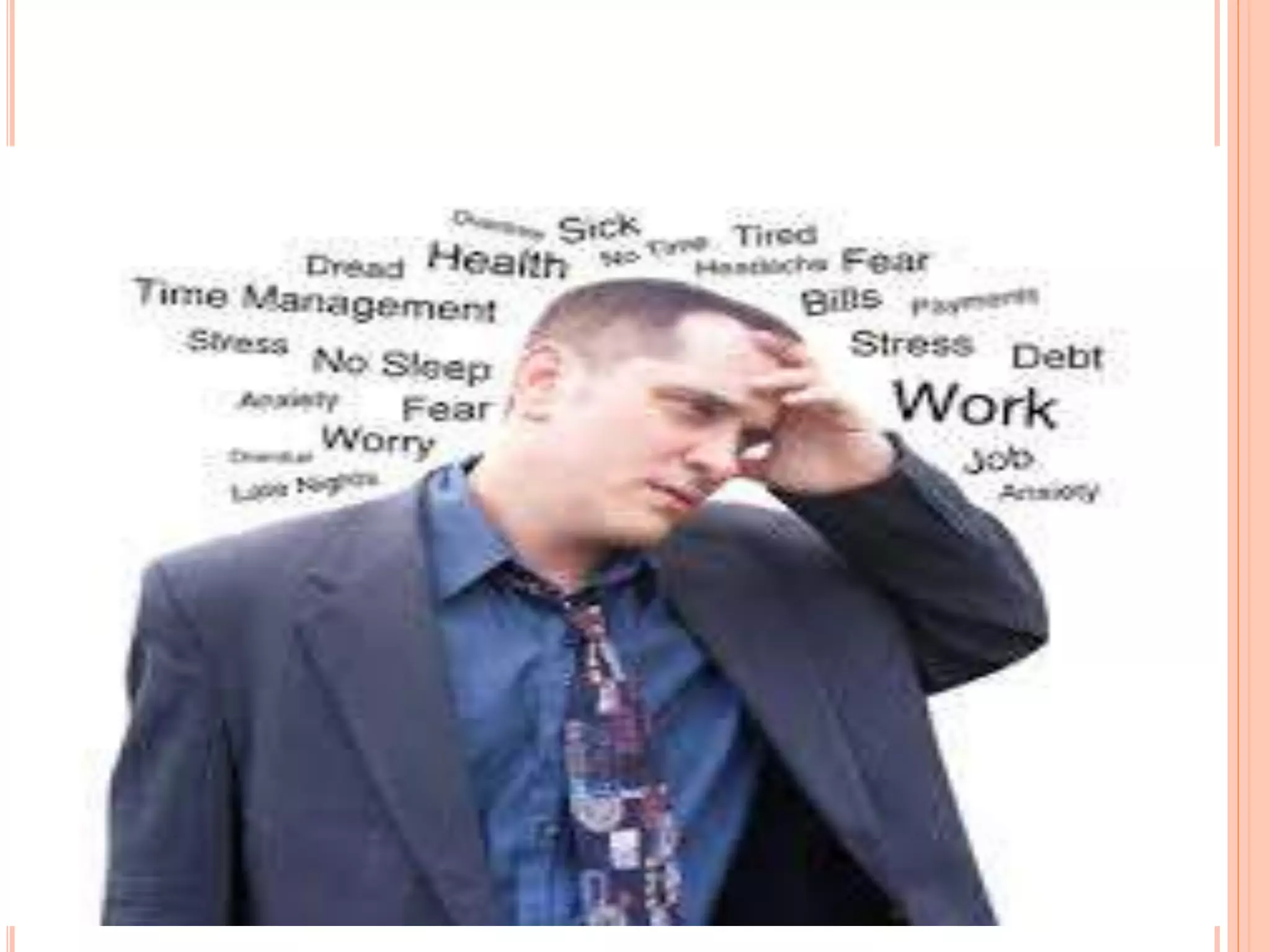
1. Traumatic events outside the usual range of
human experience
2. Uncontrollable events
3. Unpredictable events
4. Events that challenge the limits of our capabilities
& self-concept
5. Internal conflicts
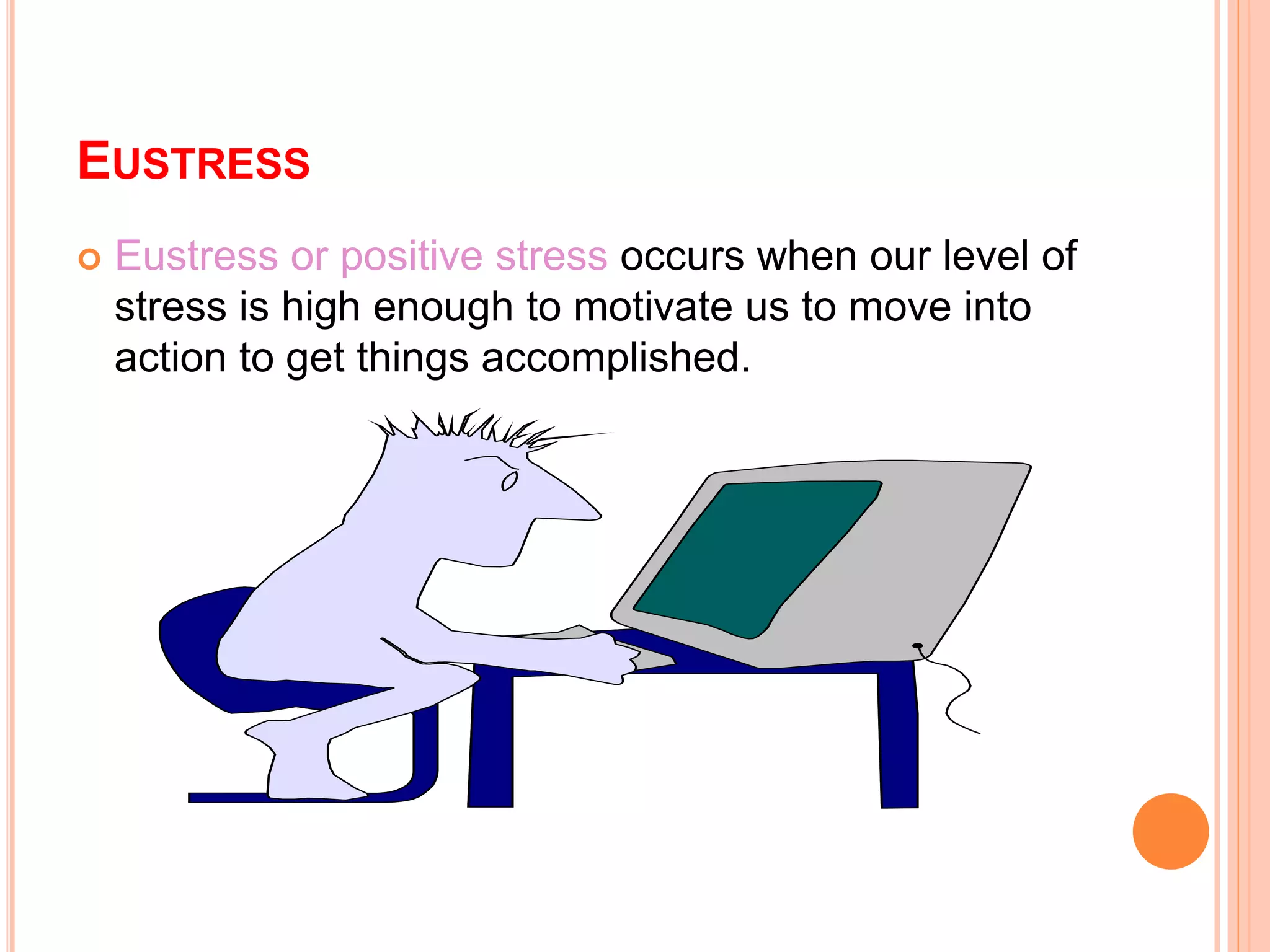
EUSTRESS
 Eustress or positive stress occurs when our level of
stress is high enough to motivate us to move into
action to get things accomplished.
DISTRESS
 Distress or negative stress occurs when our level
of stress is either too high or too low and our body
and/or mind begin to respond negatively to the
stressors.
POTENTIAL STRESSOR
OVERWHELMING INTERESTING
CHALLENGE
VULNERABILITY AND RESILIENCE
 Stress versus coping
 Coping behavior
Defensive behaviors,
Information-seeking behaviors,
Affiliative behaviors,
All-round problem-solving behaviors.
“All life events, be they positive
or negative, impose a demand for
adaptation, and that such
demands are stressful.”
THE GENERAL ADAPTATION SYNDROME
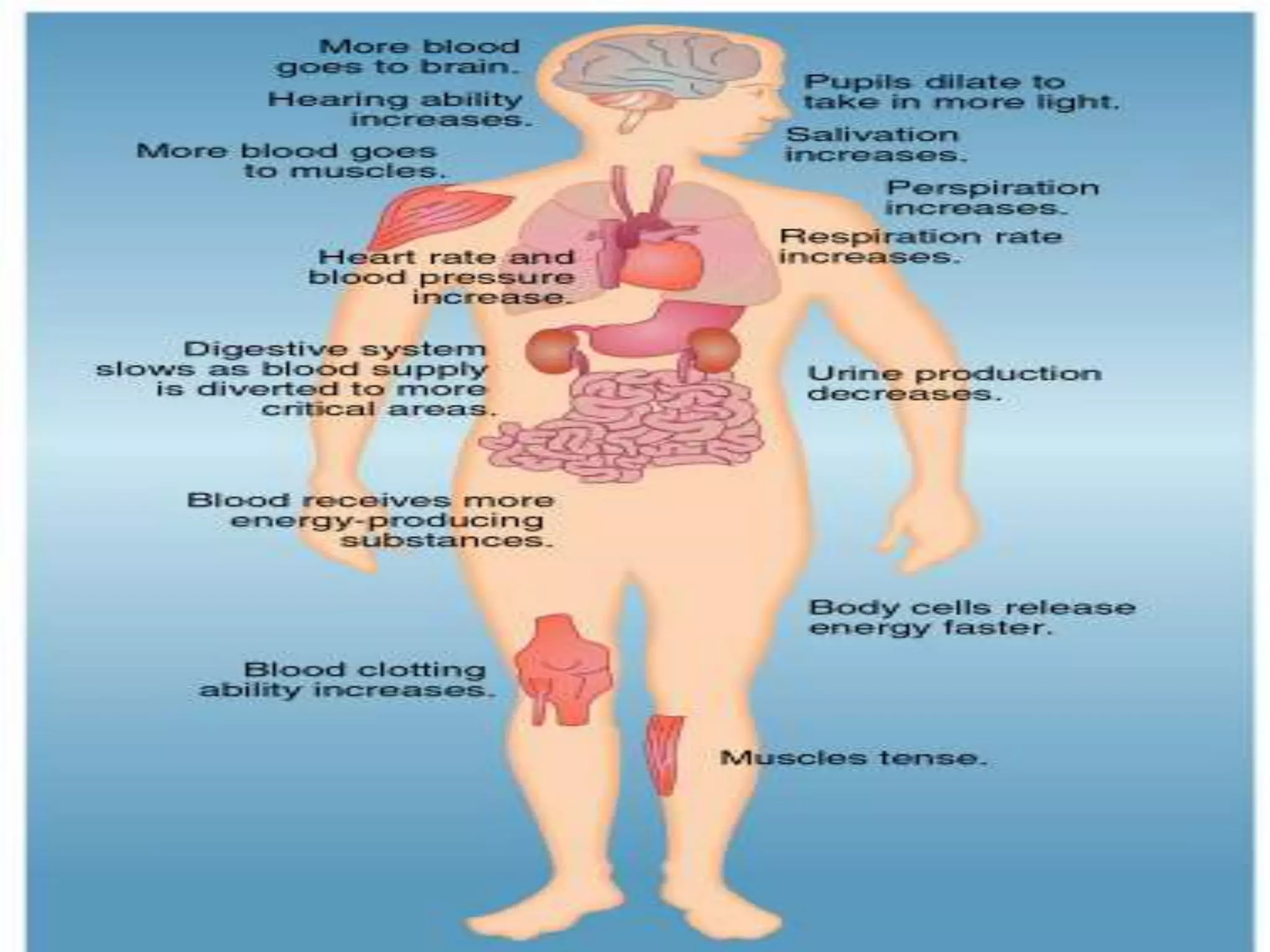
PHYSIOLOGIC RESPONSES TO STRESSORS
 Disrupts an organism's equilibrium.
 Initiation of physiologic adjustments .
 Acute stress>>>>>>Chronic stress.
NEUROTRANSMITTERS RESPONSES TO
STRESS
 Stress >>ANS Catecholamines.
 Chronic stress>>>NE>>>>tolerance but novel stressor.
 Dopamine in mesoprefrontal pathway.
 Glucocorticoids induced 5-HT2-mediated actions .
 Hypothalamus,also Anterior Cingulate Cortex And
Amygdala Glutamatergic,
Dopaminergic, And Serotonergic Systems .
Locus Coeruleus
CRH
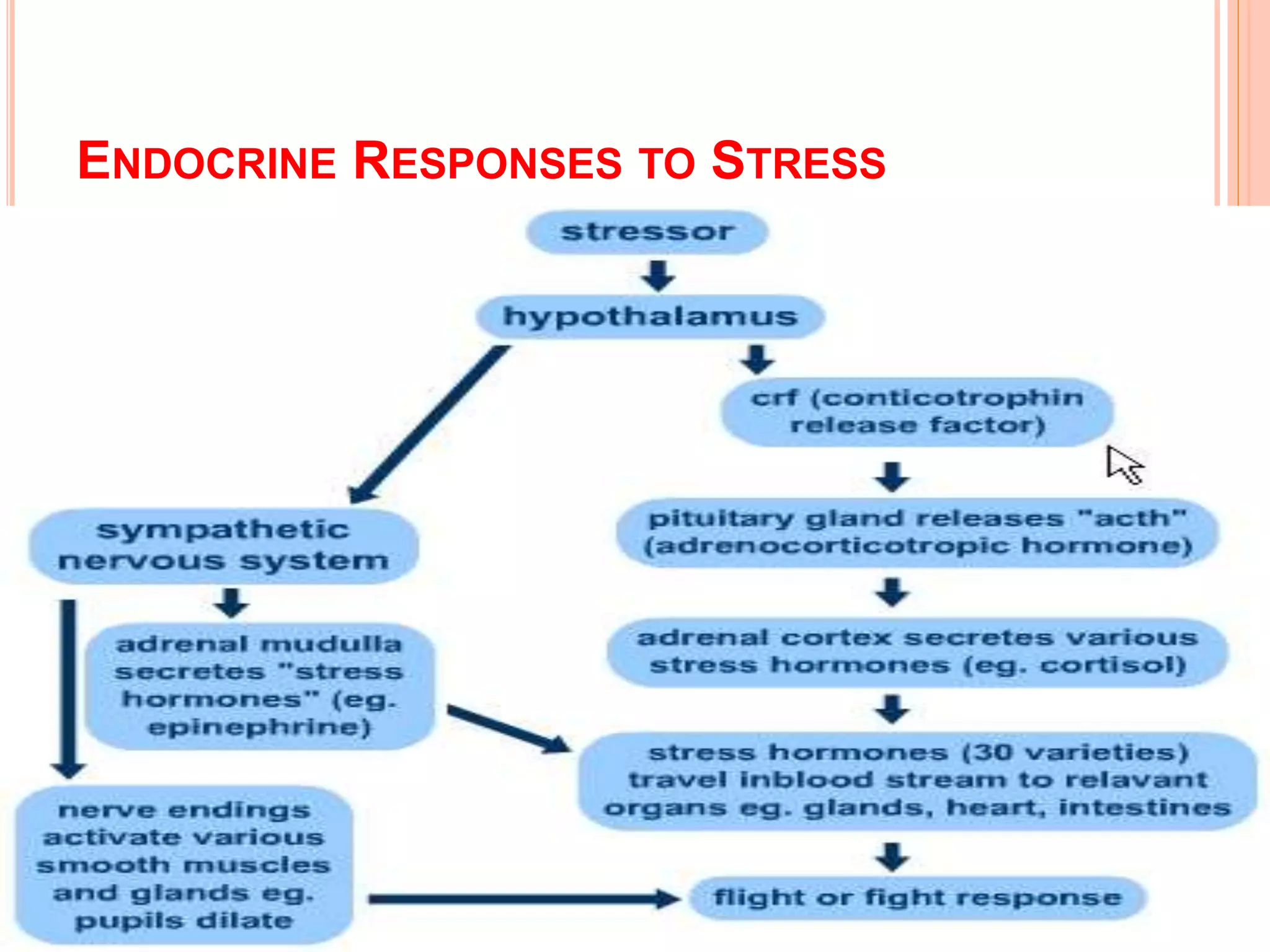
ENDOCRINE RESPONSES TO STRESS
PSYCHONEUROIMMUNOLOGY
 Immune system is also a key player in stress
physiology.
 Innate and specific immunity .
CONNECTIONS BETWEEN THE CNS AND
IMMUNE SYSTEM
Autonomic Nervous System
 Sympathetic nervous system norepinephrine
and neuropeptide Y immune cells.
 Sympathetic nerves Adrenal gland
Epinephrine Immune cells Sympathetic
regulatory signals.
 Immune cells, Antibodies by B cells, Release
cytokines.
 Blood lymphoid organs Blood.NK CELL
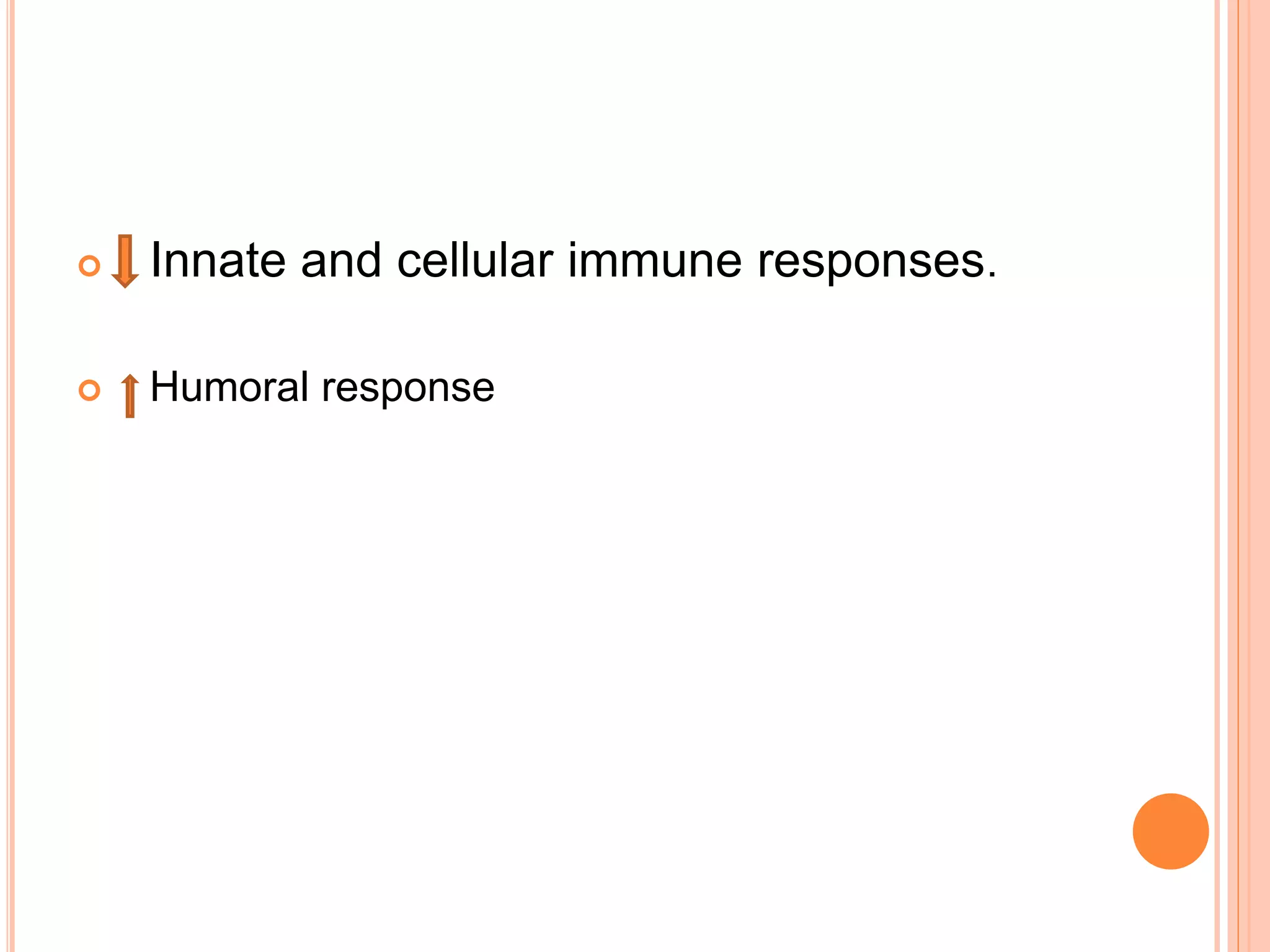
 Innate and cellular immune responses.
 Humoral response
NEUROENDOCRINE AXIS /HPA SYSTEM.
 Cortisol Cellular immune response.
 Circulating blood Lymphoid /peripheral
tissues.
 Immune cells Neuroendocrine peptides
(e.g., Endorphin, ACTH).
cells
CENTRAL MODULATION OF IMMUNITY
 Brain exerts control over innate, cellular, humoral
immunity and peripheral immune measures.
BEHAVIORAL AND PSYCHOLOGICAL
INFLUENCES ON IMMUNITY
 Behaviours and emotions are capable of altering
immunity.
 Classical conditioning.
ACUTE STRESS AND IMMUNITY IN HUMANS
 Redistribution of immunoregulatory cells
 Acute> Cell mediated immunity, IL6.
 Elderly , chronic stress>>>> immune responses, Long
illness.
 Depression , Sleep disturbances>>>> Nuclear
transcription factor-κB, Inflammatory signaling
pathway.
CHRONIC STRESS, DEPRESSION AND
IMMUNITY
 Bereavement,Caregiving, Depression
 Glucocorticoid receptor signaling >>> Cellular and
Innate immunity , Proinflammatory cytokines,
CRP.
IMMUNITY RESPONSE
DECREASES
IMMUNITY RESPONSE
INCREASE
Stressed, Depressed Traumatic experience
Co morbid Alcohol use with
Depression
CBT
Coping
Positive personality
SLEEP, CYTOKINES, AND IMMUNITY
 Normal sleep>>> NK activity, IL-2, IL-6, transsignaling
IL-6R, and a relative shift toward Th1 cytokine
expression, which is independent of circadian
processes.
 Sleep loss>> proinflammatory cytokines, AB,IL2,NK
cell, production.
 Impaired sleep or REM >>> Night/Day time IL6.
 IL-10>>> delta sleep.
 IL-6 and TNF>>> REM sleep, delta sleep
CYTOKINE INFLUENCES ON THE CNS AND
BEHAVIOR
The immune system and developmental programming of brain and
behavior, Staci D. Bilbo et al
CLINICAL IMPLICATIONS
 Exacerbate the course of many chronic diseases.
CARDIOVASCULAR DISEASE
 Depression , Stress are risk factor for
Atherosclerosis.
 Increased IL2,IL6,CRP,Adhesion molecule, Binding
of immune cells to Endothelium.
 Shift to TH2 cytokines.
INFECTIOUS DISEASE RISK
 Viral diseases(EB, Herpes)
HUMAN IMMUNODEFICIENCY VIRUS (HIV)
 Depression, bereavement, and maladaptive coping,
homosexuality, socially inhibited introverts.
 Suppressing production of the antiviral cytokines.
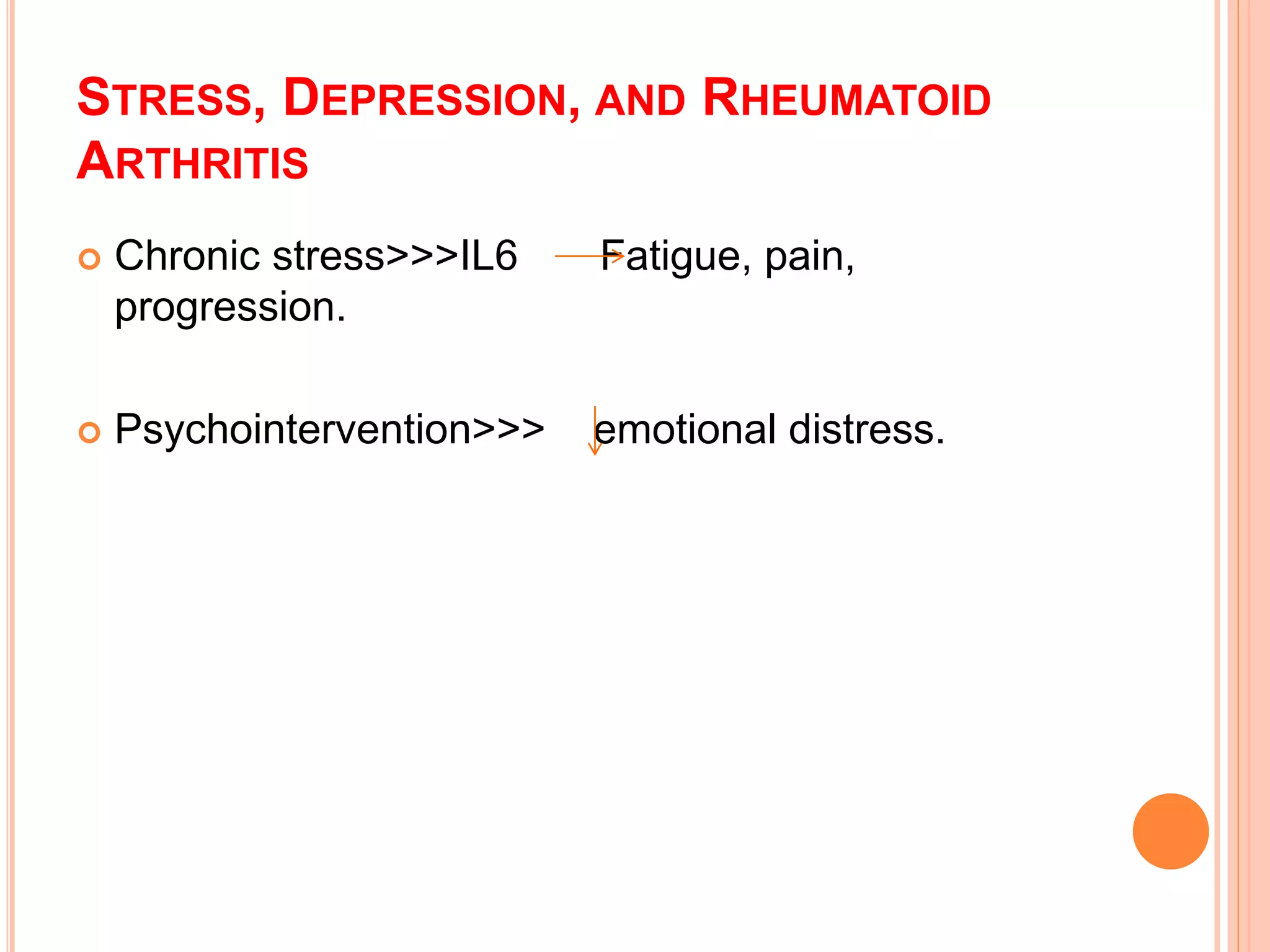
STRESS, DEPRESSION, AND RHEUMATOID
ARTHRITIS
 Chronic stress>>>IL6 Fatigue, pain,
progression.
 Psychointervention>>> emotional distress.
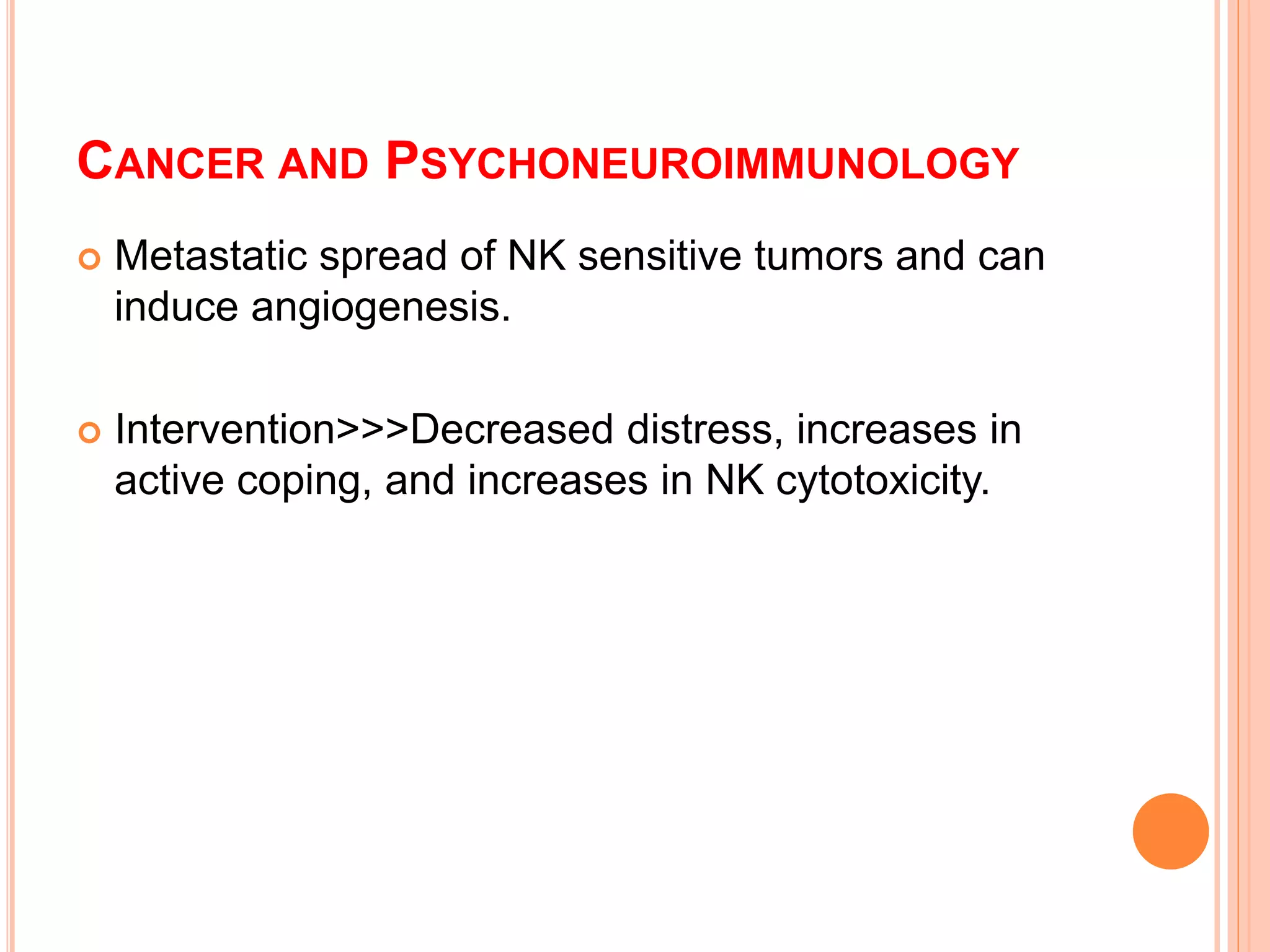
CANCER AND PSYCHONEUROIMMUNOLOGY
 Metastatic spread of NK sensitive tumors and can
induce angiogenesis.
 Intervention>>>Decreased distress, increases in
active coping, and increases in NK cytotoxicity.
CONCLUSION
 Stress has definite aspects in neurobiology,
neuroimmunology, neuroendocrinology.
 May be a trigger or response.
 Both useful and harmful.
 Not merely cause of all disease but the condition
which has temporal neurological connection.
REFERENCE
 Kaplan & Sadock's Comprehensive Textbook of
Psychiatry, 9th Edition.
Thank you

E.stress basic 1march13

  • 1.
    STRESS-BASIC CONCEPTS Dr.Soumitra Das Jr/Psychiatry Chairperson:Prof.Dr.Varghese.P.Punnoose, HOD/Psychiatry
  • 2.
    WHAT IS STRESS? Stress is our mind and body’s response to a real or imagined threat, event or change.  Psychological state associated with physiological and hormonal changes caused by conflict,trauma, or other disruptive influences (stressors).
  • 3.
    STRESSORS 1. Traumatic eventsoutside the usual range of human experience 2. Uncontrollable events 3. Unpredictable events 4. Events that challenge the limits of our capabilities & self-concept 5. Internal conflicts
  • 5.
    EUSTRESS  Eustress orpositive stress occurs when our level of stress is high enough to motivate us to move into action to get things accomplished.
  • 6.
    DISTRESS  Distress ornegative stress occurs when our level of stress is either too high or too low and our body and/or mind begin to respond negatively to the stressors.
  • 7.
  • 8.
    VULNERABILITY AND RESILIENCE Stress versus coping  Coping behavior Defensive behaviors, Information-seeking behaviors, Affiliative behaviors, All-round problem-solving behaviors.
  • 9.
    “All life events,be they positive or negative, impose a demand for adaptation, and that such demands are stressful.”
  • 10.
  • 12.
    PHYSIOLOGIC RESPONSES TOSTRESSORS  Disrupts an organism's equilibrium.  Initiation of physiologic adjustments .  Acute stress>>>>>>Chronic stress.
  • 13.
    NEUROTRANSMITTERS RESPONSES TO STRESS Stress >>ANS Catecholamines.  Chronic stress>>>NE>>>>tolerance but novel stressor.  Dopamine in mesoprefrontal pathway.  Glucocorticoids induced 5-HT2-mediated actions .  Hypothalamus,also Anterior Cingulate Cortex And Amygdala Glutamatergic, Dopaminergic, And Serotonergic Systems . Locus Coeruleus CRH
  • 14.
  • 16.
    PSYCHONEUROIMMUNOLOGY  Immune systemis also a key player in stress physiology.  Innate and specific immunity .
  • 17.
    CONNECTIONS BETWEEN THECNS AND IMMUNE SYSTEM Autonomic Nervous System  Sympathetic nervous system norepinephrine and neuropeptide Y immune cells.  Sympathetic nerves Adrenal gland Epinephrine Immune cells Sympathetic regulatory signals.  Immune cells, Antibodies by B cells, Release cytokines.  Blood lymphoid organs Blood.NK CELL
  • 18.
     Innate andcellular immune responses.  Humoral response
  • 19.
    NEUROENDOCRINE AXIS /HPASYSTEM.  Cortisol Cellular immune response.  Circulating blood Lymphoid /peripheral tissues.  Immune cells Neuroendocrine peptides (e.g., Endorphin, ACTH). cells
  • 20.
    CENTRAL MODULATION OFIMMUNITY  Brain exerts control over innate, cellular, humoral immunity and peripheral immune measures.
  • 21.
    BEHAVIORAL AND PSYCHOLOGICAL INFLUENCESON IMMUNITY  Behaviours and emotions are capable of altering immunity.  Classical conditioning.
  • 22.
    ACUTE STRESS ANDIMMUNITY IN HUMANS  Redistribution of immunoregulatory cells  Acute> Cell mediated immunity, IL6.  Elderly , chronic stress>>>> immune responses, Long illness.  Depression , Sleep disturbances>>>> Nuclear transcription factor-κB, Inflammatory signaling pathway.
  • 23.
    CHRONIC STRESS, DEPRESSIONAND IMMUNITY  Bereavement,Caregiving, Depression  Glucocorticoid receptor signaling >>> Cellular and Innate immunity , Proinflammatory cytokines, CRP.
  • 24.
    IMMUNITY RESPONSE DECREASES IMMUNITY RESPONSE INCREASE Stressed,Depressed Traumatic experience Co morbid Alcohol use with Depression CBT Coping Positive personality
  • 25.
    SLEEP, CYTOKINES, ANDIMMUNITY  Normal sleep>>> NK activity, IL-2, IL-6, transsignaling IL-6R, and a relative shift toward Th1 cytokine expression, which is independent of circadian processes.  Sleep loss>> proinflammatory cytokines, AB,IL2,NK cell, production.  Impaired sleep or REM >>> Night/Day time IL6.  IL-10>>> delta sleep.  IL-6 and TNF>>> REM sleep, delta sleep
  • 26.
    CYTOKINE INFLUENCES ONTHE CNS AND BEHAVIOR The immune system and developmental programming of brain and behavior, Staci D. Bilbo et al
  • 27.
    CLINICAL IMPLICATIONS  Exacerbatethe course of many chronic diseases.
  • 28.
    CARDIOVASCULAR DISEASE  Depression, Stress are risk factor for Atherosclerosis.  Increased IL2,IL6,CRP,Adhesion molecule, Binding of immune cells to Endothelium.  Shift to TH2 cytokines.
  • 30.
    INFECTIOUS DISEASE RISK Viral diseases(EB, Herpes)
  • 31.
    HUMAN IMMUNODEFICIENCY VIRUS(HIV)  Depression, bereavement, and maladaptive coping, homosexuality, socially inhibited introverts.  Suppressing production of the antiviral cytokines.
  • 32.
    STRESS, DEPRESSION, ANDRHEUMATOID ARTHRITIS  Chronic stress>>>IL6 Fatigue, pain, progression.  Psychointervention>>> emotional distress.
  • 33.
    CANCER AND PSYCHONEUROIMMUNOLOGY Metastatic spread of NK sensitive tumors and can induce angiogenesis.  Intervention>>>Decreased distress, increases in active coping, and increases in NK cytotoxicity.
  • 34.
    CONCLUSION  Stress hasdefinite aspects in neurobiology, neuroimmunology, neuroendocrinology.  May be a trigger or response.  Both useful and harmful.  Not merely cause of all disease but the condition which has temporal neurological connection.
  • 35.
    REFERENCE  Kaplan &Sadock's Comprehensive Textbook of Psychiatry, 9th Edition.
  • 36.