1 of 20
Networked Scaffolding: Seeking Support
in workplace learning contexts
Patricia Santos Rodriguez
University of the West of England
Networked Learning Conference, Edinburgh, 2014
Authors: Patricia Santos, John Cook, Tamsin Treasure-Jones,
Micky Kerr, Joanna Colley
2 of 20
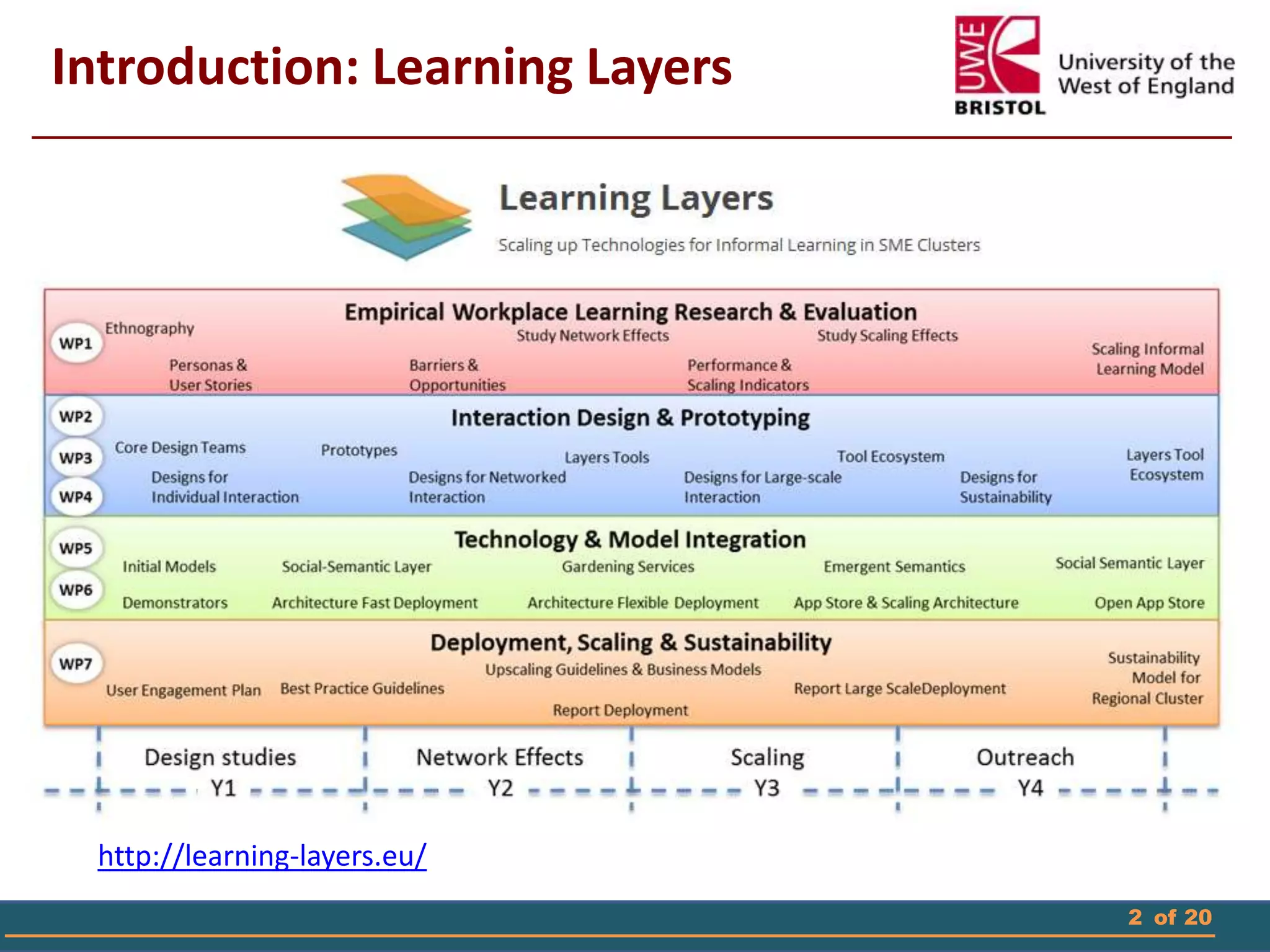
Introduction: Learning Layers
http://learning-layers.eu/
3 of 20
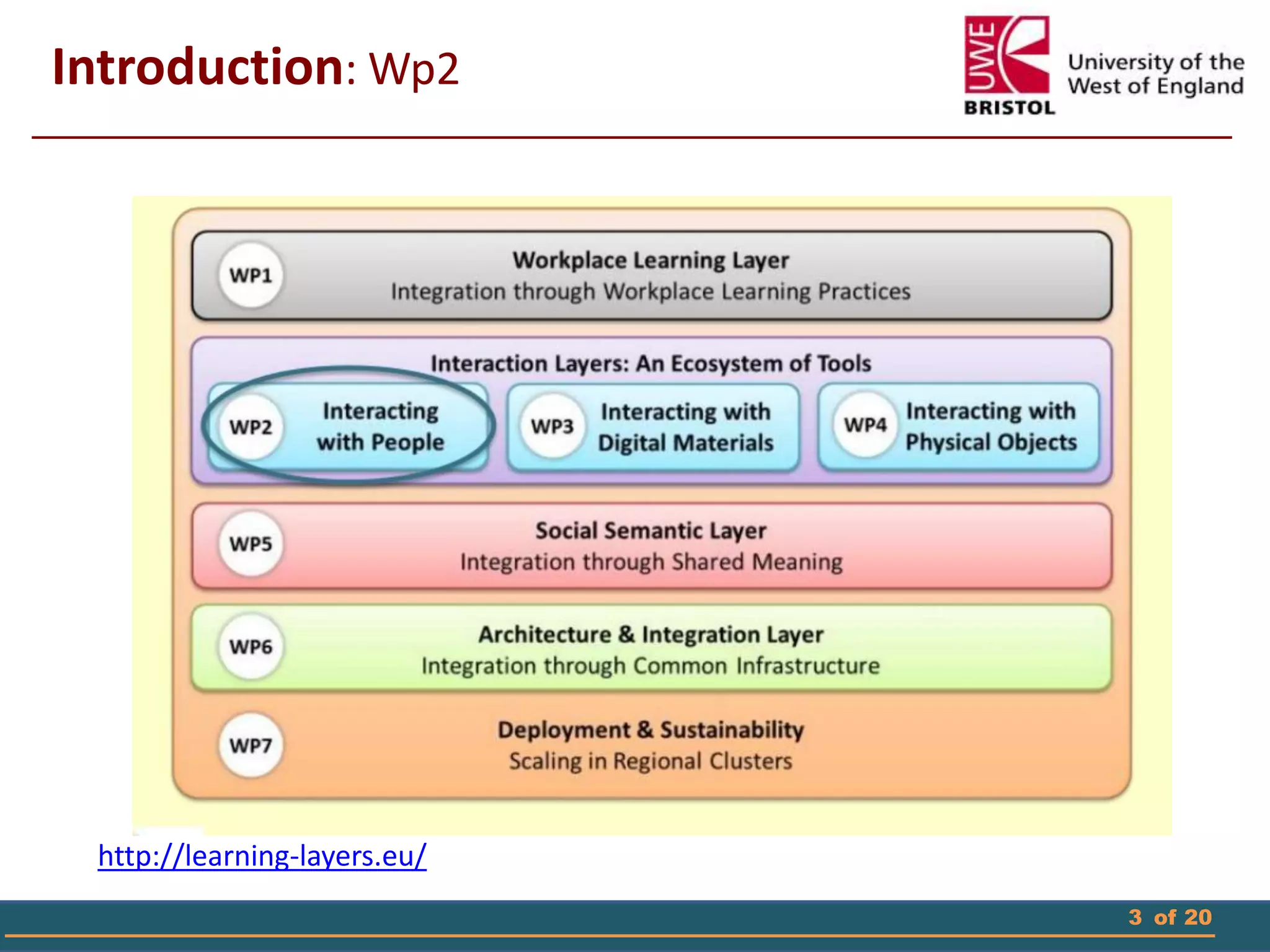
Introduction: Wp2
http://learning-layers.eu/
4 of 20
Interacting with people
Objectives:
• Improving interactions among
professionals by exchanging
Questions/Answers
• Towards Trusted Opinions & Guidance
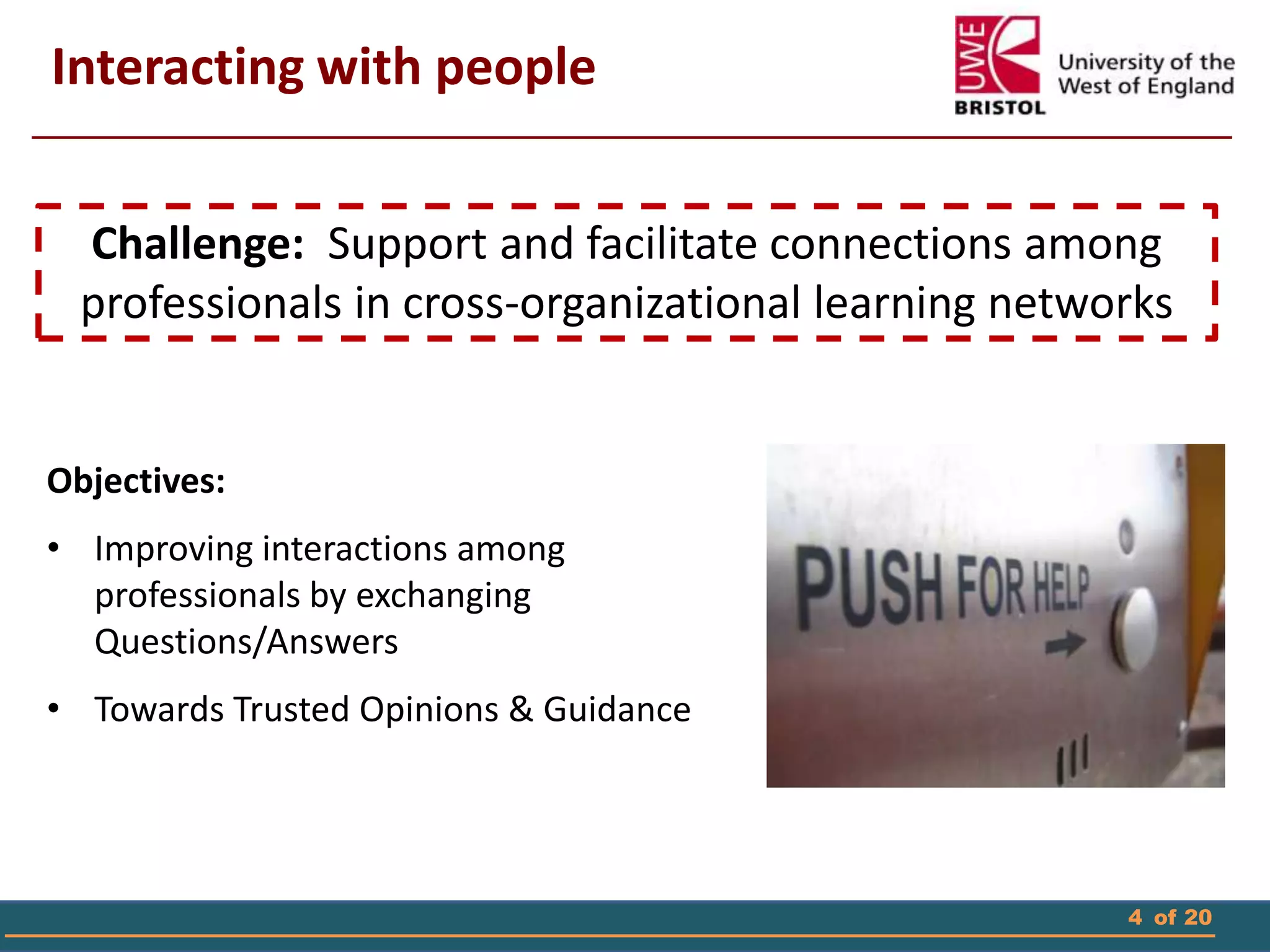
Challenge: Support and facilitate connections among
professionals in cross-organizational learning networks
5 of 20
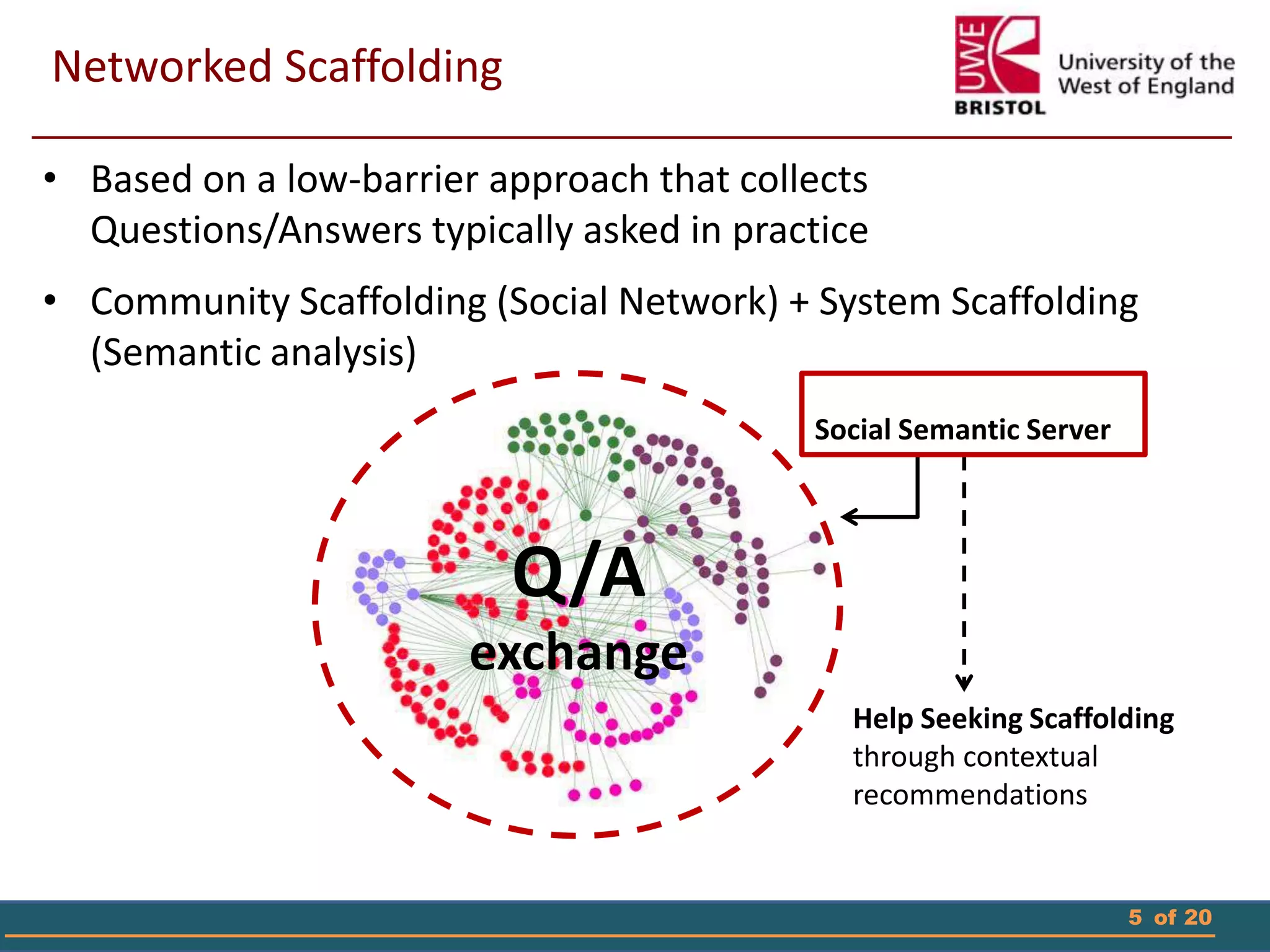
Networked Scaffolding
• Based on a low-barrier approach that collects
Questions/Answers typically asked in practice
• Community Scaffolding (Social Network) + System Scaffolding
(Semantic analysis)
Q/A
exchange
Social Semantic Server
Help Seeking Scaffolding
through contextual
recommendations
6 of 20
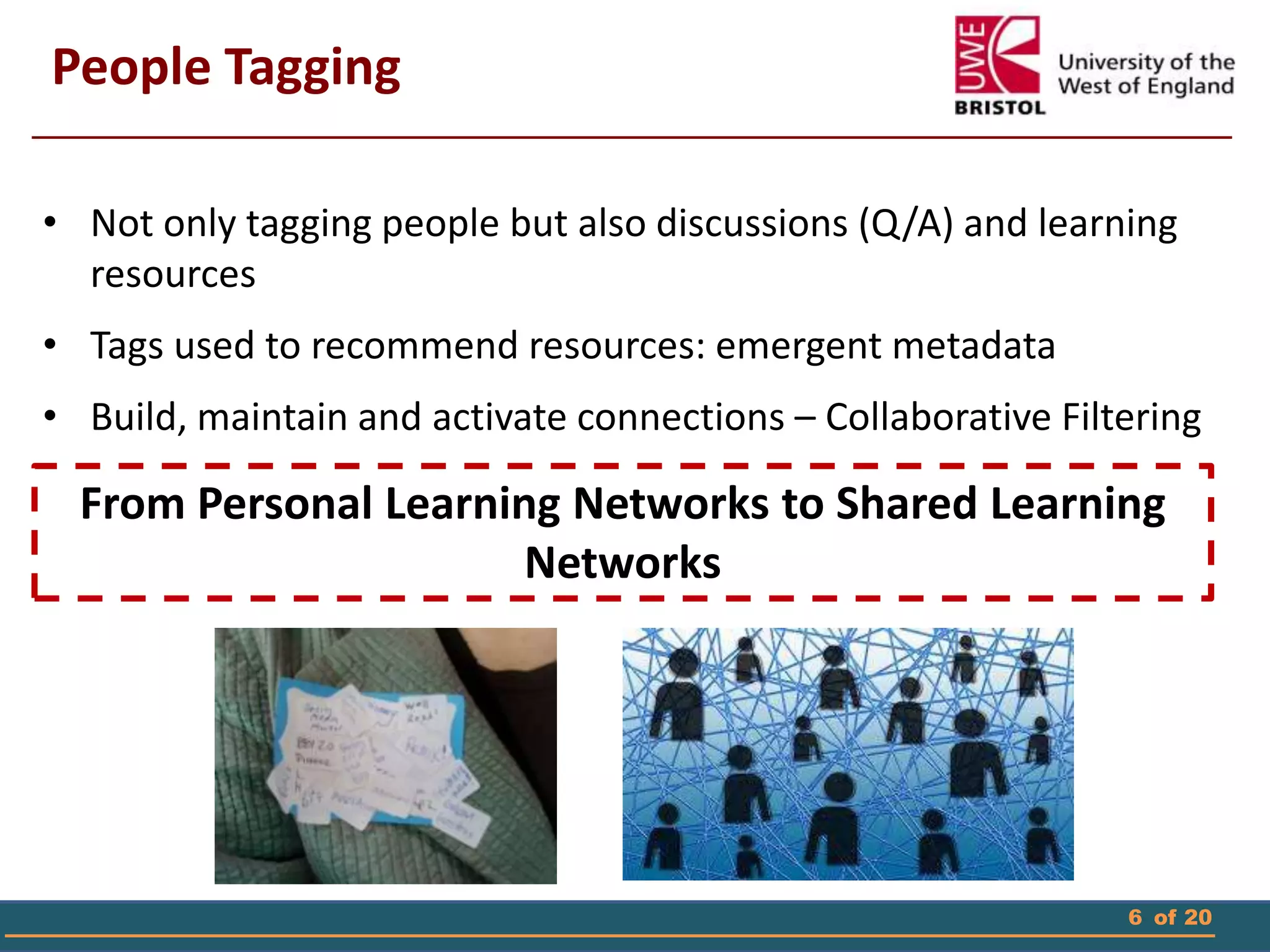
People Tagging
• Not only tagging people but also discussions (Q/A) and learning
resources
• Tags used to recommend resources: emergent metadata
• Build, maintain and activate connections – Collaborative Filtering
From Personal Learning Networks to Shared Learning
Networks
7 of 20
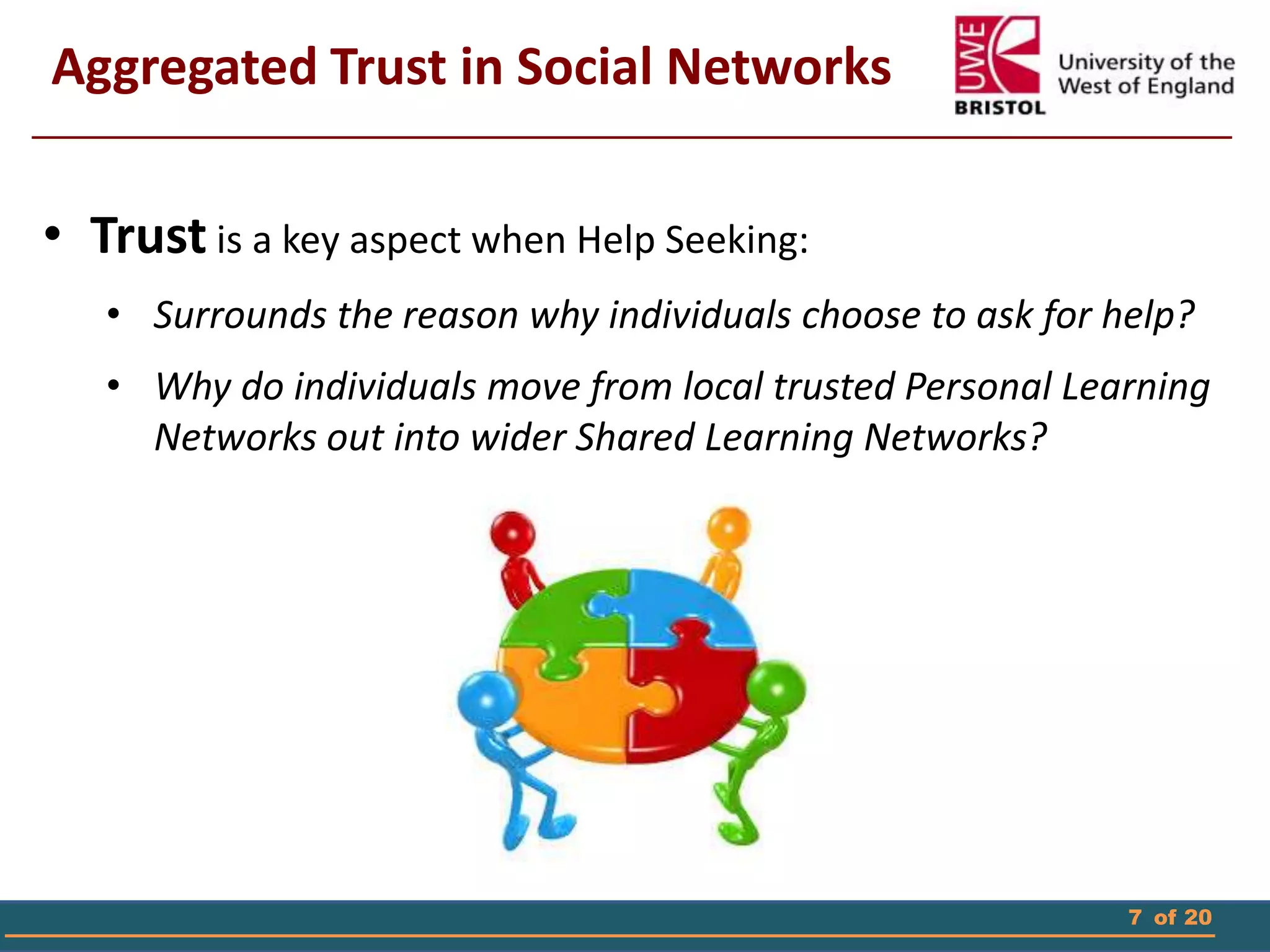
Aggregated Trust in Social Networks
• Trust is a key aspect when Help Seeking:
• Surrounds the reason why individuals choose to ask for help?
• Why do individuals move from local trusted Personal Learning
Networks out into wider Shared Learning Networks?
8 of 20
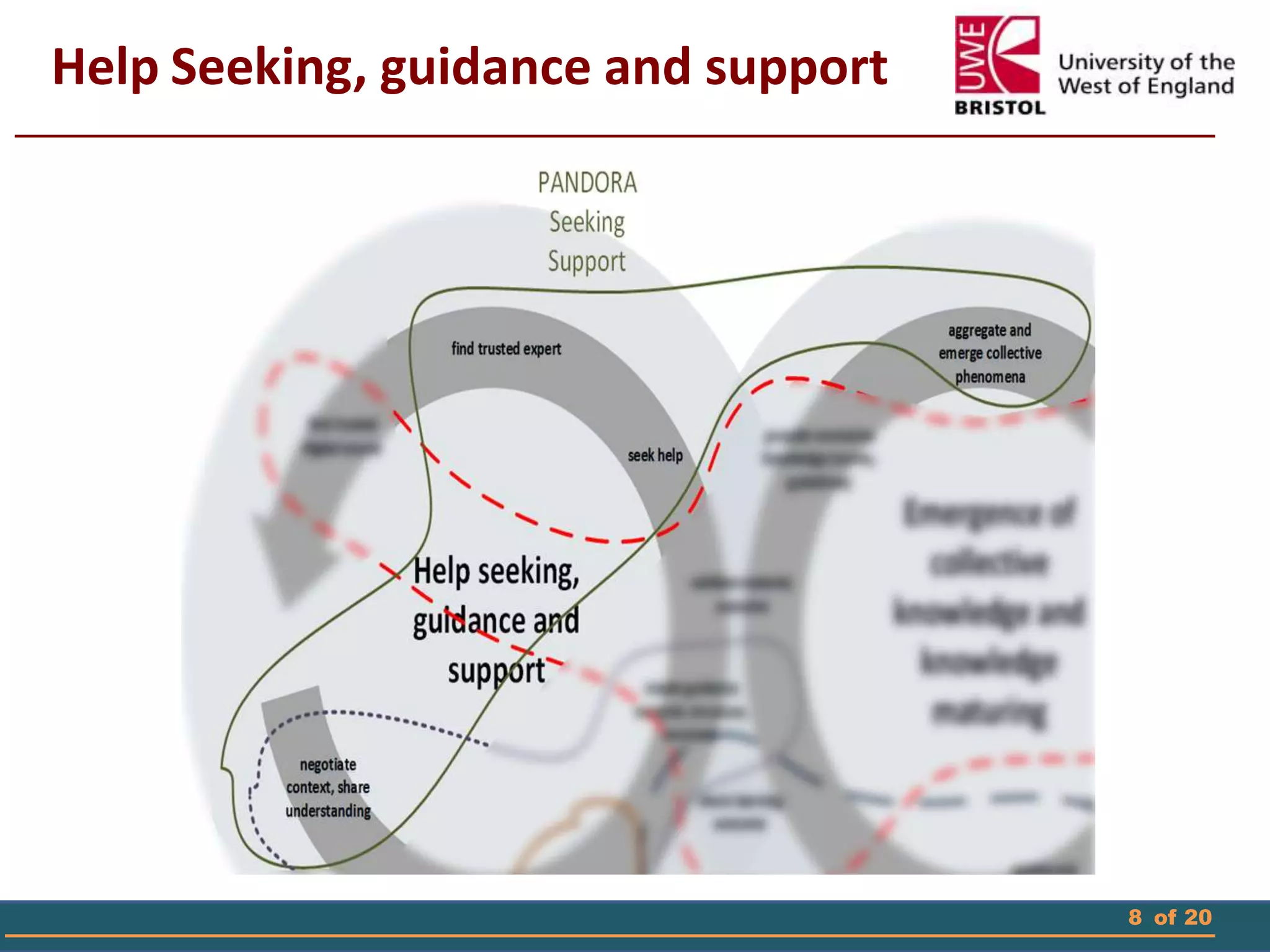
Help Seeking, guidance and support
9 of 20
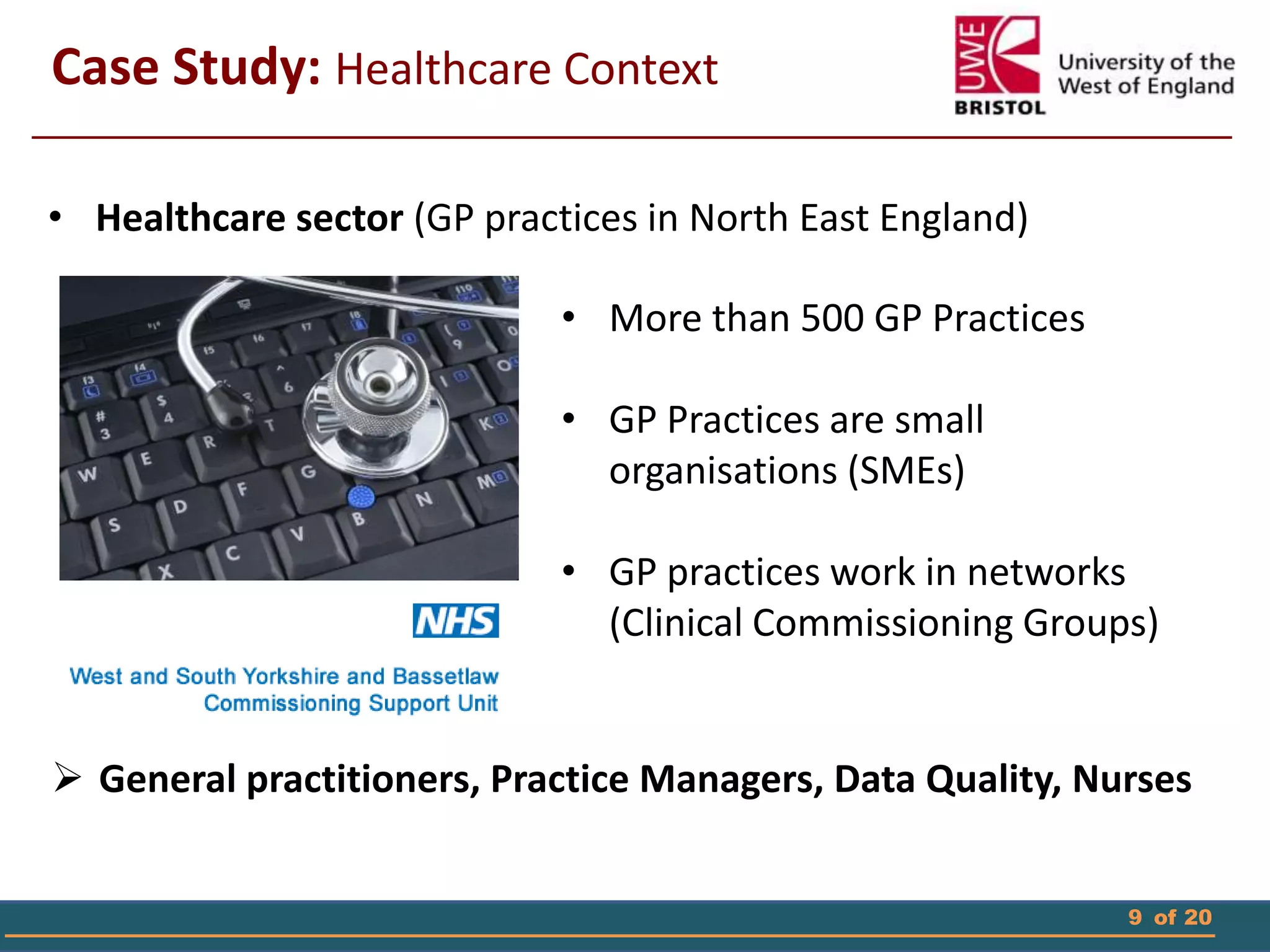
Case Study: Healthcare Context
• Healthcare sector (GP practices in North East England)
• More than 500 GP Practices
• GP Practices are small
organisations (SMEs)
• GP practices work in networks
(Clinical Commissioning Groups)
 General practitioners, Practice Managers, Data Quality, Nurses
10 of 20
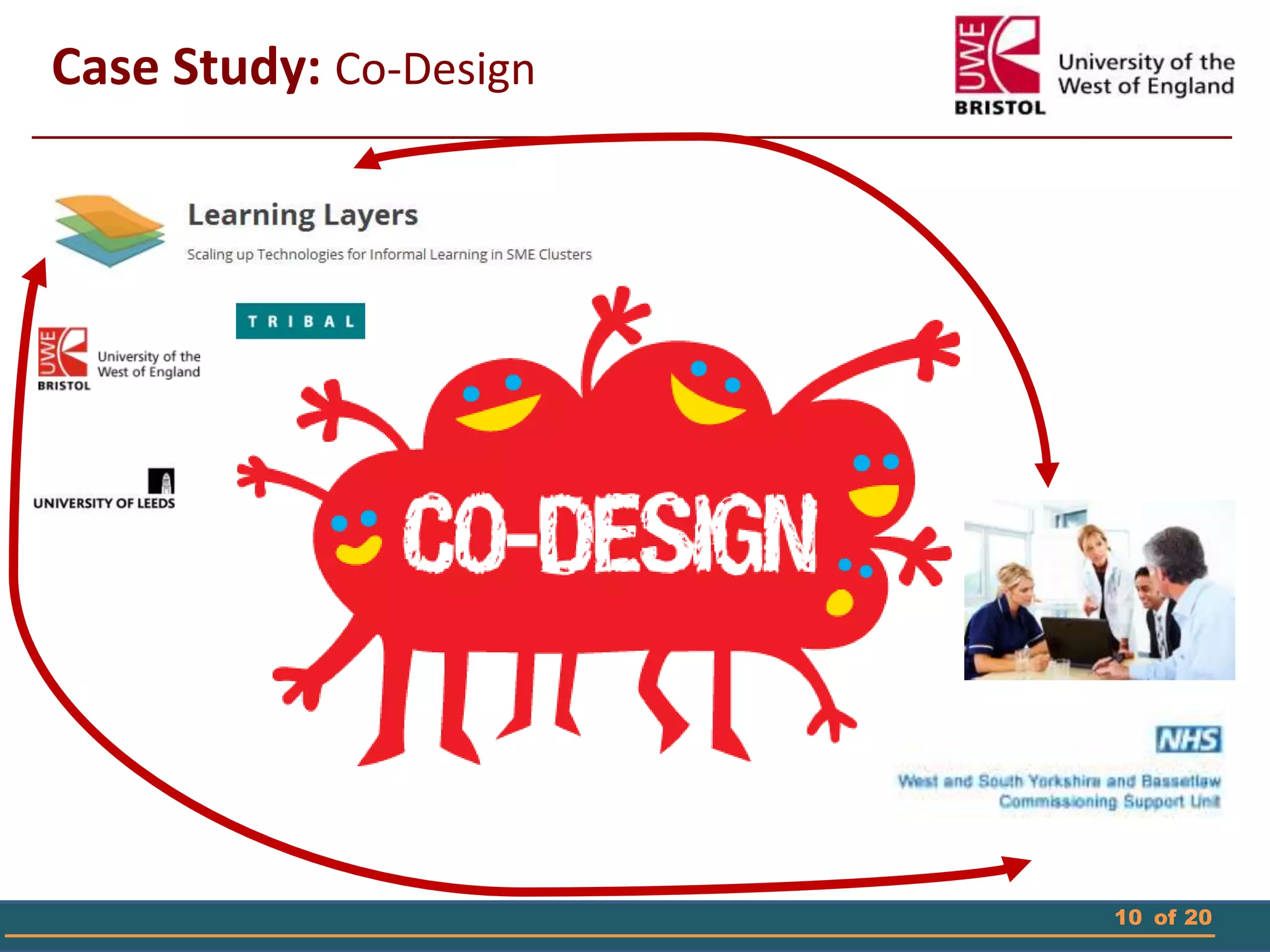
Case Study: Co-Design
11 of 20
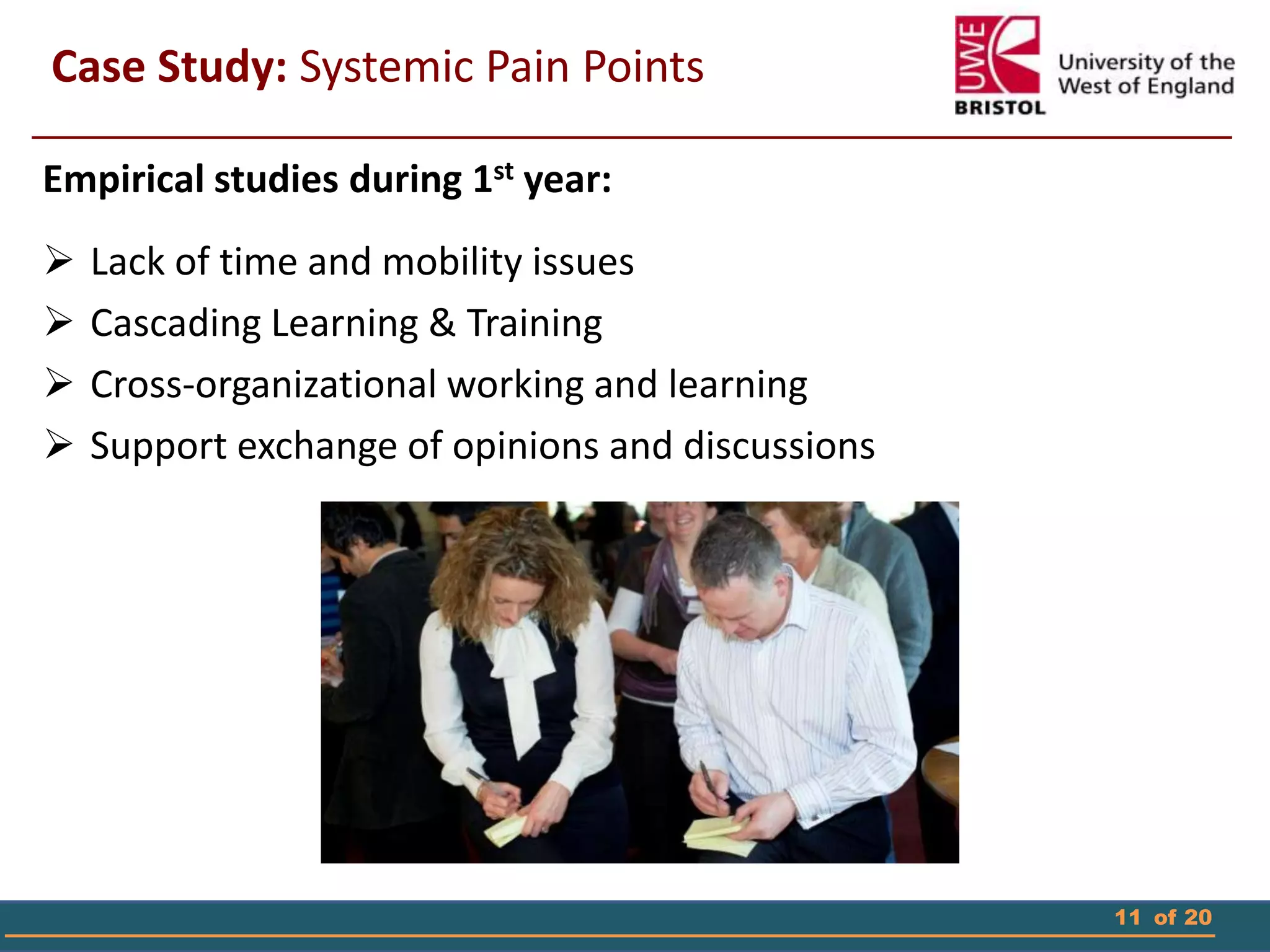
Empirical studies during 1st year:
 Lack of time and mobility issues
 Cascading Learning & Training
 Cross-organizational working and learning
 Support exchange of opinions and discussions
Case Study: Systemic Pain Points
12 of 20
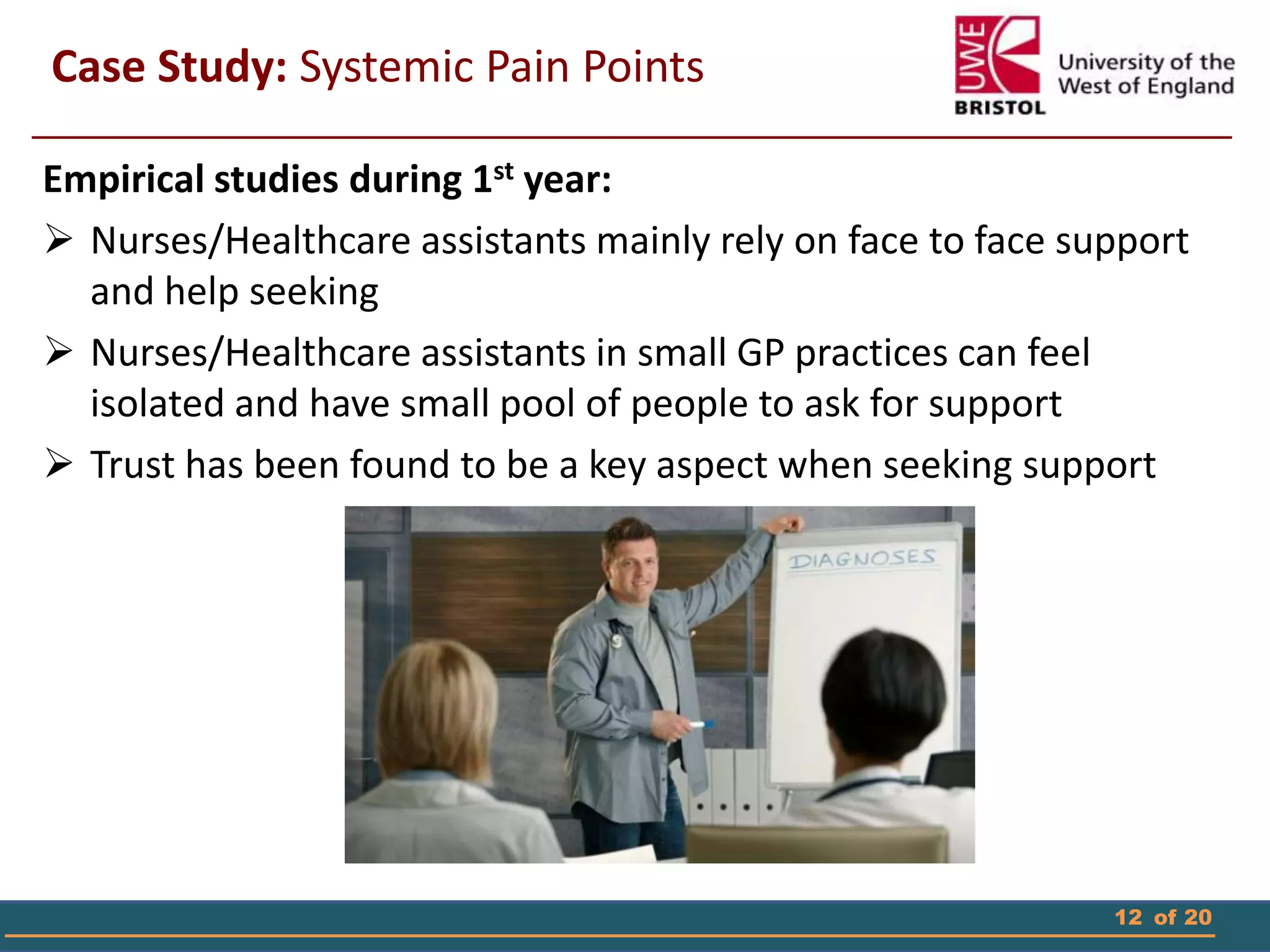
Empirical studies during 1st year:
 Nurses/Healthcare assistants mainly rely on face to face support
and help seeking
 Nurses/Healthcare assistants in small GP practices can feel
isolated and have small pool of people to ask for support
 Trust has been found to be a key aspect when seeking support
Case Study: Systemic Pain Points
13 of 20
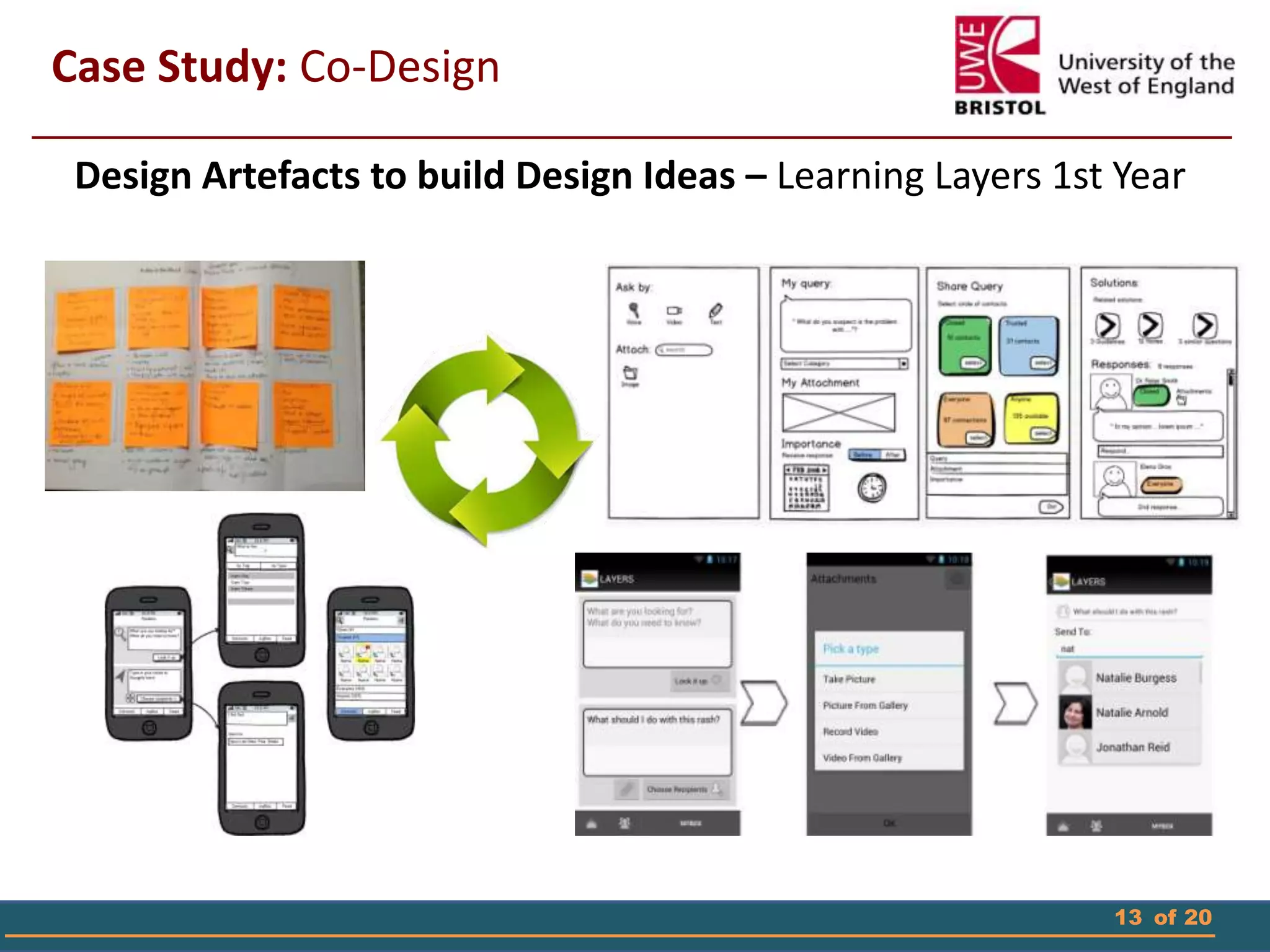
Case Study: Co-Design
Design Artefacts to build Design Ideas – Learning Layers 1st Year
14 of 20
 Discussions will take place within PLNs and in a more
organizational level through SLNs
 Development of those networks, and the associated help
seeking and support in such networks, requires Scaffolding
 The Help Seeking tool will improve the communication and
knowledge sharing in a cross-organisational network
Case Study: Hypothesis
15 of 20
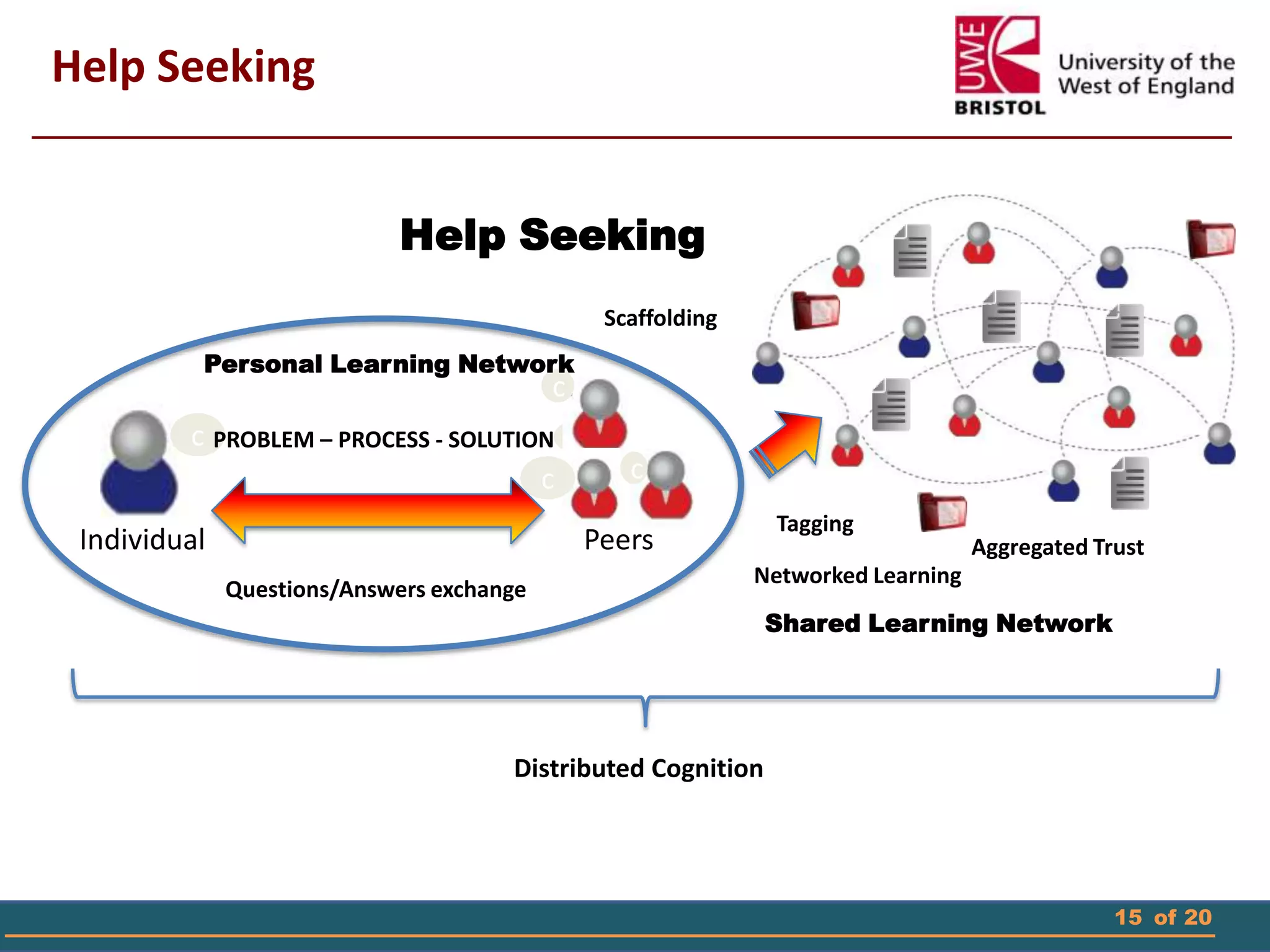
Individual Peers
c
Questions/Answers exchange
Tagging
Networked Learning
Scaffolding
Aggregated Trust
Distributed Cognition
c
c c
Personal Learning Network
Shared Learning Network
Help Seeking
PROBLEM – PROCESS - SOLUTION
Help Seeking
16 of 20
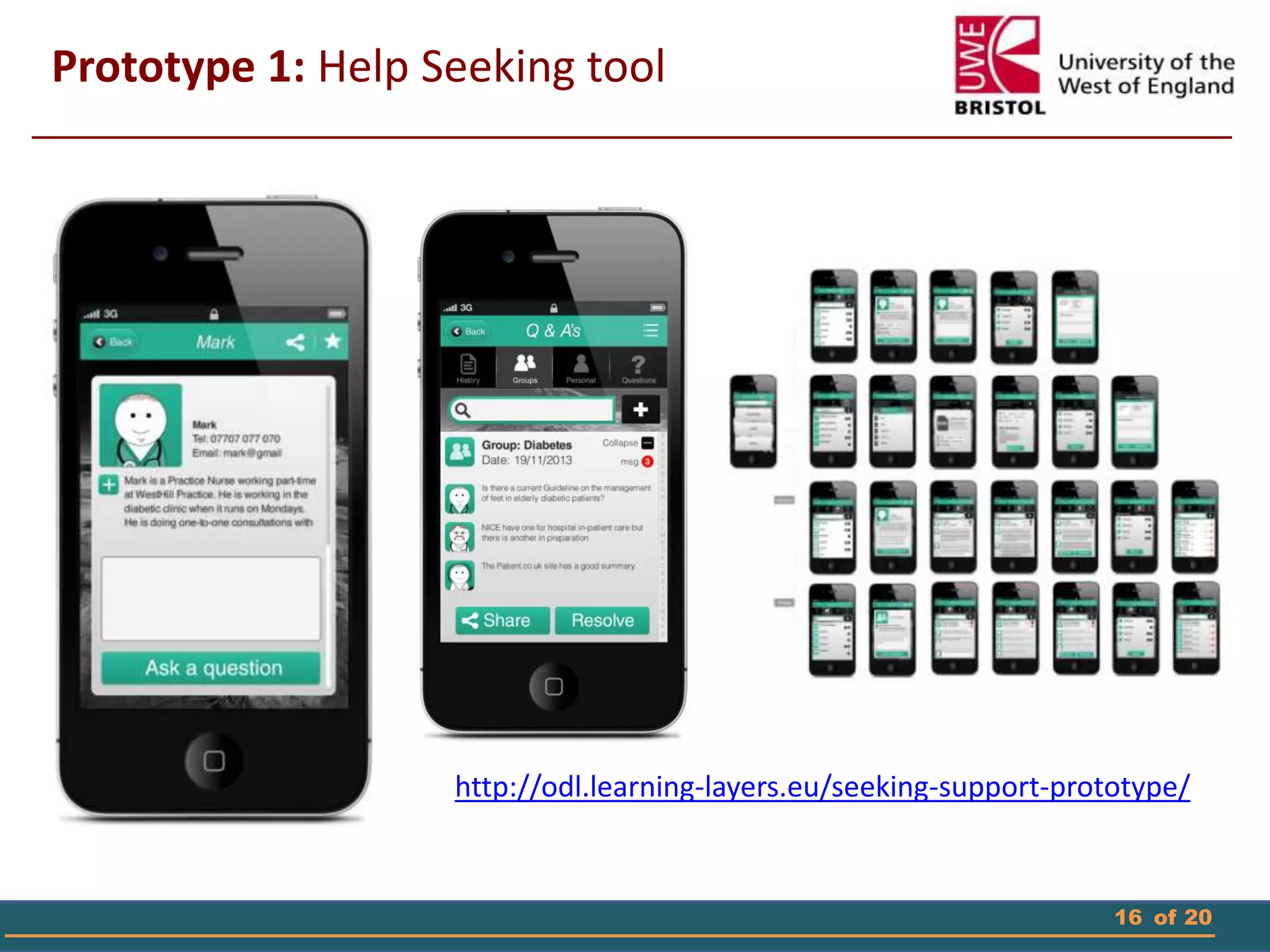
Prototype 1: Help Seeking tool
http://odl.learning-layers.eu/seeking-support-prototype/
17 of 20
 Staff can create their own PLN by tagging people and learning
resources
 Semantic analysis of the exchange of questions and
corresponding tags will be applied by using the Learning Layers
Social Semantic Server
 Relevant resources & people will be automatically and manually
recommended
Prototype 1: Help Seeking tool
18 of 20
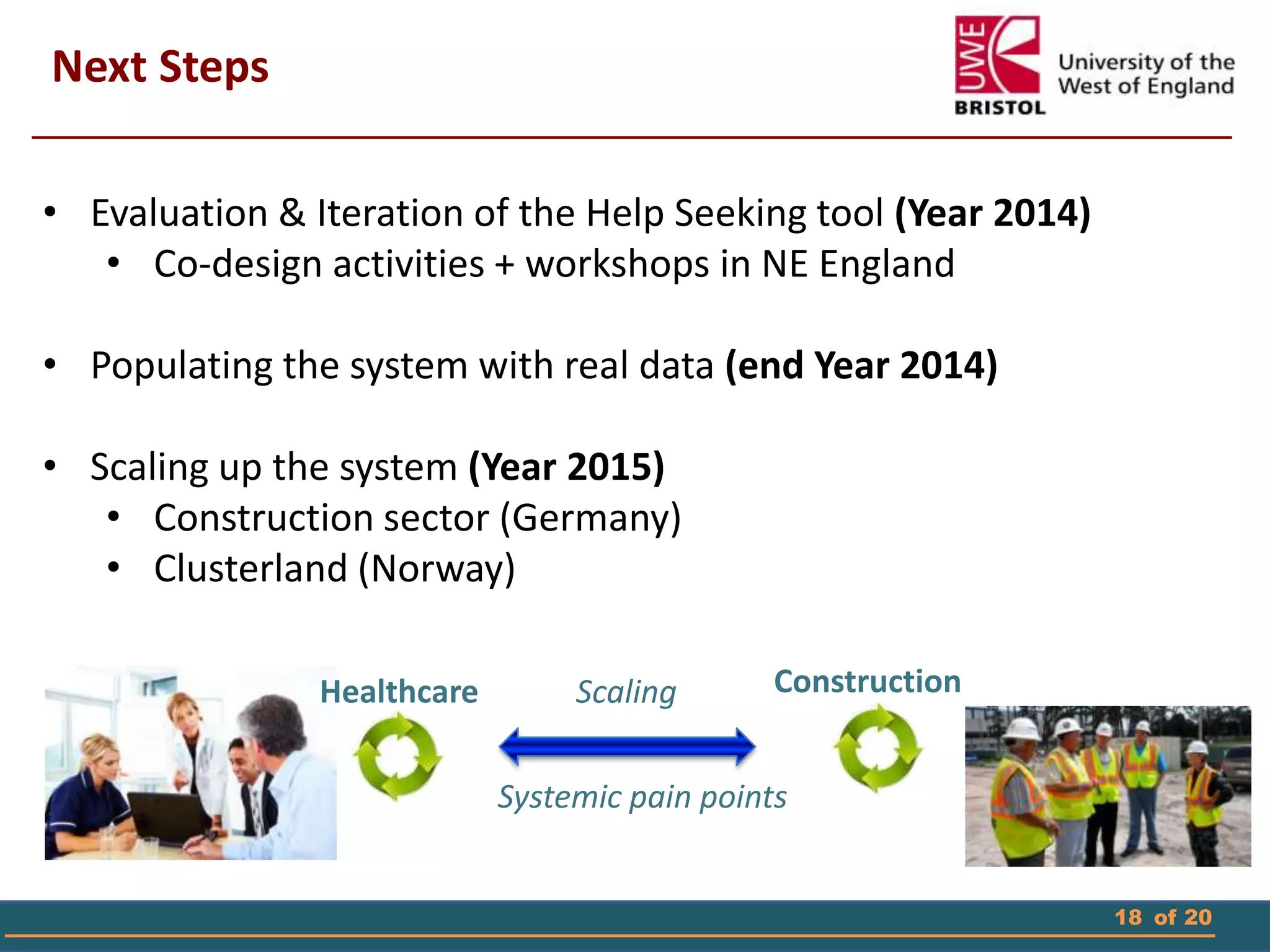
Next Steps
• Evaluation & Iteration of the Help Seeking tool (Year 2014)
• Co-design activities + workshops in NE England
• Populating the system with real data (end Year 2014)
• Scaling up the system (Year 2015)
• Construction sector (Germany)
• Clusterland (Norway)
ConstructionScaling
Systemic pain points
Healthcare
19 of 20
Conclusions
Learning networks+ People Tagging +
Maintenance, activation and building of Trust
can be used as mechanisms for scaffolding to
enhance the exchange of knowledge and
discussion in informal learning contexts at the
workplace
20 of 20
Questions?
Thank you!
Patricia Santos Rodríguez
@: patricia.santos.rdz@gmail.com
@: Patricia.Santosrodriguez@uwe.ac.uk
LinkedIn: http://www.linkedin.com/pub/patricia-santos-rodriguez/54/207/a97
http://learning-layers.eu/

Networked Scaffolding: Seeking Support in workplace learning contexts

  • 1.
    1 of 20 NetworkedScaffolding: Seeking Support in workplace learning contexts Patricia Santos Rodriguez University of the West of England Networked Learning Conference, Edinburgh, 2014 Authors: Patricia Santos, John Cook, Tamsin Treasure-Jones, Micky Kerr, Joanna Colley
  • 2.
    2 of 20 Introduction:Learning Layers http://learning-layers.eu/
  • 3.
    3 of 20 Introduction:Wp2 http://learning-layers.eu/
  • 4.
    4 of 20 Interactingwith people Objectives: • Improving interactions among professionals by exchanging Questions/Answers • Towards Trusted Opinions & Guidance Challenge: Support and facilitate connections among professionals in cross-organizational learning networks
  • 5.
    5 of 20 NetworkedScaffolding • Based on a low-barrier approach that collects Questions/Answers typically asked in practice • Community Scaffolding (Social Network) + System Scaffolding (Semantic analysis) Q/A exchange Social Semantic Server Help Seeking Scaffolding through contextual recommendations
  • 6.
    6 of 20 PeopleTagging • Not only tagging people but also discussions (Q/A) and learning resources • Tags used to recommend resources: emergent metadata • Build, maintain and activate connections – Collaborative Filtering From Personal Learning Networks to Shared Learning Networks
  • 7.
    7 of 20 AggregatedTrust in Social Networks • Trust is a key aspect when Help Seeking: • Surrounds the reason why individuals choose to ask for help? • Why do individuals move from local trusted Personal Learning Networks out into wider Shared Learning Networks?
  • 8.
    8 of 20 HelpSeeking, guidance and support
  • 9.
    9 of 20 CaseStudy: Healthcare Context • Healthcare sector (GP practices in North East England) • More than 500 GP Practices • GP Practices are small organisations (SMEs) • GP practices work in networks (Clinical Commissioning Groups)  General practitioners, Practice Managers, Data Quality, Nurses
  • 10.
    10 of 20 CaseStudy: Co-Design
  • 11.
    11 of 20 Empiricalstudies during 1st year:  Lack of time and mobility issues  Cascading Learning & Training  Cross-organizational working and learning  Support exchange of opinions and discussions Case Study: Systemic Pain Points
  • 12.
    12 of 20 Empiricalstudies during 1st year:  Nurses/Healthcare assistants mainly rely on face to face support and help seeking  Nurses/Healthcare assistants in small GP practices can feel isolated and have small pool of people to ask for support  Trust has been found to be a key aspect when seeking support Case Study: Systemic Pain Points
  • 13.
    13 of 20 CaseStudy: Co-Design Design Artefacts to build Design Ideas – Learning Layers 1st Year
  • 14.
    14 of 20 Discussions will take place within PLNs and in a more organizational level through SLNs  Development of those networks, and the associated help seeking and support in such networks, requires Scaffolding  The Help Seeking tool will improve the communication and knowledge sharing in a cross-organisational network Case Study: Hypothesis
  • 15.
    15 of 20 IndividualPeers c Questions/Answers exchange Tagging Networked Learning Scaffolding Aggregated Trust Distributed Cognition c c c Personal Learning Network Shared Learning Network Help Seeking PROBLEM – PROCESS - SOLUTION Help Seeking
  • 16.
    16 of 20 Prototype1: Help Seeking tool http://odl.learning-layers.eu/seeking-support-prototype/
  • 17.
    17 of 20 Staff can create their own PLN by tagging people and learning resources  Semantic analysis of the exchange of questions and corresponding tags will be applied by using the Learning Layers Social Semantic Server  Relevant resources & people will be automatically and manually recommended Prototype 1: Help Seeking tool
  • 18.
    18 of 20 NextSteps • Evaluation & Iteration of the Help Seeking tool (Year 2014) • Co-design activities + workshops in NE England • Populating the system with real data (end Year 2014) • Scaling up the system (Year 2015) • Construction sector (Germany) • Clusterland (Norway) ConstructionScaling Systemic pain points Healthcare
  • 19.
    19 of 20 Conclusions Learningnetworks+ People Tagging + Maintenance, activation and building of Trust can be used as mechanisms for scaffolding to enhance the exchange of knowledge and discussion in informal learning contexts at the workplace
  • 20.
    20 of 20 Questions? Thankyou! Patricia Santos Rodríguez @: patricia.santos.rdz@gmail.com @: Patricia.Santosrodriguez@uwe.ac.uk LinkedIn: http://www.linkedin.com/pub/patricia-santos-rodriguez/54/207/a97 http://learning-layers.eu/

Editor's Notes

  • #4 Developing an understanding of large-scale Networked Scaffolding – Interacting with PeopleUnderstanding the socio-cognitive interactions in workplace contextsDesign Research & Co-design1st year: Healthcare context2nd Year: Another cycle in Healthcare & Scaling up to ConstructionImprove understanding of processes around Help Seeking in workplace practice and informal learning contexts