•	INLIGHT™
Light Reagent (ULM-9358)
•	INLIGHT™
Heavy (13
C6
labeled) Reagent
(CLM-9359)
•	Maltoheptaose (ULM-9398)
Cambridge Isotope Laboratories, Inc.
isotope.com
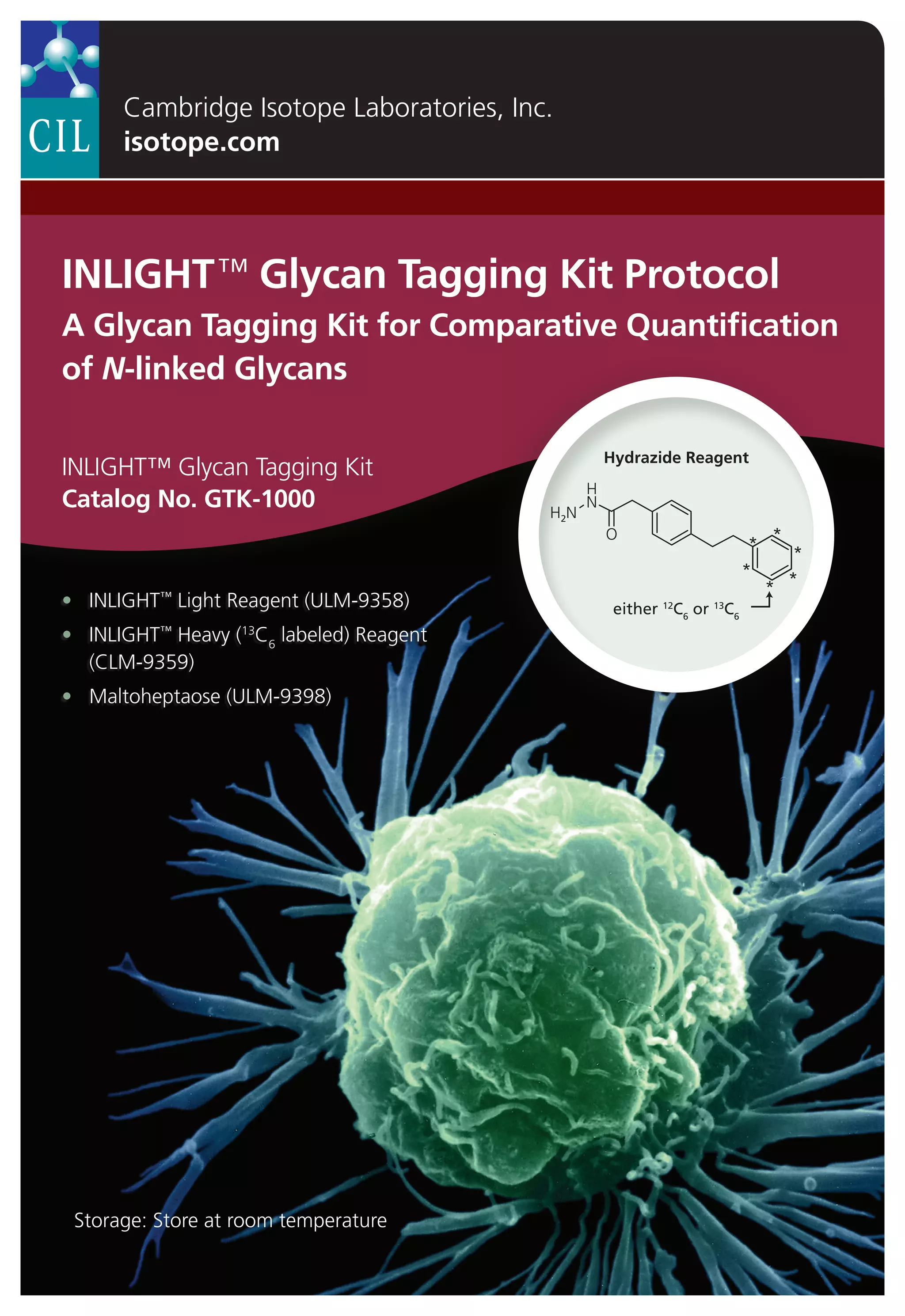
INLIGHT™ Glycan Tagging Kit Protocol
A Glycan Tagging Kit for Comparative Quantification
of N-linked Glycans
INLIGHT™ Glycan Tagging Kit
Catalog No. GTK-1000 
Hydrazide Reagent
Storage: Store at room temperature
INLIGHT™ Strategy
N-Linked Glycan Cleavage and
Derivatization via Hydrazone Formation
Cambridge Isotope Laboratories’ INLIGHT™ Glycan Tagging Kit contains natural (light) and
13
C stable isotope-labeled (heavy) hydrazide reagents for derivatization of free N-glycans. The
INLIGHT™ protocol was developed for tagging N-glycans isolated from glycoproteins for LC/MS
relative quantification. Maltoheptaose is provided for use as an internal oligosaccharide (7 hexose
units) standard. The INLIGHT™ Glycan Tagging Kit (GTK-1000) contains five vials of light reagent
and five vials of heavy reagent which in total provide tagging reagent for approximately 25 relative
quantification experiments.
Instruction for Use
The following pages contain step-by-step instructions for “INLIGHT™ Strategy: N-Linked Glycan
Cleavage and Derivatization via Hydrazone Formation” including the derivatization and
analysis of glycoproteins, Fetuin and RNase B. To ensure appropriate LC/MS conditions, the analysis
of glycoproteins fetuin and/or RNase B is highly recommended as a first step in using the INLIGHT™
strategy of glycan analysis. This will allow proper strategy optimization and troubleshooting for each
step, paying particular attention to:
	 a) time and resource constraints.
	 b) LC/MS platform verification/optimization.
After the INLIGHT™ strategy has been successfully applied to these well-characterized glycoproteins
fetuin and RNase B (see sample data at: isotope.com/chemical-tagging), the strategy may be applied
with confidence to complex mixtures.
KIT CONTENTS
INLIGHT™ Strategy
N-Linked Glycan Cleavage and
Derivatization via Hydrazone Formation
INLIGHT Glycan Tagging Kit
GTK-1000
• INLIGHT™ Light Reagent, 5 × 0.25 mg (ULM-9358, provided)
• INLIGHT™ Heavy (13
C6
labeled) Reagent, 5 × 0.25 mg
(CLM-9359, provided)
• 1
Maltoheptaose, 5 × 10 μg (ULM-9398, provided)
REQUIRED REAGENTS
	
Solvents	 Manufacturer	 Part No./Cat. No.
Acetonitrile – HPLC grade (ACN)	 Burdick  Jackson	 AH015-4
Methanol – HPLC grade	 Burdick  Jackson	 AH230-4
Water – HPLC grade	 Burdick  Jackson	 AH365-4
Formic acid	 Sigma-Aldrich	 56302
Acetic acid (50%) solution for HPLC	 Sigma-Aldrich	 45754
Trifluoroacetic acid, Reagent Plus®
9 (TFA)	 Sigma-Aldrich	 T6508
Ethanol (200 proof) HPLC grade	 Sigma-Aldrich	 459828
Reagents  Other Supplies	 Manufacturer	 Part No./Cat. No.
SPE graphitized carbograph columns [300 mg]	 Grace Discovery Sciences	 210101
Ammonium bicarbonate	 Sigma-Aldrich	 A6141
Dithiothreitol 1 M aqueous solution	 Sigma-Aldrich	 646563
2
Horseradish peroxidase (HRP) Type VI	 Sigma-Aldrich	 P8375
PNGase F – glycerol free [75,000 units]	 New England Biolabs	 P0705L
3
Fetuin	 New England Biolabs	 P6042S
4
RNase B	 New England Biolabs	 P7817S
INSTRUCTIONS FOR USE
A.	Solution and Buffer Preparation
	 1.	 SPE Wash Solution (solvent #1) 1 Liter – 1 mL TFA in water (HPLC grade).
	 2.	SPE Condition Solution (solvent #2) 1 Liter – 500 µL TFA, 800 mL ACN, 200 mL water
(HPLC grade).
	 3.	SPE Elution Solution (solvent #3) 1 Liter – 1 mL TFA, 250 mL ACN, 750 mL water
(HPLC grade).
isotope.com | 1 |
Hydrazide Reagent
2-(4-phenethylphenyl)acetohydrazide:
N-glycan tagging reagent (see ref. 1)
(continued)
4.	Digest Buffer – 250 mL – 100 mM ammonium bicarbonate – weigh 1970 mg, dissolve in
water (HPLC grade).
	 5.	 Derivatization Solution – 100 mL – 75:25 (v/v) methanol:50% acetic acid.
	 *Note: HPLC-grade solvents should be used if at all possible. However, depending on the number
of samples being prepared in parallel, large volumes of wash buffer may be necessary for solid-
phase extraction purification of N-glycans, in which case Milli-Q water or equivalent may be
substituted for HPLC-grade water in SPE wash buffer.
1
Maltoheptaose is a glucose heptamer that can be used as a free oligosaccharide standard. (See references 2 and 3)
2
HRP (plant glycoprotein) can be used as an internal standard, contains a xylosylated glycan. (See reference 2)
3
Fetuin (mammalian glycoprotein) contains sialylated N-linked and O-linked glycans. (See references 4 and 5)
4
RNase B (mammalian glycoprotein) contains high-mannose-type N-linked glycans. (See references 6 and 7)
Standard Glycoprotein Samples:
Bovine Glycoproteins Fetuin A and RNase B
Sample Name/Tube Label Sample Description Tagging Reagent
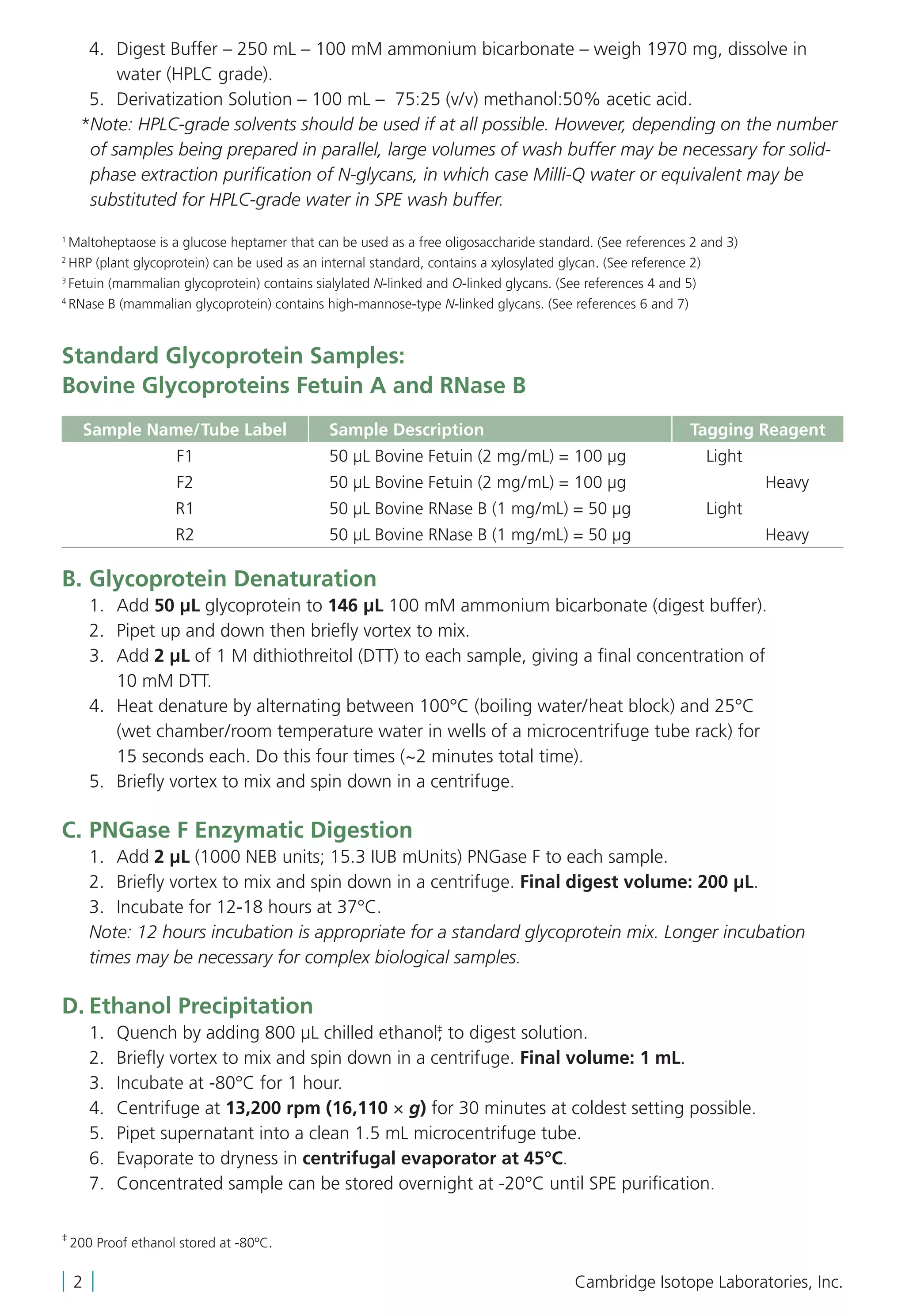
F1 50 µL Bovine Fetuin (2 mg/mL) = 100 µg Light
F2 50 µL Bovine Fetuin (2 mg/mL) = 100 µg Heavy
R1 50 µL Bovine RNase B (1 mg/mL) = 50 µg Light
R2 50 µL Bovine RNase B (1 mg/mL) = 50 µg Heavy
B.	Glycoprotein Denaturation
	 1.	Add 50 µL glycoprotein to 146 µL 100 mM ammonium bicarbonate (digest buffer).
	 2.	 Pipet up and down then briefly vortex to mix.
	 3.	Add 2 μL of 1 M dithiothreitol (DTT) to each sample, giving a final concentration of
10 mM DTT.
	 4.	Heat denature by alternating between 100°C (boiling water/heat block) and 25°C
(wet chamber/room temperature water in wells of a microcentrifuge tube rack) for
15 seconds each. Do this four times (~2 minutes total time).
	 5.	 Briefly vortex to mix and spin down in a centrifuge.
C.	PNGase F Enzymatic Digestion
	 1.	Add 2 μL (1000 NEB units; 15.3 IUB mUnits) PNGase F to each sample.
	 2.	 Briefly vortex to mix and spin down in a centrifuge. Final digest volume: 200 µL.
	3.	 Incubate for 12-18 hours at 37°C.
Note: 12 hours incubation is appropriate for a standard glycoprotein mix. Longer incubation
times may be necessary for complex biological samples.
D.	Ethanol Precipitation
	 1.	 Quench by adding 800 μL chilled ethanol,‡
to digest solution.
	 2.	 Briefly vortex to mix and spin down in a centrifuge. Final volume: 1 mL.
	 3.	 Incubate at -80°C for 1 hour.
	 4.	 Centrifuge at 13,200 rpm (16,110 × g) for 30 minutes at coldest setting possible.
	 5.	 Pipet supernatant into a clean 1.5 mL microcentrifuge tube.
	 6.	 Evaporate to dryness in centrifugal evaporator at 45°C.
	 7.	 Concentrated sample can be stored overnight at -20°C until SPE purification.
| 2 | Cambridge Isotope Laboratories, Inc.
‡
200 Proof ethanol stored at -80ºC.
E.	Glycan Purification by Solid-Phase Extraction (SPE)
	 Solvent #1 – SPE wash solution: 0.1% TFA in water
	 Solvent #2 – SPE conditioning solution: 0.05/80/20% (v/v/v) TFA/ACN/water
	 Solvent #3 – SPE elution solution: 0.1/25/75% (v/v/v) TFA/ACN/water
	 1.	 Condition SPE graphitized carbograph columns in the following order:
		 a)	 Two column volumes of solvent #1.
		 b)	 One column volume of solvent #2.
		 c)	 Two column volumes of solvent #1.
	 2.	 Re-suspend samples in 1 mL of solvent #1.
	 3.	 Briefly vortex to mix and spin down in a centrifuge.
	 4.	When the last of the wash solution elutes, pour the reconstituted sample into the
SPE column.
	 5.	Rinse sample vial with 1 mL of solvent #1, vortex, spin down in centrifuge, and pour into
the same cartridge as the initial reconstitution. Repeat rinse once more.
	 6.	 Allow meniscus to reach top of filter.
	 7.	 Wash loaded column (containing glycome solution) with 40 mL of solvent #1.
	 8.	 Elute the glycans with 1 mL of solvent #3 and collect fraction (Fraction A).
	 9.	 Repeat 3 times (Fractions B, C  D).
	 10.	 Freeze collected fractions (4) at -80°C.
F.	 Combine SPE Fractions
	 1.	 Concentrate SPE fractions to dryness using centrifugal evaporator at 45°C (~5-6 hours).
	 2.	Re-suspend Fractions A, C  D with 75 µL HPLC water; briefly vortex to mix and spin down
in a centrifuge.
	 3.	 Combine suspended fractions into Fraction B.
	 4.	 Freeze at -80°C.
	 5.	 Concentrate to dryness at 45°C (~2-3 hours).
	 6.	 After sample is completely dry, store at -20°C until day of LC/MS analysis.
G.	Glycan Derivatization
	Note: Each vial contains 0.25 mg of INLIGHT™ reagent [2-(4-phenethylphenyl)acetohydrazide],
enough for up to five reactions, depending on the starting concentration of glycan. The
following quantity of tag has proven sufficient for derivatization of: 50 µg maltodextrin (linear
polysaccharide standard); 50 µg RNase B glycoprotein (1 glycosite; high mannose-type glycans);
100 µg fetuin glycoprotein (3 glycosites; complex type glycans), and 50 μL aliquots of human
plasma (approx. 30 mg/mL total protein based on Bradford assay). It is recommended that
laboratories optimize INLIGHT™ tag : glyco-substrate ratio to minimize excess tag and maximize
reaction efficiency ( 95%).	
	 1.	Make a 0.25 mg/mL solution of each: INLIGHT™ Light Reagent and INLIGHT™ Heavy
Reagent by dissolving each reagent in derivatization solution; 75/25 (v/v) methanol:
50% acetic acid.
	 2.	 Re-suspend purified glycan samples in either:
		 a)	 200 μL Light Reagent solution (natural 2-(4-phenethylphenyl)acetohydrazide)
		 b)	 200 μL Heavy Reagent solution (13
C6
labeled 2-(4-phenethylphenyl)acetohydrazide)
	 3.	 Pipet up and down, then vortex to further mix, and spin down by centrifuge.
	4.	Optional: Add 10 µg maltoheptaose (polysaccharide standard) to each reaction, prepared
fresh in derivatization buffer.
isotope.com | 3 |
(continued)
5.	 Incubate samples at 56°C for 3 hours.
	 6.	Evaporate to dryness in centrifugal evaporator at 55°C. Important: to completely quench
reaction, all solvent must be evaporated before LC/MS analysis.
H.	LC/MS Preparation
	 *Use only HPLC-grade solvents
	 1.	 Re-suspend derivatized glycan samples in 25-200 μL of:
		Reversed Phase HPLC: 0.2% formic acid in 98:2 (v/v) water: acetonitrile (Mobile Phase A)
		HILIC: 50 mM ammonium acetate in water (pH 4.5) (Mobile Phase A)
	 2.	Pipet up and down, then vortex for 30 seconds.
		For samples tagged with ≥20μg tag:
			 a. Centrifuge at 14,000 × g for 5 minutes.
			 b. Carefully pipet supernatant (containing derivatized glycans), leaving pellet (containing
excess reagent)
	 5.	 Combine “Light” and “Heavy”-labeled glycan samples in a 1:1 (v/v) ratio for LC/MS analysis.
I.	 LC/MS Analysis
	There are many LC/MS methods that may be used for analysis of tagged glycans. The following
examples have proven successful.8
These methods are described for a 40 μL Light: 40 μL Heavy
combined glycome sample. An appreciable increase in glycan signal intensity is observed
when using a mass spectrometer equipped with a high-pass filter and AGC. Alternative mass
analyzers are viable, but may require in-house optimization. Likewise, variability between LC
systems may require in-house optimization for efficient glycan separation.
	 *Use only HPLC-grade solvents
	 nano-flow Reversed Phase HPLC:
	 •	 Stationary phase: Magic C18
AQ packing,
		 5 µm particle size, 200 Å pore size;
		 Michrom BioResources (Auburn, CA)
	 •	 Injection volume: 10 μL
	 •	 Flow rate: 500 nL/min
	 •	 Mobile Phase A:
		 0.2% formic acid in 98:2 (v/v) water: acetonitrile.
	 •	 Mobile Phase B:
		 0.2% formic acid in 2:98 (v/v) water: acetonitrile.
| 4 | Cambridge Isotope Laboratories, Inc.
Our process: Re-suspend derivatized glycans in 200 μL
and combine 40 µL from one “Light”-labeled glycome
and 40 µL from one “Heavy”-labeled glycome for
relative quantification of derivatized N-glycans by LC/MS
using INLIGHT™.3
Note: Any remaining derivatized samples can be dried
down and stored at -20°C. Be aware that sample
integrity may degrade over time. Studies have not been
conducted to ensure stability of derivatized glycans
during long-term storage.
Table 1. RP-LC gradient elution profile
Time (min) %A %B
0 98 2
5 98 2
6 80 20
39 65 35
40 2 98
45 2 98
46 98 2
56 98 2
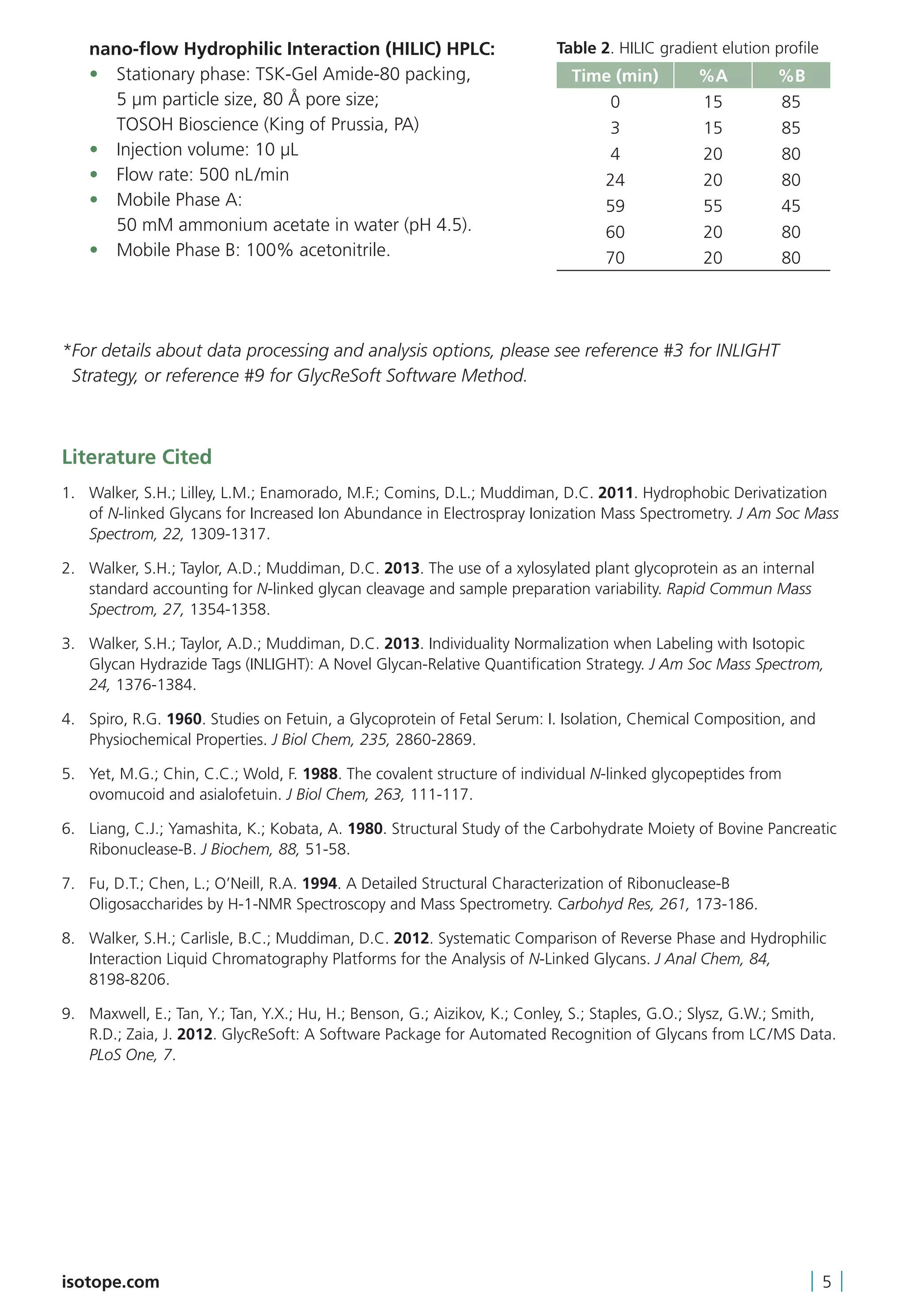
nano-flow Hydrophilic Interaction (HILIC) HPLC:
	 •	 Stationary phase: TSK-Gel Amide-80 packing,
		 5 µm particle size, 80 Å pore size;
		 TOSOH Bioscience (King of Prussia, PA)
	 •	 Injection volume: 10 μL
	 •	 Flow rate: 500 nL/min
	 •	 Mobile Phase A:
		 50 mM ammonium acetate in water (pH 4.5).
	 •	 Mobile Phase B: 100% acetonitrile.

*For details about data processing and analysis options, please see reference #3 for INLIGHT
Strategy, or reference #9 for GlycReSoft Software Method.
Literature Cited
1.	Walker, S.H.; Lilley, L.M.; Enamorado, M.F.; Comins, D.L.; Muddiman, D.C. 2011. Hydrophobic Derivatization
of N-linked Glycans for Increased Ion Abundance in Electrospray Ionization Mass Spectrometry. J Am Soc Mass
Spectrom, 22, 1309-1317.
2. 	Walker, S.H.; Taylor, A.D.; Muddiman, D.C. 2013. The use of a xylosylated plant glycoprotein as an internal
standard accounting for N-linked glycan cleavage and sample preparation variability. Rapid Commun Mass
Spectrom, 27, 1354-1358.
3.	Walker, S.H.; Taylor, A.D.; Muddiman, D.C. 2013. Individuality Normalization when Labeling with Isotopic
Glycan Hydrazide Tags (INLIGHT): A Novel Glycan-Relative Quantification Strategy. J Am Soc Mass Spectrom,
24, 1376-1384.
4.	Spiro, R.G. 1960. Studies on Fetuin, a Glycoprotein of Fetal Serum: I. Isolation, Chemical Composition, and
Physiochemical Properties. J Biol Chem, 235, 2860-2869.
5.	Yet, M.G.; Chin, C.C.; Wold, F. 1988. The covalent structure of individual N-linked glycopeptides from
ovomucoid and asialofetuin. J Biol Chem, 263, 111-117.
6.	Liang, C.J.; Yamashita, K.; Kobata, A. 1980. Structural Study of the Carbohydrate Moiety of Bovine Pancreatic
Ribonuclease-B. J Biochem, 88, 51-58.
7.	Fu, D.T.; Chen, L.; O’Neill, R.A. 1994. A Detailed Structural Characterization of Ribonuclease-B
Oligosaccharides by H-1-NMR Spectroscopy and Mass Spectrometry. Carbohyd Res, 261, 173-186.
8.	Walker, S.H.; Carlisle, B.C.; Muddiman, D.C. 2012. Systematic Comparison of Reverse Phase and Hydrophilic
Interaction Liquid Chromatography Platforms for the Analysis of N-Linked Glycans. J Anal Chem, 84,
8198-8206.
9.	Maxwell, E.; Tan, Y.; Tan, Y.X.; Hu, H.; Benson, G.; Aizikov, K.; Conley, S.; Staples, G.O.; Slysz, G.W.; Smith,
R.D.; Zaia, J. 2012. GlycReSoft: A Software Package for Automated Recognition of Glycans from LC/MS Data.
PLoS One, 7.
isotope.com | 5 |
Table 2. HILIC gradient elution profile
Time (min) %A %B
0 15 85
3 15 85
4 20 80
24 20 80
59 55 45
60 20 80
70 20 80
Cambridge Isotope Laboratories, Inc.
3 Highwood Drive, Tewksbury, MA 01876  USA
direct:	1.978.749.8000
toll-free:	 1.800.322.1174 (North America)
fax:	1.978.749.2768
e-mail:	cilsales@isotope.com
web:	www.isotope.com
Protocol_GTK
6/14 Supersedes all previously published literature

Protocol_GTK_glycan_booklet

  • 1.
    • INLIGHT™ Light Reagent (ULM-9358) • INLIGHT™ Heavy(13 C6 labeled) Reagent (CLM-9359) • Maltoheptaose (ULM-9398) Cambridge Isotope Laboratories, Inc. isotope.com INLIGHT™ Glycan Tagging Kit Protocol A Glycan Tagging Kit for Comparative Quantification of N-linked Glycans INLIGHT™ Glycan Tagging Kit Catalog No. GTK-1000  Hydrazide Reagent Storage: Store at room temperature
  • 2.
    INLIGHT™ Strategy N-Linked GlycanCleavage and Derivatization via Hydrazone Formation Cambridge Isotope Laboratories’ INLIGHT™ Glycan Tagging Kit contains natural (light) and 13 C stable isotope-labeled (heavy) hydrazide reagents for derivatization of free N-glycans. The INLIGHT™ protocol was developed for tagging N-glycans isolated from glycoproteins for LC/MS relative quantification. Maltoheptaose is provided for use as an internal oligosaccharide (7 hexose units) standard. The INLIGHT™ Glycan Tagging Kit (GTK-1000) contains five vials of light reagent and five vials of heavy reagent which in total provide tagging reagent for approximately 25 relative quantification experiments. Instruction for Use The following pages contain step-by-step instructions for “INLIGHT™ Strategy: N-Linked Glycan Cleavage and Derivatization via Hydrazone Formation” including the derivatization and analysis of glycoproteins, Fetuin and RNase B. To ensure appropriate LC/MS conditions, the analysis of glycoproteins fetuin and/or RNase B is highly recommended as a first step in using the INLIGHT™ strategy of glycan analysis. This will allow proper strategy optimization and troubleshooting for each step, paying particular attention to: a) time and resource constraints. b) LC/MS platform verification/optimization. After the INLIGHT™ strategy has been successfully applied to these well-characterized glycoproteins fetuin and RNase B (see sample data at: isotope.com/chemical-tagging), the strategy may be applied with confidence to complex mixtures.
  • 3.
    KIT CONTENTS INLIGHT™ Strategy N-LinkedGlycan Cleavage and Derivatization via Hydrazone Formation INLIGHT Glycan Tagging Kit GTK-1000 • INLIGHT™ Light Reagent, 5 × 0.25 mg (ULM-9358, provided) • INLIGHT™ Heavy (13 C6 labeled) Reagent, 5 × 0.25 mg (CLM-9359, provided) • 1 Maltoheptaose, 5 × 10 μg (ULM-9398, provided) REQUIRED REAGENTS Solvents Manufacturer Part No./Cat. No. Acetonitrile – HPLC grade (ACN) Burdick Jackson AH015-4 Methanol – HPLC grade Burdick Jackson AH230-4 Water – HPLC grade Burdick Jackson AH365-4 Formic acid Sigma-Aldrich 56302 Acetic acid (50%) solution for HPLC Sigma-Aldrich 45754 Trifluoroacetic acid, Reagent Plus® 9 (TFA) Sigma-Aldrich T6508 Ethanol (200 proof) HPLC grade Sigma-Aldrich 459828 Reagents Other Supplies Manufacturer Part No./Cat. No. SPE graphitized carbograph columns [300 mg] Grace Discovery Sciences 210101 Ammonium bicarbonate Sigma-Aldrich A6141 Dithiothreitol 1 M aqueous solution Sigma-Aldrich 646563 2 Horseradish peroxidase (HRP) Type VI Sigma-Aldrich P8375 PNGase F – glycerol free [75,000 units] New England Biolabs P0705L 3 Fetuin New England Biolabs P6042S 4 RNase B New England Biolabs P7817S INSTRUCTIONS FOR USE A. Solution and Buffer Preparation 1. SPE Wash Solution (solvent #1) 1 Liter – 1 mL TFA in water (HPLC grade). 2. SPE Condition Solution (solvent #2) 1 Liter – 500 µL TFA, 800 mL ACN, 200 mL water (HPLC grade). 3. SPE Elution Solution (solvent #3) 1 Liter – 1 mL TFA, 250 mL ACN, 750 mL water (HPLC grade). isotope.com | 1 | Hydrazide Reagent 2-(4-phenethylphenyl)acetohydrazide: N-glycan tagging reagent (see ref. 1) (continued)
  • 4.
    4. Digest Buffer –250 mL – 100 mM ammonium bicarbonate – weigh 1970 mg, dissolve in water (HPLC grade). 5. Derivatization Solution – 100 mL – 75:25 (v/v) methanol:50% acetic acid. *Note: HPLC-grade solvents should be used if at all possible. However, depending on the number of samples being prepared in parallel, large volumes of wash buffer may be necessary for solid- phase extraction purification of N-glycans, in which case Milli-Q water or equivalent may be substituted for HPLC-grade water in SPE wash buffer. 1 Maltoheptaose is a glucose heptamer that can be used as a free oligosaccharide standard. (See references 2 and 3) 2 HRP (plant glycoprotein) can be used as an internal standard, contains a xylosylated glycan. (See reference 2) 3 Fetuin (mammalian glycoprotein) contains sialylated N-linked and O-linked glycans. (See references 4 and 5) 4 RNase B (mammalian glycoprotein) contains high-mannose-type N-linked glycans. (See references 6 and 7) Standard Glycoprotein Samples: Bovine Glycoproteins Fetuin A and RNase B Sample Name/Tube Label Sample Description Tagging Reagent F1 50 µL Bovine Fetuin (2 mg/mL) = 100 µg Light F2 50 µL Bovine Fetuin (2 mg/mL) = 100 µg Heavy R1 50 µL Bovine RNase B (1 mg/mL) = 50 µg Light R2 50 µL Bovine RNase B (1 mg/mL) = 50 µg Heavy B. Glycoprotein Denaturation 1. Add 50 µL glycoprotein to 146 µL 100 mM ammonium bicarbonate (digest buffer). 2. Pipet up and down then briefly vortex to mix. 3. Add 2 μL of 1 M dithiothreitol (DTT) to each sample, giving a final concentration of 10 mM DTT. 4. Heat denature by alternating between 100°C (boiling water/heat block) and 25°C (wet chamber/room temperature water in wells of a microcentrifuge tube rack) for 15 seconds each. Do this four times (~2 minutes total time). 5. Briefly vortex to mix and spin down in a centrifuge. C. PNGase F Enzymatic Digestion 1. Add 2 μL (1000 NEB units; 15.3 IUB mUnits) PNGase F to each sample. 2. Briefly vortex to mix and spin down in a centrifuge. Final digest volume: 200 µL. 3. Incubate for 12-18 hours at 37°C. Note: 12 hours incubation is appropriate for a standard glycoprotein mix. Longer incubation times may be necessary for complex biological samples. D. Ethanol Precipitation 1. Quench by adding 800 μL chilled ethanol,‡ to digest solution. 2. Briefly vortex to mix and spin down in a centrifuge. Final volume: 1 mL. 3. Incubate at -80°C for 1 hour. 4. Centrifuge at 13,200 rpm (16,110 × g) for 30 minutes at coldest setting possible. 5. Pipet supernatant into a clean 1.5 mL microcentrifuge tube. 6. Evaporate to dryness in centrifugal evaporator at 45°C. 7. Concentrated sample can be stored overnight at -20°C until SPE purification. | 2 | Cambridge Isotope Laboratories, Inc. ‡ 200 Proof ethanol stored at -80ºC.
  • 5.
    E. Glycan Purification bySolid-Phase Extraction (SPE) Solvent #1 – SPE wash solution: 0.1% TFA in water Solvent #2 – SPE conditioning solution: 0.05/80/20% (v/v/v) TFA/ACN/water Solvent #3 – SPE elution solution: 0.1/25/75% (v/v/v) TFA/ACN/water 1. Condition SPE graphitized carbograph columns in the following order: a) Two column volumes of solvent #1. b) One column volume of solvent #2. c) Two column volumes of solvent #1. 2. Re-suspend samples in 1 mL of solvent #1. 3. Briefly vortex to mix and spin down in a centrifuge. 4. When the last of the wash solution elutes, pour the reconstituted sample into the SPE column. 5. Rinse sample vial with 1 mL of solvent #1, vortex, spin down in centrifuge, and pour into the same cartridge as the initial reconstitution. Repeat rinse once more. 6. Allow meniscus to reach top of filter. 7. Wash loaded column (containing glycome solution) with 40 mL of solvent #1. 8. Elute the glycans with 1 mL of solvent #3 and collect fraction (Fraction A). 9. Repeat 3 times (Fractions B, C D). 10. Freeze collected fractions (4) at -80°C. F. Combine SPE Fractions 1. Concentrate SPE fractions to dryness using centrifugal evaporator at 45°C (~5-6 hours). 2. Re-suspend Fractions A, C D with 75 µL HPLC water; briefly vortex to mix and spin down in a centrifuge. 3. Combine suspended fractions into Fraction B. 4. Freeze at -80°C. 5. Concentrate to dryness at 45°C (~2-3 hours). 6. After sample is completely dry, store at -20°C until day of LC/MS analysis. G. Glycan Derivatization Note: Each vial contains 0.25 mg of INLIGHT™ reagent [2-(4-phenethylphenyl)acetohydrazide], enough for up to five reactions, depending on the starting concentration of glycan. The following quantity of tag has proven sufficient for derivatization of: 50 µg maltodextrin (linear polysaccharide standard); 50 µg RNase B glycoprotein (1 glycosite; high mannose-type glycans); 100 µg fetuin glycoprotein (3 glycosites; complex type glycans), and 50 μL aliquots of human plasma (approx. 30 mg/mL total protein based on Bradford assay). It is recommended that laboratories optimize INLIGHT™ tag : glyco-substrate ratio to minimize excess tag and maximize reaction efficiency ( 95%). 1. Make a 0.25 mg/mL solution of each: INLIGHT™ Light Reagent and INLIGHT™ Heavy Reagent by dissolving each reagent in derivatization solution; 75/25 (v/v) methanol: 50% acetic acid. 2. Re-suspend purified glycan samples in either: a) 200 μL Light Reagent solution (natural 2-(4-phenethylphenyl)acetohydrazide) b) 200 μL Heavy Reagent solution (13 C6 labeled 2-(4-phenethylphenyl)acetohydrazide) 3. Pipet up and down, then vortex to further mix, and spin down by centrifuge. 4. Optional: Add 10 µg maltoheptaose (polysaccharide standard) to each reaction, prepared fresh in derivatization buffer. isotope.com | 3 | (continued)
  • 6.
    5. Incubate samplesat 56°C for 3 hours. 6. Evaporate to dryness in centrifugal evaporator at 55°C. Important: to completely quench reaction, all solvent must be evaporated before LC/MS analysis. H. LC/MS Preparation *Use only HPLC-grade solvents 1. Re-suspend derivatized glycan samples in 25-200 μL of: Reversed Phase HPLC: 0.2% formic acid in 98:2 (v/v) water: acetonitrile (Mobile Phase A) HILIC: 50 mM ammonium acetate in water (pH 4.5) (Mobile Phase A) 2. Pipet up and down, then vortex for 30 seconds. For samples tagged with ≥20μg tag: a. Centrifuge at 14,000 × g for 5 minutes. b. Carefully pipet supernatant (containing derivatized glycans), leaving pellet (containing excess reagent) 5. Combine “Light” and “Heavy”-labeled glycan samples in a 1:1 (v/v) ratio for LC/MS analysis. I. LC/MS Analysis There are many LC/MS methods that may be used for analysis of tagged glycans. The following examples have proven successful.8 These methods are described for a 40 μL Light: 40 μL Heavy combined glycome sample. An appreciable increase in glycan signal intensity is observed when using a mass spectrometer equipped with a high-pass filter and AGC. Alternative mass analyzers are viable, but may require in-house optimization. Likewise, variability between LC systems may require in-house optimization for efficient glycan separation. *Use only HPLC-grade solvents nano-flow Reversed Phase HPLC: • Stationary phase: Magic C18 AQ packing, 5 µm particle size, 200 Å pore size; Michrom BioResources (Auburn, CA) • Injection volume: 10 μL • Flow rate: 500 nL/min • Mobile Phase A: 0.2% formic acid in 98:2 (v/v) water: acetonitrile. • Mobile Phase B: 0.2% formic acid in 2:98 (v/v) water: acetonitrile. | 4 | Cambridge Isotope Laboratories, Inc. Our process: Re-suspend derivatized glycans in 200 μL and combine 40 µL from one “Light”-labeled glycome and 40 µL from one “Heavy”-labeled glycome for relative quantification of derivatized N-glycans by LC/MS using INLIGHT™.3 Note: Any remaining derivatized samples can be dried down and stored at -20°C. Be aware that sample integrity may degrade over time. Studies have not been conducted to ensure stability of derivatized glycans during long-term storage. Table 1. RP-LC gradient elution profile Time (min) %A %B 0 98 2 5 98 2 6 80 20 39 65 35 40 2 98 45 2 98 46 98 2 56 98 2
  • 7.
    nano-flow Hydrophilic Interaction(HILIC) HPLC: • Stationary phase: TSK-Gel Amide-80 packing, 5 µm particle size, 80 Å pore size; TOSOH Bioscience (King of Prussia, PA) • Injection volume: 10 μL • Flow rate: 500 nL/min • Mobile Phase A: 50 mM ammonium acetate in water (pH 4.5). • Mobile Phase B: 100% acetonitrile. *For details about data processing and analysis options, please see reference #3 for INLIGHT Strategy, or reference #9 for GlycReSoft Software Method. Literature Cited 1. Walker, S.H.; Lilley, L.M.; Enamorado, M.F.; Comins, D.L.; Muddiman, D.C. 2011. Hydrophobic Derivatization of N-linked Glycans for Increased Ion Abundance in Electrospray Ionization Mass Spectrometry. J Am Soc Mass Spectrom, 22, 1309-1317. 2. Walker, S.H.; Taylor, A.D.; Muddiman, D.C. 2013. The use of a xylosylated plant glycoprotein as an internal standard accounting for N-linked glycan cleavage and sample preparation variability. Rapid Commun Mass Spectrom, 27, 1354-1358. 3. Walker, S.H.; Taylor, A.D.; Muddiman, D.C. 2013. Individuality Normalization when Labeling with Isotopic Glycan Hydrazide Tags (INLIGHT): A Novel Glycan-Relative Quantification Strategy. J Am Soc Mass Spectrom, 24, 1376-1384. 4. Spiro, R.G. 1960. Studies on Fetuin, a Glycoprotein of Fetal Serum: I. Isolation, Chemical Composition, and Physiochemical Properties. J Biol Chem, 235, 2860-2869. 5. Yet, M.G.; Chin, C.C.; Wold, F. 1988. The covalent structure of individual N-linked glycopeptides from ovomucoid and asialofetuin. J Biol Chem, 263, 111-117. 6. Liang, C.J.; Yamashita, K.; Kobata, A. 1980. Structural Study of the Carbohydrate Moiety of Bovine Pancreatic Ribonuclease-B. J Biochem, 88, 51-58. 7. Fu, D.T.; Chen, L.; O’Neill, R.A. 1994. A Detailed Structural Characterization of Ribonuclease-B Oligosaccharides by H-1-NMR Spectroscopy and Mass Spectrometry. Carbohyd Res, 261, 173-186. 8. Walker, S.H.; Carlisle, B.C.; Muddiman, D.C. 2012. Systematic Comparison of Reverse Phase and Hydrophilic Interaction Liquid Chromatography Platforms for the Analysis of N-Linked Glycans. J Anal Chem, 84, 8198-8206. 9. Maxwell, E.; Tan, Y.; Tan, Y.X.; Hu, H.; Benson, G.; Aizikov, K.; Conley, S.; Staples, G.O.; Slysz, G.W.; Smith, R.D.; Zaia, J. 2012. GlycReSoft: A Software Package for Automated Recognition of Glycans from LC/MS Data. PLoS One, 7. isotope.com | 5 | Table 2. HILIC gradient elution profile Time (min) %A %B 0 15 85 3 15 85 4 20 80 24 20 80 59 55 45 60 20 80 70 20 80
  • 8.
    Cambridge Isotope Laboratories,Inc. 3 Highwood Drive, Tewksbury, MA 01876  USA direct: 1.978.749.8000 toll-free: 1.800.322.1174 (North America) fax: 1.978.749.2768 e-mail: cilsales@isotope.com web: www.isotope.com Protocol_GTK 6/14 Supersedes all previously published literature