PROTEIN CHEMISTRY
PROTEIN CHEMISTRY
Dr PIYUSH B. TAILOR
Associate Professor
Depart. Of Biochemistry
Govt. Medical College
Surat.
INTRODUCTION
• Abnormality in protein structure will lead to
major diseases with profound alterations in
metabolic functions.
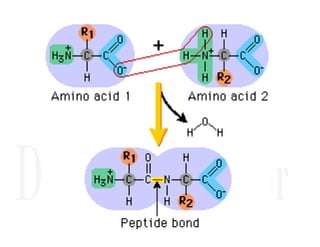
• Polymers of amino acids
• Linked by peptid bond
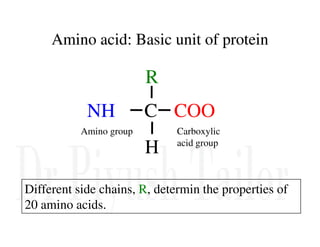
Amino acid: Basic unit of protein
COO-
NH3+ C
R
H
Different side chains, R, determin the properties of
20 amino acids.
Amino group Carboxylic
acid group
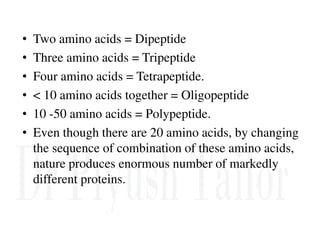
• Two amino acids = Dipeptide
• Three amino acids = Tripeptide
• Four amino acids = Tetrapeptide.
• < 10 amino acids together = Oligopeptide
• 10 -50 amino acids = Polypeptide.
• Even though there are 20 amino acids, by changing
the sequence of combination of these amino acids,
nature produces enormous number of markedly
different proteins.
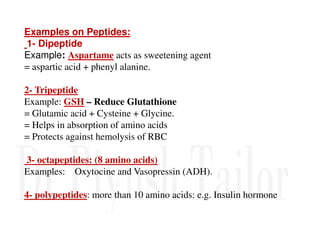
Examples on Peptides:
1- Dipeptide
Example: Aspartame acts as sweetening agent
= aspartic acid + phenyl alanine.
2- Tripeptide
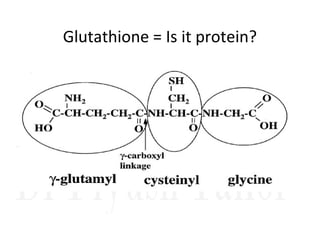
Example: GSH – Reduce Glutathione
= Glutamic acid + Cysteine + Glycine.
= Helps in absorption of amino acids
= Protects against hemolysis of RBC
3- octapeptides: (8 amino acids)
Examples: Oxytocine and Vasopressin (ADH).
4- polypeptides: more than 10 amino acids: e.g. Insulin hormone
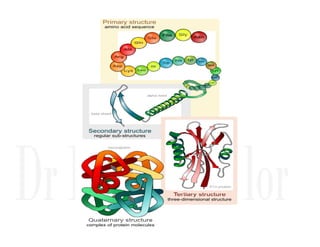
Type of Protein Structure
1. Primary
2. Secondary
3. Tertiary
4. Quaternary
4. Quaternary
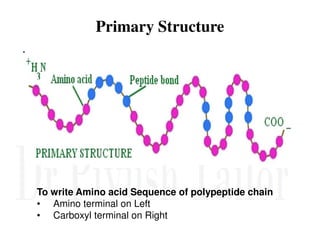
Primary Structure
.
To write Amino acid Sequence of polypeptide chain
• Amino terminal on Left
• Carboxyl terminal on Right
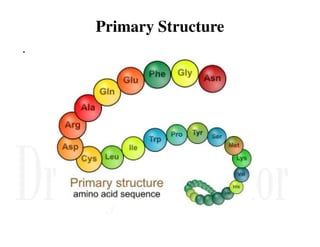
Primary Structure
.
Primary Structure & Functional Relationship
• Example
1. Sickle Cell Disease
2. Pre-pro-insulin to Pro-insulin to Insulin
3. Thallasemia
Sickle Cell Disease
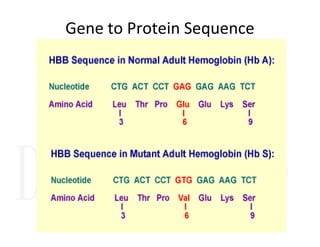
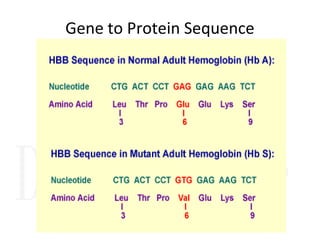
Gene to Protein Sequence
Sickle Cell Disease
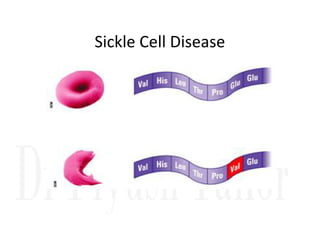
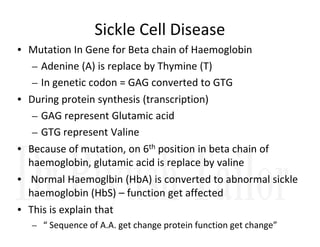
• Mutation In Gene for Beta chain of Haemoglobin
– Adenine (A) is replace by Thymine (T)
– In genetic codon = GAG converted to GTG
• During protein synthesis (transcription)
– GAG represent Glutamic acid
– GTG represent Valine
• Because of mutation, on 6th position in beta chain of
haemoglobin, glutamic acid is replace by valine
• Normal Haemoglbin (HbA) is converted to abnormal sickle
haemoglobin (HbS) – function get affected
• This is explain that
– “ Sequence of A.A. get change protein function get change”
`
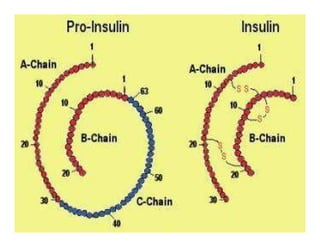
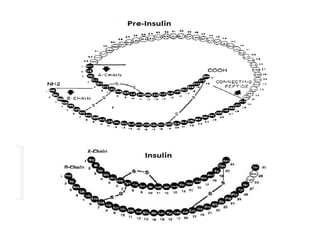
Pre-pro-insulin to Pro-insulin to Insulin
• Pre-pro-insulin & pro-Insulin ,both are inactive
• Proinsulin
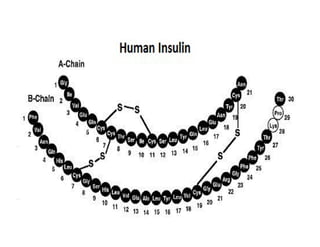
– single chain with 84 amino acids
– Inactive form
• Insulin
• Insulin
– double chain (A & B chain) with 51 amino acids
– Active form
• When Proinsulin is converted to insulin
– Sequence & number of amino acid, both get change
– So Function of protein get change
– Protein (insulin) became non-functional to functional
Thalassemia
• Normal HbA = Alpha (141 A.A.) & Beta (146 A.A.) Chain
• Mutation
– Non sense type of mutation (one of the etiology)
– Premature termination of haemoglobin chain synthesis
– Alpha or Beta either absent or short
– Alpha or Beta thalassemia occur
• Number of amino acid get changed
• Functional protein (HbA) become non-functional
Primary structural Functional Relation
• “Whenever Suquence or / and number of amino acid
get change , protein function get change”
Either
• Protein became Functional to Non-functional
– HbA to Sickle cell disease (sequence of A.A. changed)
– HbA to Thalassemia (Number of A.A. changed)
Or
• Protein became non-functional to functional
– Pro-insulin to Insulin (sequence & number of A.A.
both changed)
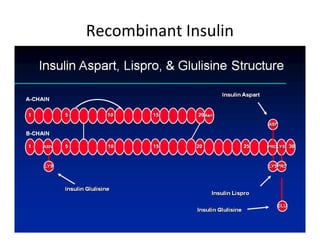
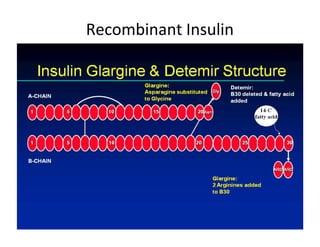
Recombinant Insulin
Recombinant Insulin
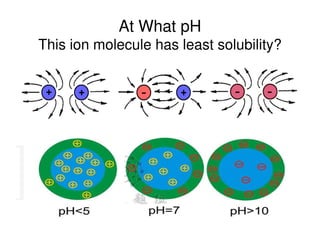
At What pH
This ion molecule has least solubility?
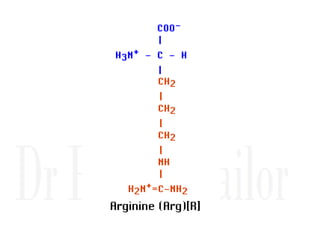
Extra 2 Arginine….Added in Human Insulin
• Is it make any change in charge?
– More positive
– More Negative
– No any change
• What shell be added more to make it neutral
(Net Charge Zero = Zwitter Ion )?
– Positive ions (H+)
– Negative ions (HCO3-)
• Can it change pI of insulin ?
– Decrease
– Increase
– Unchange
Extra 2 Arginine….Added in Human Insulin
• Human insulin has isoelectric pH of 5.4. what
can be pI of this newly for recombinant insulin?
– More than 5.4
– Less than 5.4
• In human body, this new recomb-insulin is going
to expose pH of _______ .
• Recombinant insulin pI (6.7) is nearer to
physiological pH (7.4) than human insulin pI
(5.4). So what will be effect on it’s solubility?
– More soluble
– Less soluble (precipitation)
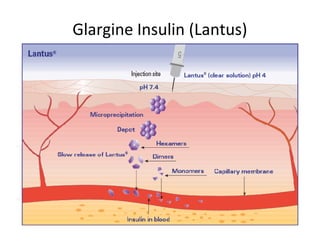
Glargine Insulin (Lantus)
Primary Structure
It is representing
• Numbers of Amino acids
• Sequence of Amino acids
• Unique amino acid sequence decided by the genes.
• Maintained by peptide linkages.
This two things decide higher levels of organization
(secondary, tertiary & quaternary) of protein.
Naming of Polypeptide
To write A.A. Sequence of polypeptide chain
• Amino terminal on Left
• Carboxyl terminal on Right
• Each component A.A. in a polypeptide is called a
“residue”
“residue”
• In a polypeptide , all A.A. residues suffixes (-ine,
-an, -ic, or -ate) changed to -yl, with the
exception of the C-terminal amino acid.
• E.g. Tripeptide = N-terminal valine, glycine, & C-
terminal leucine
• “valylglycylleucine”
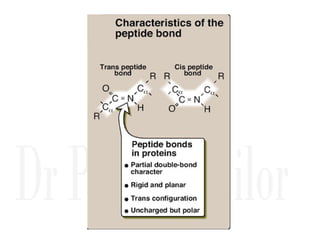
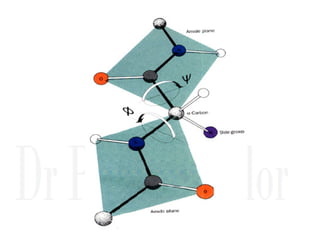
Charecteristics of a peptide bond
• It’s a partial double bond.
• ‘trans’ in nature
• Freedom of rotation with limitation to “R” group
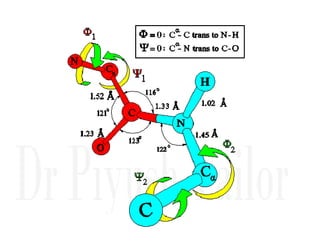
• Having rotation of 180 degree
• single bond = 360 degree
• double bond = 0 degree
• Distance is 1.32 A°
• single bond(1.42A°)
• double bond(1.27A°).
• Angles of rotation known as Ramchandran angles
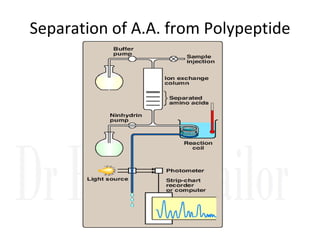
Separation of A.A. from Polypeptide
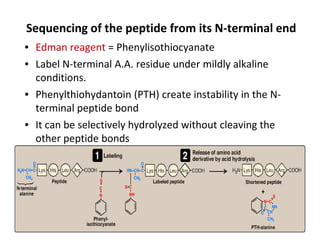
Sequencing of the peptide from its N-terminal end
• Edman reagent = Phenylisothiocyanate
• Label N-terminal A.A. residue under mildly alkaline
conditions.
• Phenylthiohydantoin (PTH) create instability in the N-
terminal peptide bond
• It can be selectively hydrolyzed without cleaving the
other peptide bonds
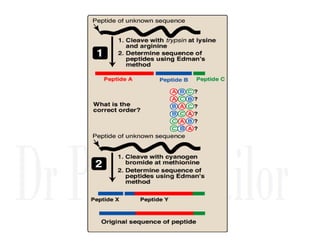
Gene to Protein Sequence
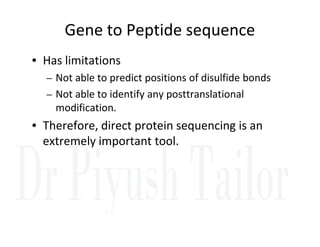
Gene to Peptide sequence
• Has limitations
– Not able to predict positions of disulfide bonds
– Not able to identify any posttranslational
modification.
• Therefore, direct protein sequencing is an
extremely important tool.
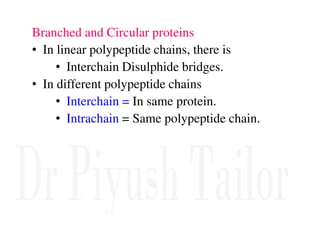
Branched and Circular proteins
• In linear polypeptide chains, there is
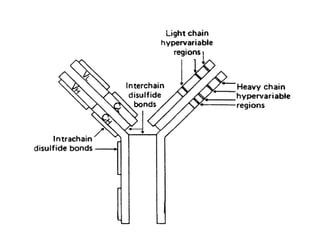
• Interchain Disulphide bridges.
• In different polypeptide chains
• Interchain = In same protein.
• Intrachain = Same polypeptide chain.
Glutathione = Is it protein?
Glutathione = Pseudopeptide
2. SECONDARY STRUCTURE
• Configurationally relationship between residues
which are about 3-4 amino acids apart in the
linear sequence.
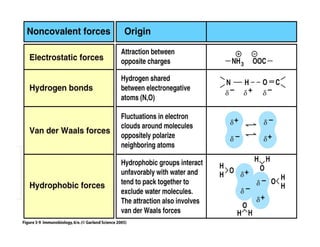
• The structure is preserved by non-covalent forces
or bonds.
or bonds.
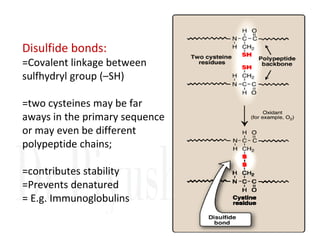
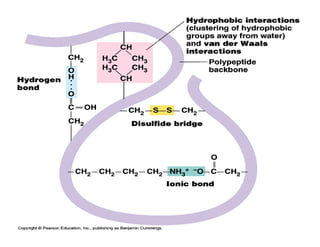
Disulfide bonds:
=Covalent linkage between
sulfhydryl group (–SH)
=two cysteines may be far
aways in the primary sequence
or may even be different
polypeptide chains;
=contributes stability
=Prevents denatured
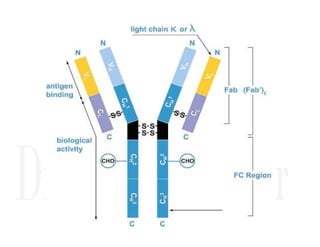
= E.g. Immunoglobulins
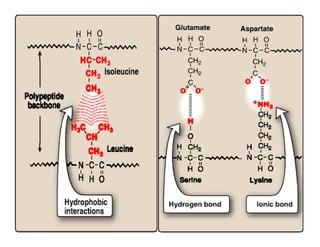
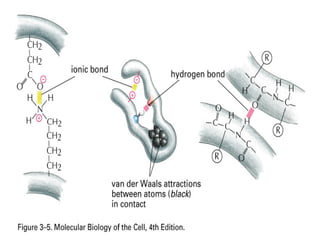
Hydrophobic interactions
• Non polar side chains = Remain in the interior
• Polar side chains = Remain on the surface
Hydrogen bonds
• Oxygen- or Nitrogen-bound hydrogen of side chains
• Alcohol groups of serine and threonine
• Can form hydrogen bonds with Oxygen of a carboxyl group of a
peptide bond (electron-rich atoms)
Ionic interactions
• Negatively charged groups, carboxyl group (–COO-) in the side
chain of aspartate or glutamate.
• Positively charged groups, such as the amino group (–NH3
+) in the
side chain of lysine .
Alpha Helix
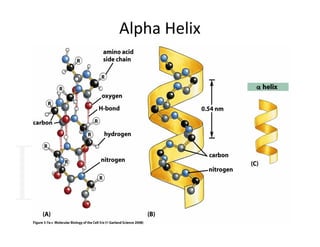
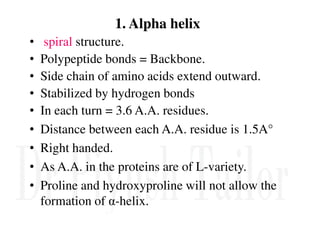
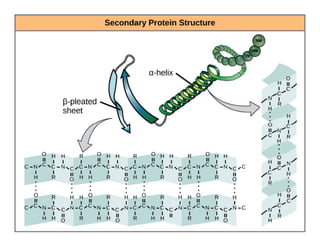
1. Alpha helix
• spiral structure.
• Polypeptide bonds = Backbone.
• Side chain of amino acids extend outward.
• Stabilized by hydrogen bonds
• In each turn = 3.6 A.A. residues.
• Distance between each A.A. residue is 1.5A°
• Right handed.
• As A.A. in the proteins are of L-variety.
• Proline and hydroxyproline will not allow the
formation of α-helix.
Example of Alpha Helix
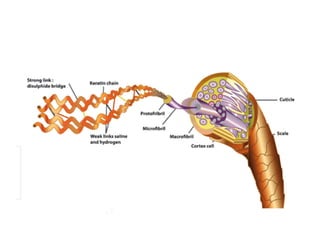
1. Keratins = fibrous proteins in Hair & Nail
• It’s rigidity is determined by the number of
disulfide bonds
2. Myoglobin = globular & flexible molecule.
(Contrast to Keratin)
It can disturb Alpha helix
• Proline
– Secondary amino group is not geometrically
compatible
– it inserts a kink in the chain
• Large numbers of charged amino acids
– As it forms more ionic bonds or by electrostatically
repelling each other.
– E.g. glutamate, aspartate, histidine, lysine, or
arginine
• Amino acids with bulky side chains or branched
– Tryptophane, Valine, Isoleucine
Beta Plated Sheet
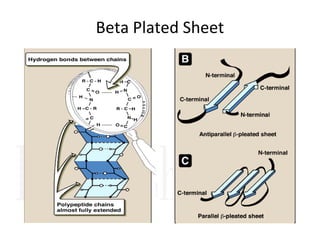
2. Beta-pleated sheet
• The distance between adjacent a.a. is 3.5A°.
• It is stabilised by hydrogen bonds.
• Adjacent strands in a sheet
• Parallel
• Anti parallel
• Anti parallel
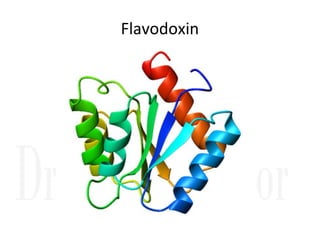
• E.g. Flavodoxin , Carbonic anhydrase
Triple helical structure in collagen
Flavodoxin
Beta Bands (beta turn)
• Reverse the direction of a polypeptide chain
• Helping it form a compact, globular shape.
• Found on the surface of protein molecules
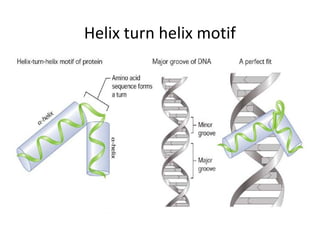
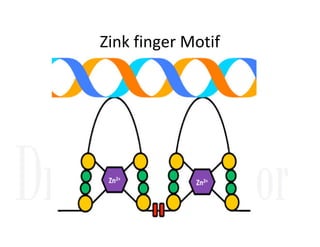
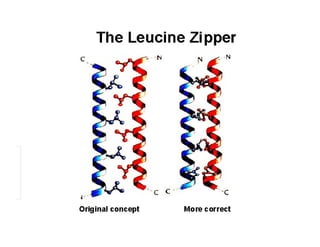
Supersecondary Structure (Motif)
Combining of α-helices and β-sheets
Form primarily the core region—that is, the
interior of the molecule.
Connected by loop β-bends
Supersecondary structures are usually produced
by packing side chains from adjacent secondary
structural elements close to each other.
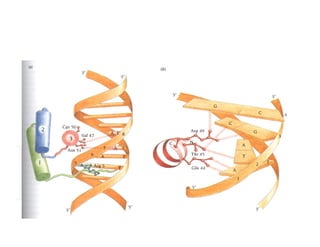
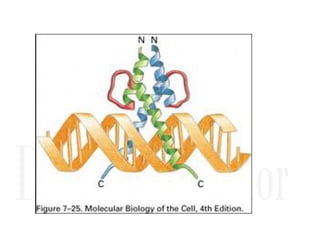
Helix turn helix motif
Zink finger Motif
3.TERTIARY STRUCTURE
• three dimentional structure of the whole protein.
• A.A. are far apart from each other in the linear
sequence.
• But A.A. are close in the three dimention.
• It is maintained by non-covalent interactions
• hydrophobic bonds
• electrostatic bonds
• Van der Waals forces.
Domain
• Compact Globular Functional Unit of a protein.
• Independent region of the protein
• May be multiple = if protein has > 200 amino acids.
• Core of a domain is built from combinations of motifs.
• Folding of domain peptide chain is independently of
folding in other domains.
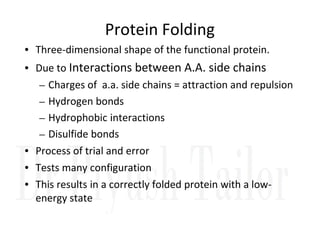
Protein Folding
• Three-dimensional shape of the functional protein.
• Due to Interactions between A.A. side chains
– Charges of a.a. side chains = attraction and repulsion
– Hydrogen bonds
– Hydrophobic interactions
– Disulfide bonds
• Process of trial and error
• Tests many configuration
• This results in a correctly folded protein with a low-
energy state
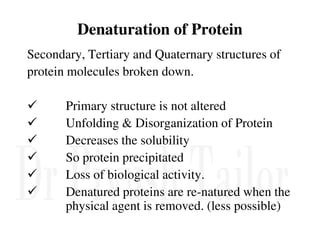
Denaturation of Protein
Secondary, Tertiary and Quaternary structures of
protein molecules broken down.
Primary structure is not altered
Unfolding & Disorganization of Protein
Decreases the solubility
So protein precipitated
Loss of biological activity.
Denatured proteins are re-natured when the
physical agent is removed. (less possible)
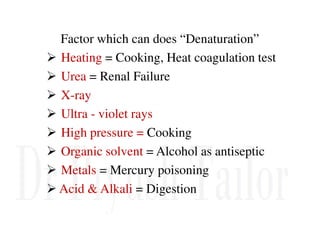
Factor which can does “Denaturation”
Heating = Cooking, Heat coagulation test
Urea = Renal Failure
X-ray
Ultra - violet rays
High pressure = Cooking
Organic solvent = Alcohol as antiseptic
Metals = Mercury poisoning
Acid & Alkali = Digestion
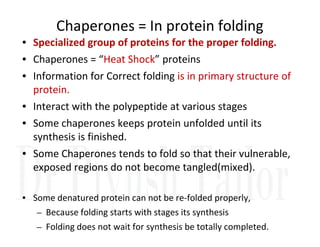
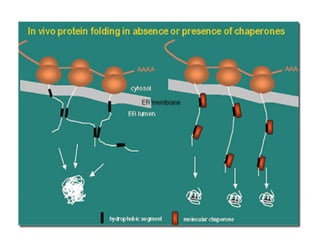
Chaperones = In protein folding
• Specialized group of proteins for the proper folding.
• Chaperones = “Heat Shock” proteins
• Information for Correct folding is in primary structure of
protein.
• Interact with the polypeptide at various stages
• Some chaperones keeps protein unfolded until its
synthesis is finished.
• Some Chaperones tends to fold so that their vulnerable,
exposed regions do not become tangled(mixed).
• Some denatured protein can not be re-folded properly,
– Because folding starts with stages its synthesis
– Folding does not wait for synthesis be totally completed.
4.QUATERNARY STRUCTURE
• Certain polypeptides aggregate
• form one functional protein
• known as quaternary structure.
• The protein will lose its function when the
subunits are dissociated.
• Stabilised by
• hydrogen bonds
• electrostatic bonds
• hydrophobic bonds
• van der Waals forces.
• Depending on the number of the monomers
• Dimer(2)
• Tetramer(4).
• Each polypeptide chain is termed as Subunit or
Monomer.
• For example,
– Hemoglobin = 2 alpha and 2 beta chains
– Immunoglobulin G = 2 heavy & 2 light chains
– Creatine kinase is dimer
– Lactate dehydrogenase is a tetramer.
Protein Misfolding
• Complex process
• Trial & Error process
• Misfolded proteins are usually tagged and degraded.
• Misfolding of proteins may occur
– Spontaneously
By mutation in a particular gene
– By mutation in a particular gene
• Accumulation of misfolded proteins can cause disease
• E.g. Amyloidosis
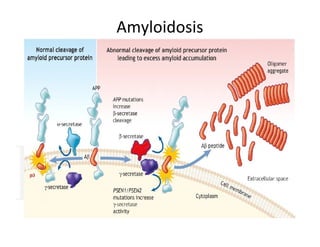
Amyloidosis
Amyloidosis = Alzheimer’s disease
• Accumulation of amyloid β (Aβ), 40 – 42 A.A. = “ Amyloids”
• Neurodegenerative disorder = “Alzheimer disease”.
• Found in the brain parenchyma & around blood vessels.
• Neurotoxic & leading to the cognitive impairment
• Abnormal proteolytic cleavage
• Formation of long fibrillar protein = β-pleated sheets.
• Second factor = Accumulation of neurofibrillary tangles
• Tangle protein = Role in assembly of the microtubular structure.
• Abnormal form of tangle protein = tau (τ) protein
• Abnormal neurofibrine actions
Prion Protein(PrP) & Prion disease
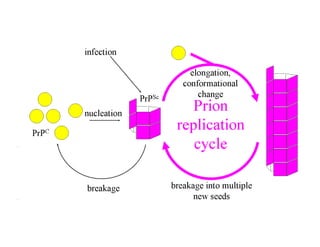
• PrP is a host protein.
• Present on the surface of neurons and Glial cells.
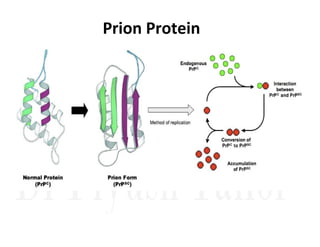
• Infective Prion Protein
– No any change in amino acid and gene sequences
– No change in primary structure differences
– No any alternate post-translational modifications
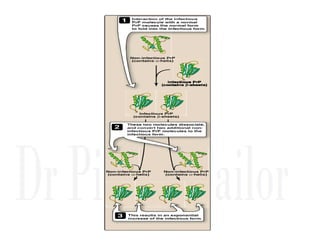
– changes in the three-dimensional conformation
– number of α-helices noninfectious PrP (PrPc) are
replaced by β-sheets in the infectious form(PrPsc).
– highly resistant to proteolytic degradation
– Accumulation of insoluble aggregates of fibrils
Prion Protein
Prion Protein(PrP) & Prion disease
• The Prion Protein (PrP) as the causative agent of
– Transmissible Spongiform Encephalopathies (TSEs)
– Creutzfeldt Jakob disease in humans
– Scrapie in sheep
– Bovine spongiform encephalopathy in cattle
• Infective agent is thus an altered version of a normal
protein
• Which acts as a “template” for converting the normal
protein to the pathogenic conformation.
• TSEs are invariably fatal
• No treatment is currently available
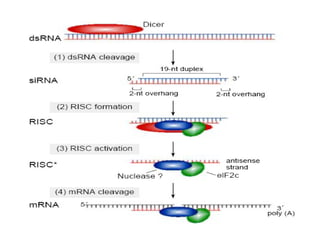
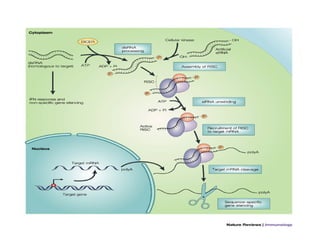
Can
dsRNA (double stranded RNA)
&
RISC (RNA Induce Silencer Complex)
be useful to treat
Prion Disease
?
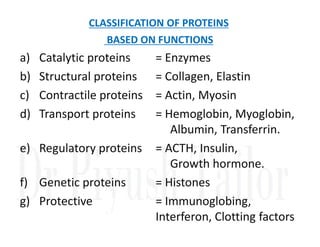
CLASSIFICATION OF PROTEINS
BASED ON FUNCTIONS
a) Catalytic proteins = Enzymes
b) Structural proteins = Collagen, Elastin
c) Contractile proteins = Actin, Myosin
d) Transport proteins = Hemoglobin, Myoglobin,
Albumin, Transferrin.
e) Regulatory proteins = ACTH, Insulin,
Growth hormone.
f) Genetic proteins = Histones
g) Protective = Immunoglobing,
Interferon, Clotting factors
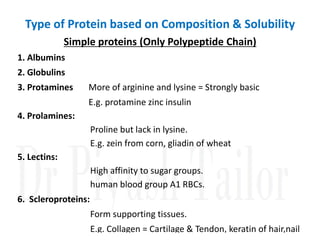
Type of Protein based on Composition & Solubility
Simple proteins (Only Polypeptide Chain)
1. Albumins
2. Globulins
3. Protamines More of arginine and lysine = Strongly basic
E.g. protamine zinc insulin
4. Prolamines:
Proline but lack in lysine.
E.g. zein from corn, gliadin of wheat
5. Lectins:
High affinity to sugar groups.
human blood group A1 RBCs.
6. Scleroproteins:
Form supporting tissues.
E.g. Collagen = Cartilage & Tendon, keratin of hair,nail
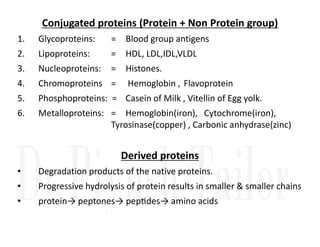
Conjugated proteins (Protein + Non Protein group)
1. Glycoproteins: = Blood group antigens
2. Lipoproteins: = HDL, LDL,IDL,VLDL
3. Nucleoproteins: = Histones.
4. Chromoproteins = Hemoglobin , Flavoprotein
5. Phosphoproteins: = Casein of Milk , Vitellin of Egg yolk.
6. Metalloproteins: = Hemoglobin(iron), Cytochrome(iron),
Tyrosinase(copper) , Carbonic anhydrase(zinc)
Derived proteins
• Degradation products of the native proteins.
• Progressive hydrolysis of protein results in smaller & smaller chains
• protein→ peptones→ pepSdes→ amino acids
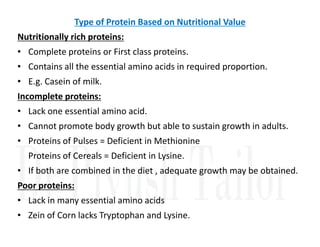
Type of Protein Based on Nutritional Value
Nutritionally rich proteins:
• Complete proteins or First class proteins.
• Contains all the essential amino acids in required proportion.
• E.g. Casein of milk.
Incomplete proteins:
• Lack one essential amino acid.
• Cannot promote body growth but able to sustain growth in adults.
• Proteins of Pulses = Deficient in Methionine
Proteins of Cereals = Deficient in Lysine.
• If both are combined in the diet , adequate growth may be obtained.
Poor proteins:
• Lack in many essential amino acids
• Zein of Corn lacks Tryptophan and Lysine.
protein_chemistry.pdf

protein_chemistry.pdf

  • 1.
    PROTEIN CHEMISTRY PROTEIN CHEMISTRY DrPIYUSH B. TAILOR Associate Professor Depart. Of Biochemistry Govt. Medical College Surat.
  • 2.
    INTRODUCTION • Abnormality inprotein structure will lead to major diseases with profound alterations in metabolic functions. • Polymers of amino acids • Linked by peptid bond
  • 3.
    Amino acid: Basicunit of protein Amino acid: Basic unit of protein COO- NH3+ C R H Different side chains, R, determin the properties of 20 amino acids. Amino group Carboxylic acid group
  • 5.
    • Two aminoacids = Dipeptide • Three amino acids = Tripeptide • Four amino acids = Tetrapeptide. • < 10 amino acids together = Oligopeptide • 10 -50 amino acids = Polypeptide. • Even though there are 20 amino acids, by changing the sequence of combination of these amino acids, nature produces enormous number of markedly different proteins.
  • 6.
    Examples on Peptides: 1-Dipeptide Example: Aspartame acts as sweetening agent = aspartic acid + phenyl alanine. 2- Tripeptide Example: GSH – Reduce Glutathione = Glutamic acid + Cysteine + Glycine. = Helps in absorption of amino acids = Helps in absorption of amino acids = Protects against hemolysis of RBC 3- octapeptides: (8 amino acids) Examples: Oxytocine and Vasopressin (ADH). 4- polypeptides: more than 10 amino acids: e.g. Insulin hormone
  • 7.
    Type of ProteinStructure 1. Primary 2. Secondary 3. Tertiary 4. Quaternary 4. Quaternary
  • 9.
    Primary Structure . To writeAmino acid Sequence of polypeptide chain • Amino terminal on Left • Carboxyl terminal on Right
  • 10.
  • 11.
    Primary Structure &Functional Relationship • Example 1. Sickle Cell Disease 2. Pre-pro-insulin to Pro-insulin to Insulin 3. Thallasemia
  • 12.
  • 13.
  • 14.
    Sickle Cell Disease •Mutation In Gene for Beta chain of Haemoglobin – Adenine (A) is replace by Thymine (T) – In genetic codon = GAG converted to GTG • During protein synthesis (transcription) – GAG represent Glutamic acid – GTG represent Valine • Because of mutation, on 6th position in beta chain of haemoglobin, glutamic acid is replace by valine • Normal Haemoglbin (HbA) is converted to abnormal sickle haemoglobin (HbS) – function get affected • This is explain that – “ Sequence of A.A. get change protein function get change”
  • 15.
  • 16.
    Pre-pro-insulin to Pro-insulinto Insulin • Pre-pro-insulin & pro-Insulin ,both are inactive • Proinsulin – single chain with 84 amino acids – Inactive form • Insulin • Insulin – double chain (A & B chain) with 51 amino acids – Active form • When Proinsulin is converted to insulin – Sequence & number of amino acid, both get change – So Function of protein get change – Protein (insulin) became non-functional to functional
  • 17.
    Thalassemia • Normal HbA= Alpha (141 A.A.) & Beta (146 A.A.) Chain • Mutation – Non sense type of mutation (one of the etiology) – Premature termination of haemoglobin chain synthesis – Alpha or Beta either absent or short – Alpha or Beta either absent or short – Alpha or Beta thalassemia occur • Number of amino acid get changed • Functional protein (HbA) become non-functional
  • 18.
    Primary structural FunctionalRelation • “Whenever Suquence or / and number of amino acid get change , protein function get change” Either • Protein became Functional to Non-functional – HbA to Sickle cell disease (sequence of A.A. changed) – HbA to Sickle cell disease (sequence of A.A. changed) – HbA to Thalassemia (Number of A.A. changed) Or • Protein became non-functional to functional – Pro-insulin to Insulin (sequence & number of A.A. both changed)
  • 20.
  • 21.
  • 23.
    At What pH Thision molecule has least solubility?
  • 24.
    Extra 2 Arginine….Addedin Human Insulin • Is it make any change in charge? – More positive – More Negative – No any change • What shell be added more to make it neutral (Net Charge Zero = Zwitter Ion )? (Net Charge Zero = Zwitter Ion )? – Positive ions (H+) – Negative ions (HCO3-) • Can it change pI of insulin ? – Decrease – Increase – Unchange
  • 25.
    Extra 2 Arginine….Addedin Human Insulin • Human insulin has isoelectric pH of 5.4. what can be pI of this newly for recombinant insulin? – More than 5.4 – Less than 5.4 • In human body, this new recomb-insulin is going to expose pH of _______ . to expose pH of _______ . • Recombinant insulin pI (6.7) is nearer to physiological pH (7.4) than human insulin pI (5.4). So what will be effect on it’s solubility? – More soluble – Less soluble (precipitation)
  • 26.
  • 27.
    Primary Structure It isrepresenting • Numbers of Amino acids • Sequence of Amino acids • Unique amino acid sequence decided by the genes. • Maintained by peptide linkages. • Maintained by peptide linkages. This two things decide higher levels of organization (secondary, tertiary & quaternary) of protein.
  • 28.
    Naming of Polypeptide Towrite A.A. Sequence of polypeptide chain • Amino terminal on Left • Carboxyl terminal on Right • Each component A.A. in a polypeptide is called a “residue” “residue” • In a polypeptide , all A.A. residues suffixes (-ine, -an, -ic, or -ate) changed to -yl, with the exception of the C-terminal amino acid. • E.g. Tripeptide = N-terminal valine, glycine, & C- terminal leucine • “valylglycylleucine”
  • 29.
    Charecteristics of apeptide bond • It’s a partial double bond. • ‘trans’ in nature • Freedom of rotation with limitation to “R” group • Having rotation of 180 degree • single bond = 360 degree • double bond = 0 degree • double bond = 0 degree • Distance is 1.32 A° • single bond(1.42A°) • double bond(1.27A°). • Angles of rotation known as Ramchandran angles
  • 33.
    Separation of A.A.from Polypeptide
  • 34.
    Sequencing of thepeptide from its N-terminal end • Edman reagent = Phenylisothiocyanate • Label N-terminal A.A. residue under mildly alkaline conditions. • Phenylthiohydantoin (PTH) create instability in the N- terminal peptide bond • It can be selectively hydrolyzed without cleaving the • It can be selectively hydrolyzed without cleaving the other peptide bonds
  • 36.
  • 37.
    Gene to Peptidesequence • Has limitations – Not able to predict positions of disulfide bonds – Not able to identify any posttranslational modification. • Therefore, direct protein sequencing is an • Therefore, direct protein sequencing is an extremely important tool.
  • 38.
    Branched and Circularproteins • In linear polypeptide chains, there is • Interchain Disulphide bridges. • In different polypeptide chains • Interchain = In same protein. • Intrachain = Same polypeptide chain. • Intrachain = Same polypeptide chain.
  • 41.
    Glutathione = Isit protein?
  • 42.
  • 43.
    2. SECONDARY STRUCTURE •Configurationally relationship between residues which are about 3-4 amino acids apart in the linear sequence. • The structure is preserved by non-covalent forces or bonds. or bonds.
  • 45.
    Disulfide bonds: =Covalent linkagebetween sulfhydryl group (–SH) =two cysteines may be far aways in the primary sequence or may even be different or may even be different polypeptide chains; =contributes stability =Prevents denatured = E.g. Immunoglobulins
  • 49.
    Hydrophobic interactions • Nonpolar side chains = Remain in the interior • Polar side chains = Remain on the surface Hydrogen bonds • Oxygen- or Nitrogen-bound hydrogen of side chains • Alcohol groups of serine and threonine • Can form hydrogen bonds with Oxygen of a carboxyl group of a • Can form hydrogen bonds with Oxygen of a carboxyl group of a peptide bond (electron-rich atoms) Ionic interactions • Negatively charged groups, carboxyl group (–COO-) in the side chain of aspartate or glutamate. • Positively charged groups, such as the amino group (–NH3 +) in the side chain of lysine .
  • 51.
  • 52.
    1. Alpha helix •spiral structure. • Polypeptide bonds = Backbone. • Side chain of amino acids extend outward. • Stabilized by hydrogen bonds • In each turn = 3.6 A.A. residues. • Distance between each A.A. residue is 1.5A° • Distance between each A.A. residue is 1.5A° • Right handed. • As A.A. in the proteins are of L-variety. • Proline and hydroxyproline will not allow the formation of α-helix.
  • 54.
    Example of AlphaHelix 1. Keratins = fibrous proteins in Hair & Nail • It’s rigidity is determined by the number of disulfide bonds 2. Myoglobin = globular & flexible molecule. (Contrast to Keratin) (Contrast to Keratin)
  • 55.
    It can disturbAlpha helix • Proline – Secondary amino group is not geometrically compatible – it inserts a kink in the chain • Large numbers of charged amino acids – As it forms more ionic bonds or by electrostatically – As it forms more ionic bonds or by electrostatically repelling each other. – E.g. glutamate, aspartate, histidine, lysine, or arginine • Amino acids with bulky side chains or branched – Tryptophane, Valine, Isoleucine
  • 56.
  • 58.
    2. Beta-pleated sheet •The distance between adjacent a.a. is 3.5A°. • It is stabilised by hydrogen bonds. • Adjacent strands in a sheet • Parallel • Anti parallel • Anti parallel • E.g. Flavodoxin , Carbonic anhydrase Triple helical structure in collagen
  • 59.
  • 60.
    Beta Bands (betaturn) • Reverse the direction of a polypeptide chain • Helping it form a compact, globular shape. • Found on the surface of protein molecules
  • 61.
    Supersecondary Structure (Motif) Combiningof α-helices and β-sheets Form primarily the core region—that is, the interior of the molecule. Connected by loop β-bends Supersecondary structures are usually produced by packing side chains from adjacent secondary structural elements close to each other.
  • 62.
  • 64.
  • 67.
    3.TERTIARY STRUCTURE • threedimentional structure of the whole protein. • A.A. are far apart from each other in the linear sequence. • But A.A. are close in the three dimention. • It is maintained by non-covalent interactions • hydrophobic bonds • electrostatic bonds • Van der Waals forces.
  • 69.
    Domain • Compact GlobularFunctional Unit of a protein. • Independent region of the protein • May be multiple = if protein has > 200 amino acids. • Core of a domain is built from combinations of motifs. • Folding of domain peptide chain is independently of folding in other domains. folding in other domains.
  • 70.
    Protein Folding • Three-dimensionalshape of the functional protein. • Due to Interactions between A.A. side chains – Charges of a.a. side chains = attraction and repulsion – Hydrogen bonds – Hydrophobic interactions – Hydrophobic interactions – Disulfide bonds • Process of trial and error • Tests many configuration • This results in a correctly folded protein with a low- energy state
  • 71.
    Denaturation of Protein Secondary,Tertiary and Quaternary structures of protein molecules broken down. Primary structure is not altered Unfolding & Disorganization of Protein Unfolding & Disorganization of Protein Decreases the solubility So protein precipitated Loss of biological activity. Denatured proteins are re-natured when the physical agent is removed. (less possible)
  • 72.
    Factor which candoes “Denaturation” Heating = Cooking, Heat coagulation test Urea = Renal Failure X-ray Ultra - violet rays High pressure = Cooking Organic solvent = Alcohol as antiseptic Metals = Mercury poisoning Acid & Alkali = Digestion
  • 73.
    Chaperones = Inprotein folding • Specialized group of proteins for the proper folding. • Chaperones = “Heat Shock” proteins • Information for Correct folding is in primary structure of protein. • Interact with the polypeptide at various stages • Some chaperones keeps protein unfolded until its • Some chaperones keeps protein unfolded until its synthesis is finished. • Some Chaperones tends to fold so that their vulnerable, exposed regions do not become tangled(mixed). • Some denatured protein can not be re-folded properly, – Because folding starts with stages its synthesis – Folding does not wait for synthesis be totally completed.
  • 75.
    4.QUATERNARY STRUCTURE • Certainpolypeptides aggregate • form one functional protein • known as quaternary structure. • The protein will lose its function when the subunits are dissociated. • Stabilised by • hydrogen bonds • electrostatic bonds • hydrophobic bonds • van der Waals forces.
  • 76.
    • Depending onthe number of the monomers • Dimer(2) • Tetramer(4). • Each polypeptide chain is termed as Subunit or Monomer. • For example, – Hemoglobin = 2 alpha and 2 beta chains – Immunoglobulin G = 2 heavy & 2 light chains – Creatine kinase is dimer – Lactate dehydrogenase is a tetramer.
  • 77.
    Protein Misfolding • Complexprocess • Trial & Error process • Misfolded proteins are usually tagged and degraded. • Misfolding of proteins may occur – Spontaneously By mutation in a particular gene – By mutation in a particular gene • Accumulation of misfolded proteins can cause disease • E.g. Amyloidosis
  • 78.
  • 79.
    Amyloidosis = Alzheimer’sdisease • Accumulation of amyloid β (Aβ), 40 – 42 A.A. = “ Amyloids” • Neurodegenerative disorder = “Alzheimer disease”. • Found in the brain parenchyma & around blood vessels. • Neurotoxic & leading to the cognitive impairment • Abnormal proteolytic cleavage • Formation of long fibrillar protein = β-pleated sheets. • Second factor = Accumulation of neurofibrillary tangles • Tangle protein = Role in assembly of the microtubular structure. • Abnormal form of tangle protein = tau (τ) protein • Abnormal neurofibrine actions
  • 80.
    Prion Protein(PrP) &Prion disease • PrP is a host protein. • Present on the surface of neurons and Glial cells. • Infective Prion Protein – No any change in amino acid and gene sequences – No change in primary structure differences – No any alternate post-translational modifications – No any alternate post-translational modifications – changes in the three-dimensional conformation – number of α-helices noninfectious PrP (PrPc) are replaced by β-sheets in the infectious form(PrPsc). – highly resistant to proteolytic degradation – Accumulation of insoluble aggregates of fibrils
  • 81.
  • 84.
    Prion Protein(PrP) &Prion disease • The Prion Protein (PrP) as the causative agent of – Transmissible Spongiform Encephalopathies (TSEs) – Creutzfeldt Jakob disease in humans – Scrapie in sheep – Bovine spongiform encephalopathy in cattle • Infective agent is thus an altered version of a normal • Infective agent is thus an altered version of a normal protein • Which acts as a “template” for converting the normal protein to the pathogenic conformation. • TSEs are invariably fatal • No treatment is currently available
  • 85.
    Can dsRNA (double strandedRNA) & RISC (RNA Induce Silencer Complex) RISC (RNA Induce Silencer Complex) be useful to treat Prion Disease ?
  • 88.
    CLASSIFICATION OF PROTEINS BASEDON FUNCTIONS a) Catalytic proteins = Enzymes b) Structural proteins = Collagen, Elastin c) Contractile proteins = Actin, Myosin d) Transport proteins = Hemoglobin, Myoglobin, Albumin, Transferrin. Albumin, Transferrin. e) Regulatory proteins = ACTH, Insulin, Growth hormone. f) Genetic proteins = Histones g) Protective = Immunoglobing, Interferon, Clotting factors
  • 89.
    Type of Proteinbased on Composition & Solubility Simple proteins (Only Polypeptide Chain) 1. Albumins 2. Globulins 3. Protamines More of arginine and lysine = Strongly basic E.g. protamine zinc insulin 4. Prolamines: Proline but lack in lysine. Proline but lack in lysine. E.g. zein from corn, gliadin of wheat 5. Lectins: High affinity to sugar groups. human blood group A1 RBCs. 6. Scleroproteins: Form supporting tissues. E.g. Collagen = Cartilage & Tendon, keratin of hair,nail
  • 90.
    Conjugated proteins (Protein+ Non Protein group) 1. Glycoproteins: = Blood group antigens 2. Lipoproteins: = HDL, LDL,IDL,VLDL 3. Nucleoproteins: = Histones. 4. Chromoproteins = Hemoglobin , Flavoprotein 5. Phosphoproteins: = Casein of Milk , Vitellin of Egg yolk. 6. Metalloproteins: = Hemoglobin(iron), Cytochrome(iron), Tyrosinase(copper) , Carbonic anhydrase(zinc) Tyrosinase(copper) , Carbonic anhydrase(zinc) Derived proteins • Degradation products of the native proteins. • Progressive hydrolysis of protein results in smaller & smaller chains • protein→ peptones→ pepSdes→ amino acids
  • 91.
    Type of ProteinBased on Nutritional Value Nutritionally rich proteins: • Complete proteins or First class proteins. • Contains all the essential amino acids in required proportion. • E.g. Casein of milk. Incomplete proteins: • Lack one essential amino acid. • Cannot promote body growth but able to sustain growth in adults. • Cannot promote body growth but able to sustain growth in adults. • Proteins of Pulses = Deficient in Methionine Proteins of Cereals = Deficient in Lysine. • If both are combined in the diet , adequate growth may be obtained. Poor proteins: • Lack in many essential amino acids • Zein of Corn lacks Tryptophan and Lysine.