General structure, classification and
functions of bio-molecules
Biomolecule –
• A molecule that is produced by cells and living organisms and is involved in the
maintenance and metabolic processes of living organisms.
• Biomolecules include large macromolecules such as proteins, carbohydrates, lipids,
and nucleic acids, as well as small molecules such as
primary metabolites, secondary metabolites, and natural products.
• primary metabolites are components of basic metabolic pathways that are
required for life. Primary metabolites include carbohydrates, lipids, amino acids,
and nucleic acids
• Secondary in contrast to primary metabolites are dispensable and not absolutely
required for survival e.g. pheromones that act as social signaling molecules with
other individuals of the same species, and competitive weapons
(repellants, venoms, toxins etc.) that are used against competitors, prey, and
predators.
• Biomolecules are usually endogenous but may also be exogenous.
General structure, classification and
functions of bio-molecules
 Proteins
 Carbohydrates
 Fats and lipids
 DNA and RNA
• Structure
• Classification
• Functions
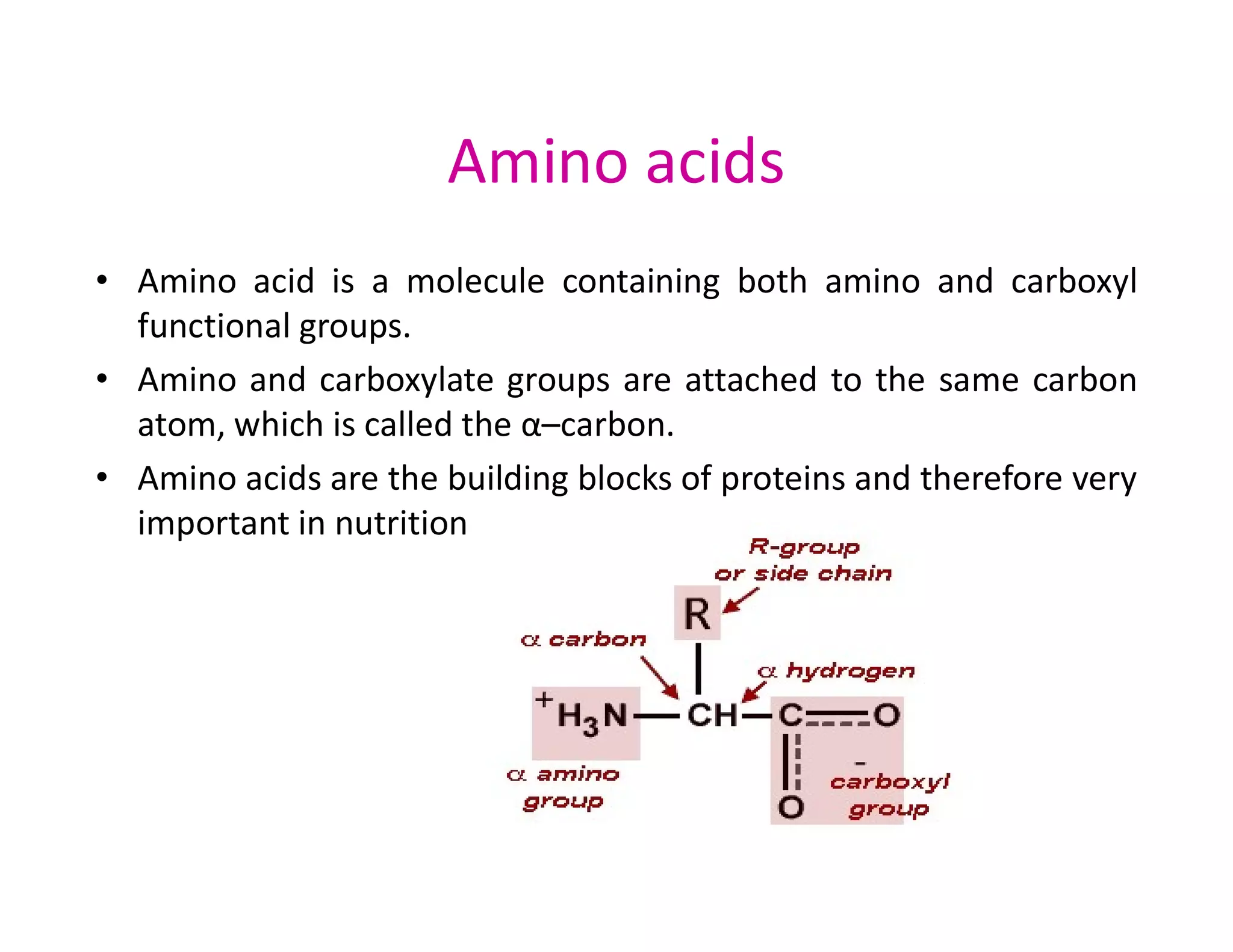
Amino acids
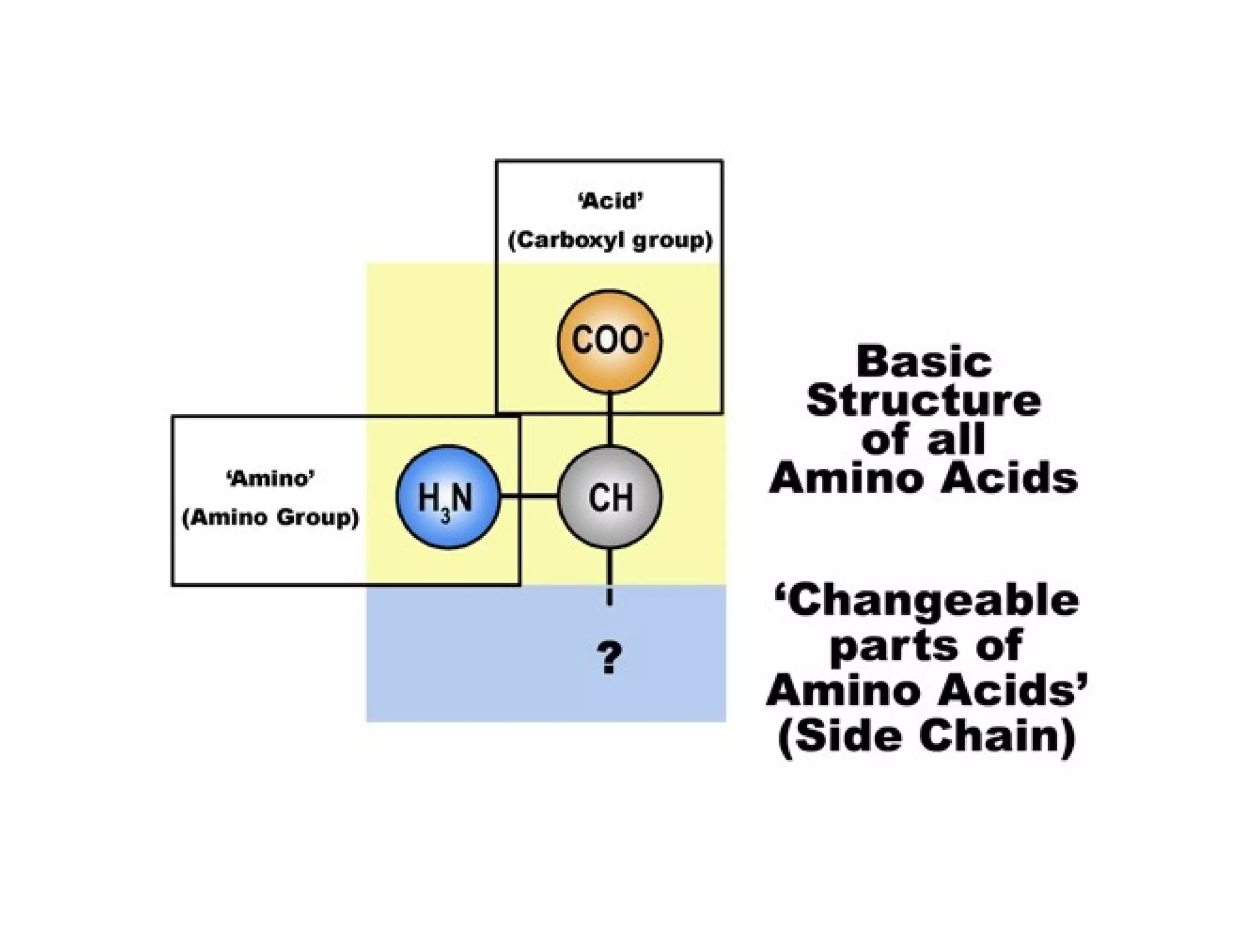
• Amino acid is a molecule containing both amino and carboxyl
functional groups.
• Amino and carboxylate groups are attached to the same carbon
atom, which is called the α–carbon.
• Amino acids are the building blocks of proteins and therefore very
important in nutrition
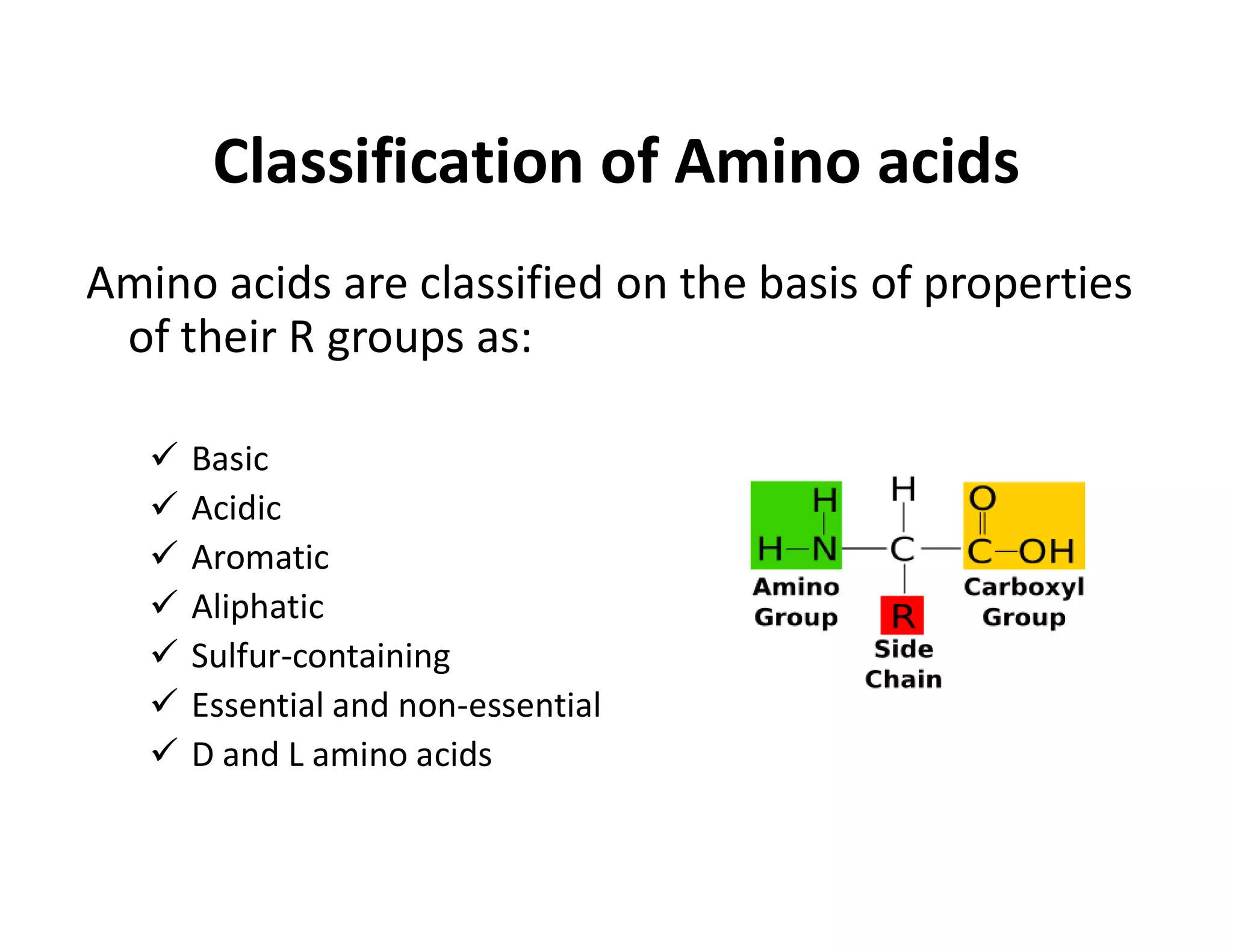
Classification of Amino acids
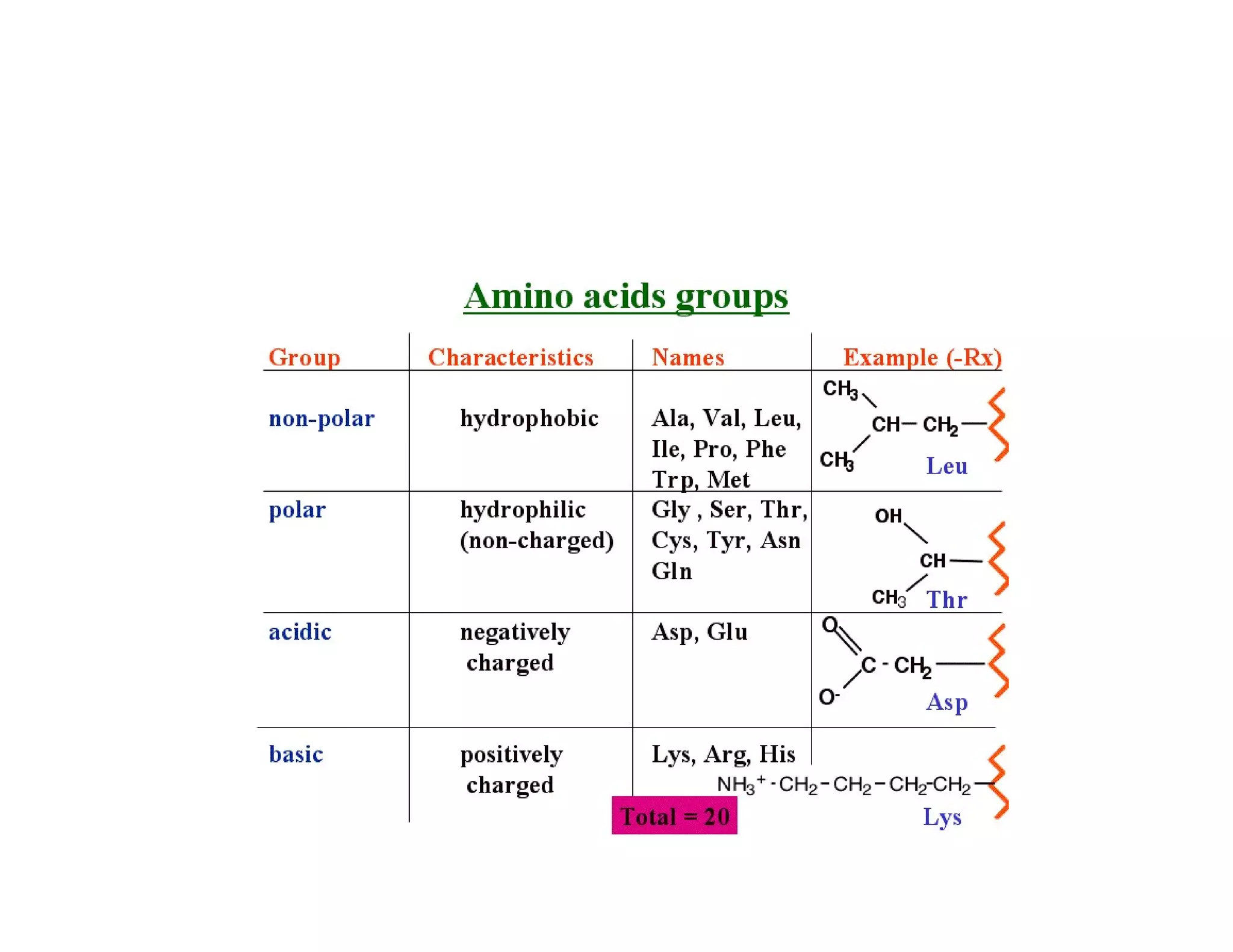
Amino acids are classified on the basis of properties
of their R groups as:
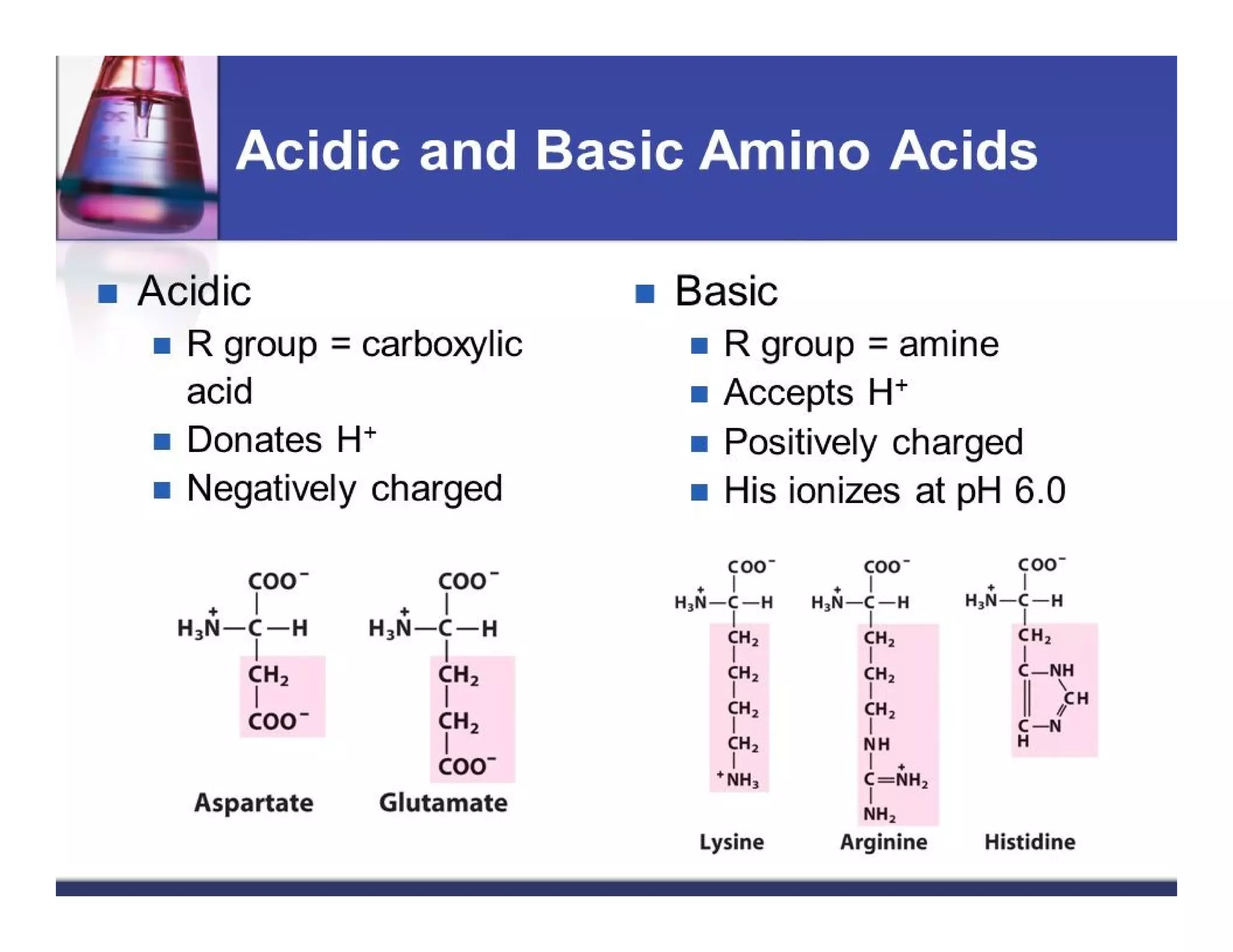
 Basic
 Basic
 Acidic
 Aromatic
 Aliphatic
 Sulfur-containing
 Essential and non-essential
 D and L amino acids
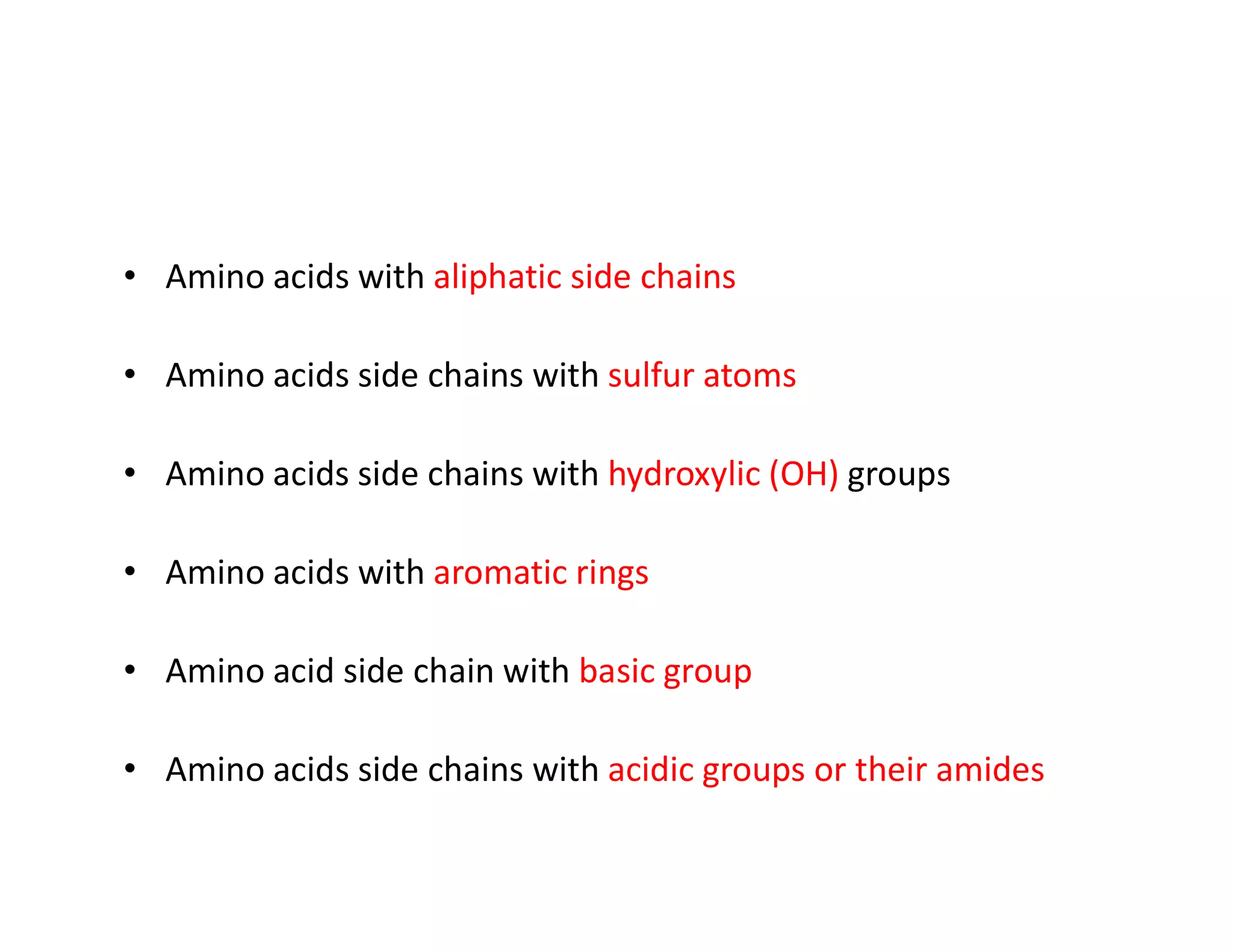
• Amino acids with aliphatic side chains
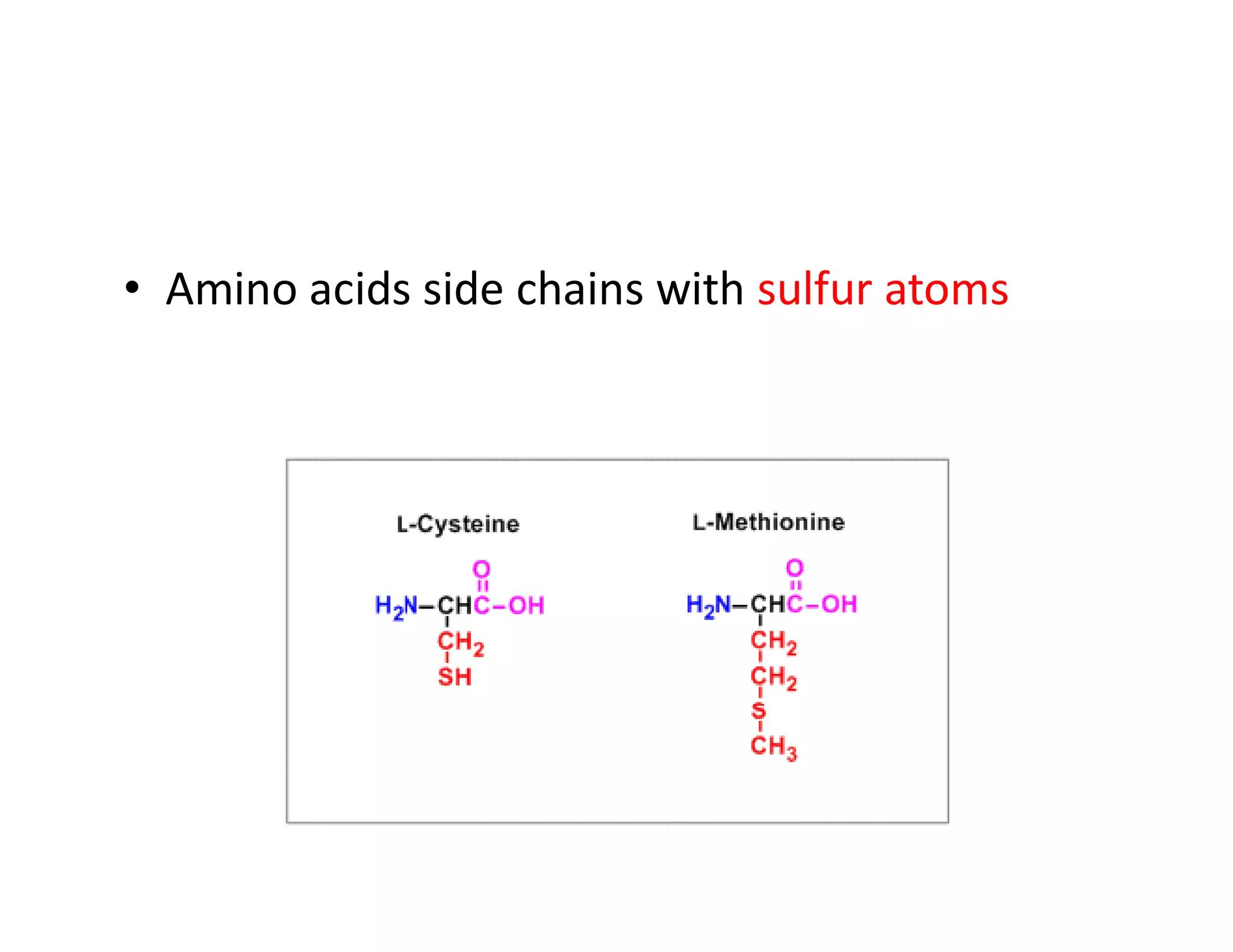
• Amino acids side chains with sulfur atoms
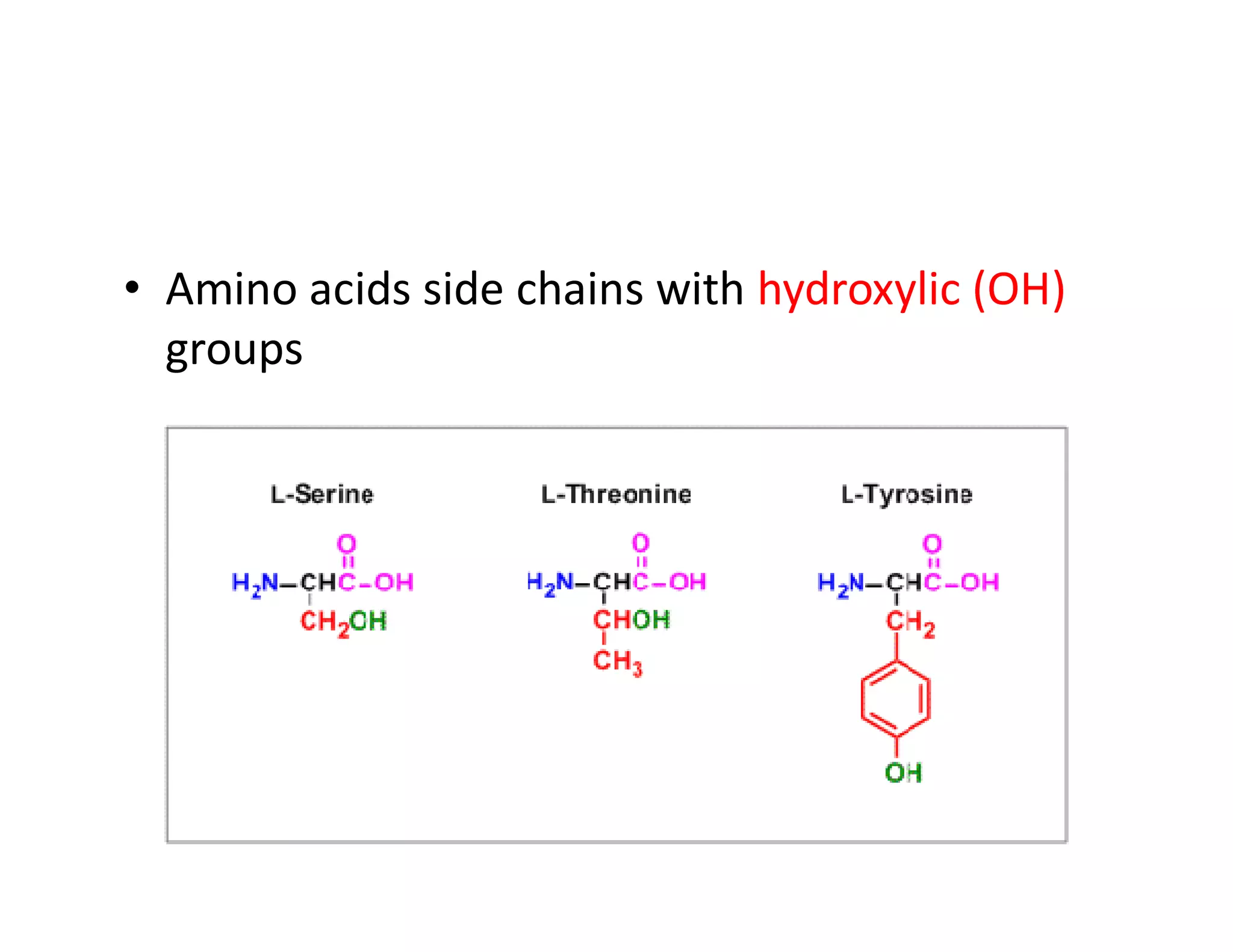
• Amino acids side chains with hydroxylic (OH) groups
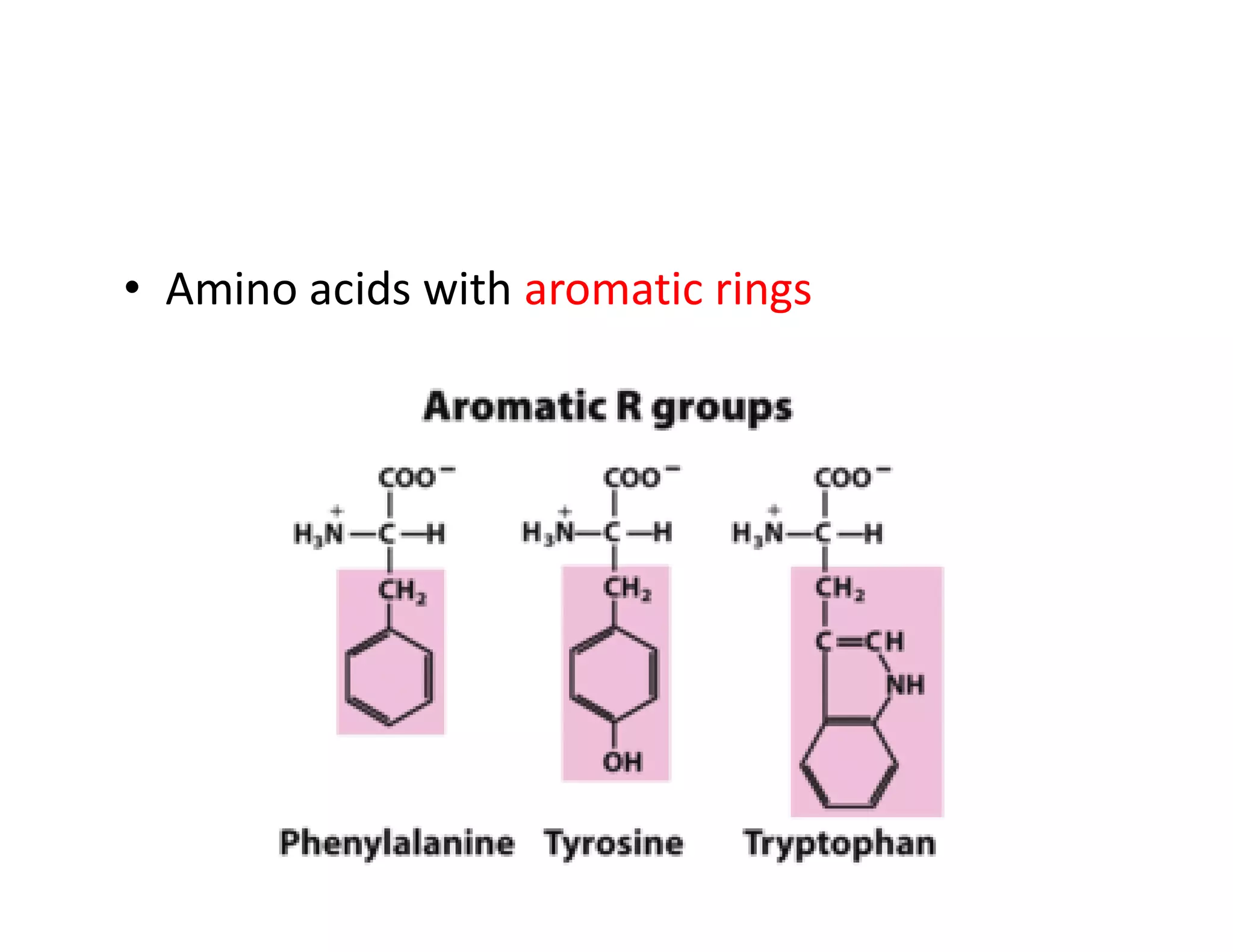
• Amino acids with aromatic rings
• Amino acid side chain with basic group
• Amino acids side chains with acidic groups or their amides
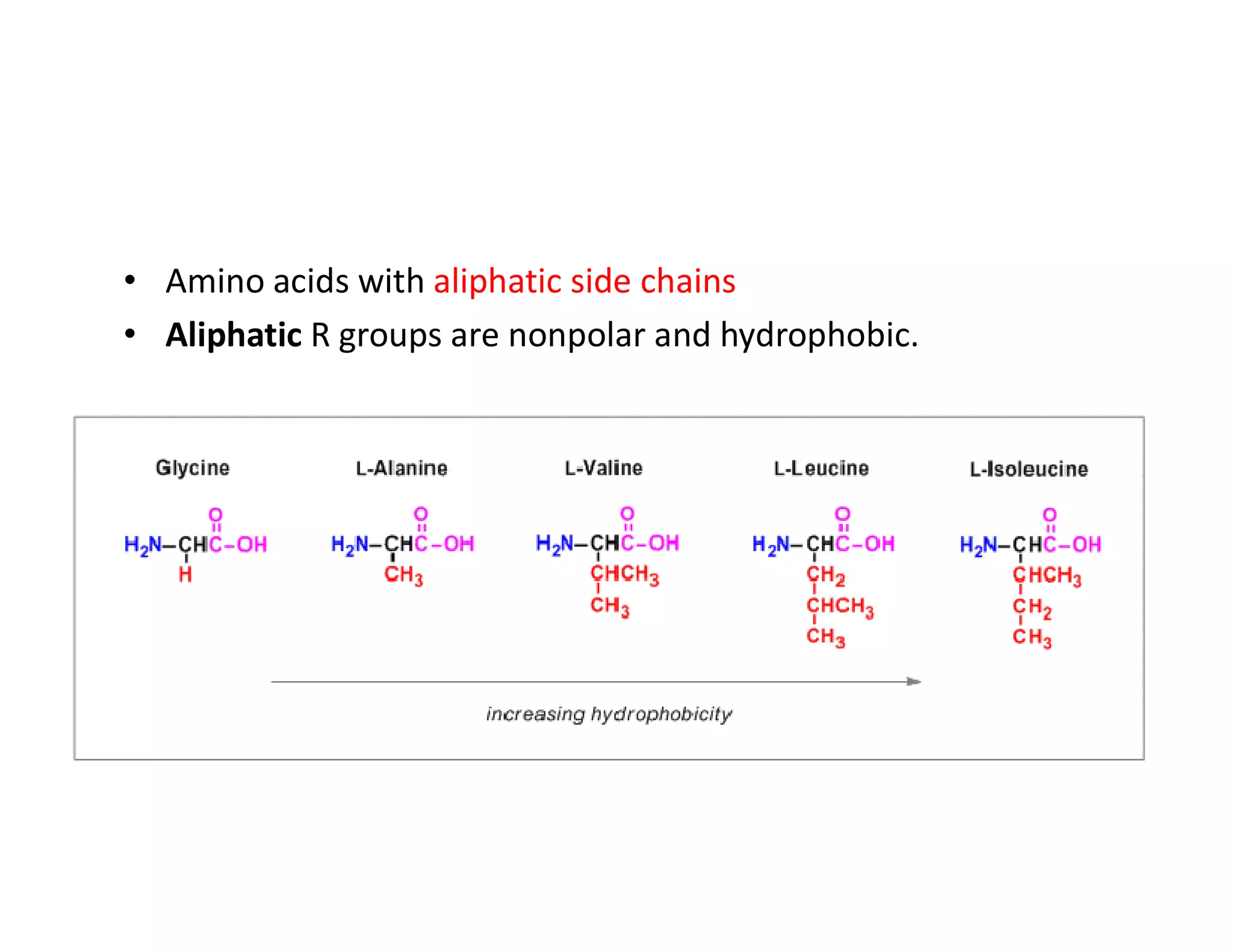
• Amino acids with aliphatic side chains
• Aliphatic R groups are nonpolar and hydrophobic.
• Amino acids side chains with sulfur atoms
• Amino acids side chains with hydroxylic (OH)
groups
• Amino acids with aromatic rings
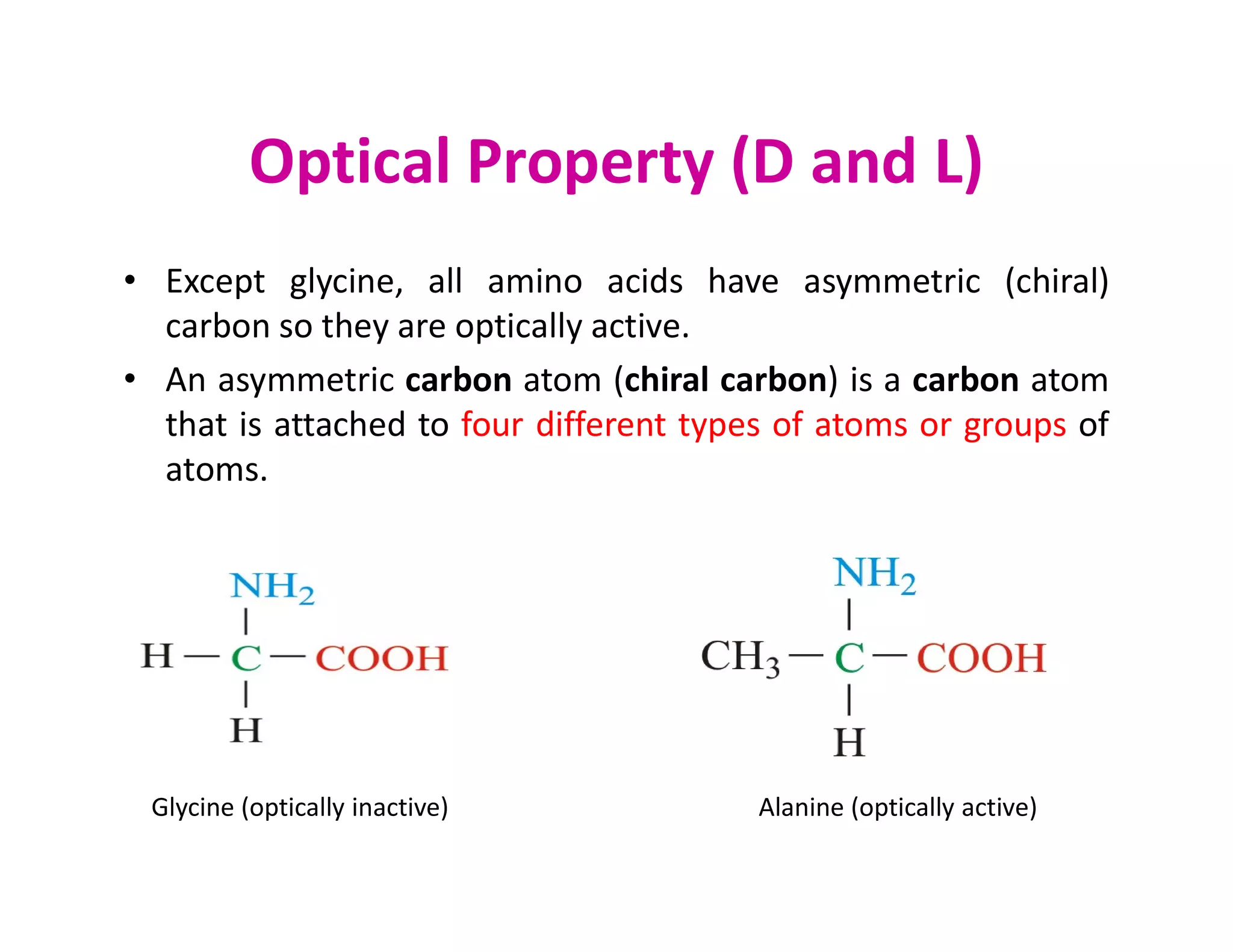
Optical Property (D and L)
• Except glycine, all amino acids have asymmetric (chiral)
carbon so they are optically active.
• An asymmetric carbon atom (chiral carbon) is a carbon atom
that is attached to four different types of atoms or groups of
atoms.
atoms.
Glycine (optically inactive) Alanine (optically active)
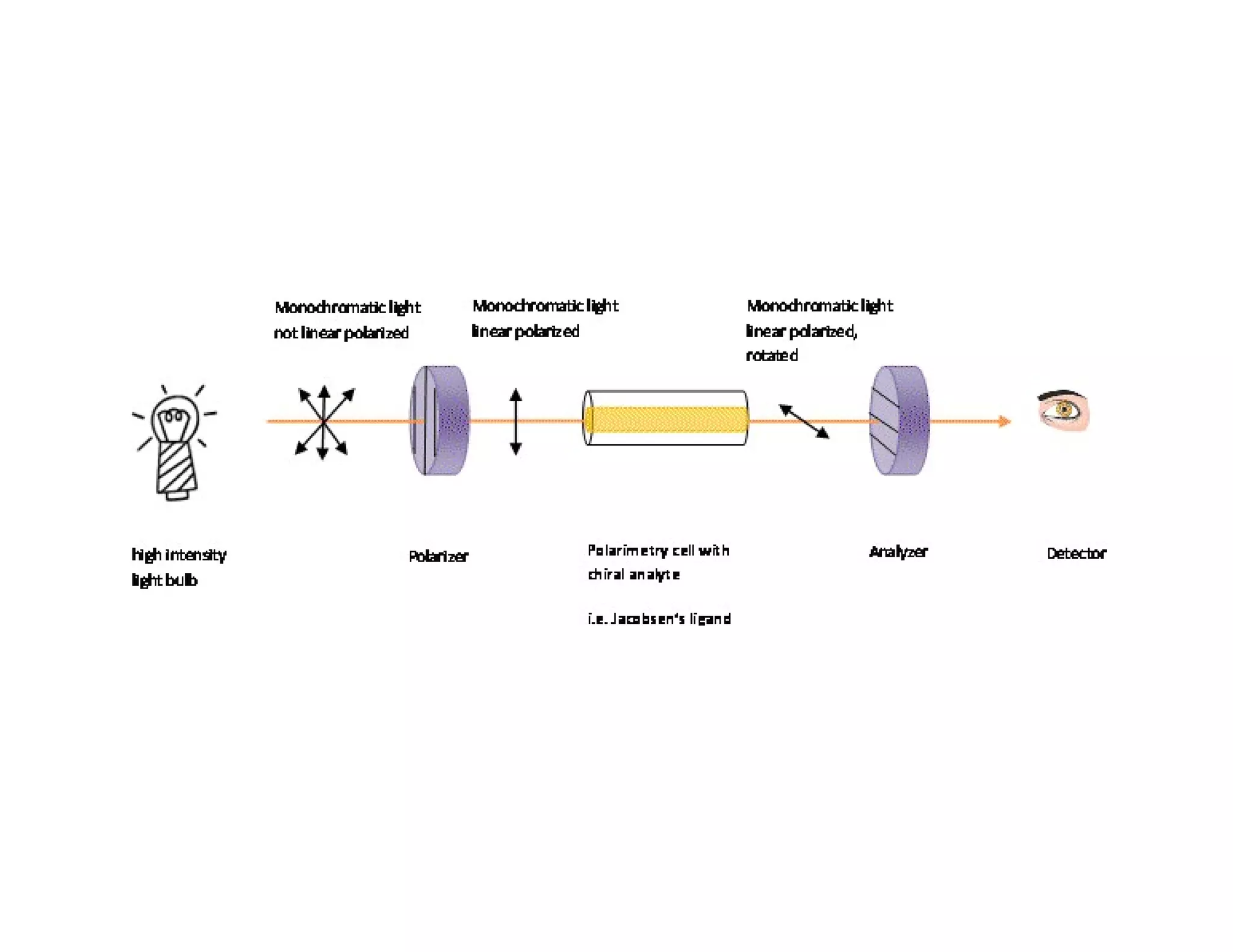
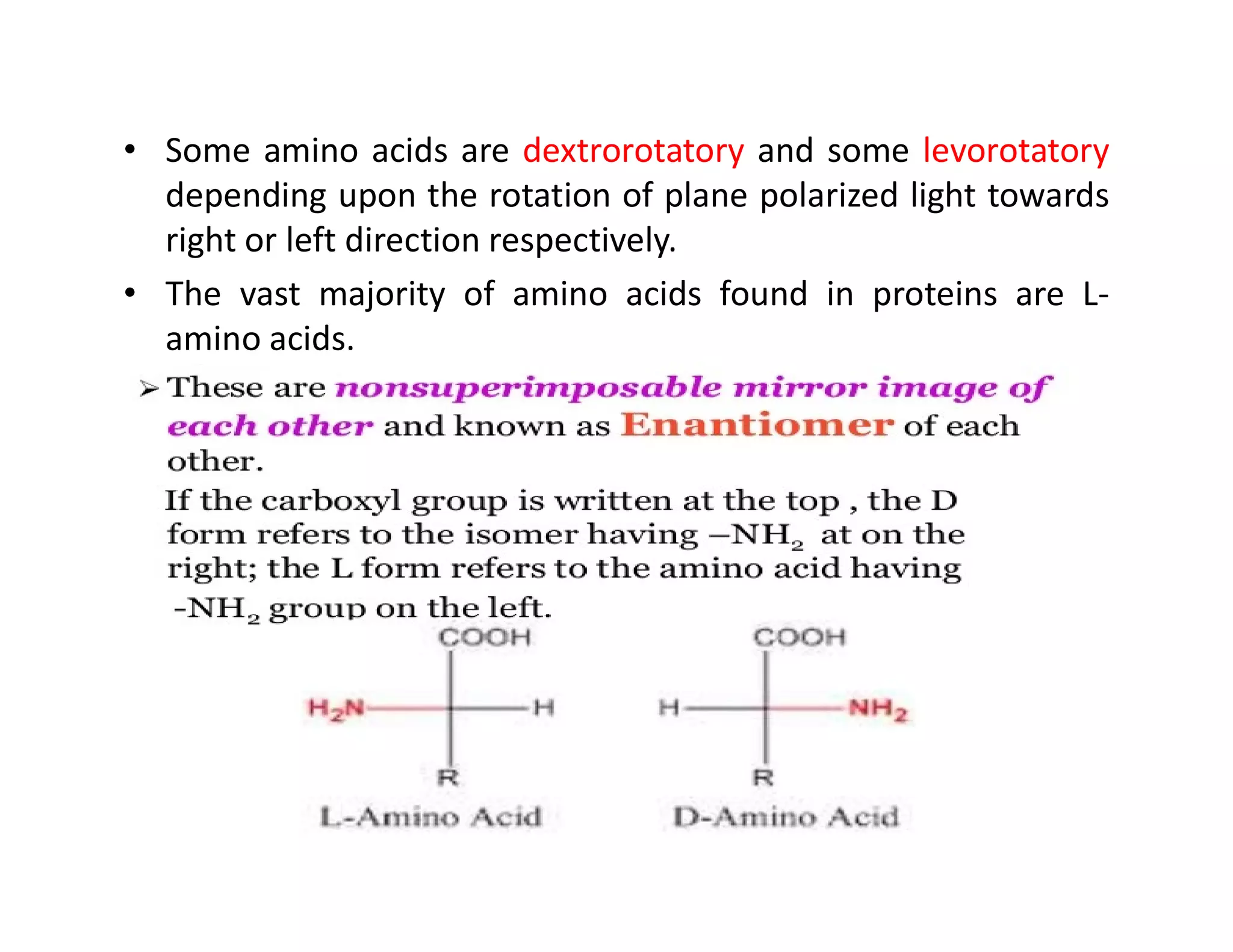
• Some amino acids are dextrorotatory and some levorotatory
depending upon the rotation of plane polarized light towards
right or left direction respectively.
• The vast majority of amino acids found in proteins are L-
amino acids.
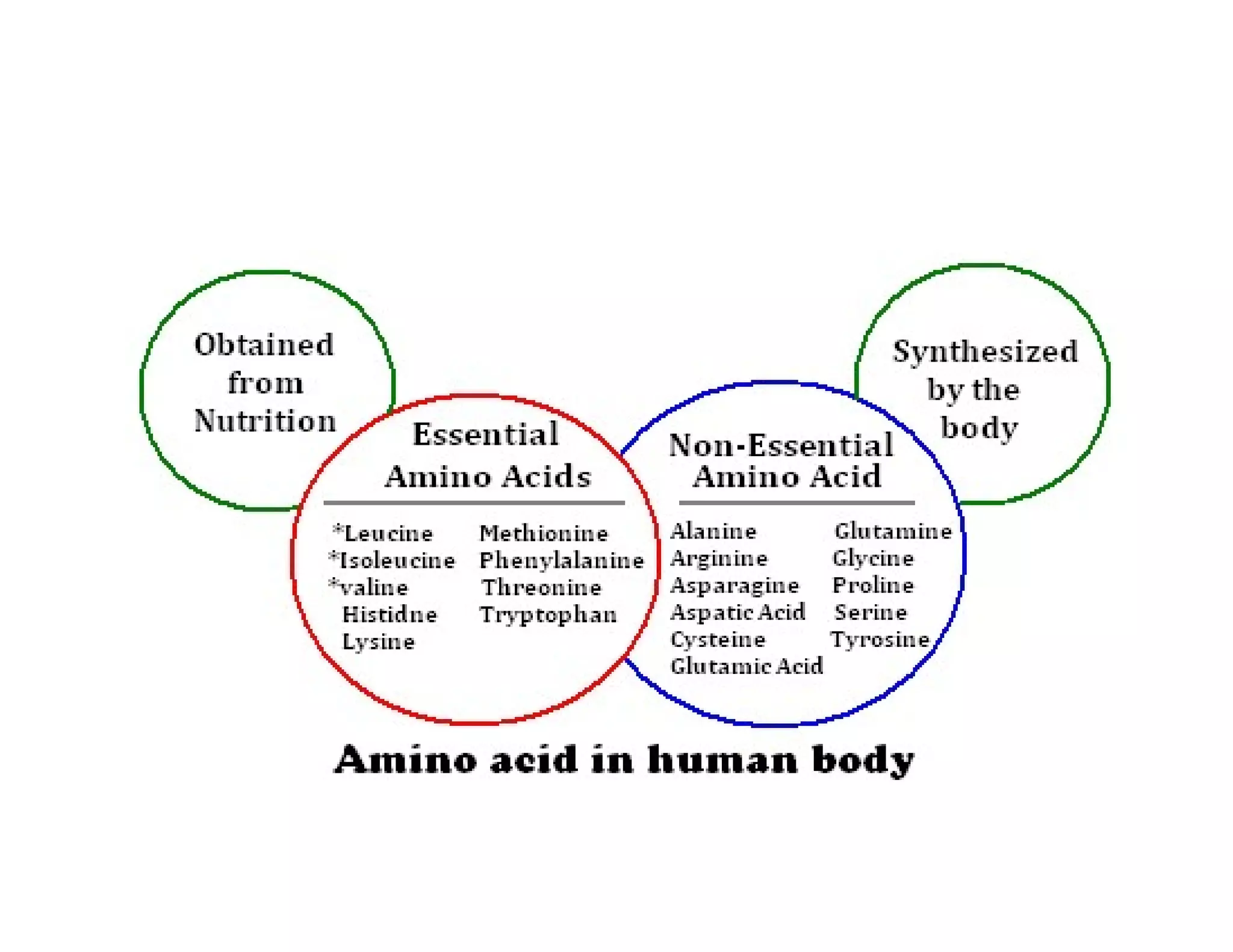
• Some amino acids are essential (an animal cannot produce
them internally) and some are non-essential (the animal can
produce them from other nitrogen-containing compounds).
• About twenty amino acids are found in the human body, and
9 are essential and, therefore, must be included in the diet.
• A complete protein source contains all the essential amino
acids. Animal proteins are complete, including red meat,
poultry, seafood, eggs, and dairy.
• An incomplete protein source lacks one or more of the
essential amino acids.
• Incomplete proteins found in plant foods can also be
combined with small amounts of animal foods to make a
complete protein. Examples include macaroni and cheese
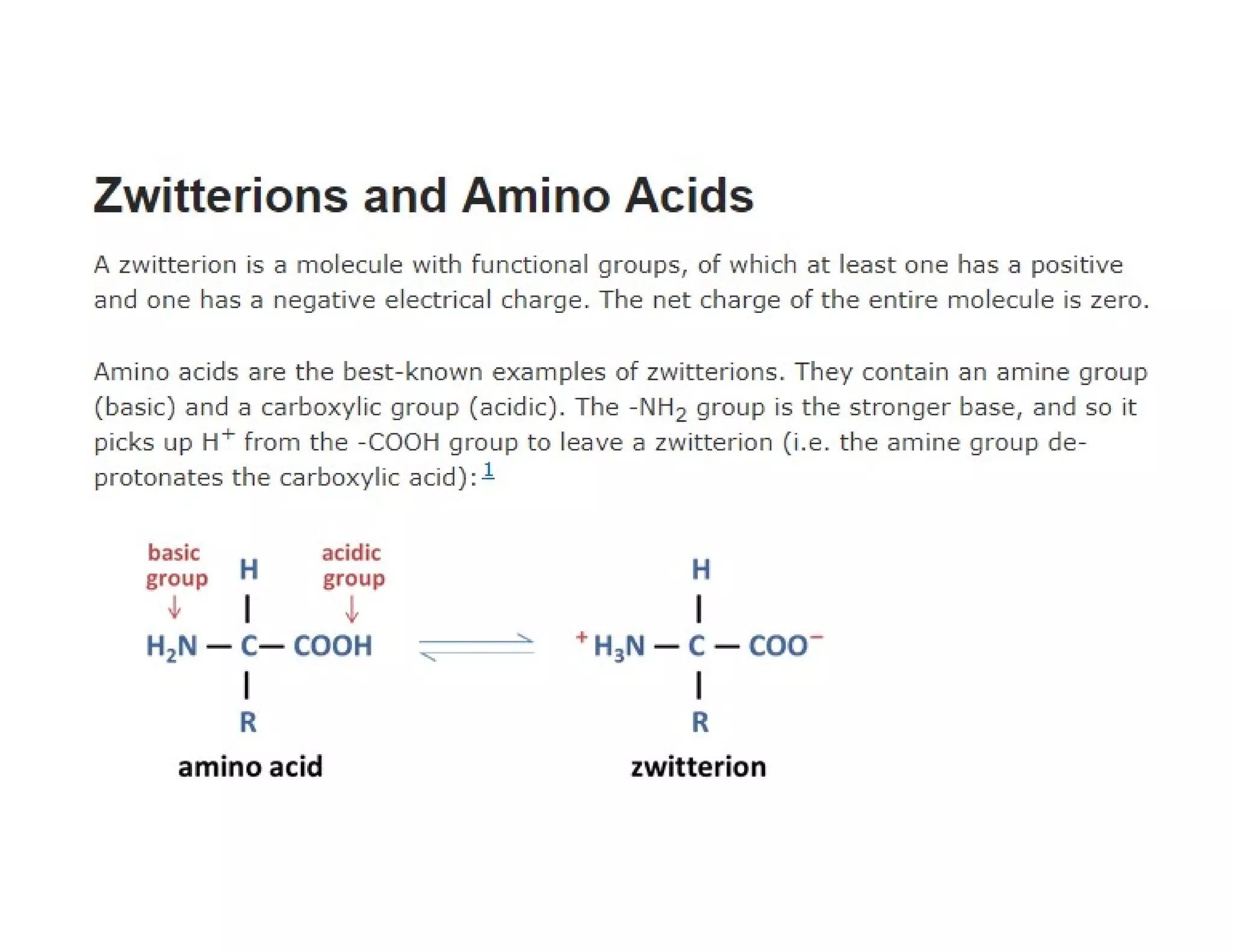
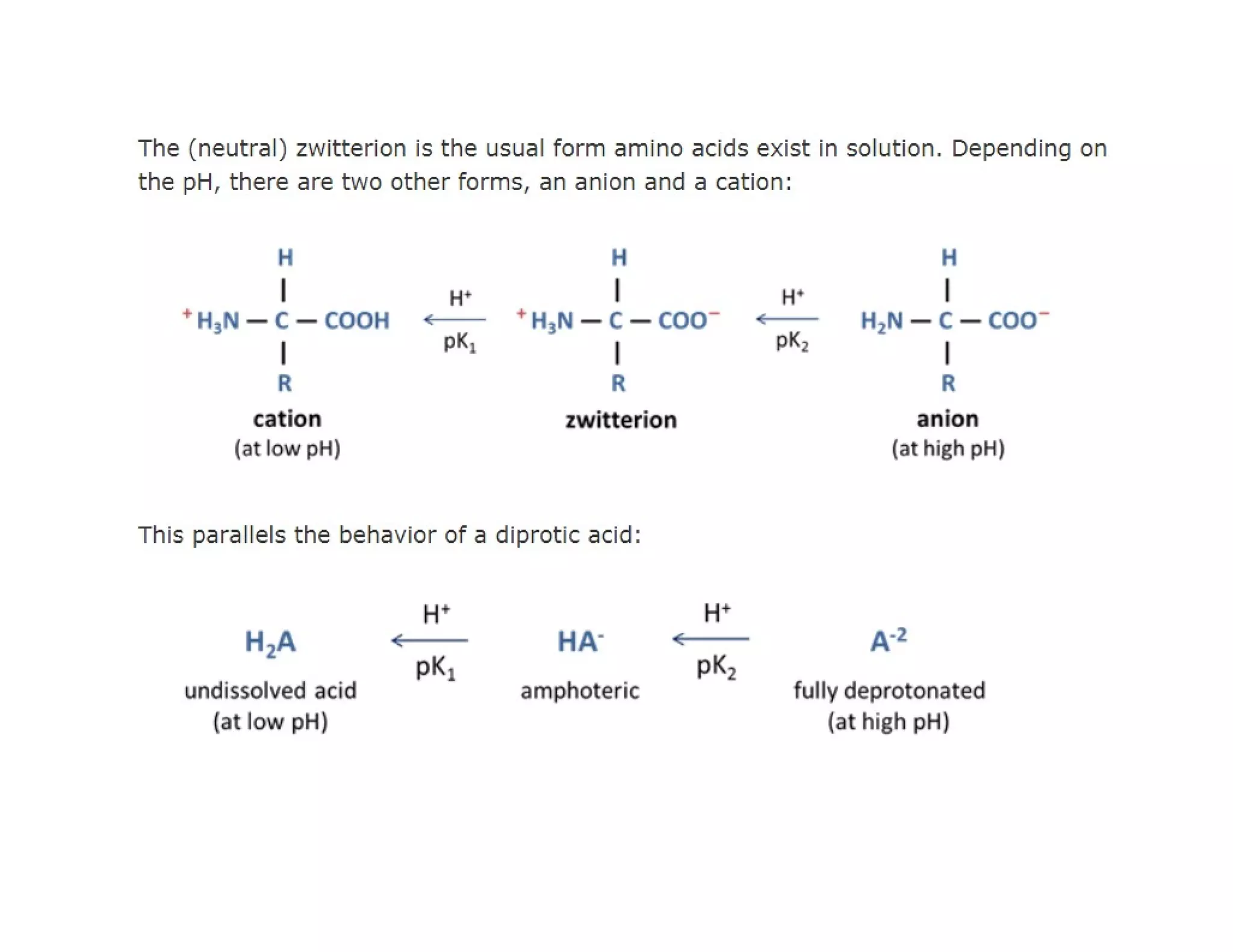
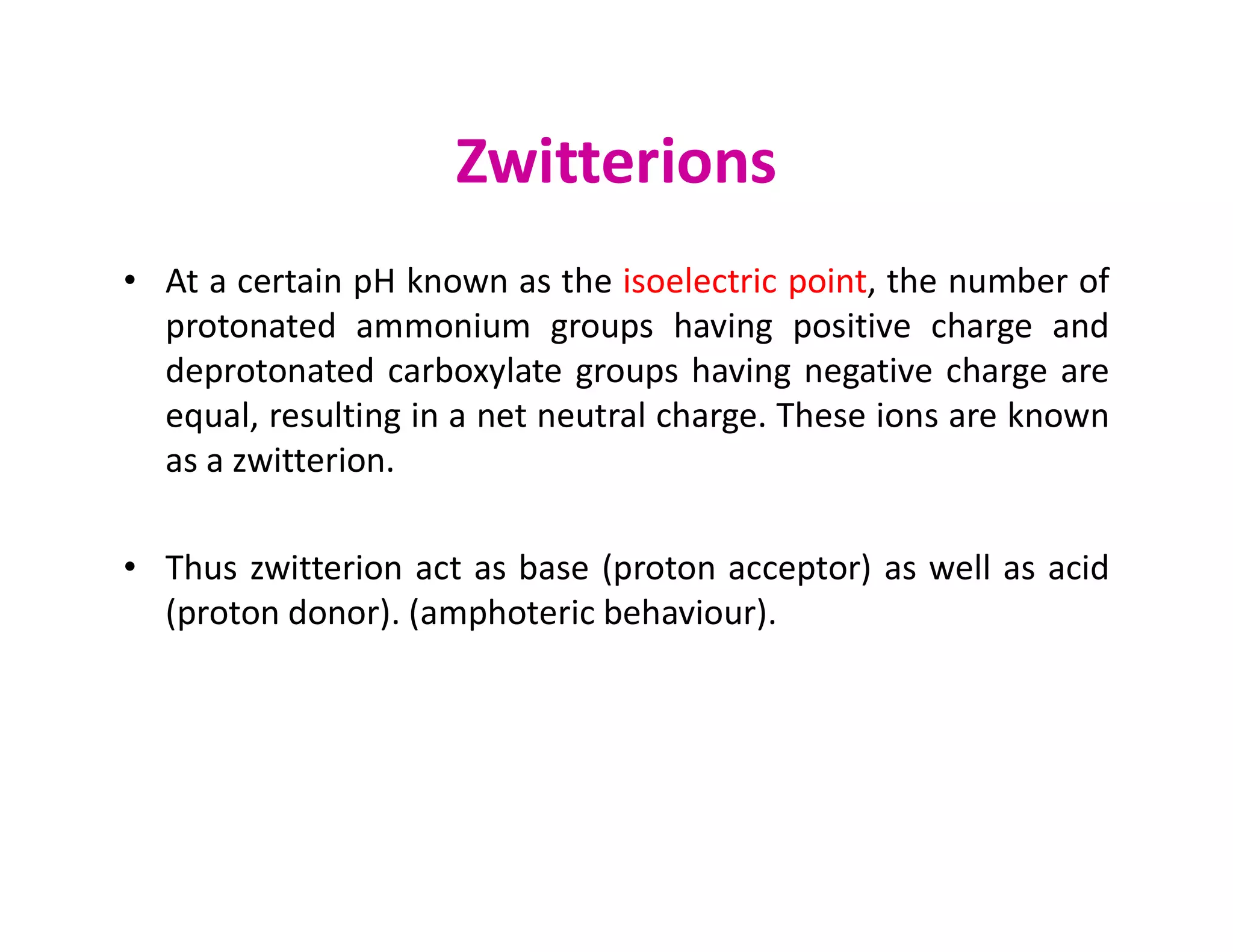
Zwitterions
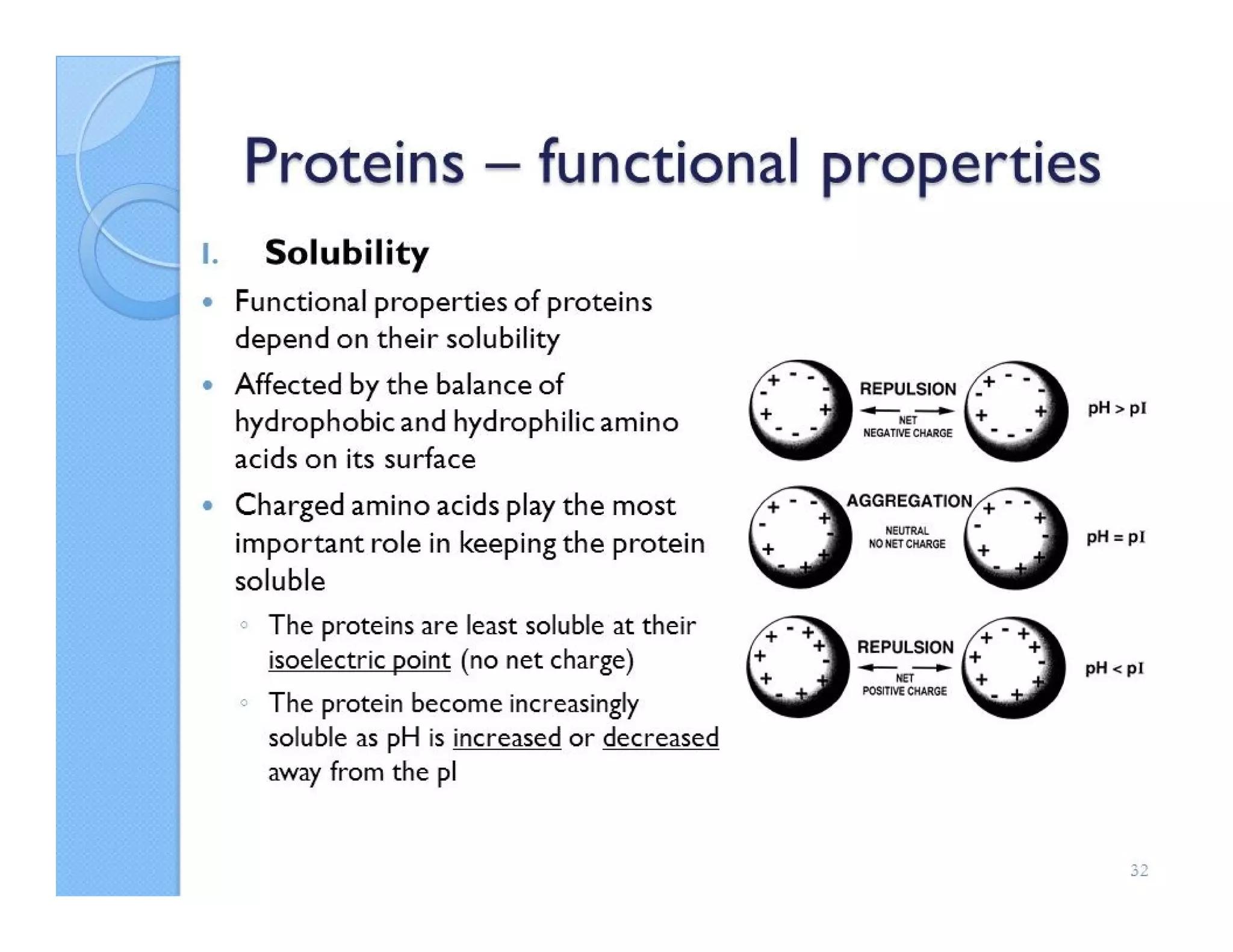
• At a certain pH known as the isoelectric point, the number of
protonated ammonium groups having positive charge and
deprotonated carboxylate groups having negative charge are
equal, resulting in a net neutral charge. These ions are known
as a zwitterion.
as a zwitterion.
• Thus zwitterion act as base (proton acceptor) as well as acid
(proton donor). (amphoteric behaviour).
Proteins
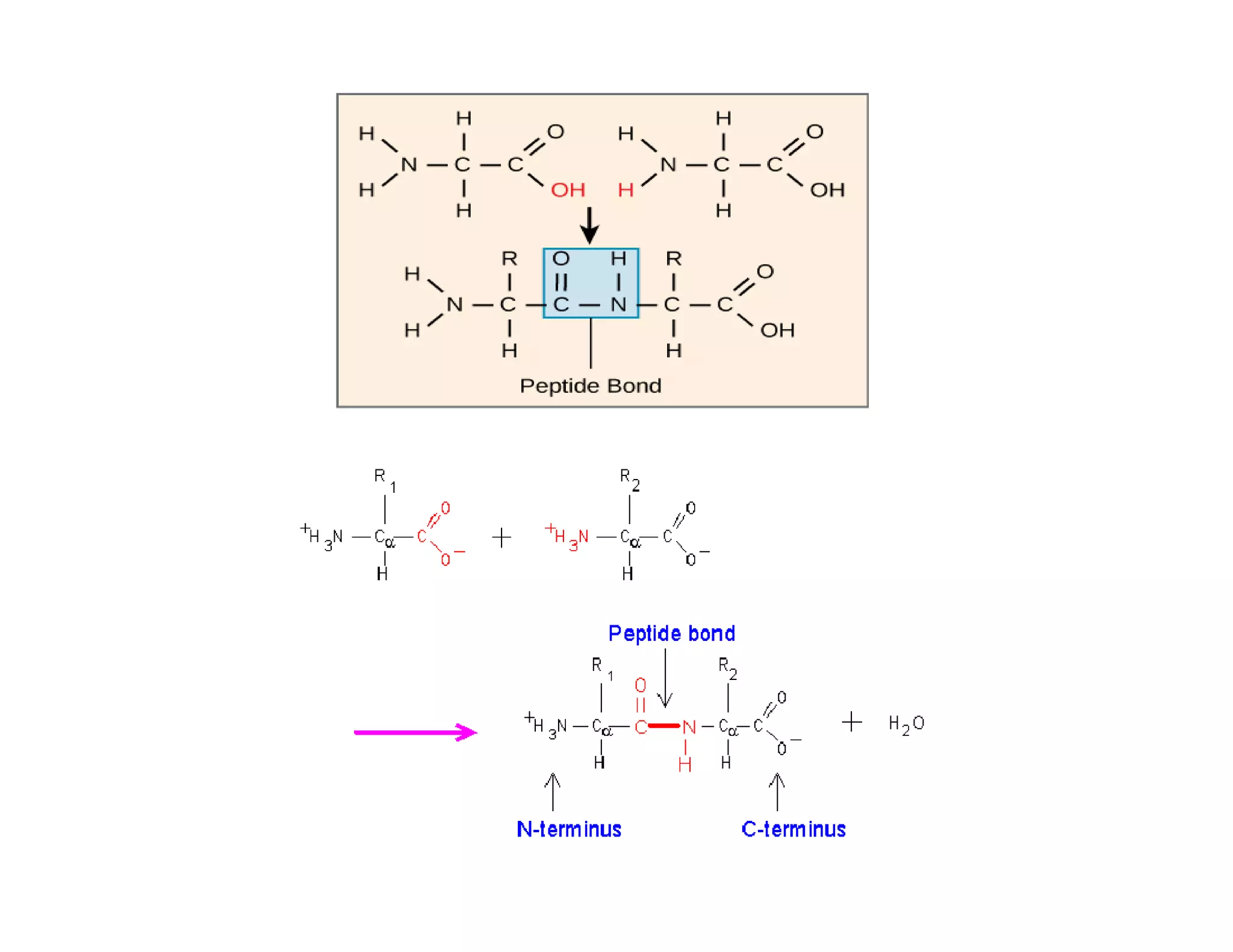
• Proteins are linear sequences of amino acids linked together by
peptide bonds. The amino acids are linked head to tail.
• The peptide bond is a covalent bond formed between the α-
carboxyl group of one amino acid and the α-amino group of
another. Once two amino acids are joined together via a peptide
bond to form a dipeptide, there is still a free amino group at one
end and a free carboxyl group at the other, each of which can in
turn be linked to further amino acids.
• A long, unbranched chain of amino acids (upto 25 amino acid
residues), linked together by peptide bonds is called oligopeptide. A
peptide chain having >25 amino acids residues is called
polypeptide.
Peptide bond
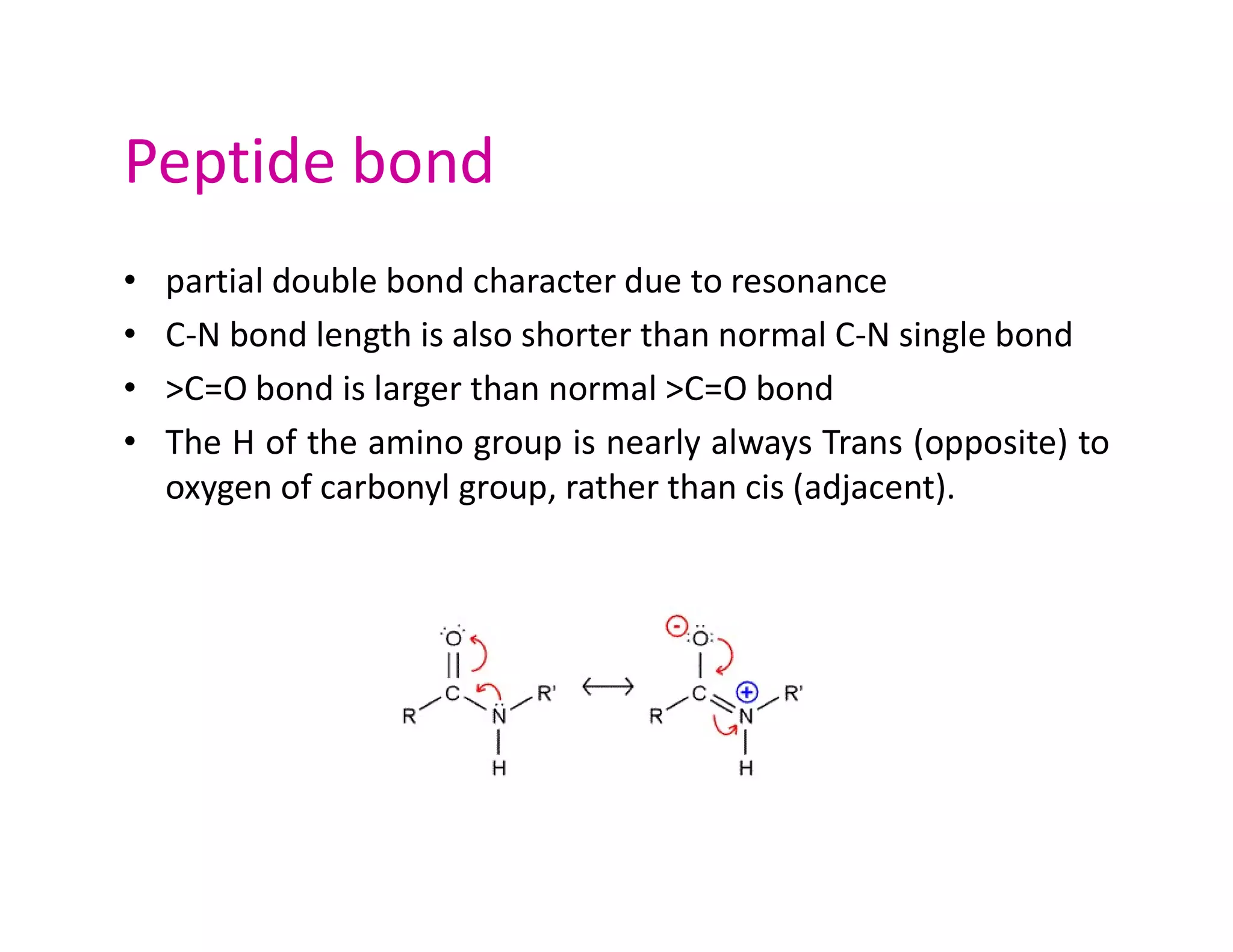
• partial double bond character due to resonance
• C-N bond length is also shorter than normal C-N single bond
• >C=O bond is larger than normal >C=O bond
• The H of the amino group is nearly always Trans (opposite) to
oxygen of carbonyl group, rather than cis (adjacent).
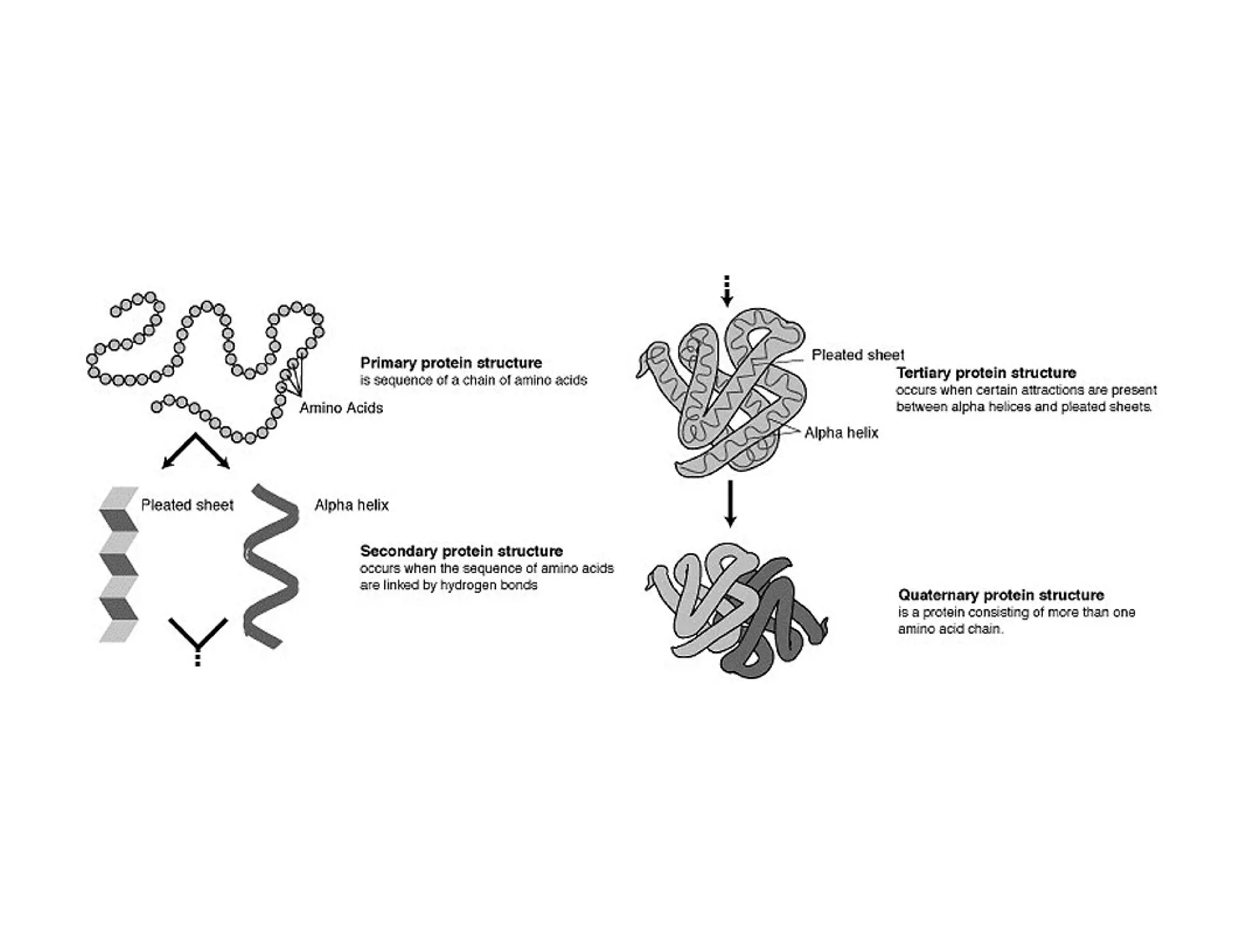
Structure of proteins
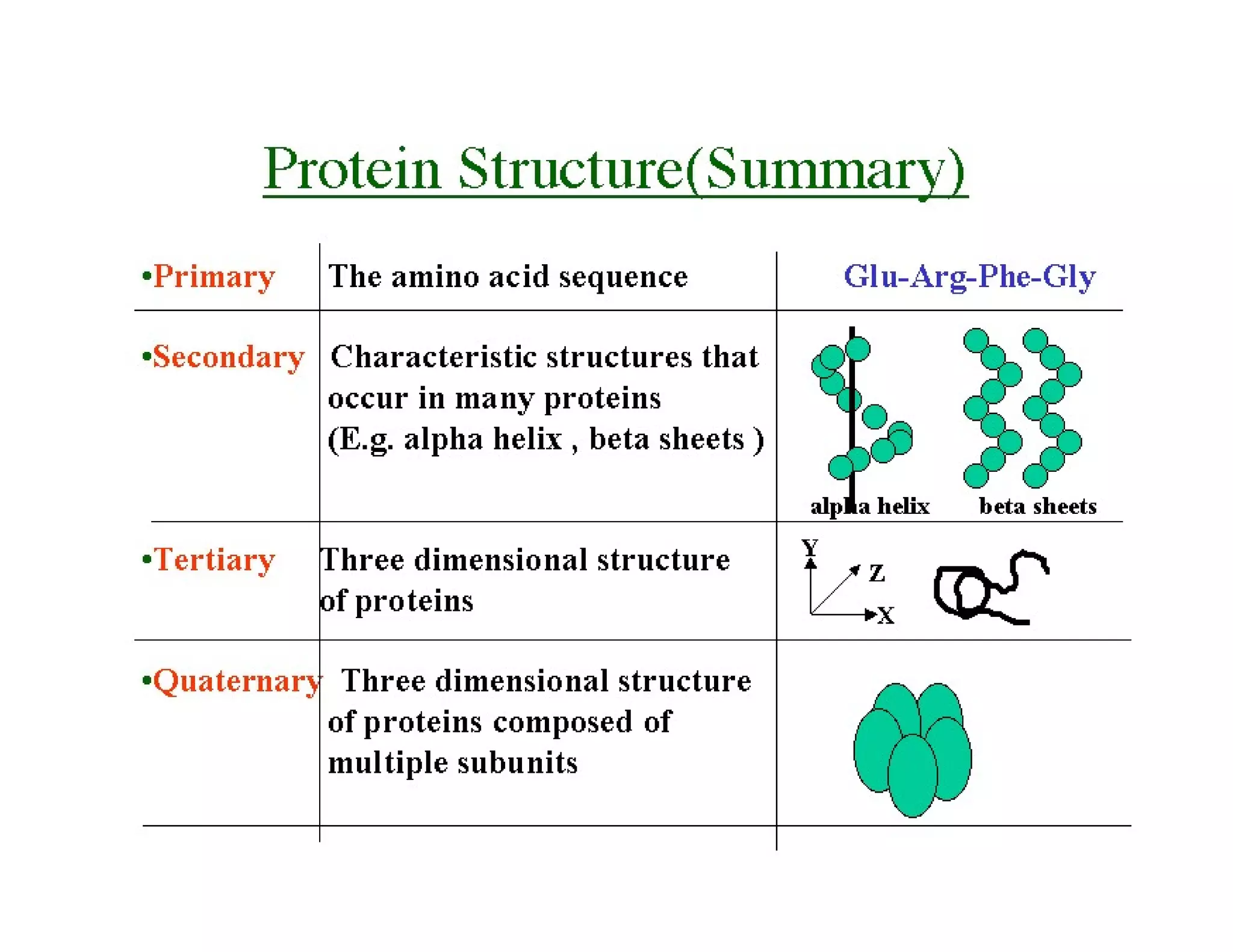
• The peptide chain folds up in the protein to form a specific
shape (conformation). The conformation is the three
dimensional arrangement of atoms in structure and is
determined by the amino acid sequence.
• There are four levels of structure in proteins:
 primary
 secondary
 tertiary
 quaternary.
Primary structure
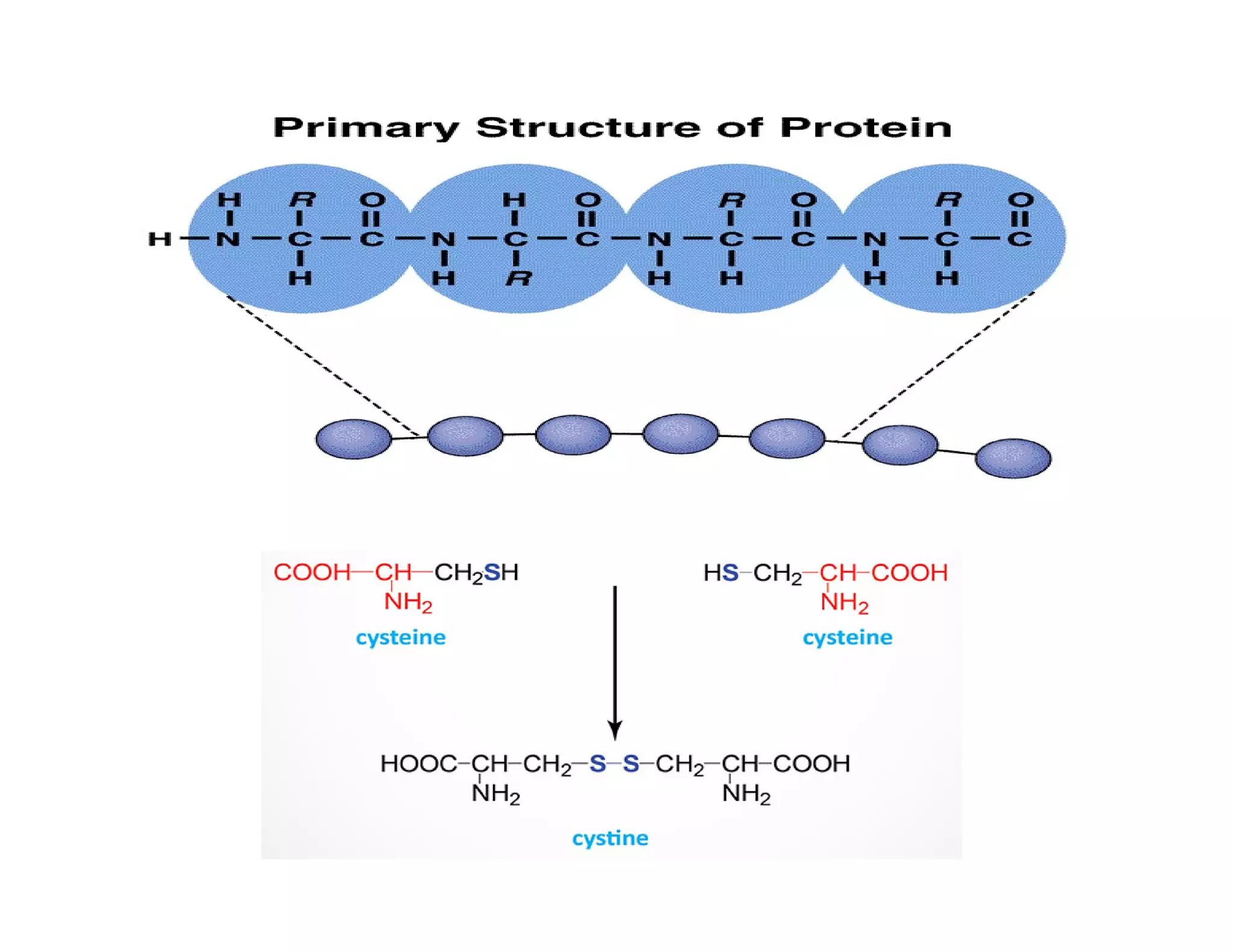
• The primary structure in a protein is the linear sequence of amino
acids as joined together by peptide bonds.
• Includes disulfide bonds between cysteine residues that are
adjacent in space but not in the linear amino acid sequence. These
covalent cross-links are formed by the oxidation of SH groups on
cysteine residues that are juxtaposed in space between separate
polypeptide chains or between different parts of same chain. The
resulting disulfide is called a cystine residues.
• Disulfide bonds are often present in extracellular proteins, but are
rarely found in intracellular proteins.
Secondary structure
Secondary level of structure in a protein is the
regular folding of regions of the polypeptide
chain.
1. α-helix
1. α-helix
2. β-pleated sheet
α-helix
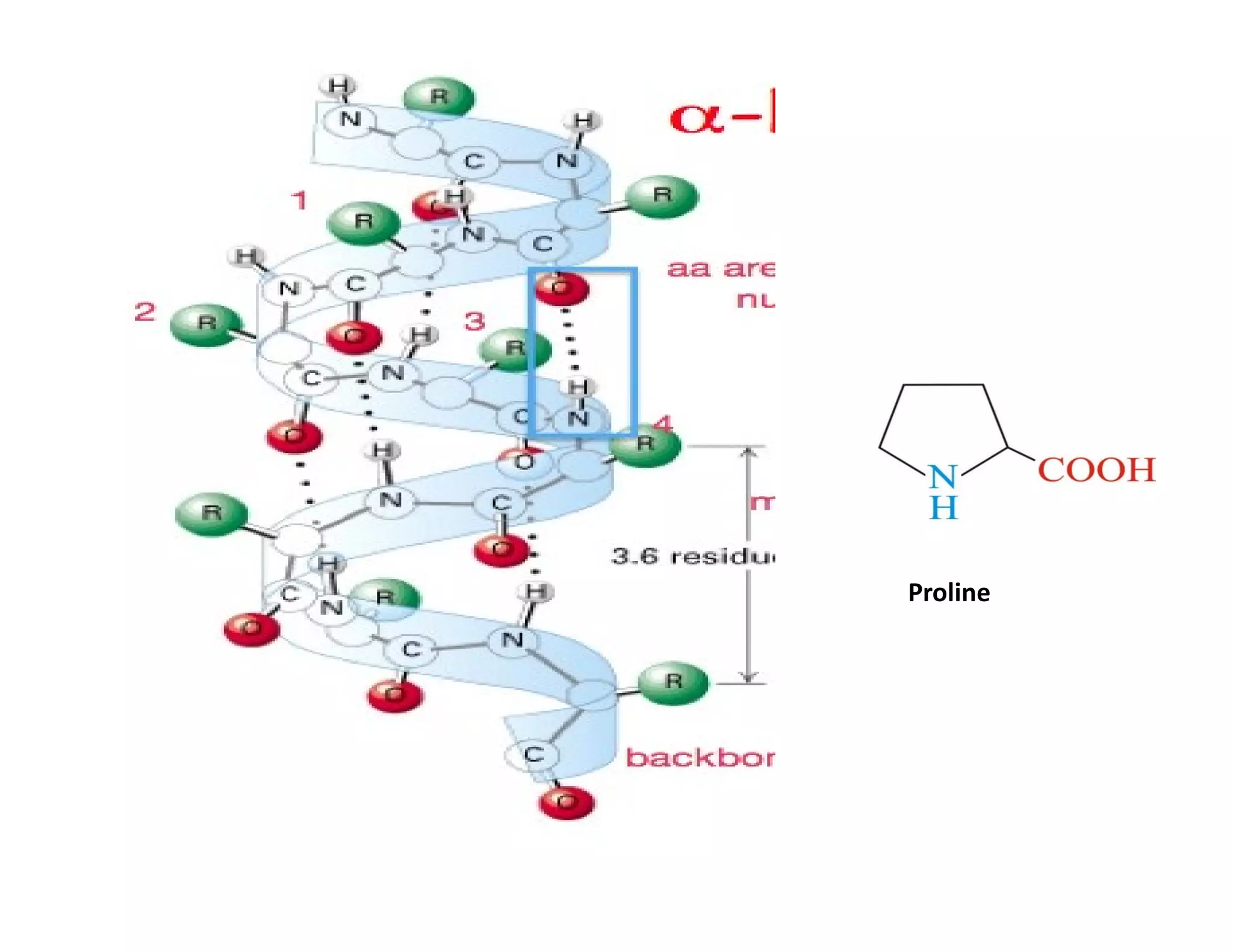
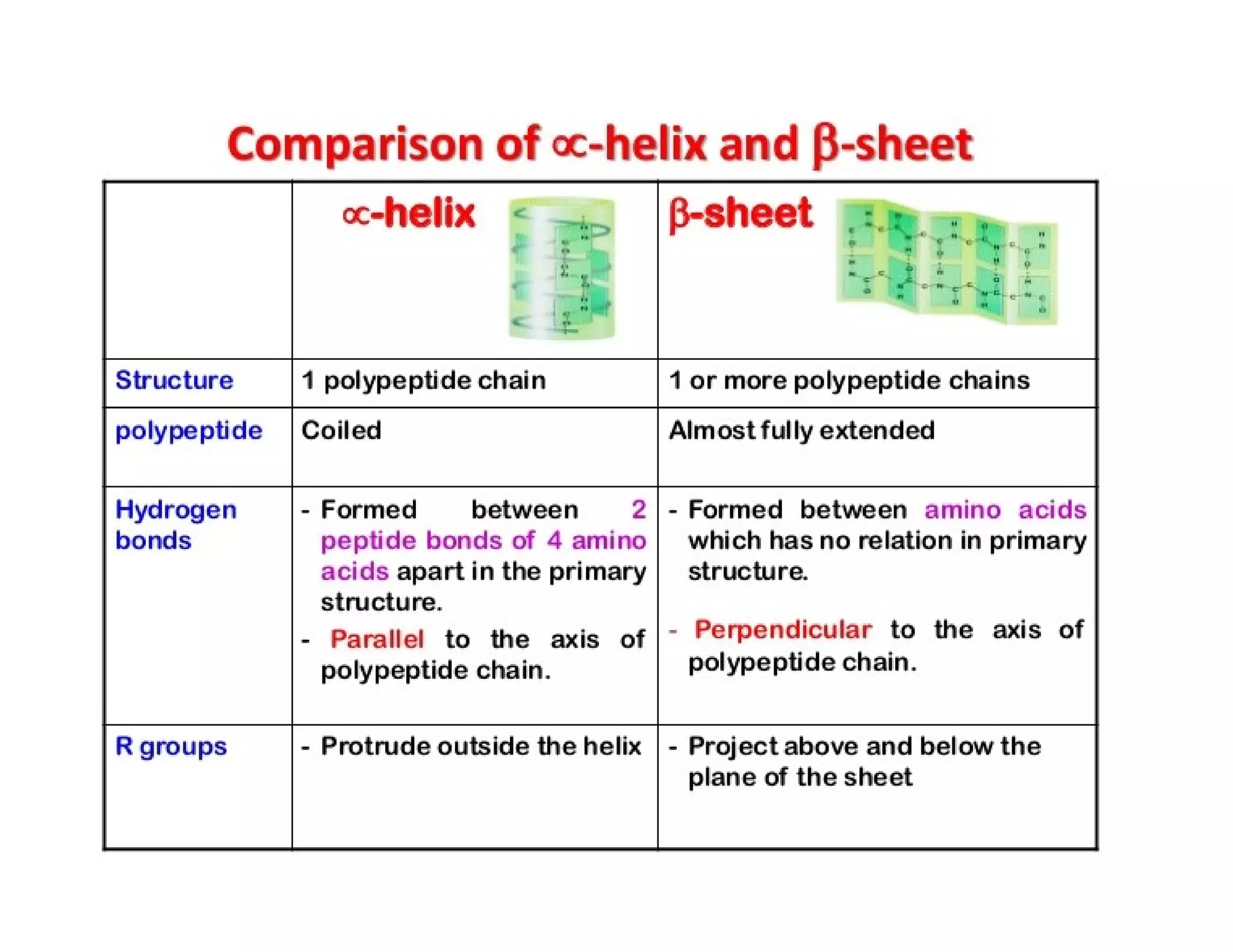
• In α-helix, the amino acids arrange themselves in a regular helical
conformation in a rod shape.
• The carbonyl oxygen of each peptide bond is hydrogen bonded to
the hydrogen on the amino group of the fourth amino acid away.
In an α-helix there are 3.6 amino acids per turn of the helix
covering a distance of 0.54 nm.
• The side chain of the amino acids are all positioned along the
outside of the cylindrical helix.
• Proline is rarely found in α-helical regions as it cannot form the
correct pattern of hydrogen bonds due to lack of a hydrogen atom
on its nitrogen atom. For this reason, Pro is often found at the
end of an α-helix where it alters the direction of polypeptide
chain and terminates the helix.
Proline
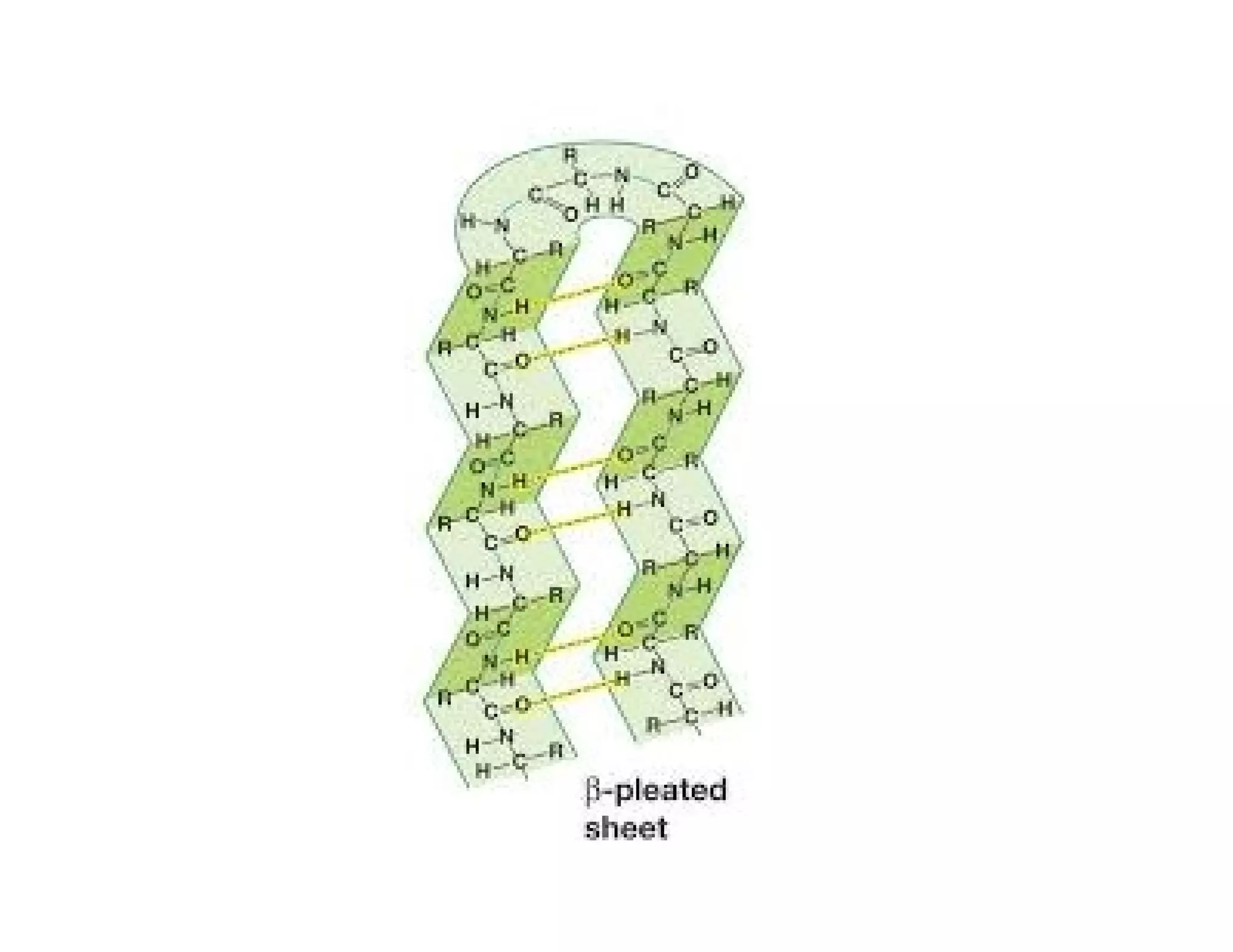
β-pleated sheet
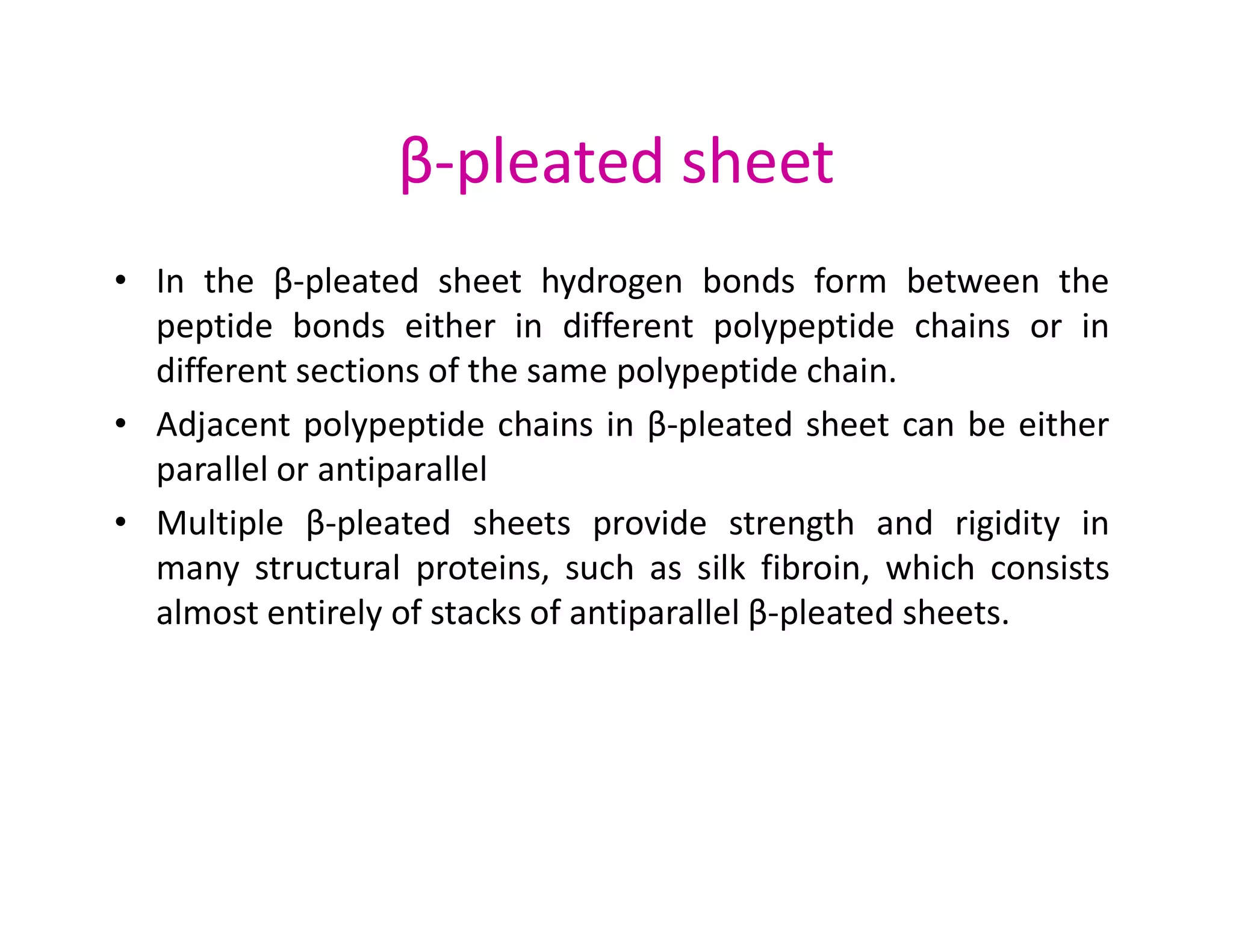
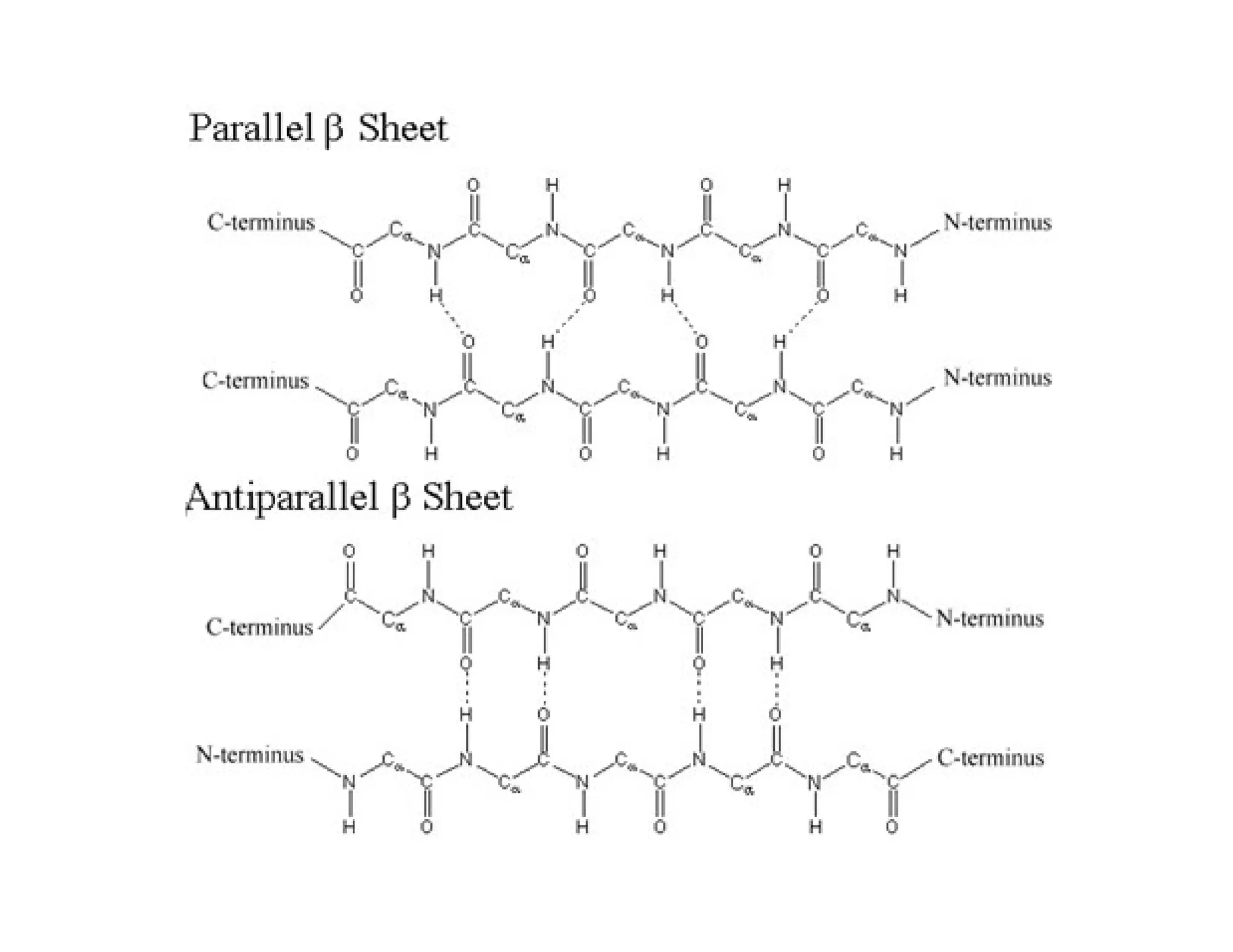
• In the β-pleated sheet hydrogen bonds form between the
peptide bonds either in different polypeptide chains or in
different sections of the same polypeptide chain.
• Adjacent polypeptide chains in β-pleated sheet can be either
parallel or antiparallel
• Multiple β-pleated sheets provide strength and rigidity in
many structural proteins, such as silk fibroin, which consists
almost entirely of stacks of antiparallel β-pleated sheets.
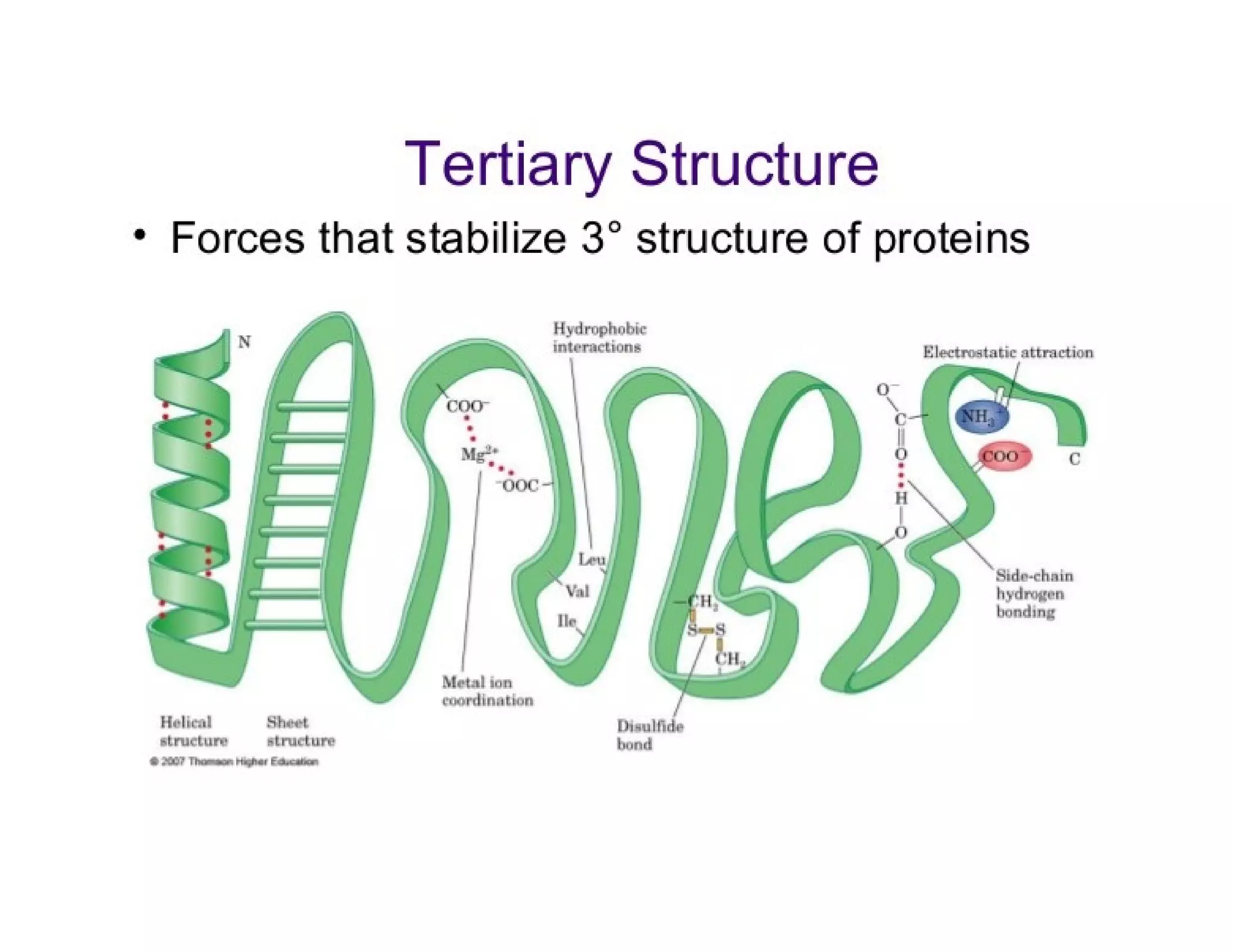
Tertiary structure
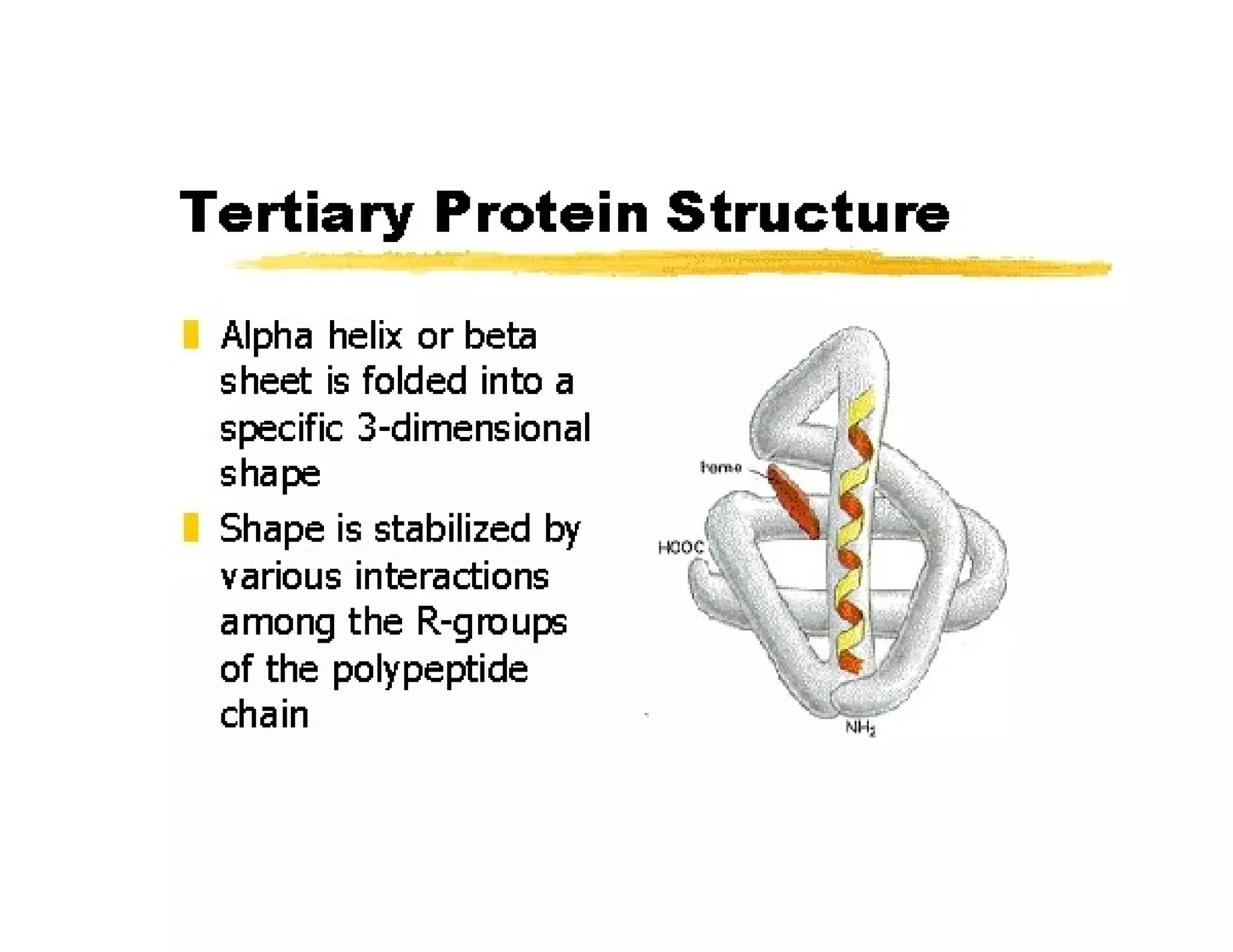
• The tertiary structure means the spatial arrangement of amino
acids that are far apart in the linear sequence as well as those
residues that are adjacent.
• The term “tertiary structure” refers to the entire three
dimensional conformation of a polypeptide.
• It indicates, in three-dimensional space, how secondary
structural features—helices, sheets, bends, turns, and loops—
assemble to form domains and how these domains relate
spatially to one another.
• A domain is a section of protein structure sufficient to
perform a particular chemical or physical task such as binding
of a substrate or other ligand.
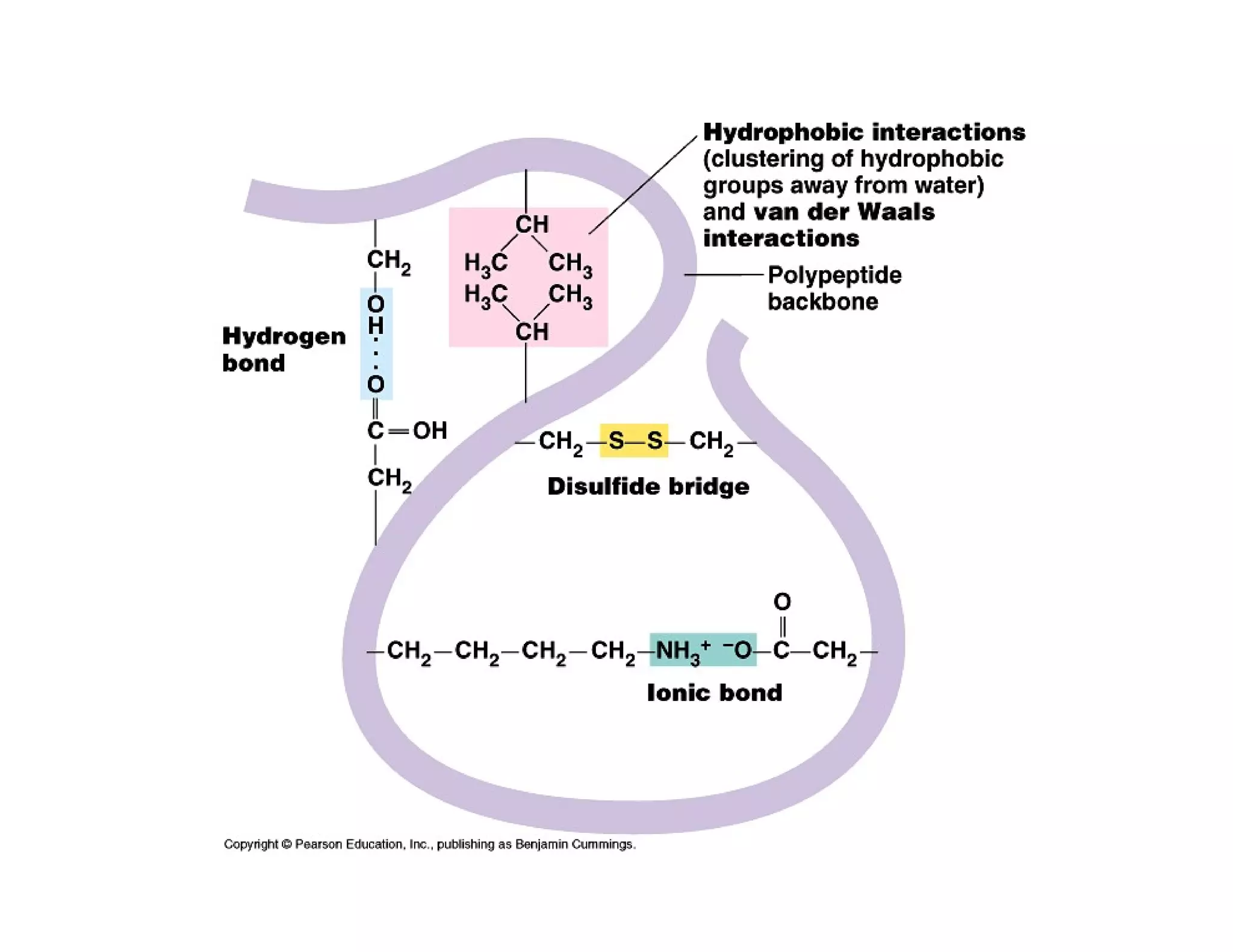
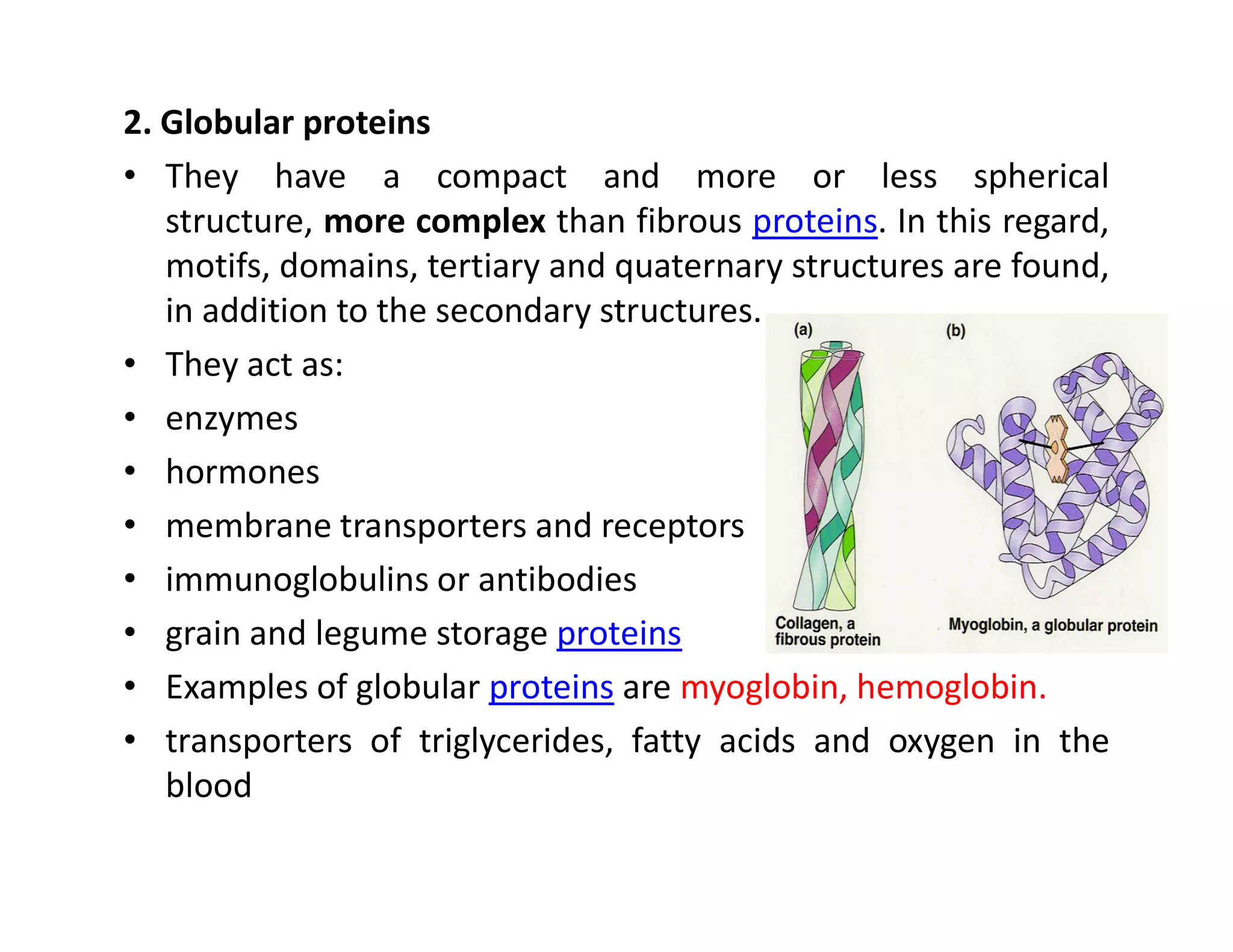
• For example in myoglobin, a globular protein, the polypeptide
chain folds spontaneously so that the majority of its
For example in myoglobin, a globular protein, the polypeptide
chain folds spontaneously so that the majority of its
hydrophobic side chains are buried in the interior, and the
majority of its polar , charged side chains are on the surface.
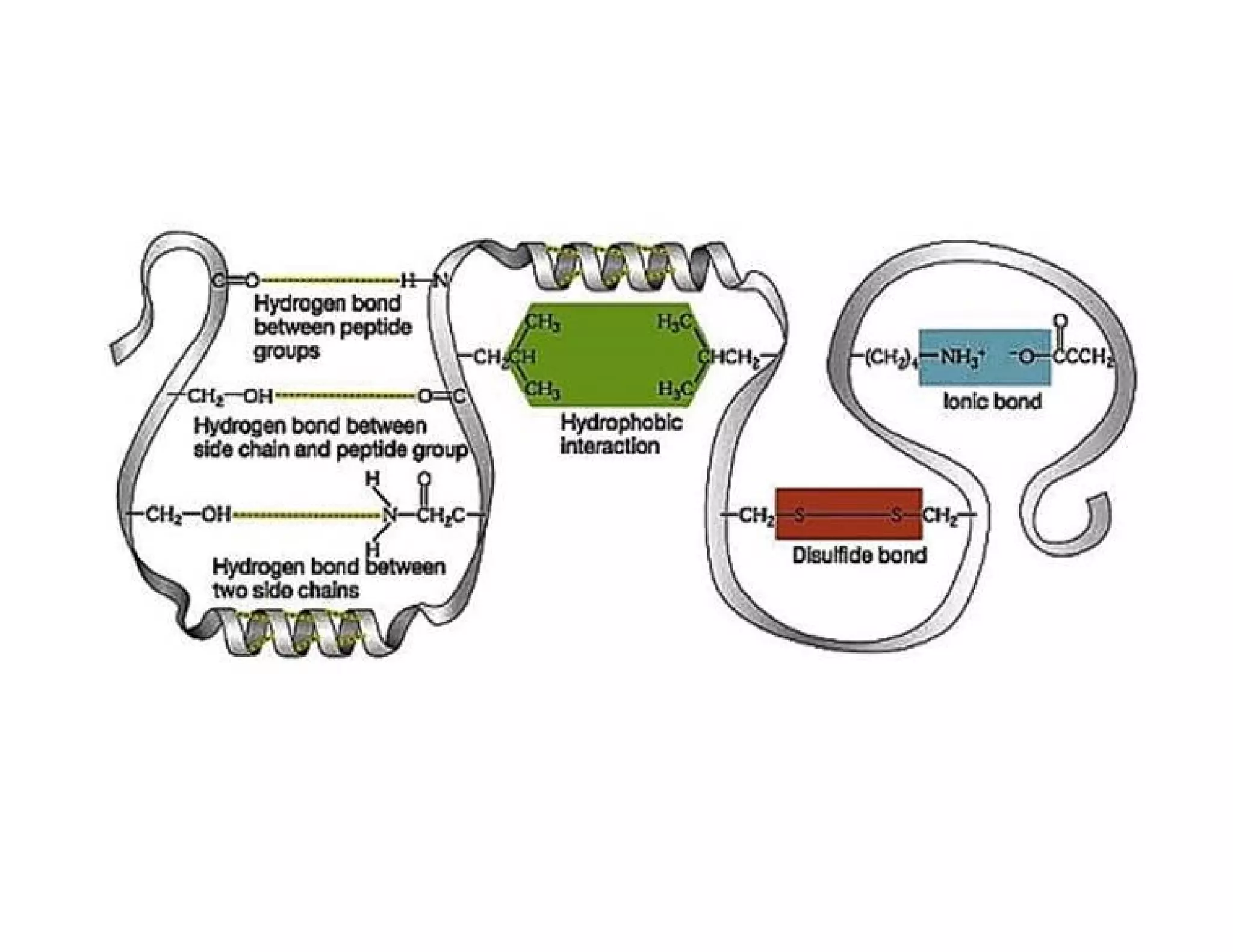
Once folded , the three dimensional , biologically active
(native ) conformation of protein is maintained not only by
hydrophobic interactions, but also by electrostatic forces
(including salt bridges, Vander Waals interactions), hydrogen
bonding and if present the covalent disulfide bonds.
Quaternary structure
• Proteins containing more than one polypeptide chains, such as
haemoglobin exhibit a fourth level of protein structure called
quaternary structure.
• This level of structure refers to the spatial arrangement of the
polypeptide subunits and the nature of the interactions
between them.
• These interactions may be covalent links or noncovalent
interactions (electrostatic forces, hydrophobic interactions and
hydrogen bonding.
• E.g. Silk, Collagen, insulin
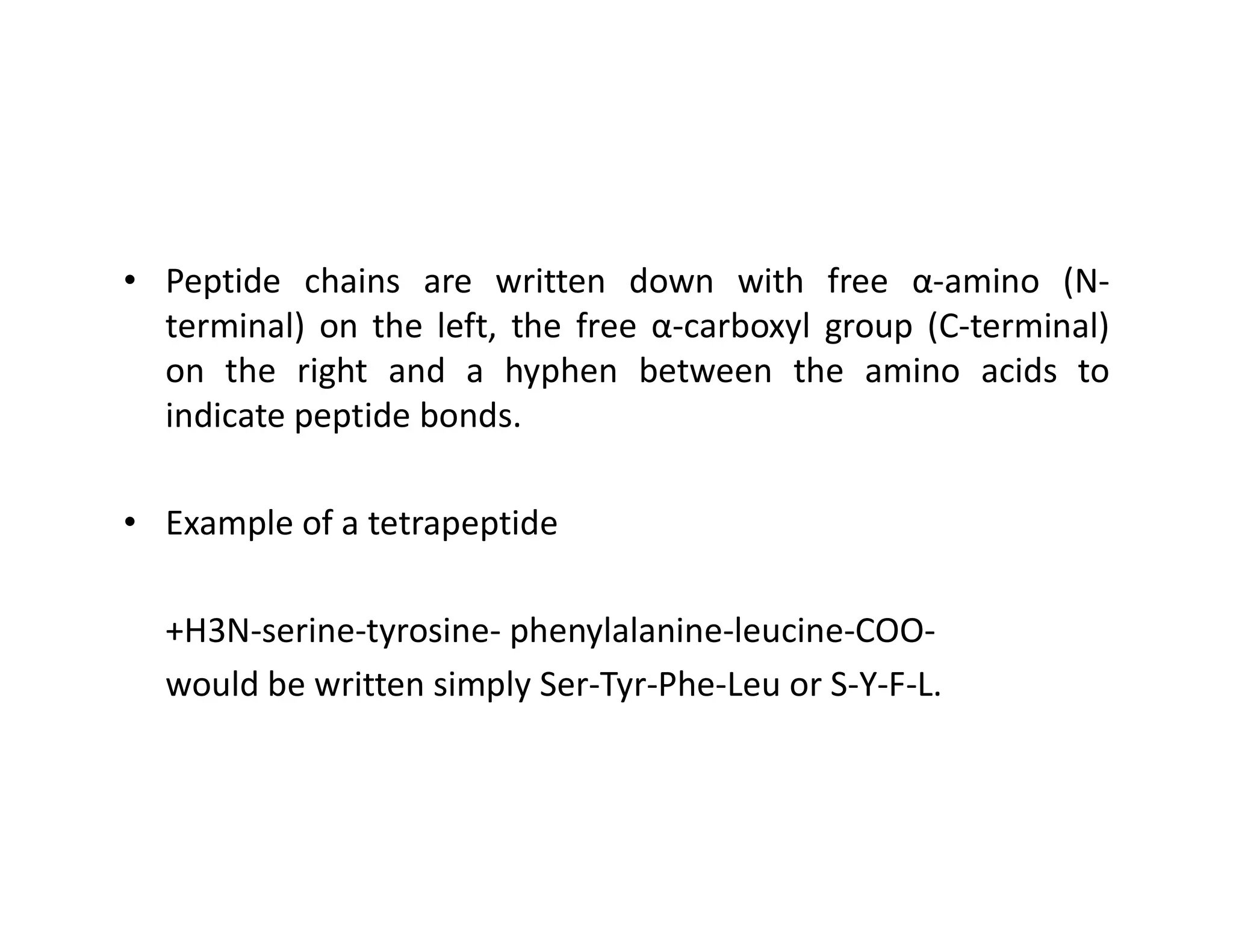
• Peptide chains are written down with free α-amino (N-
terminal) on the left, the free α-carboxyl group (C-terminal)
on the right and a hyphen between the amino acids to
indicate peptide bonds.
• Example of a tetrapeptide
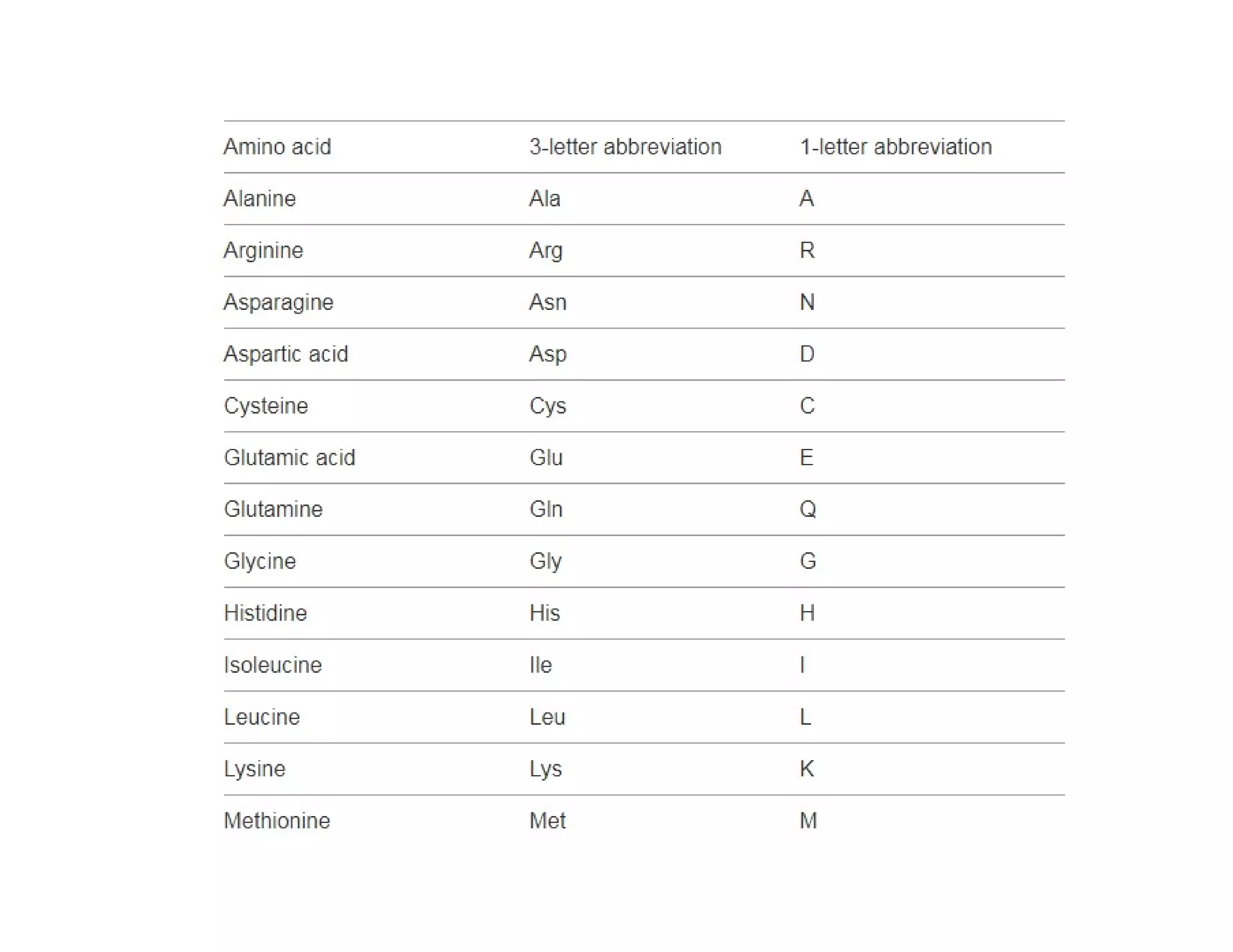
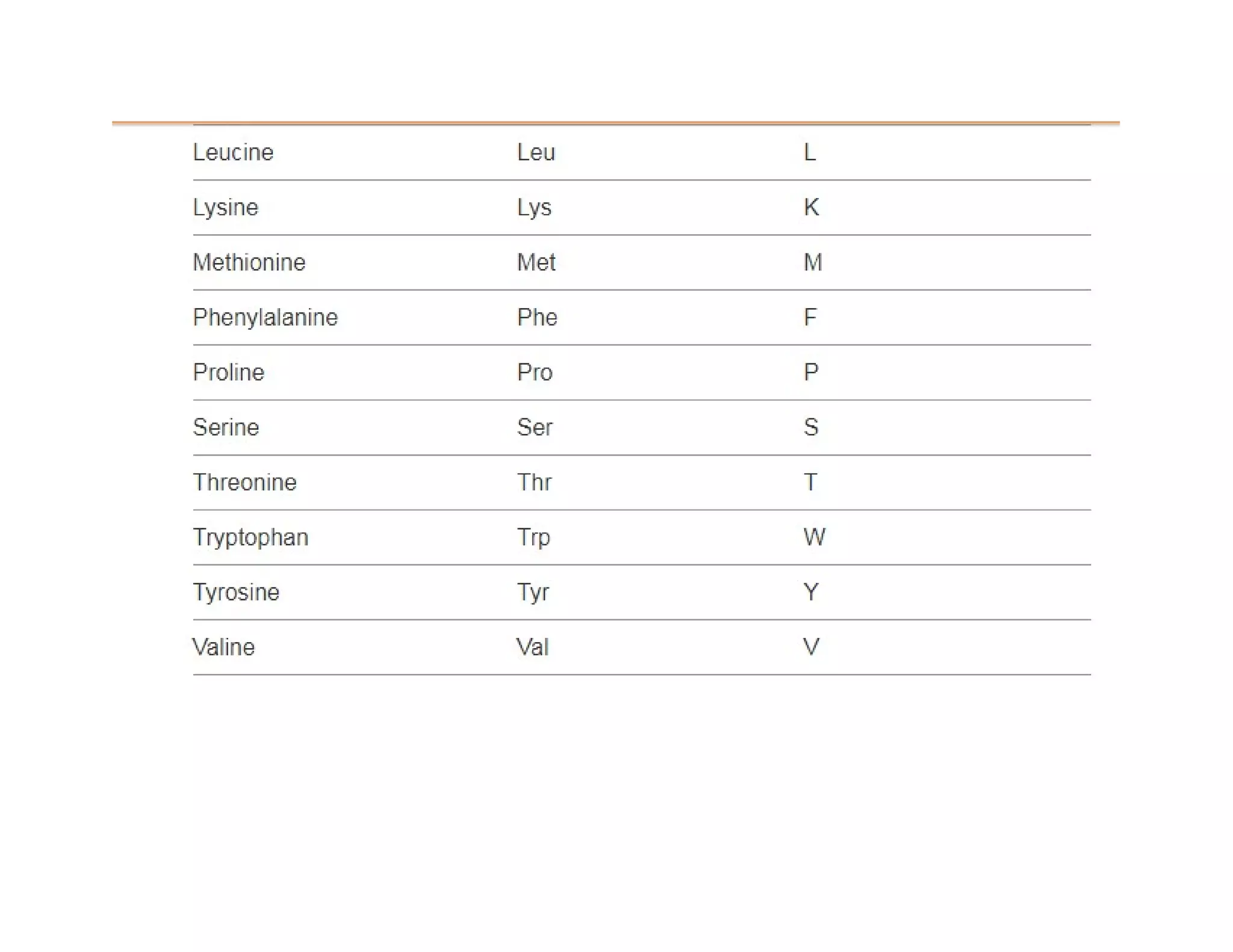
+H3N-serine-tyrosine- phenylalanine-leucine-COO-
would be written simply Ser-Tyr-Phe-Leu or S-Y-F-L.
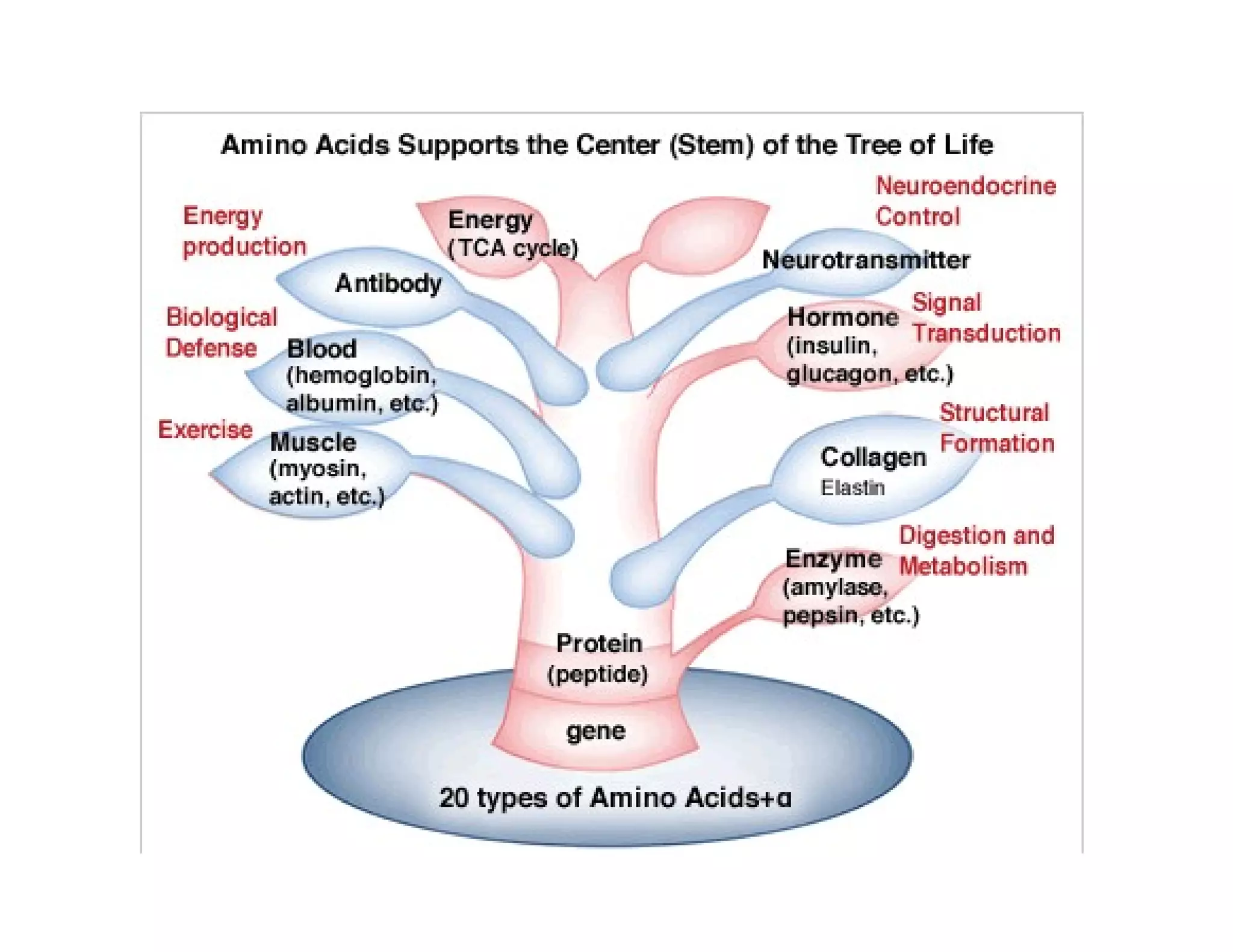
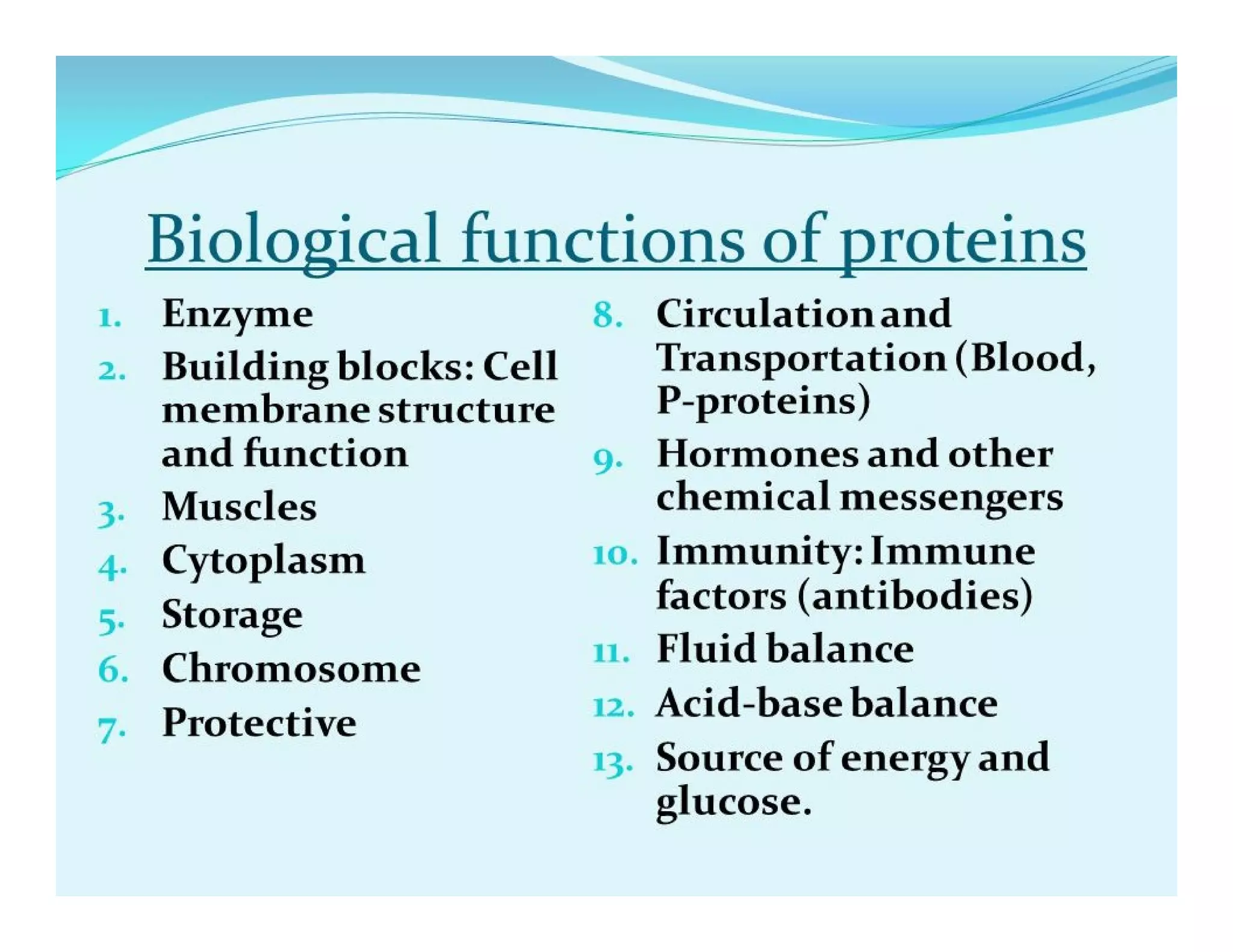
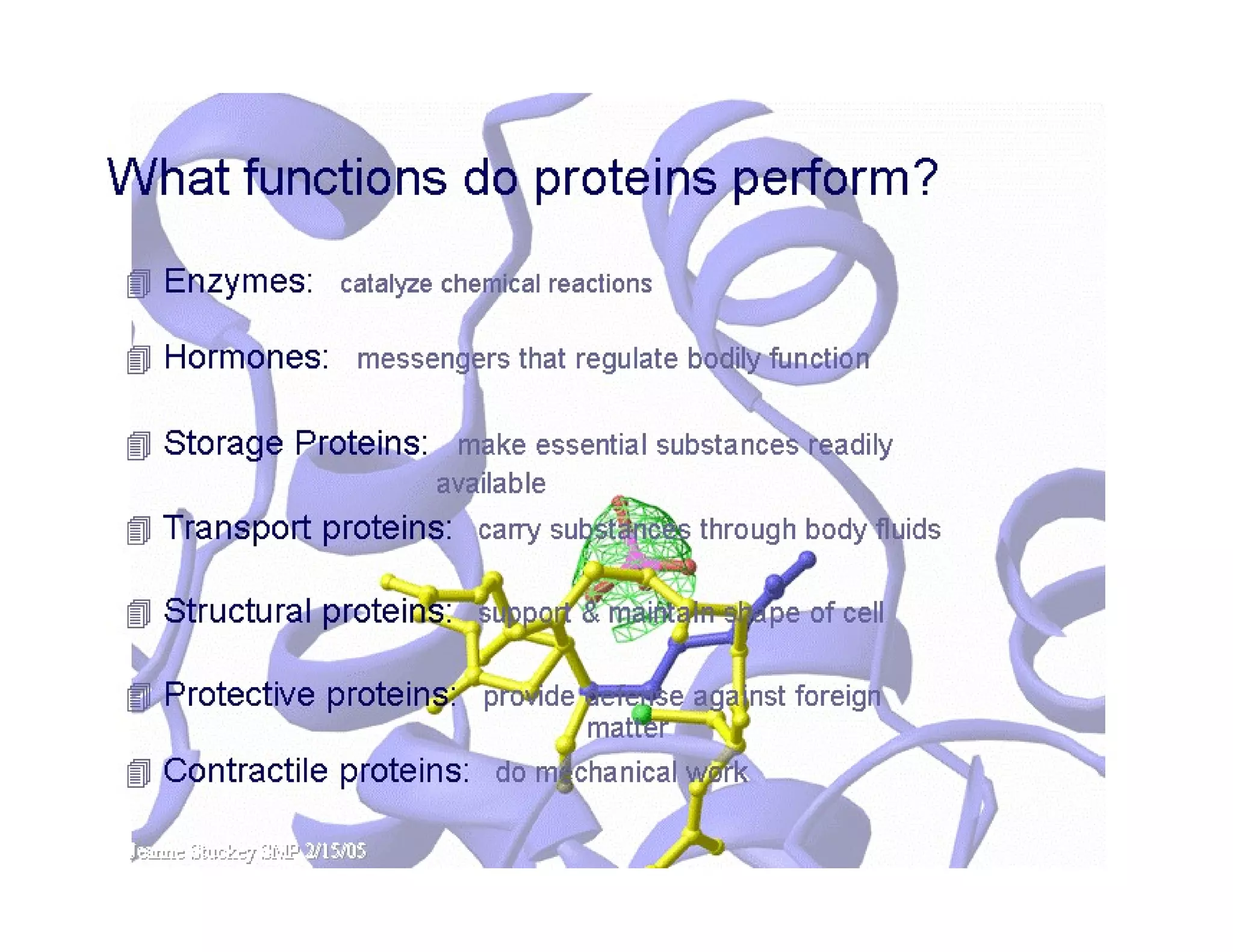
Functions of proteins
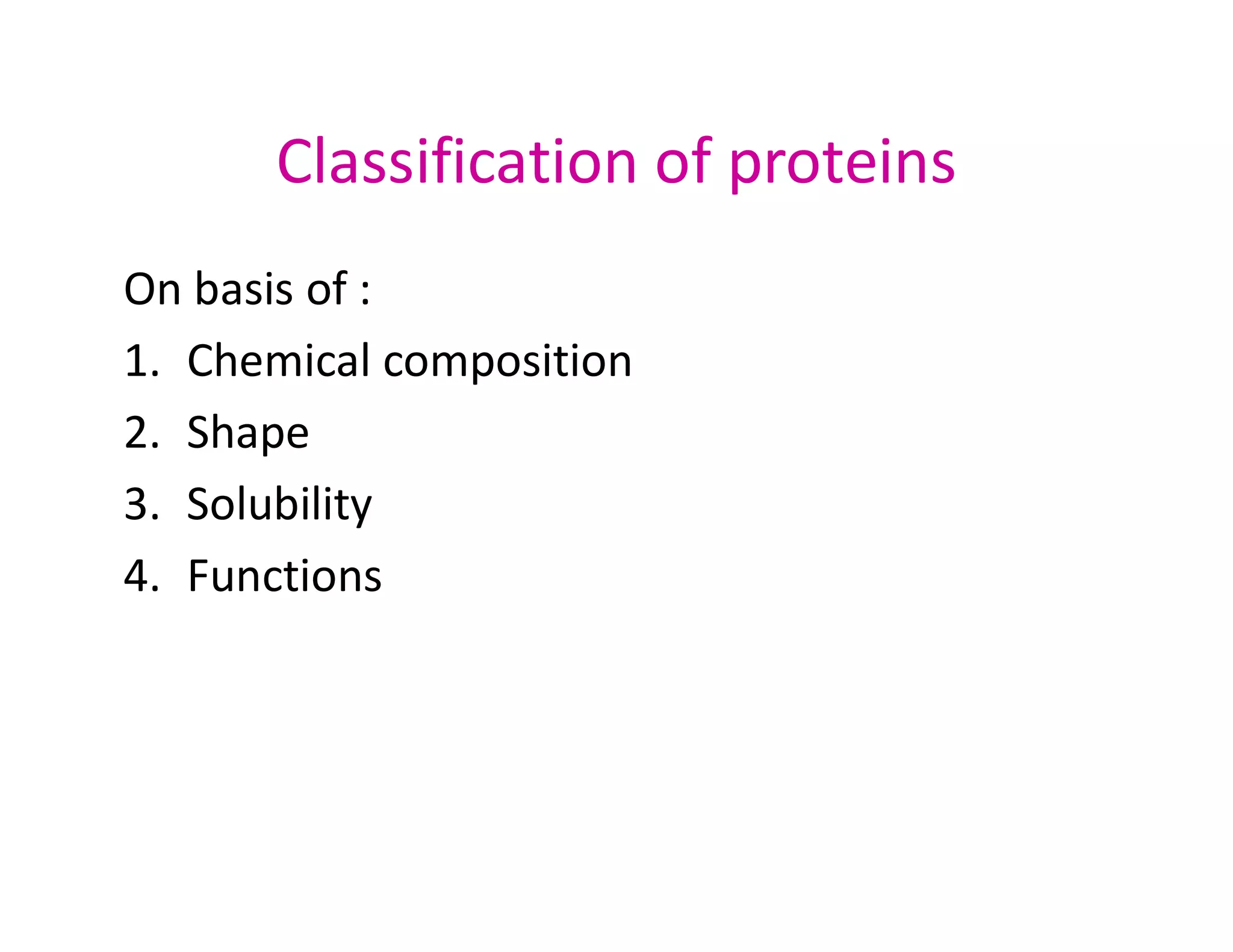
Classification of proteins
On basis of :
1. Chemical composition
2. Shape
3. Solubility
3. Solubility
4. Functions
Classification on basis of composition
1. Simple proteins
• Also known as homoproteins, they are made up of only amino acids.
Examples are plasma albumin, collagen, and keratin.
2. Complex proteins
• Sometimes also called heteroproteins, they contain in their structure
a non-protein portion. Three examples are glycoproteins, chromoproteins,
and phosphoproteins.
• Glycoproteins: Immunoglobulins,
• Chromoproteins: Hemoglobin and myoglobin, chlorophyll and rhodopsin
• Phosphoproteins: milk caseins and egg yolk phosvitin.
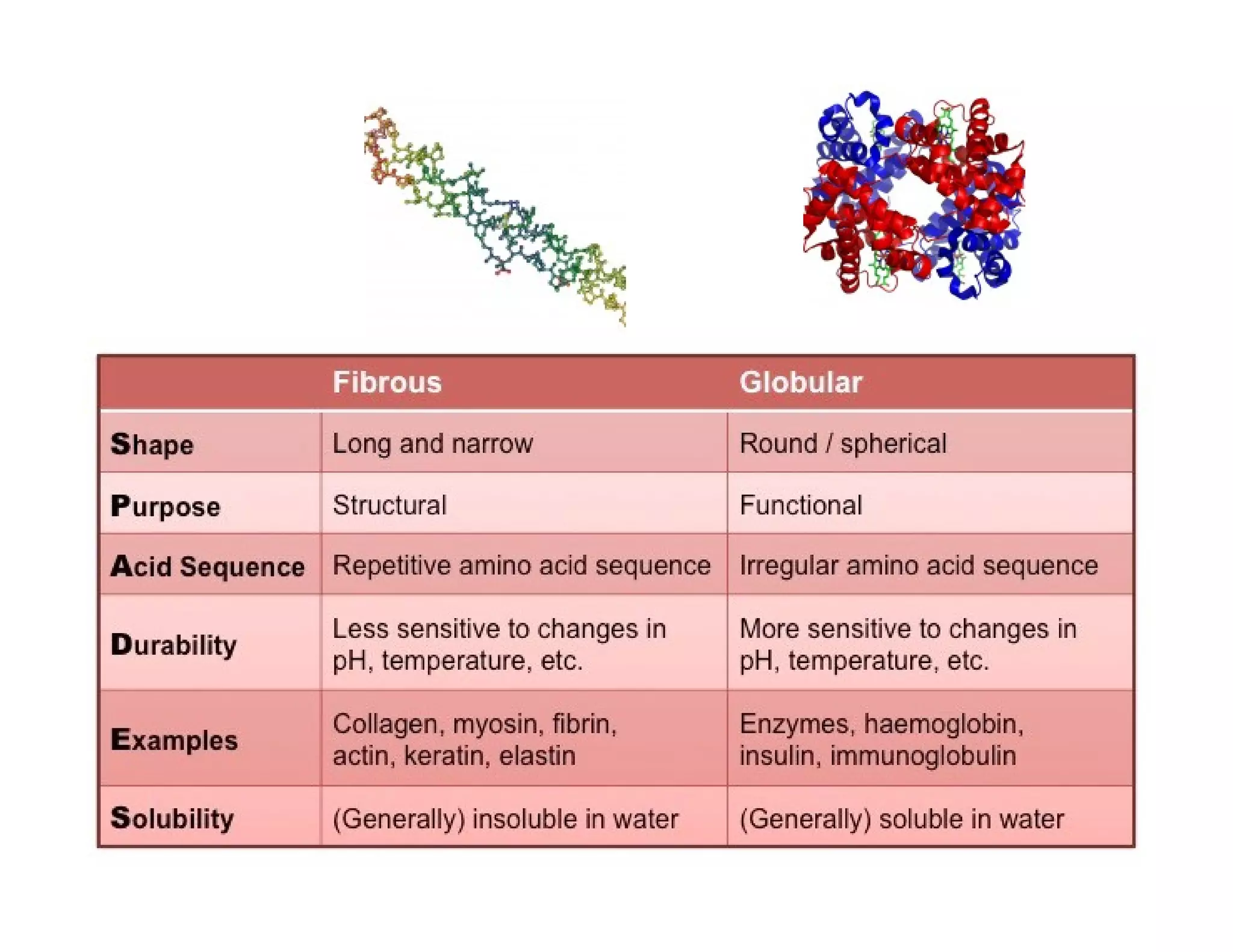
Classification on basis of shape
1. Fibrous proteins
• their polypeptide chains form long filaments or sheets, where
in most cases only one type of secondary structure, that
repeats itself, is found.
• They have primarily mechanical and structural functions
• E.g. Fibroin produced by spiders, silkworms
• Collagen present in eye cornea, skin, tendons
2. Globular proteins
• They have a compact and more or less spherical
structure, more complex than fibrous proteins. In this regard,
motifs, domains, tertiary and quaternary structures are found,
in addition to the secondary structures.
• They act as:
• enzymes
• hormones
• hormones
• membrane transporters and receptors
• immunoglobulins or antibodies
• grain and legume storage proteins
• Examples of globular proteins are myoglobin, hemoglobin.
• transporters of triglycerides, fatty acids and oxygen in the
blood
Classification on basis of solubility
Classification on basis of functions
• Enzymes
• Transport proteins
Many small molecules, organic and inorganic, are transported
in the bloodstream and extracellular fluids, across the cell
membranes, and inside the cells from one compartment to
another, by specific proteins. hemoglobin, that carries oxygen
from the alveolar blood vessels to tissue capillaries;
transferrin, which carries iron in the blood
• Protective role: fatty acid binding proteins (FABP), bound
molecules, such as fatty acids, may be harmful for the
organism when present in free form.
• Storage proteins: ferritin, that stores iron intracellularly in a
non-toxic form; egg yolk phosvitin, that contains high amounts
of phosphorus.
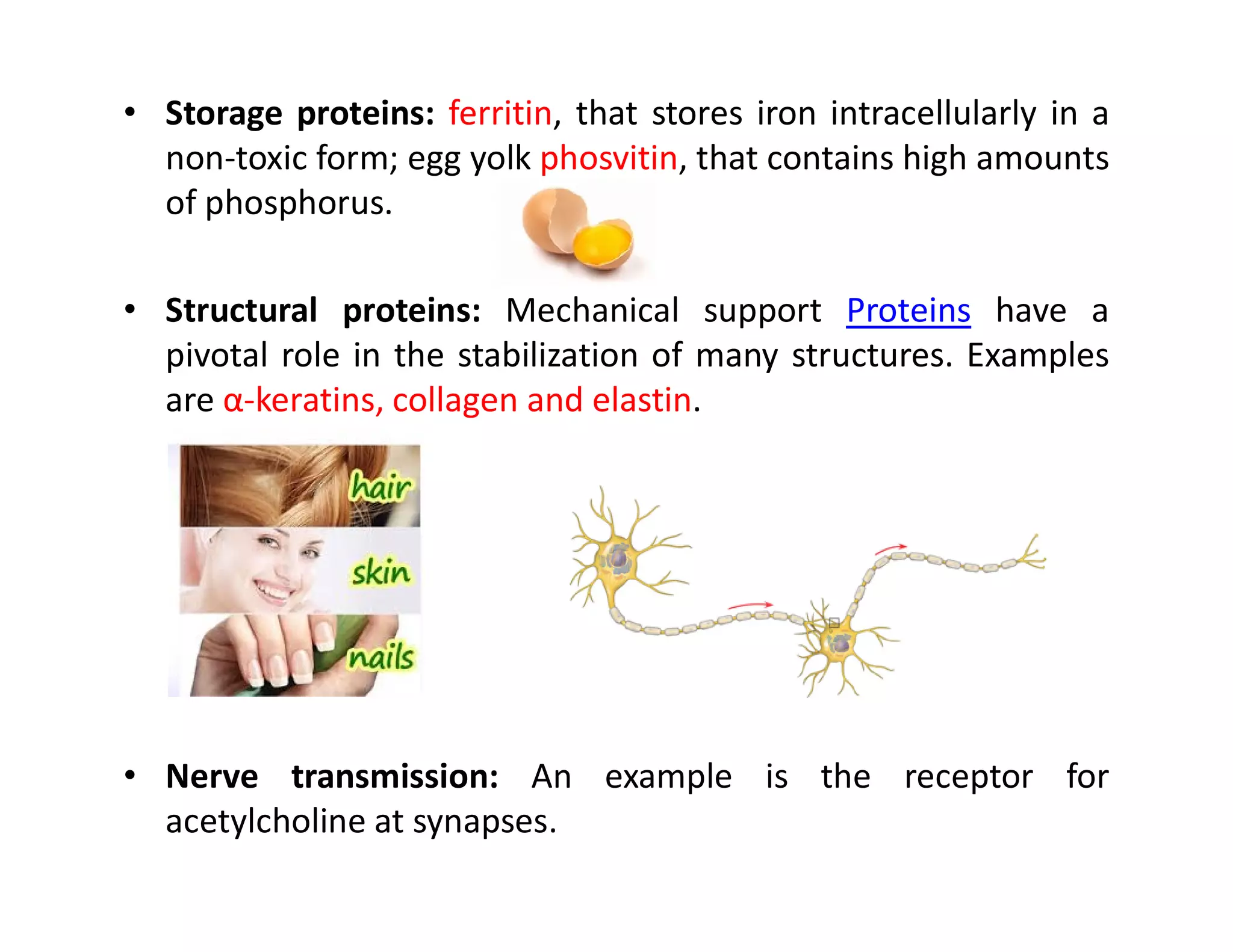
• Structural proteins: Mechanical support Proteins have a
pivotal role in the stabilization of many structures. Examples
are α-keratins, collagen and elastin.
• Nerve transmission: An example is the receptor for
acetylcholine at synapses.
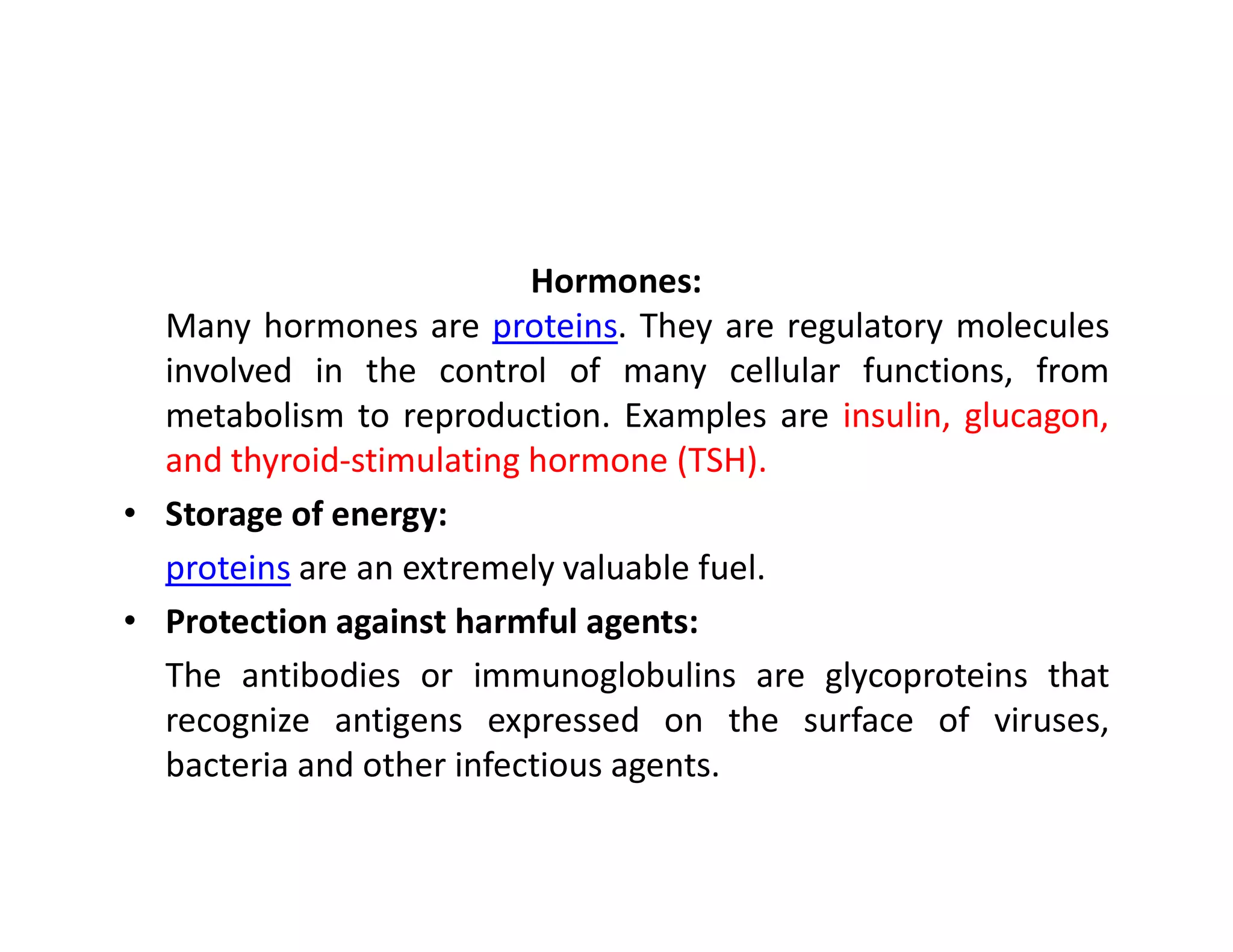
Hormones:
Many hormones are proteins. They are regulatory molecules
involved in the control of many cellular functions, from
metabolism to reproduction. Examples are insulin, glucagon,
and thyroid-stimulating hormone (TSH).
• Storage of energy:
proteins are an extremely valuable fuel.
• Protection against harmful agents:
The antibodies or immunoglobulins are glycoproteins that
recognize antigens expressed on the surface of viruses,
bacteria and other infectious agents.
 Proteins and Amino acid -: classification , structure,functions, physicochemical properties

Proteins and Amino acid -: classification , structure,functions, physicochemical properties

  • 2.
    General structure, classificationand functions of bio-molecules Biomolecule – • A molecule that is produced by cells and living organisms and is involved in the maintenance and metabolic processes of living organisms. • Biomolecules include large macromolecules such as proteins, carbohydrates, lipids, and nucleic acids, as well as small molecules such as primary metabolites, secondary metabolites, and natural products. • primary metabolites are components of basic metabolic pathways that are required for life. Primary metabolites include carbohydrates, lipids, amino acids, and nucleic acids • Secondary in contrast to primary metabolites are dispensable and not absolutely required for survival e.g. pheromones that act as social signaling molecules with other individuals of the same species, and competitive weapons (repellants, venoms, toxins etc.) that are used against competitors, prey, and predators. • Biomolecules are usually endogenous but may also be exogenous.
  • 3.
    General structure, classificationand functions of bio-molecules  Proteins  Carbohydrates  Fats and lipids  DNA and RNA • Structure • Classification • Functions
  • 4.
    Amino acids • Aminoacid is a molecule containing both amino and carboxyl functional groups. • Amino and carboxylate groups are attached to the same carbon atom, which is called the α–carbon. • Amino acids are the building blocks of proteins and therefore very • Amino acids are the building blocks of proteins and therefore very important in nutrition
  • 6.
    Classification of Aminoacids Amino acids are classified on the basis of properties of their R groups as:  Basic  Basic  Acidic  Aromatic  Aliphatic  Sulfur-containing  Essential and non-essential  D and L amino acids
  • 7.
    • Amino acidswith aliphatic side chains • Amino acids side chains with sulfur atoms • Amino acids side chains with hydroxylic (OH) groups • Amino acids side chains with hydroxylic (OH) groups • Amino acids with aromatic rings • Amino acid side chain with basic group • Amino acids side chains with acidic groups or their amides
  • 8.
    • Amino acidswith aliphatic side chains • Aliphatic R groups are nonpolar and hydrophobic.
  • 9.
    • Amino acidsside chains with sulfur atoms
  • 10.
    • Amino acidsside chains with hydroxylic (OH) groups
  • 11.
    • Amino acidswith aromatic rings
  • 16.
    Optical Property (Dand L) • Except glycine, all amino acids have asymmetric (chiral) carbon so they are optically active. • An asymmetric carbon atom (chiral carbon) is a carbon atom that is attached to four different types of atoms or groups of atoms. atoms. Glycine (optically inactive) Alanine (optically active)
  • 18.
    • Some aminoacids are dextrorotatory and some levorotatory depending upon the rotation of plane polarized light towards right or left direction respectively. • The vast majority of amino acids found in proteins are L- amino acids.
  • 19.
    • Some aminoacids are essential (an animal cannot produce them internally) and some are non-essential (the animal can produce them from other nitrogen-containing compounds). • About twenty amino acids are found in the human body, and 9 are essential and, therefore, must be included in the diet. • A complete protein source contains all the essential amino acids. Animal proteins are complete, including red meat, acids. Animal proteins are complete, including red meat, poultry, seafood, eggs, and dairy. • An incomplete protein source lacks one or more of the essential amino acids. • Incomplete proteins found in plant foods can also be combined with small amounts of animal foods to make a complete protein. Examples include macaroni and cheese
  • 23.
    Zwitterions • At acertain pH known as the isoelectric point, the number of protonated ammonium groups having positive charge and deprotonated carboxylate groups having negative charge are equal, resulting in a net neutral charge. These ions are known as a zwitterion. as a zwitterion. • Thus zwitterion act as base (proton acceptor) as well as acid (proton donor). (amphoteric behaviour).
  • 28.
    Proteins • Proteins arelinear sequences of amino acids linked together by peptide bonds. The amino acids are linked head to tail. • The peptide bond is a covalent bond formed between the α- carboxyl group of one amino acid and the α-amino group of another. Once two amino acids are joined together via a peptide another. Once two amino acids are joined together via a peptide bond to form a dipeptide, there is still a free amino group at one end and a free carboxyl group at the other, each of which can in turn be linked to further amino acids. • A long, unbranched chain of amino acids (upto 25 amino acid residues), linked together by peptide bonds is called oligopeptide. A peptide chain having >25 amino acids residues is called polypeptide.
  • 30.
    Peptide bond • partialdouble bond character due to resonance • C-N bond length is also shorter than normal C-N single bond • >C=O bond is larger than normal >C=O bond • The H of the amino group is nearly always Trans (opposite) to oxygen of carbonyl group, rather than cis (adjacent). oxygen of carbonyl group, rather than cis (adjacent).
  • 31.
    Structure of proteins •The peptide chain folds up in the protein to form a specific shape (conformation). The conformation is the three dimensional arrangement of atoms in structure and is determined by the amino acid sequence. • There are four levels of structure in proteins:  primary  secondary  tertiary  quaternary.
  • 32.
    Primary structure • Theprimary structure in a protein is the linear sequence of amino acids as joined together by peptide bonds. • Includes disulfide bonds between cysteine residues that are adjacent in space but not in the linear amino acid sequence. These adjacent in space but not in the linear amino acid sequence. These covalent cross-links are formed by the oxidation of SH groups on cysteine residues that are juxtaposed in space between separate polypeptide chains or between different parts of same chain. The resulting disulfide is called a cystine residues. • Disulfide bonds are often present in extracellular proteins, but are rarely found in intracellular proteins.
  • 34.
    Secondary structure Secondary levelof structure in a protein is the regular folding of regions of the polypeptide chain. 1. α-helix 1. α-helix 2. β-pleated sheet
  • 35.
    α-helix • In α-helix,the amino acids arrange themselves in a regular helical conformation in a rod shape. • The carbonyl oxygen of each peptide bond is hydrogen bonded to the hydrogen on the amino group of the fourth amino acid away. In an α-helix there are 3.6 amino acids per turn of the helix covering a distance of 0.54 nm. covering a distance of 0.54 nm. • The side chain of the amino acids are all positioned along the outside of the cylindrical helix. • Proline is rarely found in α-helical regions as it cannot form the correct pattern of hydrogen bonds due to lack of a hydrogen atom on its nitrogen atom. For this reason, Pro is often found at the end of an α-helix where it alters the direction of polypeptide chain and terminates the helix.
  • 36.
  • 37.
    β-pleated sheet • Inthe β-pleated sheet hydrogen bonds form between the peptide bonds either in different polypeptide chains or in different sections of the same polypeptide chain. • Adjacent polypeptide chains in β-pleated sheet can be either parallel or antiparallel parallel or antiparallel • Multiple β-pleated sheets provide strength and rigidity in many structural proteins, such as silk fibroin, which consists almost entirely of stacks of antiparallel β-pleated sheets.
  • 41.
    Tertiary structure • Thetertiary structure means the spatial arrangement of amino acids that are far apart in the linear sequence as well as those residues that are adjacent. • The term “tertiary structure” refers to the entire three dimensional conformation of a polypeptide. dimensional conformation of a polypeptide. • It indicates, in three-dimensional space, how secondary structural features—helices, sheets, bends, turns, and loops— assemble to form domains and how these domains relate spatially to one another.
  • 42.
    • A domainis a section of protein structure sufficient to perform a particular chemical or physical task such as binding of a substrate or other ligand. • For example in myoglobin, a globular protein, the polypeptide chain folds spontaneously so that the majority of its For example in myoglobin, a globular protein, the polypeptide chain folds spontaneously so that the majority of its hydrophobic side chains are buried in the interior, and the majority of its polar , charged side chains are on the surface. Once folded , the three dimensional , biologically active (native ) conformation of protein is maintained not only by hydrophobic interactions, but also by electrostatic forces (including salt bridges, Vander Waals interactions), hydrogen bonding and if present the covalent disulfide bonds.
  • 47.
    Quaternary structure • Proteinscontaining more than one polypeptide chains, such as haemoglobin exhibit a fourth level of protein structure called quaternary structure. • This level of structure refers to the spatial arrangement of the polypeptide subunits and the nature of the interactions polypeptide subunits and the nature of the interactions between them. • These interactions may be covalent links or noncovalent interactions (electrostatic forces, hydrophobic interactions and hydrogen bonding. • E.g. Silk, Collagen, insulin
  • 50.
    • Peptide chainsare written down with free α-amino (N- terminal) on the left, the free α-carboxyl group (C-terminal) on the right and a hyphen between the amino acids to indicate peptide bonds. • Example of a tetrapeptide +H3N-serine-tyrosine- phenylalanine-leucine-COO- would be written simply Ser-Tyr-Phe-Leu or S-Y-F-L.
  • 51.
  • 52.
    Classification of proteins Onbasis of : 1. Chemical composition 2. Shape 3. Solubility 3. Solubility 4. Functions
  • 53.
    Classification on basisof composition 1. Simple proteins • Also known as homoproteins, they are made up of only amino acids. Examples are plasma albumin, collagen, and keratin. 2. Complex proteins • Sometimes also called heteroproteins, they contain in their structure • Sometimes also called heteroproteins, they contain in their structure a non-protein portion. Three examples are glycoproteins, chromoproteins, and phosphoproteins. • Glycoproteins: Immunoglobulins, • Chromoproteins: Hemoglobin and myoglobin, chlorophyll and rhodopsin • Phosphoproteins: milk caseins and egg yolk phosvitin.
  • 54.
    Classification on basisof shape 1. Fibrous proteins • their polypeptide chains form long filaments or sheets, where in most cases only one type of secondary structure, that repeats itself, is found. • They have primarily mechanical and structural functions • They have primarily mechanical and structural functions • E.g. Fibroin produced by spiders, silkworms • Collagen present in eye cornea, skin, tendons
  • 55.
    2. Globular proteins •They have a compact and more or less spherical structure, more complex than fibrous proteins. In this regard, motifs, domains, tertiary and quaternary structures are found, in addition to the secondary structures. • They act as: • enzymes • hormones • hormones • membrane transporters and receptors • immunoglobulins or antibodies • grain and legume storage proteins • Examples of globular proteins are myoglobin, hemoglobin. • transporters of triglycerides, fatty acids and oxygen in the blood
  • 57.
  • 58.
  • 59.
    Classification on basisof functions • Enzymes • Transport proteins Many small molecules, organic and inorganic, are transported in the bloodstream and extracellular fluids, across the cell in the bloodstream and extracellular fluids, across the cell membranes, and inside the cells from one compartment to another, by specific proteins. hemoglobin, that carries oxygen from the alveolar blood vessels to tissue capillaries; transferrin, which carries iron in the blood • Protective role: fatty acid binding proteins (FABP), bound molecules, such as fatty acids, may be harmful for the organism when present in free form.
  • 60.
    • Storage proteins:ferritin, that stores iron intracellularly in a non-toxic form; egg yolk phosvitin, that contains high amounts of phosphorus. • Structural proteins: Mechanical support Proteins have a pivotal role in the stabilization of many structures. Examples are α-keratins, collagen and elastin. • Nerve transmission: An example is the receptor for acetylcholine at synapses.
  • 61.
    Hormones: Many hormones areproteins. They are regulatory molecules involved in the control of many cellular functions, from metabolism to reproduction. Examples are insulin, glucagon, and thyroid-stimulating hormone (TSH). and thyroid-stimulating hormone (TSH). • Storage of energy: proteins are an extremely valuable fuel. • Protection against harmful agents: The antibodies or immunoglobulins are glycoproteins that recognize antigens expressed on the surface of viruses, bacteria and other infectious agents.