Protecting
Heritage Places
10 steps to help protect the natural
and cultural significance of places
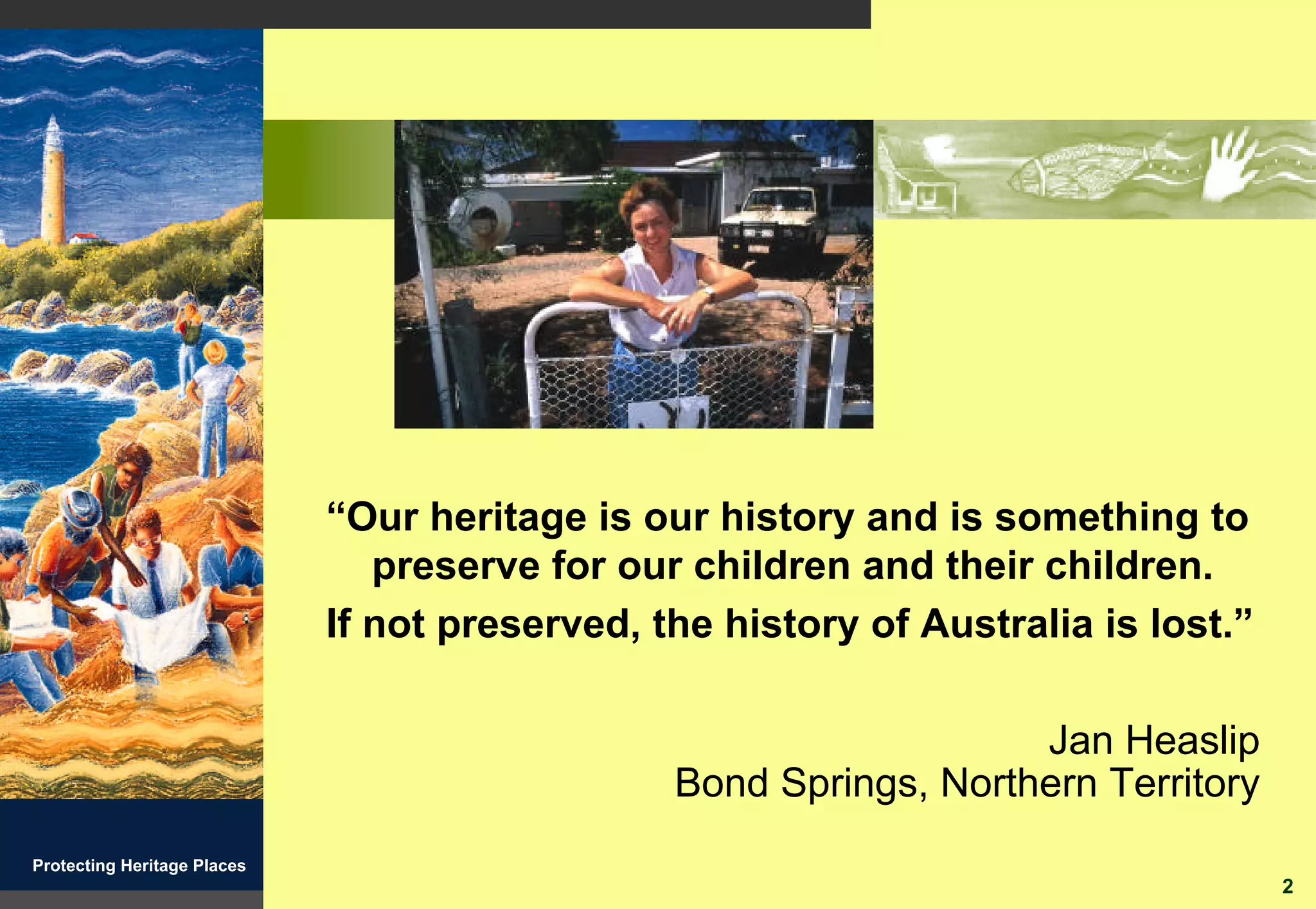
“Our heritage is our history and is something to
                                preserve for our children and their children.
                             If not preserved, the history of Australia is lost.”

                                                                   Jan Heaslip
                                                Bond Springs, Northern Territory
Protecting Heritage Places
                                                                                    2
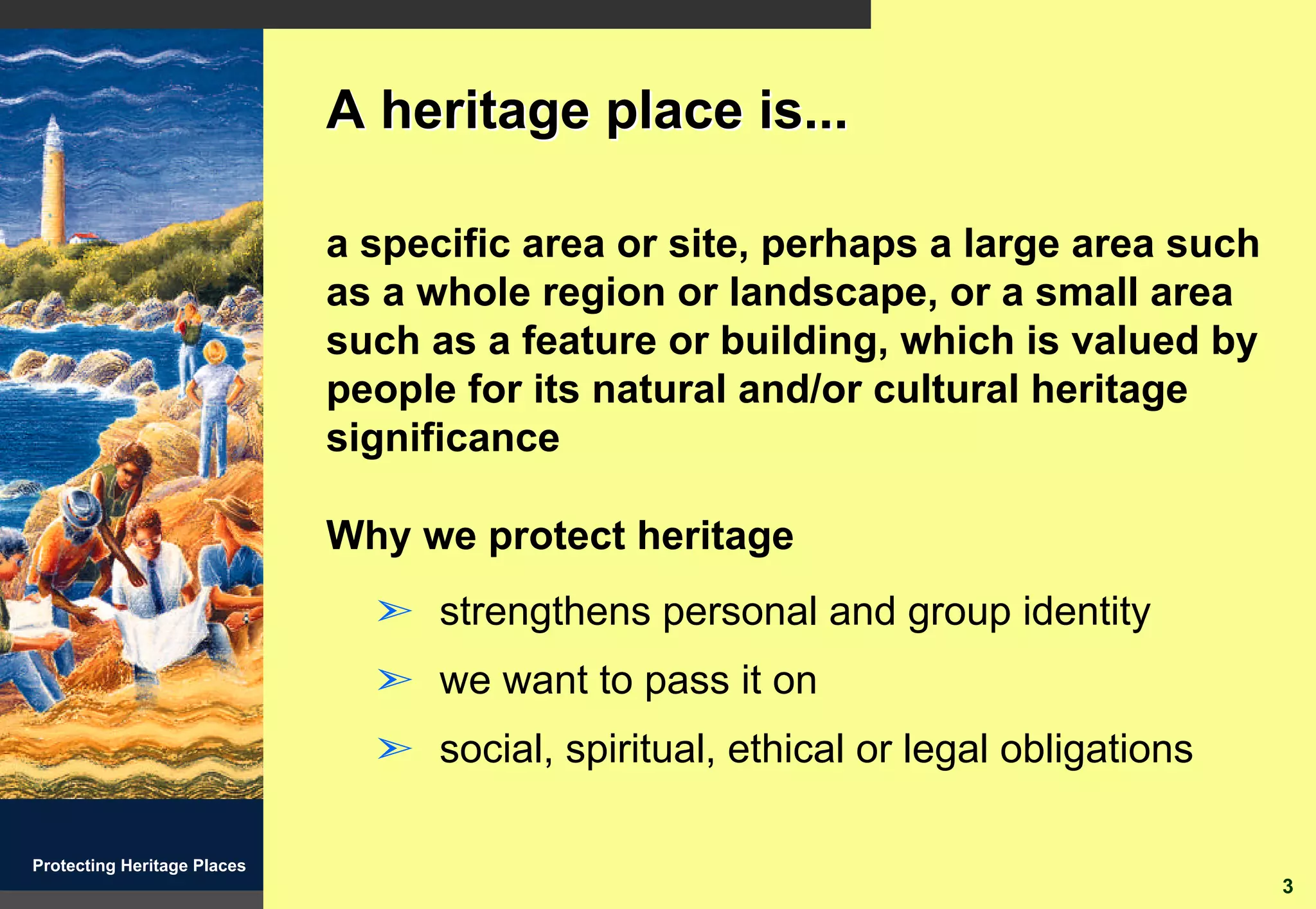
A heritage place is...

                             a specific area or site, perhaps a large area such
                             as a whole region or landscape, or a small area
                             such as a feature or building, which is valued by
                             people for its natural and/or cultural heritage
                             significance

                             Why we protect heritage
                               ã strengthens personal and group identity
                               ã we want to pass it on
                               ã social, spiritual, ethical or legal obligations

Protecting Heritage Places
                                                                                   3
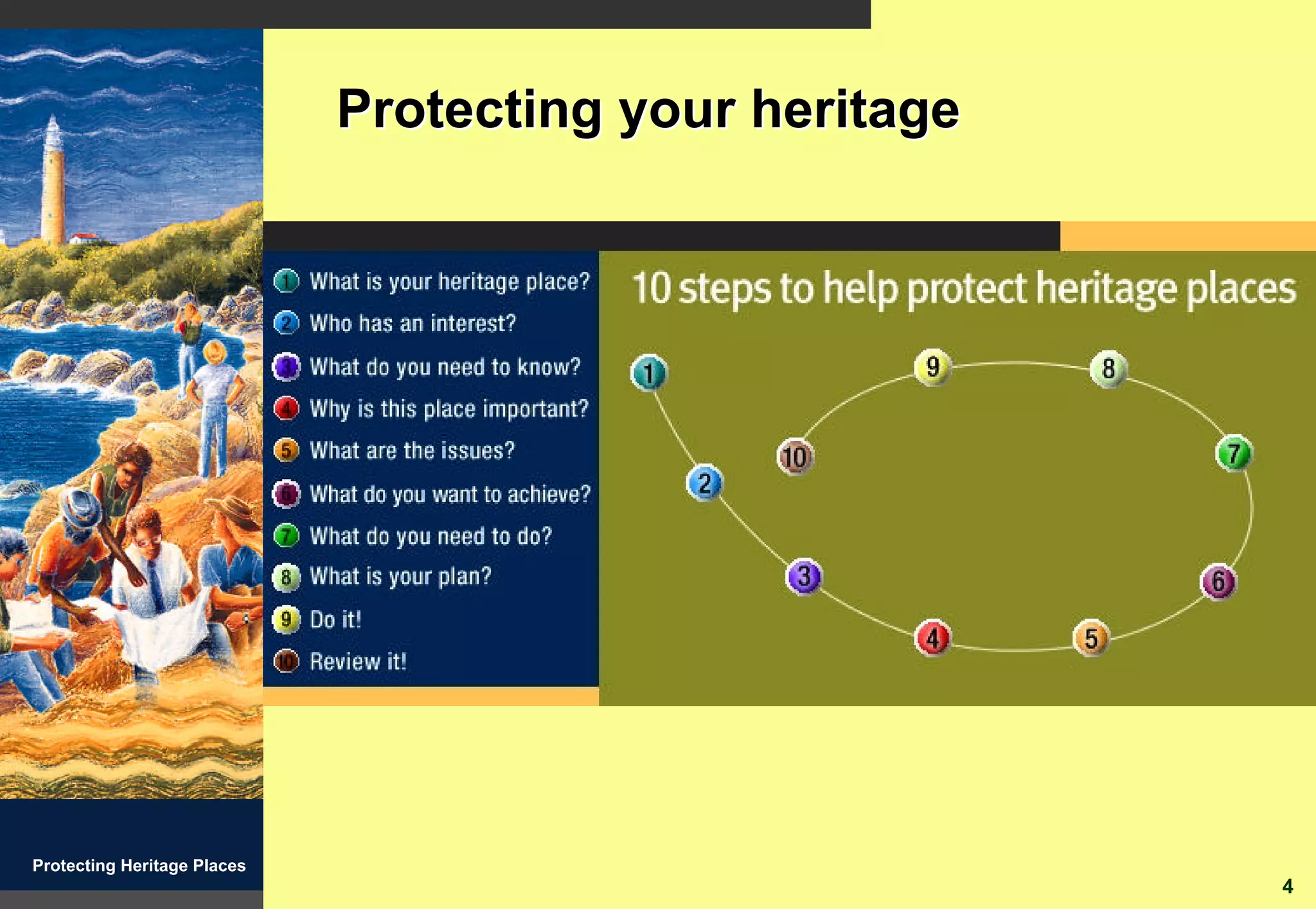
Protecting your heritage


Protecting Heritage Places
                                                        4
Step 1. What is your heritage place?

                             Heritage places are important in different ways
                             for different people

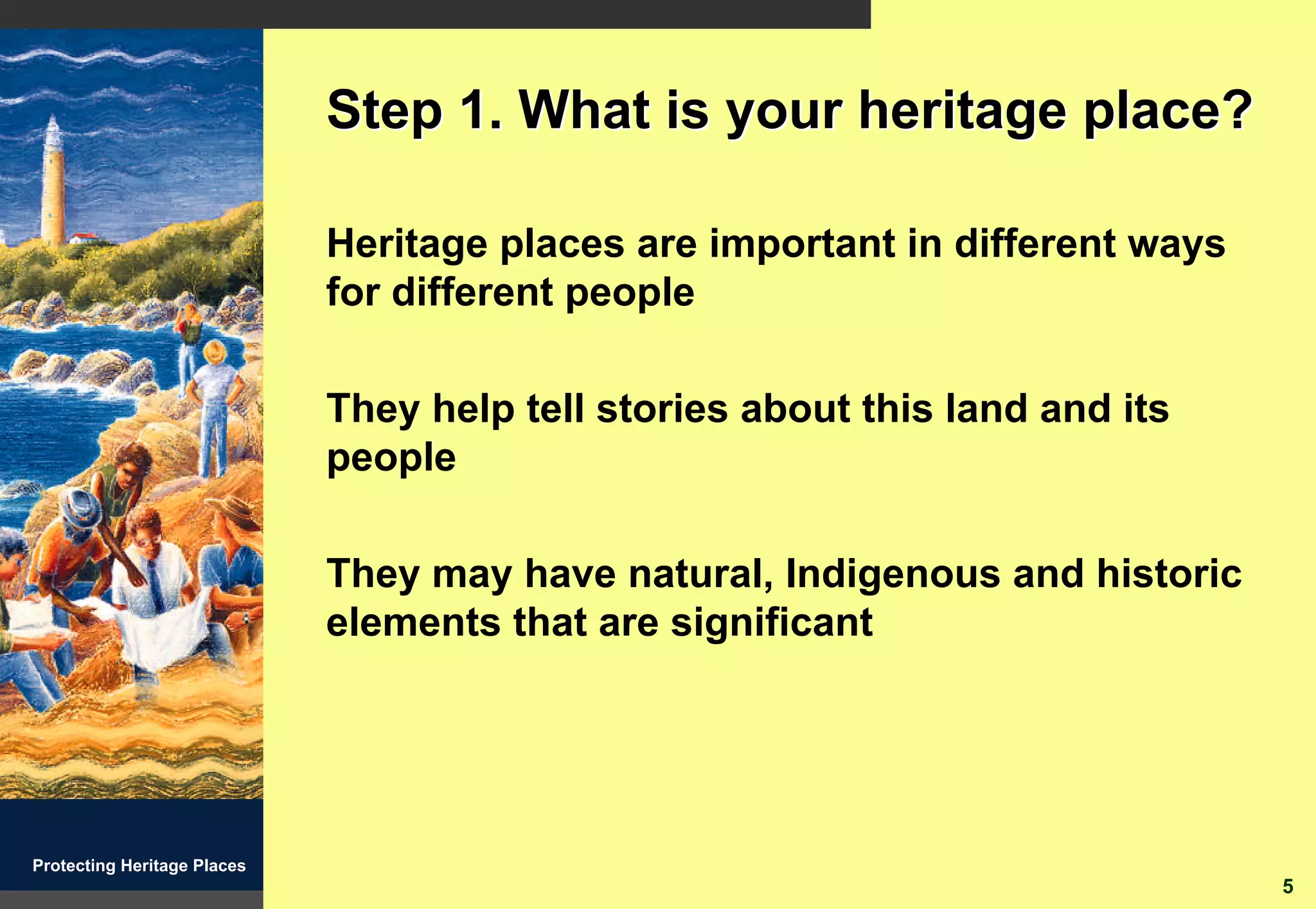
                             They help tell stories about this land and its
                             people

                             They may have natural, Indigenous and historic
                             elements that are significant


Protecting Heritage Places
                                                                               5
Step 1. What is your heritage place?


                             What heritage place interests you?
                             Describe its key features, and think whether it
                             has natural, Indigenous and/or historic heritage
                             significance


Protecting Heritage Places
                                                                                6
Step 2. Who has an interest?

                             Finding out who is concerned about and
                             responsible for a place
                              ã ensures the right people are involved
                              ã helps find out about heritage significance
                              ã ensures all important issues are considered
                             Ask
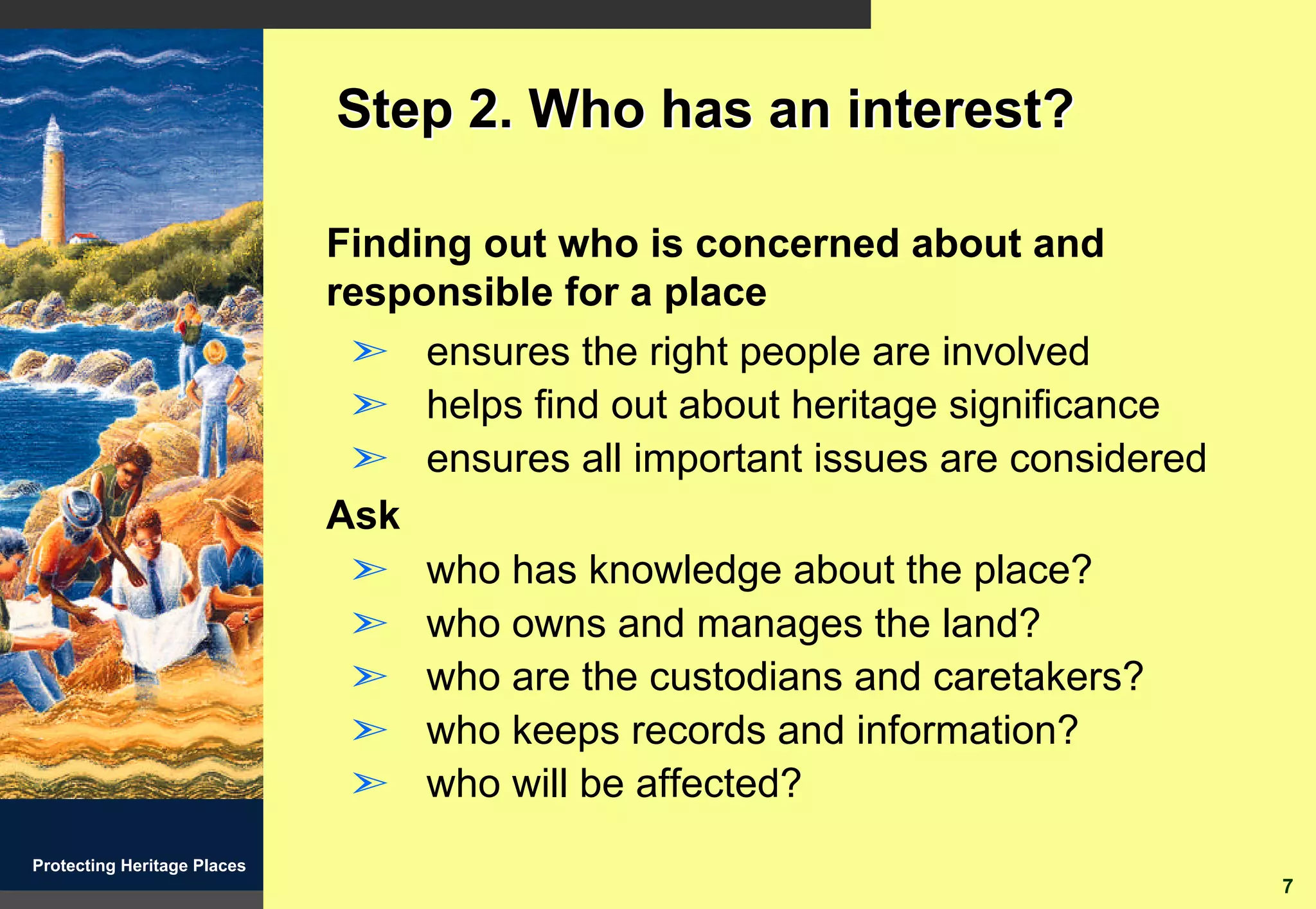
                              ã who has knowledge about the place?
                              ã who owns and manages the land?
                              ã who are the custodians and caretakers?
                              ã who keeps records and information?
                              ã who will be affected?
Protecting Heritage Places
                                                                              7
Step 2. Who has an interest?


                             Write down the different groups or individuals
                             with an interest in your place


Protecting Heritage Places
                                                                              8
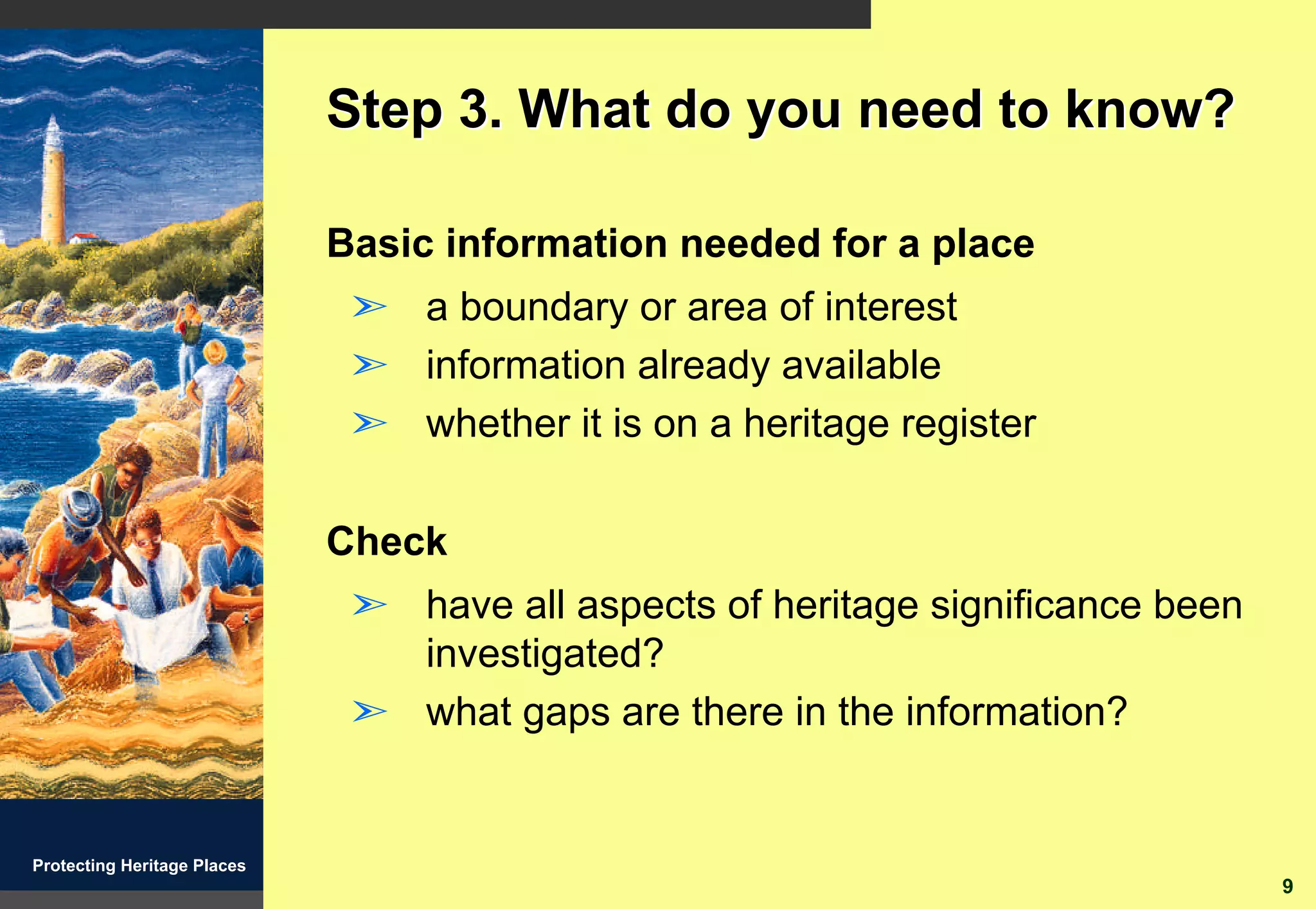
Step 3. What do you need to know?

                             Basic information needed for a place
                              ã a boundary or area of interest
                              ã information already available
                              ã whether it is on a heritage register

                             Check
                              ã have all aspects of heritage significance been
                                investigated?
                              ã what gaps are there in the information?


Protecting Heritage Places
                                                                                 9
Step 3. What do you need to know?


                             Write notes on the following to get you started
                             ã What is the boundary or area of interest?
                             ã What information is already available?
                             ã What additional information is needed?


Protecting Heritage Places
                                                                               10
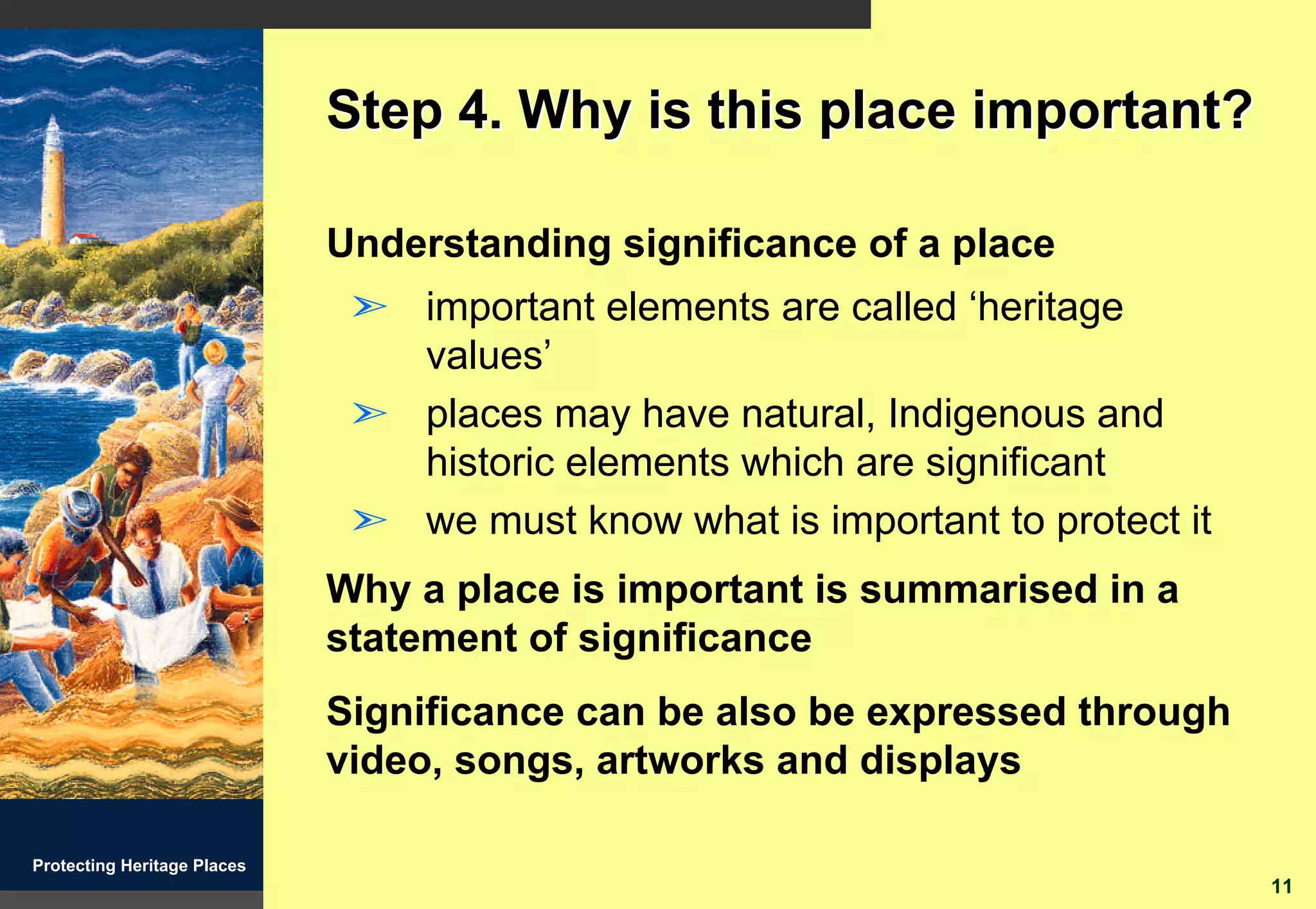
Step 4. Why is this place important?

                             Understanding significance of a place
                              ã important elements are called ‘heritage
                                values’
                              ã places may have natural, Indigenous and
                                historic elements which are significant
                              ã we must know what is important to protect it
                             Why a place is important is summarised in a
                             statement of significance
                             Significance can be also be expressed through
                             video, songs, artworks and displays

Protecting Heritage Places
                                                                               11
Step 4. Why is this place important?


                             Write down the important elements of your
                             heritage place and why each is significant


Protecting Heritage Places
                                                                          12
Step 5. What are the issues?

                             What issues affect the place?
                              ã   what is its condition?
                              ã   what laws apply?
                              ã   what threats and trends might affect it?
                              ã   what resources are available?
                             Understand issues by
                              ã talking and consulting widely
                              ã identifying priority issues


Protecting Heritage Places
                                                                             13
Step 5. What are the issues?


                             Write down the key issues for your place
                             ã    threats to significance
                             ã    the condition of the place
                             ã    current management arrangements
                             ã    other key issues


Protecting Heritage Places
                                                                        14
Step 6. What do you want to achieve?

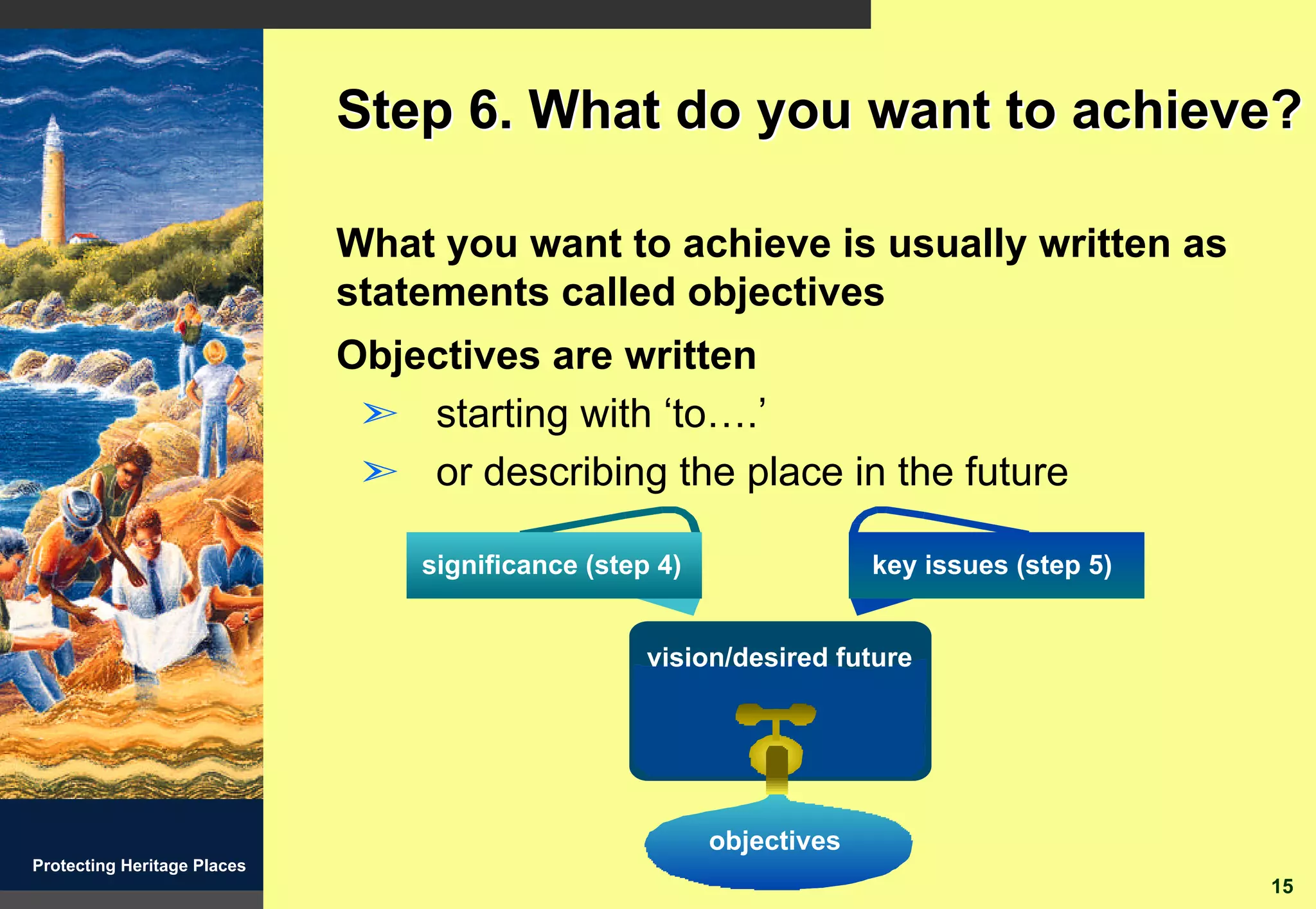
                             What you want to achieve is usually written as
                             statements called objectives
                             Objectives are written
                              ã starting with ‘to….’
                              ã or describing the place in the future

                                 significance (step 4)                key issues (step 5)


                                                   vision/desired future


                                                         objectives
Protecting Heritage Places
                                                                                            15
Step 6. What do you want to achieve?


                             Develop objectives by asking
                              ã what results do you want?
                              ã how do you want the place to be in the
                                future?
                              ã how will significance be retained?
                              ã what are the priorities?


Protecting Heritage Places
                                                                         16
Step 7. What do you need to do?

                             Develop strategies to retain significance
                             ‘Do as much as necessary and as little as
                             possible’
                             Each place is unique - good management is
                             about finding appropriate and creative solutions
                             Sometimes the best approach is to do nothing

                             Examples of strategies
                              ã erecting a fence to prevent animal damage
                              ã restoring a collapsed historic wall
                              ã a program to reintroduce a plant species
                              ã ensuring Indigenous access so traditional
                                 practices are continued

Protecting Heritage Places
                                                                                17
Step 7. What do you need to do?


                             Write down possible strategies and actions and
                             ask
                              ã   does every objective have a strategy?
                              ã   are the key issues covered?
                              ã   how will the strategy protect significance?
                              ã   how will the strategy change the place?


Protecting Heritage Places
                                                                                18
Step 8. What is your plan?

                             Responses to the first 7 steps make up the key
                             components of a management plan
                             A management plan also includes who is
                             responsible for what, how progress will be
                             monitored and when and how the plan will be
                             reviewed
                             Heritage studies and reports can back up a plan
                             A concise plan can be very effective


Protecting Heritage Places
                                                                               19
Step 8. What is your plan?


                             The ‘Have a Go’ tasks from the previous 7 steps
                             create an outline for a plan to protect your
                             heritage place
                             Check
                              ã your statement of significance is reflected in
                                   the objectives
                              ã the strategies are linked to the objectives
                             Work out
                              ã who will be responsible for implementing
                                   your plan, how it will be monitored and
                                   when it will be reviewed
Protecting Heritage Places
                                                                                 20
Step 9. Do it!

                             This is the stage where you put your plan into
                             action. Do it!
                              ã take action systematically according to
                                  the plan
                              ã record progress

                             Remember
                              ã project management requires a
                                 project manager
                              ã keep people involved and informed


Protecting Heritage Places
                                                                              21
Step 10. Review it!

                             All plans and projects require regular and
                             systematic review

                             Review at times indicated in the plan

                             Circumstances change - so plans will change

                             Record results of reviews and why changes to
                             your plan are necessary


Protecting Heritage Places
                                                                            22
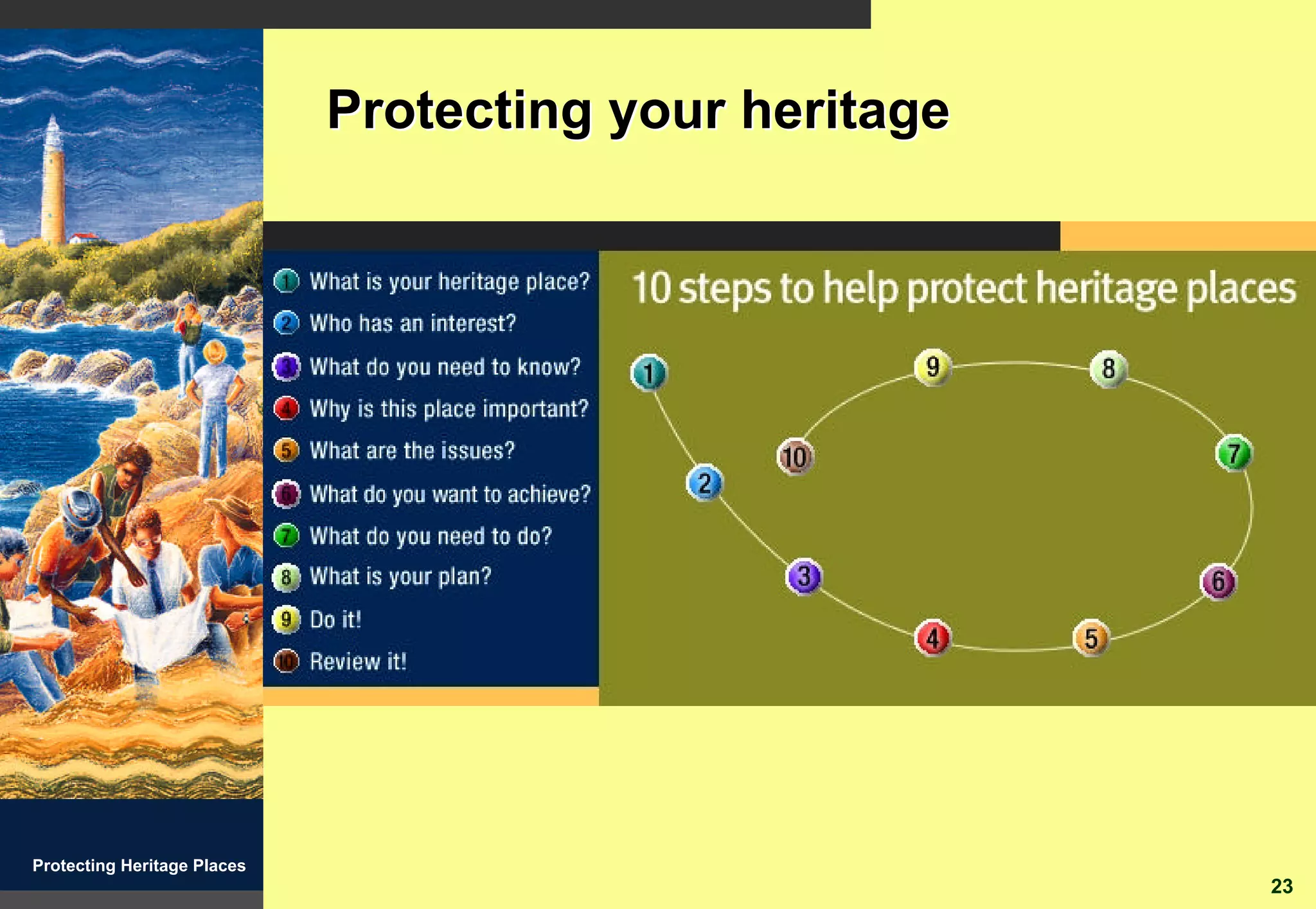
Protecting your heritage


                             Heritage conservation has 10 basic steps

                             Determine   1.          What is a heritage place?
                                                     2.          Who has an interest?
                                                     3.          What do you need to know?
                                                     4.          Why is this place important?
                                                     5.          What are the issues?
                                                     6.          What do you want to achieve?
                                                     7.          What do you need to do?
                                                     8.          What is your plan?
                             Then                    9.          Do it!
                                                     10.         Review it!


Protecting Heritage Places
                                                                                                23
“Understand the land and
                             everything on it so you can
                                manage it properly”

                                David Burrumarra MBE
                             Elcho Island, Northern Territory


Protecting Heritage Places
                                                                24

Protectingpresentation

  • 1.
    Protecting Heritage Places 10 stepsto help protect the natural and cultural significance of places
  • 2.
    “Our heritage isour history and is something to preserve for our children and their children. If not preserved, the history of Australia is lost.” Jan Heaslip Bond Springs, Northern Territory Protecting Heritage Places 2
  • 3.
    A heritage placeis... a specific area or site, perhaps a large area such as a whole region or landscape, or a small area such as a feature or building, which is valued by people for its natural and/or cultural heritage significance Why we protect heritage ã strengthens personal and group identity ã we want to pass it on ã social, spiritual, ethical or legal obligations Protecting Heritage Places 3
  • 4.
  • 5.
    Step 1. Whatis your heritage place? Heritage places are important in different ways for different people They help tell stories about this land and its people They may have natural, Indigenous and historic elements that are significant Protecting Heritage Places 5
  • 6.
    Step 1. Whatis your heritage place? What heritage place interests you? Describe its key features, and think whether it has natural, Indigenous and/or historic heritage significance Protecting Heritage Places 6
  • 7.
    Step 2. Whohas an interest? Finding out who is concerned about and responsible for a place ã ensures the right people are involved ã helps find out about heritage significance ã ensures all important issues are considered Ask ã who has knowledge about the place? ã who owns and manages the land? ã who are the custodians and caretakers? ã who keeps records and information? ã who will be affected? Protecting Heritage Places 7
  • 8.
    Step 2. Whohas an interest? Write down the different groups or individuals with an interest in your place Protecting Heritage Places 8
  • 9.
    Step 3. Whatdo you need to know? Basic information needed for a place ã a boundary or area of interest ã information already available ã whether it is on a heritage register Check ã have all aspects of heritage significance been investigated? ã what gaps are there in the information? Protecting Heritage Places 9
  • 10.
    Step 3. Whatdo you need to know? Write notes on the following to get you started ã What is the boundary or area of interest? ã What information is already available? ã What additional information is needed? Protecting Heritage Places 10
  • 11.
    Step 4. Whyis this place important? Understanding significance of a place ã important elements are called ‘heritage values’ ã places may have natural, Indigenous and historic elements which are significant ã we must know what is important to protect it Why a place is important is summarised in a statement of significance Significance can be also be expressed through video, songs, artworks and displays Protecting Heritage Places 11
  • 12.
    Step 4. Whyis this place important? Write down the important elements of your heritage place and why each is significant Protecting Heritage Places 12
  • 13.
    Step 5. Whatare the issues? What issues affect the place? ã what is its condition? ã what laws apply? ã what threats and trends might affect it? ã what resources are available? Understand issues by ã talking and consulting widely ã identifying priority issues Protecting Heritage Places 13
  • 14.
    Step 5. Whatare the issues? Write down the key issues for your place ã threats to significance ã the condition of the place ã current management arrangements ã other key issues Protecting Heritage Places 14
  • 15.
    Step 6. Whatdo you want to achieve? What you want to achieve is usually written as statements called objectives Objectives are written ã starting with ‘to….’ ã or describing the place in the future significance (step 4) key issues (step 5) vision/desired future objectives Protecting Heritage Places 15
  • 16.
    Step 6. Whatdo you want to achieve? Develop objectives by asking ã what results do you want? ã how do you want the place to be in the future? ã how will significance be retained? ã what are the priorities? Protecting Heritage Places 16
  • 17.
    Step 7. Whatdo you need to do? Develop strategies to retain significance ‘Do as much as necessary and as little as possible’ Each place is unique - good management is about finding appropriate and creative solutions Sometimes the best approach is to do nothing Examples of strategies ã erecting a fence to prevent animal damage ã restoring a collapsed historic wall ã a program to reintroduce a plant species ã ensuring Indigenous access so traditional practices are continued Protecting Heritage Places 17
  • 18.
    Step 7. Whatdo you need to do? Write down possible strategies and actions and ask ã does every objective have a strategy? ã are the key issues covered? ã how will the strategy protect significance? ã how will the strategy change the place? Protecting Heritage Places 18
  • 19.
    Step 8. Whatis your plan? Responses to the first 7 steps make up the key components of a management plan A management plan also includes who is responsible for what, how progress will be monitored and when and how the plan will be reviewed Heritage studies and reports can back up a plan A concise plan can be very effective Protecting Heritage Places 19
  • 20.
    Step 8. Whatis your plan? The ‘Have a Go’ tasks from the previous 7 steps create an outline for a plan to protect your heritage place Check ã your statement of significance is reflected in the objectives ã the strategies are linked to the objectives Work out ã who will be responsible for implementing your plan, how it will be monitored and when it will be reviewed Protecting Heritage Places 20
  • 21.
    Step 9. Doit! This is the stage where you put your plan into action. Do it! ã take action systematically according to the plan ã record progress Remember ã project management requires a project manager ã keep people involved and informed Protecting Heritage Places 21
  • 22.
    Step 10. Reviewit! All plans and projects require regular and systematic review Review at times indicated in the plan Circumstances change - so plans will change Record results of reviews and why changes to your plan are necessary Protecting Heritage Places 22
  • 23.
    Protecting your heritage Heritage conservation has 10 basic steps Determine 1. What is a heritage place? 2. Who has an interest? 3. What do you need to know? 4. Why is this place important? 5. What are the issues? 6. What do you want to achieve? 7. What do you need to do? 8. What is your plan? Then 9. Do it! 10. Review it! Protecting Heritage Places 23
  • 24.
    “Understand the landand everything on it so you can manage it properly” David Burrumarra MBE Elcho Island, Northern Territory Protecting Heritage Places 24