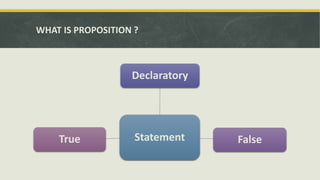
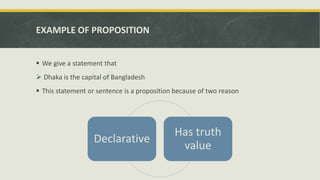
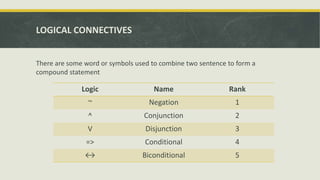
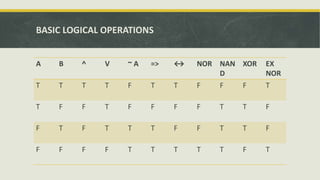
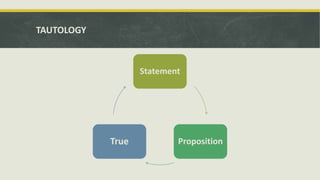
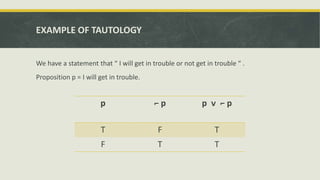
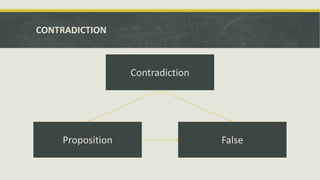
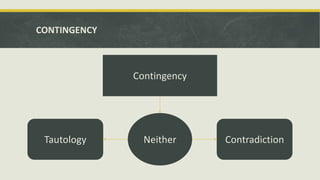
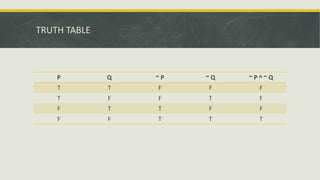
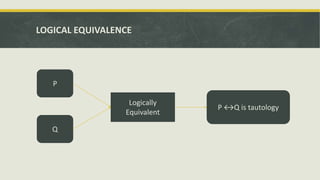
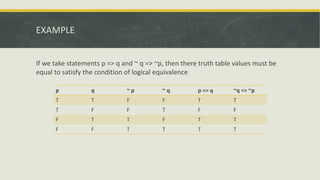
Propositional logic involves analyzing statements called propositions that can be either true or false. Propositions are combined using logical connectives like "and", "or", and "if/then" to form compound statements. A tautology is a statement that is always true no matter the truth values of the individual propositions. A contradiction is always false, while a contingency can be either true or false depending on the propositions. Two statements are logically equivalent if they have identical truth tables.