Welcome Everybody
OPERATING SYSTEM
OVERVIEW
Tahosib Mohammad Tamim
171-15-
Abdullah Al Amin
171-15-
Runa Akter
171-15-
Mustafizur Rahaman
171-15-
Presented To
G.m. Rasiqul Islam
Rasiq
Lecturer
Department of Computer
Science and Engineering
Daffodil International
University
COMPUTING
COMPONENTS
NETWORK
PROCESSOR
CLOUD COMPUTING
SERVER
WHAT IS OPERATING SYSTEM?
A program that acts as an intermediary between a
user of a computer and the computer hardware.
WHY WE USE OPERATING SYSTEM
Make a computer system easier to use.
An operating hides details of hardware resources
from programmers.
Manage the recourses of a computer system.
An operating manages all the resources of a
computer system.
TYPES OF OPERATING SYSTEM?
 Normal Operating System
Character User Interface Operating System
Graphical User Interface Operating System
 Real Time Operating System
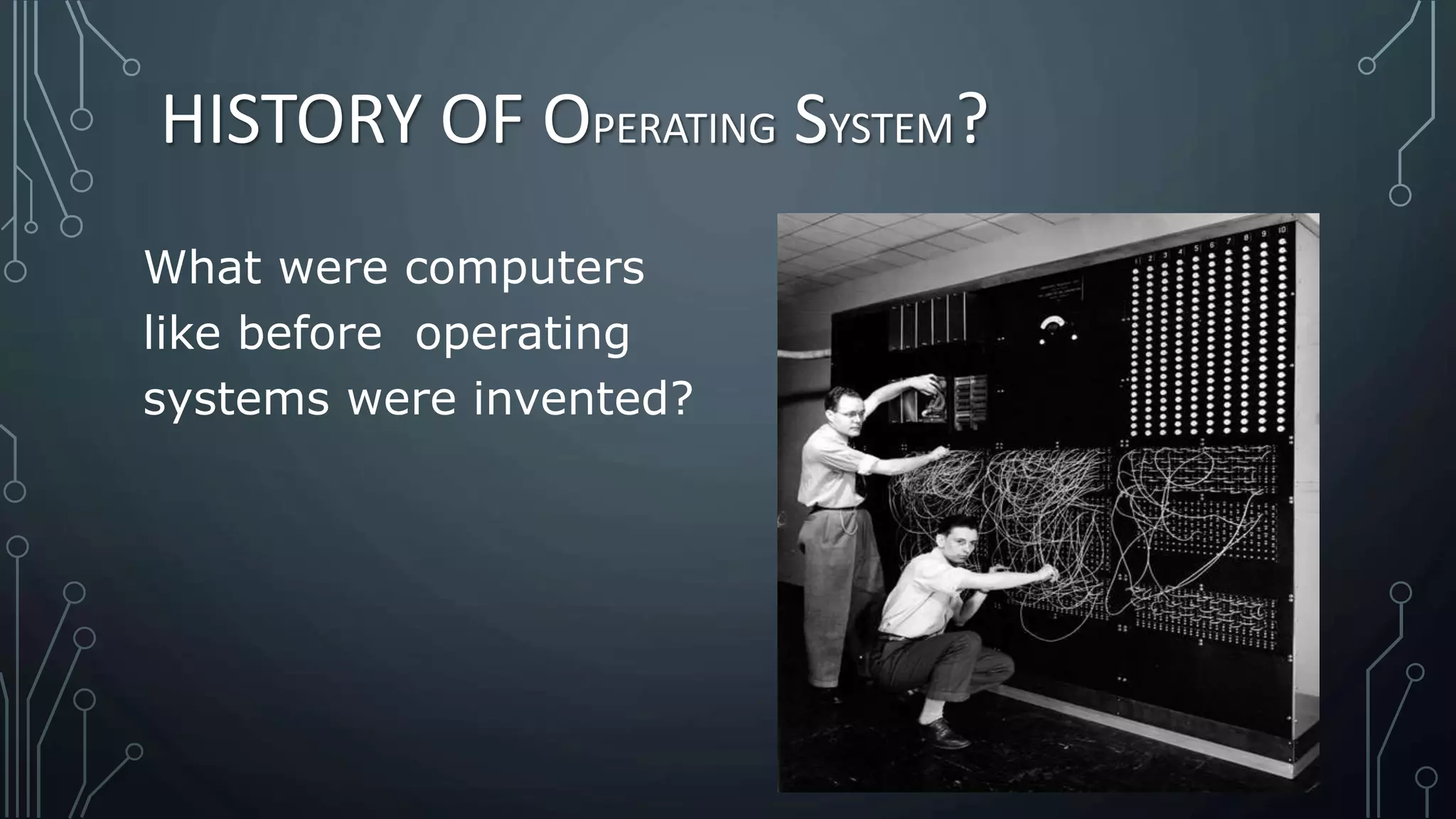
HISTORY OF OPERATING SYSTEM?
What were computers
like before operating
systems were invented?
LATER, INSTRUCTIONS
WERE GIVEN TO THE
COMPUTER WITH PUNCH
CARDS OR MAGNETIC TAPE.
To run more than one
program at a time, you need a
"boss“ program that controls
all the other programs.
MICROSOFT MS-DOS
In the 1980s, operating systems were
developed where you could move a
mouse around and click on things
instead of typing commands.
FUNCTIONS OF OPERATING SYSTEM
•Memory Management
•Processor Management
•Device Management
•File Management
•Security
•Control over system performance
•Job accounting
•Error detecting aids
•Coordination between other software and users
PROCESSOR MANAGEMENT
In multiprogramming environment, the OS decides which process gets the
processor when and for how much time. This function is called process
scheduling. An Operating System does the following activities for processor
management −
 Keeps tracks of processor and status of process. The program responsible
for this task is known as traffic controller.
 Allocates the processor (CPU) to a process.
 De-allocates processor when a process is no longer required.
MEMORY MANAGEMENT
Memory management refers to management of Primary Memory or Main
Memory. Main memory is a large array of words or bytes where each word or
byte has its own address.
Main memory provides a fast storage that can be accessed directly by the CPU.
For a program to be executed, it must in the main memory.
DEVICE MANAGEMENT
An Operating System manages device communication via their respective drivers. It does the
following activities for device management −
 Keeps tracks of all devices. Program responsible for this task is known as the I/O controller.
 Decides which process gets the device when and for how much time.
 Allocates the device in the efficient way.
 De-allocates devices.
FILE MANAGEMENT
A file system is normally organized into directories for easy navigation and
usage. These directories may contain files and other directions.
An Operating System does the following activities for file management −
Keeps track of information, location, uses, status etc. The collective facilities
are often known as file system.
Decides who gets the resources.
Allocates the resources.
De-allocates the resources.
OTHER IMPORTANT ACTIVITIES
Following are some of the important activities that an Operating System performs −
 Security − By means of password and similar other techniques, it prevents unauthorized
access to programs and data.
 Control over system performance − Recording delays between request for a service and
response from the system.
 Job accounting − Keeping track of time and resources used by various jobs and users.
 Error detecting aids − Production of dumps, traces, error messages, and other debugging
and error detecting aids.
 Coordination between other software and users − Coordination and assignment of
compilers, interpreters, assemblers and other software to the various users of the computer
systems.
TYPES OF OPERATING SYSTEM
Distinguished by the response time and how data is entered
into the system
Single user
Multi user
Multitasking
Multi processing
Embedded
Real time
TWO TYPES:
 Single user, Singletask
 Single user, Multi tasking
SINGLE USER
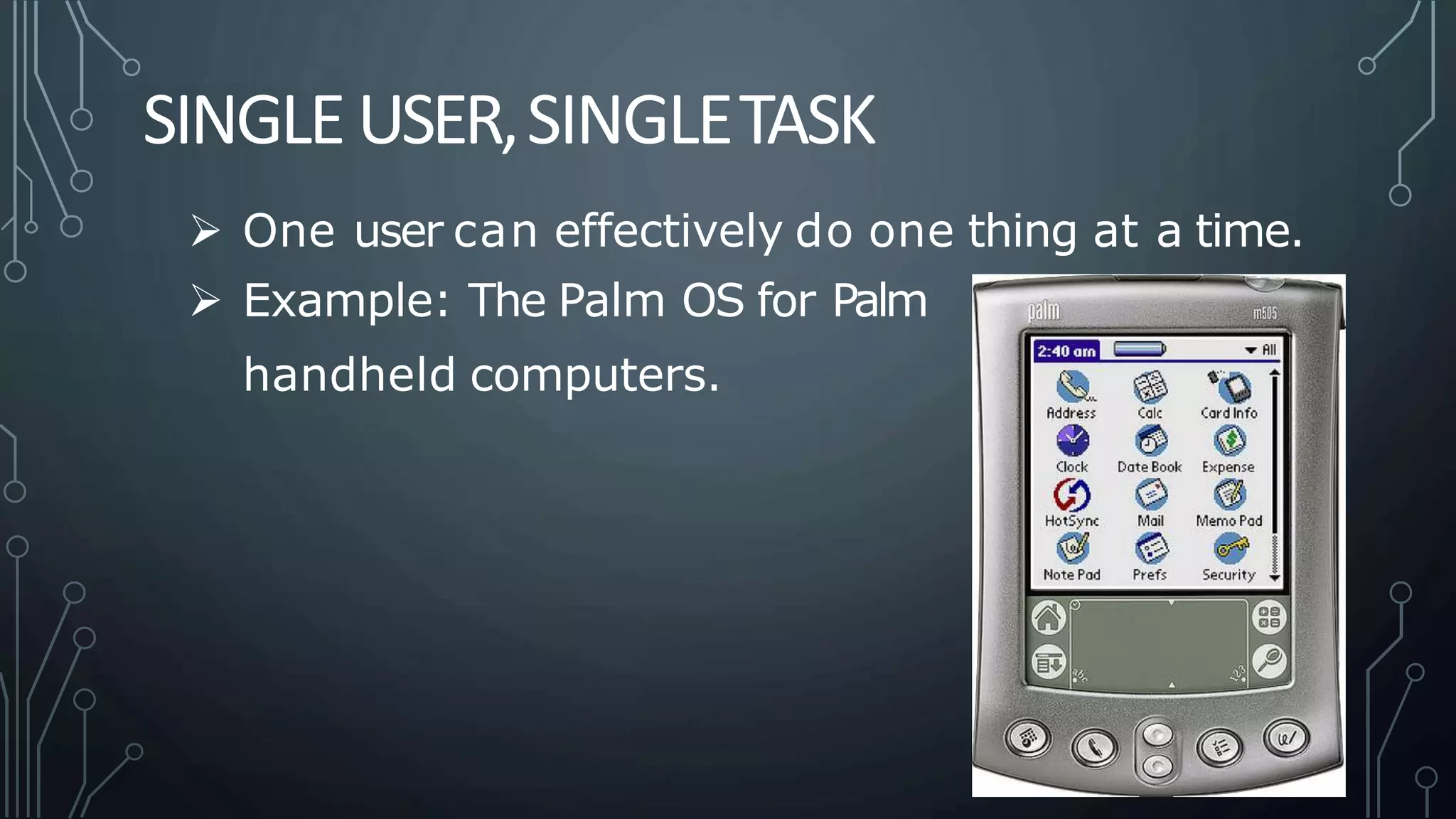
 One user can effectively do one thing at a time.
 Example: The Palm OS for Palm
handheld computers.
SINGLEUSER,SINGLETASK
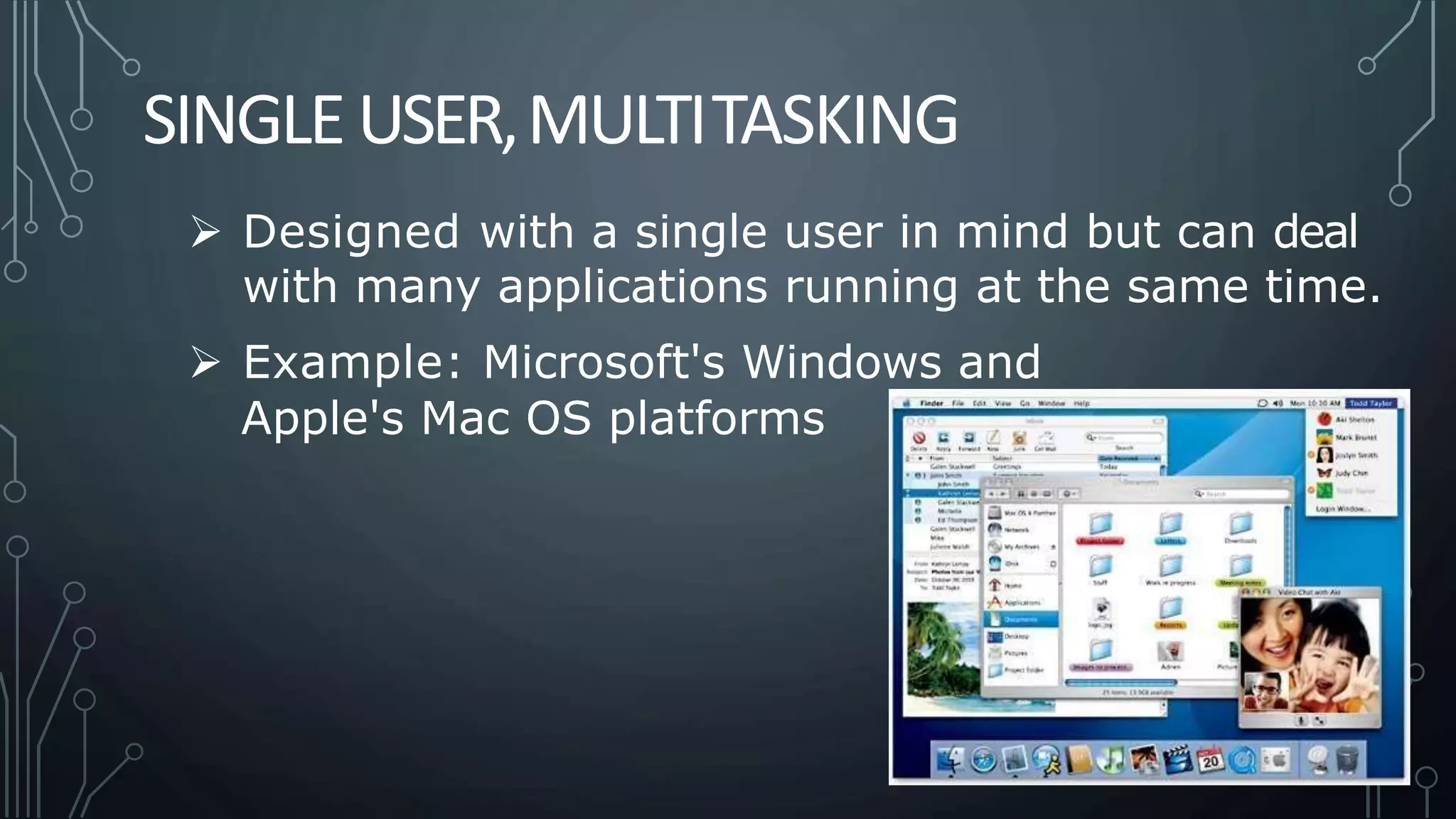
 Designed with a single user in mind but can deal
with many applications running at the same time.
 Example: Microsoft's Windows and
Apple's Mac OS platforms
SINGLEUSER,MULTITASKING
 Allows multiple users to access the computer
system at the same time.
 Time Sharing system and Internet servers are the
multi user systems.
 Examples: UNIX, VMS and Mainframe Operating
systems.
MULTIUSER
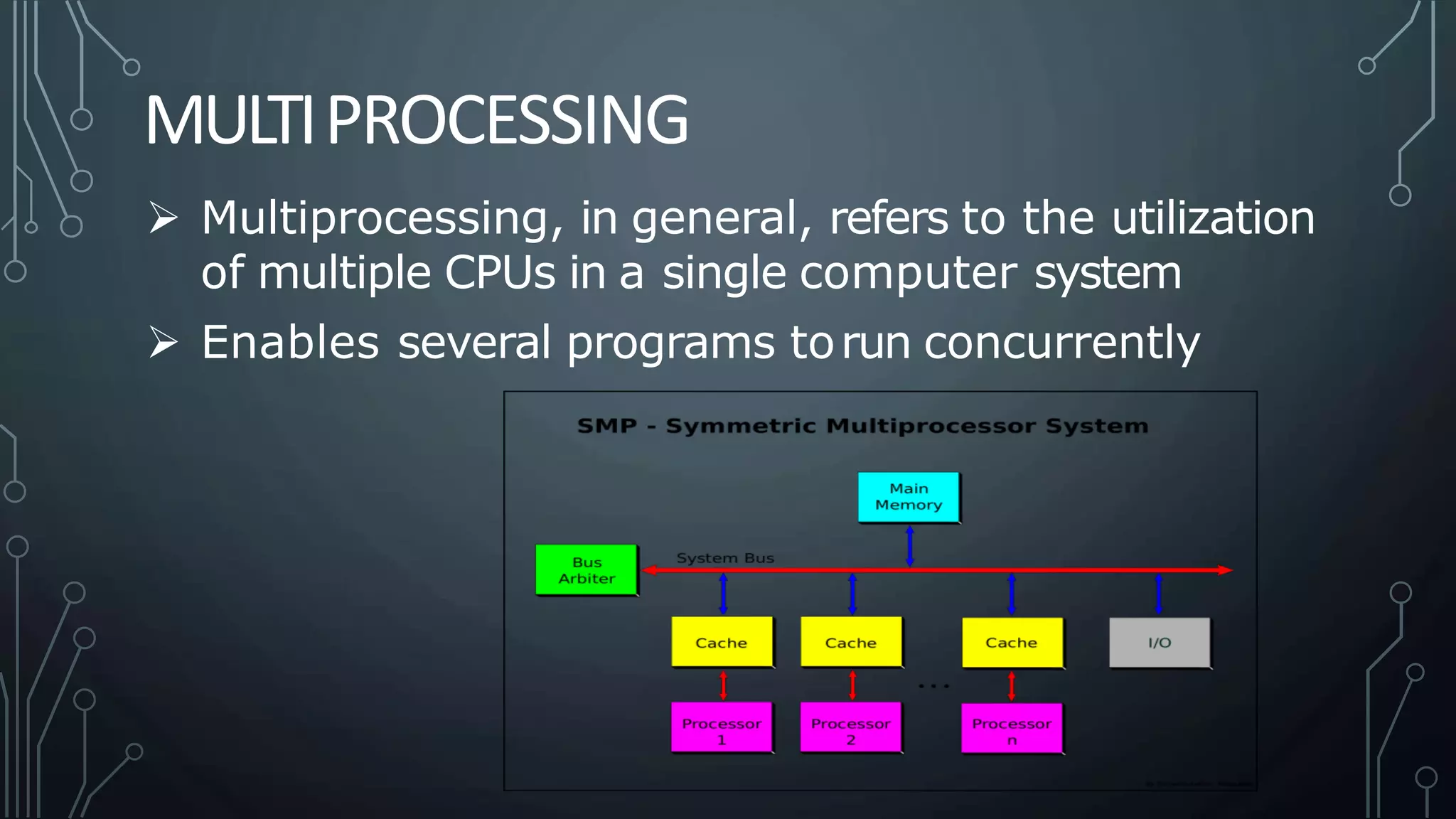
 Multiprocessing, in general, refers to the utilization
of multiple CPUs in a single computer system
 Enables several programs torun concurrently
MULTIPROCESSING
Designed to be used in embedded computer systems
Are able to operate with a limited number of
resources on small machineslike PDAs
It is a computer that is part of a different kind of
machine.
Examples: include computers in cars, digital
televisions, ATMs, airplane controls, digital cameras,
GPS navigation systems, elevators, and among many
other possibilities.
EMBEDDEDOS
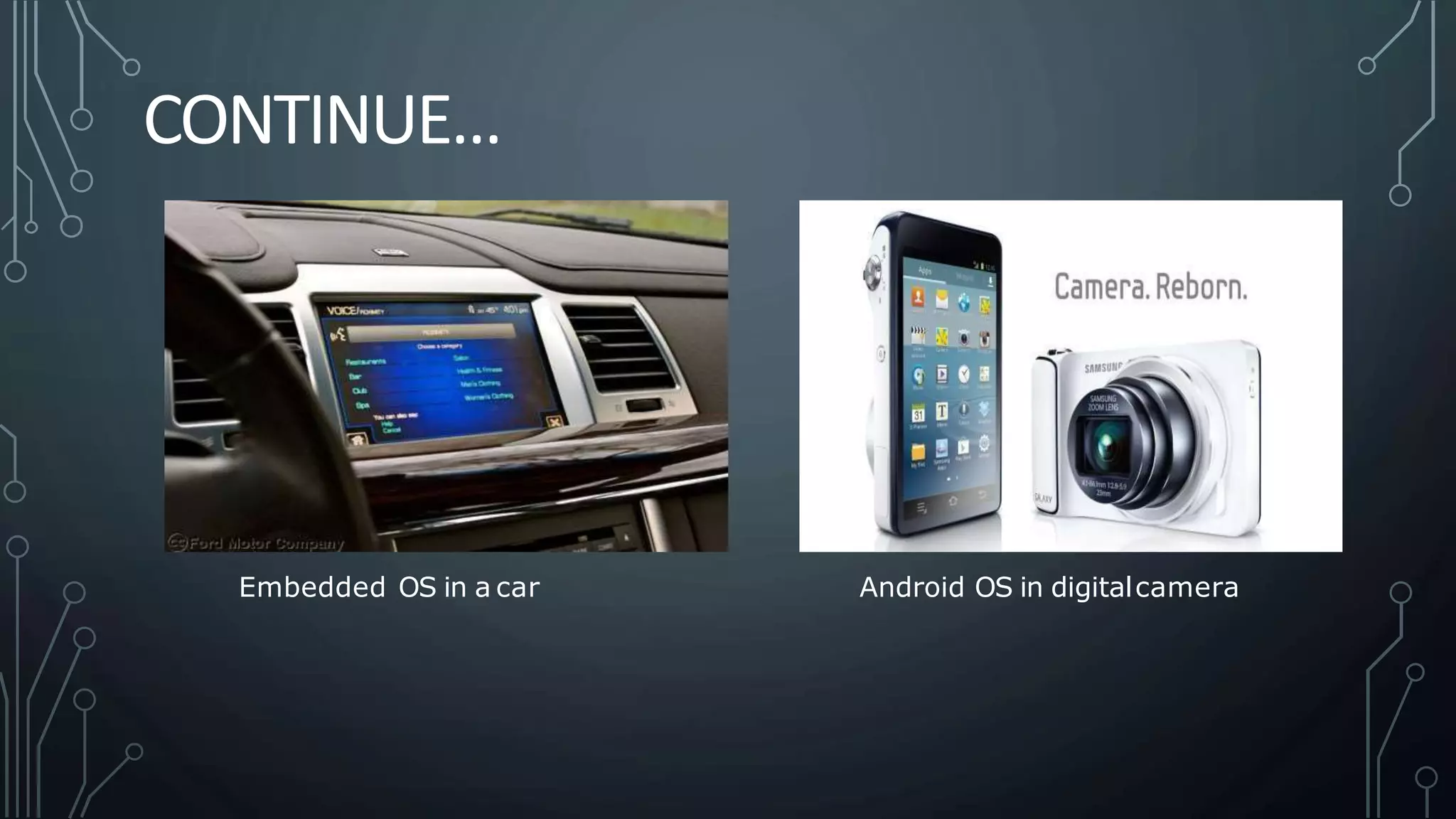
Embedded OS in a car Android OS in digitalcamera
CONTINUE…
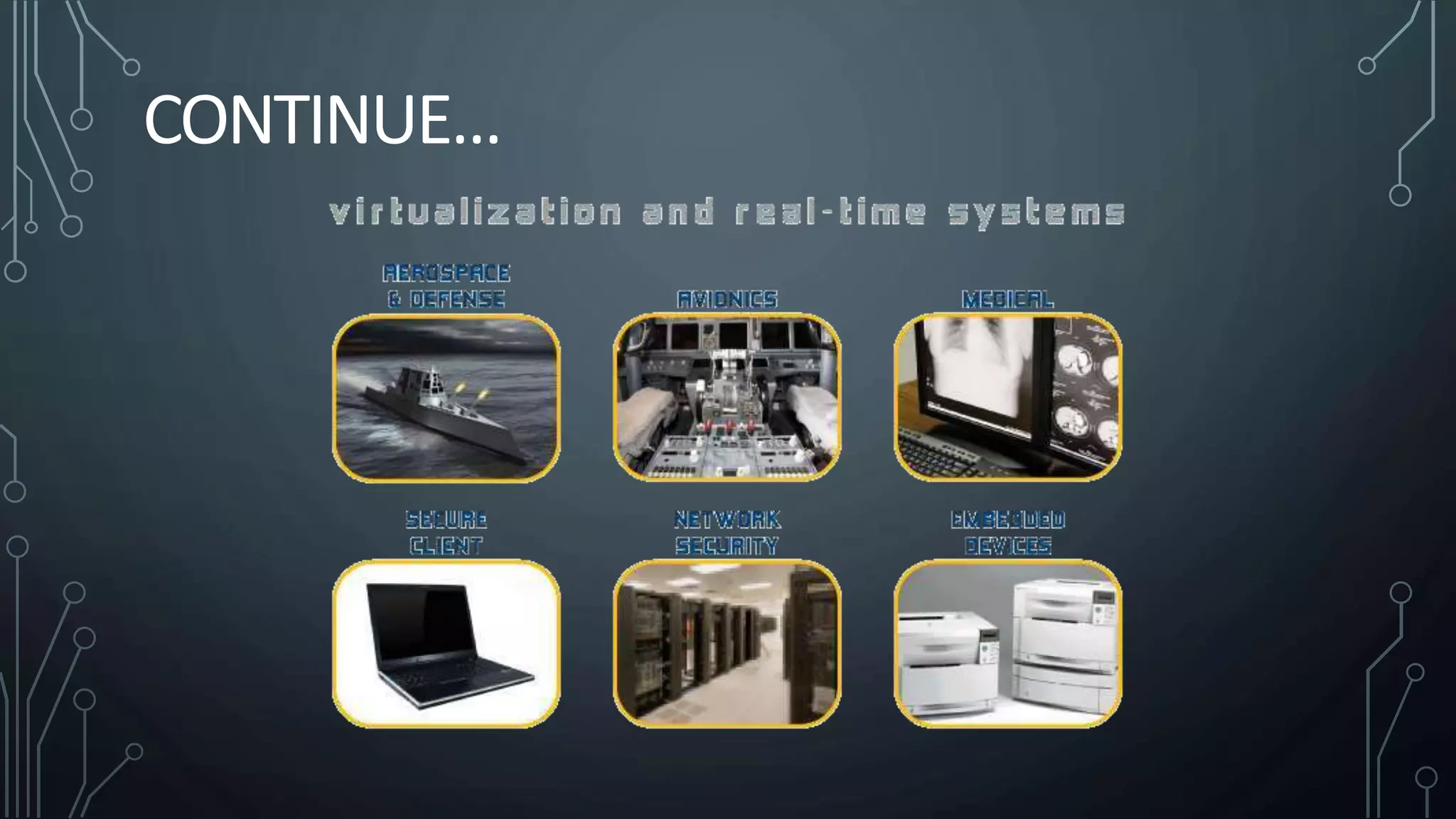
 Is a multitasking operating system that aims at
executing real-time applications.
 The main objective of real-time operating systems
is their quick and predictable response to events.
 Examples: QNX, RTLINUX
 Are used to control machinery, scientific
instruments and industrial systems.
REALTIMEOPERATING SYSTEM
CONTINUE…
Overview of operating system

Overview of operating system

  • 1.
  • 2.
  • 3.
    Tahosib Mohammad Tamim 171-15- AbdullahAl Amin 171-15- Runa Akter 171-15- Mustafizur Rahaman 171-15- Presented To G.m. Rasiqul Islam Rasiq Lecturer Department of Computer Science and Engineering Daffodil International University
  • 4.
  • 5.
    WHAT IS OPERATINGSYSTEM? A program that acts as an intermediary between a user of a computer and the computer hardware.
  • 6.
    WHY WE USEOPERATING SYSTEM Make a computer system easier to use. An operating hides details of hardware resources from programmers. Manage the recourses of a computer system. An operating manages all the resources of a computer system.
  • 7.
    TYPES OF OPERATINGSYSTEM?  Normal Operating System Character User Interface Operating System Graphical User Interface Operating System  Real Time Operating System
  • 8.
    HISTORY OF OPERATINGSYSTEM? What were computers like before operating systems were invented?
  • 9.
    LATER, INSTRUCTIONS WERE GIVENTO THE COMPUTER WITH PUNCH CARDS OR MAGNETIC TAPE. To run more than one program at a time, you need a "boss“ program that controls all the other programs.
  • 10.
    MICROSOFT MS-DOS In the1980s, operating systems were developed where you could move a mouse around and click on things instead of typing commands.
  • 11.
    FUNCTIONS OF OPERATINGSYSTEM •Memory Management •Processor Management •Device Management •File Management •Security •Control over system performance •Job accounting •Error detecting aids •Coordination between other software and users
  • 12.
    PROCESSOR MANAGEMENT In multiprogrammingenvironment, the OS decides which process gets the processor when and for how much time. This function is called process scheduling. An Operating System does the following activities for processor management −  Keeps tracks of processor and status of process. The program responsible for this task is known as traffic controller.  Allocates the processor (CPU) to a process.  De-allocates processor when a process is no longer required.
  • 13.
    MEMORY MANAGEMENT Memory managementrefers to management of Primary Memory or Main Memory. Main memory is a large array of words or bytes where each word or byte has its own address. Main memory provides a fast storage that can be accessed directly by the CPU. For a program to be executed, it must in the main memory.
  • 14.
    DEVICE MANAGEMENT An OperatingSystem manages device communication via their respective drivers. It does the following activities for device management −  Keeps tracks of all devices. Program responsible for this task is known as the I/O controller.  Decides which process gets the device when and for how much time.  Allocates the device in the efficient way.  De-allocates devices.
  • 15.
    FILE MANAGEMENT A filesystem is normally organized into directories for easy navigation and usage. These directories may contain files and other directions. An Operating System does the following activities for file management − Keeps track of information, location, uses, status etc. The collective facilities are often known as file system. Decides who gets the resources. Allocates the resources. De-allocates the resources.
  • 16.
    OTHER IMPORTANT ACTIVITIES Followingare some of the important activities that an Operating System performs −  Security − By means of password and similar other techniques, it prevents unauthorized access to programs and data.  Control over system performance − Recording delays between request for a service and response from the system.  Job accounting − Keeping track of time and resources used by various jobs and users.  Error detecting aids − Production of dumps, traces, error messages, and other debugging and error detecting aids.  Coordination between other software and users − Coordination and assignment of compilers, interpreters, assemblers and other software to the various users of the computer systems.
  • 17.
    TYPES OF OPERATINGSYSTEM Distinguished by the response time and how data is entered into the system Single user Multi user Multitasking Multi processing Embedded Real time
  • 18.
    TWO TYPES:  Singleuser, Singletask  Single user, Multi tasking SINGLE USER
  • 19.
     One usercan effectively do one thing at a time.  Example: The Palm OS for Palm handheld computers. SINGLEUSER,SINGLETASK
  • 20.
     Designed witha single user in mind but can deal with many applications running at the same time.  Example: Microsoft's Windows and Apple's Mac OS platforms SINGLEUSER,MULTITASKING
  • 21.
     Allows multipleusers to access the computer system at the same time.  Time Sharing system and Internet servers are the multi user systems.  Examples: UNIX, VMS and Mainframe Operating systems. MULTIUSER
  • 22.
     Multiprocessing, ingeneral, refers to the utilization of multiple CPUs in a single computer system  Enables several programs torun concurrently MULTIPROCESSING
  • 23.
    Designed to beused in embedded computer systems Are able to operate with a limited number of resources on small machineslike PDAs It is a computer that is part of a different kind of machine. Examples: include computers in cars, digital televisions, ATMs, airplane controls, digital cameras, GPS navigation systems, elevators, and among many other possibilities. EMBEDDEDOS
  • 24.
    Embedded OS ina car Android OS in digitalcamera CONTINUE…
  • 25.
     Is amultitasking operating system that aims at executing real-time applications.  The main objective of real-time operating systems is their quick and predictable response to events.  Examples: QNX, RTLINUX  Are used to control machinery, scientific instruments and industrial systems. REALTIMEOPERATING SYSTEM
  • 26.