NAME: JANETTE CAMEN ROGER
MAGWAZA
REG #: 11816142
TOPIC: PRONOUNS
CLASS: EIGHT (8TH) ENGLISH
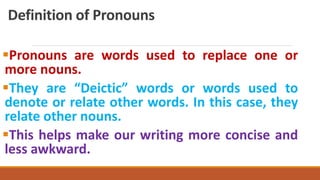
Definition of Pronouns
Pronouns are words used to replace one or
more nouns.
They are “Deictic” words or words used to
denote or relate other words. In this case, they
relate other nouns.
This helps make our writing more concise and
less awkward.
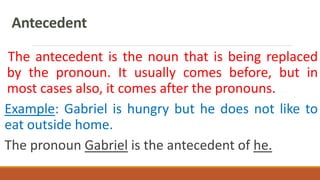
Antecedent
The antecedent is the noun that is being replaced
by the pronoun. It usually comes before, but in
most cases also, it comes after the pronouns.
Example: Gabriel is hungry but he does not like to
eat outside home.
The pronoun Gabriel is the antecedent of he.
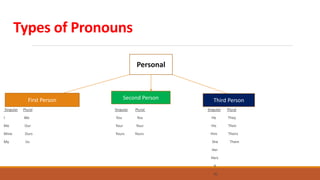
Types of Pronouns
Singular Plural Singular Plural Singular Plural
I We You You He They
Me Our Your Your His Their
Mine Ours Yours Yours Him Theirs
My Us She Them
Her
Hers
It
Its
Personal
First Person Second Person Third Person
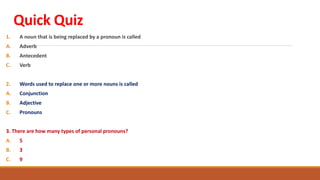
Quick Quiz
1. A noun that is being replaced by a pronoun is called
A. Adverb
B. Antecedent
C. Verb
2. Words used to replace one or more nouns is called
A. Conjunction
B. Adjective
C. Pronouns
3. There are how many types of personal pronouns?
A. 5
B. 3
C. 9
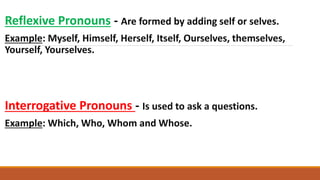
Reflexive Pronouns - Are formed by adding self or selves.
Example: Myself, Himself, Herself, Itself, Ourselves, themselves,
Yourself, Yourselves.
Interrogative Pronouns - Is used to ask a questions.
Example: Which, Who, Whom and Whose.
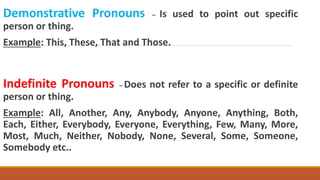
Demonstrative Pronouns – Is used to point out specific
person or thing.
Example: This, These, That and Those.
Indefinite Pronouns – Does not refer to a specific or definite
person or thing.
Example: All, Another, Any, Anybody, Anyone, Anything, Both,
Each, Either, Everybody, Everyone, Everything, Few, Many, More,
Most, Much, Neither, Nobody, None, Several, Some, Someone,
Somebody etc..
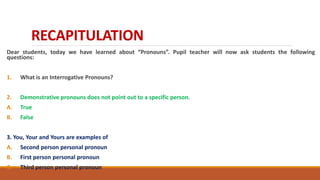
RECAPITULATION
Dear students, today we have learned about “Pronouns”. Pupil teacher will now ask students the following
questions:
1. What is an Interrogative Pronouns?
2. Demonstrative pronouns does not point out to a specific person.
A. True
B. False
3. You, Your and Yours are examples of
A. Second person personal pronoun
B. First person personal pronoun
C. Third person personal pronoun
Home Work
1. Discuss about adverb with suitable examples.
2. Define Verb and outline it types.
Pronouns ppt.pptx

Pronouns ppt.pptx

  • 1.
    NAME: JANETTE CAMENROGER MAGWAZA REG #: 11816142 TOPIC: PRONOUNS CLASS: EIGHT (8TH) ENGLISH
  • 2.
    Definition of Pronouns Pronounsare words used to replace one or more nouns. They are “Deictic” words or words used to denote or relate other words. In this case, they relate other nouns. This helps make our writing more concise and less awkward.
  • 3.
    Antecedent The antecedent isthe noun that is being replaced by the pronoun. It usually comes before, but in most cases also, it comes after the pronouns. Example: Gabriel is hungry but he does not like to eat outside home. The pronoun Gabriel is the antecedent of he.
  • 4.
    Types of Pronouns SingularPlural Singular Plural Singular Plural I We You You He They Me Our Your Your His Their Mine Ours Yours Yours Him Theirs My Us She Them Her Hers It Its Personal First Person Second Person Third Person
  • 5.
    Quick Quiz 1. Anoun that is being replaced by a pronoun is called A. Adverb B. Antecedent C. Verb 2. Words used to replace one or more nouns is called A. Conjunction B. Adjective C. Pronouns 3. There are how many types of personal pronouns? A. 5 B. 3 C. 9
  • 6.
    Reflexive Pronouns -Are formed by adding self or selves. Example: Myself, Himself, Herself, Itself, Ourselves, themselves, Yourself, Yourselves. Interrogative Pronouns - Is used to ask a questions. Example: Which, Who, Whom and Whose.
  • 7.
    Demonstrative Pronouns –Is used to point out specific person or thing. Example: This, These, That and Those. Indefinite Pronouns – Does not refer to a specific or definite person or thing. Example: All, Another, Any, Anybody, Anyone, Anything, Both, Each, Either, Everybody, Everyone, Everything, Few, Many, More, Most, Much, Neither, Nobody, None, Several, Some, Someone, Somebody etc..
  • 8.
    RECAPITULATION Dear students, todaywe have learned about “Pronouns”. Pupil teacher will now ask students the following questions: 1. What is an Interrogative Pronouns? 2. Demonstrative pronouns does not point out to a specific person. A. True B. False 3. You, Your and Yours are examples of A. Second person personal pronoun B. First person personal pronoun C. Third person personal pronoun
  • 9.
    Home Work 1. Discussabout adverb with suitable examples. 2. Define Verb and outline it types.