1. Personal Pronouns 
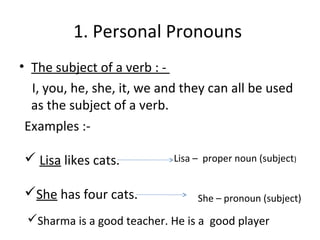
• The subject of a verb : - 
I, you, he, she, it, we and they can all be used 
as the subject of a verb. 
Examples :- 
 Lisa likes cats. 
She has four cats. 
Lisa – proper noun (subject) 
She – pronoun (subject) 
Sharma is a good teacher. He is a good player
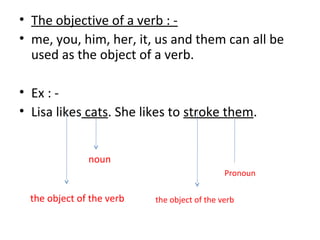
• The objective of a verb : - 
• me, you, him, her, it, us and them can all be 
used as the object of a verb. 
• Ex : - 
• Lisa likes cats. She likes to stroke them. 
noun 
the object of the verb 
Pronoun 
the object of the verb
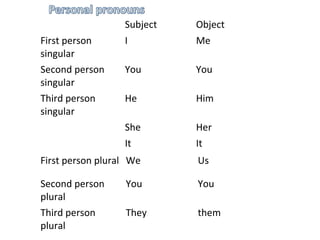
Subject Object 
First person 
singular 
I Me 
Second person 
singular 
You You 
Third person 
singular 
He Him 
She Her 
It It 
First person plural We Us 
Second person 
plural 
You You 
Third person 
plural 
They them
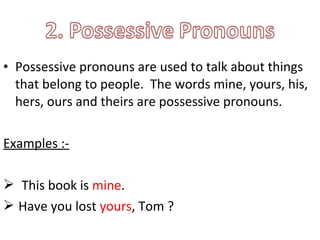
• Possessive pronouns are used to talk about things 
that belong to people. The words mine, yours, his, 
hers, ours and theirs are possessive pronouns. 
Examples :- 
 This book is mine. 
 Have you lost yours, Tom ?
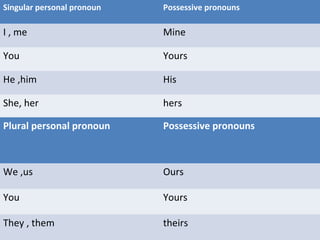
Singular personal pronoun Possessive pronouns 
I , me Mine 
You Yours 
He ,him His 
She, her hers 
Plural personal pronoun Possessive pronouns 
We ,us Ours 
You Yours 
They , them theirs
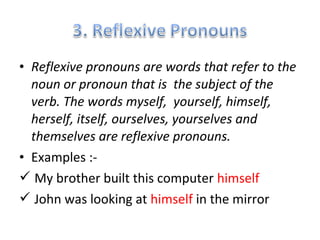
• Reflexive pronouns are words that refer to the 
noun or pronoun that is the subject of the 
verb. The words myself, yourself, himself, 
herself, itself, ourselves, yourselves and 
themselves are reflexive pronouns. 
• Examples :- 
 My brother built this computer himself 
 John was looking at himself in the mirror
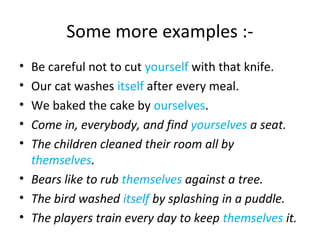
Some more examples :- 
• Be careful not to cut yourself with that knife. 
• Our cat washes itself after every meal. 
• We baked the cake by ourselves. 
• Come in, everybody, and find yourselves a seat. 
• The children cleaned their room all by 
themselves. 
• Bears like to rub themselves against a tree. 
• The bird washed itself by splashing in a puddle. 
• The players train every day to keep themselves it.
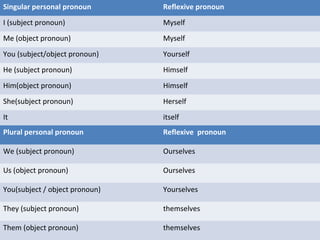
Singular personal pronoun Reflexive pronoun 
I (subject pronoun) Myself 
Me (object pronoun) Myself 
You (subject/object pronoun) Yourself 
He (subject pronoun) Himself 
Him(object pronoun) Himself 
She(subject pronoun) Herself 
It itself 
Plural personal pronoun Reflexive pronoun 
We (subject pronoun) Ourselves 
Us (object pronoun) Ourselves 
You(subject / object pronoun) Yourselves 
They (subject pronoun) themselves 
Them (object pronoun) themselves
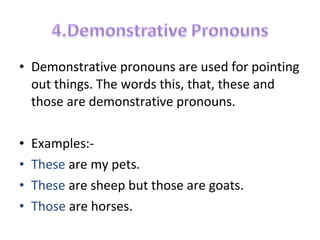
• Demonstrative pronouns are used for pointing 
out things. The words this, that, these and 
those are demonstrative pronouns. 
• Examples:- 
• These are my pets. 
• These are sheep but those are goats. 
• Those are horses.
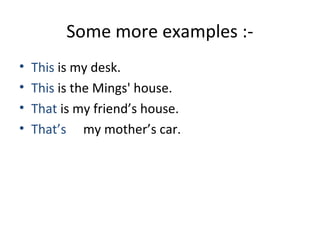
Some more examples :- 
• This is my desk. 
• This is the Mings' house. 
• That is my friend’s house. 
• That’s my mother’s car.
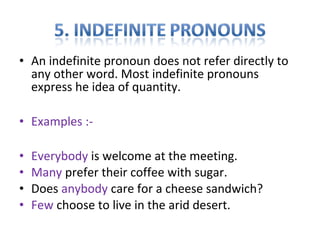
• An indefinite pronoun does not refer directly to 
any other word. Most indefinite pronouns 
express he idea of quantity. 
• Examples :- 
• Everybody is welcome at the meeting. 
• Many prefer their coffee with sugar. 
• Does anybody care for a cheese sandwich? 
• Few choose to live in the arid desert.
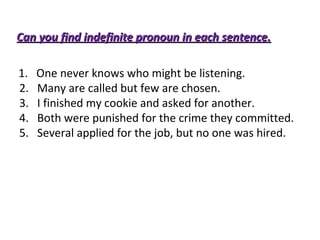
Can you find indefinite pronoun iinn eeaacchh sseenntteennccee.. 
1. One never knows who might be listening. 
2. Many are called but few are chosen. 
3. I finished my cookie and asked for another. 
4. Both were punished for the crime they committed. 
5. Several applied for the job, but no one was hired.
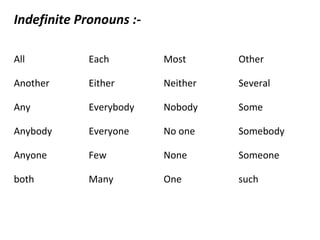
Indefinite Pronouns :- 
All Each Most Other 
Another Either Neither Several 
Any Everybody Nobody Some 
Anybody Everyone No one Somebody 
Anyone Few None Someone 
both Many One such
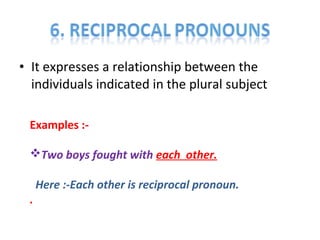
• It expresses a relationship between the 
individuals indicated in the plural subject 
Examples :- 
Two boys fought with each other. 
Here :-Each other is reciprocal pronoun. 
.
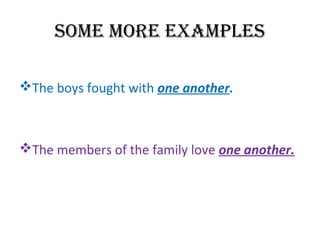
SOME MORE EXAMPLES 
The boys fought with one another. 
The members of the family love one another.
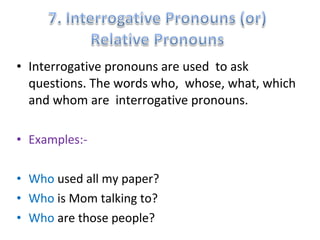
• Interrogative pronouns are used to ask 
questions. The words who, whose, what, which 
and whom are interrogative pronouns. 
• Examples:- 
• Who used all my paper? 
• Who is Mom talking to? 
• Who are those people?
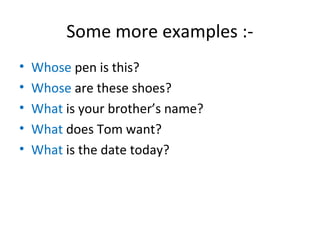
Some more examples :- 
• Whose pen is this? 
• Whose are these shoes? 
• What is your brother’s name? 
• What does Tom want? 
• What is the date today?
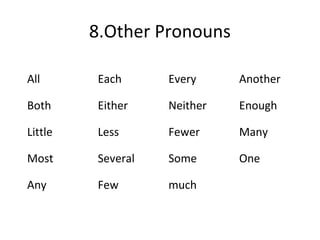
8.Other Pronouns 
All Each Every Another 
Both Either Neither Enough 
Little Less Fewer Many 
Most Several Some One 
Any Few much
This powerpoint was kindly donated to 
www.worldofteaching.com 
http://www.worldofteaching.com is home to over a thousand 
powerpoints submitted by teachers. This is a completely free 
site and requires no registration. Please visit and I hope it will 
help in your teaching.

Pronouns

  • 4.
    1. Personal Pronouns • The subject of a verb : - I, you, he, she, it, we and they can all be used as the subject of a verb. Examples :-  Lisa likes cats. She has four cats. Lisa – proper noun (subject) She – pronoun (subject) Sharma is a good teacher. He is a good player
  • 5.
    • The objectiveof a verb : - • me, you, him, her, it, us and them can all be used as the object of a verb. • Ex : - • Lisa likes cats. She likes to stroke them. noun the object of the verb Pronoun the object of the verb
  • 6.
    Subject Object Firstperson singular I Me Second person singular You You Third person singular He Him She Her It It First person plural We Us Second person plural You You Third person plural They them
  • 7.
    • Possessive pronounsare used to talk about things that belong to people. The words mine, yours, his, hers, ours and theirs are possessive pronouns. Examples :-  This book is mine.  Have you lost yours, Tom ?
  • 8.
    Singular personal pronounPossessive pronouns I , me Mine You Yours He ,him His She, her hers Plural personal pronoun Possessive pronouns We ,us Ours You Yours They , them theirs
  • 9.
    • Reflexive pronounsare words that refer to the noun or pronoun that is the subject of the verb. The words myself, yourself, himself, herself, itself, ourselves, yourselves and themselves are reflexive pronouns. • Examples :-  My brother built this computer himself  John was looking at himself in the mirror
  • 10.
    Some more examples:- • Be careful not to cut yourself with that knife. • Our cat washes itself after every meal. • We baked the cake by ourselves. • Come in, everybody, and find yourselves a seat. • The children cleaned their room all by themselves. • Bears like to rub themselves against a tree. • The bird washed itself by splashing in a puddle. • The players train every day to keep themselves it.
  • 11.
    Singular personal pronounReflexive pronoun I (subject pronoun) Myself Me (object pronoun) Myself You (subject/object pronoun) Yourself He (subject pronoun) Himself Him(object pronoun) Himself She(subject pronoun) Herself It itself Plural personal pronoun Reflexive pronoun We (subject pronoun) Ourselves Us (object pronoun) Ourselves You(subject / object pronoun) Yourselves They (subject pronoun) themselves Them (object pronoun) themselves
  • 12.
    • Demonstrative pronounsare used for pointing out things. The words this, that, these and those are demonstrative pronouns. • Examples:- • These are my pets. • These are sheep but those are goats. • Those are horses.
  • 13.
    Some more examples:- • This is my desk. • This is the Mings' house. • That is my friend’s house. • That’s my mother’s car.
  • 14.
    • An indefinitepronoun does not refer directly to any other word. Most indefinite pronouns express he idea of quantity. • Examples :- • Everybody is welcome at the meeting. • Many prefer their coffee with sugar. • Does anybody care for a cheese sandwich? • Few choose to live in the arid desert.
  • 15.
    Can you findindefinite pronoun iinn eeaacchh sseenntteennccee.. 1. One never knows who might be listening. 2. Many are called but few are chosen. 3. I finished my cookie and asked for another. 4. Both were punished for the crime they committed. 5. Several applied for the job, but no one was hired.
  • 16.
    Indefinite Pronouns :- All Each Most Other Another Either Neither Several Any Everybody Nobody Some Anybody Everyone No one Somebody Anyone Few None Someone both Many One such
  • 17.
    • It expressesa relationship between the individuals indicated in the plural subject Examples :- Two boys fought with each other. Here :-Each other is reciprocal pronoun. .
  • 18.
    SOME MORE EXAMPLES The boys fought with one another. The members of the family love one another.
  • 19.
    • Interrogative pronounsare used to ask questions. The words who, whose, what, which and whom are interrogative pronouns. • Examples:- • Who used all my paper? • Who is Mom talking to? • Who are those people?
  • 20.
    Some more examples:- • Whose pen is this? • Whose are these shoes? • What is your brother’s name? • What does Tom want? • What is the date today?
  • 21.
    8.Other Pronouns AllEach Every Another Both Either Neither Enough Little Less Fewer Many Most Several Some One Any Few much
  • 23.
    This powerpoint waskindly donated to www.worldofteaching.com http://www.worldofteaching.com is home to over a thousand powerpoints submitted by teachers. This is a completely free site and requires no registration. Please visit and I hope it will help in your teaching.