A pronoun is a word that takes
 the place of one or more
 nouns.
       Pro- means for (standing
 FOR a noun)
            http://www.youtube.com/watch?v=yg
   Pronouns that are used to refer to people or
    things are called personal pronouns.

       Examples: he, she, it
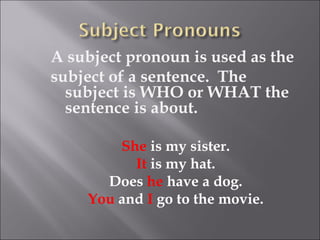
A subject pronoun is used as the
subject of a sentence. The
  subject is WHO or WHAT the
  sentence is about.

        She is my sister.
          It is my hat.
      Does he have a dog.
    You and I go to the movie.
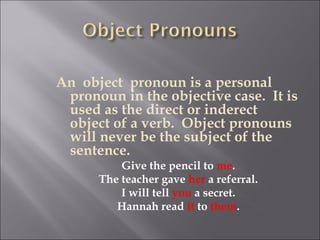
An object pronoun is a personal
 pronoun in the objective case. It is
 used as the direct or inderect
 object of a verb. Object pronouns
 will never be the subject of the
 sentence.
          Give the pencil to me.
      The teacher gave her a referral.
          I will tell you a secret.
         Hannah read it to them.
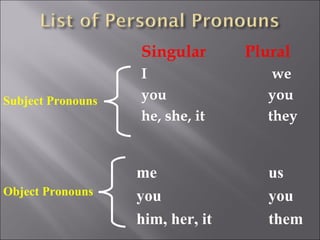
Singular       Plural
                   I                  we
Subject Pronouns   you               you
                   he, she, it       they


                   me                us
Object Pronouns    you               you
                   him, her, it      them
1.   Listen to this song and then
     lets try it together!
     http://www.youtube.com/watch?v

2.   Activity. Complete WS p. 16
     as a table and then we will
     go over it together.
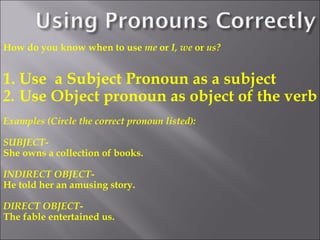
How do you know when to use me or I, we or us?


1. Use a Subject Pronoun as a subject
2. Use Object pronoun as object of the verb
Examples (Circle the correct pronoun listed):

SUBJECT-
She owns a collection of books.

INDIRECT OBJECT-
He told her an amusing story.

DIRECT OBJECT-
The fable entertained us.
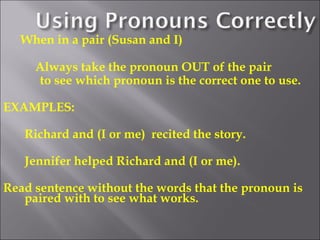
When in a pair (Susan and I)

     Always take the pronoun OUT of the pair
     to see which pronoun is the correct one to use.

EXAMPLES:

   Richard and (I or me) recited the story.

   Jennifer helped Richard and (I or me).

Read sentence without the words that the pronoun is
   paired with to see what works.
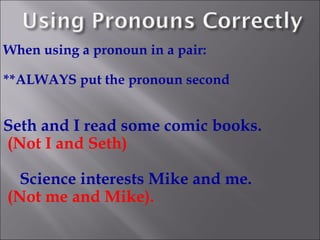
When using a pronoun in a pair:

**ALWAYS put the pronoun second


Seth and I read some comic books.
(Not I and Seth)

  Science interests Mike and me.
(Not me and Mike).
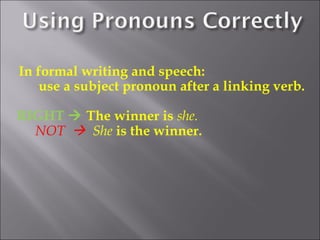
In formal writing and speech:
    use a subject pronoun after a linking verb.

RIGHT  The winner is she.
  NOT  She is the winner.
   Complete WS p. 19, Using Pronouns Correctly
    and then we will review as a class.
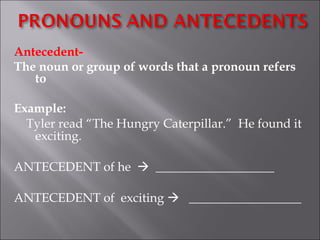
Antecedent-
The noun or group of words that a pronoun refers
   to

Example:
  Tyler read “The Hungry Caterpillar.” He found it
   exciting.

ANTECEDENT of he  ___________________

ANTECEDENT of exciting  __________________
RULE FOR PRONOUNS and
  ANTECEDENTS:

1.   Pronoun must agree with
     antecedent in number (singular or
     plural) and gender.
2.   The gender of a noun may be
     masculine (male), feminine (female),
     or neuter (referring to things).
Complete WS p. 17 for Review
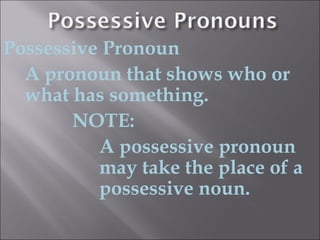
Possessive Pronoun
  A pronoun that shows who or
  what has something.
       NOTE:
          A possessive pronoun
          may take the place of a
          possessive noun.
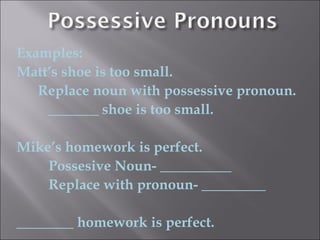
Examples:
Matt’s shoe is too small.
   Replace noun with possessive pronoun.
    _______ shoe is too small.

Mike’s homework is perfect.
    Possesive Noun- __________
    Replace with pronoun- _________

________ homework is perfect.
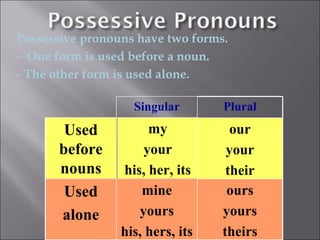
Possessive pronouns have two forms.
- One form is used before a noun.
- The other form is used alone.

                   Singular       Plural
        Used          my            our
       before        your          your
       nouns     his, her, its     their
        Used         mine          ours
       alone        yours         yours
                 his, hers, its   theirs
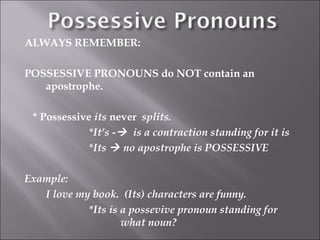
ALWAYS REMEMBER:

POSSESSIVE PRONOUNS do NOT contain an
   apostrophe.

 * Possessive its never splits.
            *It’s - is a contraction standing for it is
            *Its  no apostrophe is POSSESSIVE

Example:
   I love my book. (Its) characters are funny.
            *Its is a possevive pronoun standing for
                    what noun?
Complete WS p. 18 to review
  possessive pronouns
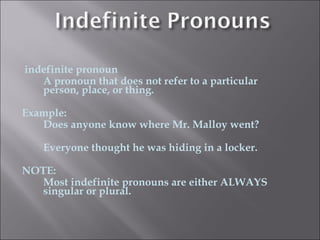
indefinite pronoun
   A pronoun that does not refer to a particular
   person, place, or thing.
Example:
   Does anyone know where Mr. Malloy went?

   Everyone thought he was hiding in a locker.

NOTE:
   Most indefinite pronouns are either ALWAYS
   singular or plural.
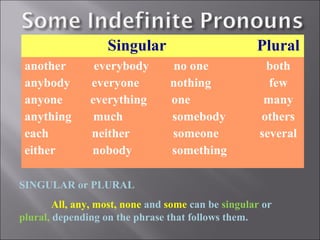
Singular                         Plural
 another        everybody         no one              both
 anybody       everyone          nothing               few
 anyone        everything        one                  many
 anything       much             somebody            others
 each          neither           someone             several
 either        nobody            something

SINGULAR or PLURAL
        All, any, most, none and some can be singular or
plural, depending on the phrase that follows them.
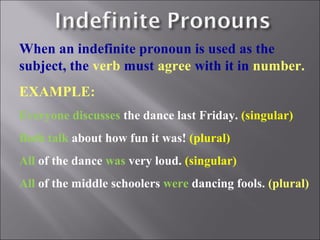
When an indefinite pronoun is used as the
subject, the verb must agree with it in number.
EXAMPLE:
Everyone discusses the dance last Friday. (singular)
Both talk about how fun it was! (plural)
All of the dance was very loud. (singular)
All of the middle schoolers were dancing fools. (plural)
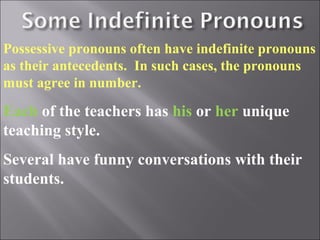
Possessive pronouns often have indefinite pronouns
as their antecedents. In such cases, the pronouns
must agree in number.

Each of the teachers has his or her unique
teaching style.
Several have funny conversations with their
students.
Complete WS p. 19
reviewing
Indefinite pronouns

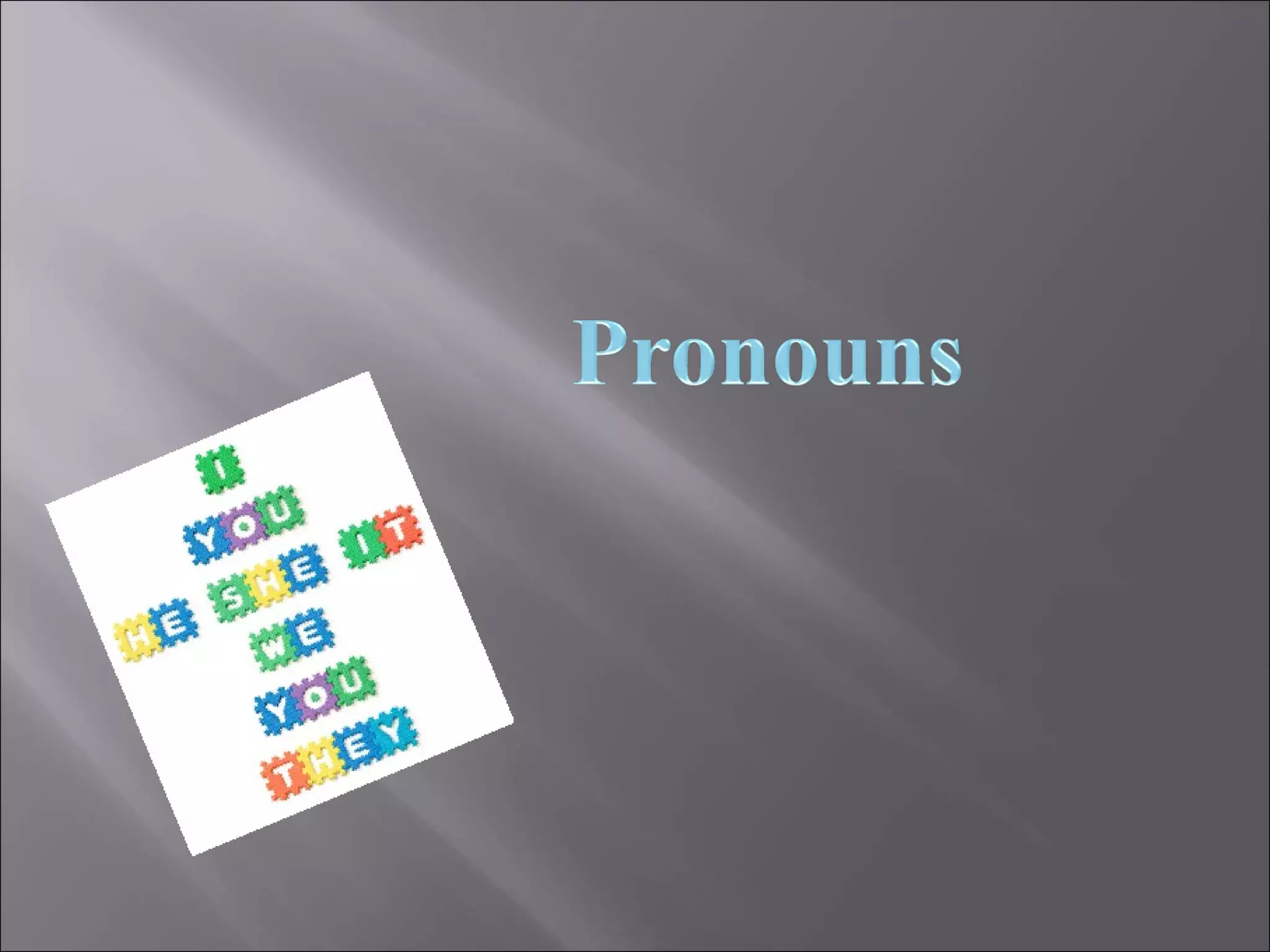
Pronouns

  • 2.
    A pronoun isa word that takes the place of one or more nouns. Pro- means for (standing FOR a noun) http://www.youtube.com/watch?v=yg
  • 3.
    Pronouns that are used to refer to people or things are called personal pronouns.  Examples: he, she, it
  • 4.
    A subject pronounis used as the subject of a sentence. The subject is WHO or WHAT the sentence is about. She is my sister. It is my hat. Does he have a dog. You and I go to the movie.
  • 5.
    An object pronounis a personal pronoun in the objective case. It is used as the direct or inderect object of a verb. Object pronouns will never be the subject of the sentence. Give the pencil to me. The teacher gave her a referral. I will tell you a secret. Hannah read it to them.
  • 6.
    Singular Plural I we Subject Pronouns you you he, she, it they me us Object Pronouns you you him, her, it them
  • 7.
    1. Listen to this song and then lets try it together! http://www.youtube.com/watch?v 2. Activity. Complete WS p. 16 as a table and then we will go over it together.
  • 8.
    How do youknow when to use me or I, we or us? 1. Use a Subject Pronoun as a subject 2. Use Object pronoun as object of the verb Examples (Circle the correct pronoun listed): SUBJECT- She owns a collection of books. INDIRECT OBJECT- He told her an amusing story. DIRECT OBJECT- The fable entertained us.
  • 9.
    When in apair (Susan and I) Always take the pronoun OUT of the pair to see which pronoun is the correct one to use. EXAMPLES: Richard and (I or me) recited the story. Jennifer helped Richard and (I or me). Read sentence without the words that the pronoun is paired with to see what works.
  • 10.
    When using apronoun in a pair: **ALWAYS put the pronoun second Seth and I read some comic books. (Not I and Seth) Science interests Mike and me. (Not me and Mike).
  • 11.
    In formal writingand speech: use a subject pronoun after a linking verb. RIGHT  The winner is she. NOT  She is the winner.
  • 12.
    Complete WS p. 19, Using Pronouns Correctly and then we will review as a class.
  • 13.
    Antecedent- The noun orgroup of words that a pronoun refers to Example: Tyler read “The Hungry Caterpillar.” He found it exciting. ANTECEDENT of he  ___________________ ANTECEDENT of exciting  __________________
  • 14.
    RULE FOR PRONOUNSand ANTECEDENTS: 1. Pronoun must agree with antecedent in number (singular or plural) and gender. 2. The gender of a noun may be masculine (male), feminine (female), or neuter (referring to things).
  • 15.
    Complete WS p.17 for Review
  • 16.
    Possessive Pronoun A pronoun that shows who or what has something. NOTE: A possessive pronoun may take the place of a possessive noun.
  • 17.
    Examples: Matt’s shoe istoo small. Replace noun with possessive pronoun. _______ shoe is too small. Mike’s homework is perfect. Possesive Noun- __________ Replace with pronoun- _________ ________ homework is perfect.
  • 18.
    Possessive pronouns havetwo forms. - One form is used before a noun. - The other form is used alone. Singular Plural Used my our before your your nouns his, her, its their Used mine ours alone yours yours his, hers, its theirs
  • 19.
    ALWAYS REMEMBER: POSSESSIVE PRONOUNSdo NOT contain an apostrophe. * Possessive its never splits. *It’s - is a contraction standing for it is *Its  no apostrophe is POSSESSIVE Example: I love my book. (Its) characters are funny. *Its is a possevive pronoun standing for what noun?
  • 20.
    Complete WS p.18 to review possessive pronouns
  • 21.
    indefinite pronoun A pronoun that does not refer to a particular person, place, or thing. Example: Does anyone know where Mr. Malloy went? Everyone thought he was hiding in a locker. NOTE: Most indefinite pronouns are either ALWAYS singular or plural.
  • 22.
    Singular Plural another everybody no one both anybody everyone nothing few anyone everything one many anything much somebody others each neither someone several either nobody something SINGULAR or PLURAL All, any, most, none and some can be singular or plural, depending on the phrase that follows them.
  • 23.
    When an indefinitepronoun is used as the subject, the verb must agree with it in number. EXAMPLE: Everyone discusses the dance last Friday. (singular) Both talk about how fun it was! (plural) All of the dance was very loud. (singular) All of the middle schoolers were dancing fools. (plural)
  • 24.
    Possessive pronouns oftenhave indefinite pronouns as their antecedents. In such cases, the pronouns must agree in number. Each of the teachers has his or her unique teaching style. Several have funny conversations with their students.
  • 25.
    Complete WS p.19 reviewing Indefinite pronouns