
Pronouns
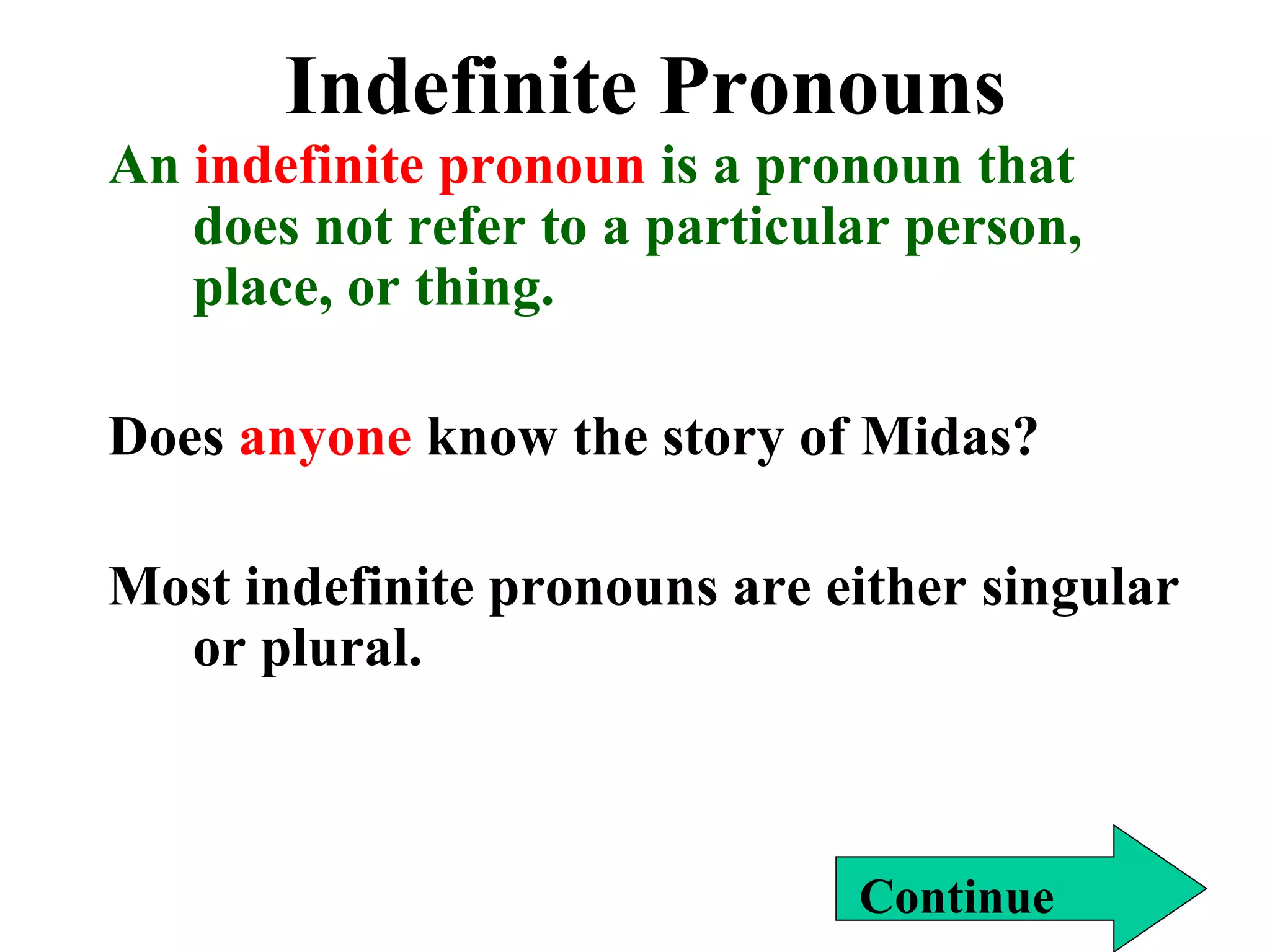
Indefinite Pronouns An  indefinite pronoun  is a pronoun that does not refer to a particular person, place, or thing. Does  anyone  know the story of Midas? Most indefinite pronouns are either singular or plural. Continue
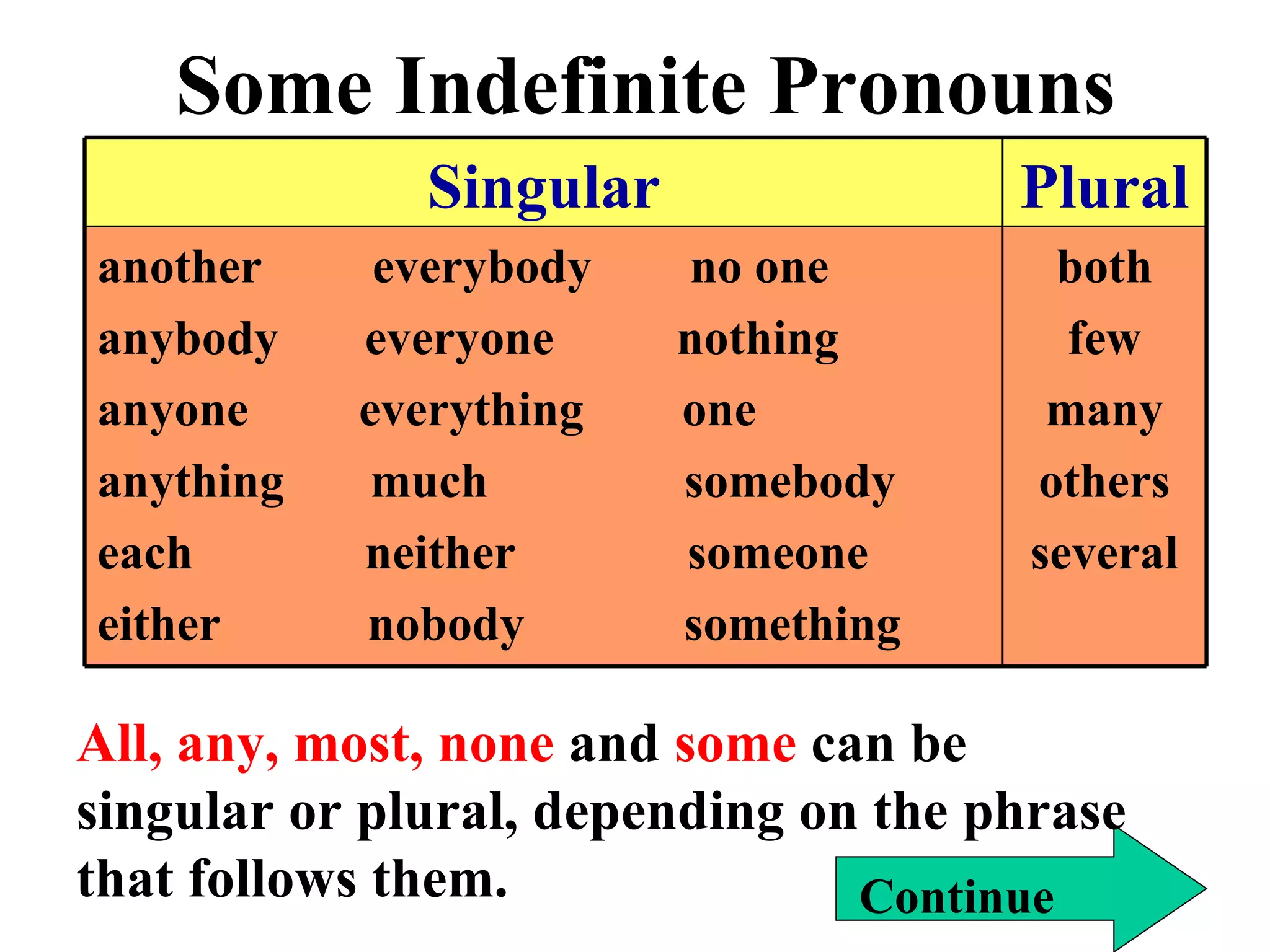
Some Indefinite Pronouns All, any, most, none  and  some  can be singular or plural, depending on the phrase that follows them. Continue Singular Plural another  everybody  no one anybody  everyone  nothing anyone  everything  one anything  much  somebody each  neither  someone either  nobody  something both few many others several
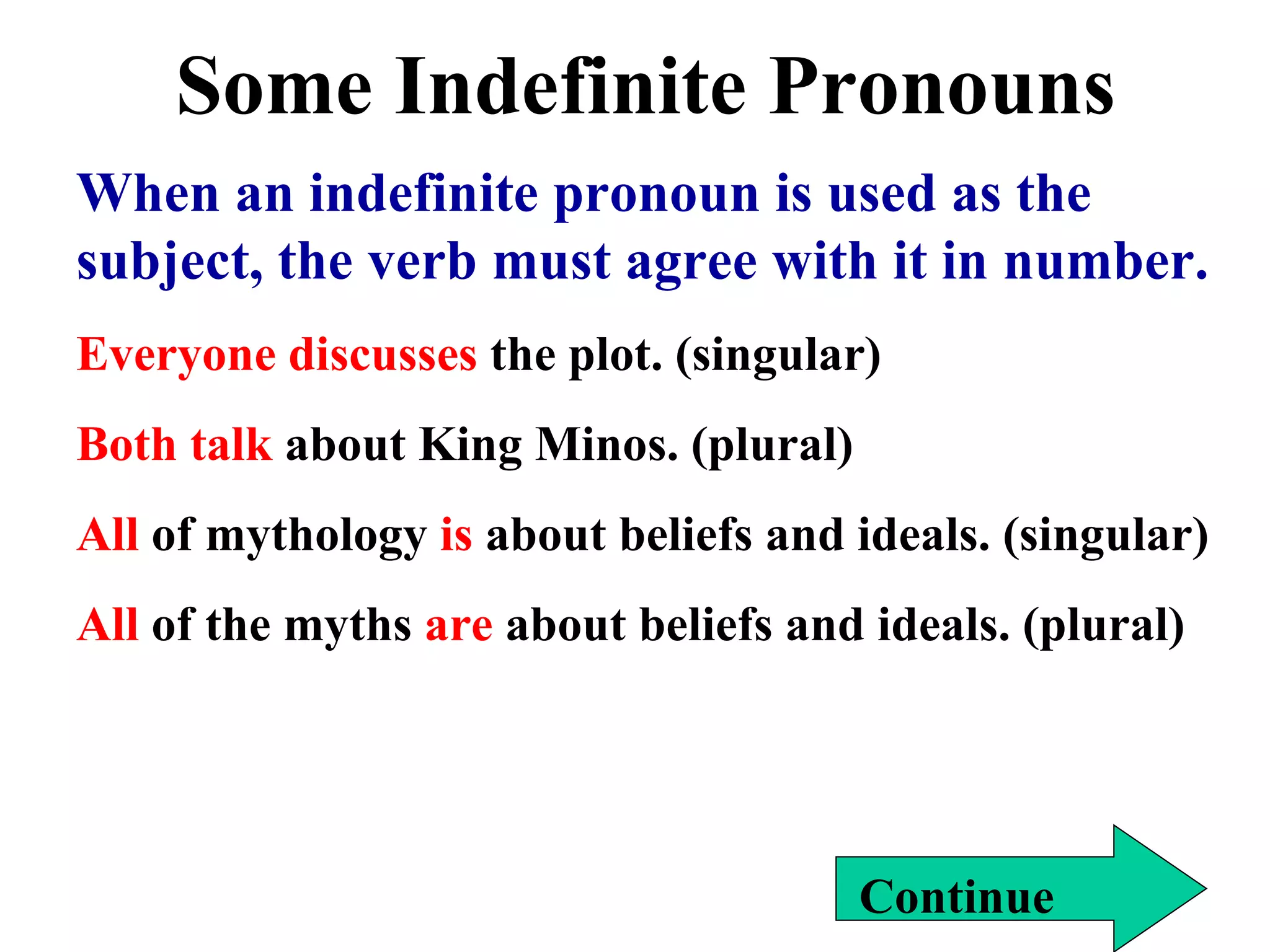
Some Indefinite Pronouns When an indefinite pronoun is used as the subject, the verb must agree with it in number. Everyone discusses  the plot. (singular) Both talk  about King Minos. (plural) All  of mythology  is  about beliefs and ideals. (singular) All  of the myths  are  about beliefs and ideals. (plural) Continue
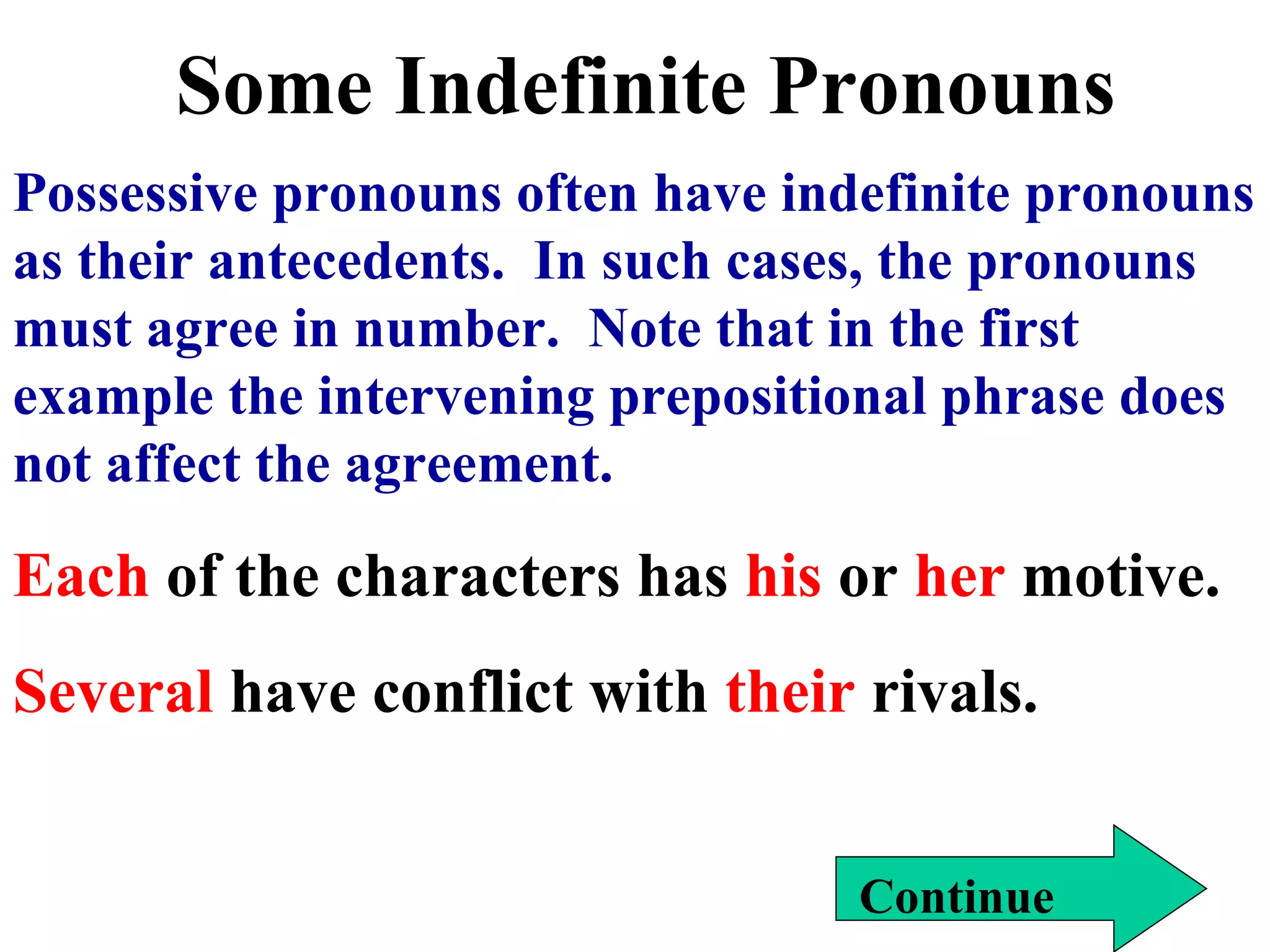
Some Indefinite Pronouns Possessive pronouns often have indefinite pronouns as their antecedents.  In such cases, the pronouns must agree in number.  Note that in the first example the intervening prepositional phrase does not affect the agreement. Each  of the characters has  his  or  her  motive. Several  have conflict with  their  rivals. Continue
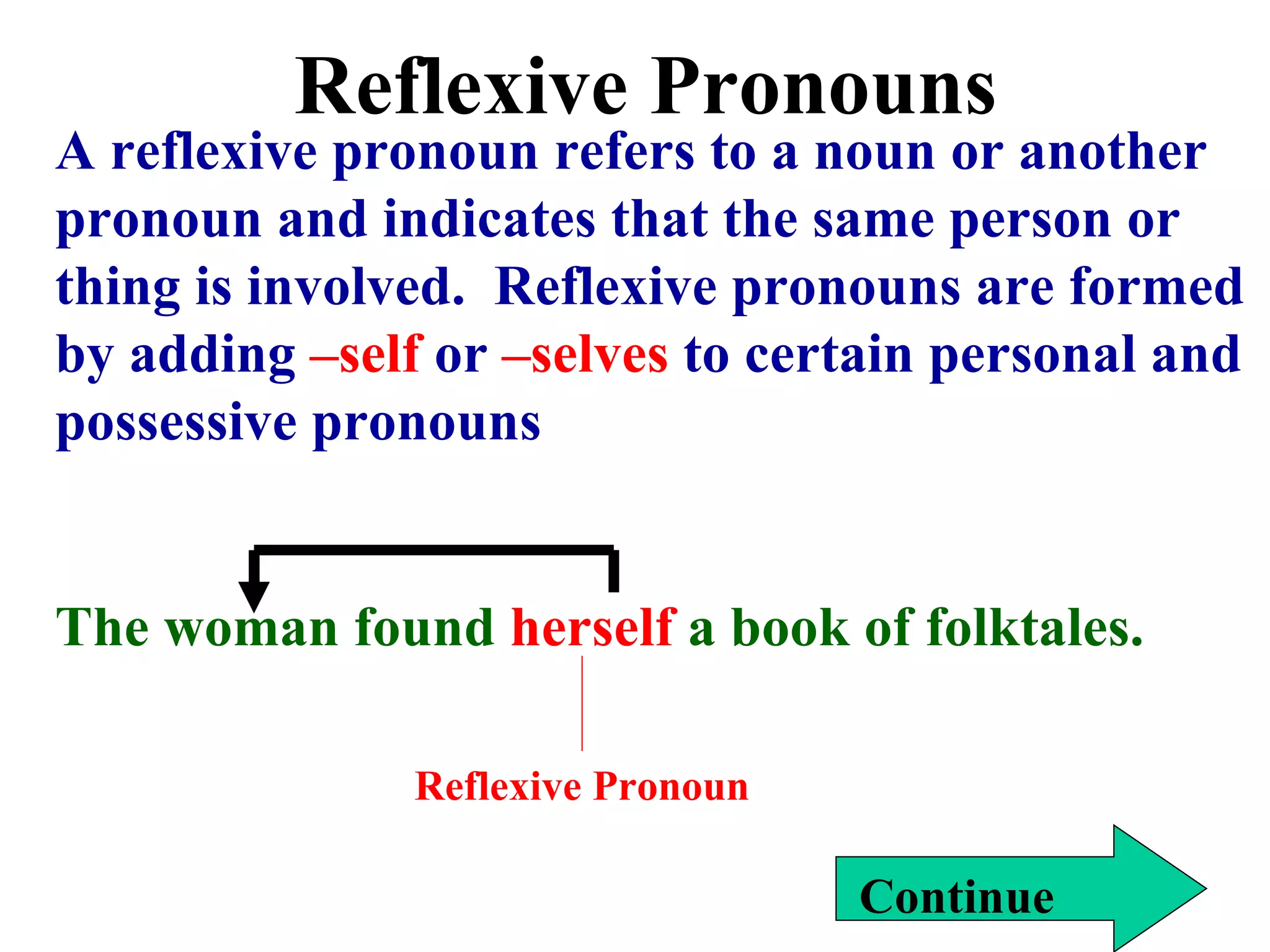
Reflexive Pronouns A reflexive pronoun refers to a noun or another pronoun and indicates that the same person or thing is involved.  Reflexive pronouns are formed by adding  –self  or  –selves  to certain personal and possessive pronouns The woman found  herself  a book of folktales. Reflexive Pronoun Continue
Reflexive Pronouns Sometimes hisself is mistakenly used for himself and theirselves for themselves.  Avoid using hisself and theirselves. Continue Singular Plural myself yourself himself, herself, itself ourselves yourselves themselves
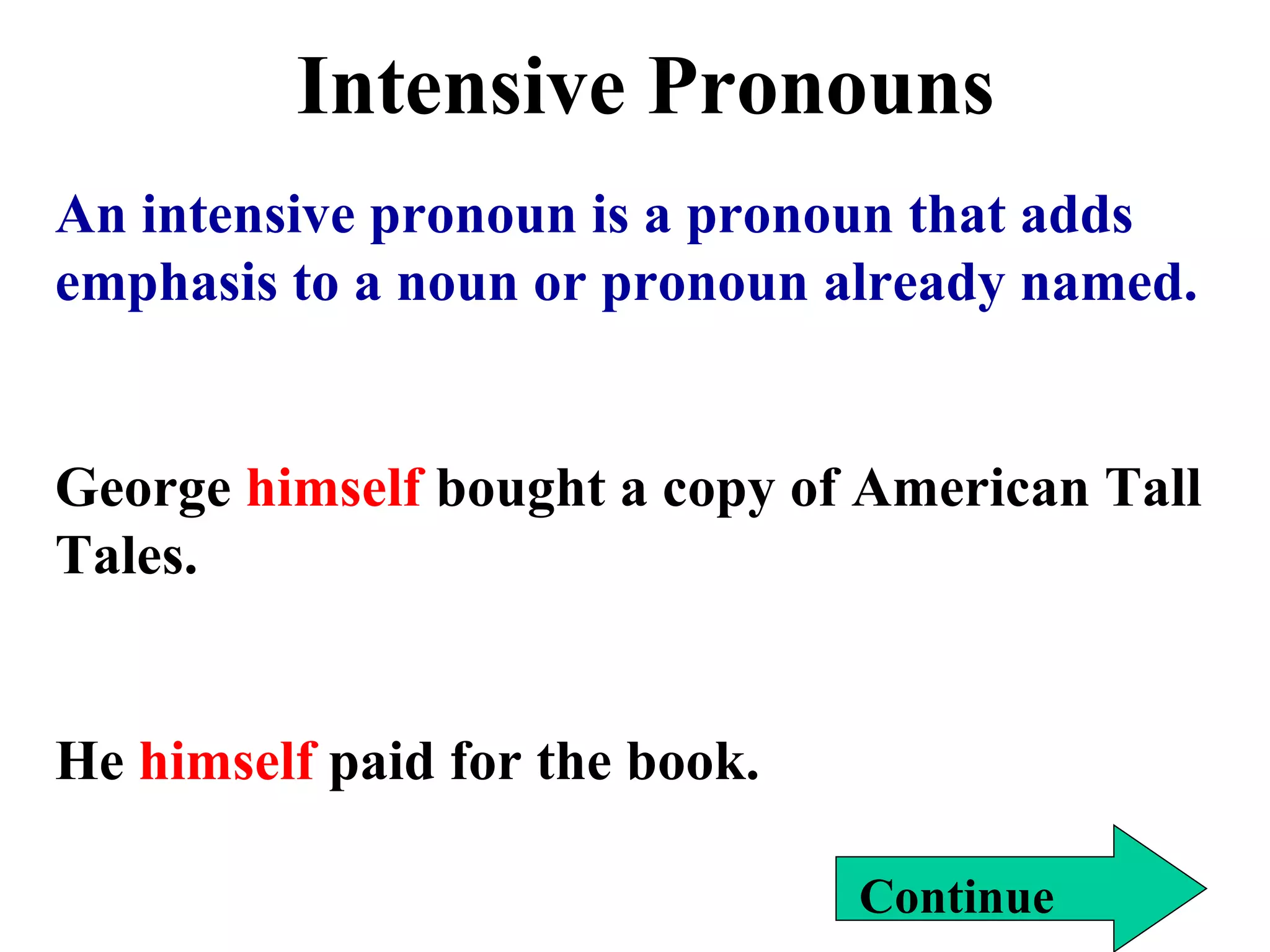
Intensive Pronouns An intensive pronoun is a pronoun that adds emphasis to a noun or pronoun already named. George   himself   bought a copy of American Tall Tales. He  himself  paid for the book. Continue

Indefinite and reflexive pronouns

  • 1.
  • 2.
    Indefinite Pronouns An indefinite pronoun is a pronoun that does not refer to a particular person, place, or thing. Does anyone know the story of Midas? Most indefinite pronouns are either singular or plural. Continue
  • 3.
    Some Indefinite PronounsAll, any, most, none and some can be singular or plural, depending on the phrase that follows them. Continue Singular Plural another everybody no one anybody everyone nothing anyone everything one anything much somebody each neither someone either nobody something both few many others several
  • 4.
    Some Indefinite PronounsWhen an indefinite pronoun is used as the subject, the verb must agree with it in number. Everyone discusses the plot. (singular) Both talk about King Minos. (plural) All of mythology is about beliefs and ideals. (singular) All of the myths are about beliefs and ideals. (plural) Continue
  • 5.
    Some Indefinite PronounsPossessive pronouns often have indefinite pronouns as their antecedents. In such cases, the pronouns must agree in number. Note that in the first example the intervening prepositional phrase does not affect the agreement. Each of the characters has his or her motive. Several have conflict with their rivals. Continue
  • 6.
    Reflexive Pronouns Areflexive pronoun refers to a noun or another pronoun and indicates that the same person or thing is involved. Reflexive pronouns are formed by adding –self or –selves to certain personal and possessive pronouns The woman found herself a book of folktales. Reflexive Pronoun Continue
  • 7.
    Reflexive Pronouns Sometimeshisself is mistakenly used for himself and theirselves for themselves. Avoid using hisself and theirselves. Continue Singular Plural myself yourself himself, herself, itself ourselves yourselves themselves
  • 8.
    Intensive Pronouns Anintensive pronoun is a pronoun that adds emphasis to a noun or pronoun already named. George himself bought a copy of American Tall Tales. He himself paid for the book. Continue