Dr. Souvik Bhattacharjee
Junior Resident
Department of Physical Medicine & Rehabilitation
AIIMS BBSR
 Introduction
 Definition
 Mechanism of action
 Proliferant solutions
 Candidate selection criteria
 Indication
 Contraindication
 Complications
 Use
 Treatment Course
 Evidence
 References
 The term Prolotherapy was coined by Dr.
George Heckett in 1956
 Derives from the Latin word “proles” ,
offspring or progeny and english word
“therapy”
 According to another school of thought
prolotherapy is simply derived from
“proliferation therapy”.
 Prolotherapy is “ an alternative therapy for
treating musculoskeletal pain that involves
injecting an irritant substance (as dextrose)
into a ligament or tendon to promote the
growth of new tissue”
-Marriam-Webster Dictionary
 “ The rehabilitation of an incompetent
structure by generation of new cellular tissue”
- Dr. George Hackett
Low grade inflammation at the site of injection and tricks
the body into initiating a new healing cascade
Activation of fibroblasts, elevation of multiple secondary
growth factors(PDGFs,TGF,EGF,FGF,IGF,CTGF); which
ultimately leads to new cell growth and collagen
deposition
The inflammatory stimulus raises the level of growth
factors to resume the tissue repair sequence which was
prematurely aborted or initiate new healing or tissue
repair response which was never started.
 Most commonly used solution is hypertonic
dextrose, mainly 12.5% to 25 %
 Glucose
 Glycerin
 Phenol
 Sodium Morrhuate
 P2G (Phenol, Glycerin and Glucose)
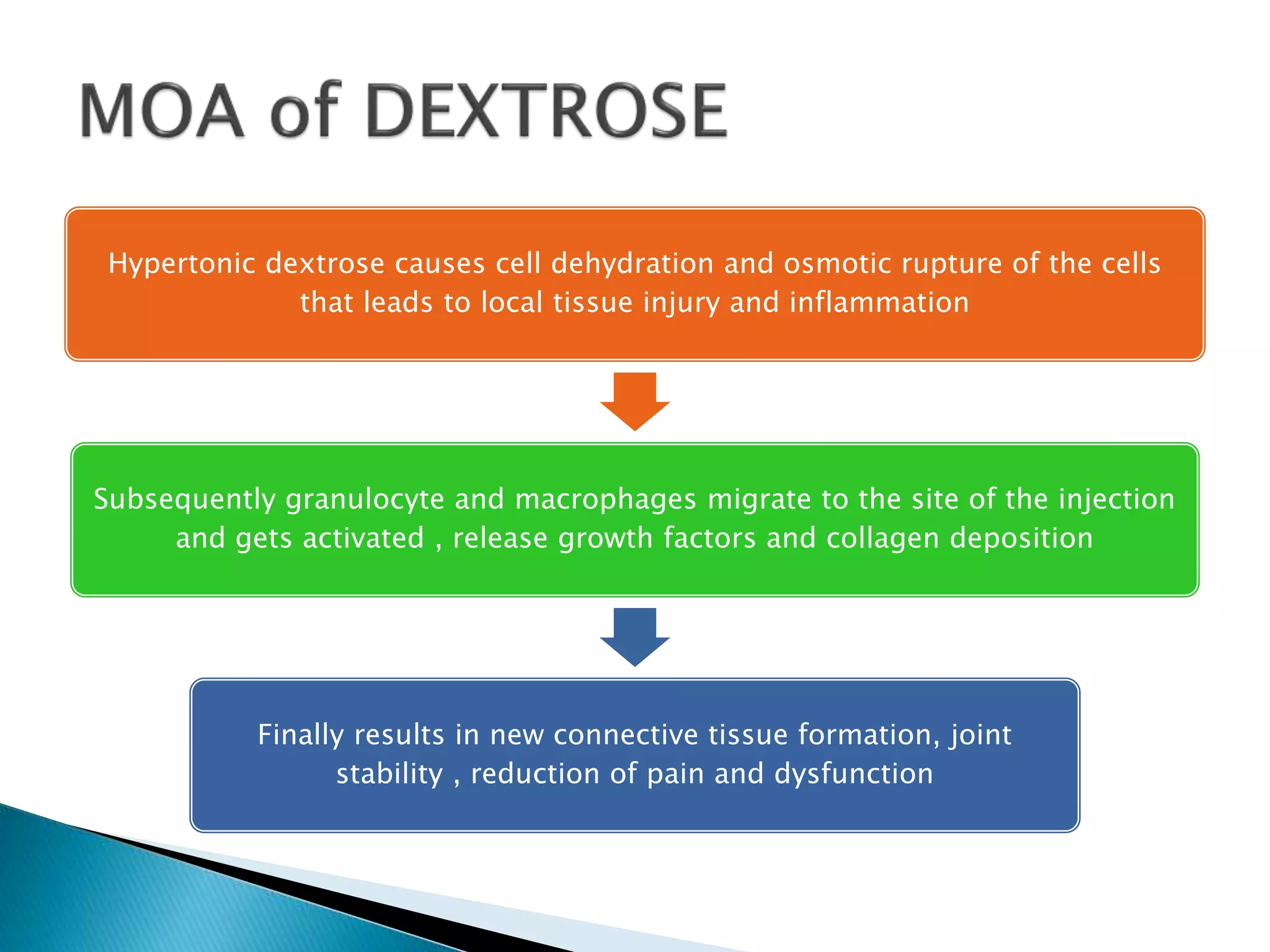
Hypertonic dextrose causes cell dehydration and osmotic rupture of the cells
that leads to local tissue injury and inflammation
Subsequently granulocyte and macrophages migrate to the site of the injection
and gets activated , release growth factors and collagen deposition
Finally results in new connective tissue formation, joint
stability , reduction of pain and dysfunction
 A recent study which evaluated the effect of
dextrose and P2G on cultured tenocytes showed
that both of these proliferant solutions
upregulates key infalammatory markers including
IL-8, cox-2, PGE-2, TGF and type 1 collagen
expression following 48 hrs of treatment.
 In rats after P2G and Sodium morrhuate
injections in MCL showed localized increase in
inflammatory cells (CD43+,ED1+,ED2+) but
inflammatory response was variable.
 Criteria for Injection in new patients :
1. Appropriate medical problem
2. Desire for recovery
3. No underlying medical condition which
would significantly interfere with healing
4. Ability and willingness to follow
instructions
5. Willingness to report progress
6. Willingness to receive painful injections in
an effort to recover from injury
 According to the Florida Academy of Pain
Management
1. Chronic pain from ligaments or tendons
secondary to sprains or strains
2. Pain from overuse or occupational
conditions known as “ Repetitive Motion
Disorders”
3. Chronic postural pain in the cervical ,
thoracic, lumbar and lumbo-sacral regions
4.Painful recurrent somatic dysfunctions secondary
to ligament laxity that improves temporarily with
manipulation. Painful hypermnobility and
subluxation at given peripheral or spinal
articulation(s), or mobile segment(s)
accompanied by a restricted range of motion at
reciprocal segment(s).
5.Thoracic and lumbar vertebral compression
fractures with a wedge deformity that exerts
additional stress on the posterior ligamento-
tendinous complex.
6. Recurrent painful subluxation of ribs at the
costo-transverse, costo-vertebral and/or costo-
sternal articulation
7. Osteoarthritis of the axial and peripheral joints,
spondylosis and spondylolisthesis
8. Painful cervical, thoracic, lumbar, lumbo-sacral
and sacro-iliac instability secondary to ligament
laxity.
9. Intolerance to NSAIDS, steroids and opiates
 Active infection, allergy
 Malignancy
 Immunodeficiency conditions, bleeding disorders
 Diabetes
 Acute gout ,Rheumatoid arthritis
 Rupture of ligaments and tendons
 Non-reduced dislocations and severe unstable
spondylolisthesis
 Drugs : Narcotics, NSAIDS, steroids
 Central canal stenosis and severe degenerative
Hip osteoarthritis
 Soreness at injection site
 Bruise around injected area
 Headache
 Nerve irritation
 Infection
 Allergy
 Puncture of an organ
 Epidural puncture
 After the injection patient shold not be
administered anti-inflammatory drugs
because it will interfere with the healing
response.
 Patients must be counselled about the post
injection pain at the site due to ongoing
inflammatory process for few days.
 Mainly used in any kind of musculo-skeletal
pain which has lasted >8 weeks
1. Low back pain
2. Osteoarthritis knee
3. Chronic sprains/strains
4. Whiplash injury
5. Tendinopathies
6. Tennis and golfer’s elbow
7. Myofascial pain
8. Skin ulcer
 Treatment interval depends upon healing
 On average interval between two sittings is usually 3
to 4 weeks
 The average number of treatments for any given area
is usually between 4 and 6 total sittings, each sittings
involving multiple injections into the particular area
 Improvement is usually noticed after 2nd to 3rd sitting
 Individuals with hypermobility often requires longer
treatment.
 Identifying Injection Sites
 Sedation, Positioning, and Anesthesia
◦ Anesthetic gel (benzocaine or an alternative) over
skin sensation.
◦ Anesthetic blebs are an alternative, especially if IV
sedation is not used
 Part preparation
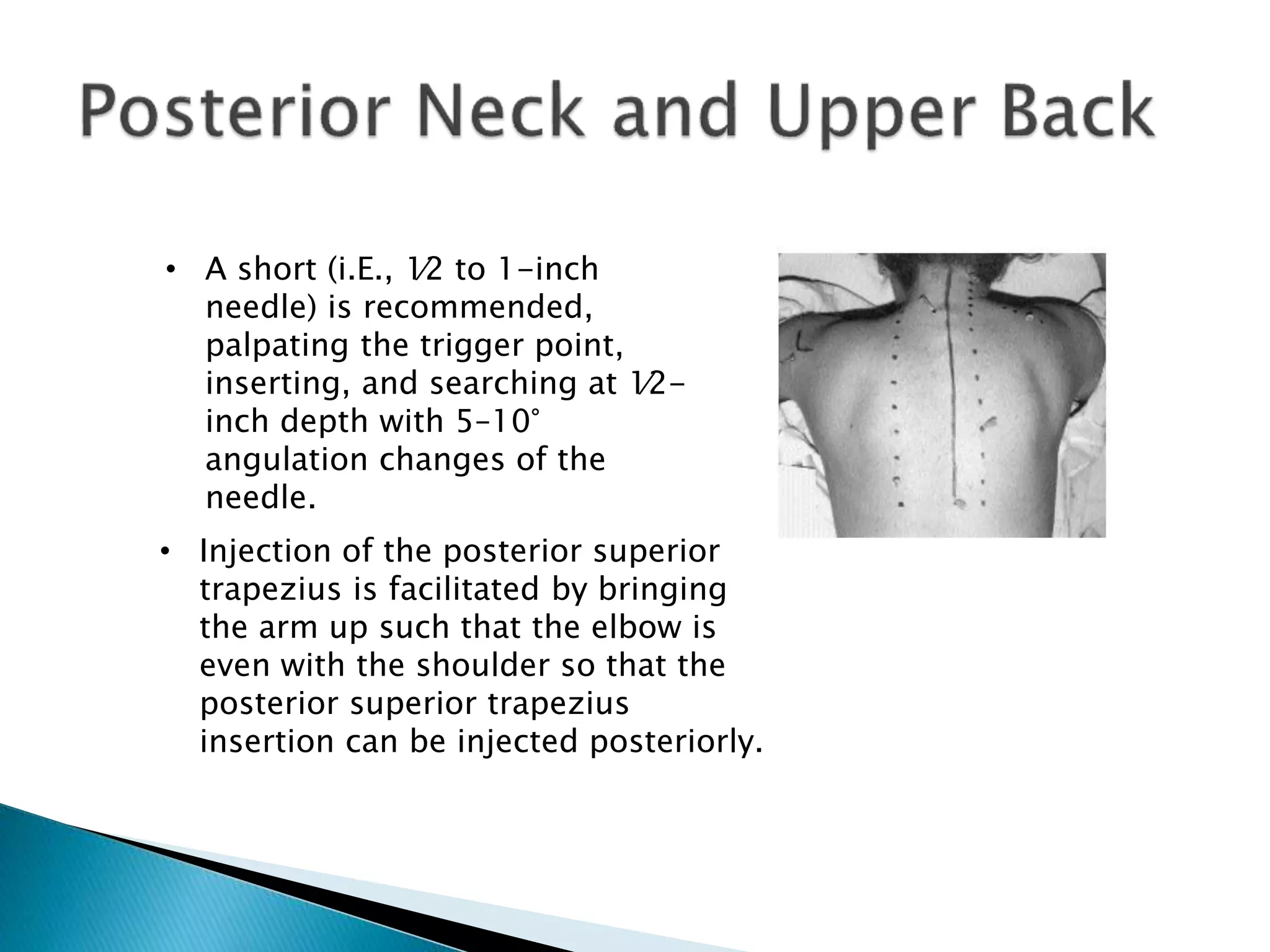
• A short (i.E., 1⁄2 to 1-inch
needle) is recommended,
palpating the trigger point,
inserting, and searching at 1⁄2-
inch depth with 5–10°
angulation changes of the
needle.
• Injection of the posterior superior
trapezius is facilitated by bringing
the arm up such that the elbow is
even with the shoulder so that the
posterior superior trapezius
insertion can be injected posteriorly.
 After the top of the crest is marked, two rows of
injection sites can be marked paralleling the top
of the crest.
 Injection of the iliolumbar (IL) and sacroiliac (SI)
ligaments, intertransverse and facet ligaments,
at lumbosacral junction
 Injection of the metatarsophalangeal (MTP) joint (a)
 plantar fascia (b)
 Achilles tendonosis (c)
 Injection of the calcaneofibular and talofibular ligaments (d)
a
b
c
d
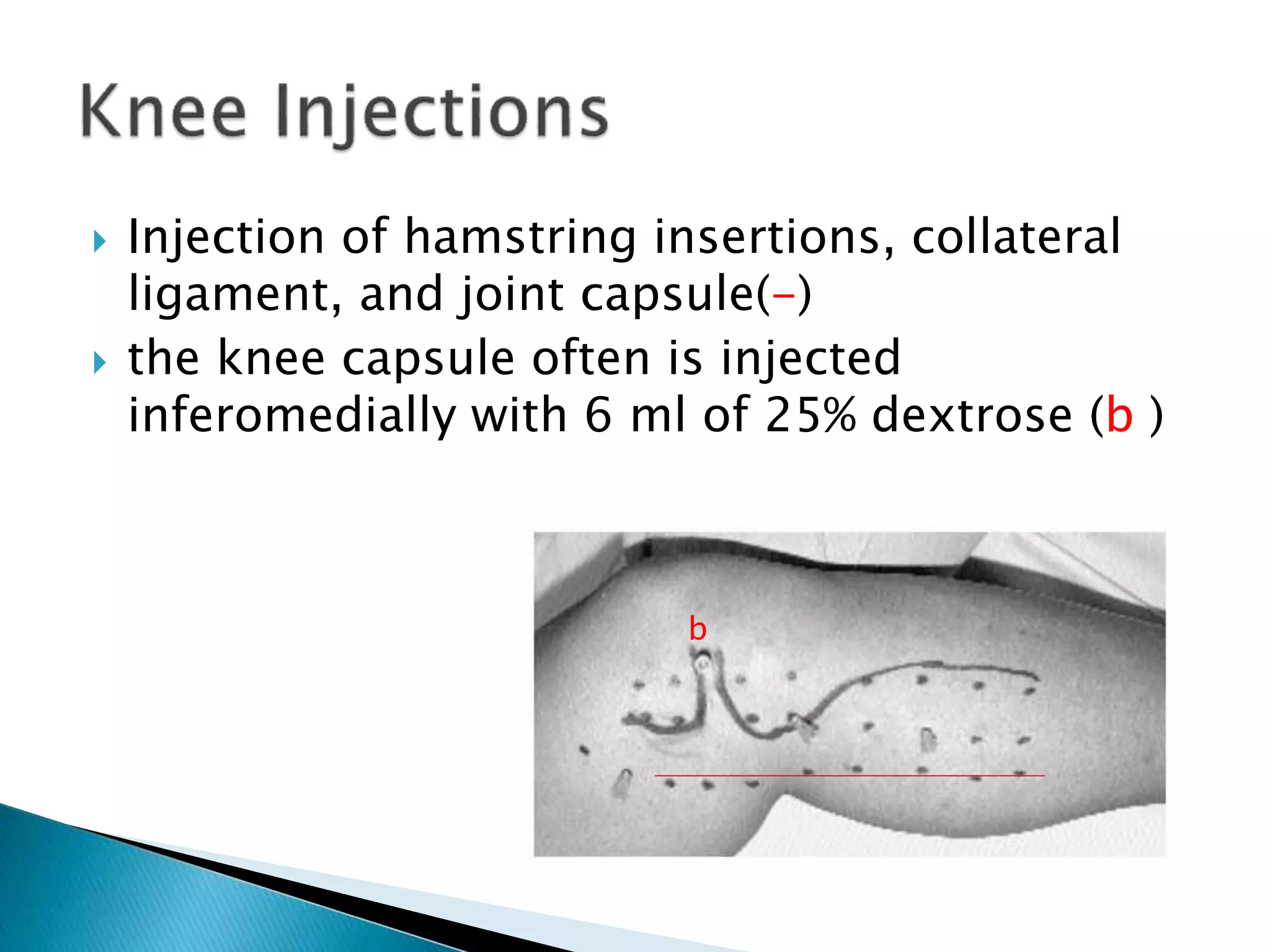
 Injection of hamstring insertions, collateral
ligament, and joint capsule(-)
 the knee capsule often is injected
inferomedially with 6 ml of 25% dextrose (b )
b
 Proliferation treatment of medial and lateral epicondylosis is
preferable to use of steroids.
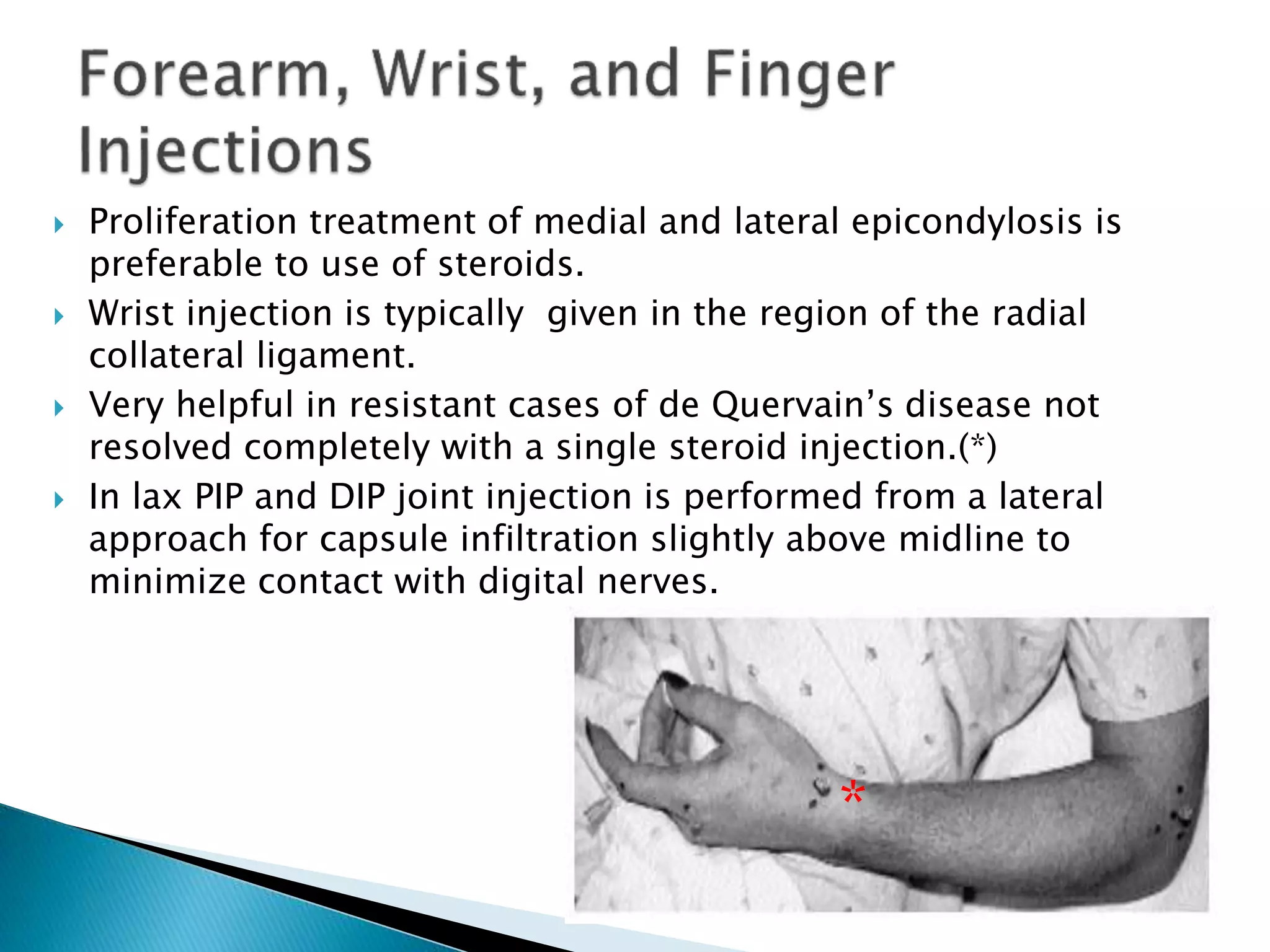
 Wrist injection is typically given in the region of the radial
collateral ligament.
 Very helpful in resistant cases of de Quervain’s disease not
resolved completely with a single steroid injection.(*)
 In lax PIP and DIP joint injection is performed from a lateral
approach for capsule infiltration slightly above midline to
minimize contact with digital nerves.
*
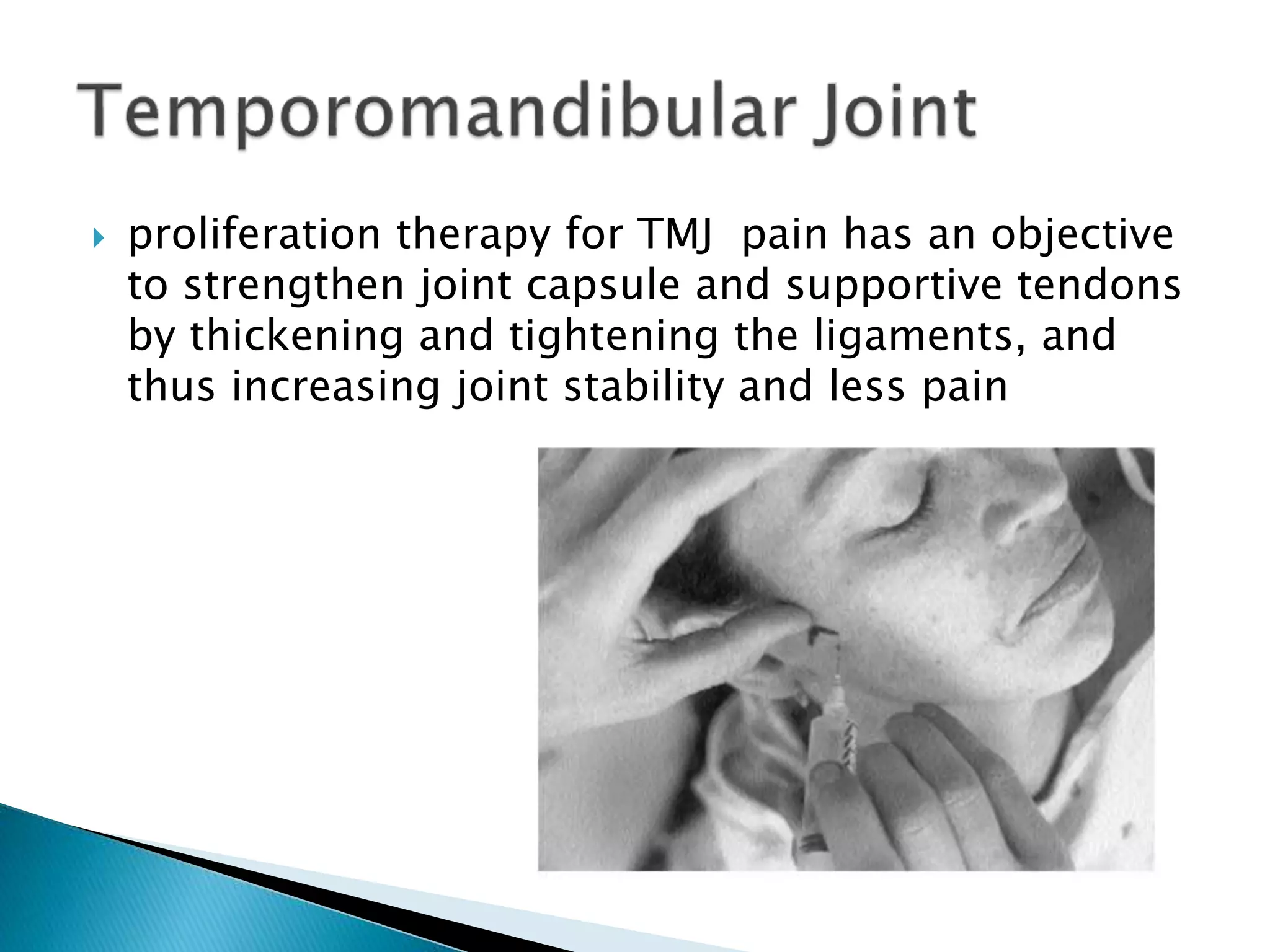
 proliferation therapy for TMJ pain has an objective
to strengthen joint capsule and supportive tendons
by thickening and tightening the ligaments, and
thus increasing joint stability and less pain
 In a human study of chronic low back pain patients, biopsy of sacroiliac
ligaments 3 months after demonstrated 60% increase in collagen fibril
diameter, reduction of pain and increased range of motion
 A 2005 study of elite rugby and soccer athletes with groin pain that
prevented full sport participation showed marked efficacy. After 2.8
treatments 20 out of 24 athletes reported no pain.
 A study involving patients with significant knee ligament laxity and
instabilility showed highly significant tightening of cruciate and collateral
ligaments measured by standard electrogoniometer measurements and
increased activity level after 9 months of treatment.
 A double-blind study by Reeves showed improvement of ACL laxity in about
60% of the patients with statistically significant improvement after 3 years of
follow up.
 In a recent double-blinded placebo controlled trail, there was
clinically and statistically significant improvement in knee
osteoarthritis symptom at 1 and 3 years follow-up after treatment
with radiogarphic readings also noting improvement in several
measures of osteoarthritis severity.
 Another study showed improvement in finger and thumb
osteoarthritis after injection, with 42 % improvement in pain and 8°
improvement in flexibility after 6 months.
 A study involving patients with significant knee ligament laxity and
instabilility showed highly significant tightening of cruciate and collateral
ligaments measured by standard electrogoniometer measurements and
increased activity level after 9 months of treatment.
 A double-blind study by Reeves showed improvement of ACL laxity in about
60% of the patients with statistically significant improvement after 3 years of
follow up.
 Bertrand et al. used a systemic ultrasound rotator cuff tendinipathy grading
method to evaluate pre and post treatment images and showed no
significant differences after 9 months despite clinical improvement.
 Dextrose prolotherapy: a narrative Review of Basic Science, clinical research , and best
treatment recommendations- Kenneth Reeves, David Rabago
 Prolotherapy for the patients with chronic musculoskeletal pain : systematic review and
meta-analysis: Suyeon Kim, Sangeosk Lee, Woo Yong Lee
 Evidence based use of dextrose prolotherapy for Musculoskeletal pain : A Scientific
Literature Review: Ross Hauser , Nicole Baird
 The effects of injecting intra-articular platelet-rich plasma or prolotherapy on pain score
and function in knee osteoarthritis
 Prolotherapy in primary care practice : David Rabago, Andrew Slattengren
 Prolotherapy Induces an Inflammatory Response in human tenocytes In vitro : E.
Ekwueme et al.
 Prolotherapy: Potential for the treatment of Chronic wound- Amir Siadat, Roslyn Isseroff
 Prolotherapy for musculoskeletal pain : Donna Alderman

PROLOTHERAPY IN REHABILITATION & EVIDENCE.pptx

  • 1.
    Dr. Souvik Bhattacharjee JuniorResident Department of Physical Medicine & Rehabilitation AIIMS BBSR
  • 2.
     Introduction  Definition Mechanism of action  Proliferant solutions  Candidate selection criteria  Indication  Contraindication  Complications  Use  Treatment Course  Evidence  References
  • 3.
     The termProlotherapy was coined by Dr. George Heckett in 1956  Derives from the Latin word “proles” , offspring or progeny and english word “therapy”  According to another school of thought prolotherapy is simply derived from “proliferation therapy”.
  • 4.
     Prolotherapy is“ an alternative therapy for treating musculoskeletal pain that involves injecting an irritant substance (as dextrose) into a ligament or tendon to promote the growth of new tissue” -Marriam-Webster Dictionary  “ The rehabilitation of an incompetent structure by generation of new cellular tissue” - Dr. George Hackett
  • 5.
    Low grade inflammationat the site of injection and tricks the body into initiating a new healing cascade Activation of fibroblasts, elevation of multiple secondary growth factors(PDGFs,TGF,EGF,FGF,IGF,CTGF); which ultimately leads to new cell growth and collagen deposition The inflammatory stimulus raises the level of growth factors to resume the tissue repair sequence which was prematurely aborted or initiate new healing or tissue repair response which was never started.
  • 6.
     Most commonlyused solution is hypertonic dextrose, mainly 12.5% to 25 %  Glucose  Glycerin  Phenol  Sodium Morrhuate  P2G (Phenol, Glycerin and Glucose)
  • 7.
    Hypertonic dextrose causescell dehydration and osmotic rupture of the cells that leads to local tissue injury and inflammation Subsequently granulocyte and macrophages migrate to the site of the injection and gets activated , release growth factors and collagen deposition Finally results in new connective tissue formation, joint stability , reduction of pain and dysfunction
  • 8.
     A recentstudy which evaluated the effect of dextrose and P2G on cultured tenocytes showed that both of these proliferant solutions upregulates key infalammatory markers including IL-8, cox-2, PGE-2, TGF and type 1 collagen expression following 48 hrs of treatment.  In rats after P2G and Sodium morrhuate injections in MCL showed localized increase in inflammatory cells (CD43+,ED1+,ED2+) but inflammatory response was variable.
  • 9.
     Criteria forInjection in new patients : 1. Appropriate medical problem 2. Desire for recovery 3. No underlying medical condition which would significantly interfere with healing 4. Ability and willingness to follow instructions 5. Willingness to report progress 6. Willingness to receive painful injections in an effort to recover from injury
  • 10.
     According tothe Florida Academy of Pain Management 1. Chronic pain from ligaments or tendons secondary to sprains or strains 2. Pain from overuse or occupational conditions known as “ Repetitive Motion Disorders” 3. Chronic postural pain in the cervical , thoracic, lumbar and lumbo-sacral regions
  • 11.
    4.Painful recurrent somaticdysfunctions secondary to ligament laxity that improves temporarily with manipulation. Painful hypermnobility and subluxation at given peripheral or spinal articulation(s), or mobile segment(s) accompanied by a restricted range of motion at reciprocal segment(s). 5.Thoracic and lumbar vertebral compression fractures with a wedge deformity that exerts additional stress on the posterior ligamento- tendinous complex.
  • 12.
    6. Recurrent painfulsubluxation of ribs at the costo-transverse, costo-vertebral and/or costo- sternal articulation 7. Osteoarthritis of the axial and peripheral joints, spondylosis and spondylolisthesis 8. Painful cervical, thoracic, lumbar, lumbo-sacral and sacro-iliac instability secondary to ligament laxity. 9. Intolerance to NSAIDS, steroids and opiates
  • 13.
     Active infection,allergy  Malignancy  Immunodeficiency conditions, bleeding disorders  Diabetes  Acute gout ,Rheumatoid arthritis  Rupture of ligaments and tendons  Non-reduced dislocations and severe unstable spondylolisthesis  Drugs : Narcotics, NSAIDS, steroids  Central canal stenosis and severe degenerative Hip osteoarthritis
  • 14.
     Soreness atinjection site  Bruise around injected area  Headache  Nerve irritation  Infection  Allergy  Puncture of an organ  Epidural puncture
  • 15.
     After theinjection patient shold not be administered anti-inflammatory drugs because it will interfere with the healing response.  Patients must be counselled about the post injection pain at the site due to ongoing inflammatory process for few days.
  • 16.
     Mainly usedin any kind of musculo-skeletal pain which has lasted >8 weeks 1. Low back pain 2. Osteoarthritis knee 3. Chronic sprains/strains 4. Whiplash injury 5. Tendinopathies 6. Tennis and golfer’s elbow 7. Myofascial pain 8. Skin ulcer
  • 17.
     Treatment intervaldepends upon healing  On average interval between two sittings is usually 3 to 4 weeks  The average number of treatments for any given area is usually between 4 and 6 total sittings, each sittings involving multiple injections into the particular area  Improvement is usually noticed after 2nd to 3rd sitting  Individuals with hypermobility often requires longer treatment.
  • 18.
     Identifying InjectionSites  Sedation, Positioning, and Anesthesia ◦ Anesthetic gel (benzocaine or an alternative) over skin sensation. ◦ Anesthetic blebs are an alternative, especially if IV sedation is not used  Part preparation
  • 19.
    • A short(i.E., 1⁄2 to 1-inch needle) is recommended, palpating the trigger point, inserting, and searching at 1⁄2- inch depth with 5–10° angulation changes of the needle. • Injection of the posterior superior trapezius is facilitated by bringing the arm up such that the elbow is even with the shoulder so that the posterior superior trapezius insertion can be injected posteriorly.
  • 20.
     After thetop of the crest is marked, two rows of injection sites can be marked paralleling the top of the crest.  Injection of the iliolumbar (IL) and sacroiliac (SI) ligaments, intertransverse and facet ligaments, at lumbosacral junction
  • 21.
     Injection ofthe metatarsophalangeal (MTP) joint (a)  plantar fascia (b)  Achilles tendonosis (c)  Injection of the calcaneofibular and talofibular ligaments (d) a b c d
  • 22.
     Injection ofhamstring insertions, collateral ligament, and joint capsule(-)  the knee capsule often is injected inferomedially with 6 ml of 25% dextrose (b ) b
  • 23.
     Proliferation treatmentof medial and lateral epicondylosis is preferable to use of steroids.  Wrist injection is typically given in the region of the radial collateral ligament.  Very helpful in resistant cases of de Quervain’s disease not resolved completely with a single steroid injection.(*)  In lax PIP and DIP joint injection is performed from a lateral approach for capsule infiltration slightly above midline to minimize contact with digital nerves. *
  • 24.
     proliferation therapyfor TMJ pain has an objective to strengthen joint capsule and supportive tendons by thickening and tightening the ligaments, and thus increasing joint stability and less pain
  • 25.
     In ahuman study of chronic low back pain patients, biopsy of sacroiliac ligaments 3 months after demonstrated 60% increase in collagen fibril diameter, reduction of pain and increased range of motion  A 2005 study of elite rugby and soccer athletes with groin pain that prevented full sport participation showed marked efficacy. After 2.8 treatments 20 out of 24 athletes reported no pain.  A study involving patients with significant knee ligament laxity and instabilility showed highly significant tightening of cruciate and collateral ligaments measured by standard electrogoniometer measurements and increased activity level after 9 months of treatment.  A double-blind study by Reeves showed improvement of ACL laxity in about 60% of the patients with statistically significant improvement after 3 years of follow up.
  • 26.
     In arecent double-blinded placebo controlled trail, there was clinically and statistically significant improvement in knee osteoarthritis symptom at 1 and 3 years follow-up after treatment with radiogarphic readings also noting improvement in several measures of osteoarthritis severity.  Another study showed improvement in finger and thumb osteoarthritis after injection, with 42 % improvement in pain and 8° improvement in flexibility after 6 months.
  • 27.
     A studyinvolving patients with significant knee ligament laxity and instabilility showed highly significant tightening of cruciate and collateral ligaments measured by standard electrogoniometer measurements and increased activity level after 9 months of treatment.  A double-blind study by Reeves showed improvement of ACL laxity in about 60% of the patients with statistically significant improvement after 3 years of follow up.  Bertrand et al. used a systemic ultrasound rotator cuff tendinipathy grading method to evaluate pre and post treatment images and showed no significant differences after 9 months despite clinical improvement.
  • 28.
     Dextrose prolotherapy:a narrative Review of Basic Science, clinical research , and best treatment recommendations- Kenneth Reeves, David Rabago  Prolotherapy for the patients with chronic musculoskeletal pain : systematic review and meta-analysis: Suyeon Kim, Sangeosk Lee, Woo Yong Lee  Evidence based use of dextrose prolotherapy for Musculoskeletal pain : A Scientific Literature Review: Ross Hauser , Nicole Baird  The effects of injecting intra-articular platelet-rich plasma or prolotherapy on pain score and function in knee osteoarthritis  Prolotherapy in primary care practice : David Rabago, Andrew Slattengren  Prolotherapy Induces an Inflammatory Response in human tenocytes In vitro : E. Ekwueme et al.  Prolotherapy: Potential for the treatment of Chronic wound- Amir Siadat, Roslyn Isseroff  Prolotherapy for musculoskeletal pain : Donna Alderman