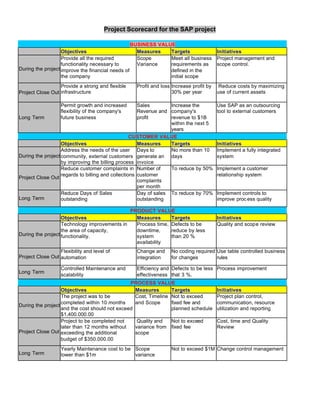
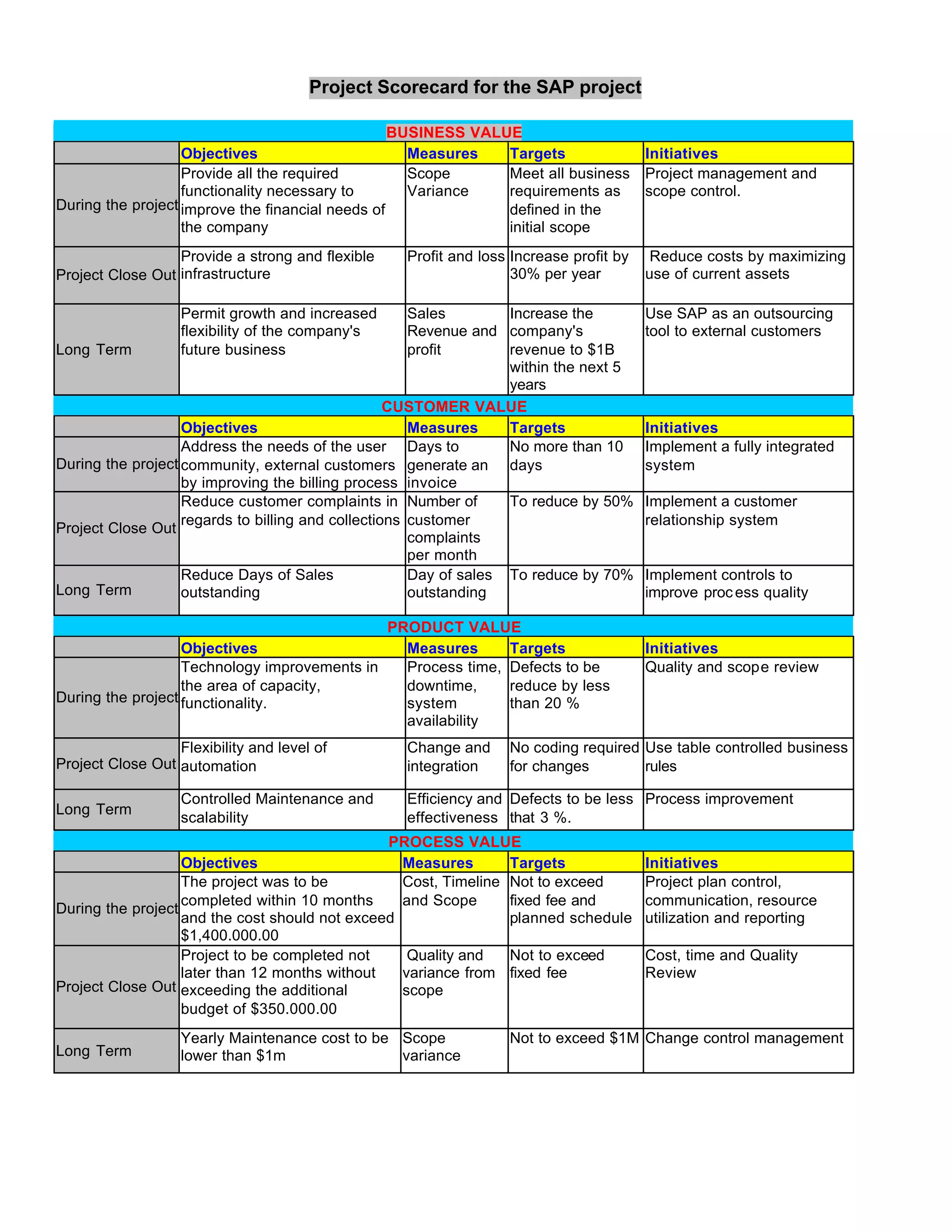
Project Scorecard for the SAP project
BUSINESS VALUE
Objectives Measures Targets Initiatives
During the project
Provide all the required
functionality necessary to
improve the financial needs of
the company
Scope
Variance
Meet all business
requirements as
defined in the
initial scope
Project management and
scope control.
Project Close Out
Provide a strong and flexible
infrastructure
Profit and loss Increase profit by
30% per year
Reduce costs by maximizing
use of current assets
Long Term
Permit growth and increased
flexibility of the company's
future business
Sales
Revenue and
profit
Increase the
company's
revenue to $1B
within the next 5
years
Use SAP as an outsourcing
tool to external customers
CUSTOMER VALUE
Objectives Measures Targets Initiatives
During the project
Address the needs of the user
community, external customers
by improving the billing process
Days to
generate an
invoice
No more than 10
days
Implement a fully integrated
system
Project Close Out
Reduce customer complaints in
regards to billing and collections
Number of
customer
complaints
per month
To reduce by 50% Implement a customer
relationship system
Long Term
Reduce Days of Sales
outstanding
Day of sales
outstanding
To reduce by 70% Implement controls to
improve process quality
PRODUCT VALUE
Objectives Measures Targets Initiatives
During the project
Technology improvements in
the area of capacity,
functionality.
Process time,
downtime,
system
availability
Defects to be
reduce by less
than 20 %
Quality and scope review
Project Close Out
Flexibility and level of
automation
Change and
integration
No coding required
for changes
Use table controlled business
rules
Long Term
Controlled Maintenance and
scalability
Efficiency and
effectiveness
Defects to be less
that 3 %.
Process improvement
PROCESS VALUE
Objectives Measures Targets Initiatives
During the project
The project was to be
completed within 10 months
and the cost should not exceed
$1,400.000.00
Cost, Timeline
and Scope
Not to exceed
fixed fee and
planned schedule
Project plan control,
communication, resource
utilization and reporting
Project Close Out
Project to be completed not
later than 12 months without
exceeding the additional
budget of $350.000.00
Quality and
variance from
scope
Not to exceed
fixed fee
Cost, time and Quality
Review
Long Term
Yearly Maintenance cost to be
lower than $1m
Scope
variance
Not to exceed $1M Change control management
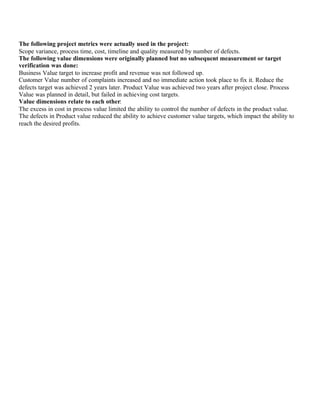
The following project metrics were actually used in the project:
Scope variance, process time, cost, timeline and quality measured by number of defects.
The following value dimensions were originally planned but no subsequent measurement or target
verification was done:
Business Value target to increase profit and revenue was not followed up.
Customer Value number of complaints increased and no immediate action took place to fix it. Reduce the
defects target was achieved 2 years later. Product Value was achieved two years after project close. Process
Value was planned in detail, but failed in achieving cost targets.
Value dimensions relate to each other:
The excess in cost in process value limited the ability to control the number of defects in the product value.
The defects in Product value reduced the ability to achieve customer value targets, which impact the ability to
reach the desired profits.

Project scorecard sample_2

  • 1.
    Project Scorecard forthe SAP project BUSINESS VALUE Objectives Measures Targets Initiatives During the project Provide all the required functionality necessary to improve the financial needs of the company Scope Variance Meet all business requirements as defined in the initial scope Project management and scope control. Project Close Out Provide a strong and flexible infrastructure Profit and loss Increase profit by 30% per year Reduce costs by maximizing use of current assets Long Term Permit growth and increased flexibility of the company's future business Sales Revenue and profit Increase the company's revenue to $1B within the next 5 years Use SAP as an outsourcing tool to external customers CUSTOMER VALUE Objectives Measures Targets Initiatives During the project Address the needs of the user community, external customers by improving the billing process Days to generate an invoice No more than 10 days Implement a fully integrated system Project Close Out Reduce customer complaints in regards to billing and collections Number of customer complaints per month To reduce by 50% Implement a customer relationship system Long Term Reduce Days of Sales outstanding Day of sales outstanding To reduce by 70% Implement controls to improve process quality PRODUCT VALUE Objectives Measures Targets Initiatives During the project Technology improvements in the area of capacity, functionality. Process time, downtime, system availability Defects to be reduce by less than 20 % Quality and scope review Project Close Out Flexibility and level of automation Change and integration No coding required for changes Use table controlled business rules Long Term Controlled Maintenance and scalability Efficiency and effectiveness Defects to be less that 3 %. Process improvement PROCESS VALUE Objectives Measures Targets Initiatives During the project The project was to be completed within 10 months and the cost should not exceed $1,400.000.00 Cost, Timeline and Scope Not to exceed fixed fee and planned schedule Project plan control, communication, resource utilization and reporting Project Close Out Project to be completed not later than 12 months without exceeding the additional budget of $350.000.00 Quality and variance from scope Not to exceed fixed fee Cost, time and Quality Review Long Term Yearly Maintenance cost to be lower than $1m Scope variance Not to exceed $1M Change control management
  • 2.
    The following projectmetrics were actually used in the project: Scope variance, process time, cost, timeline and quality measured by number of defects. The following value dimensions were originally planned but no subsequent measurement or target verification was done: Business Value target to increase profit and revenue was not followed up. Customer Value number of complaints increased and no immediate action took place to fix it. Reduce the defects target was achieved 2 years later. Product Value was achieved two years after project close. Process Value was planned in detail, but failed in achieving cost targets. Value dimensions relate to each other: The excess in cost in process value limited the ability to control the number of defects in the product value. The defects in Product value reduced the ability to achieve customer value targets, which impact the ability to reach the desired profits.