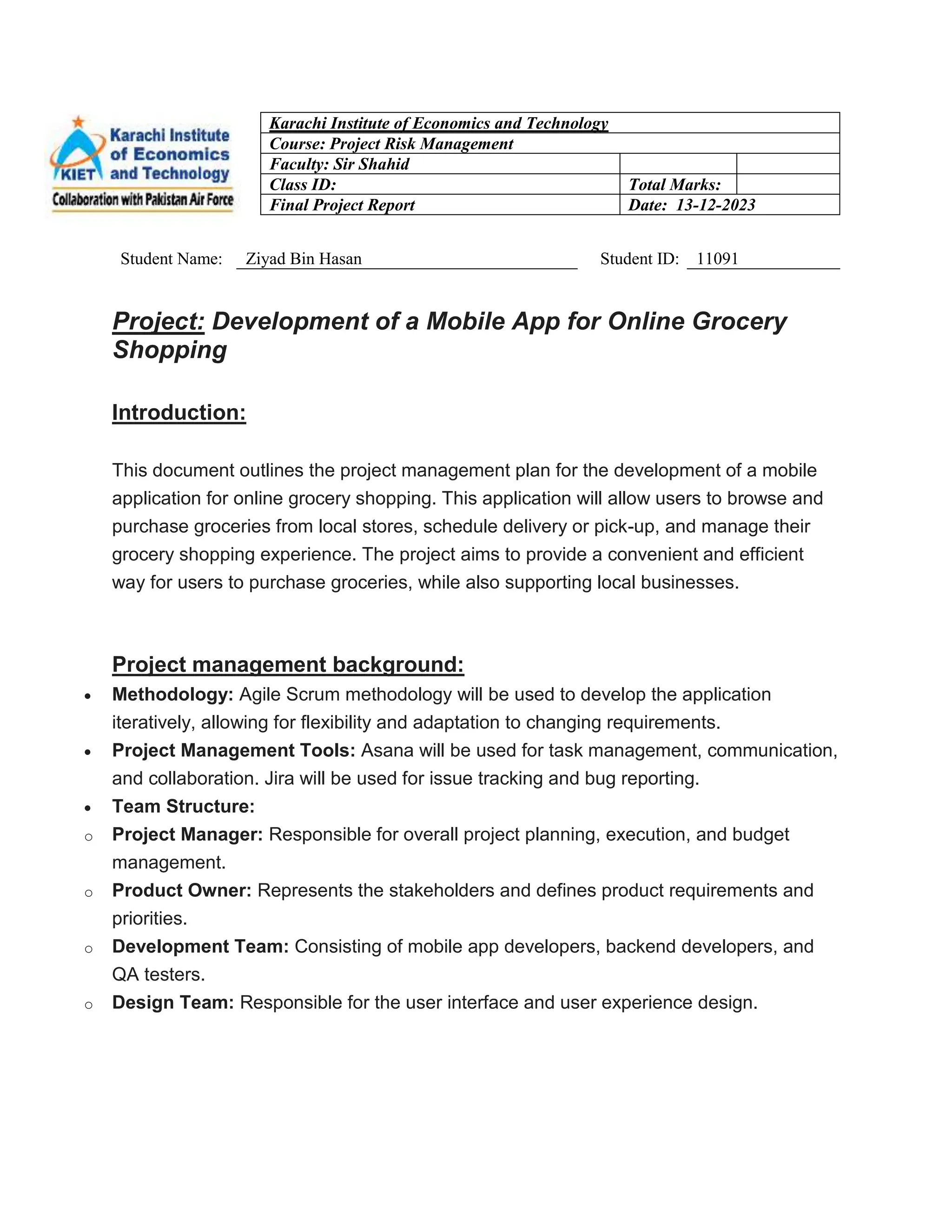
Karachi Institute of Economics and Technology
Course: Project Risk Management
Faculty: Sir Shahid
Class ID: Total Marks:
Final Project Report Date: 13-12-2023
Student Name: Ziyad Bin Hasan Student ID: 11091
Project: Development of a Mobile App for Online Grocery
Shopping
Introduction:
This document outlines the project management plan for the development of a mobile
application for online grocery shopping. This application will allow users to browse and
purchase groceries from local stores, schedule delivery or pick-up, and manage their
grocery shopping experience. The project aims to provide a convenient and efficient
way for users to purchase groceries, while also supporting local businesses.
Project management background:
 Methodology: Agile Scrum methodology will be used to develop the application
iteratively, allowing for flexibility and adaptation to changing requirements.
 Project Management Tools: Asana will be used for task management, communication,
and collaboration. Jira will be used for issue tracking and bug reporting.
 Team Structure:
o Project Manager: Responsible for overall project planning, execution, and budget
management.
o Product Owner: Represents the stakeholders and defines product requirements and
priorities.
o Development Team: Consisting of mobile app developers, backend developers, and
QA testers.
o Design Team: Responsible for the user interface and user experience design.
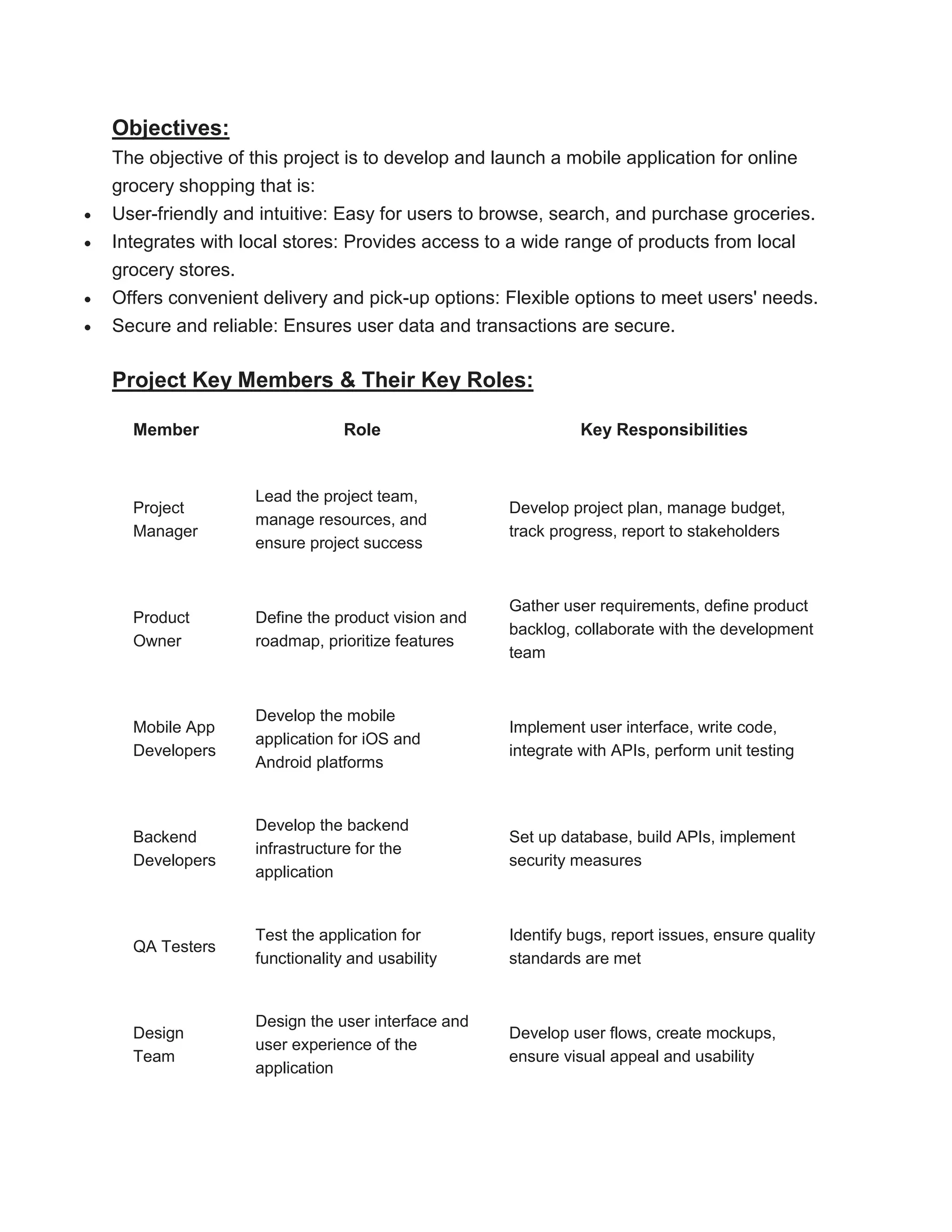
Objectives:
The objective of this project is to develop and launch a mobile application for online
grocery shopping that is:
 User-friendly and intuitive: Easy for users to browse, search, and purchase groceries.
 Integrates with local stores: Provides access to a wide range of products from local
grocery stores.
 Offers convenient delivery and pick-up options: Flexible options to meet users' needs.
 Secure and reliable: Ensures user data and transactions are secure.
Project Key Members & Their Key Roles:
Member Role Key Responsibilities
Project
Manager
Lead the project team,
manage resources, and
ensure project success
Develop project plan, manage budget,
track progress, report to stakeholders
Product
Owner
Define the product vision and
roadmap, prioritize features
Gather user requirements, define product
backlog, collaborate with the development
team
Mobile App
Developers
Develop the mobile
application for iOS and
Android platforms
Implement user interface, write code,
integrate with APIs, perform unit testing
Backend
Developers
Develop the backend
infrastructure for the
application
Set up database, build APIs, implement
security measures
QA Testers
Test the application for
functionality and usability
Identify bugs, report issues, ensure quality
standards are met
Design
Team
Design the user interface and
user experience of the
application
Develop user flows, create mockups,
ensure visual appeal and usability
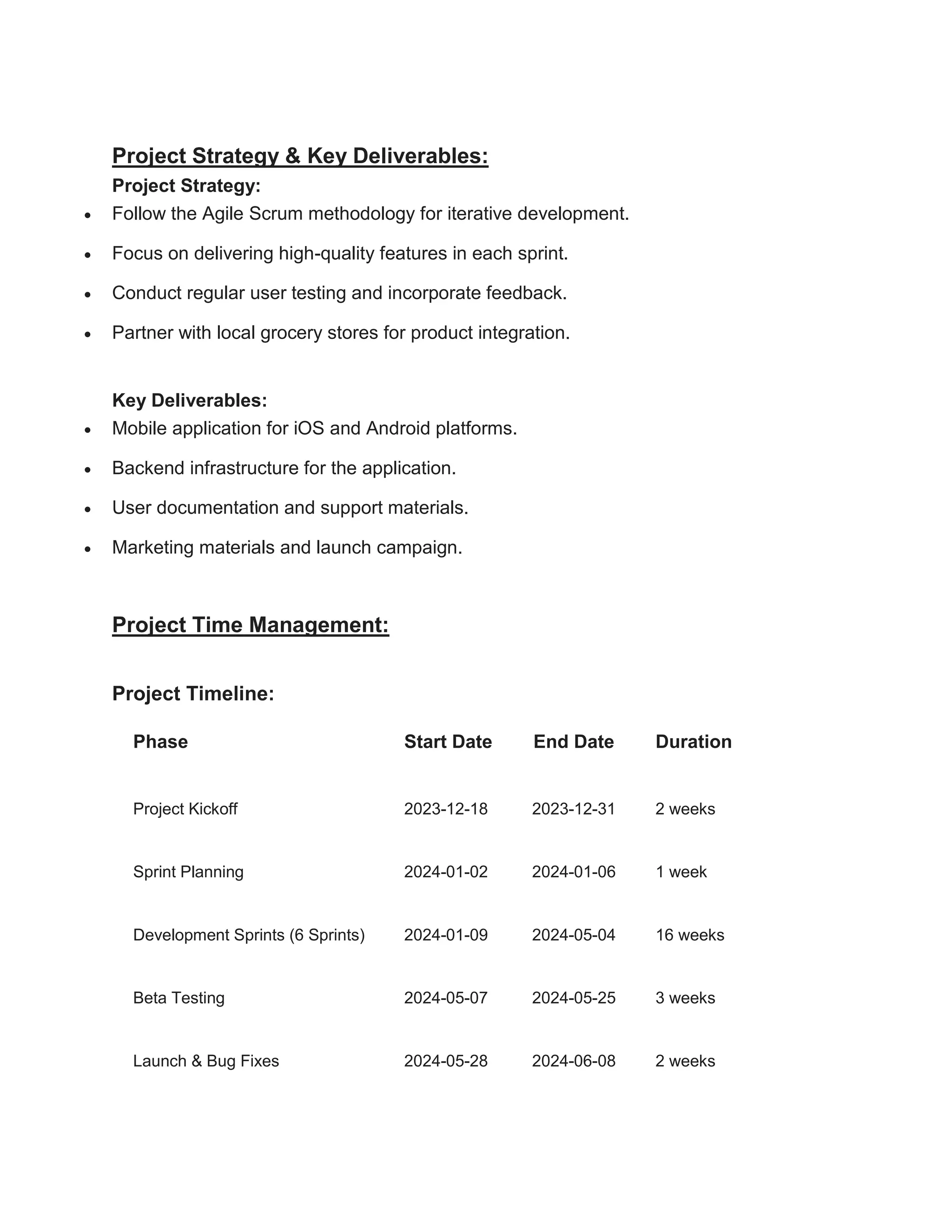
Project Strategy & Key Deliverables:
Project Strategy:
 Follow the Agile Scrum methodology for iterative development.
 Focus on delivering high-quality features in each sprint.
 Conduct regular user testing and incorporate feedback.
 Partner with local grocery stores for product integration.
Key Deliverables:
 Mobile application for iOS and Android platforms.
 Backend infrastructure for the application.
 User documentation and support materials.
 Marketing materials and launch campaign.
Project Time Management:
Project Timeline:
Phase Start Date End Date Duration
Project Kickoff 2023-12-18 2023-12-31 2 weeks
Sprint Planning 2024-01-02 2024-01-06 1 week
Development Sprints (6 Sprints) 2024-01-09 2024-05-04 16 weeks
Beta Testing 2024-05-07 2024-05-25 3 weeks
Launch & Bug Fixes 2024-05-28 2024-06-08 2 weeks
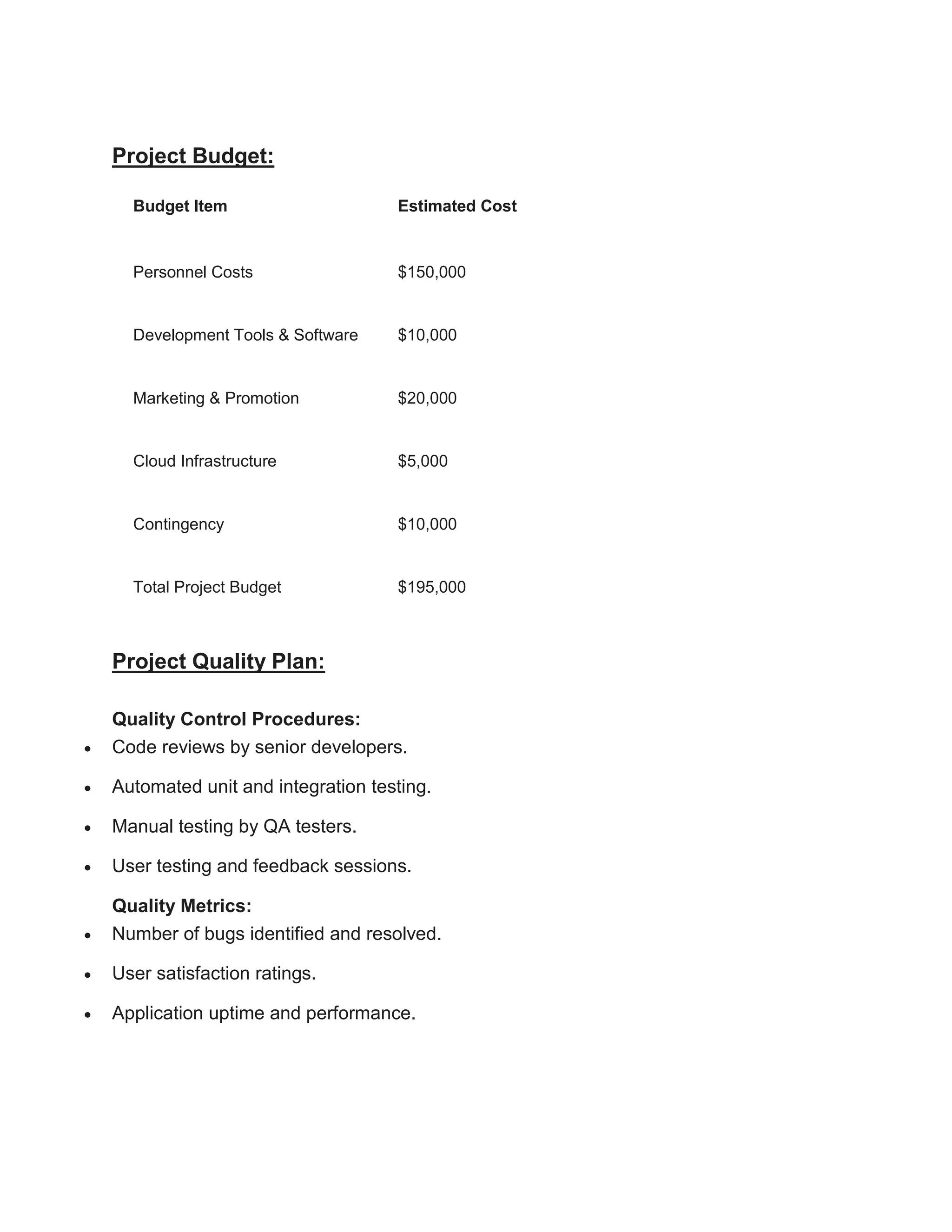
Project Budget:
Budget Item Estimated Cost
Personnel Costs $150,000
Development Tools & Software $10,000
Marketing & Promotion $20,000
Cloud Infrastructure $5,000
Contingency $10,000
Total Project Budget $195,000
Project Quality Plan:
Quality Control Procedures:
 Code reviews by senior developers.
 Automated unit and integration testing.
 Manual testing by QA testers.
 User testing and feedback sessions.
Quality Metrics:
 Number of bugs identified and resolved.
 User satisfaction ratings.
 Application uptime and performance.
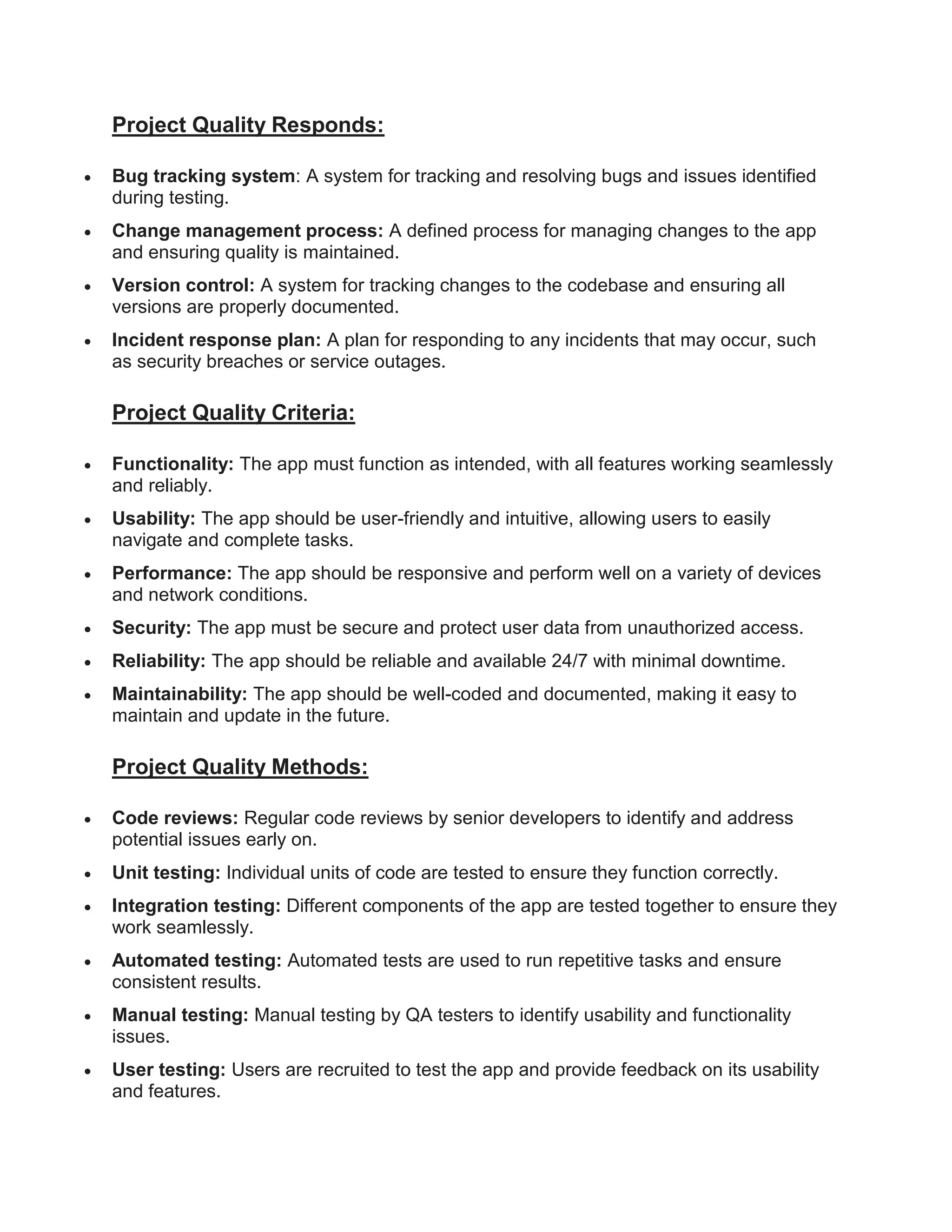
Project Quality Responds:
 Bug tracking system: A system for tracking and resolving bugs and issues identified
during testing.
 Change management process: A defined process for managing changes to the app
and ensuring quality is maintained.
 Version control: A system for tracking changes to the codebase and ensuring all
versions are properly documented.
 Incident response plan: A plan for responding to any incidents that may occur, such
as security breaches or service outages.
Project Quality Criteria:
 Functionality: The app must function as intended, with all features working seamlessly
and reliably.
 Usability: The app should be user-friendly and intuitive, allowing users to easily
navigate and complete tasks.
 Performance: The app should be responsive and perform well on a variety of devices
and network conditions.
 Security: The app must be secure and protect user data from unauthorized access.
 Reliability: The app should be reliable and available 24/7 with minimal downtime.
 Maintainability: The app should be well-coded and documented, making it easy to
maintain and update in the future.
Project Quality Methods:
 Code reviews: Regular code reviews by senior developers to identify and address
potential issues early on.
 Unit testing: Individual units of code are tested to ensure they function correctly.
 Integration testing: Different components of the app are tested together to ensure they
work seamlessly.
 Automated testing: Automated tests are used to run repetitive tasks and ensure
consistent results.
 Manual testing: Manual testing by QA testers to identify usability and functionality
issues.
 User testing: Users are recruited to test the app and provide feedback on its usability
and features.
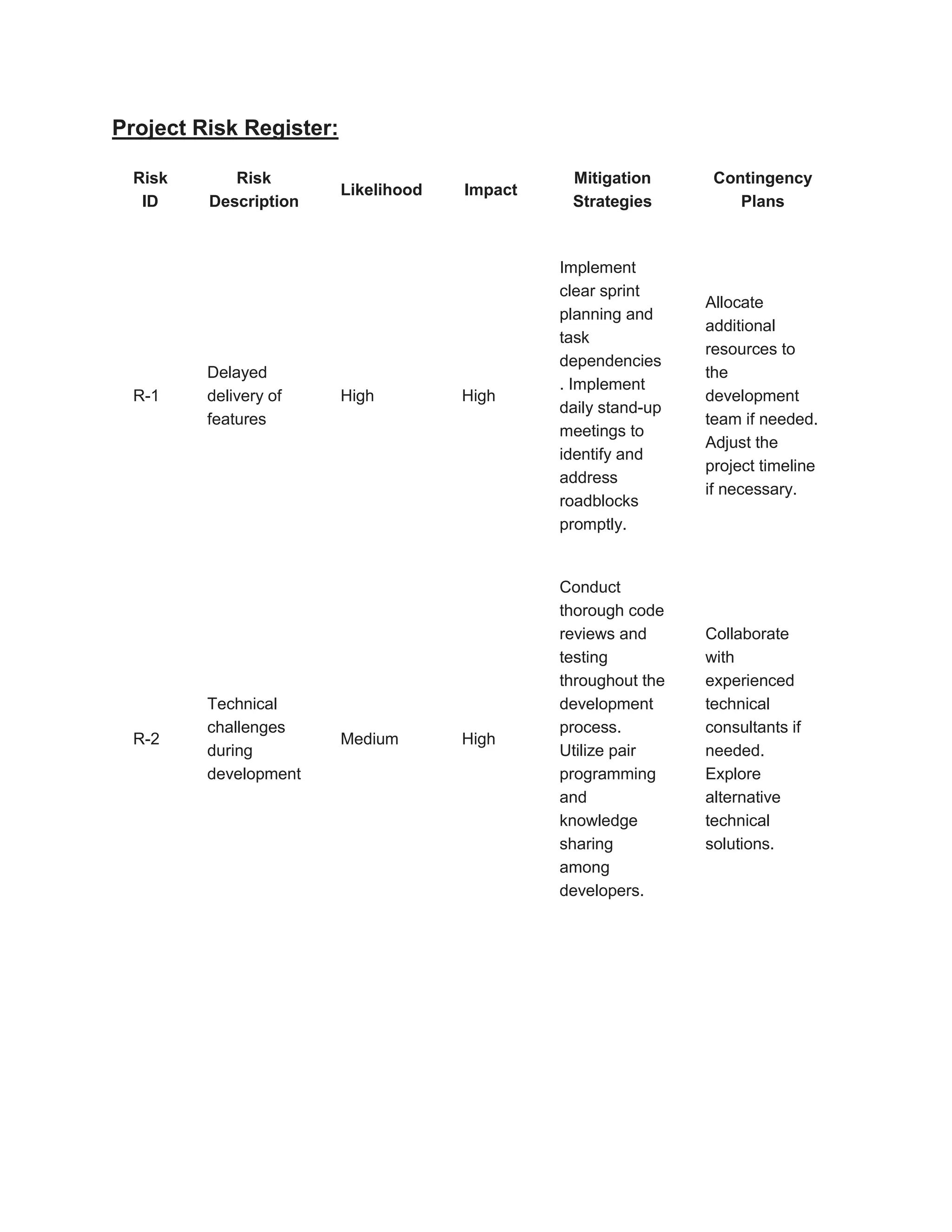
Project Risk Register:
Risk
ID
Risk
Description
Likelihood Impact
Mitigation
Strategies
Contingency
Plans
R-1
Delayed
delivery of
features
High High
Implement
clear sprint
planning and
task
dependencies
. Implement
daily stand-up
meetings to
identify and
address
roadblocks
promptly.
Allocate
additional
resources to
the
development
team if needed.
Adjust the
project timeline
if necessary.
R-2
Technical
challenges
during
development
Medium High
Conduct
thorough code
reviews and
testing
throughout the
development
process.
Utilize pair
programming
and
knowledge
sharing
among
developers.
Collaborate
with
experienced
technical
consultants if
needed.
Explore
alternative
technical
solutions.
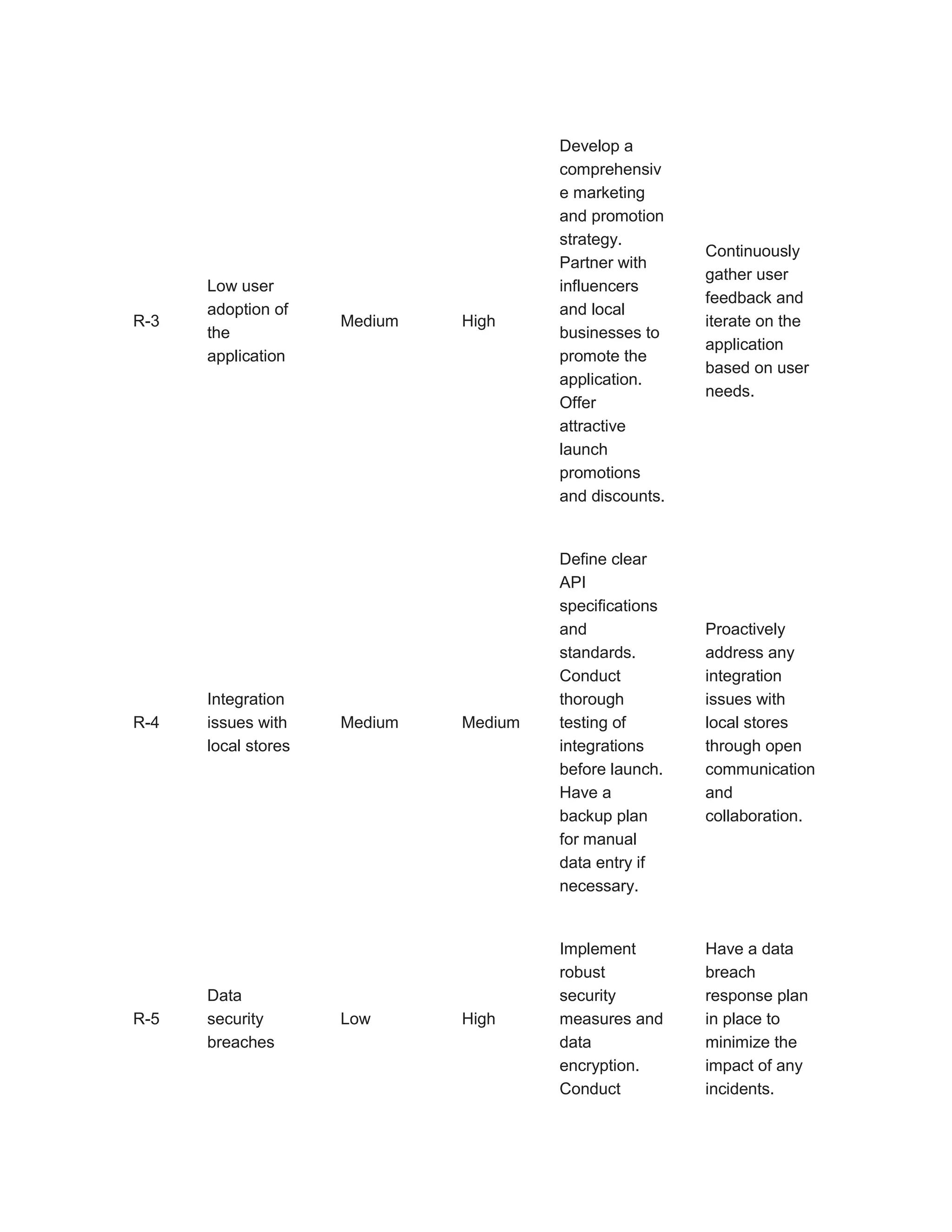
R-3
Low user
adoption of
the
application
Medium High
Develop a
comprehensiv
e marketing
and promotion
strategy.
Partner with
influencers
and local
businesses to
promote the
application.
Offer
attractive
launch
promotions
and discounts.
Continuously
gather user
feedback and
iterate on the
application
based on user
needs.
R-4
Integration
issues with
local stores
Medium Medium
Define clear
API
specifications
and
standards.
Conduct
thorough
testing of
integrations
before launch.
Have a
backup plan
for manual
data entry if
necessary.
Proactively
address any
integration
issues with
local stores
through open
communication
and
collaboration.
R-5
Data
security
breaches
Low High
Implement
robust
security
measures and
data
encryption.
Conduct
Have a data
breach
response plan
in place to
minimize the
impact of any
incidents.
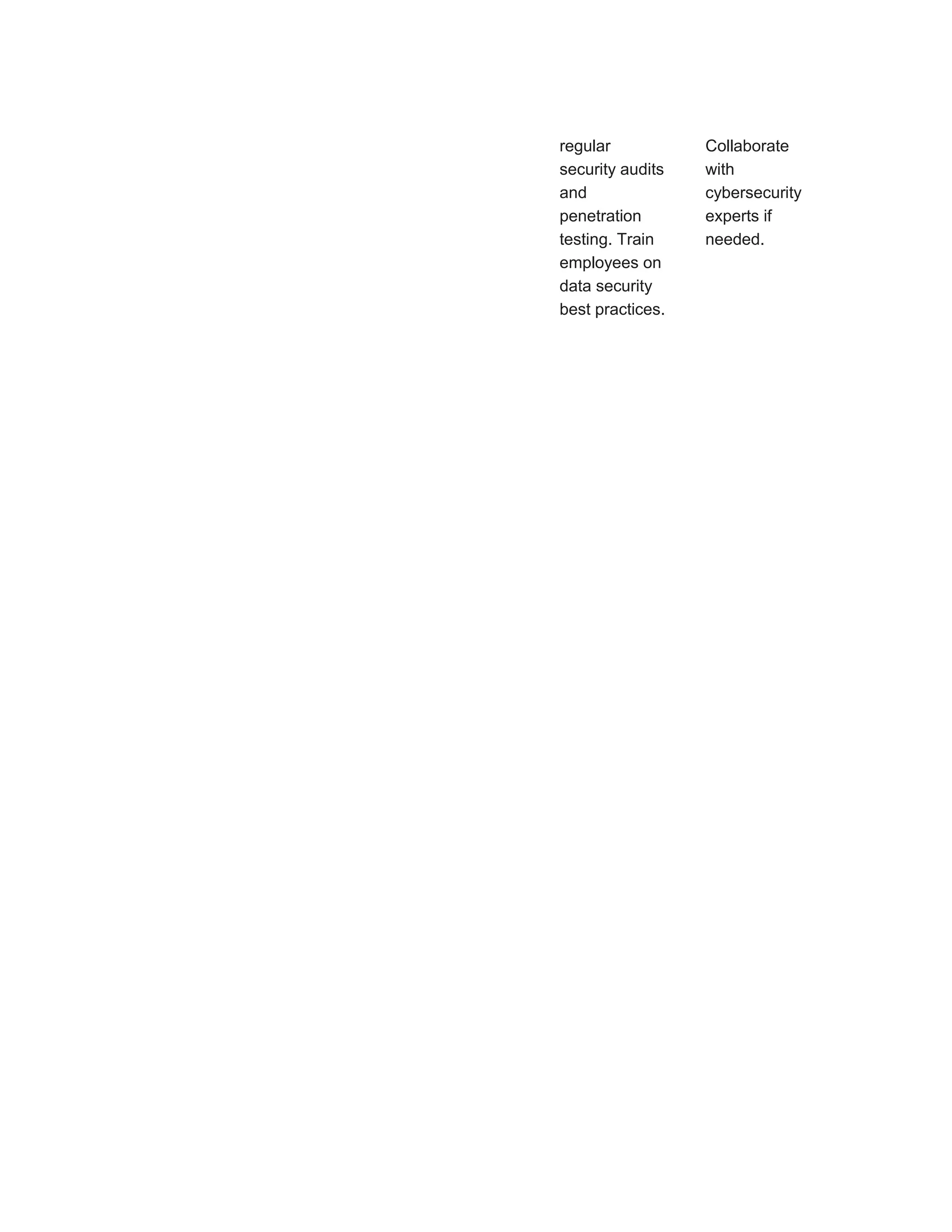
regular
security audits
and
penetration
testing. Train
employees on
data security
best practices.
Collaborate
with
cybersecurity
experts if
needed.

Project Risk Management Report (Mobile App)

  • 1.
    Karachi Institute ofEconomics and Technology Course: Project Risk Management Faculty: Sir Shahid Class ID: Total Marks: Final Project Report Date: 13-12-2023 Student Name: Ziyad Bin Hasan Student ID: 11091 Project: Development of a Mobile App for Online Grocery Shopping Introduction: This document outlines the project management plan for the development of a mobile application for online grocery shopping. This application will allow users to browse and purchase groceries from local stores, schedule delivery or pick-up, and manage their grocery shopping experience. The project aims to provide a convenient and efficient way for users to purchase groceries, while also supporting local businesses. Project management background:  Methodology: Agile Scrum methodology will be used to develop the application iteratively, allowing for flexibility and adaptation to changing requirements.  Project Management Tools: Asana will be used for task management, communication, and collaboration. Jira will be used for issue tracking and bug reporting.  Team Structure: o Project Manager: Responsible for overall project planning, execution, and budget management. o Product Owner: Represents the stakeholders and defines product requirements and priorities. o Development Team: Consisting of mobile app developers, backend developers, and QA testers. o Design Team: Responsible for the user interface and user experience design.
  • 2.
    Objectives: The objective ofthis project is to develop and launch a mobile application for online grocery shopping that is:  User-friendly and intuitive: Easy for users to browse, search, and purchase groceries.  Integrates with local stores: Provides access to a wide range of products from local grocery stores.  Offers convenient delivery and pick-up options: Flexible options to meet users' needs.  Secure and reliable: Ensures user data and transactions are secure. Project Key Members & Their Key Roles: Member Role Key Responsibilities Project Manager Lead the project team, manage resources, and ensure project success Develop project plan, manage budget, track progress, report to stakeholders Product Owner Define the product vision and roadmap, prioritize features Gather user requirements, define product backlog, collaborate with the development team Mobile App Developers Develop the mobile application for iOS and Android platforms Implement user interface, write code, integrate with APIs, perform unit testing Backend Developers Develop the backend infrastructure for the application Set up database, build APIs, implement security measures QA Testers Test the application for functionality and usability Identify bugs, report issues, ensure quality standards are met Design Team Design the user interface and user experience of the application Develop user flows, create mockups, ensure visual appeal and usability
  • 3.
    Project Strategy &Key Deliverables: Project Strategy:  Follow the Agile Scrum methodology for iterative development.  Focus on delivering high-quality features in each sprint.  Conduct regular user testing and incorporate feedback.  Partner with local grocery stores for product integration. Key Deliverables:  Mobile application for iOS and Android platforms.  Backend infrastructure for the application.  User documentation and support materials.  Marketing materials and launch campaign. Project Time Management: Project Timeline: Phase Start Date End Date Duration Project Kickoff 2023-12-18 2023-12-31 2 weeks Sprint Planning 2024-01-02 2024-01-06 1 week Development Sprints (6 Sprints) 2024-01-09 2024-05-04 16 weeks Beta Testing 2024-05-07 2024-05-25 3 weeks Launch & Bug Fixes 2024-05-28 2024-06-08 2 weeks
  • 4.
    Project Budget: Budget ItemEstimated Cost Personnel Costs $150,000 Development Tools & Software $10,000 Marketing & Promotion $20,000 Cloud Infrastructure $5,000 Contingency $10,000 Total Project Budget $195,000 Project Quality Plan: Quality Control Procedures:  Code reviews by senior developers.  Automated unit and integration testing.  Manual testing by QA testers.  User testing and feedback sessions. Quality Metrics:  Number of bugs identified and resolved.  User satisfaction ratings.  Application uptime and performance.
  • 5.
    Project Quality Responds: Bug tracking system: A system for tracking and resolving bugs and issues identified during testing.  Change management process: A defined process for managing changes to the app and ensuring quality is maintained.  Version control: A system for tracking changes to the codebase and ensuring all versions are properly documented.  Incident response plan: A plan for responding to any incidents that may occur, such as security breaches or service outages. Project Quality Criteria:  Functionality: The app must function as intended, with all features working seamlessly and reliably.  Usability: The app should be user-friendly and intuitive, allowing users to easily navigate and complete tasks.  Performance: The app should be responsive and perform well on a variety of devices and network conditions.  Security: The app must be secure and protect user data from unauthorized access.  Reliability: The app should be reliable and available 24/7 with minimal downtime.  Maintainability: The app should be well-coded and documented, making it easy to maintain and update in the future. Project Quality Methods:  Code reviews: Regular code reviews by senior developers to identify and address potential issues early on.  Unit testing: Individual units of code are tested to ensure they function correctly.  Integration testing: Different components of the app are tested together to ensure they work seamlessly.  Automated testing: Automated tests are used to run repetitive tasks and ensure consistent results.  Manual testing: Manual testing by QA testers to identify usability and functionality issues.  User testing: Users are recruited to test the app and provide feedback on its usability and features.
  • 6.
    Project Risk Register: Risk ID Risk Description LikelihoodImpact Mitigation Strategies Contingency Plans R-1 Delayed delivery of features High High Implement clear sprint planning and task dependencies . Implement daily stand-up meetings to identify and address roadblocks promptly. Allocate additional resources to the development team if needed. Adjust the project timeline if necessary. R-2 Technical challenges during development Medium High Conduct thorough code reviews and testing throughout the development process. Utilize pair programming and knowledge sharing among developers. Collaborate with experienced technical consultants if needed. Explore alternative technical solutions.
  • 7.
    R-3 Low user adoption of the application MediumHigh Develop a comprehensiv e marketing and promotion strategy. Partner with influencers and local businesses to promote the application. Offer attractive launch promotions and discounts. Continuously gather user feedback and iterate on the application based on user needs. R-4 Integration issues with local stores Medium Medium Define clear API specifications and standards. Conduct thorough testing of integrations before launch. Have a backup plan for manual data entry if necessary. Proactively address any integration issues with local stores through open communication and collaboration. R-5 Data security breaches Low High Implement robust security measures and data encryption. Conduct Have a data breach response plan in place to minimize the impact of any incidents.
  • 8.
    regular security audits and penetration testing. Train employeeson data security best practices. Collaborate with cybersecurity experts if needed.