Project Governance
Effective Project Governance
• Ensure Your Project Governance Across All Your Project is
As Effective As Possible. With Fully Configurable & Fully
Automated Project Governance Frameworks
• Having the right mix of people and skills on a governing
body should help it to be more effective. An effective
board will have members who bring multiple
perspectives, who debate issues robustly, and who then
speak with unity of voice and message about the
decisions made.
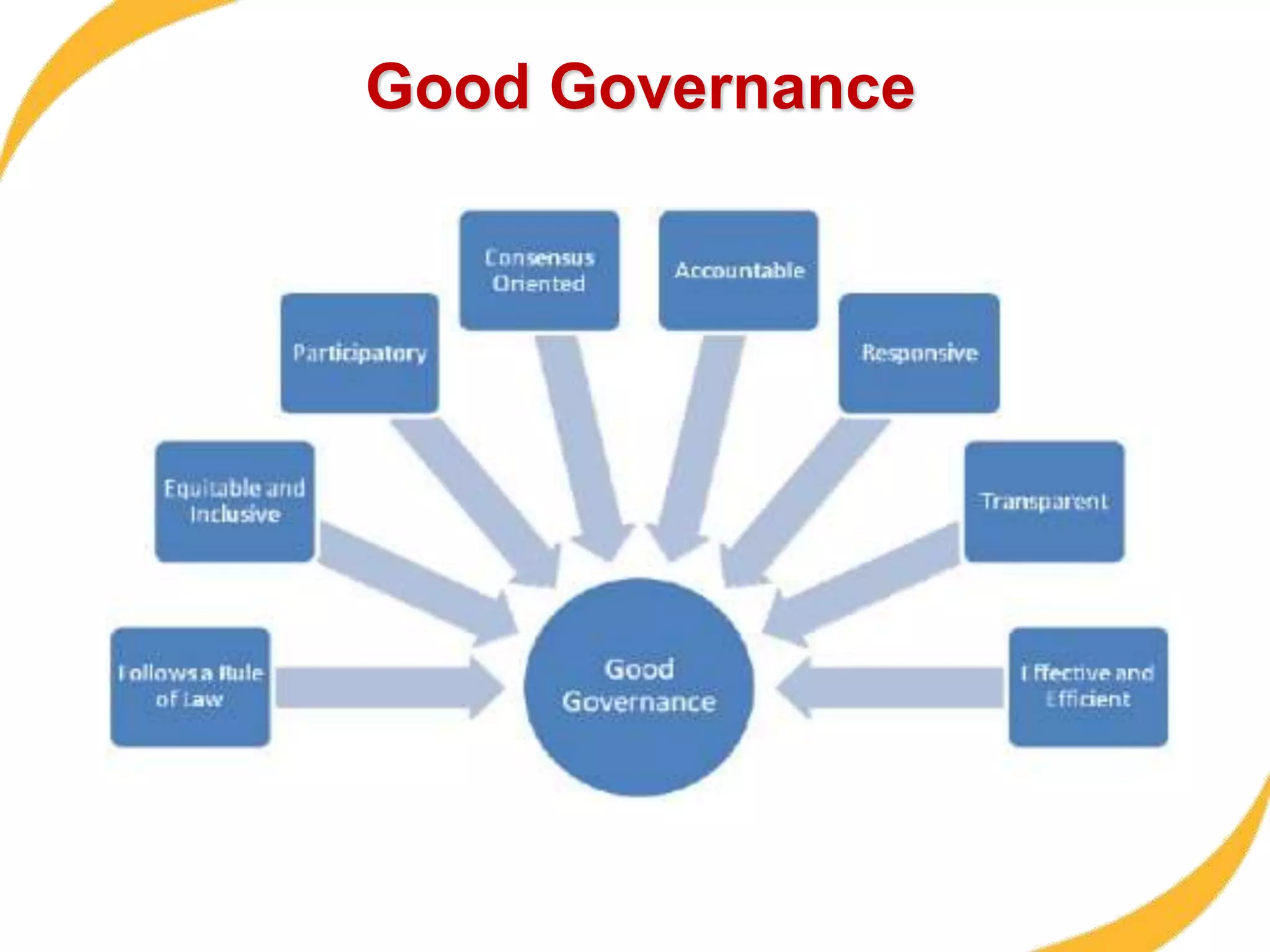
Good Governance
• Good project governance is the secret weapon of effective
project-based organizations. A key element of project
governance addresses how decision rights and accountabilities
are disseminated and assigned between the project team and
executives.
• Poor governance can put the organization at risk of commercial
failure, pecuniary and regulatory problems, or allow the
organization to lose sight of its objectives and responsibilities to
its stakeholder, who benefit from its success.
Good Governance
Five Principles of Good Governance
a. Integrated planning: ensuring projects are well planned will be
the foundation for progress reporting, but can also hardwire the
discipline of talking to other work streams and projects
by integrating plans and tracking dependencies
b. Expert change control: inevitably your programme won’t operate
in a vacuum and will have to adapt to the changing external
environment, technical issues and moving user requirements.
Therefore providing clear boundaries as to when to approach
sponsors, escalate concerns or get change approved in considered
process is essential
Five Principles of Good Governance
c. Adaptable progress reporting: it is visibility that will give the
programme team and the organization a sense of control.
Standardization and automation of reporting is good but having
centralised ownership through a PMO will give consistency whilst
providing a hub of information creating insight, foresight and
flexibility in reporting
d. Proactive risk management: more than just stage gate
compliance, the programme needs to establish a strong culture of
identifying, reporting and tracking risks and issues in a way which
crosses project and work stream boundaries and creates practical
mitigations
Five Principles of Good Governance
e. Business strategic fit: at a portfolio level programmes and
projects should be prioritized to align to strategic business
objectives. However once in flight, particularly larger projects,
should continue to regularly check back to organizational priorities
to ensure that the benefits and outcomes being pursued are still
relevant
Accountability -Good Governance
Accountability, in terms of ethics and governance, is equated with
answerability, blameworthiness, liability, and the expectation of
account-giving. As in an aspect of governance, it has been central to
discussions related to problems in the public sector, nonprofit and
private (corporate) and individual contexts.
Accountability eliminates the time and effort you spend on
distracting activities and other unproductive behavior. When you
make people accountable for their actions, you're effectively
teaching them to value their work. When done right, accountability
can increase your team members' skills and confidence.
Transparency -Good Governance
Transparency ensures that information is available that can be used
to measure the authorities' performance and to guard against any
possible misuse of powers. In that sense, transparency serves to
achieve accountability, which means that authorities can be held
responsible for their actions.
Q & A

Project Governance

  • 2.
  • 3.
    Effective Project Governance •Ensure Your Project Governance Across All Your Project is As Effective As Possible. With Fully Configurable & Fully Automated Project Governance Frameworks • Having the right mix of people and skills on a governing body should help it to be more effective. An effective board will have members who bring multiple perspectives, who debate issues robustly, and who then speak with unity of voice and message about the decisions made.
  • 4.
    Good Governance • Goodproject governance is the secret weapon of effective project-based organizations. A key element of project governance addresses how decision rights and accountabilities are disseminated and assigned between the project team and executives. • Poor governance can put the organization at risk of commercial failure, pecuniary and regulatory problems, or allow the organization to lose sight of its objectives and responsibilities to its stakeholder, who benefit from its success.
  • 5.
  • 6.
    Five Principles ofGood Governance a. Integrated planning: ensuring projects are well planned will be the foundation for progress reporting, but can also hardwire the discipline of talking to other work streams and projects by integrating plans and tracking dependencies b. Expert change control: inevitably your programme won’t operate in a vacuum and will have to adapt to the changing external environment, technical issues and moving user requirements. Therefore providing clear boundaries as to when to approach sponsors, escalate concerns or get change approved in considered process is essential
  • 7.
    Five Principles ofGood Governance c. Adaptable progress reporting: it is visibility that will give the programme team and the organization a sense of control. Standardization and automation of reporting is good but having centralised ownership through a PMO will give consistency whilst providing a hub of information creating insight, foresight and flexibility in reporting d. Proactive risk management: more than just stage gate compliance, the programme needs to establish a strong culture of identifying, reporting and tracking risks and issues in a way which crosses project and work stream boundaries and creates practical mitigations
  • 8.
    Five Principles ofGood Governance e. Business strategic fit: at a portfolio level programmes and projects should be prioritized to align to strategic business objectives. However once in flight, particularly larger projects, should continue to regularly check back to organizational priorities to ensure that the benefits and outcomes being pursued are still relevant
  • 9.
    Accountability -Good Governance Accountability,in terms of ethics and governance, is equated with answerability, blameworthiness, liability, and the expectation of account-giving. As in an aspect of governance, it has been central to discussions related to problems in the public sector, nonprofit and private (corporate) and individual contexts. Accountability eliminates the time and effort you spend on distracting activities and other unproductive behavior. When you make people accountable for their actions, you're effectively teaching them to value their work. When done right, accountability can increase your team members' skills and confidence.
  • 10.
    Transparency -Good Governance Transparencyensures that information is available that can be used to measure the authorities' performance and to guard against any possible misuse of powers. In that sense, transparency serves to achieve accountability, which means that authorities can be held responsible for their actions.
  • 11.