
Project
Management in an
Organization
Karan Madra
- Manufacturing Department
- Brewer Science Inc
- .
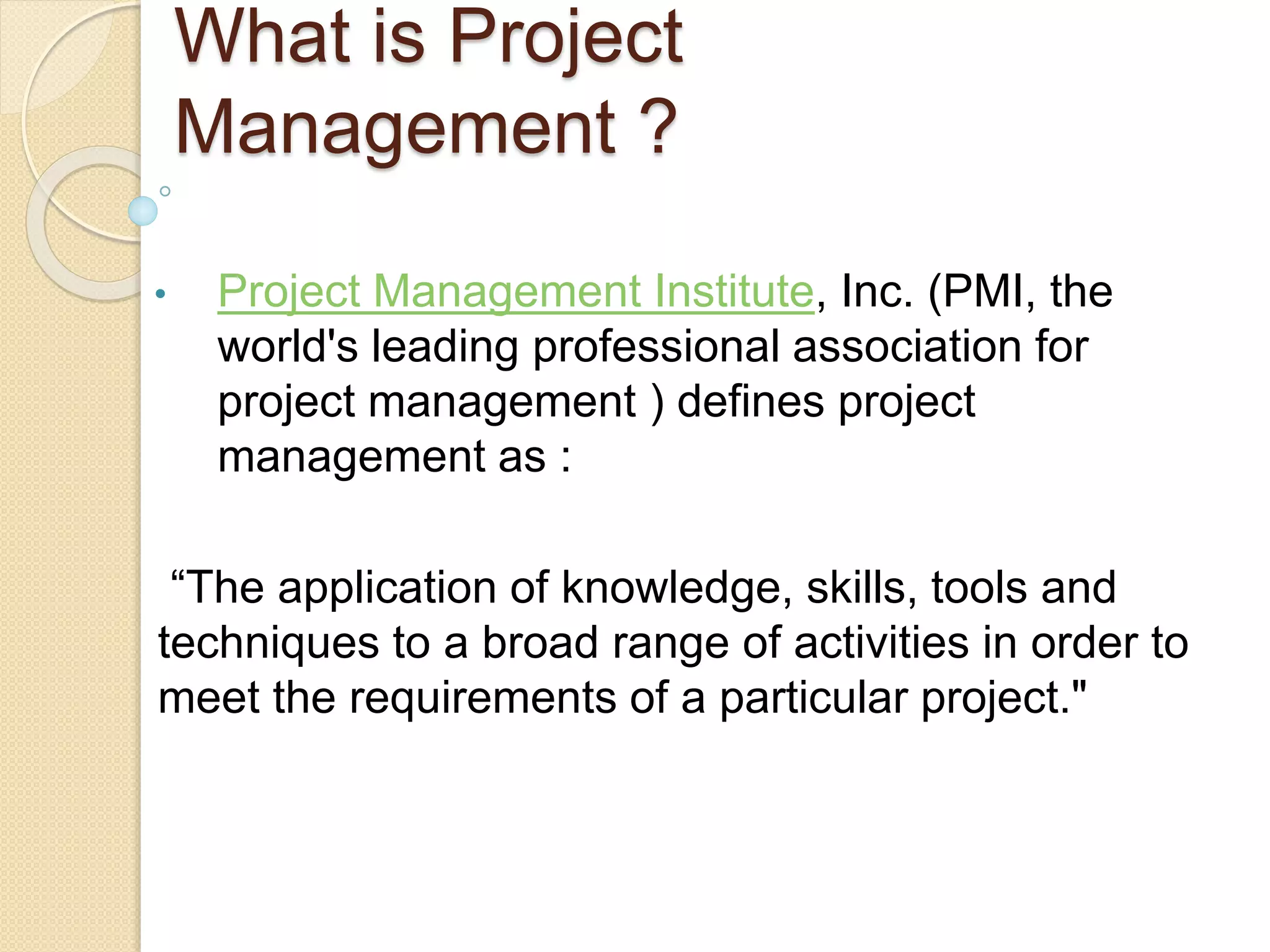
What is Project
Management ?
• Project Management Institute, Inc. (PMI, the
world's leading professional association for
project management ) defines project
management as :
“The application of knowledge, skills, tools and
techniques to a broad range of activities in order to
meet the requirements of a particular project."
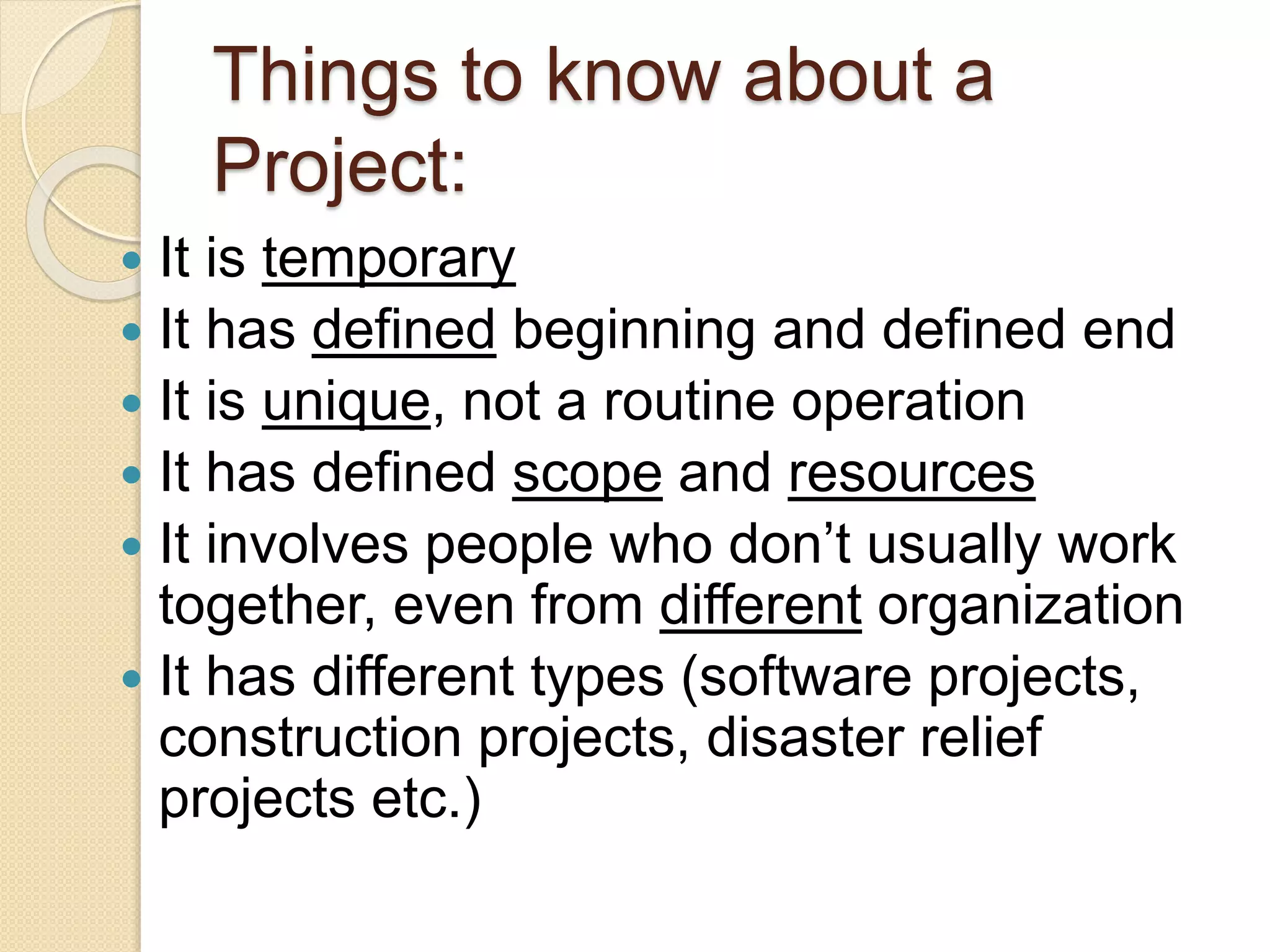
Things to know about a
Project:
 It is temporary
 It has defined beginning and defined end
 It is unique, not a routine operation
 It has defined scope and resources
 It involves people who don’t usually work
together, even from different organization
 It has different types (software projects,
construction projects, disaster relief
projects etc.)
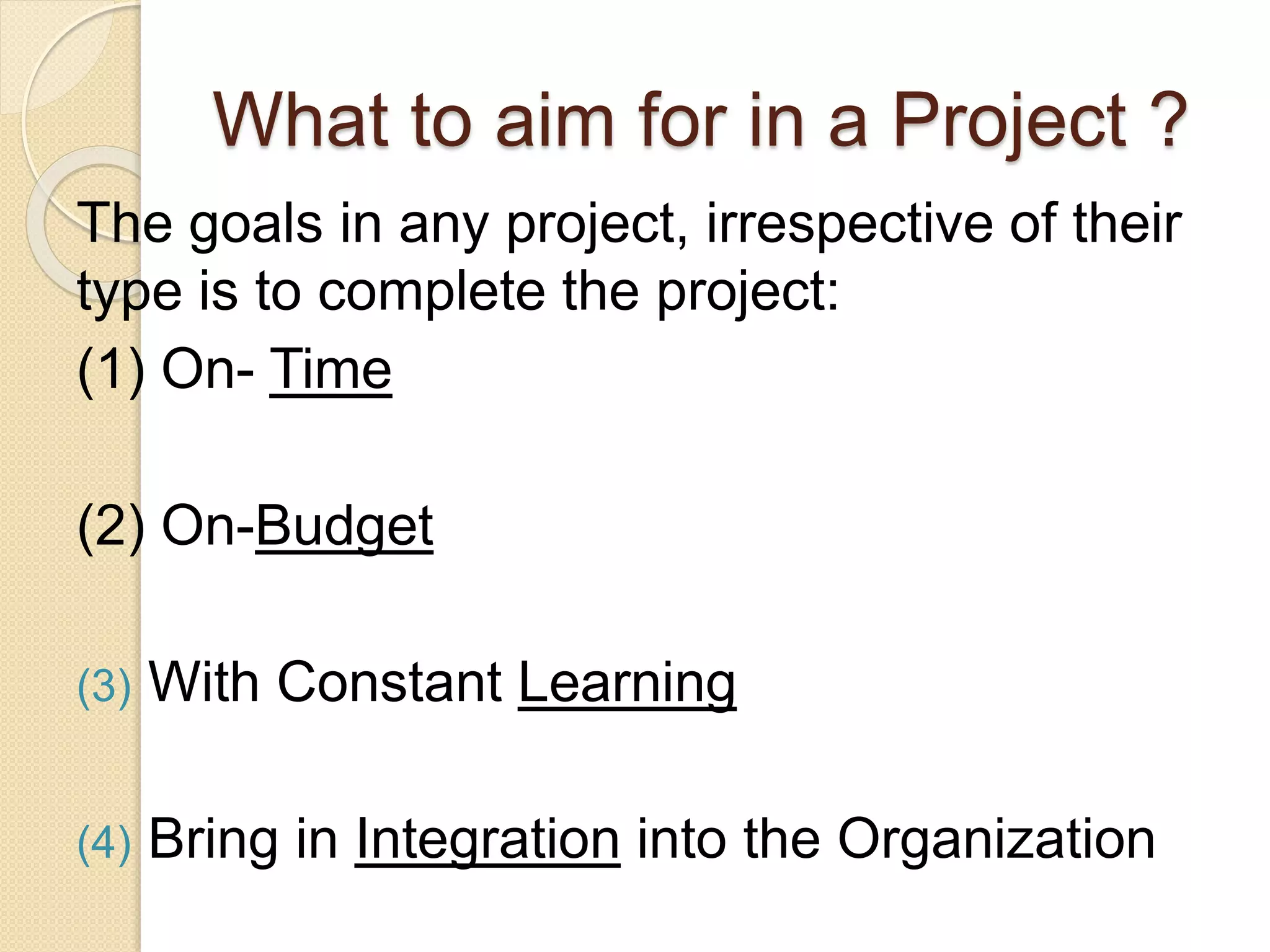
What to aim for in a Project ?
The goals in any project, irrespective of their
type is to complete the project:
(1) On- Time
(2) On-Budget
(3) With Constant Learning
(4) Bring in Integration into the Organization
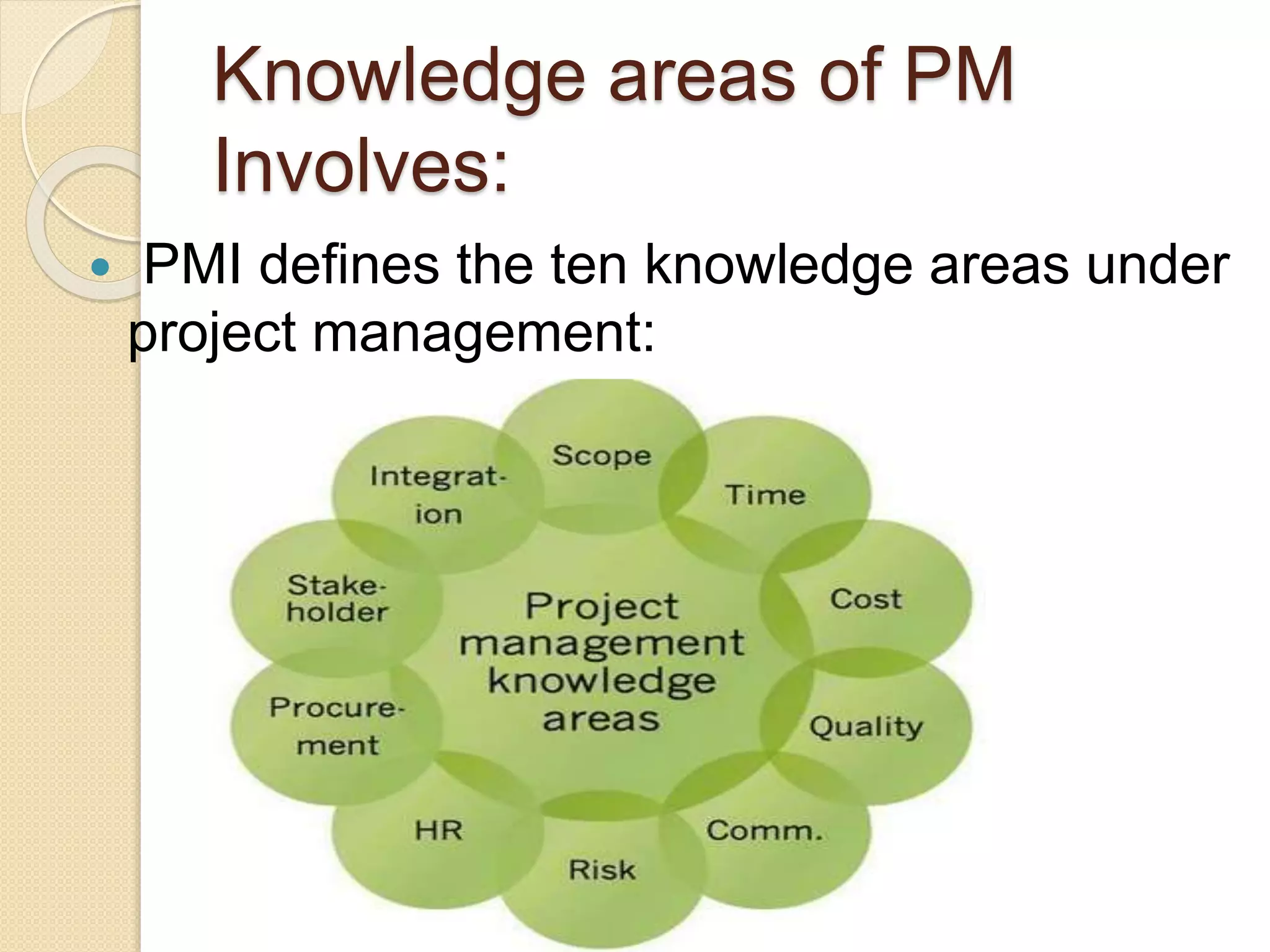
Knowledge areas of PM
Involves:
 PMI defines the ten knowledge areas under
project management:
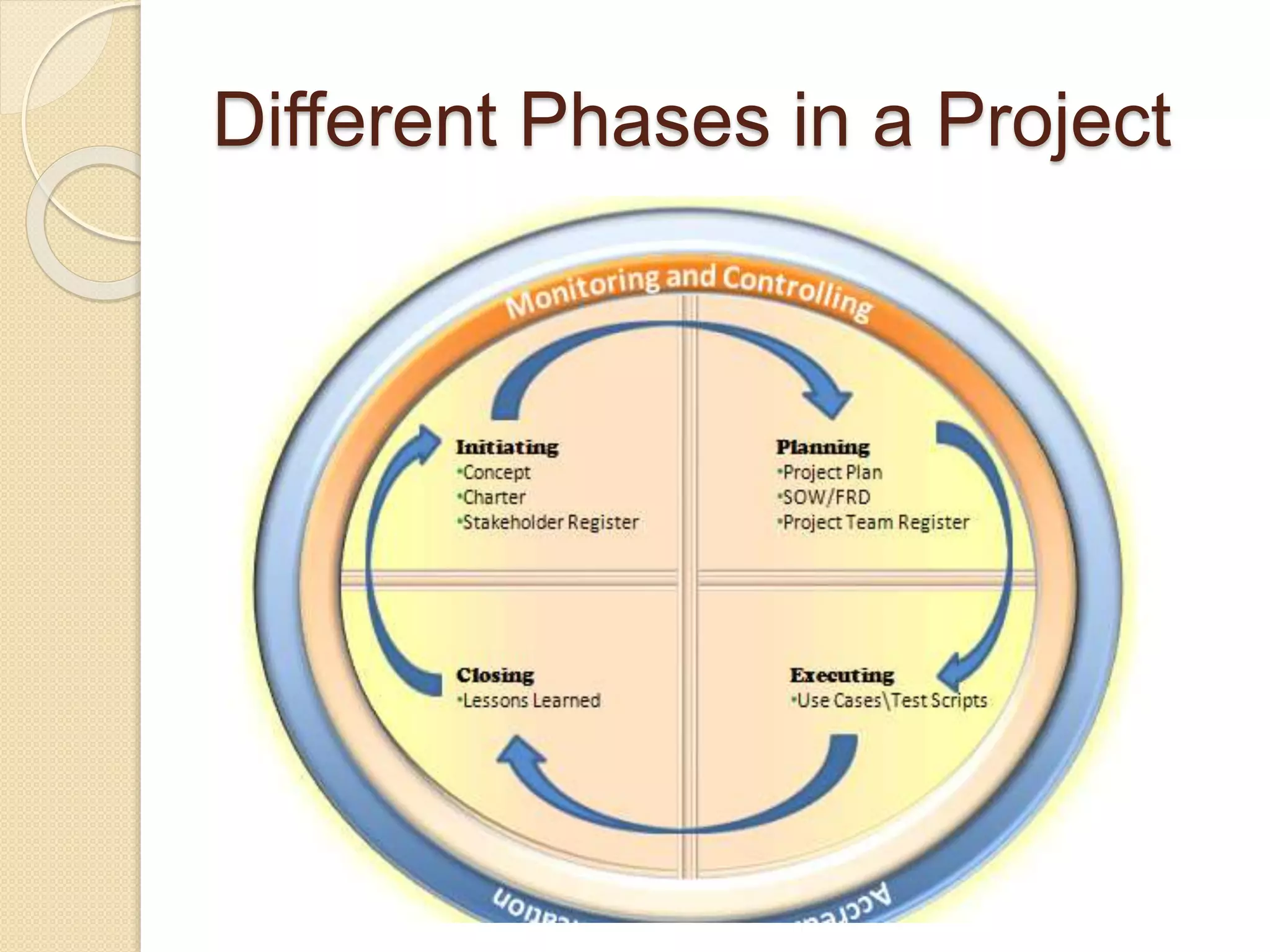
Different Phases in a Project
PMI defines the different phases
as:
(1) Project conception and initiation:
 An idea for a project is carefully examined
 A decision making team identifies if the project
can realistically be completed
(2) Project definition and planning:
 A project plan, project charter and/or project
scope is put in writing
 A team prioritizes the project, calculates budget
and schedule, and determines what resources
are required
(3) Execution Phase:
 Resources' tasks are distributed and teams
are informed of responsibilities.
 All the important project related information
is brought out
(4) Monitoring & Controlling Phase:
 During this phase the project managers
compares the project status and progress to
the actual plan
 The project schedules are adjusted and
other required changes are made to keep
the project on track
(5) Closing Phase:
 After project tasks are completed, the
approval from the client is requested
 An evaluation is performed to highlight
project success and/or learn from project
history (in lessons learned document)
Where do we go
from here ?
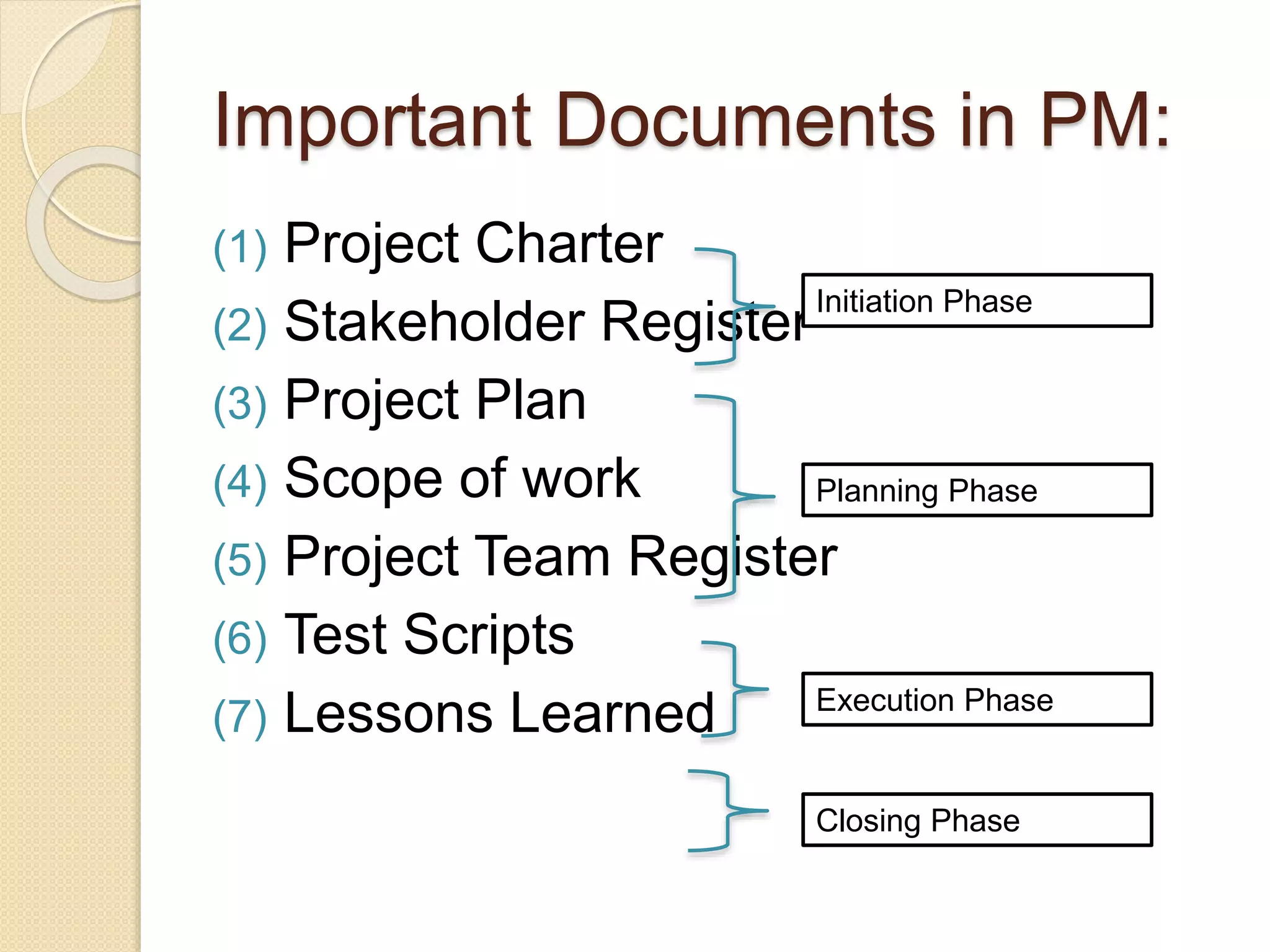
Important Documents in PM:
(1) Project Charter
(2) Stakeholder Register
(3) Project Plan
(4) Scope of work
(5) Project Team Register
(6) Test Scripts
(7) Lessons Learned
Initiation Phase
Planning Phase
Execution Phase
Closing Phase
There is a Solution called
PMO
 A Project Management Office (PMO)
is a group or department within a
business, agency or enterprise that
defines and maintains standards for
project management within the
organization.
Implementing Project
Management in an Company
Phase 1: Initiation Phase
 Initial communication(s) to management and
assistance in the identification of pilot projects
 Project management methodology and software
training for identified pilot team members
 Project plans and formal control processes in
place for all identified pilot projects
 A library of project "templates" for use during the
installation phases
 Standardized project coding structures and
project-level report formats
 Finalized requirements and a plan for the project-
level installation phase
Phase 2: Project-Level Installation
Phase:
 Network-based, structured project plans
and formal control process for all targeted
projects
 Rollout of PM/software training to all
project leaders and team members
 Training and mentoring of PMO personnel
 Implementation of the initial PMO
infrastructure
 Finalized requirements and a plan for the
enterprise-Level implementation phase
Phase 3: Enterprise-Level Installation
Phase:
 Implementation of the enterprise-level
PMO infrastructure
 Turnover to PMO staff of the day-to-day
responsibility for developing and
maintaining individual project plans
 Finalized requirements and a plan for
the maintenance phase
Phase 4: Maintenance Phase:
 Turnover to Project Management Office
staff the responsibility for supporting all
of the project management
requirements of the organization
 Recommendations to management for
policies and incentives required to
permanently establish project
management as a core competency
and essential function
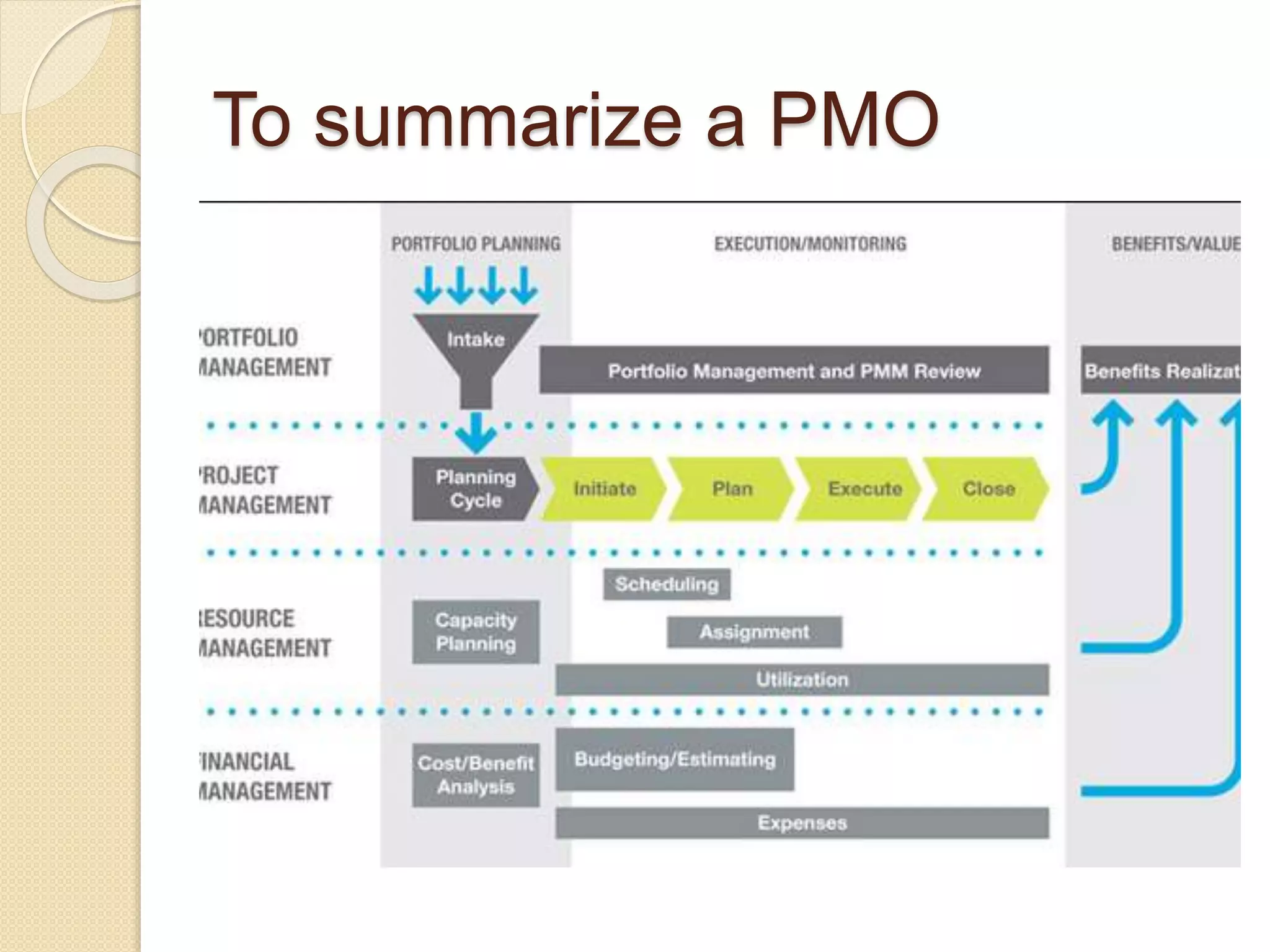
To summarize a PMO
In Summary:
 Need to control the project management
practices of the company
 By establishing a centralized department to
track the previous projects and people
involved
 Software database needs to be formed which
can track the projects based on (i) Type (ii)
Scope (iii) skills used
 Need to save every type of project document
in a PMO and review these documents
before initiating any new project within the
organization’
 Set standards for the template to be followed
Future Work
 Perform the in-depth analysis of the
various project management
templates used in the past
 As a result of the research, develop a
standardized template for handling
any project within the company
 Consult the management to work
towards establishment of PMO within
the company

Project management

  • 1.
    Project Management in an Organization KaranMadra - Manufacturing Department - Brewer Science Inc - .
  • 2.
    What is Project Management? • Project Management Institute, Inc. (PMI, the world's leading professional association for project management ) defines project management as : “The application of knowledge, skills, tools and techniques to a broad range of activities in order to meet the requirements of a particular project."
  • 3.
    Things to knowabout a Project:  It is temporary  It has defined beginning and defined end  It is unique, not a routine operation  It has defined scope and resources  It involves people who don’t usually work together, even from different organization  It has different types (software projects, construction projects, disaster relief projects etc.)
  • 4.
    What to aimfor in a Project ? The goals in any project, irrespective of their type is to complete the project: (1) On- Time (2) On-Budget (3) With Constant Learning (4) Bring in Integration into the Organization
  • 5.
    Knowledge areas ofPM Involves:  PMI defines the ten knowledge areas under project management:
  • 6.
  • 7.
    PMI defines thedifferent phases as: (1) Project conception and initiation:  An idea for a project is carefully examined  A decision making team identifies if the project can realistically be completed (2) Project definition and planning:  A project plan, project charter and/or project scope is put in writing  A team prioritizes the project, calculates budget and schedule, and determines what resources are required
  • 8.
    (3) Execution Phase: Resources' tasks are distributed and teams are informed of responsibilities.  All the important project related information is brought out (4) Monitoring & Controlling Phase:  During this phase the project managers compares the project status and progress to the actual plan  The project schedules are adjusted and other required changes are made to keep the project on track
  • 9.
    (5) Closing Phase: After project tasks are completed, the approval from the client is requested  An evaluation is performed to highlight project success and/or learn from project history (in lessons learned document)
  • 10.
    Where do wego from here ?
  • 11.
    Important Documents inPM: (1) Project Charter (2) Stakeholder Register (3) Project Plan (4) Scope of work (5) Project Team Register (6) Test Scripts (7) Lessons Learned Initiation Phase Planning Phase Execution Phase Closing Phase
  • 12.
    There is aSolution called PMO  A Project Management Office (PMO) is a group or department within a business, agency or enterprise that defines and maintains standards for project management within the organization.
  • 13.
    Implementing Project Management inan Company Phase 1: Initiation Phase  Initial communication(s) to management and assistance in the identification of pilot projects  Project management methodology and software training for identified pilot team members  Project plans and formal control processes in place for all identified pilot projects  A library of project "templates" for use during the installation phases  Standardized project coding structures and project-level report formats  Finalized requirements and a plan for the project- level installation phase
  • 14.
    Phase 2: Project-LevelInstallation Phase:  Network-based, structured project plans and formal control process for all targeted projects  Rollout of PM/software training to all project leaders and team members  Training and mentoring of PMO personnel  Implementation of the initial PMO infrastructure  Finalized requirements and a plan for the enterprise-Level implementation phase
  • 15.
    Phase 3: Enterprise-LevelInstallation Phase:  Implementation of the enterprise-level PMO infrastructure  Turnover to PMO staff of the day-to-day responsibility for developing and maintaining individual project plans  Finalized requirements and a plan for the maintenance phase
  • 16.
    Phase 4: MaintenancePhase:  Turnover to Project Management Office staff the responsibility for supporting all of the project management requirements of the organization  Recommendations to management for policies and incentives required to permanently establish project management as a core competency and essential function
  • 17.
  • 18.
    In Summary:  Needto control the project management practices of the company  By establishing a centralized department to track the previous projects and people involved  Software database needs to be formed which can track the projects based on (i) Type (ii) Scope (iii) skills used  Need to save every type of project document in a PMO and review these documents before initiating any new project within the organization’  Set standards for the template to be followed
  • 19.
    Future Work  Performthe in-depth analysis of the various project management templates used in the past  As a result of the research, develop a standardized template for handling any project within the company  Consult the management to work towards establishment of PMO within the company