Unit 4
Daw Saw Sandar Oo
Assessor
Myanmar Noble College
Contracts with organization
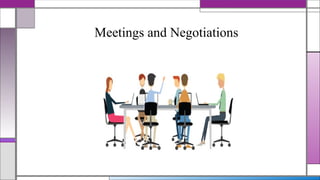
Meetings and Negotiations
• The meeting is the communication centre of every organization.
• It is a decision making body where the best prepared member’s ideas
are accepted because such a member is more direct, thinks more
quickly, and knows how to use effective communication method.
• The meeting displays a blending of a number of individual talents.
• The concept of performing individuals roles in the meeting format
can lead to better decisions and prevent later problems.
• Meeting of the company take place between the members, directors,
creditors or members and directors, or all of them.
Types of Meeting in Construction
• Project conceptual design meetings ( in house )
• Project presentation meetings ( to potential client )
• Project “ kickoff” meetings ( in house project team)
• Project manager’s orgnisation or coordination meeting
• Project budget meetings for production
• Project design meetings ( design/ construction interface )
• Planning and scheduling meetings for project workload
• Value engineering meetings
• Prenegotiation meetings ( in house preparation )
Etc……
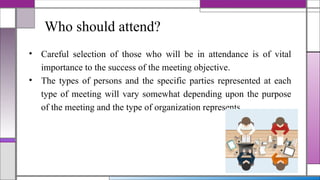
Who should attend?
• Careful selection of those who will be in attendance is of vital
importance to the success of the meeting objective.
• The types of persons and the specific parties represented at each
type of meeting will vary somewhat depending upon the purpose
of the meeting and the type of organization represents.
Handling Yourself At A Meeting
• First and most basic rules of conduct at a meeting is to become
familiar with the meeting agenda.
Some guideline-
Determined who called the meeting.
Find out the reason for the meeting.
Understand the background of the subject.
Establish your own position on the subject.
Determine your goals or objectives before the meeting.
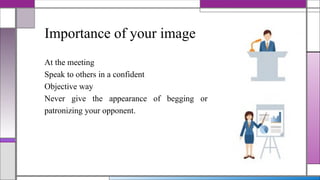
Importance of your image
At the meeting
Speak to others in a confident
Objective way
Never give the appearance of begging or
patronizing your opponent.
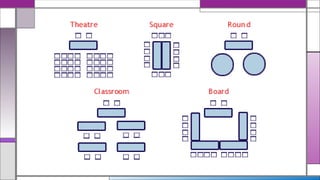
Seating Advantage
• Seating position is seldom spoken of as having an influence on the
outcome of a meeting.
• Yet its subtle psychological advantages are felt if not actually observed.
• A few brief suggestions that might allow you some advantage at the
conference
 Sit at the opposite end of the meeting room table from or on the
side closest to, the leader.
 The leader is the type who frequently consults the person next to
him or her, sit next to the meeting leader.
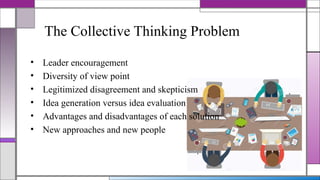
• Leader encouragement
• Diversity of view point
• Legitimized disagreement and skepticism
• Idea generation versus idea evaluation
• Advantages and disadvantages of each solution
• New approaches and new people
The Collective Thinking Problem
Agenda for a Typical Preconstruction Conference
• Progress payments
• Form of payment requests
• Payroll reports
• Shop drawing and sample submittal requirements
• Requirements for interference and/or composite drawings
• Insurance requirements; permits required
• Job progress scheduling
• Temporary facilities and controls
• Storage facilities and staging area
• Jobsite security during nonworking hours
Continued
• Cleanup and trash removal
• Available hoisting facilities
• Change order
• Warranty requirements
• Employment practices
• Listing and identification of all tiers of subcontractors
• Punch lists
• Record drawings and final document submittals
• Final payment and retainage
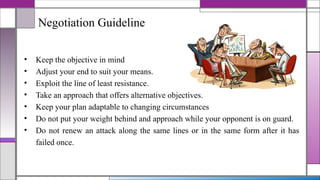
Negotiation Guideline
• Keep the objective in mind
• Adjust your end to suit your means.
• Exploit the line of least resistance.
• Take an approach that offers alternative objectives.
• Keep your plan adaptable to changing circumstances
• Do not put your weight behind and approach while your opponent is on guard.
• Do not renew an attack along the same lines or in the same form after it has
failed once.
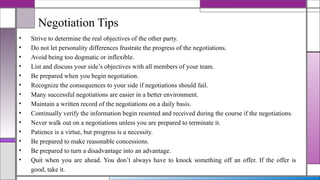
Negotiation Tips
• Strive to determine the real objectives of the other party.
• Do not let personality differences frustrate the progress of the negotiations.
• Avoid being too dogmatic or inflexible.
• List and discuss your side’s objectives with all members of your team.
• Be prepared when you begin negotiation.
• Recognize the consequences to your side if negotiations should fail.
• Many successful negotiations are easier in a better environment.
• Maintain a written record of the negotiations on a daily basis.
• Continually verify the information begin resented and received during the course if the negotiations.
• Never walk out on a negotiations unless you are prepared to terminate it.
• Patience is a virtue, but progress is a necessity.
• Be prepared to make reasonable concessions.
• Be prepared to turn a disadvantage into an advantage.
• Quit when you are ahead. You don’t always have to knock something off an offer. If the offer is
good, take it.
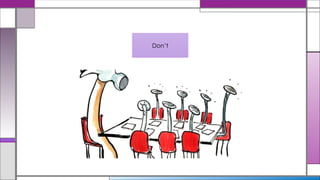
Don’t
THANKS

Project Management for construction industry1

  • 1.
    Unit 4 Daw SawSandar Oo Assessor Myanmar Noble College
  • 2.
  • 3.
  • 4.
    • The meetingis the communication centre of every organization. • It is a decision making body where the best prepared member’s ideas are accepted because such a member is more direct, thinks more quickly, and knows how to use effective communication method. • The meeting displays a blending of a number of individual talents. • The concept of performing individuals roles in the meeting format can lead to better decisions and prevent later problems. • Meeting of the company take place between the members, directors, creditors or members and directors, or all of them.
  • 5.
    Types of Meetingin Construction • Project conceptual design meetings ( in house ) • Project presentation meetings ( to potential client ) • Project “ kickoff” meetings ( in house project team) • Project manager’s orgnisation or coordination meeting • Project budget meetings for production • Project design meetings ( design/ construction interface ) • Planning and scheduling meetings for project workload • Value engineering meetings • Prenegotiation meetings ( in house preparation ) Etc……
  • 6.
    Who should attend? •Careful selection of those who will be in attendance is of vital importance to the success of the meeting objective. • The types of persons and the specific parties represented at each type of meeting will vary somewhat depending upon the purpose of the meeting and the type of organization represents.
  • 7.
    Handling Yourself AtA Meeting • First and most basic rules of conduct at a meeting is to become familiar with the meeting agenda. Some guideline- Determined who called the meeting. Find out the reason for the meeting. Understand the background of the subject. Establish your own position on the subject. Determine your goals or objectives before the meeting.
  • 8.
    Importance of yourimage At the meeting Speak to others in a confident Objective way Never give the appearance of begging or patronizing your opponent.
  • 9.
    Seating Advantage • Seatingposition is seldom spoken of as having an influence on the outcome of a meeting. • Yet its subtle psychological advantages are felt if not actually observed. • A few brief suggestions that might allow you some advantage at the conference  Sit at the opposite end of the meeting room table from or on the side closest to, the leader.  The leader is the type who frequently consults the person next to him or her, sit next to the meeting leader.
  • 11.
    • Leader encouragement •Diversity of view point • Legitimized disagreement and skepticism • Idea generation versus idea evaluation • Advantages and disadvantages of each solution • New approaches and new people The Collective Thinking Problem
  • 12.
    Agenda for aTypical Preconstruction Conference • Progress payments • Form of payment requests • Payroll reports • Shop drawing and sample submittal requirements • Requirements for interference and/or composite drawings • Insurance requirements; permits required • Job progress scheduling • Temporary facilities and controls • Storage facilities and staging area • Jobsite security during nonworking hours
  • 13.
    Continued • Cleanup andtrash removal • Available hoisting facilities • Change order • Warranty requirements • Employment practices • Listing and identification of all tiers of subcontractors • Punch lists • Record drawings and final document submittals • Final payment and retainage
  • 14.
    Negotiation Guideline • Keepthe objective in mind • Adjust your end to suit your means. • Exploit the line of least resistance. • Take an approach that offers alternative objectives. • Keep your plan adaptable to changing circumstances • Do not put your weight behind and approach while your opponent is on guard. • Do not renew an attack along the same lines or in the same form after it has failed once.
  • 15.
    Negotiation Tips • Striveto determine the real objectives of the other party. • Do not let personality differences frustrate the progress of the negotiations. • Avoid being too dogmatic or inflexible. • List and discuss your side’s objectives with all members of your team. • Be prepared when you begin negotiation. • Recognize the consequences to your side if negotiations should fail. • Many successful negotiations are easier in a better environment. • Maintain a written record of the negotiations on a daily basis. • Continually verify the information begin resented and received during the course if the negotiations. • Never walk out on a negotiations unless you are prepared to terminate it. • Patience is a virtue, but progress is a necessity. • Be prepared to make reasonable concessions. • Be prepared to turn a disadvantage into an advantage. • Quit when you are ahead. You don’t always have to knock something off an offer. If the offer is good, take it.
  • 16.
  • 18.