FIRE WATCH SAFETY
TRAINING
Opening & Background
TRAINING RULE
 Phone on silent mode (if there is an urgent call
take it outside)
 If you need a break or explanation don’t hesitate
to stop us
 Try to stay, always focus on your safety and the
safety of your buddy.
Fire Watch Training
What we MUST prevent!
Fires can rapidly spread!
Fire Watch Training
Fire Watch Training
Fire Triangle
Air Sparks
Flammable or Combustible materials
What is a HOT WORK?
Hot Work is considered any work that create
sufficient heat or spark which could start fire or
explosion and any work using open flames or
source of heat that could ignite materials in the
work area.
- Brazing
- Oxyacetylene cutting
- Friction cutting etc.
Example of Hot Work are:
- Welding
- Soldering
- Grinding
- Pre-heating
Permit To Work
Hot Work Permit
 Must be completed all the list of safety
requirements for specific areas and task.
 Must be posted in the working area.
 Must be required in all hot work activity.
 Must be approved by the contractor.
Permit To Work
General Requirements:
 Prior to issue the Hot Work Permit, operations
must be perform gas test.
 Contractors signed on the permit are
responsible for area safety.
 Permits are to be returned when worked is
complete or end of the shift.
What is Fire Watch?
Fire Watch
 An employee responsible for ensuring that
fires are not started while others are
performing the Hot Works.
 Should a fire start, the fire watch will attempt
to extinguished or sound the alarm.
 In the presence of combustibles, the
Firewatch will remain on duty until the hot
work is finished.
What is Fire Watch?
Fire Watch
 Fire watch should remain constant in the hot
work area with fire extinguisher and keep
constant watch while hot work activity
continues.
 Fire watchman has a knowledgeable in using
fire extinguisher
 Know the fire triangle.
General Requirement
A Fire Watchman must have….!
Hot work permit
Whistle
General Requirement
Fire Retardant Blanket
(Welding/Cutting)
Fire
Extinguisher
Reflectorized
Vest (Orange)
Competency
Fire Watchman
Duties of Fire Watchman
 It is a requirement that all firewatchers are
trained.
 Personnel selected for Fire watchman duty must
realized the seriousness of the job.
 Never place your self in DANGER
 Never turn your back on a fire.
 Sound the alarm first!!!
Fire Watchman
A Fire Watchman must be trained!
 In fire extinguishing techniques
- Extinguisher capabilities
- Self activation
- Approach
- Application techniques
- Retreat
Parts of Fire Extinguisher
Safety Seal
Lever
Handle
Extinguish
Agent
Body / Cylinder
Tank
Base
Nozzle
Hose
Safety Pin
Pressure Gauge
Neck
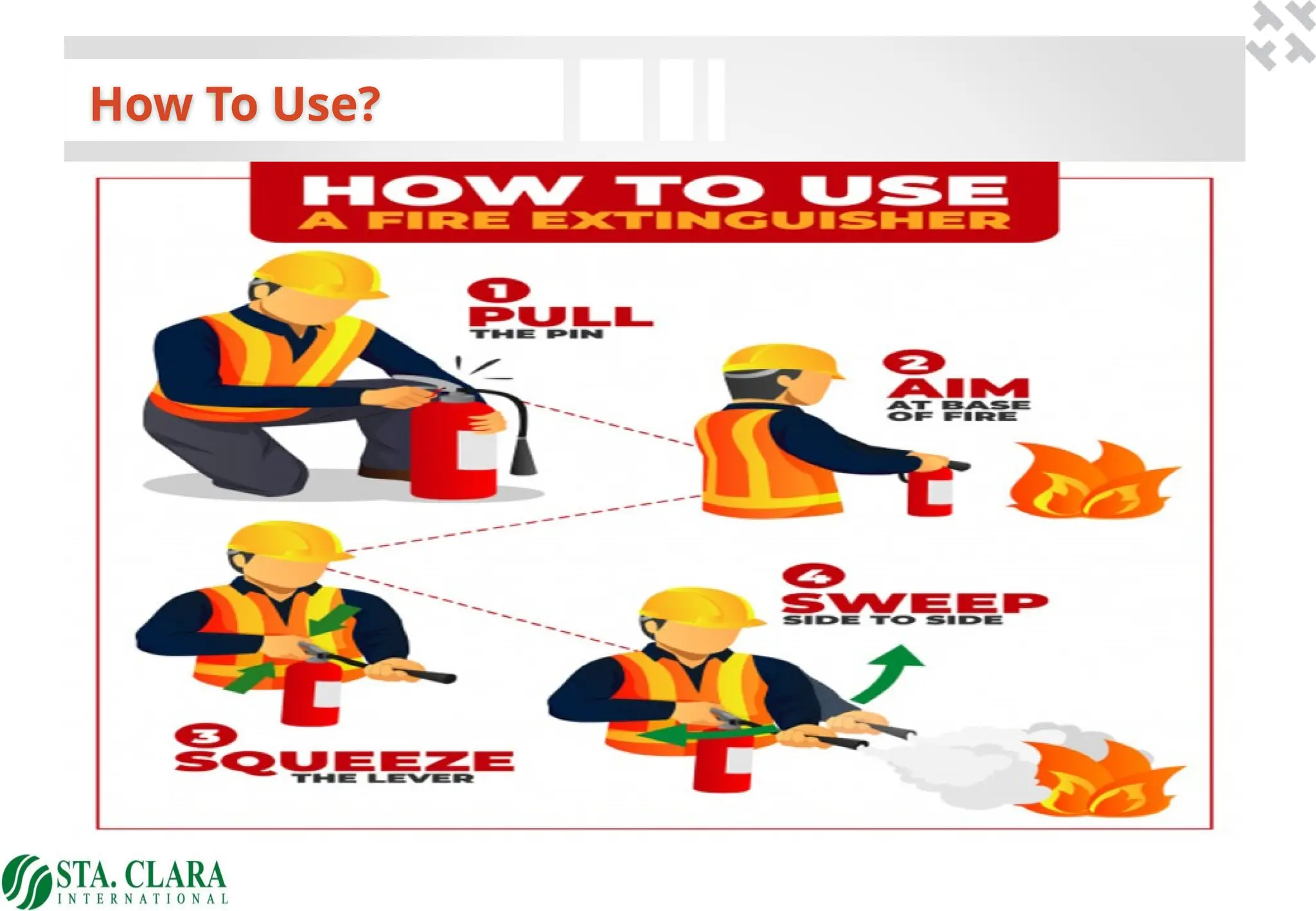
How To Use?
Types of Fires
 CLASS A ( Wood, Plastics, Paper, Cloth, etc.)
 CLASS B (Flammable Liquids, Vapors or Gas)
 CLASS C (Energized Electrical)
 CLASS D (Combustible Metals)
Fire Extinguisher
Suitable fire extinguishing equipment shall be
maintained in a state of readiness for instant
use. Such extinguishing equipment may consist
of:
 Water
 Foam
 Dry Chemical
 Halon
Water
 Advantage:
- Cooling ….. Absorbs heat
- Expands ….. Easily to expand
 Disadvantage:
- Conducts electricity
- Can “float” flammable liquids
- Some materials react with water
Water
 Water works well on combustible materials
such a wood and paper.
 Water only gives a “cooling effect” on
flammable liquids fires and may spread the
fires.
 Water is not to be used on live electrical
equipment.
Foam
 Advantage:
- Floats on flammable liquids such as
gasoline
- Slows vapor release from liquids and
solids
 Disadvantage:
- Foam blanket easily broken
- Conduct electricity
- Can not be applied to vertical surfaces
Foam
 Form works well on flammable liquids but….
- Can easily be displaced by wind or hose
stream.
- Does not work on vertical surfaces.
Example of Using Foam
Controlling a tank fire with a foam.
Dry Chemicals
 Advantage:
- Is rated either ABC or BC fires
- Easily portable
 Disadvantage:
- BC rated by dry chemical extinguishers
are
not effective on class A fires (wood,
papers)
- Mono-ammonium phosphate forms a
varnish
Halon
- Intended for use on B-C fires.
- Can be toxic to people.
- Liquid steaming agent
 Advantage:
- No residue
- Non conductive
 Disadvantage:
- Toxic if inhaled at a 5% or greater
concentration
- Has no cooling effect.
Halon
Using a fire hose it
requires training.
Halon
Let the ERT handle the
task! You could be
injured if you use a fire
hose improperly.
Fire Extinguisher?
How to check fire extinguisher in a good
condition?
• Check the pressure gauge to make sure the needle is in
the GREEN.
 If the needle is not in the
GREEN zone, the fire
extinguisher is not
properly charge. Replace
or return the fire ex
immediately to the tool
bodega or warehouse.
Fire Extinguisher?
How to check fire extinguisher in a good
condition?
• Shake the fire extinguisher to be sure that the dry
chemical powder is not caked.
Question & Answer?
NO JOB IS SO URGENT THAT WE
CANNOT TAKE THE TIME TO DO
IT SAFELY.
ALWAYS REMEMBER!
Project Fire Watch Safety Training - PREPARED BY JAY.pptx

Project Fire Watch Safety Training - PREPARED BY JAY.pptx

  • 1.
  • 2.
    Opening & Background TRAININGRULE  Phone on silent mode (if there is an urgent call take it outside)  If you need a break or explanation don’t hesitate to stop us  Try to stay, always focus on your safety and the safety of your buddy.
  • 4.
    Fire Watch Training Whatwe MUST prevent! Fires can rapidly spread!
  • 5.
  • 6.
  • 7.
    Fire Triangle Air Sparks Flammableor Combustible materials
  • 8.
    What is aHOT WORK? Hot Work is considered any work that create sufficient heat or spark which could start fire or explosion and any work using open flames or source of heat that could ignite materials in the work area. - Brazing - Oxyacetylene cutting - Friction cutting etc. Example of Hot Work are: - Welding - Soldering - Grinding - Pre-heating
  • 9.
    Permit To Work HotWork Permit  Must be completed all the list of safety requirements for specific areas and task.  Must be posted in the working area.  Must be required in all hot work activity.  Must be approved by the contractor.
  • 10.
    Permit To Work GeneralRequirements:  Prior to issue the Hot Work Permit, operations must be perform gas test.  Contractors signed on the permit are responsible for area safety.  Permits are to be returned when worked is complete or end of the shift.
  • 11.
    What is FireWatch? Fire Watch  An employee responsible for ensuring that fires are not started while others are performing the Hot Works.  Should a fire start, the fire watch will attempt to extinguished or sound the alarm.  In the presence of combustibles, the Firewatch will remain on duty until the hot work is finished.
  • 12.
    What is FireWatch? Fire Watch  Fire watch should remain constant in the hot work area with fire extinguisher and keep constant watch while hot work activity continues.  Fire watchman has a knowledgeable in using fire extinguisher  Know the fire triangle.
  • 13.
    General Requirement A FireWatchman must have….! Hot work permit Whistle
  • 14.
    General Requirement Fire RetardantBlanket (Welding/Cutting) Fire Extinguisher Reflectorized Vest (Orange) Competency
  • 15.
    Fire Watchman Duties ofFire Watchman  It is a requirement that all firewatchers are trained.  Personnel selected for Fire watchman duty must realized the seriousness of the job.  Never place your self in DANGER  Never turn your back on a fire.  Sound the alarm first!!!
  • 16.
    Fire Watchman A FireWatchman must be trained!  In fire extinguishing techniques - Extinguisher capabilities - Self activation - Approach - Application techniques - Retreat
  • 17.
    Parts of FireExtinguisher Safety Seal Lever Handle Extinguish Agent Body / Cylinder Tank Base Nozzle Hose Safety Pin Pressure Gauge Neck
  • 18.
  • 19.
    Types of Fires CLASS A ( Wood, Plastics, Paper, Cloth, etc.)  CLASS B (Flammable Liquids, Vapors or Gas)  CLASS C (Energized Electrical)  CLASS D (Combustible Metals)
  • 20.
    Fire Extinguisher Suitable fireextinguishing equipment shall be maintained in a state of readiness for instant use. Such extinguishing equipment may consist of:  Water  Foam  Dry Chemical  Halon
  • 21.
    Water  Advantage: - Cooling….. Absorbs heat - Expands ….. Easily to expand  Disadvantage: - Conducts electricity - Can “float” flammable liquids - Some materials react with water
  • 22.
    Water  Water workswell on combustible materials such a wood and paper.  Water only gives a “cooling effect” on flammable liquids fires and may spread the fires.  Water is not to be used on live electrical equipment.
  • 23.
    Foam  Advantage: - Floatson flammable liquids such as gasoline - Slows vapor release from liquids and solids  Disadvantage: - Foam blanket easily broken - Conduct electricity - Can not be applied to vertical surfaces
  • 24.
    Foam  Form workswell on flammable liquids but…. - Can easily be displaced by wind or hose stream. - Does not work on vertical surfaces.
  • 25.
    Example of UsingFoam Controlling a tank fire with a foam.
  • 26.
    Dry Chemicals  Advantage: -Is rated either ABC or BC fires - Easily portable  Disadvantage: - BC rated by dry chemical extinguishers are not effective on class A fires (wood, papers) - Mono-ammonium phosphate forms a varnish
  • 27.
    Halon - Intended foruse on B-C fires. - Can be toxic to people. - Liquid steaming agent  Advantage: - No residue - Non conductive  Disadvantage: - Toxic if inhaled at a 5% or greater concentration - Has no cooling effect.
  • 28.
    Halon Using a firehose it requires training.
  • 29.
    Halon Let the ERThandle the task! You could be injured if you use a fire hose improperly.
  • 30.
    Fire Extinguisher? How tocheck fire extinguisher in a good condition? • Check the pressure gauge to make sure the needle is in the GREEN.  If the needle is not in the GREEN zone, the fire extinguisher is not properly charge. Replace or return the fire ex immediately to the tool bodega or warehouse.
  • 31.
    Fire Extinguisher? How tocheck fire extinguisher in a good condition? • Shake the fire extinguisher to be sure that the dry chemical powder is not caked.
  • 32.
  • 33.
    NO JOB ISSO URGENT THAT WE CANNOT TAKE THE TIME TO DO IT SAFELY. ALWAYS REMEMBER!