Professional
Ethics in
Computing
Chaitra Gadekar
Fr Jossy P George
Christ (Deemed to be University)
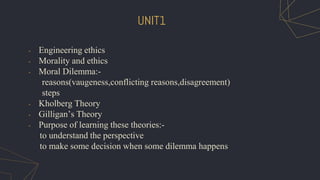
• Engineering ethics
• Morality and ethics
• Moral Dilemma:-
reasons(vaugeness,conflicting reasons,disagreement)
steps
• Kholberg Theory
• Gilligan’s Theory
• Purpose of learning these theories:-
to understand the perspective
to make some decision when some dilemma happens
UNIT1
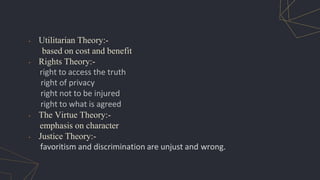
• Utilitarian Theory:-
based on cost and benefit
• Rights Theory:-
right to access the truth
right of privacy
right not to be injured
right to what is agreed
• The Virtue Theory:-
emphasis on character
• Justice Theory:-
favoritism and discrimination are unjust and wrong.
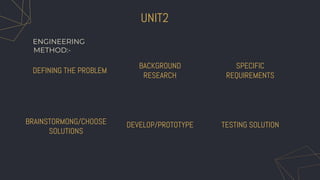
UNIT2
BACKGROUND
RESEARCH
DEFINING THE PROBLEM
SPECIFIC
REQUIREMENTS
DEVELOP/PROTOTYPE
BRAINSTORMONG/CHOOSE
SOLUTIONS
TESTING SOLUTION
ENGINEERING
METHOD:-
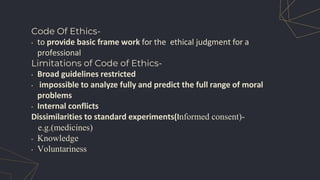
Code Of Ethics-
• to provide basic frame work for the ethical judgment for a
professional
Limitations of Code of Ethics-
• Broad guidelines restricted
• impossible to analyze fully and predict the full range of moral
problems
• Internal conflicts
Dissimilarities to standard experiments(Informed consent)-
e.g.(medicines)
• Knowledge
• Voluntariness
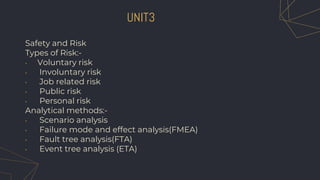
Safety and Risk
Types of Risk:-
• Voluntary risk
• Involuntary risk
• Job related risk
• Public risk
• Personal risk
Analytical methods:-
• Scenario analysis
• Failure mode and effect analysis(FMEA)
• Fault tree analysis(FTA)
• Event tree analysis (ETA)
UNIT3
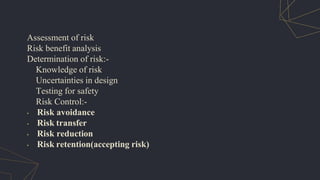
Assessment of risk
Risk benefit analysis
Determination of risk:-
Knowledge of risk
Uncertainties in design
Testing for safety
Risk Control:-
• Risk avoidance
• Risk transfer
• Risk reduction
• Risk retention(accepting risk)
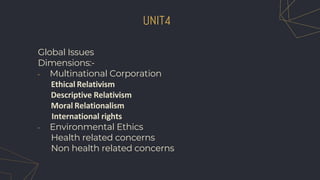
Global Issues
Dimensions:-
• Multinational Corporation
Ethical Relativism
Descriptive Relativism
Moral Relationalism
International rights
• Environmental Ethics
Health related concerns
Non health related concerns
UNIT4
• Computer Ethics
Instrument of unethical behaviour:-
• Bank robbery
• Privacy
• Hacking
• Weapons Development
THANK YOU!!

Professional ethics in computing

  • 1.
    Professional Ethics in Computing Chaitra Gadekar FrJossy P George Christ (Deemed to be University)
  • 2.
    • Engineering ethics •Morality and ethics • Moral Dilemma:- reasons(vaugeness,conflicting reasons,disagreement) steps • Kholberg Theory • Gilligan’s Theory • Purpose of learning these theories:- to understand the perspective to make some decision when some dilemma happens UNIT1
  • 3.
    • Utilitarian Theory:- basedon cost and benefit • Rights Theory:- right to access the truth right of privacy right not to be injured right to what is agreed • The Virtue Theory:- emphasis on character • Justice Theory:- favoritism and discrimination are unjust and wrong.
  • 4.
  • 5.
    Code Of Ethics- •to provide basic frame work for the ethical judgment for a professional Limitations of Code of Ethics- • Broad guidelines restricted • impossible to analyze fully and predict the full range of moral problems • Internal conflicts Dissimilarities to standard experiments(Informed consent)- e.g.(medicines) • Knowledge • Voluntariness
  • 6.
    Safety and Risk Typesof Risk:- • Voluntary risk • Involuntary risk • Job related risk • Public risk • Personal risk Analytical methods:- • Scenario analysis • Failure mode and effect analysis(FMEA) • Fault tree analysis(FTA) • Event tree analysis (ETA) UNIT3
  • 7.
    Assessment of risk Riskbenefit analysis Determination of risk:- Knowledge of risk Uncertainties in design Testing for safety Risk Control:- • Risk avoidance • Risk transfer • Risk reduction • Risk retention(accepting risk)
  • 8.
    Global Issues Dimensions:- • MultinationalCorporation Ethical Relativism Descriptive Relativism Moral Relationalism International rights • Environmental Ethics Health related concerns Non health related concerns UNIT4
  • 9.
    • Computer Ethics Instrumentof unethical behaviour:- • Bank robbery • Privacy • Hacking • Weapons Development
  • 10.