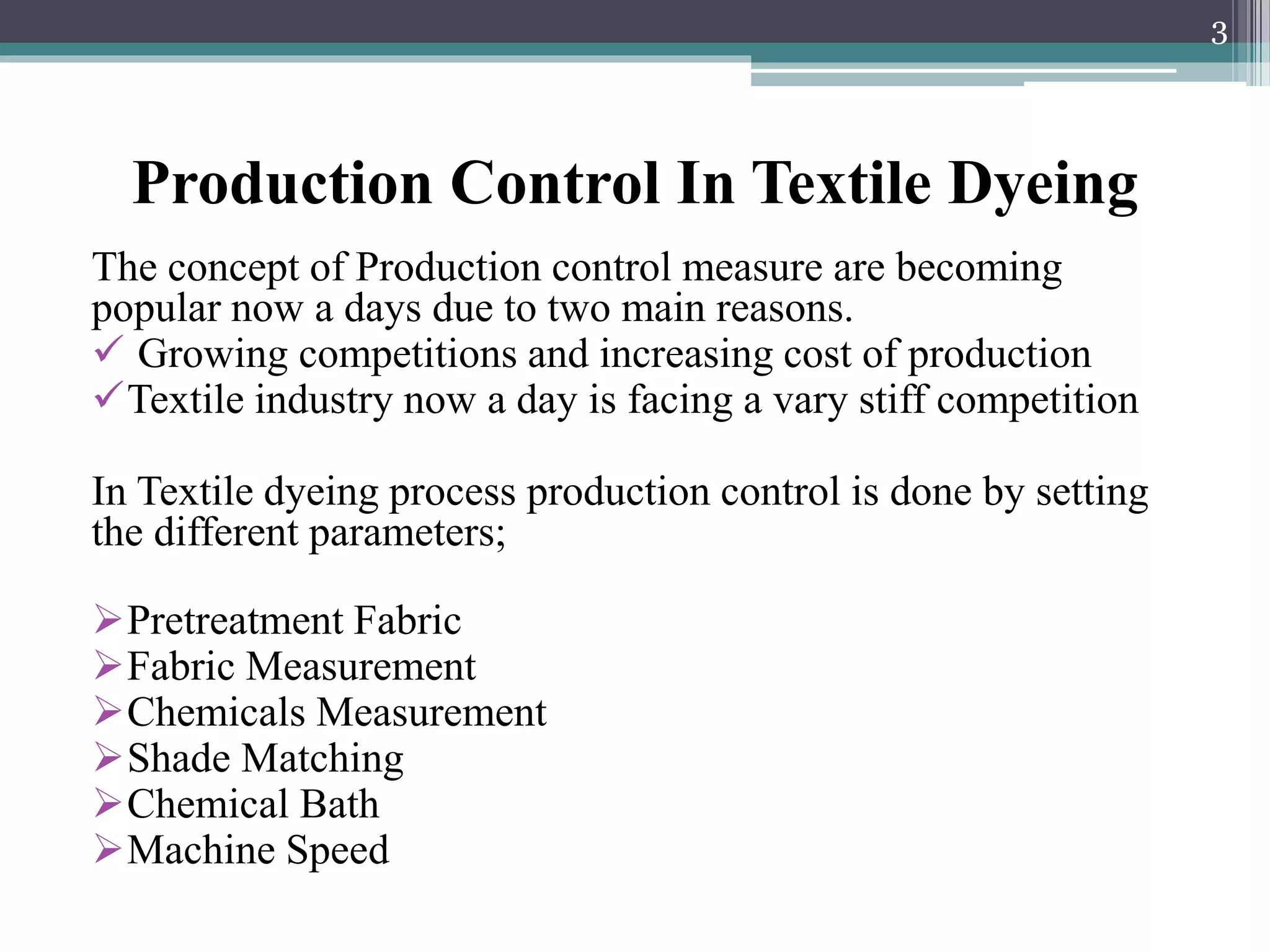
PRODUCTION
CONTROL &its
Function
1
1
Department of Textile Engineering Mehran UET Jamshoro
Submitted to:
SIR MUHAMMAD NAGAR
Submitted By:
AYAZ ALI F16TE76
PRODUCTION CONTROL
Production control is the process that keeps a watchful
eye on the production flow, size of resources along with
any deviation from the planned action. It also includes
arrangement for the prompt remedy or adjustment in
case of any deviation so that the production may run
according to the original or revised schedule.
2
“Production control refers to ensuring that all
which occurs is in accordance with the rules
established and instructions issued.” (By – Henry
Fayol)
2
Production Control In Textile Dyeing
The concept of Production control measure are becoming
popular now a days due to two main reasons.
 Growing competitions and increasing cost of production
Textile industry now a day is facing a vary stiff competition
In Textile dyeing process production control is done by setting
the different parameters;
Pretreatment Fabric
Fabric Measurement
Chemicals Measurement
Shade Matching
Chemical Bath
Machine Speed
3
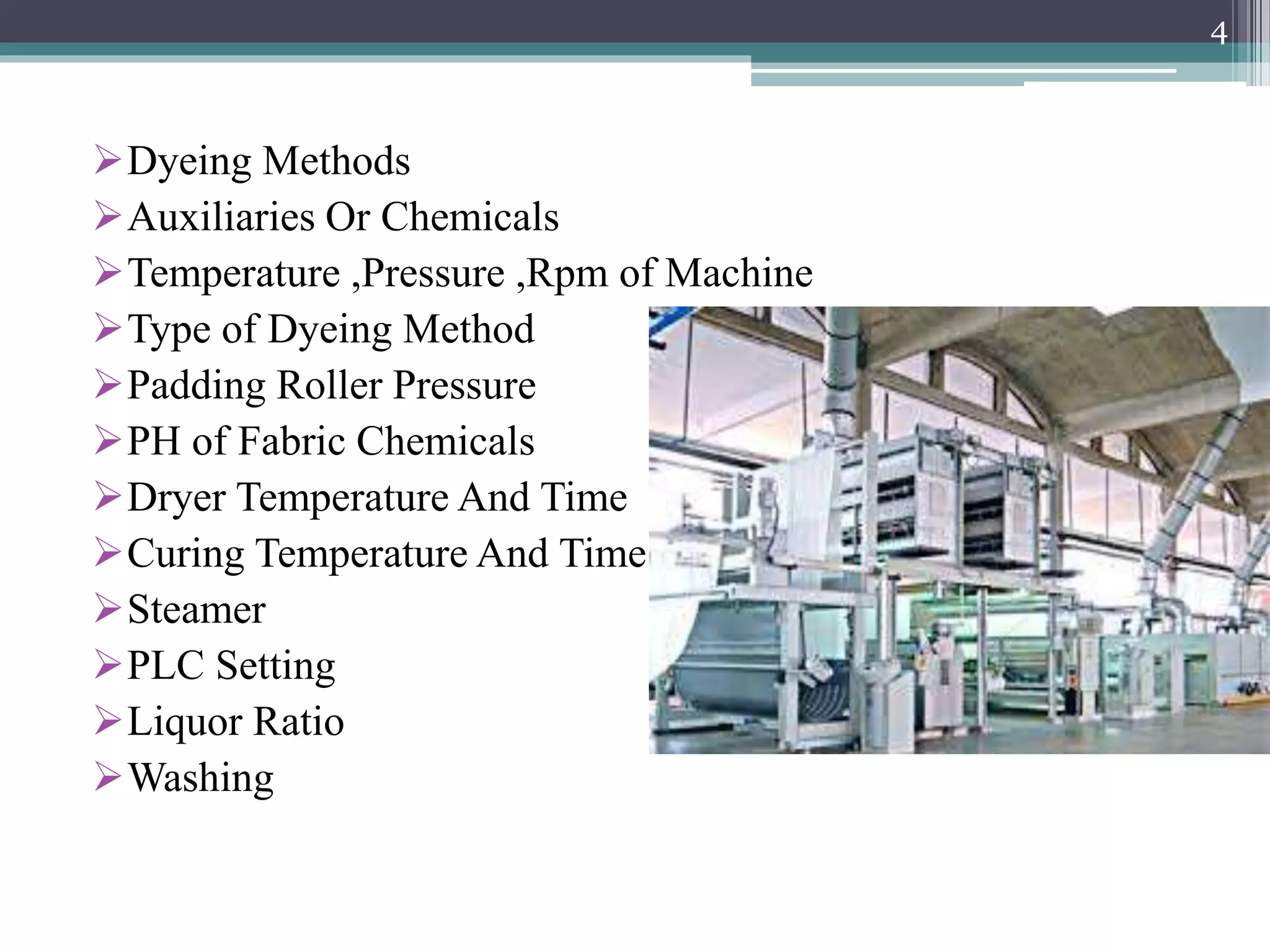
Dyeing Methods
Auxiliaries Or Chemicals
Temperature ,Pressure ,Rpm of Machine
Type of Dyeing Method
Padding Roller Pressure
PH of Fabric Chemicals
Dryer Temperature And Time
Curing Temperature And Time
Steamer
PLC Setting
Liquor Ratio
Washing
4
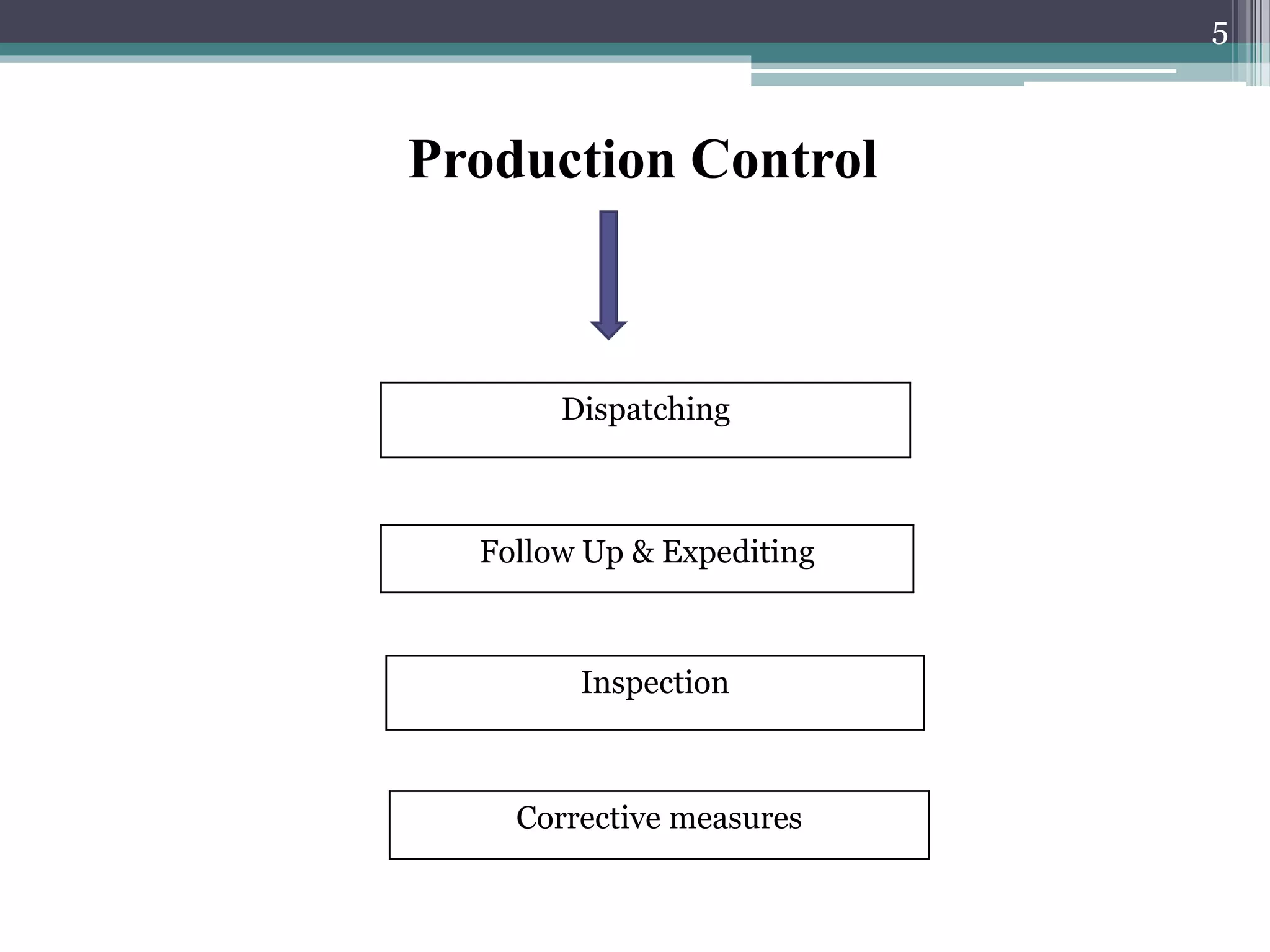
Production Control
Dispatching
Follow Up & Expediting
Inspection
Corrective measures
5
DISPATCHING
6
Dispatching refers to the process of actually ordering the work to
be done. It involves putting the plan into effect by issuing orders.
It is concerned with starting the process and operation on the basis
of route sheets and schedule charts.
“Dispatches put production in effect by releasing and
guiding manufacturing order in the sequence previously
determined by route sheets and schedules.”(John
A.Shubin)
DISPATCHING PROCEDURES
7
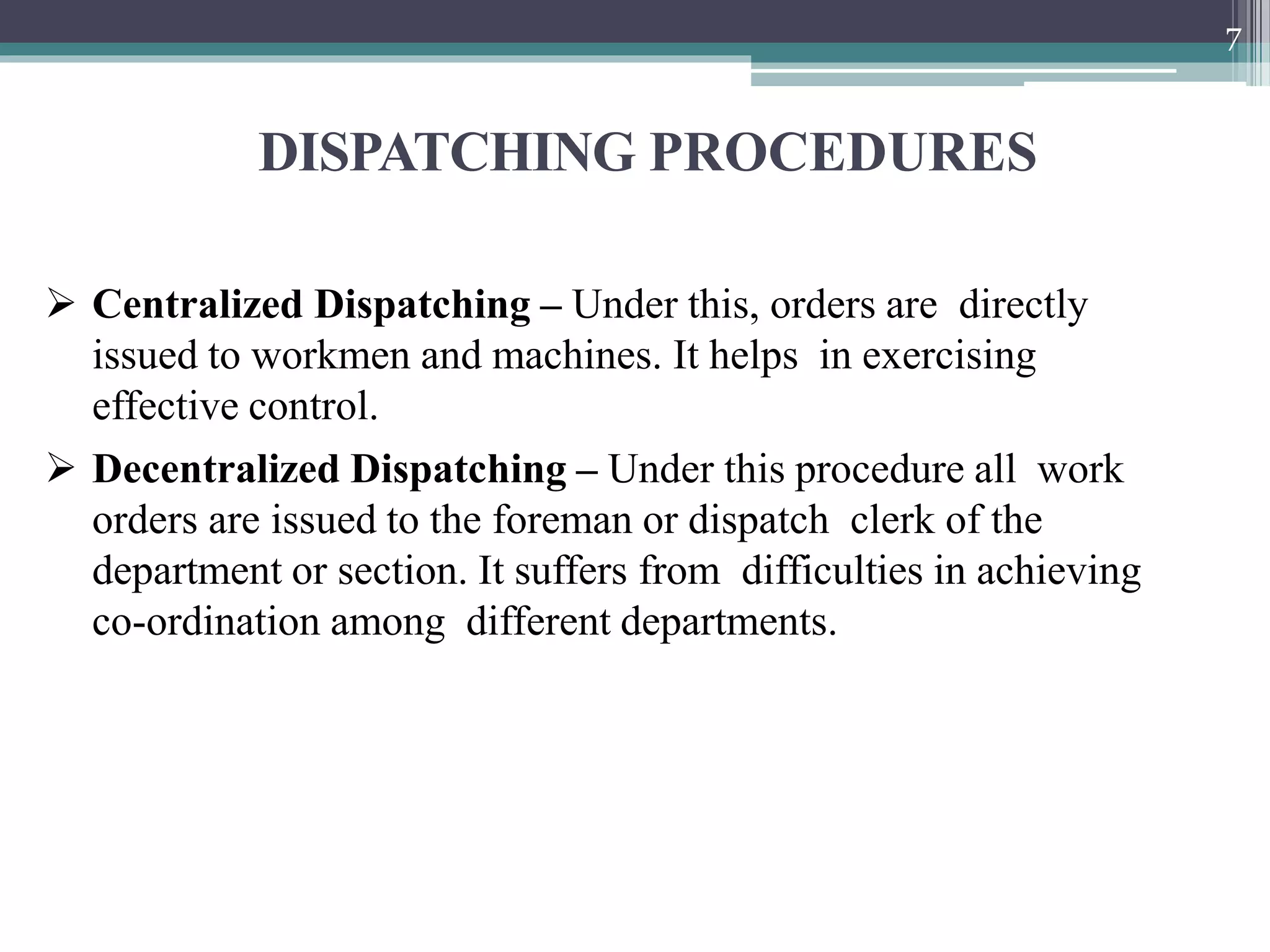
 Centralized Dispatching – Under this, orders are directly
issued to workmen and machines. It helps in exercising
effective control.
 Decentralized Dispatching – Under this procedure all work
orders are issued to the foreman or dispatch clerk of the
department or section. It suffers from difficulties in achieving
co-ordination among different departments.
FOLLOW UP & EXPEDITING
 Progress may be assessed with the help of routine reports or
communication with operating departments. The follow up
procedure is used for expediting and checking the progress.
 “Follow up or expediting is that branch of production control
procedure which regulates the progress of materials and part
through the production process.”
8
INSPECTION
9
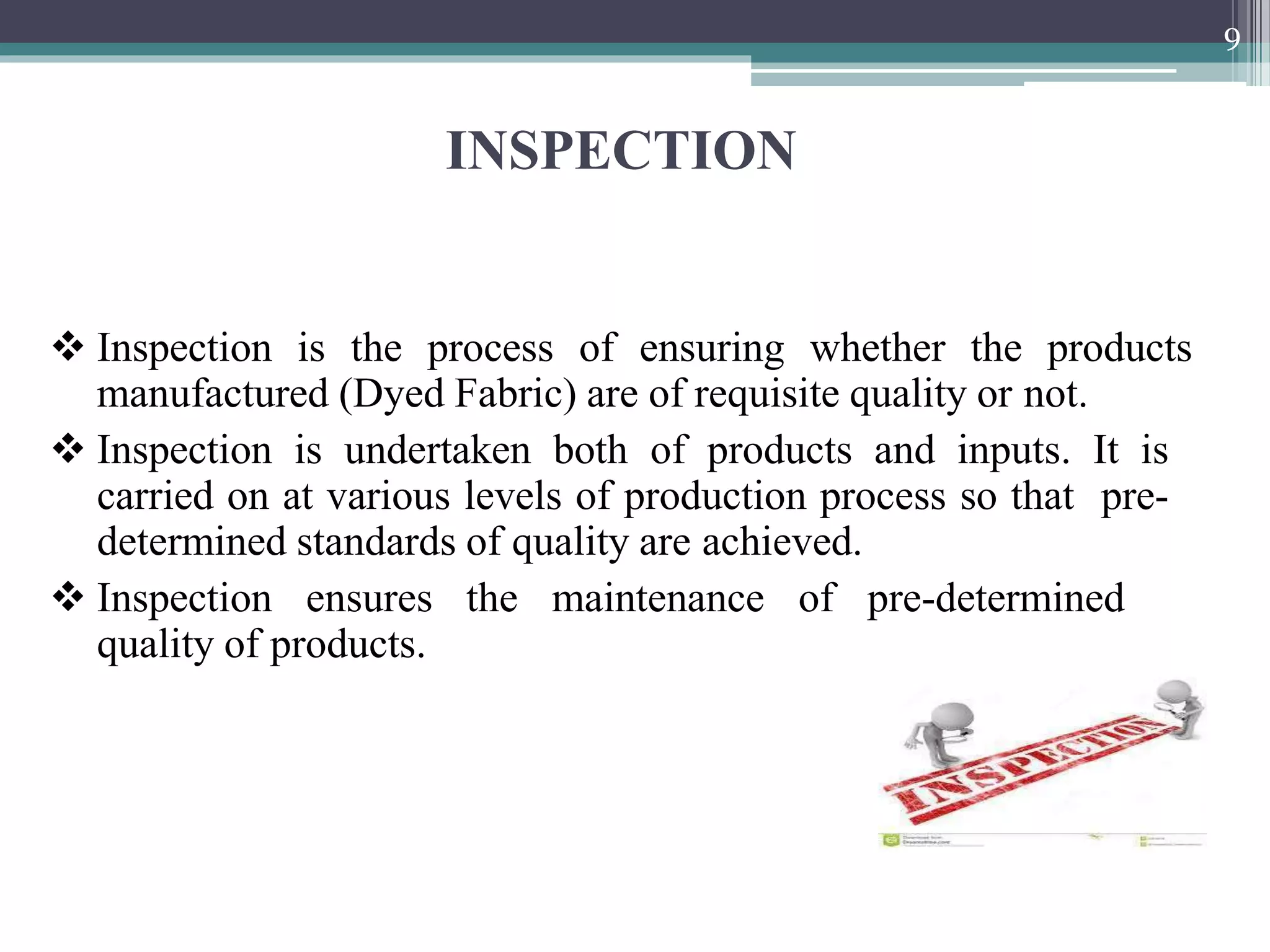
 Inspection is the process of ensuring whether the products
manufactured (Dyed Fabric) are of requisite quality or not.
 Inspection is undertaken both of products and inputs. It is
carried on at various levels of production process so that pre-
determined standards of quality are achieved.
 Inspection ensures the maintenance of pre-determined
quality of products.
CORRECTIVE MEASURES :
10
 Adjusting the route
 Rescheduling of work
 Changing the workloads
 Repairs and Maintenance of machinery or
equipment,
 Control over inventories
 Certain personnel decisions like training, transfer,
demotion etc.
 Alternate methods may be suggested to handle
peak loads.
CONCLUSION :
Production Control represents the beating heart of any
manufacturing process and are essential for customer delight
and overall success of an organization.
11
12

Production control &; its functions

  • 1.
    PRODUCTION CONTROL &its Function 1 1 Department ofTextile Engineering Mehran UET Jamshoro Submitted to: SIR MUHAMMAD NAGAR Submitted By: AYAZ ALI F16TE76
  • 2.
    PRODUCTION CONTROL Production controlis the process that keeps a watchful eye on the production flow, size of resources along with any deviation from the planned action. It also includes arrangement for the prompt remedy or adjustment in case of any deviation so that the production may run according to the original or revised schedule. 2 “Production control refers to ensuring that all which occurs is in accordance with the rules established and instructions issued.” (By – Henry Fayol) 2
  • 3.
    Production Control InTextile Dyeing The concept of Production control measure are becoming popular now a days due to two main reasons.  Growing competitions and increasing cost of production Textile industry now a day is facing a vary stiff competition In Textile dyeing process production control is done by setting the different parameters; Pretreatment Fabric Fabric Measurement Chemicals Measurement Shade Matching Chemical Bath Machine Speed 3
  • 4.
    Dyeing Methods Auxiliaries OrChemicals Temperature ,Pressure ,Rpm of Machine Type of Dyeing Method Padding Roller Pressure PH of Fabric Chemicals Dryer Temperature And Time Curing Temperature And Time Steamer PLC Setting Liquor Ratio Washing 4
  • 5.
    Production Control Dispatching Follow Up& Expediting Inspection Corrective measures 5
  • 6.
    DISPATCHING 6 Dispatching refers tothe process of actually ordering the work to be done. It involves putting the plan into effect by issuing orders. It is concerned with starting the process and operation on the basis of route sheets and schedule charts. “Dispatches put production in effect by releasing and guiding manufacturing order in the sequence previously determined by route sheets and schedules.”(John A.Shubin)
  • 7.
    DISPATCHING PROCEDURES 7  CentralizedDispatching – Under this, orders are directly issued to workmen and machines. It helps in exercising effective control.  Decentralized Dispatching – Under this procedure all work orders are issued to the foreman or dispatch clerk of the department or section. It suffers from difficulties in achieving co-ordination among different departments.
  • 8.
    FOLLOW UP &EXPEDITING  Progress may be assessed with the help of routine reports or communication with operating departments. The follow up procedure is used for expediting and checking the progress.  “Follow up or expediting is that branch of production control procedure which regulates the progress of materials and part through the production process.” 8
  • 9.
    INSPECTION 9  Inspection isthe process of ensuring whether the products manufactured (Dyed Fabric) are of requisite quality or not.  Inspection is undertaken both of products and inputs. It is carried on at various levels of production process so that pre- determined standards of quality are achieved.  Inspection ensures the maintenance of pre-determined quality of products.
  • 10.
    CORRECTIVE MEASURES : 10 Adjusting the route  Rescheduling of work  Changing the workloads  Repairs and Maintenance of machinery or equipment,  Control over inventories  Certain personnel decisions like training, transfer, demotion etc.  Alternate methods may be suggested to handle peak loads.
  • 11.
    CONCLUSION : Production Controlrepresents the beating heart of any manufacturing process and are essential for customer delight and overall success of an organization. 11
  • 12.